May 30, 2026 · 5 min read
I build with AI every single day. So it stopped me cold when the oldest institution on earth started talking about it like a threat to the soul.
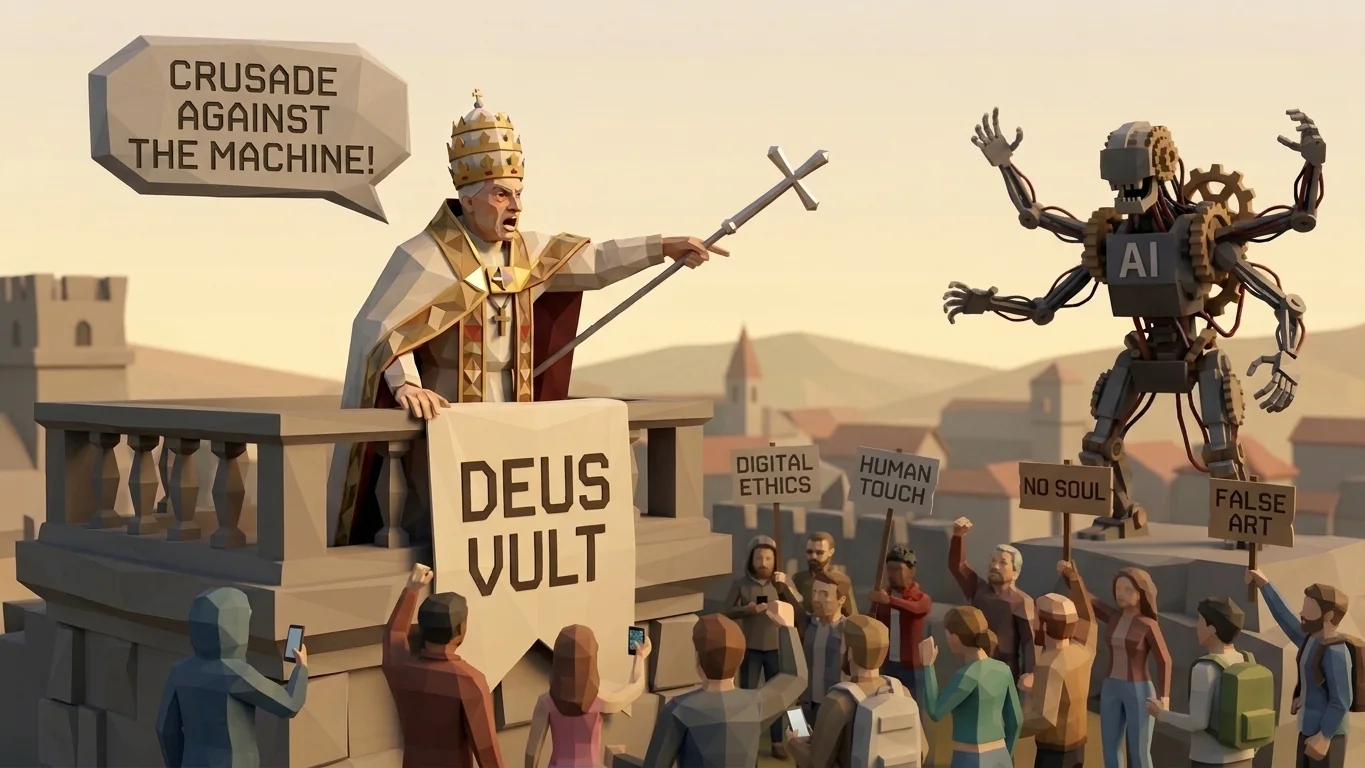
The Catholic Church has outlived empires, plagues, schisms and the printing press. It does not panic easily. Yet over the past two years, Rome has been raising an alarm about artificial intelligence that is louder, and stranger, than anything I hear coming out of Silicon Valley.
Rome is not worried about your job. It is worried about what we are becoming.
A pope who named himself after a machine age
When Cardinal Robert Prevost was elected Pope Leo XIV in 2025, he explained his choice of name. The previous Leo, Leo XIII, wrote Rerum Novarum in 1891: the document that confronted the Industrial Revolution and defended the dignity of workers against the machine.
The new Leo called AI one of the defining challenges of our age, a kind of second industrial revolution. He picked a 134-year-old name to signal exactly that.
Reaching for a century-old playbook to fight a brand-new technology is, in itself, the message.
The argument Rome is actually making
Strip away the incense and the argument is surprisingly precise. The Church does not claim that AI is evil. It claims that AI is not intelligent in the way we are, and that pretending otherwise is the real danger.
In early 2025 the Vatican published Antiqua et Nova, a note on the relationship between artificial and human intelligence. Its central move is simple:
Intelligence is not the same thing as computation. Wisdom cannot be downloaded.
A model manipulates symbols with breathtaking speed. Human understanding, the Church argues, is embodied, relational, and pointed at truth and goodness. We do not just process the world. We are answerable to it.
There is an older idea underneath all of this. A human being is made in the image of God. A model is made in the image of its training data. The Church is betting that the difference matters.
Why a spiritual frame, not a policy frame
The usual critics warn about bias, lost jobs, misinformation, and the concentration of power. All of it real. But Rome is playing a different game entirely.
A policy frame asks: is it safe? A spiritual frame asks a harder question: is it making us less human? The worry is not that the machine fails. The worry is that it succeeds, and we quietly hand over the things that were never meant to be outsourced.
- Judgment, when we let the model decide what is true.
- Relationship, when the machine writes the message a person should have written.
- Meaning, when efficiency becomes the only thing we know how to measure.
If a machine can write your condolences, choose your friends and shape your opinions, the question is not whether it works. It is what is left of you.
What a builder should take from this
I am not about to put down the tools. I still think AI is one of the most useful things I have ever touched, and I am not interested in pretending otherwise.
But the Church is doing something the industry refuses to do. It is asking what AI is for, and refusing to let efficiency be the final answer.
So here is what I am keeping:
- Keep a human in the loop for judgment, not just for oversight.
- Protect the things that are supposed to stay slow: grief, friendship, faith, art.
- Treat “it works” as the start of the question, never the end of it.
You can build with the machine without kneeling to it. That, more than any regulation, is the crusade.