Visuele inspiratie
Promptbibliotheek
Sterke AI-resultaten uit het wild, mét de prompt erbij. Klik op een beeld, kopieer de prompt en maak er iets eigens van.
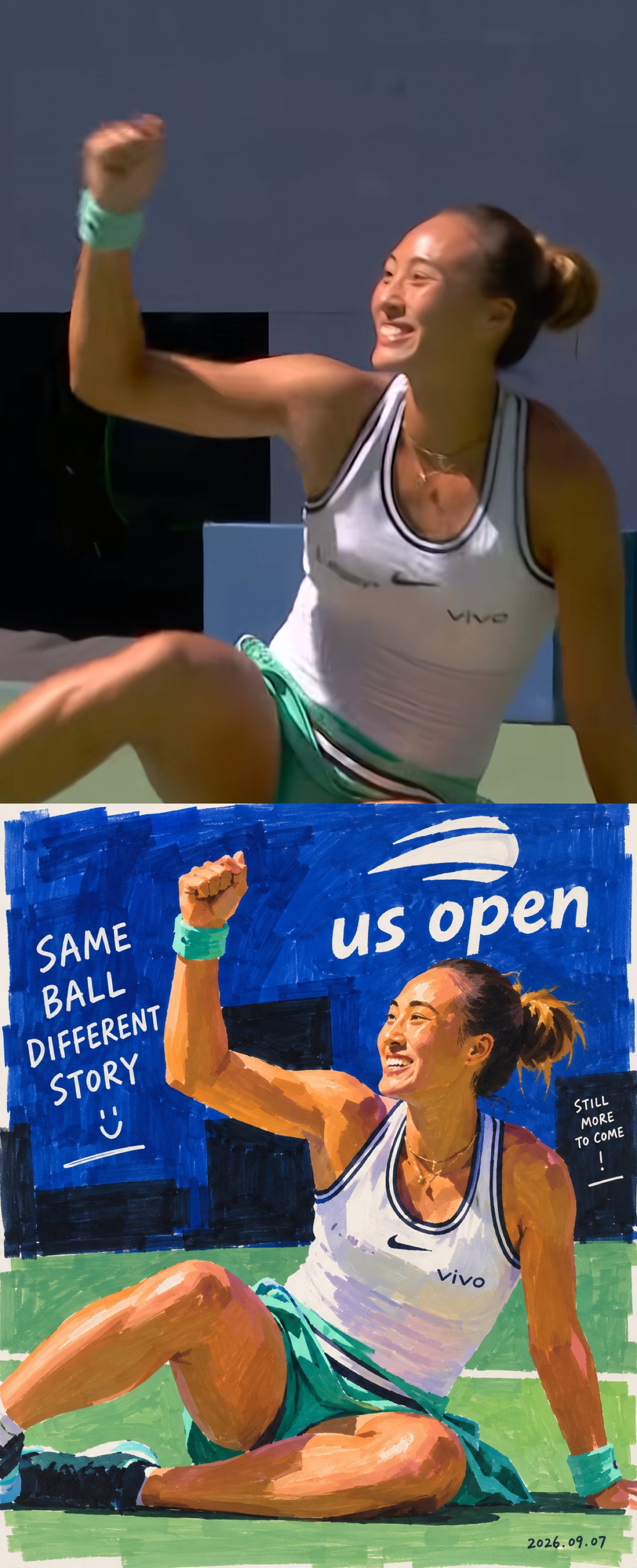
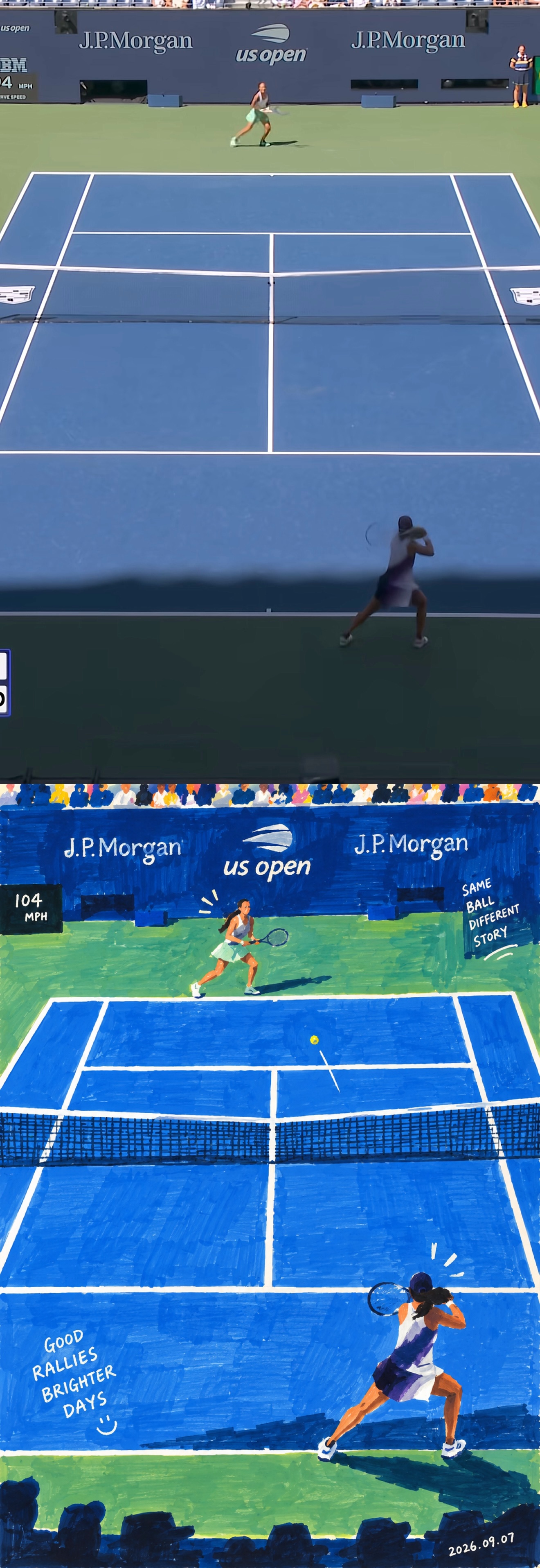
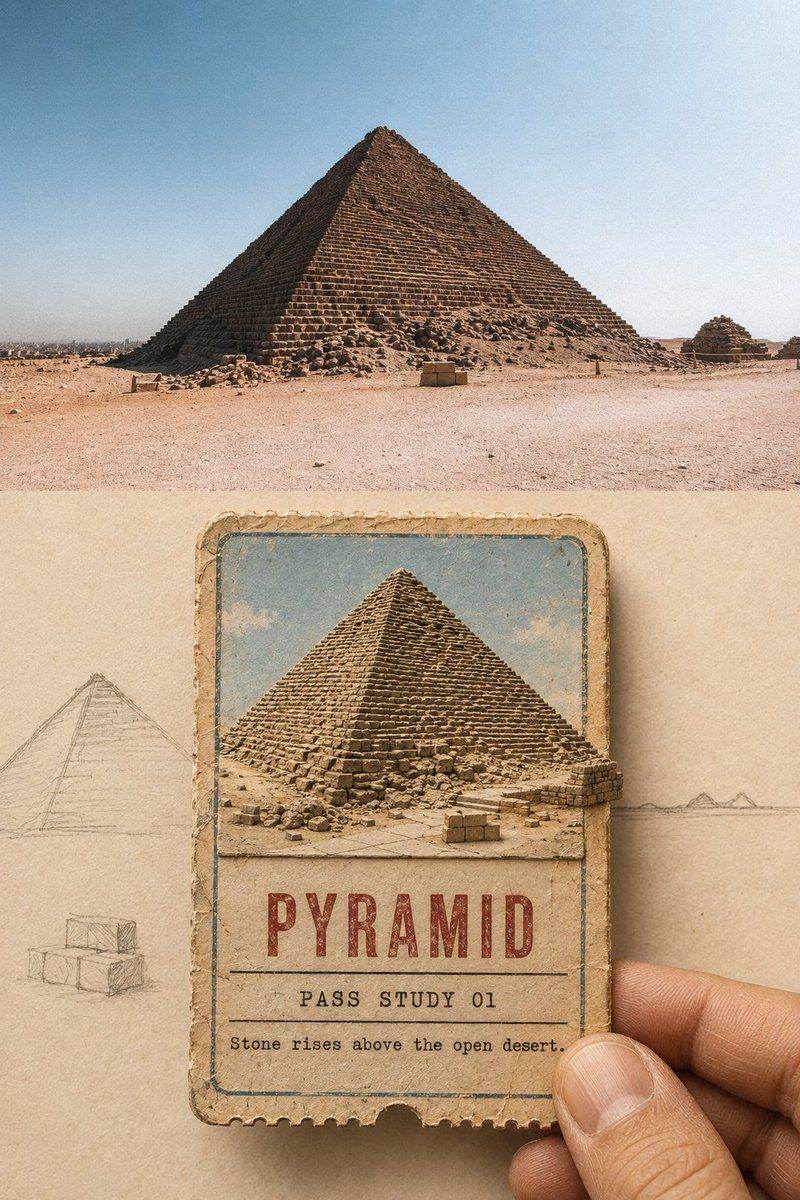
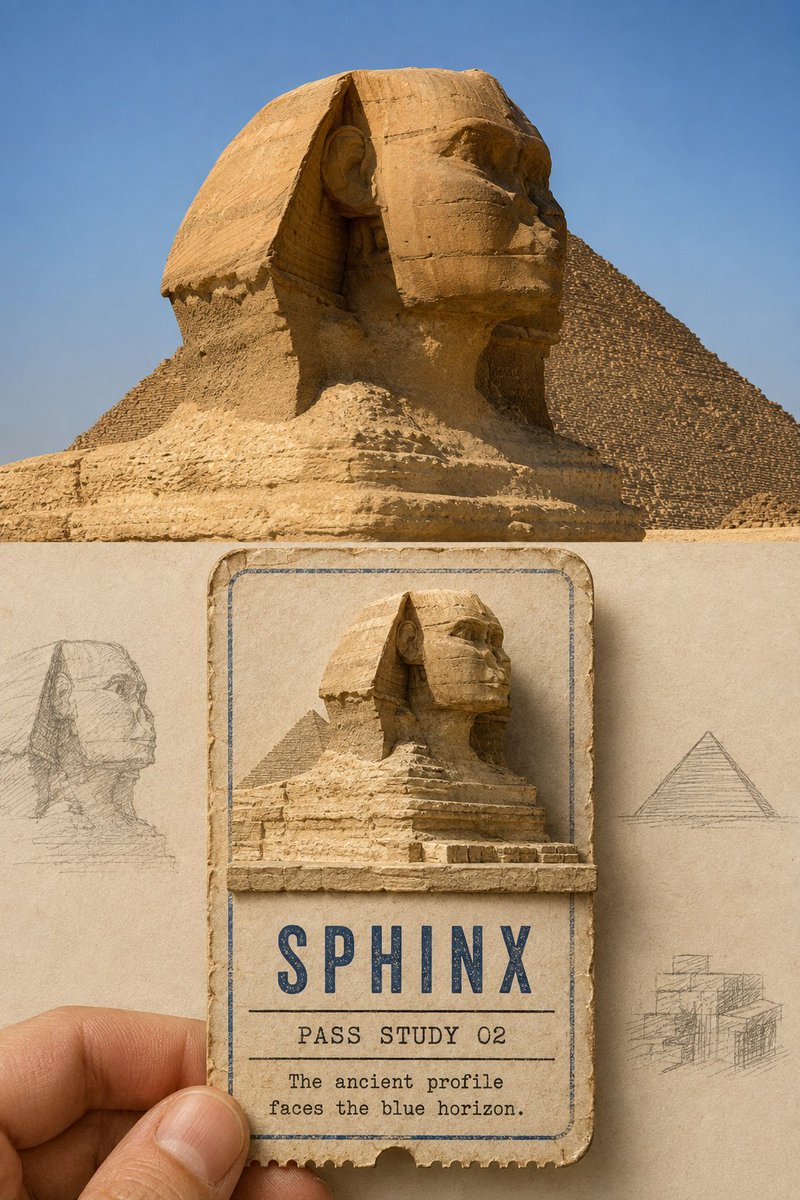
Krijg de prompts die indruk maken
Krijg de prompts die indruk maken
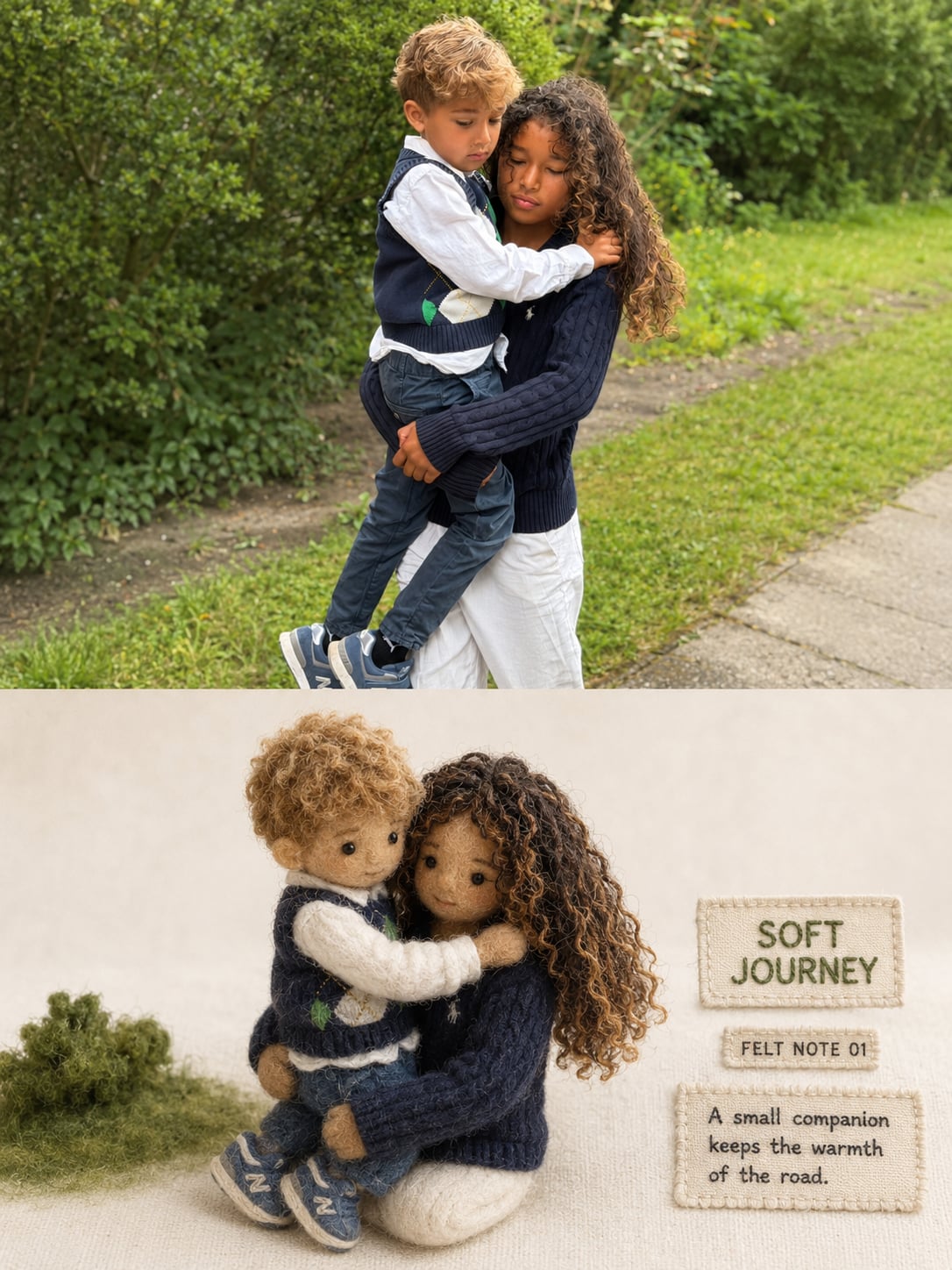
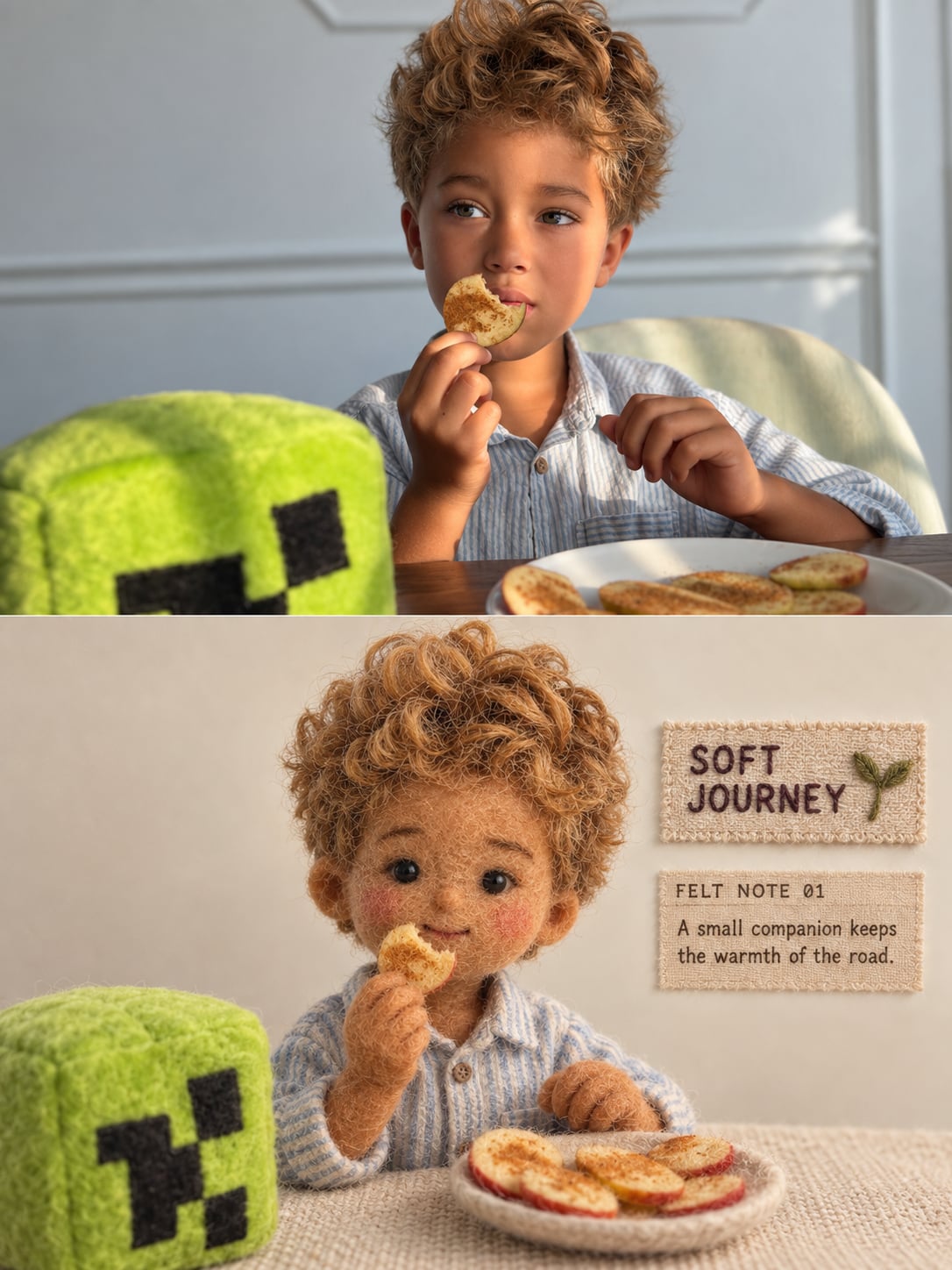
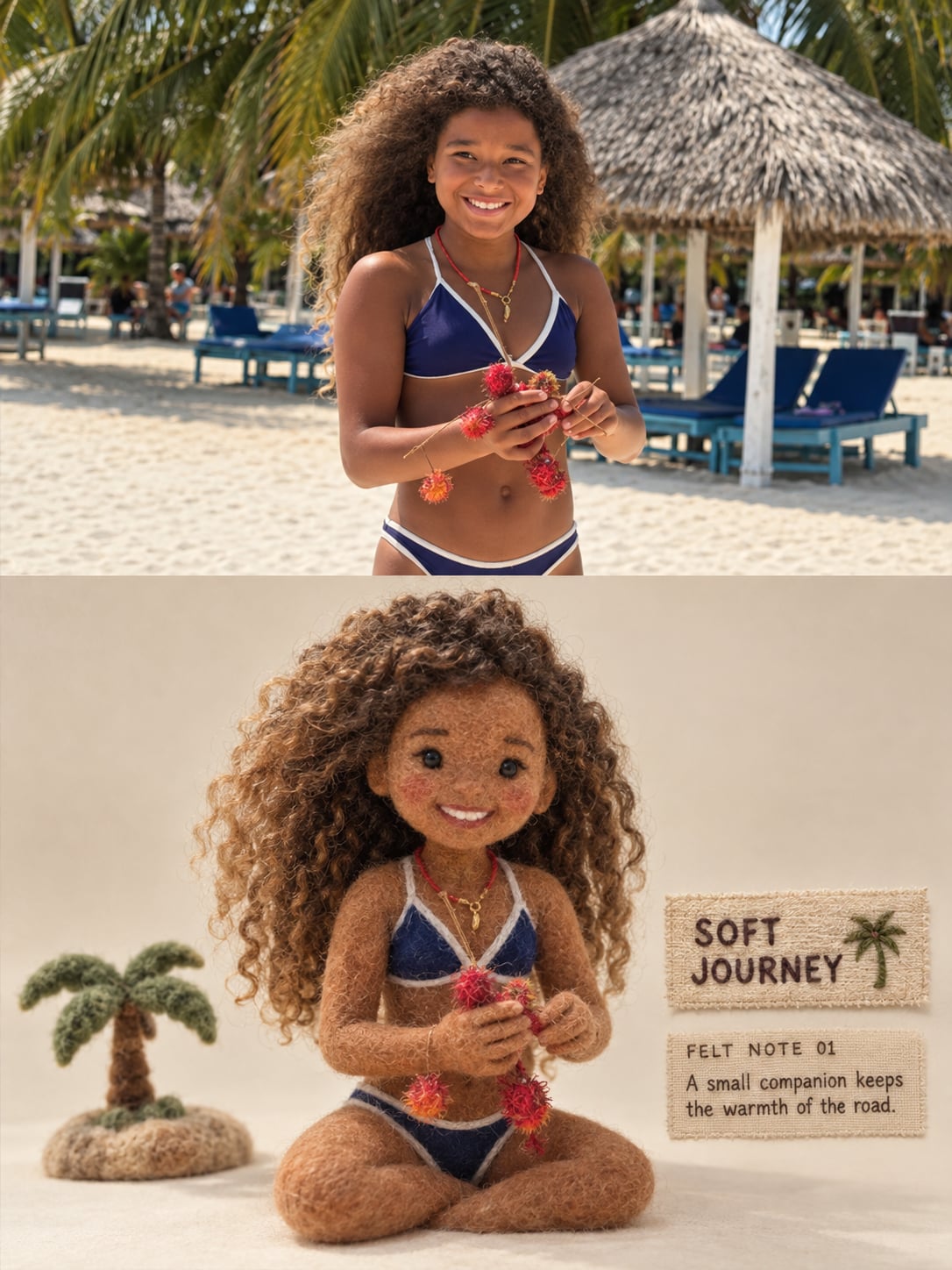
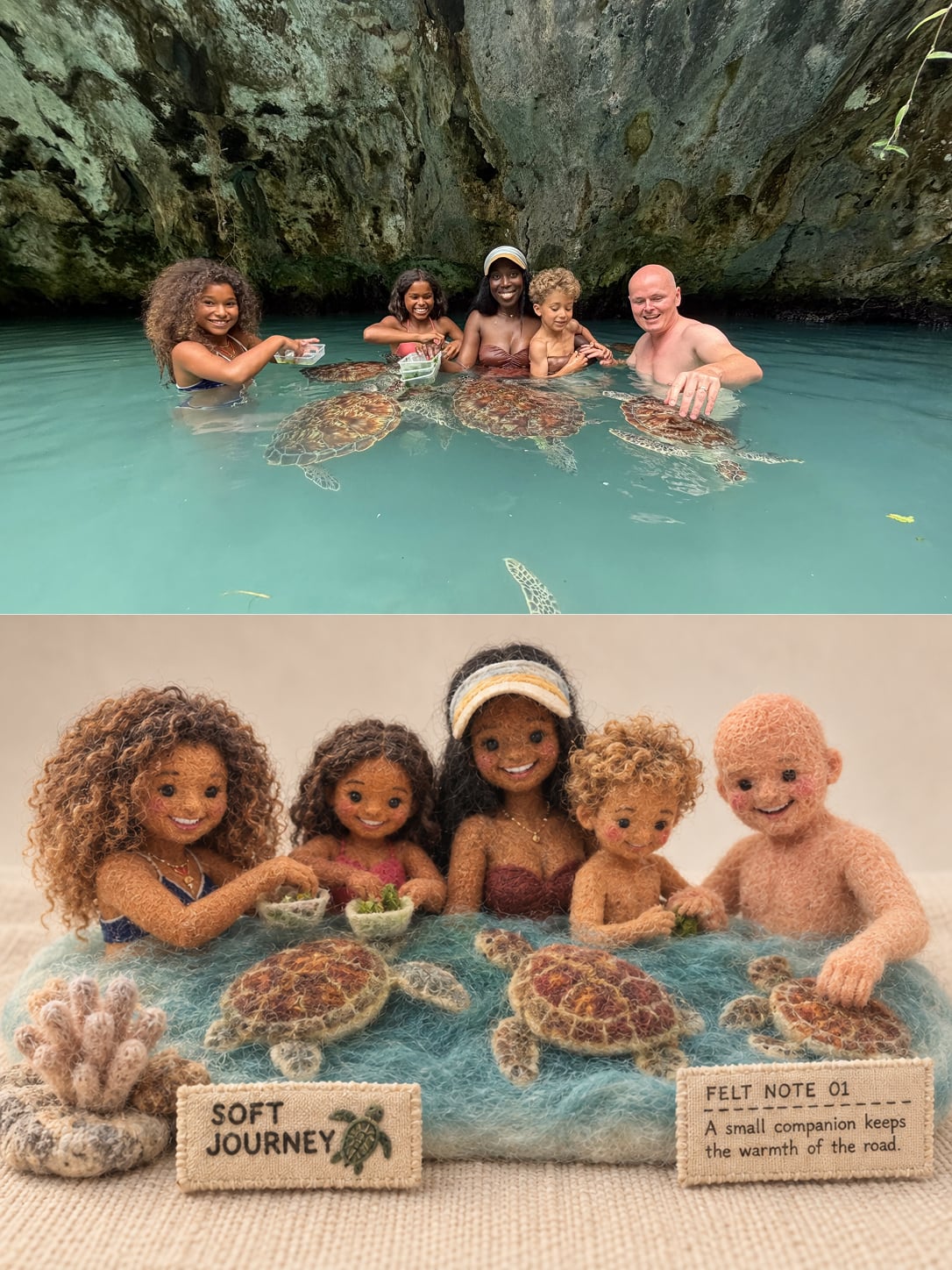
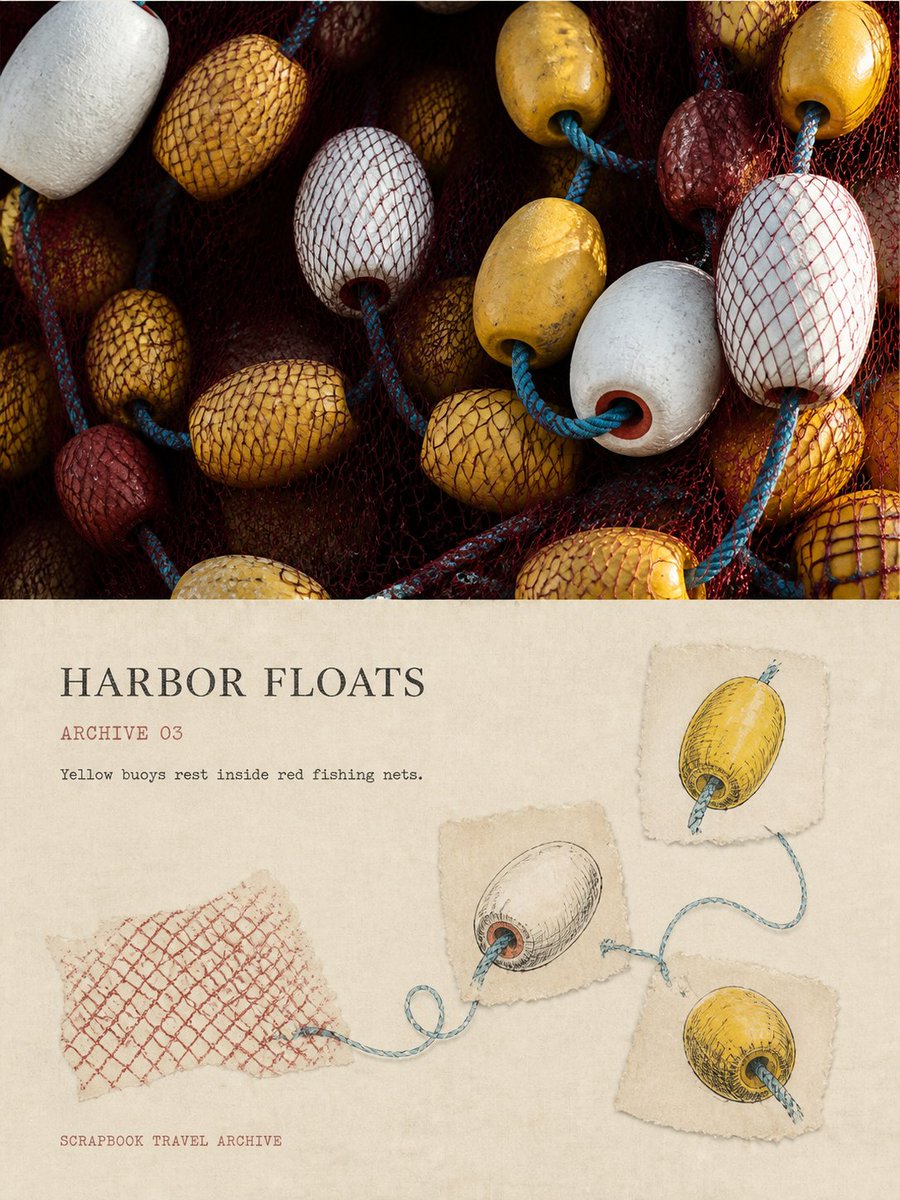
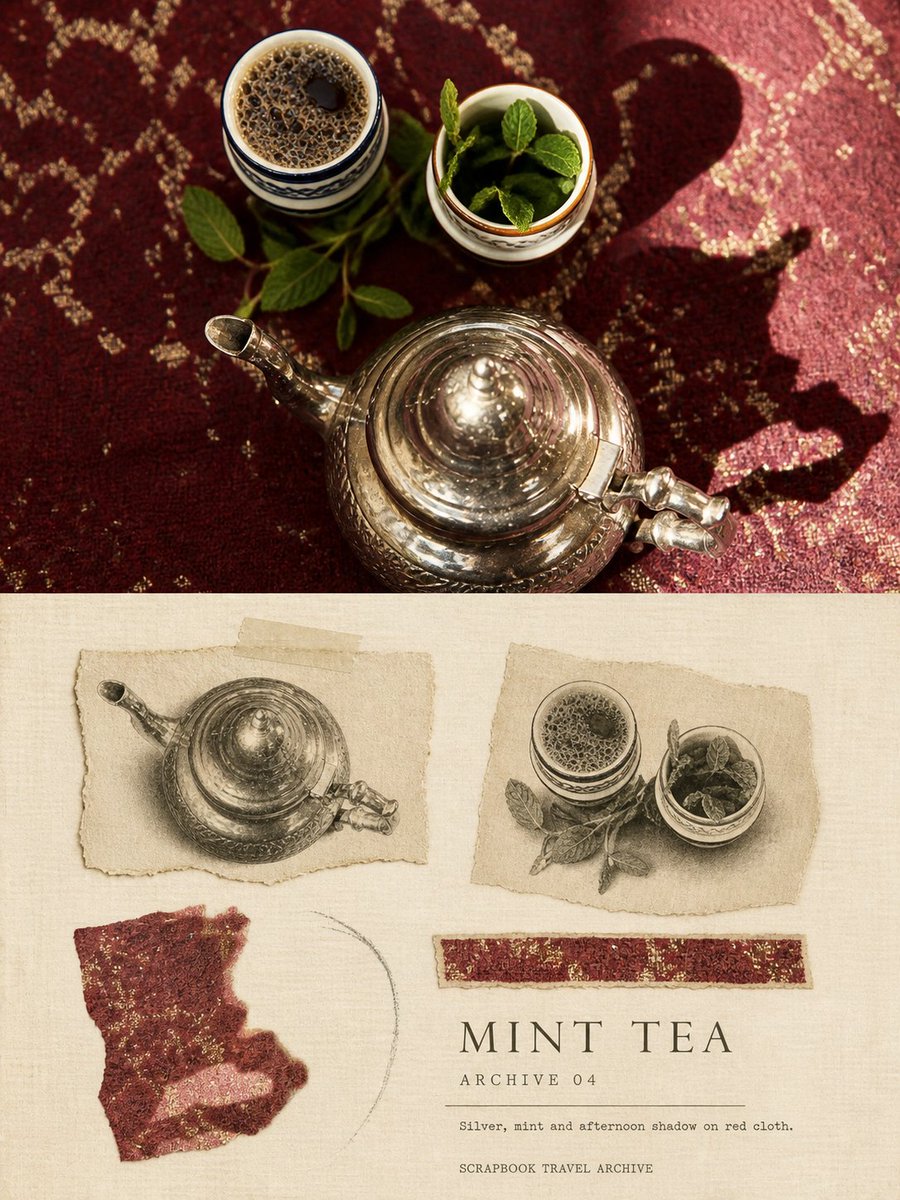
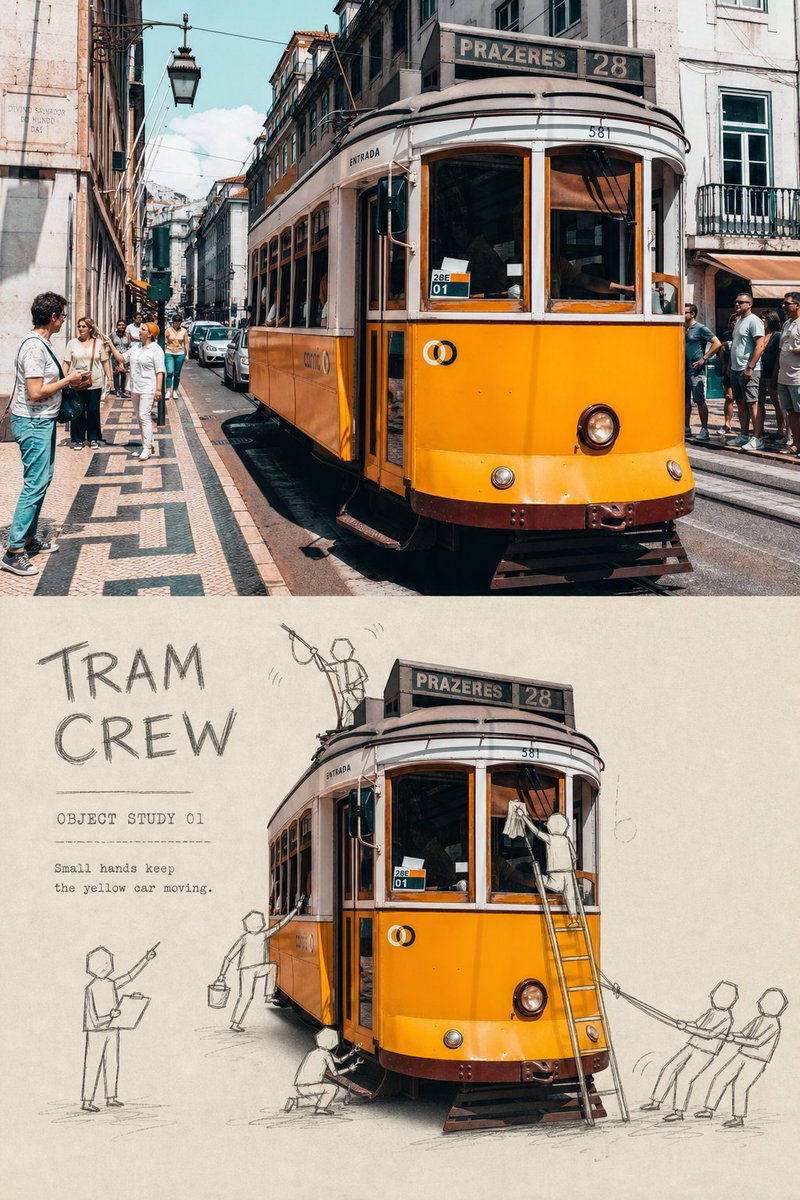
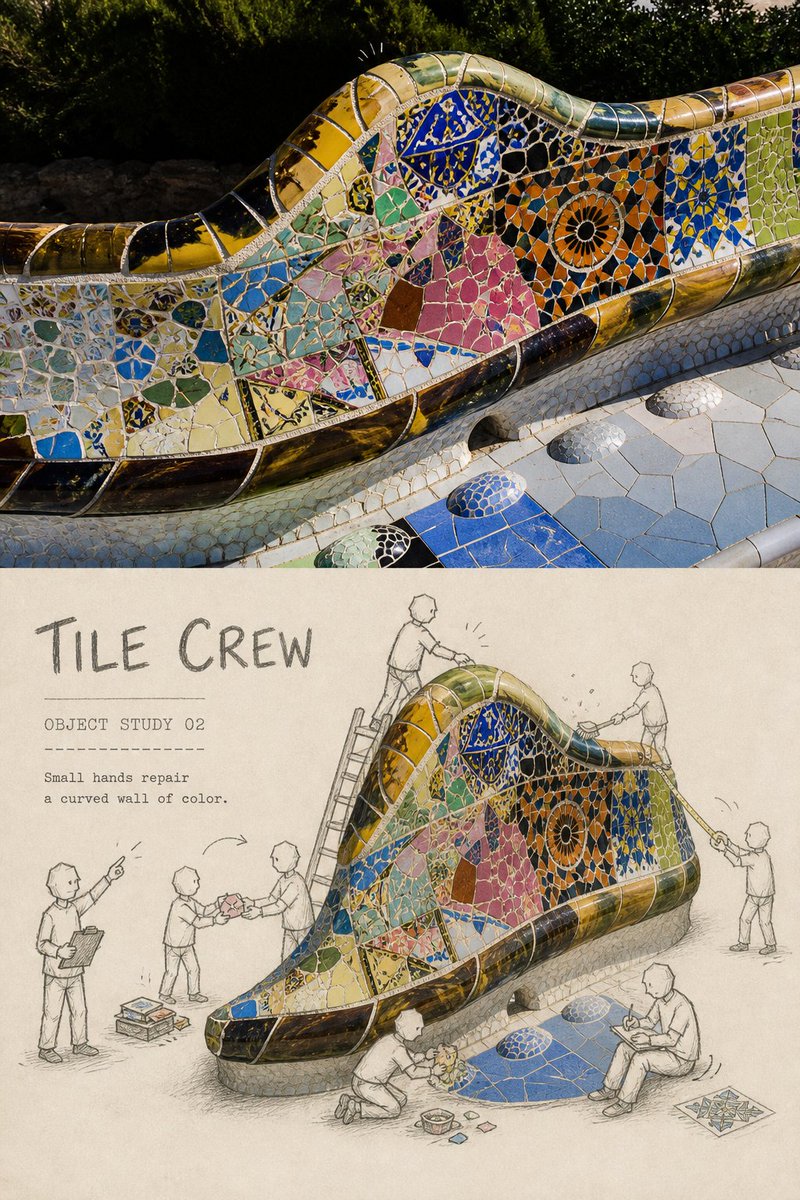
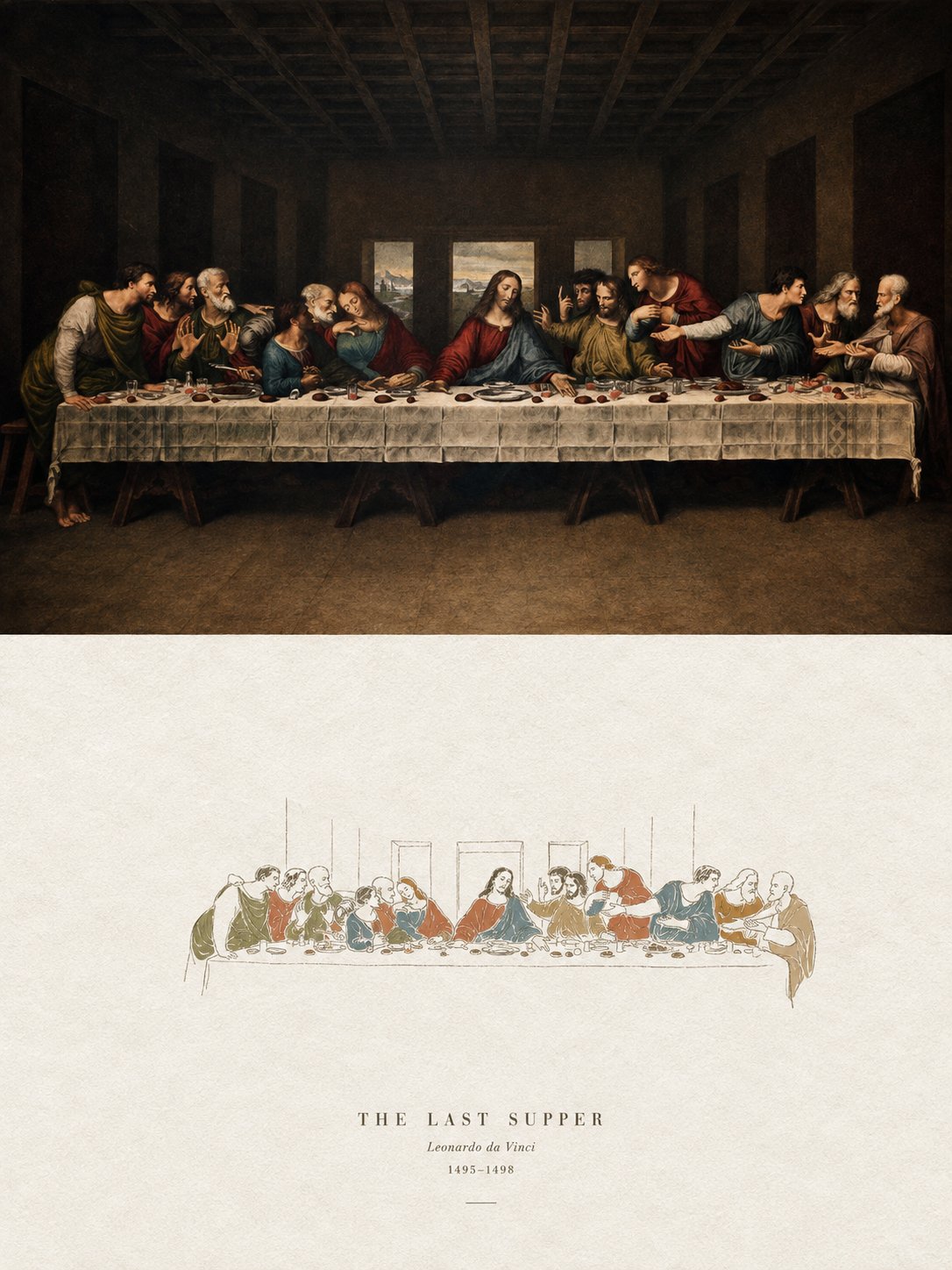
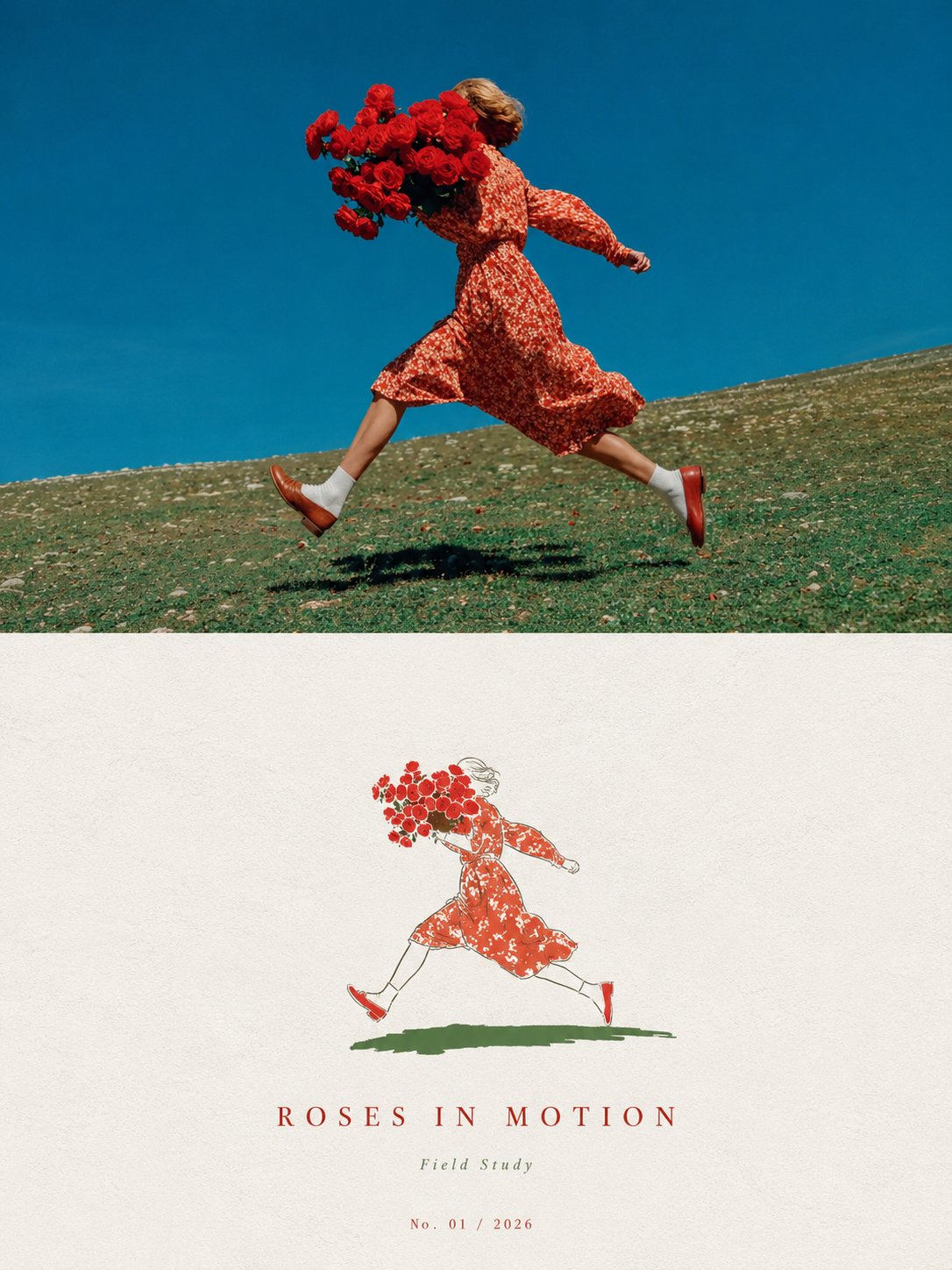
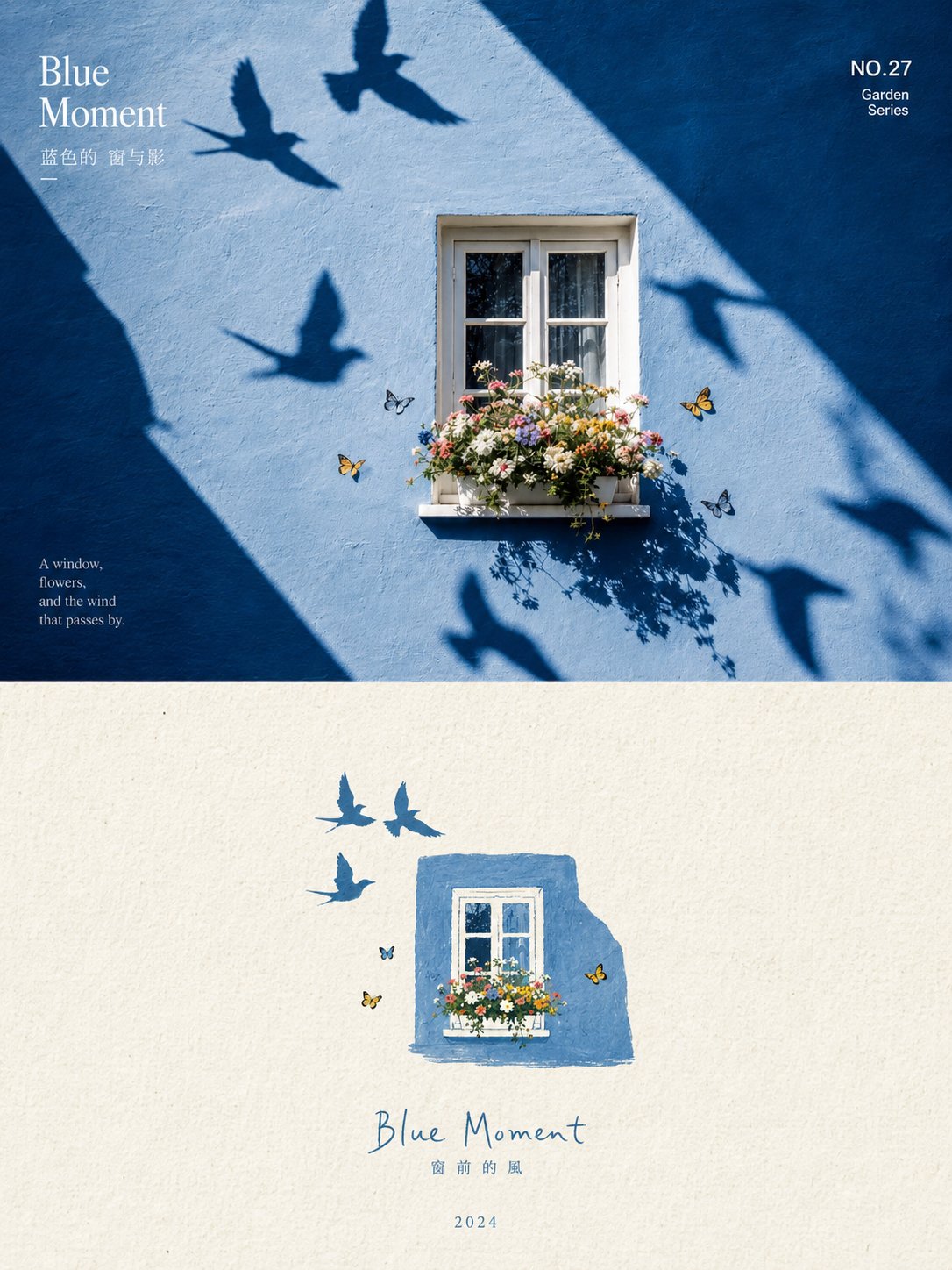
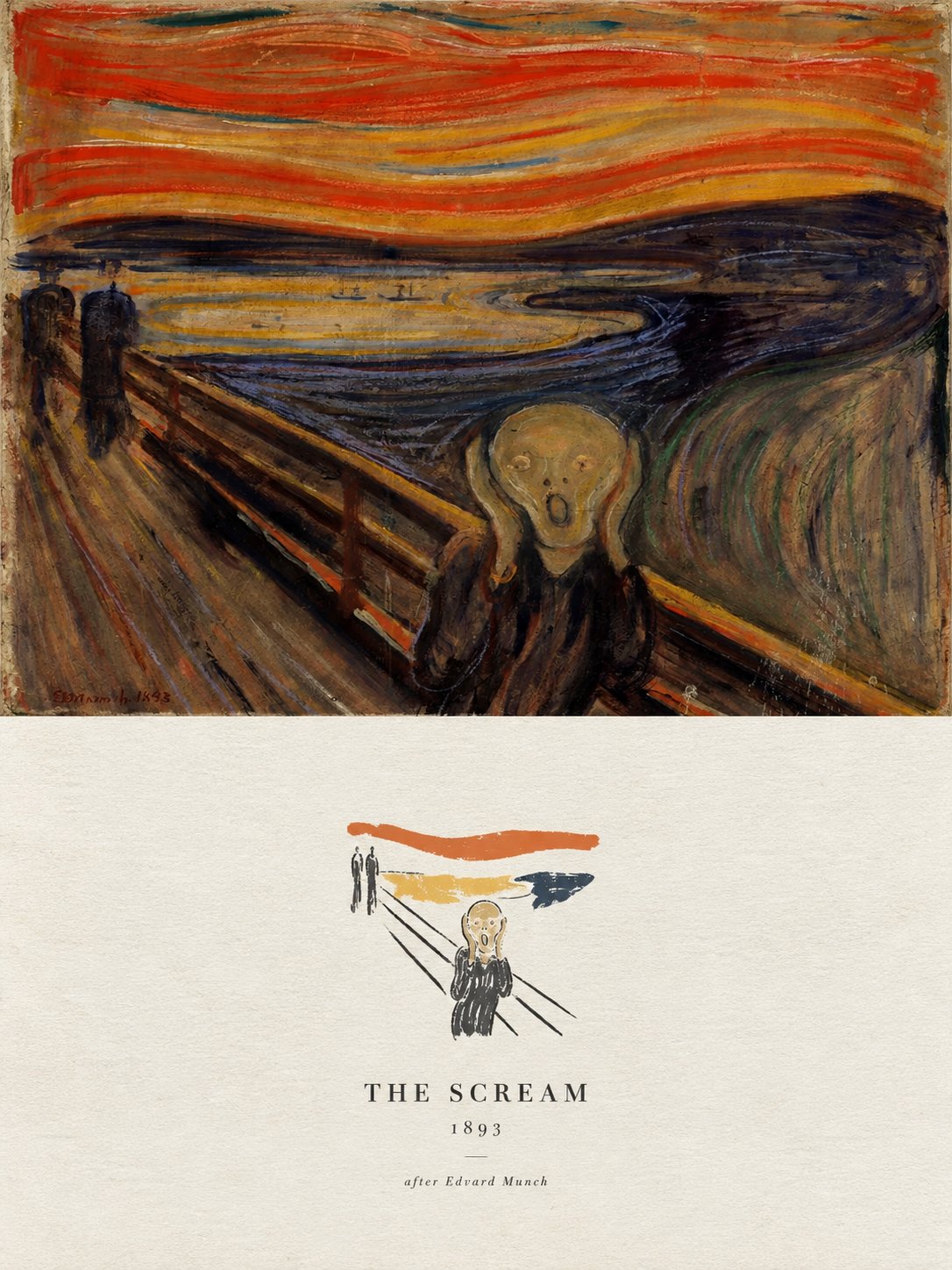
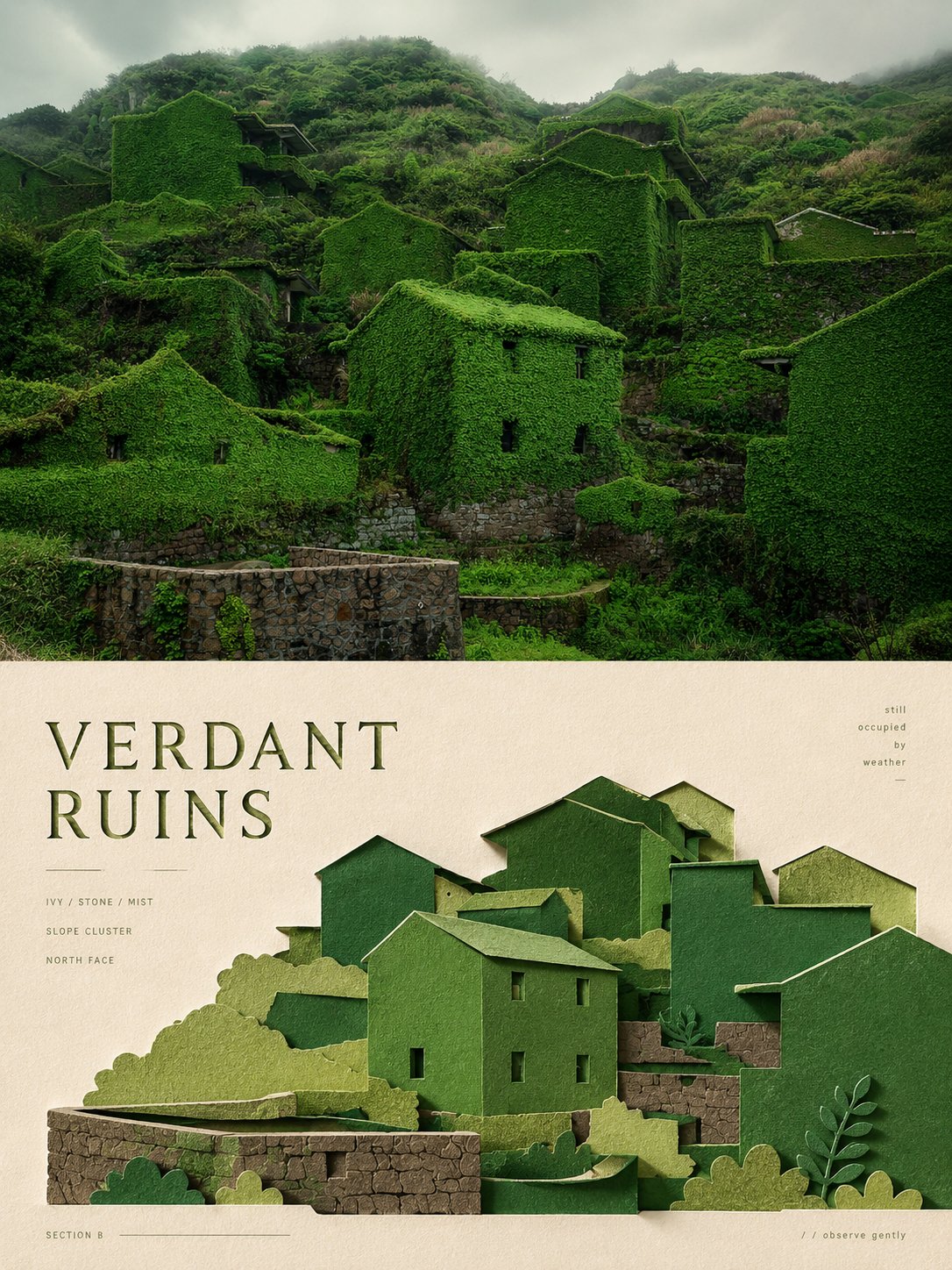
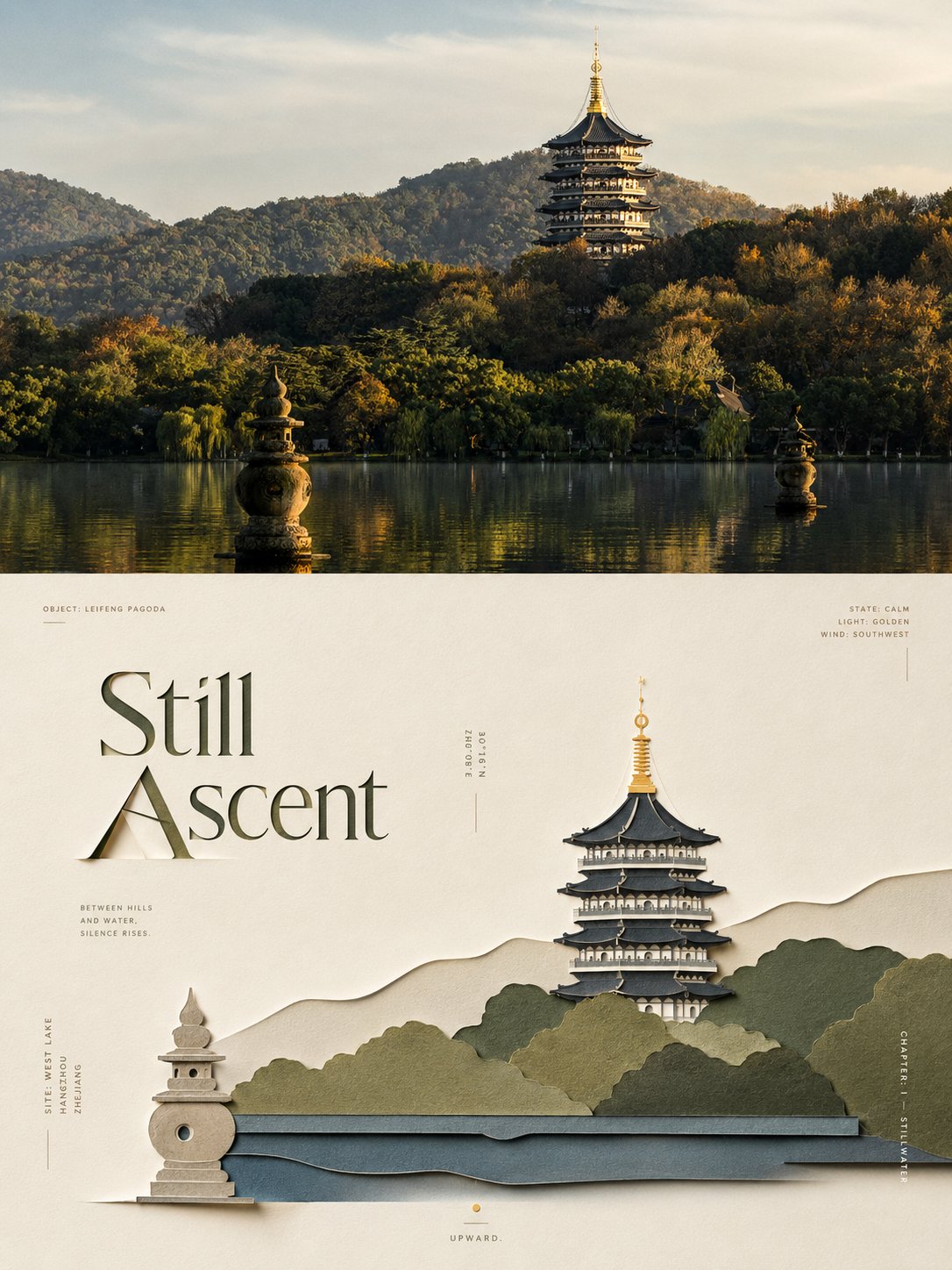
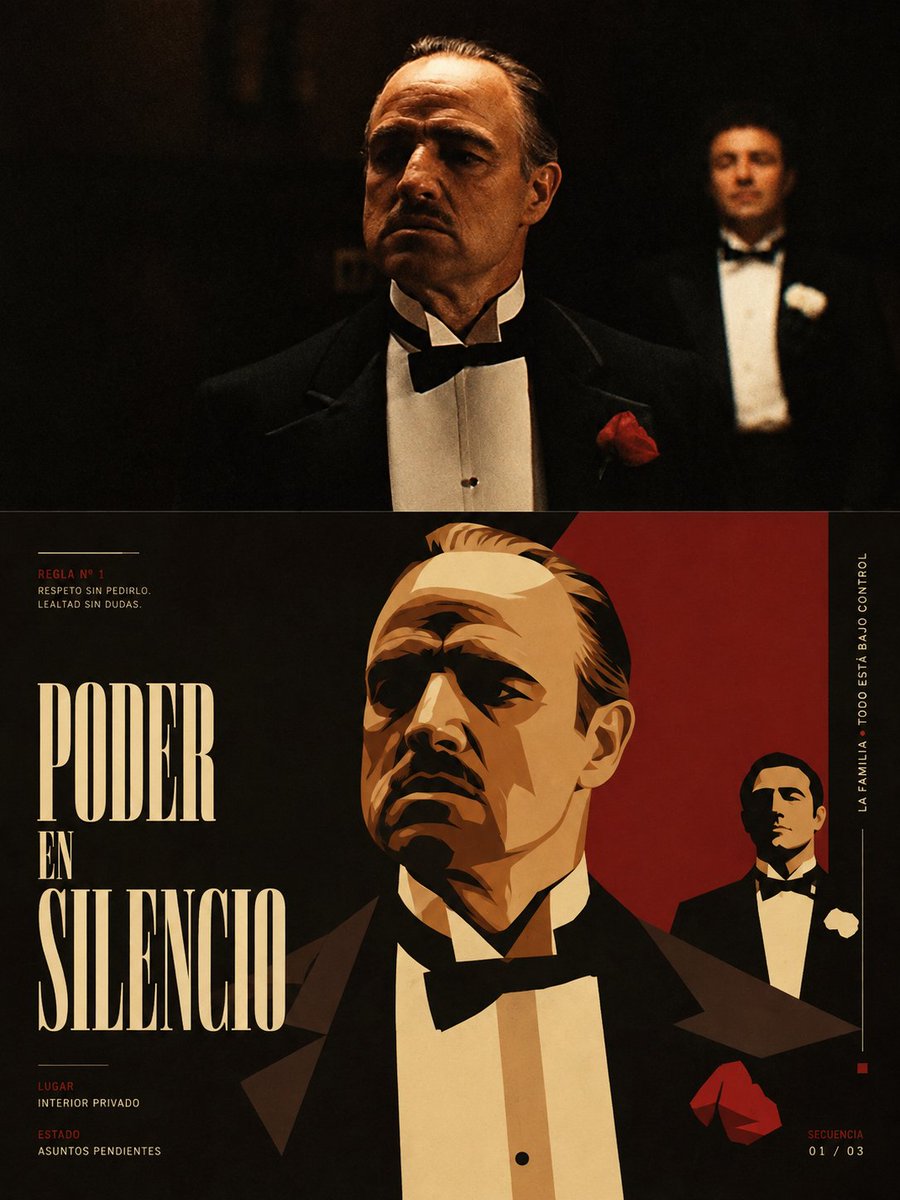
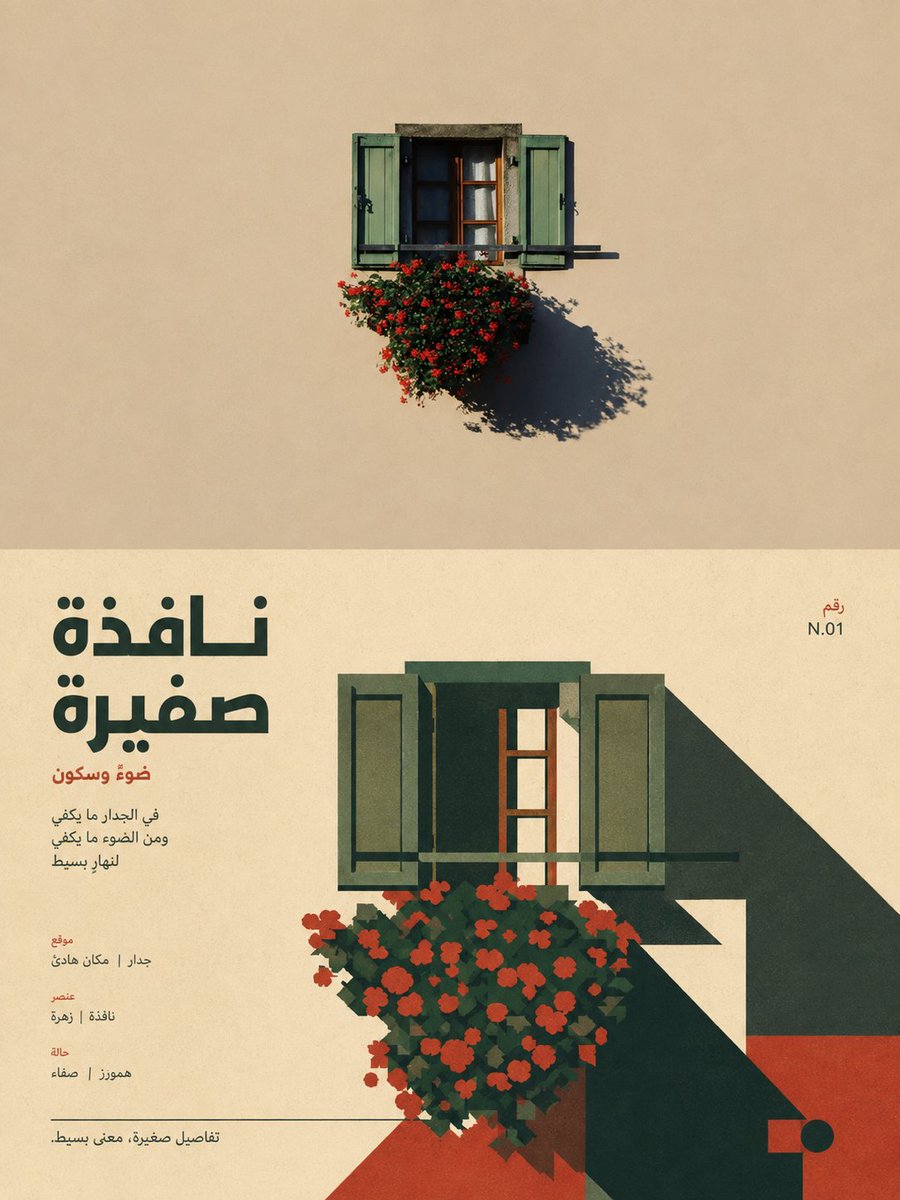
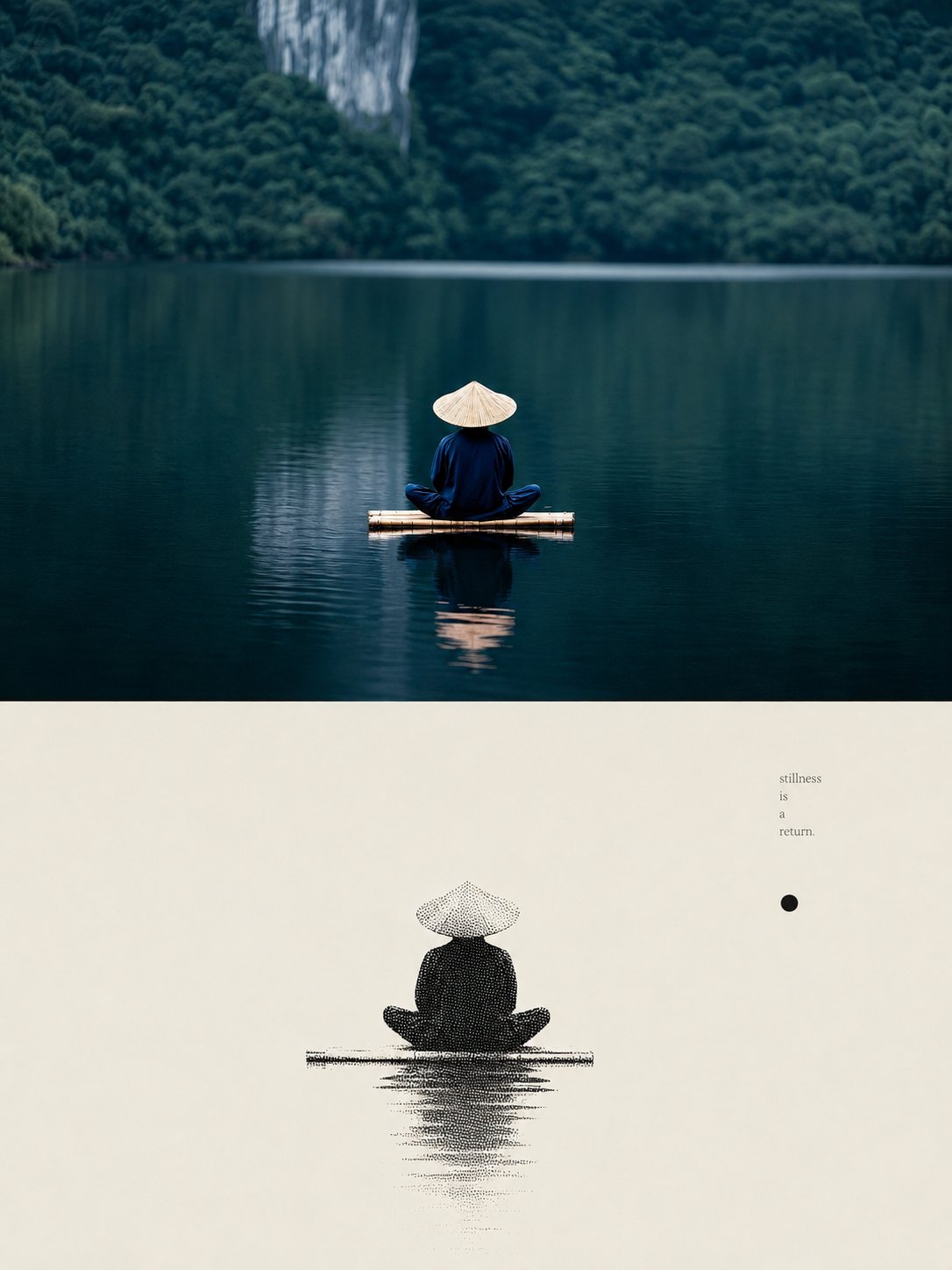
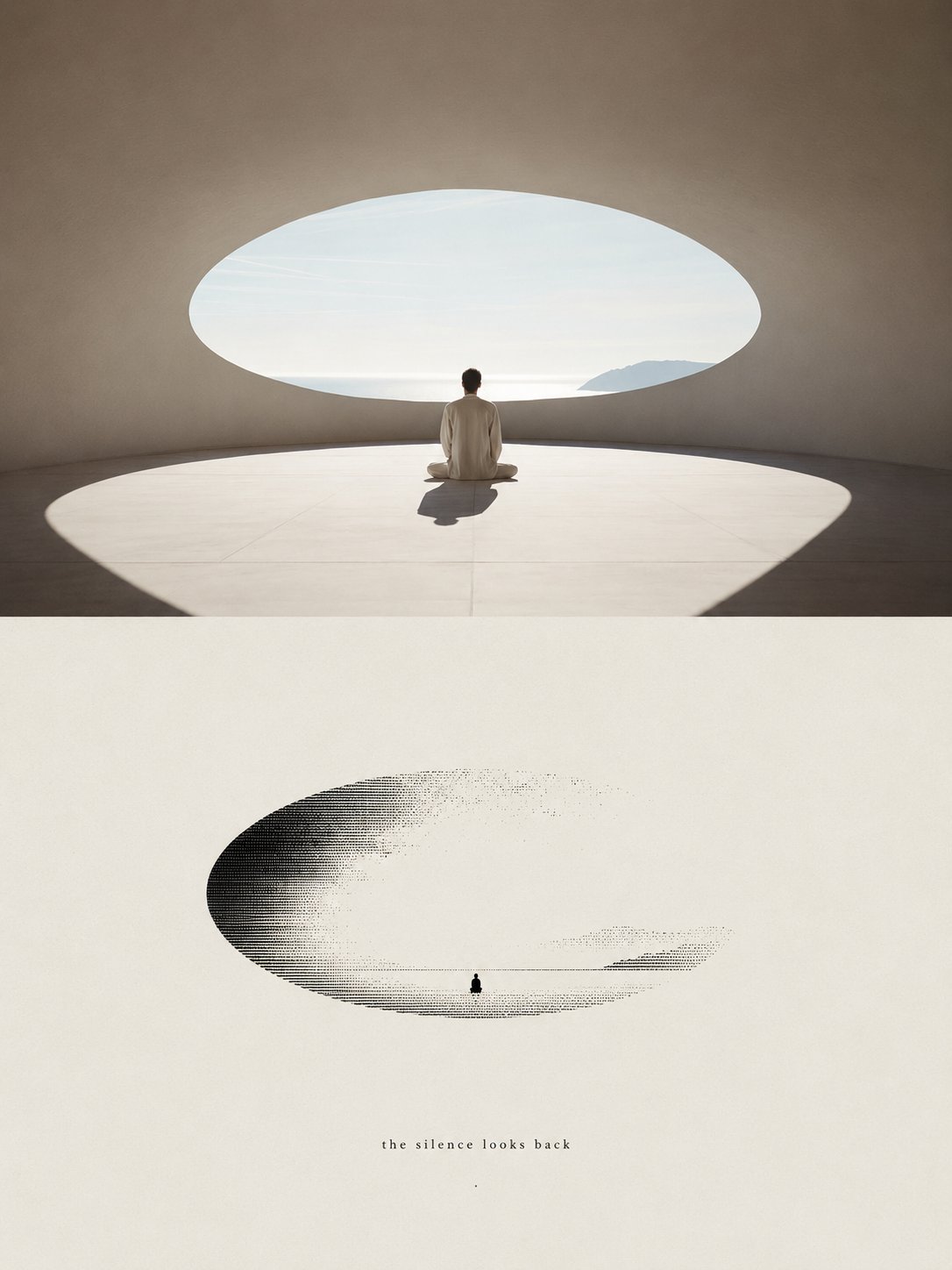
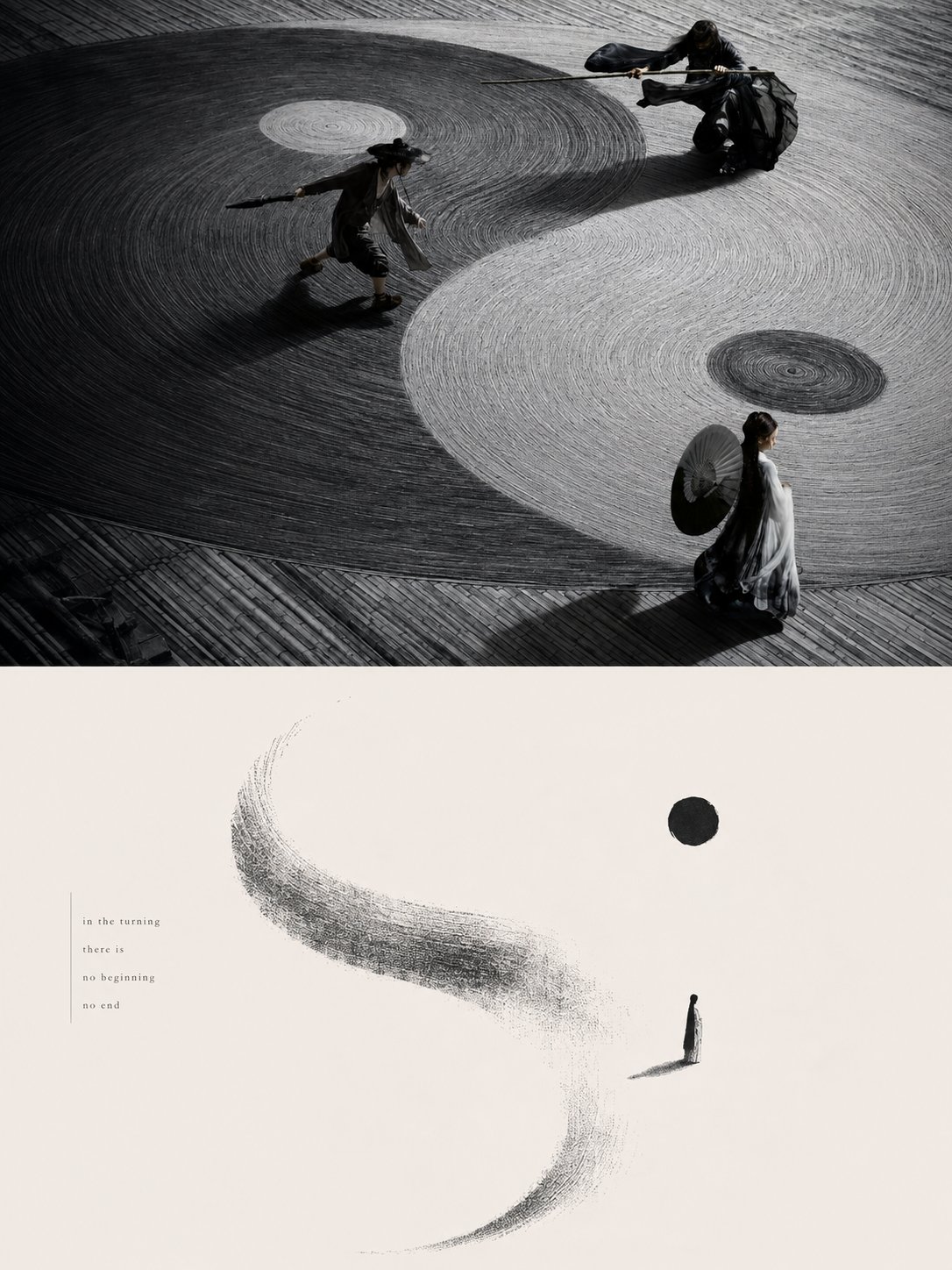
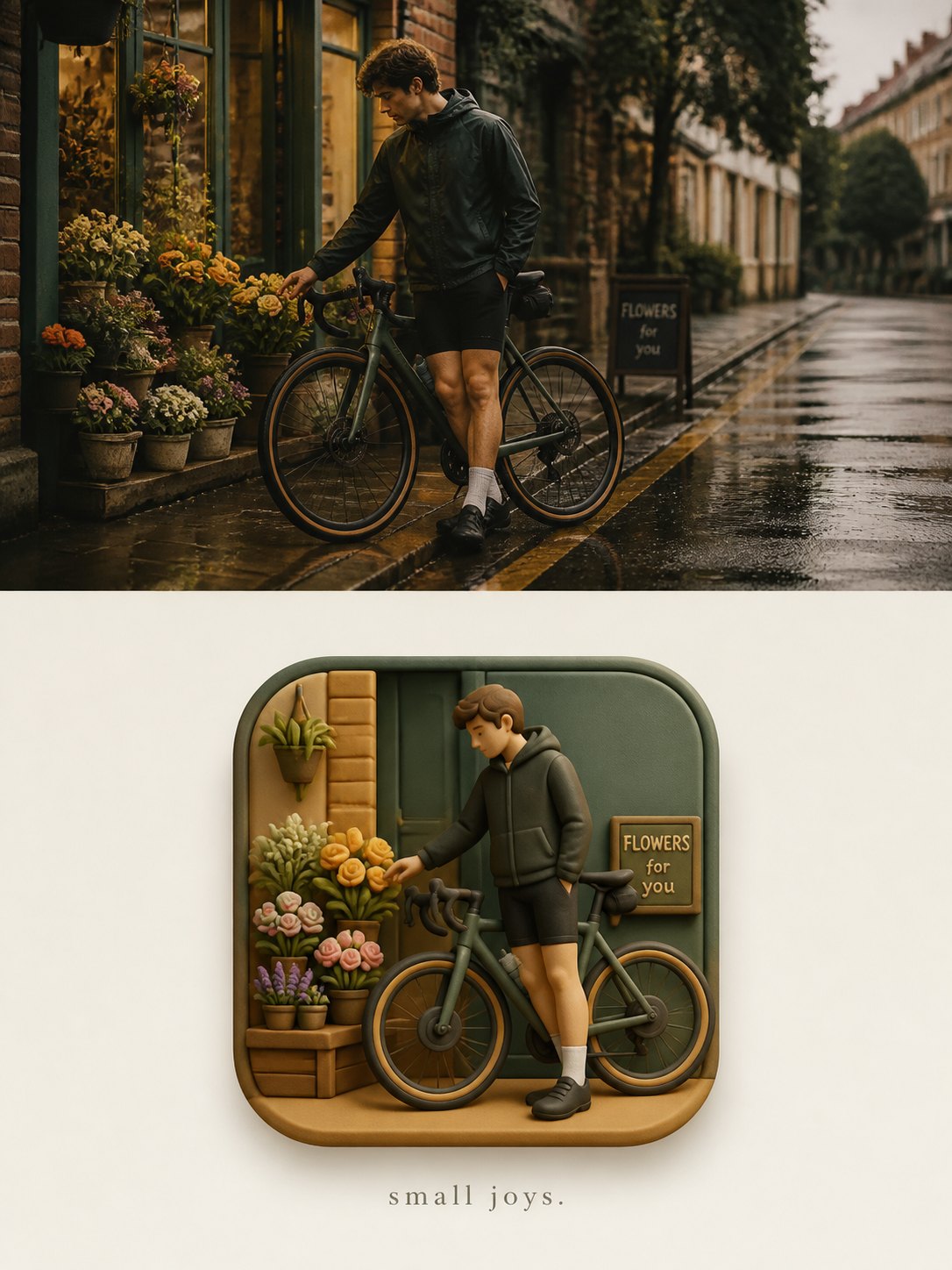
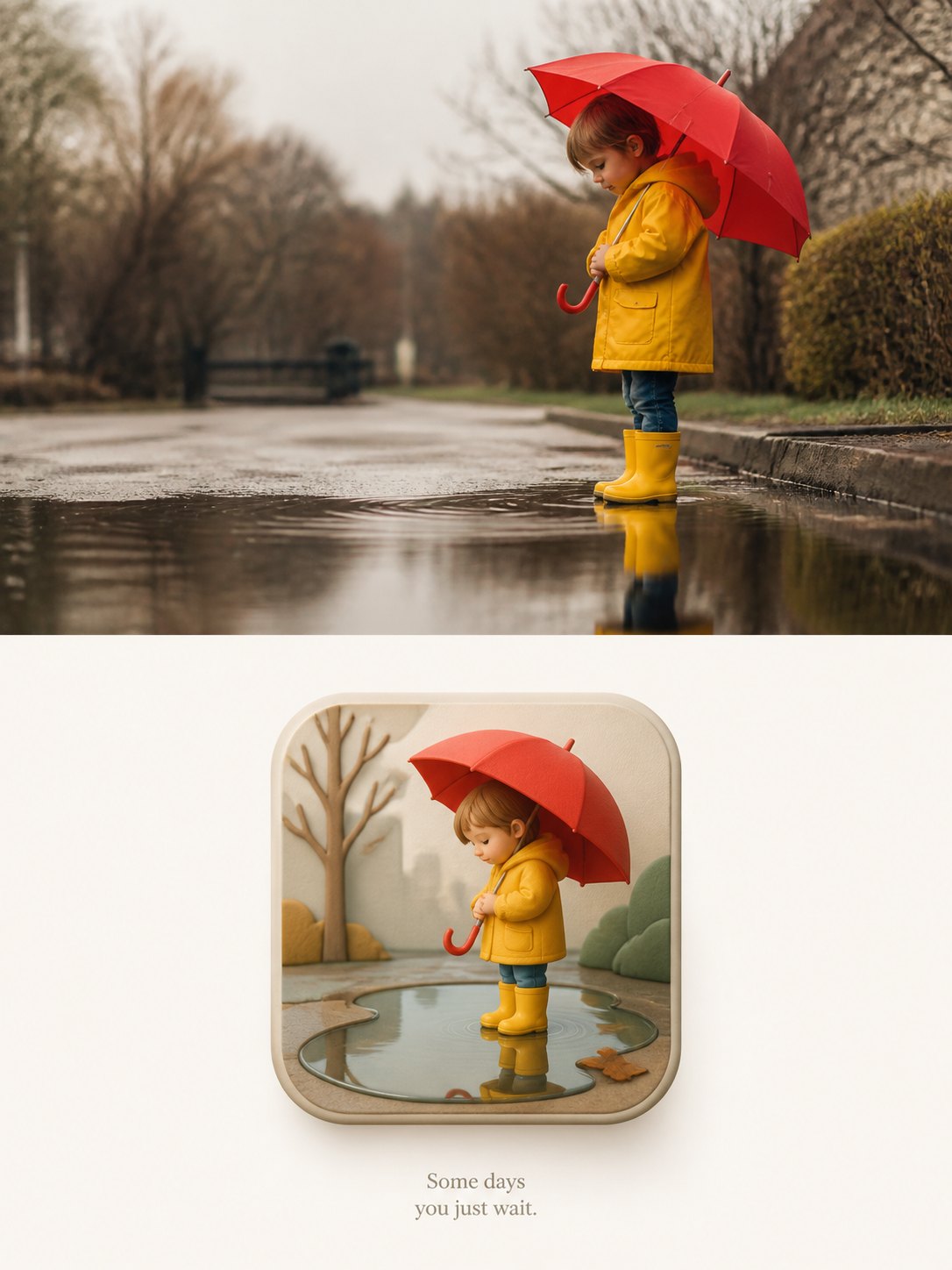
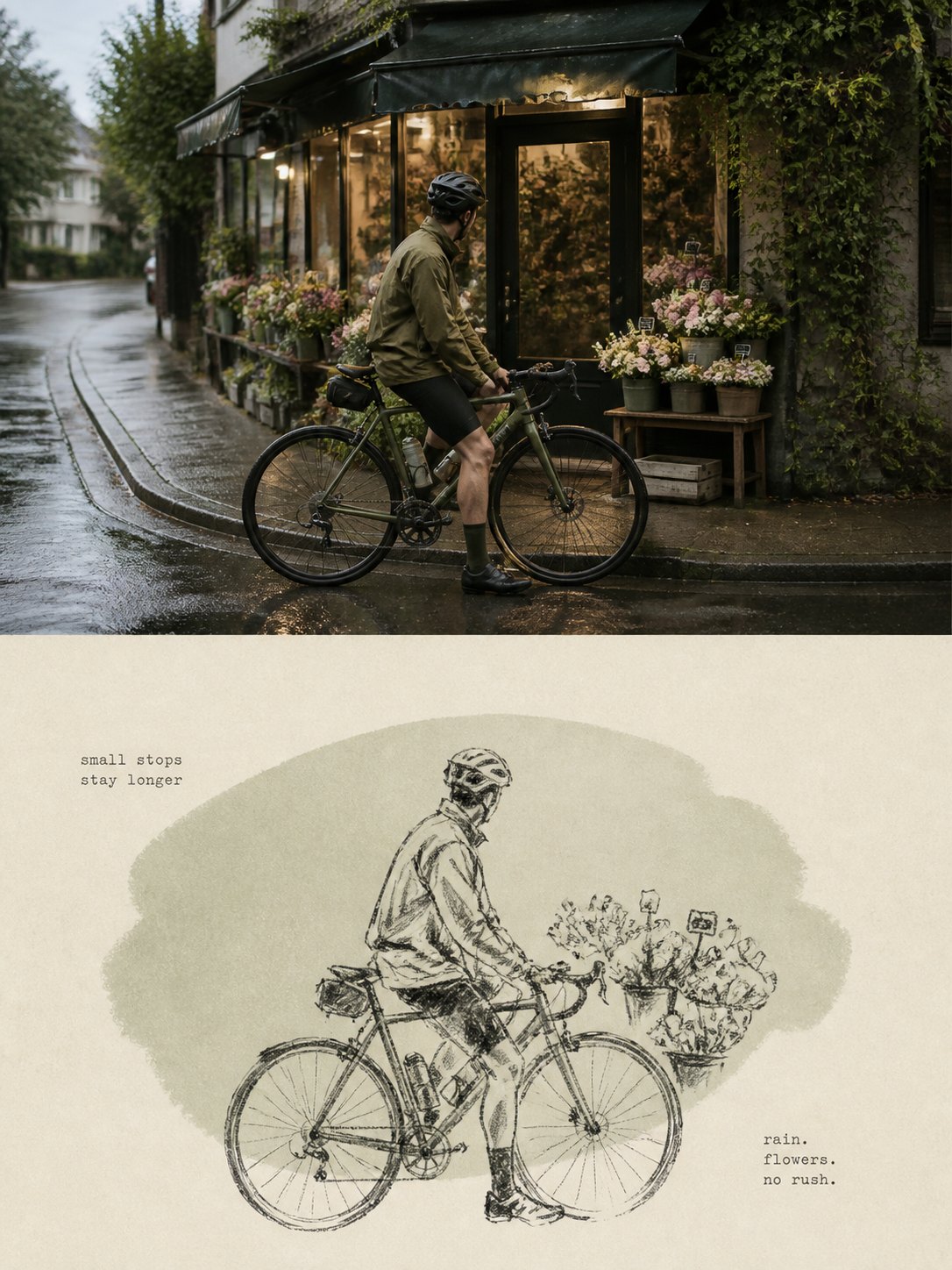
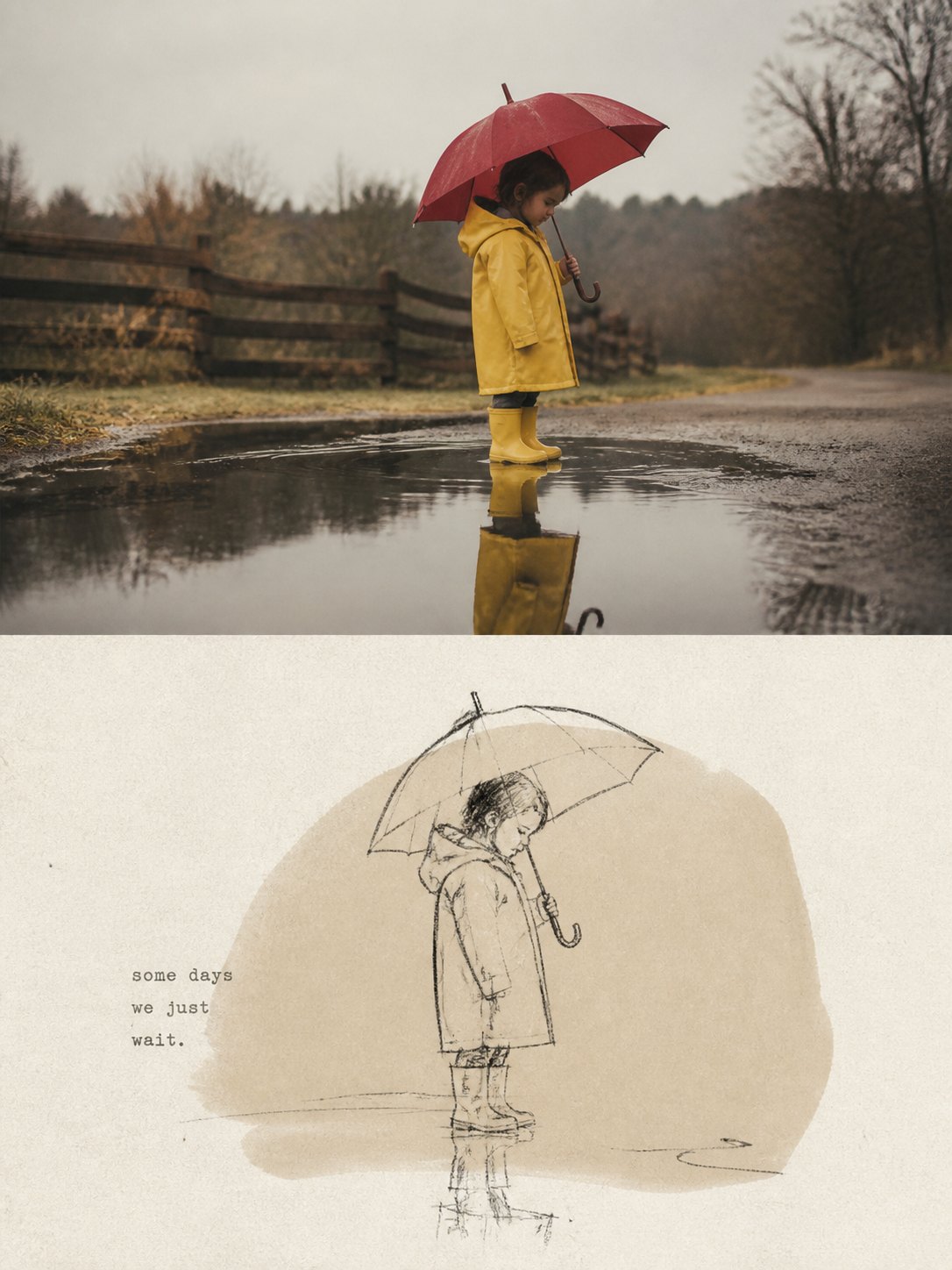
 1 / 4
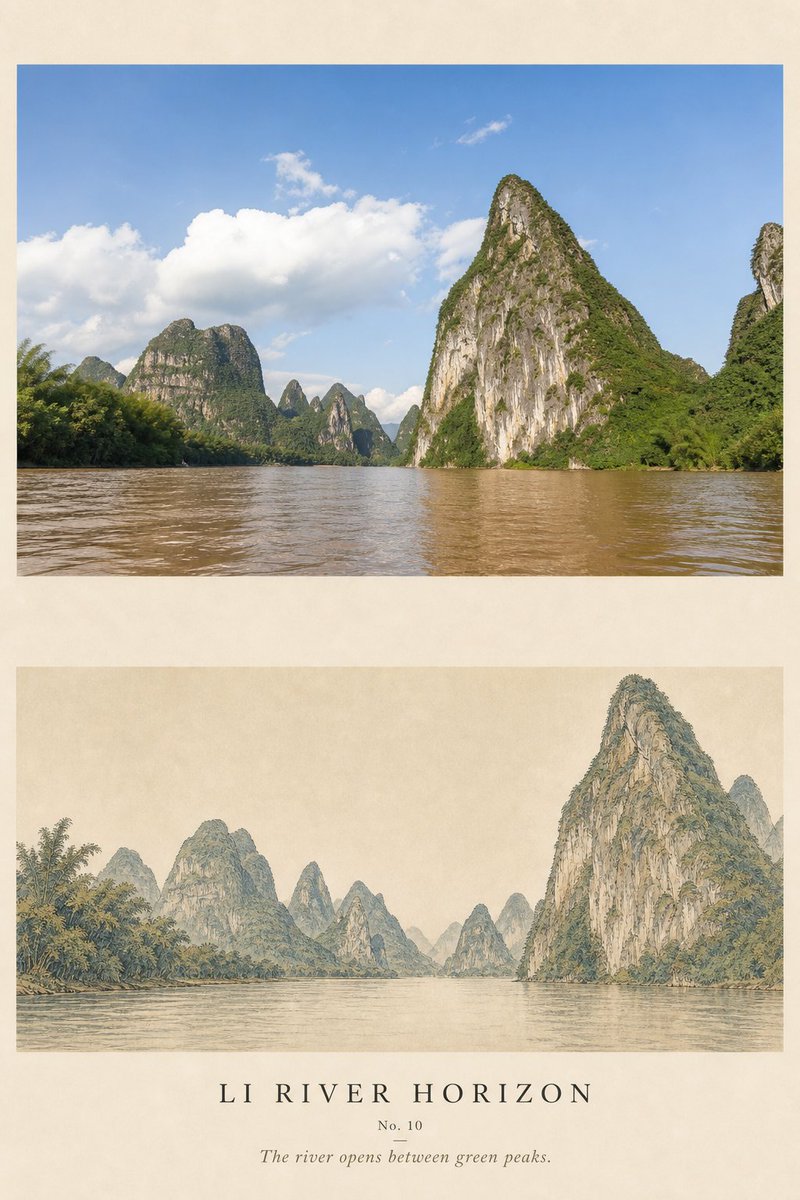
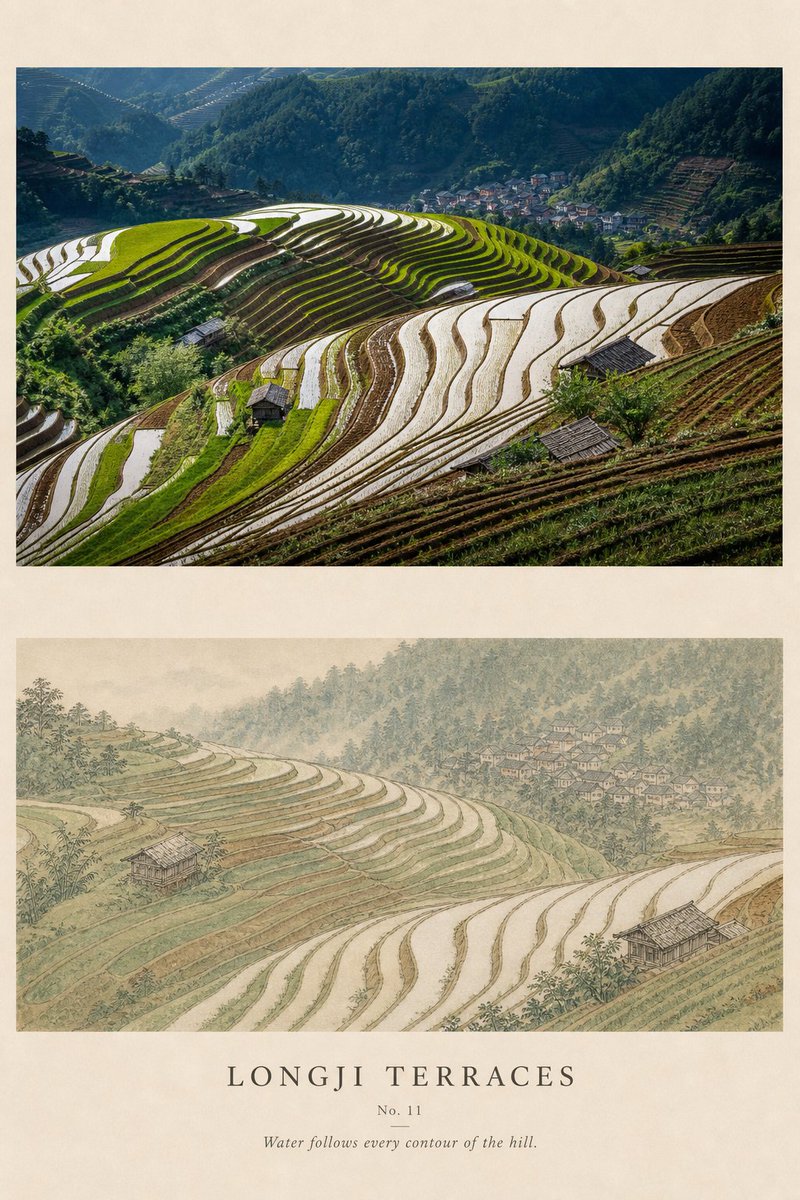
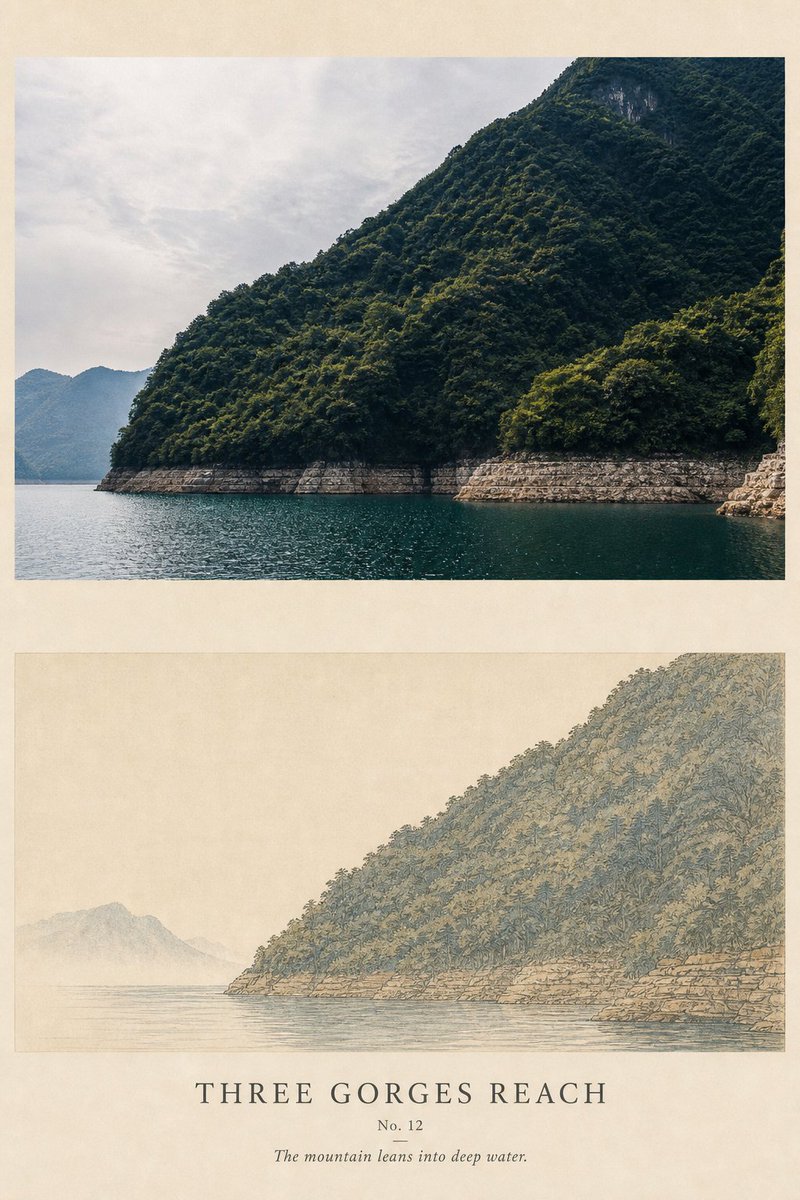
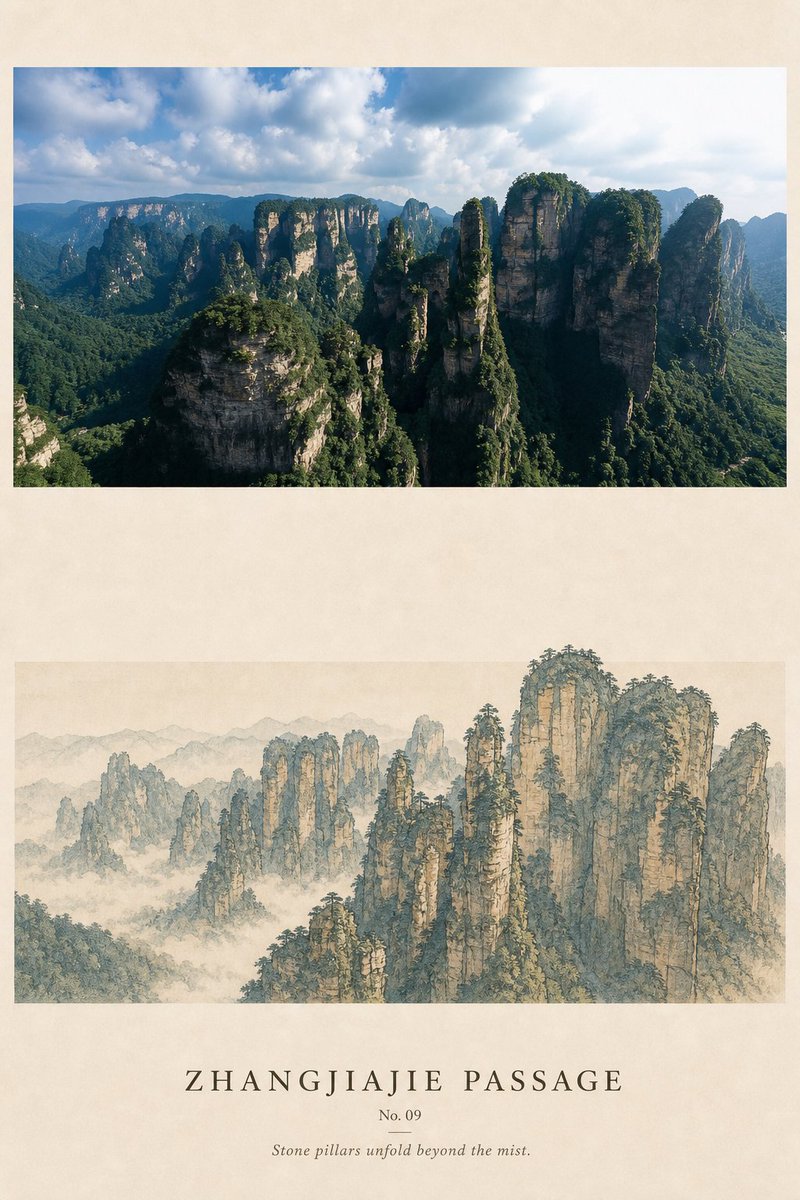
1 / 4Blue-green shanshui handscroll
painteditorial
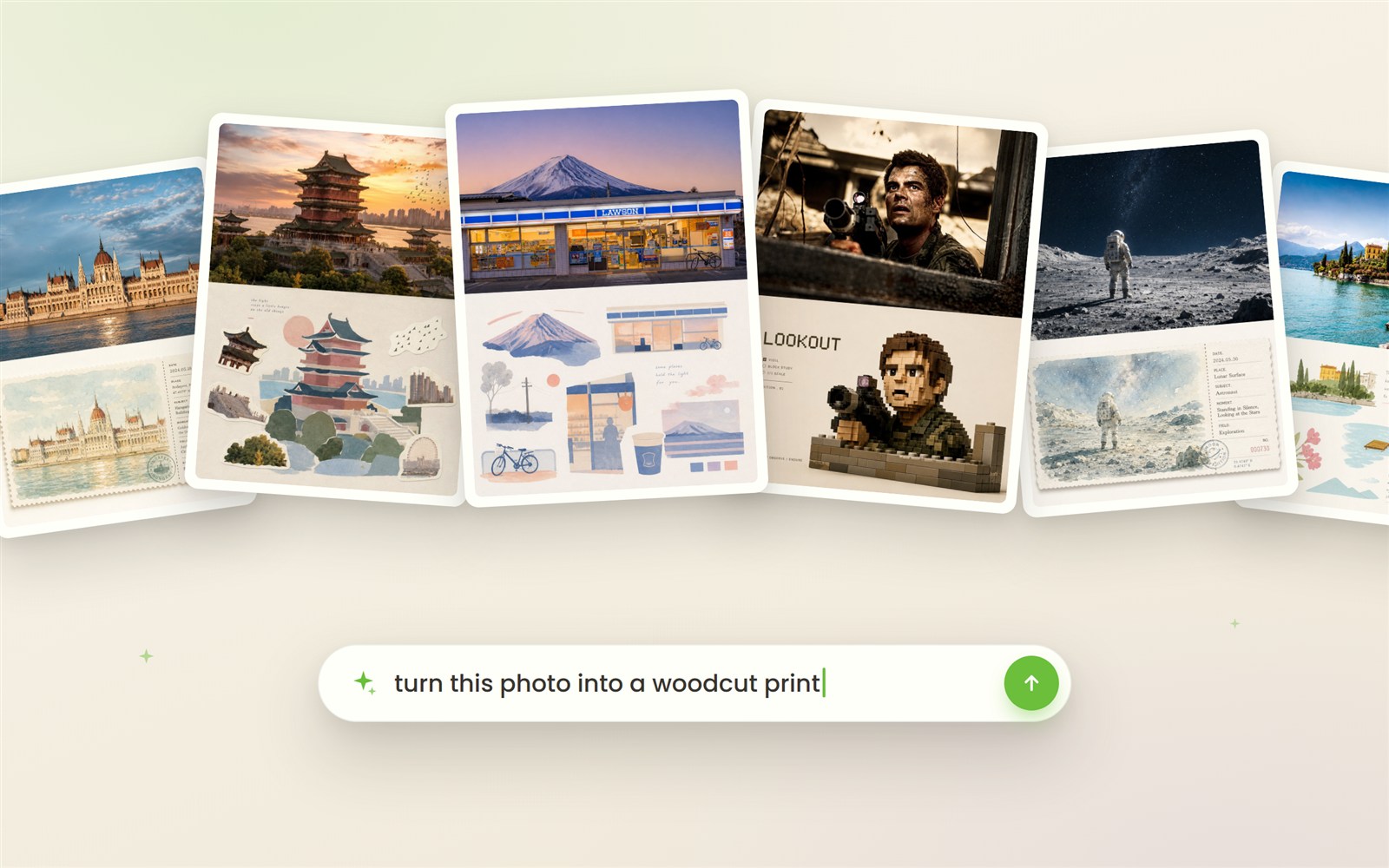
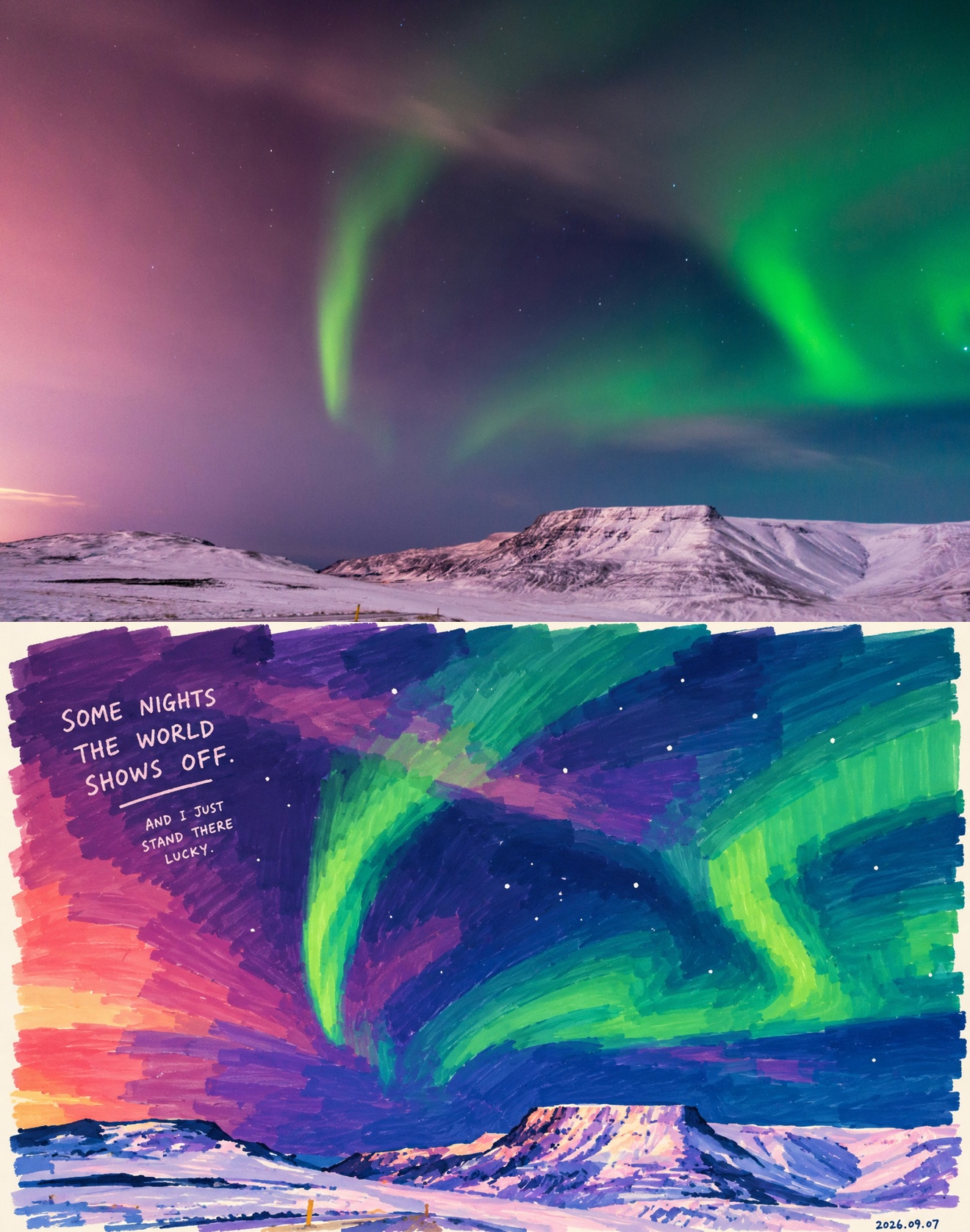
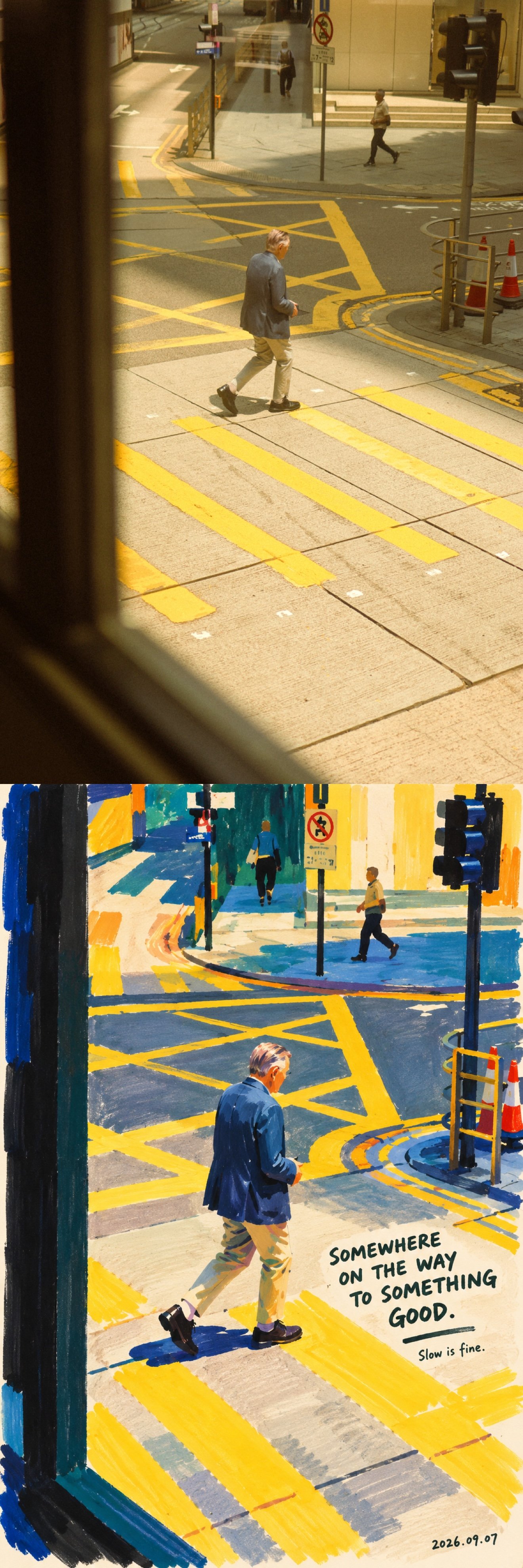
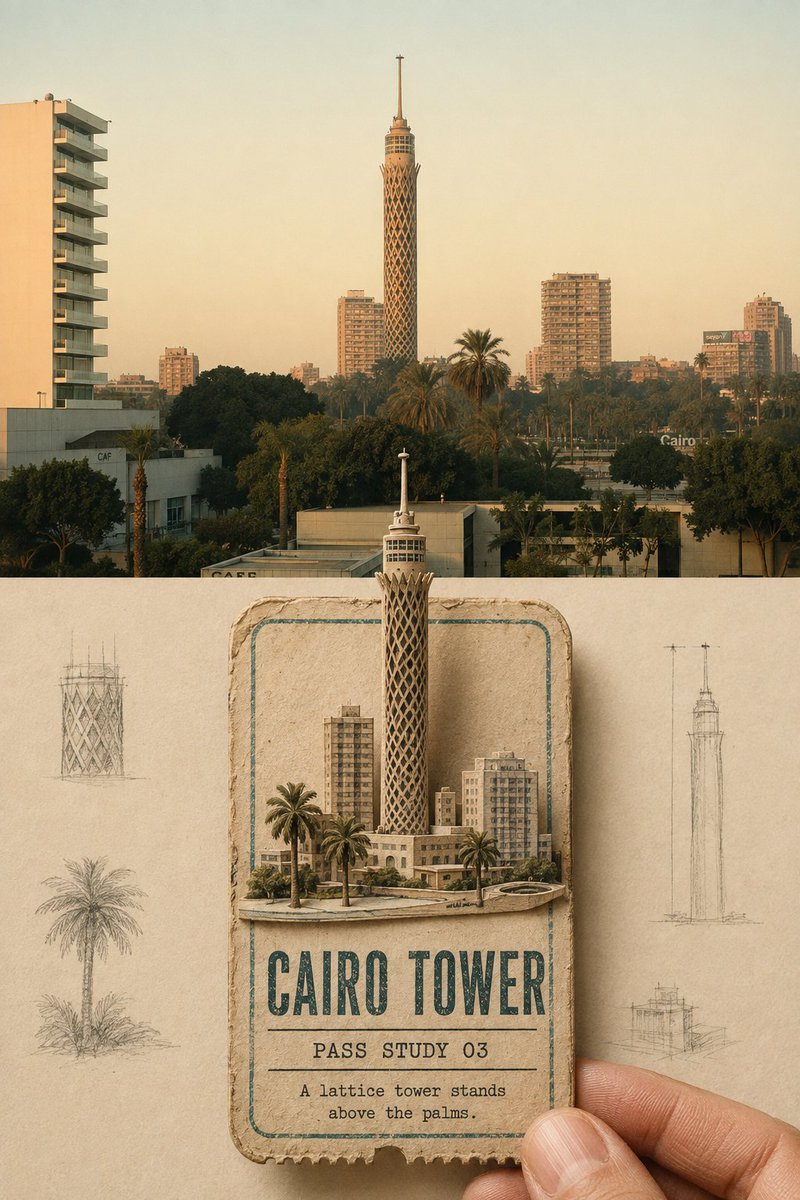
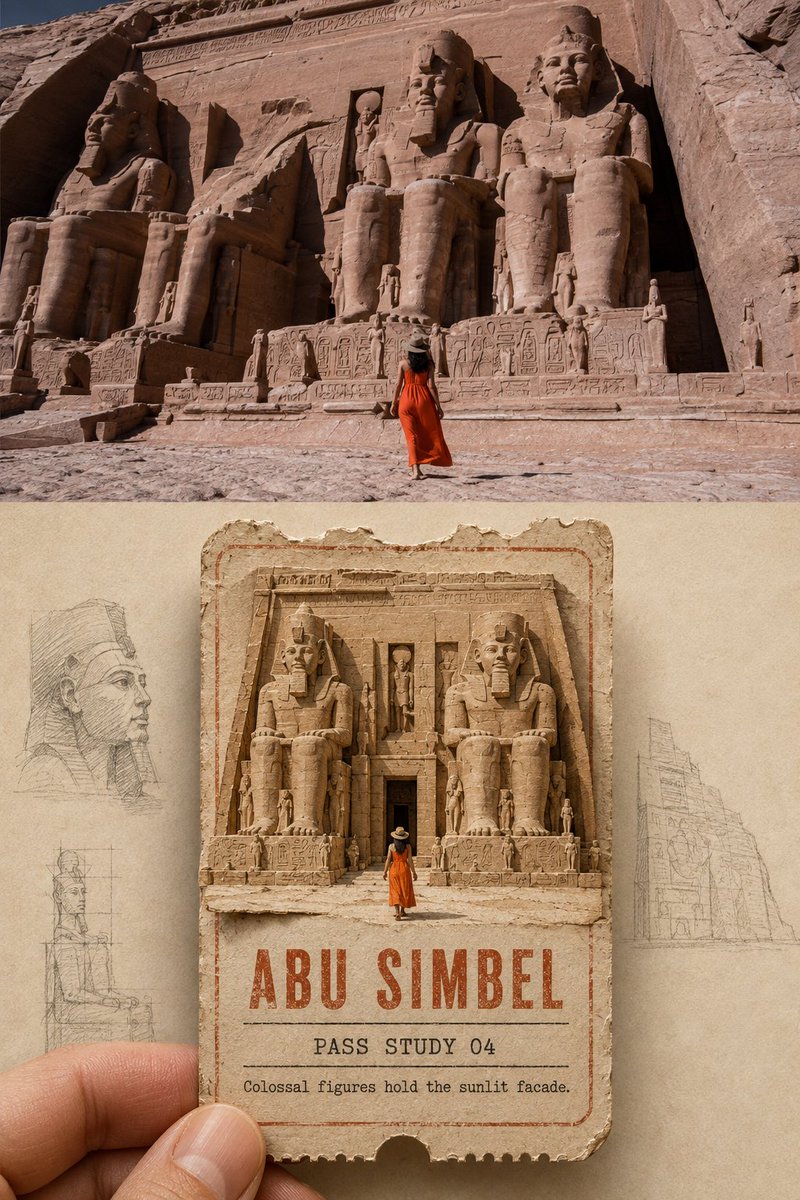
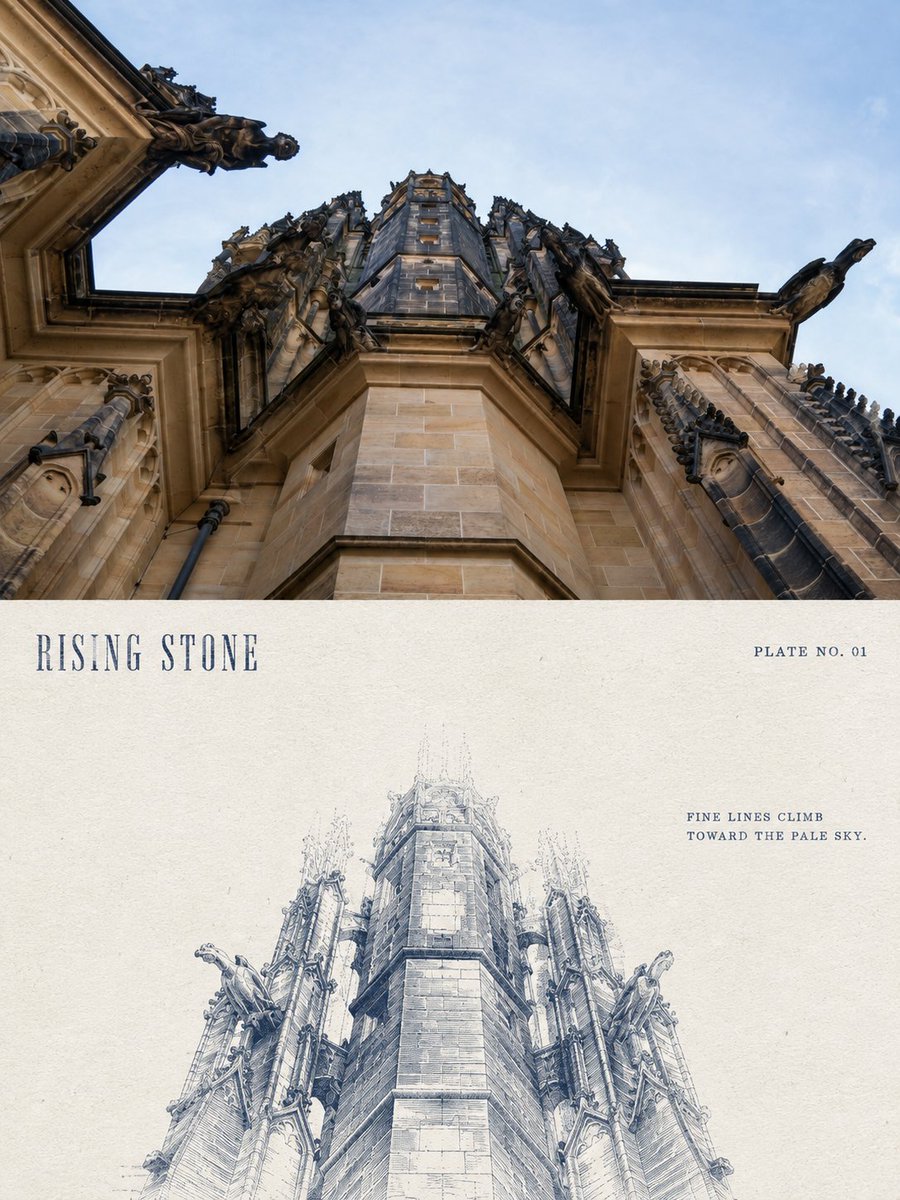
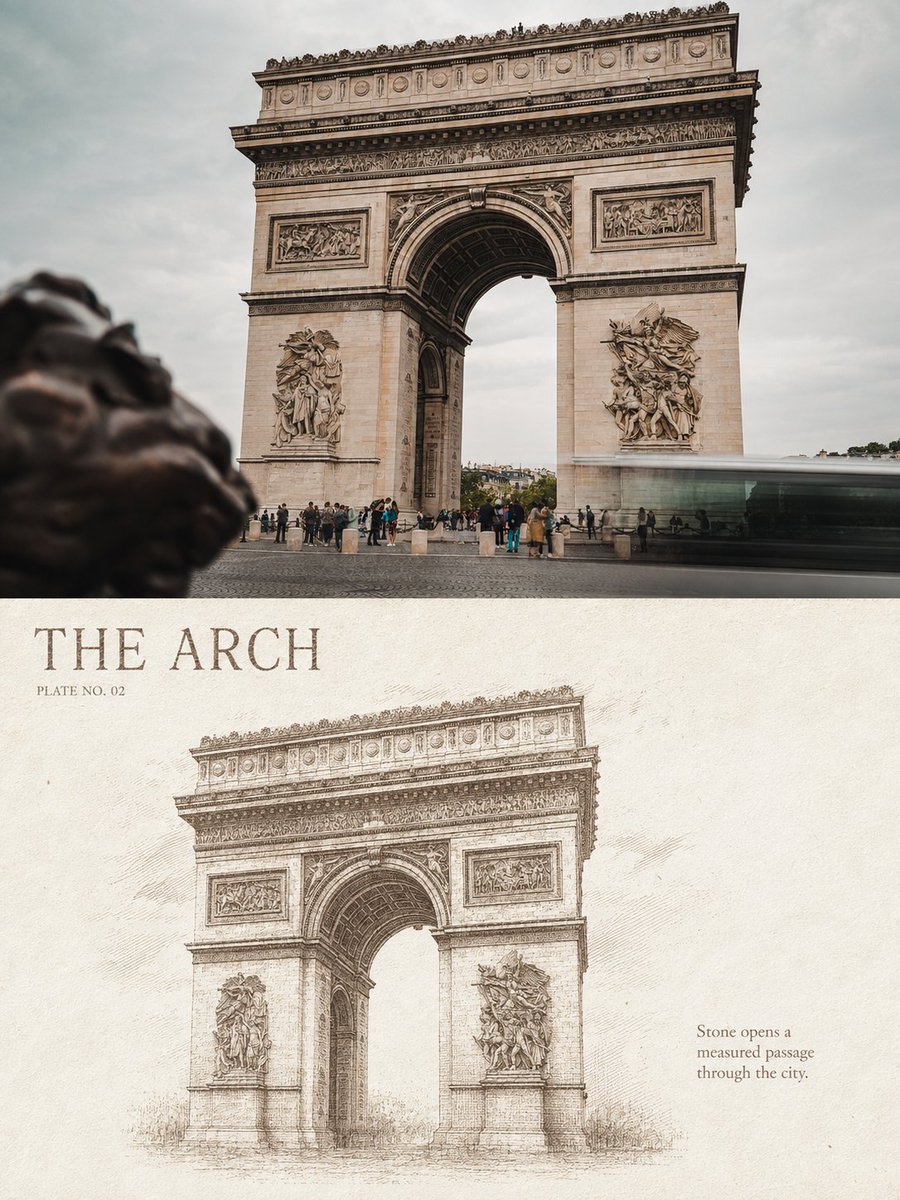
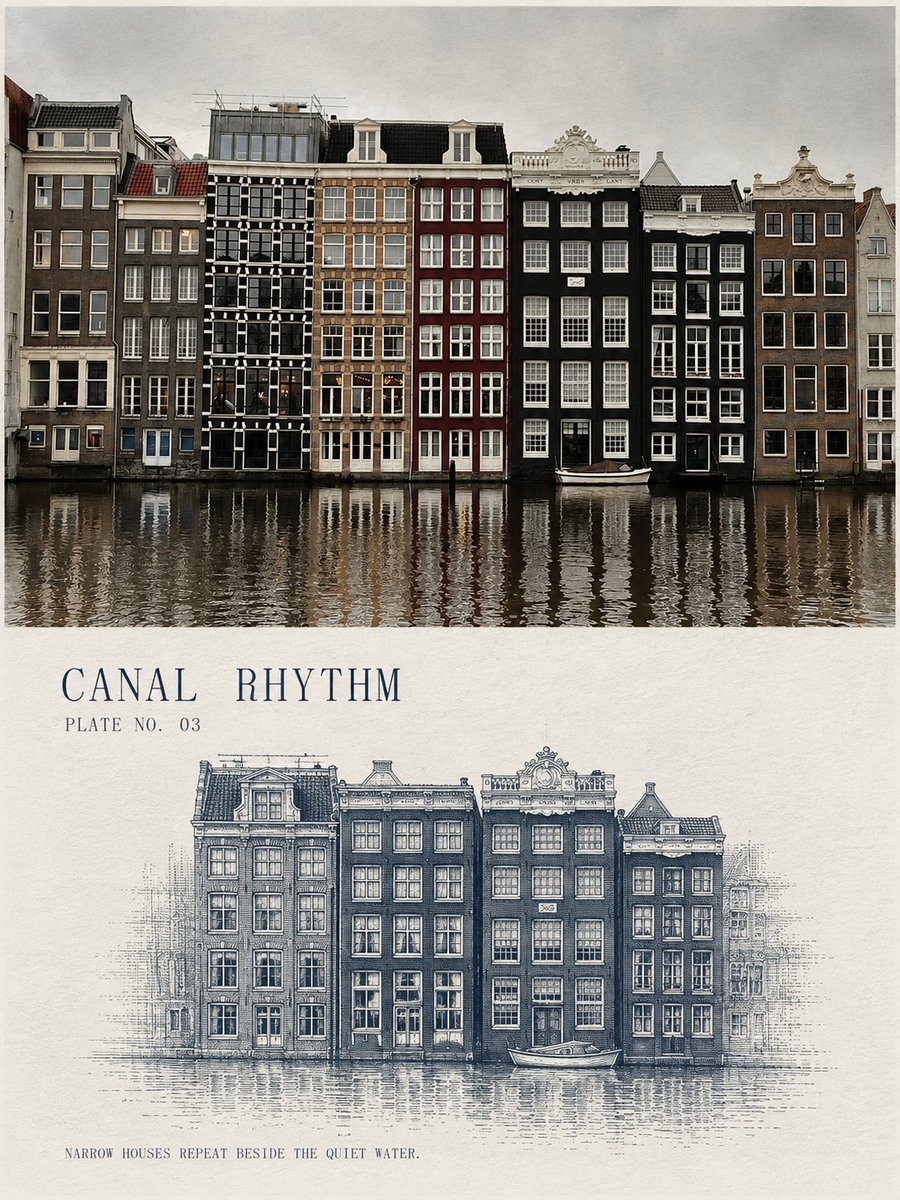
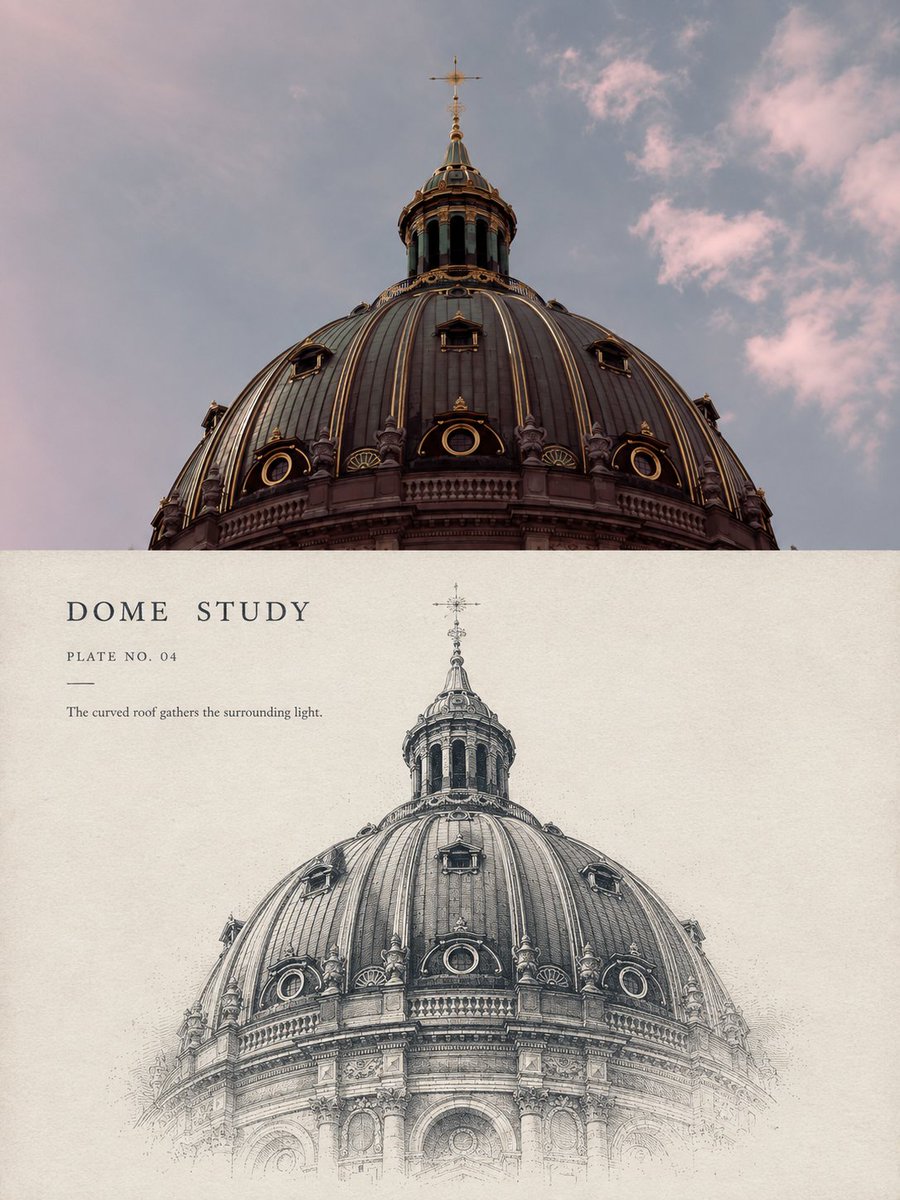
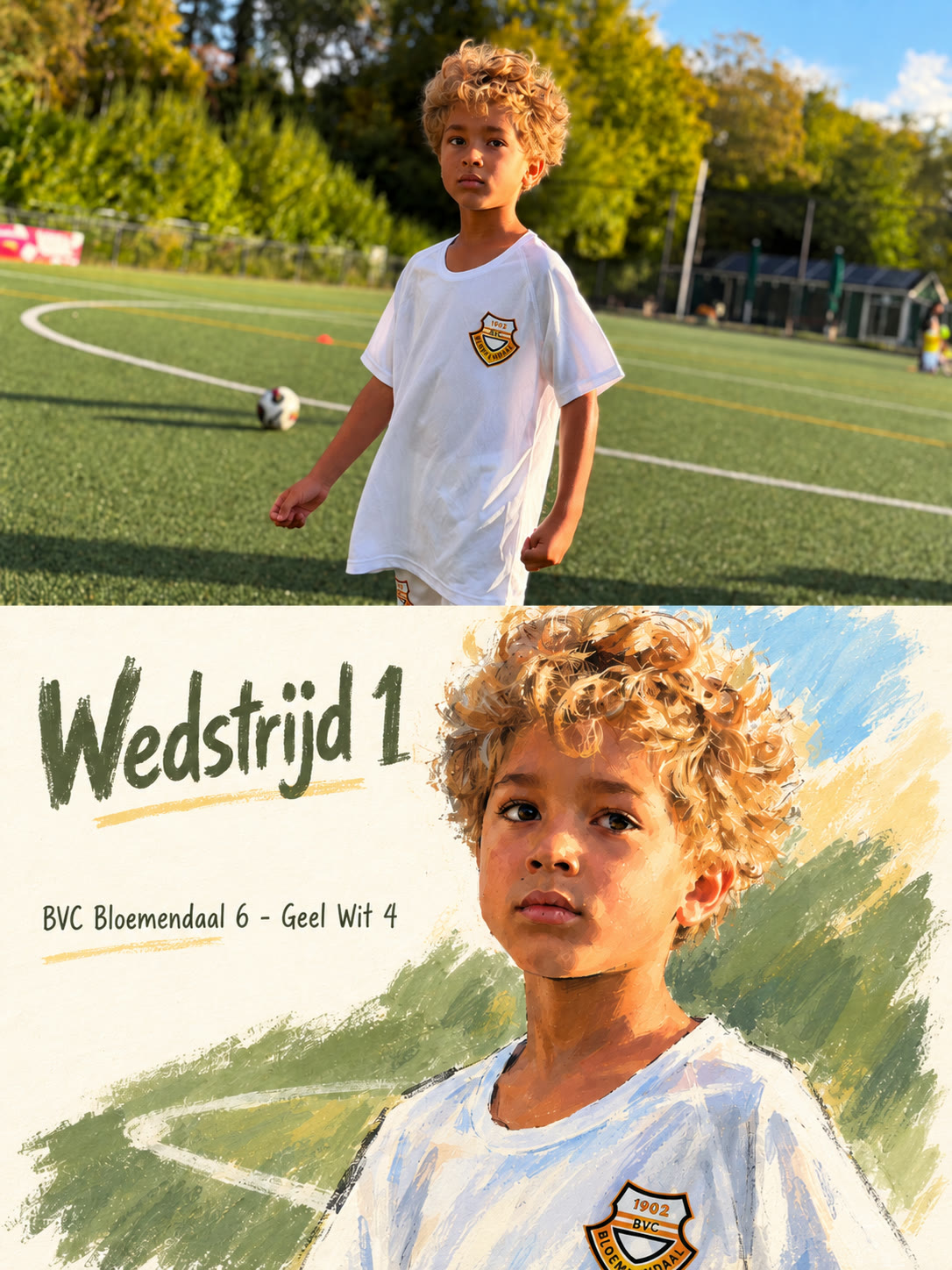
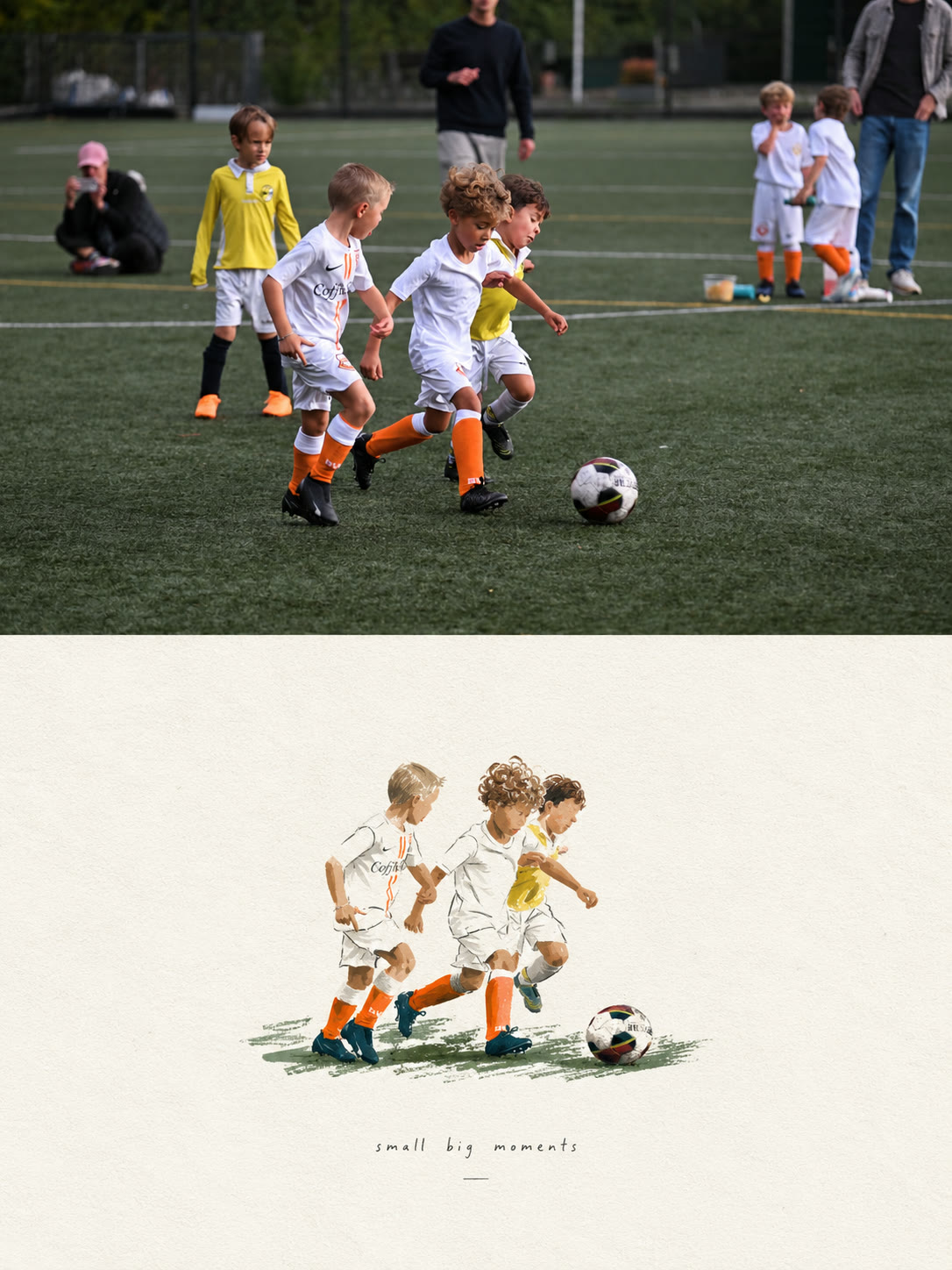
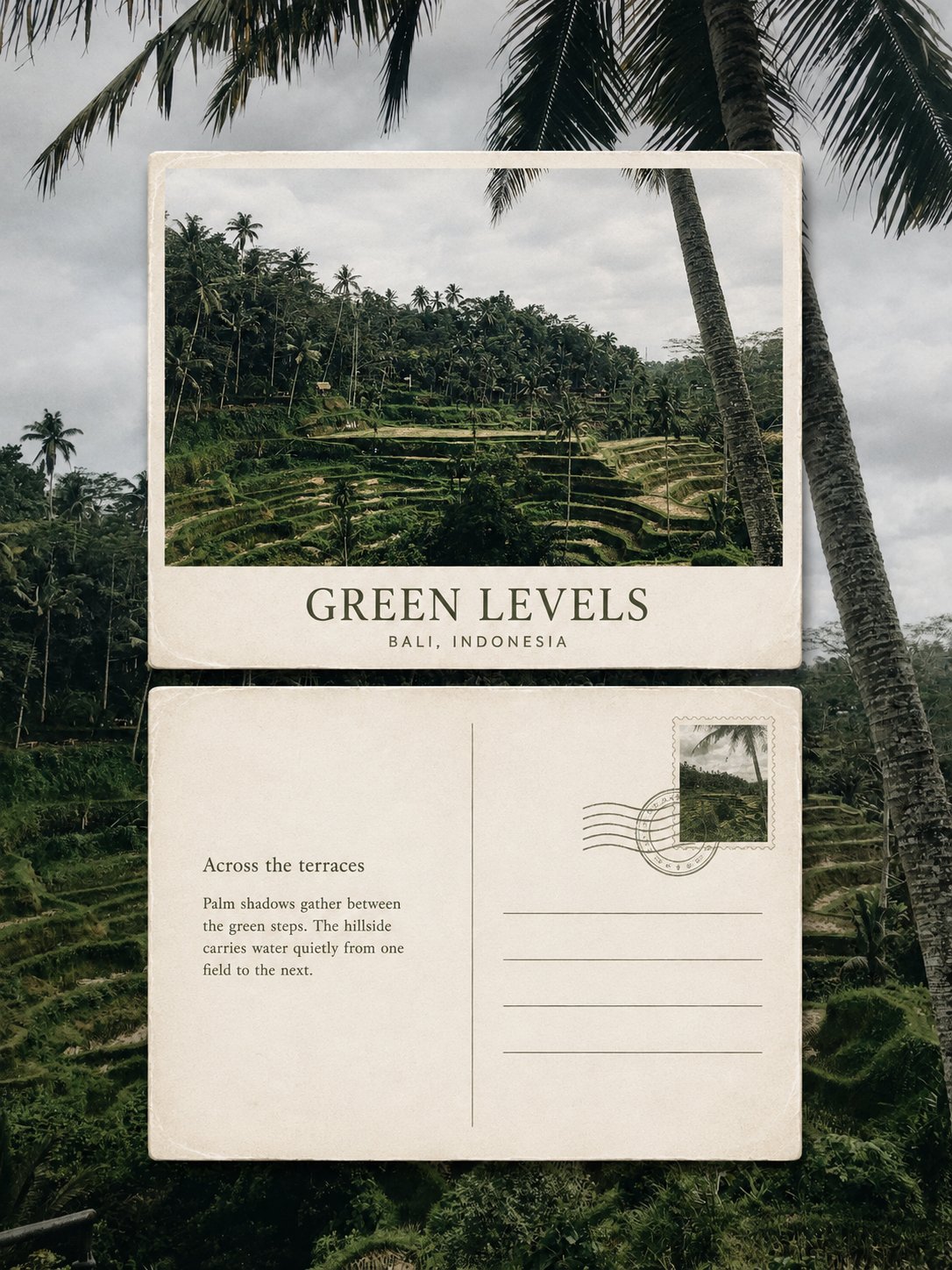
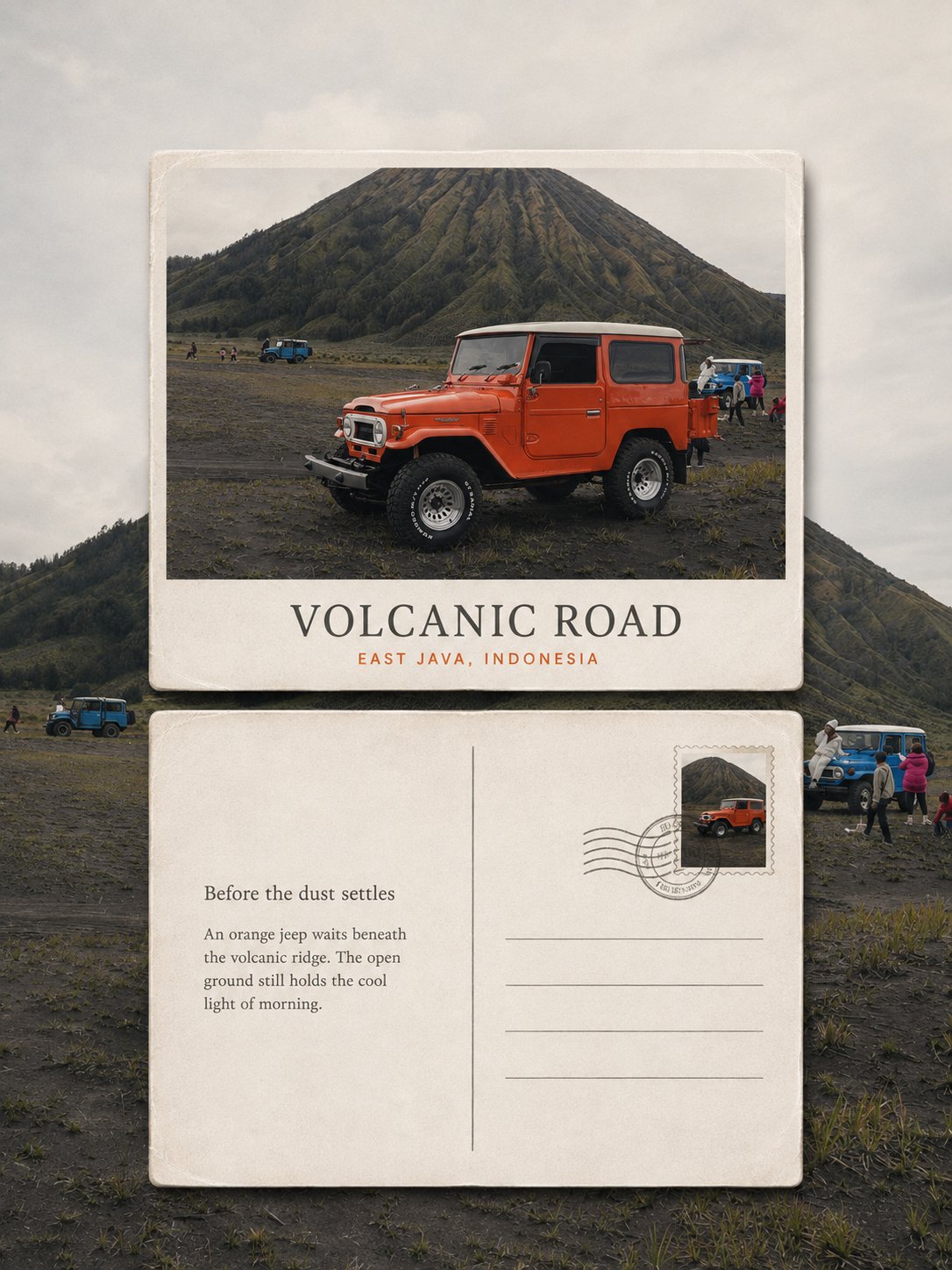
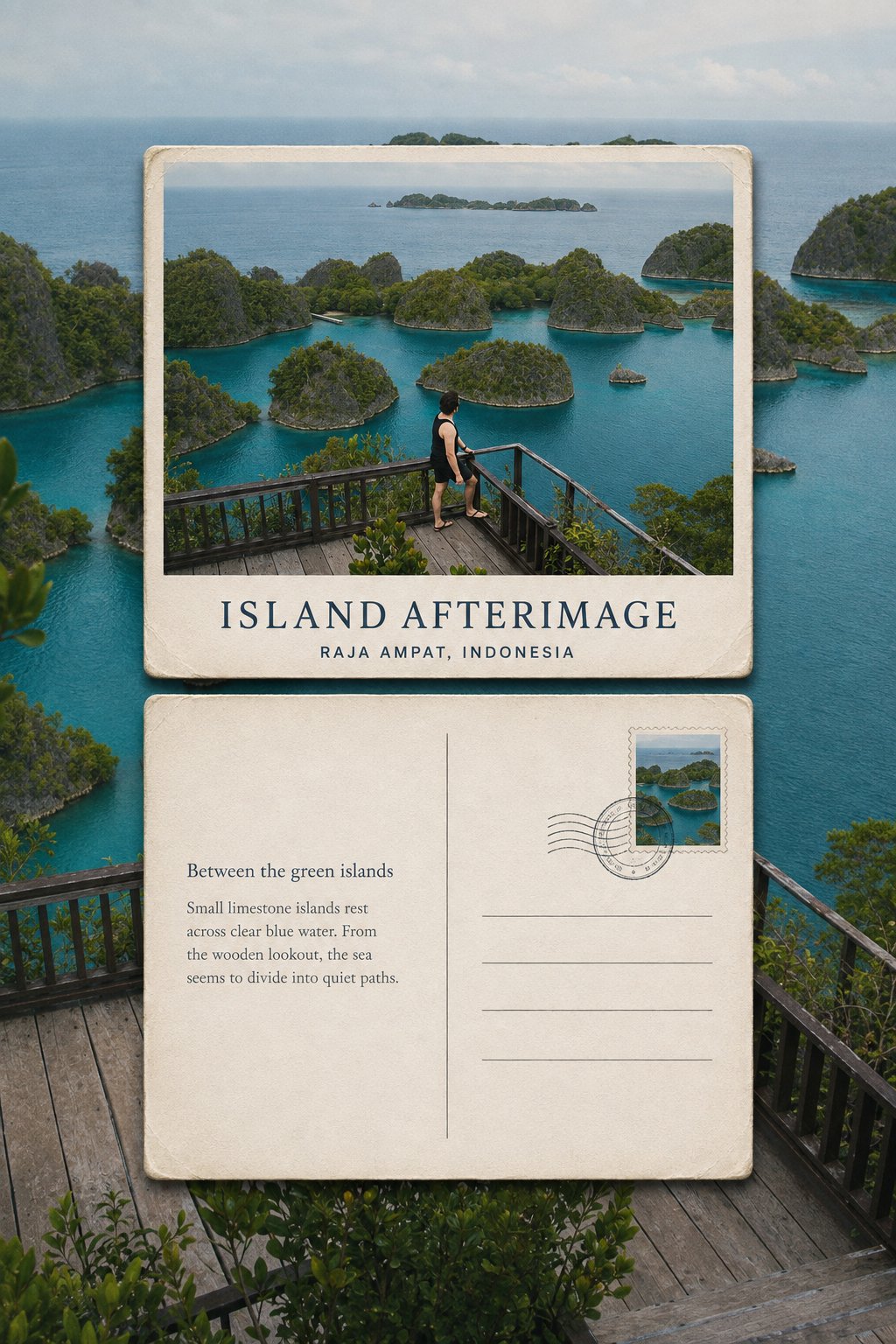
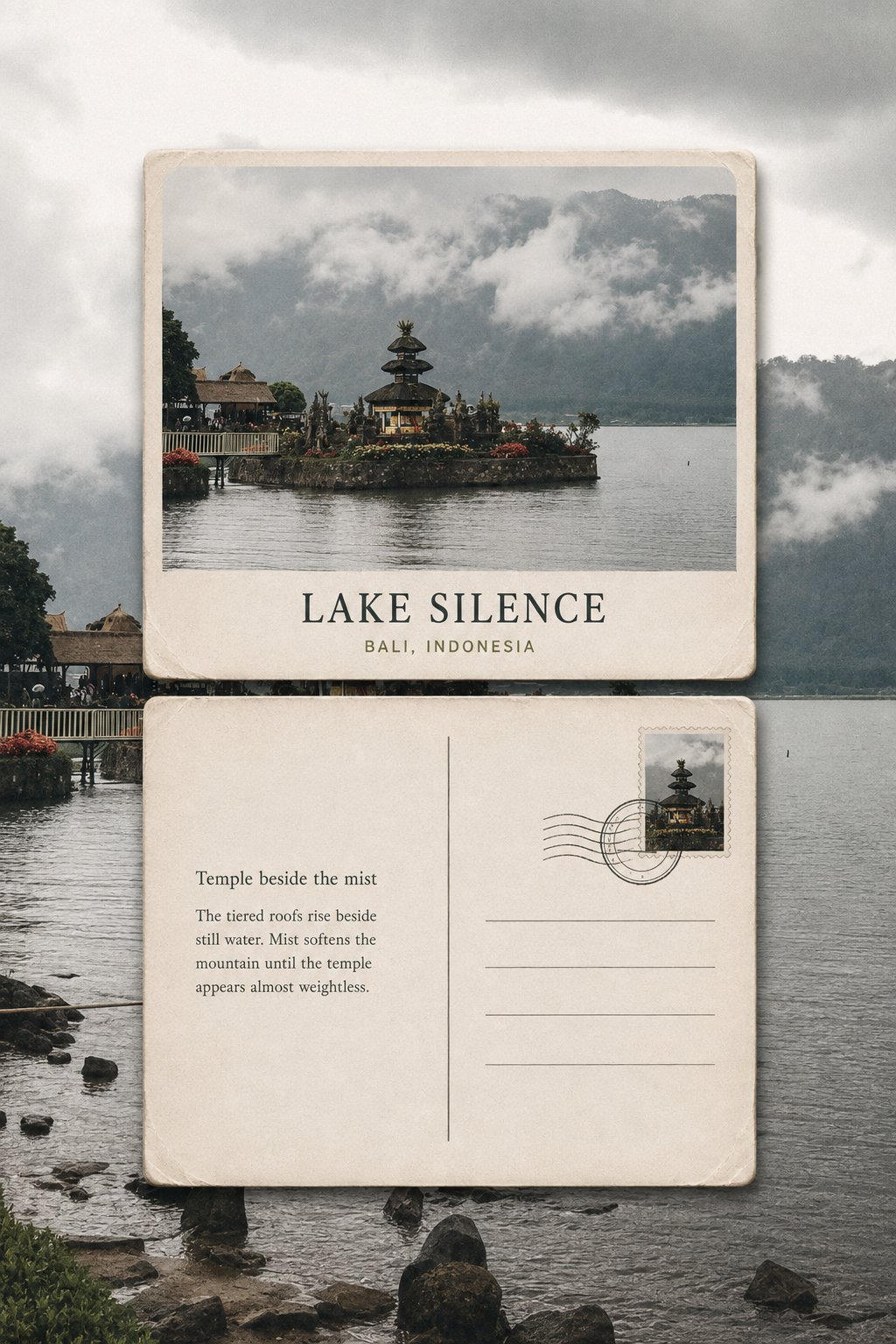
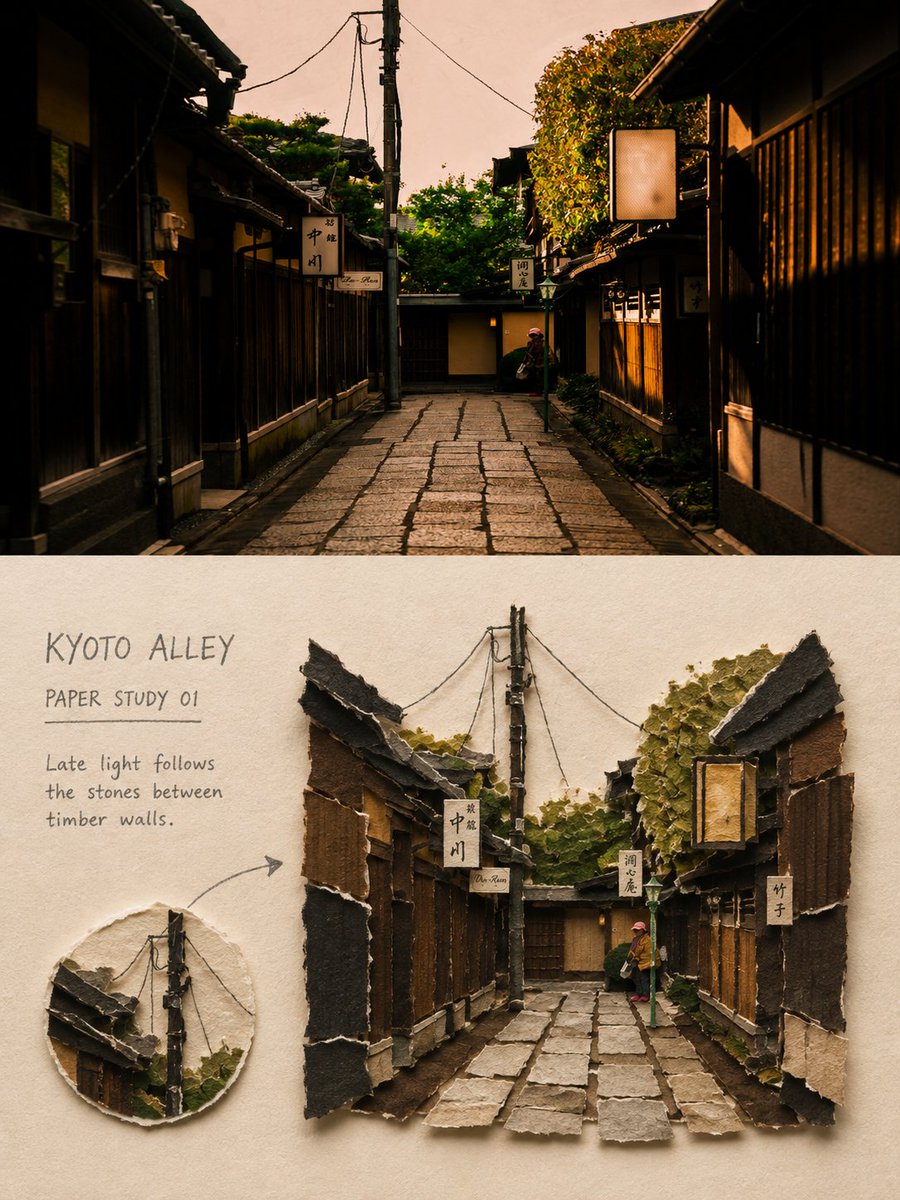
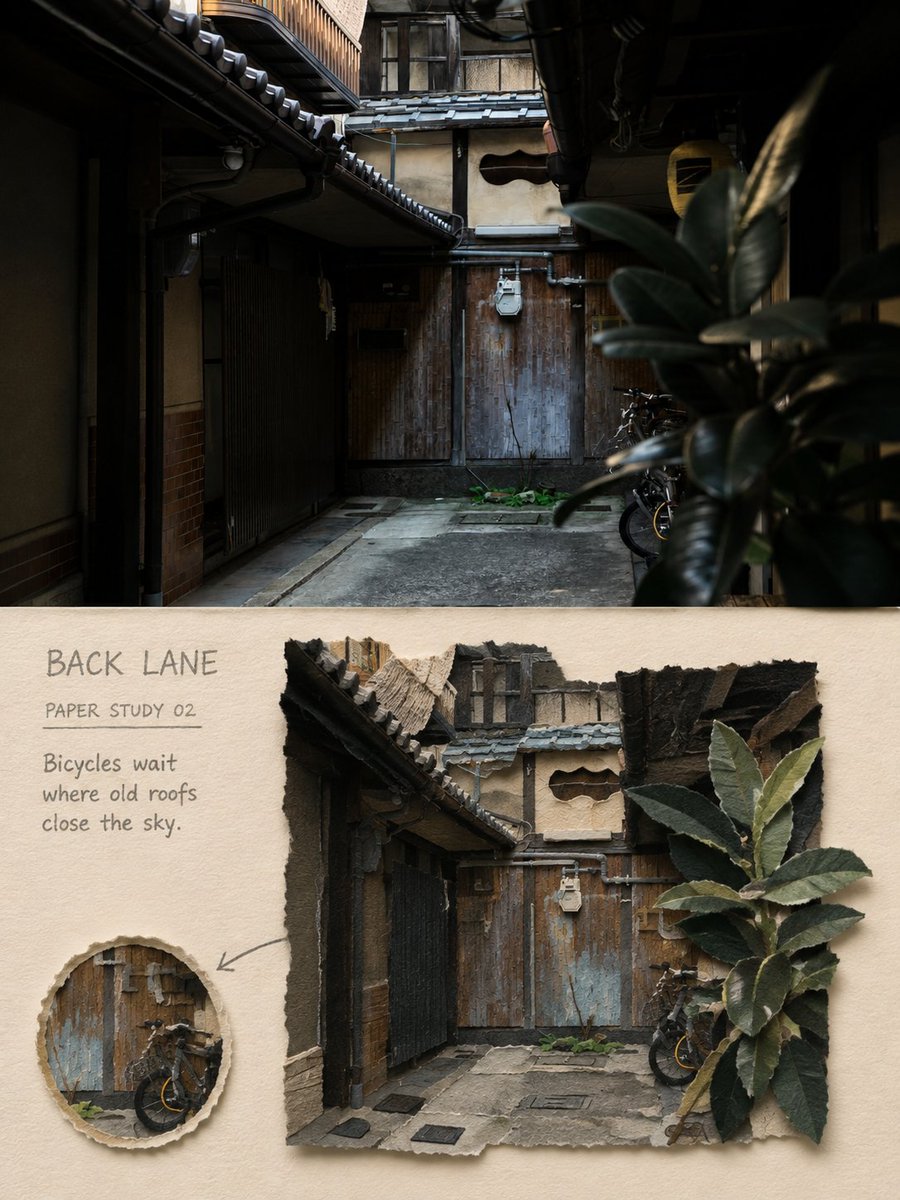
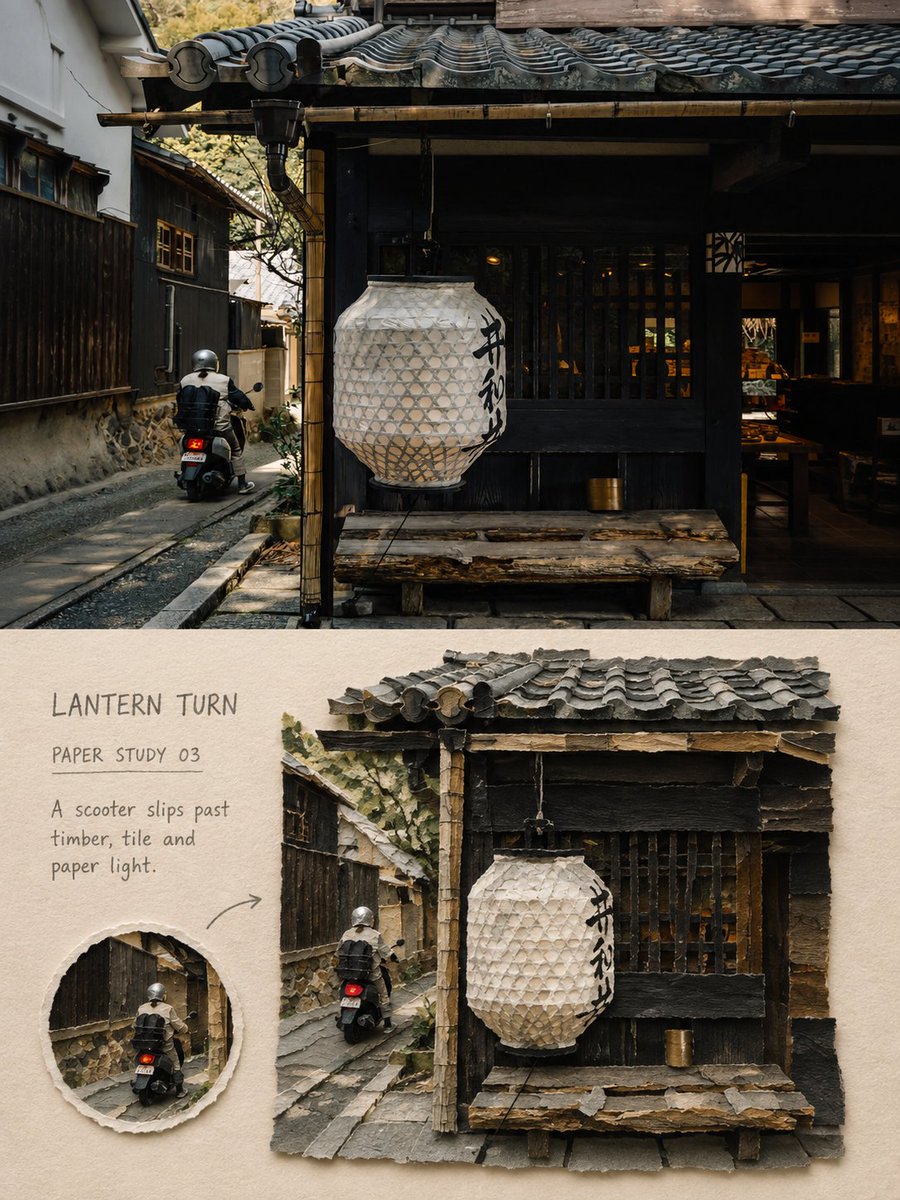
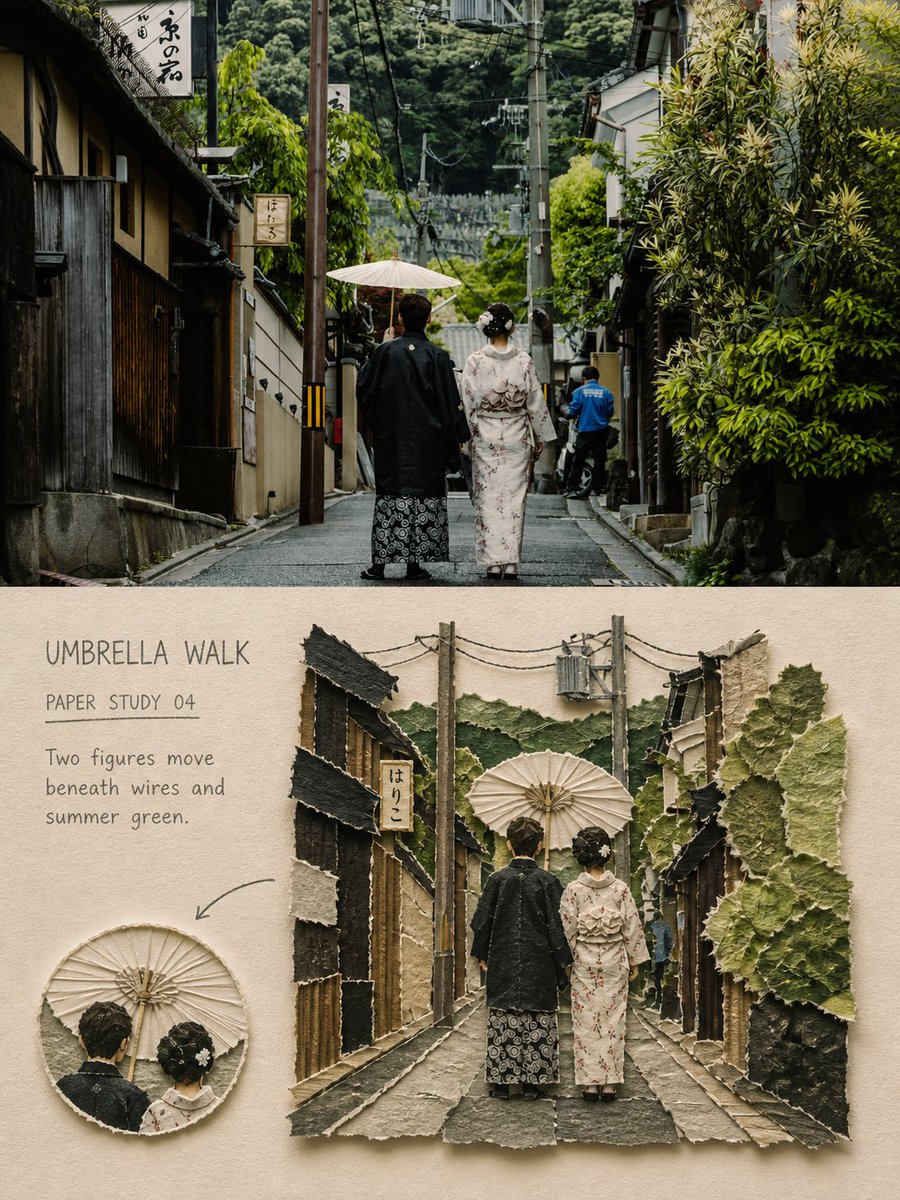
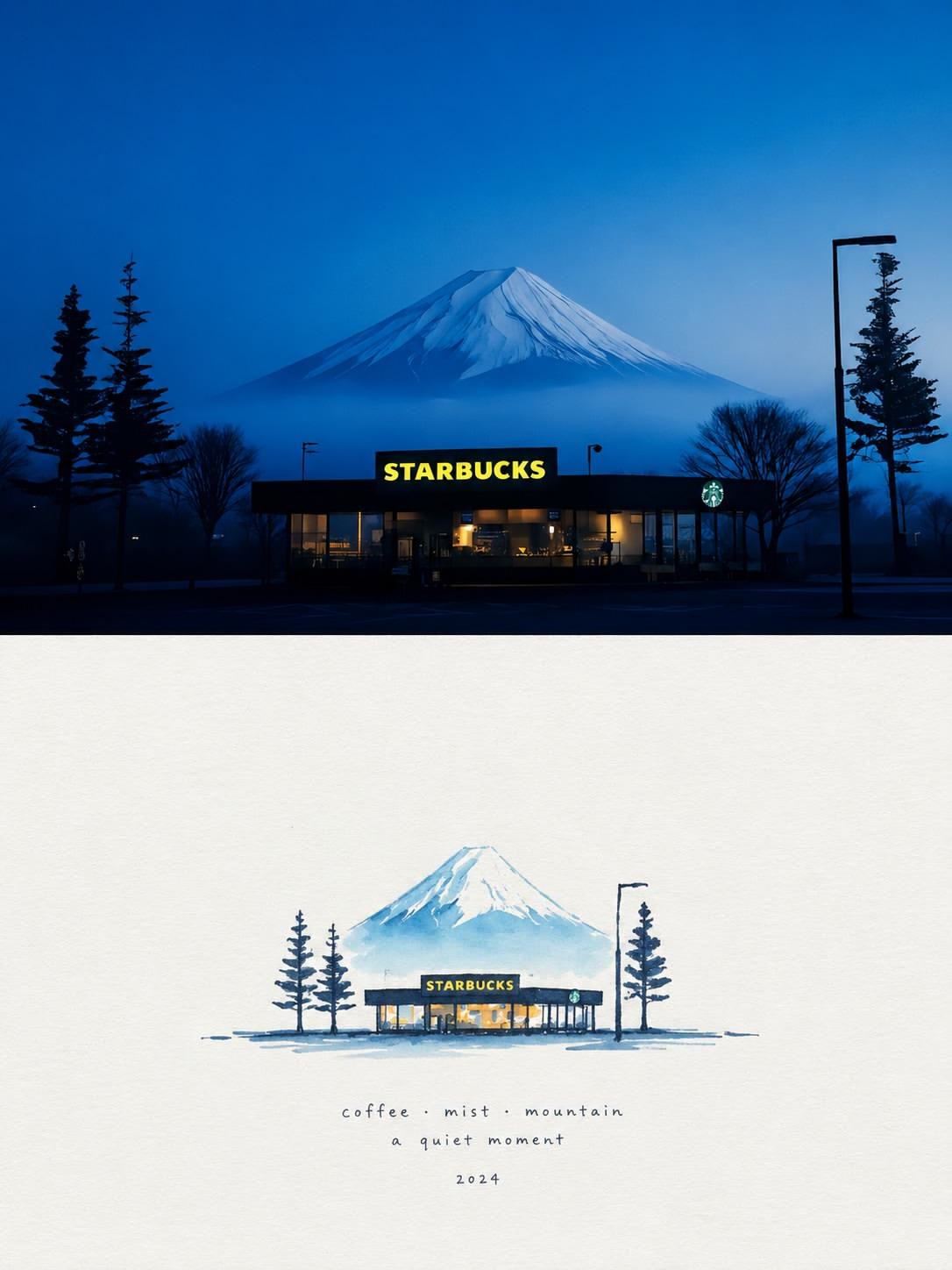
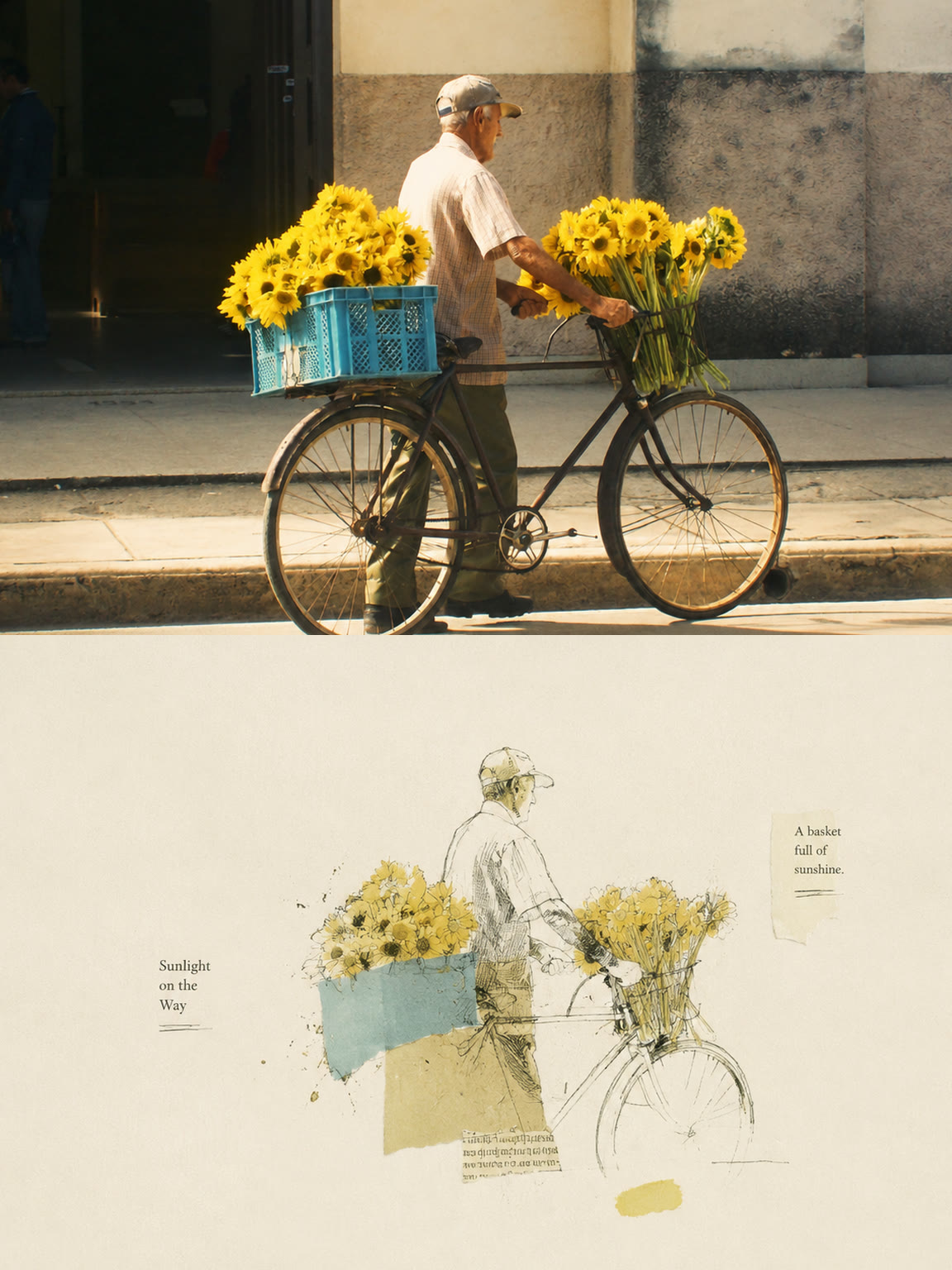
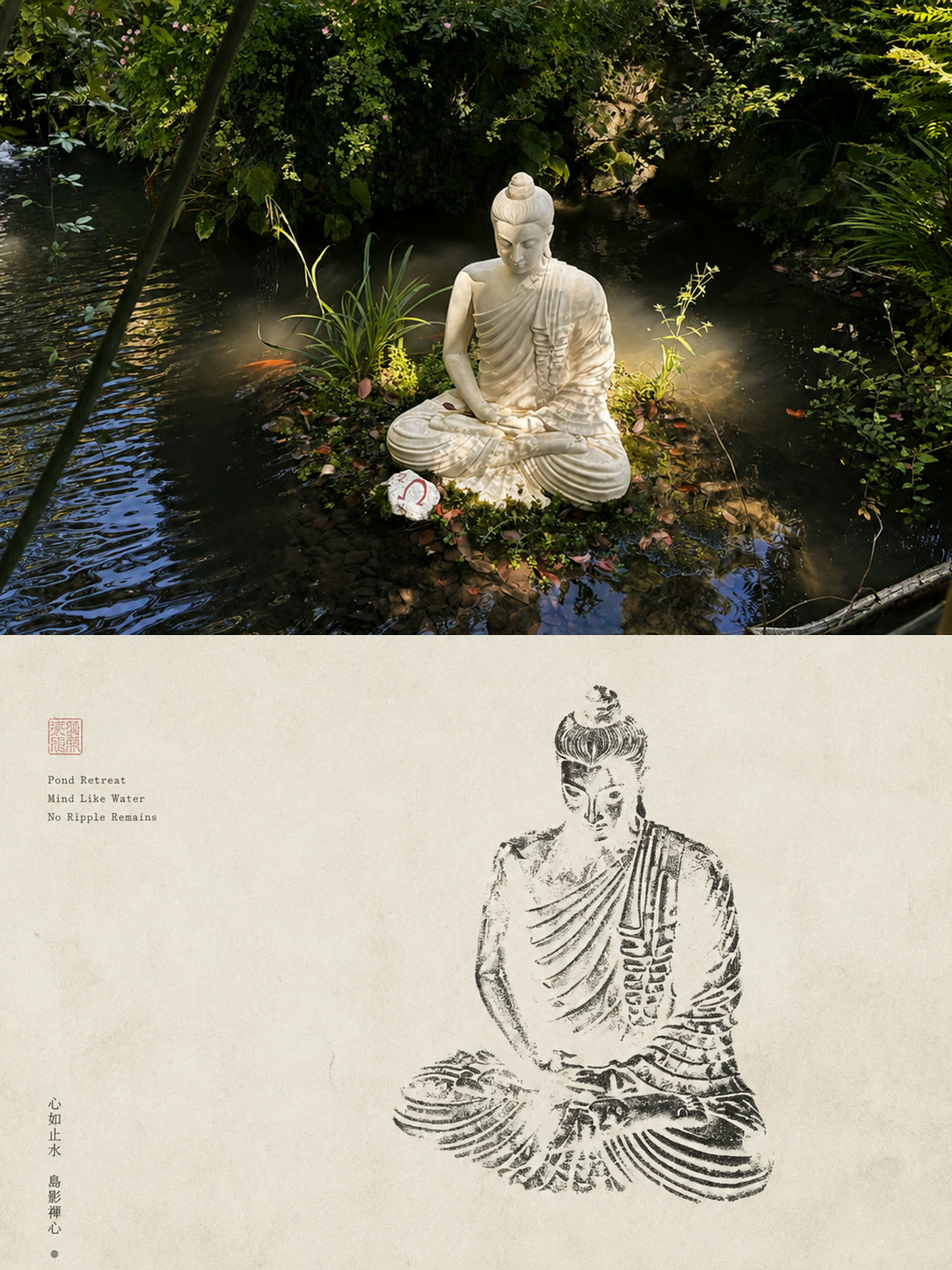
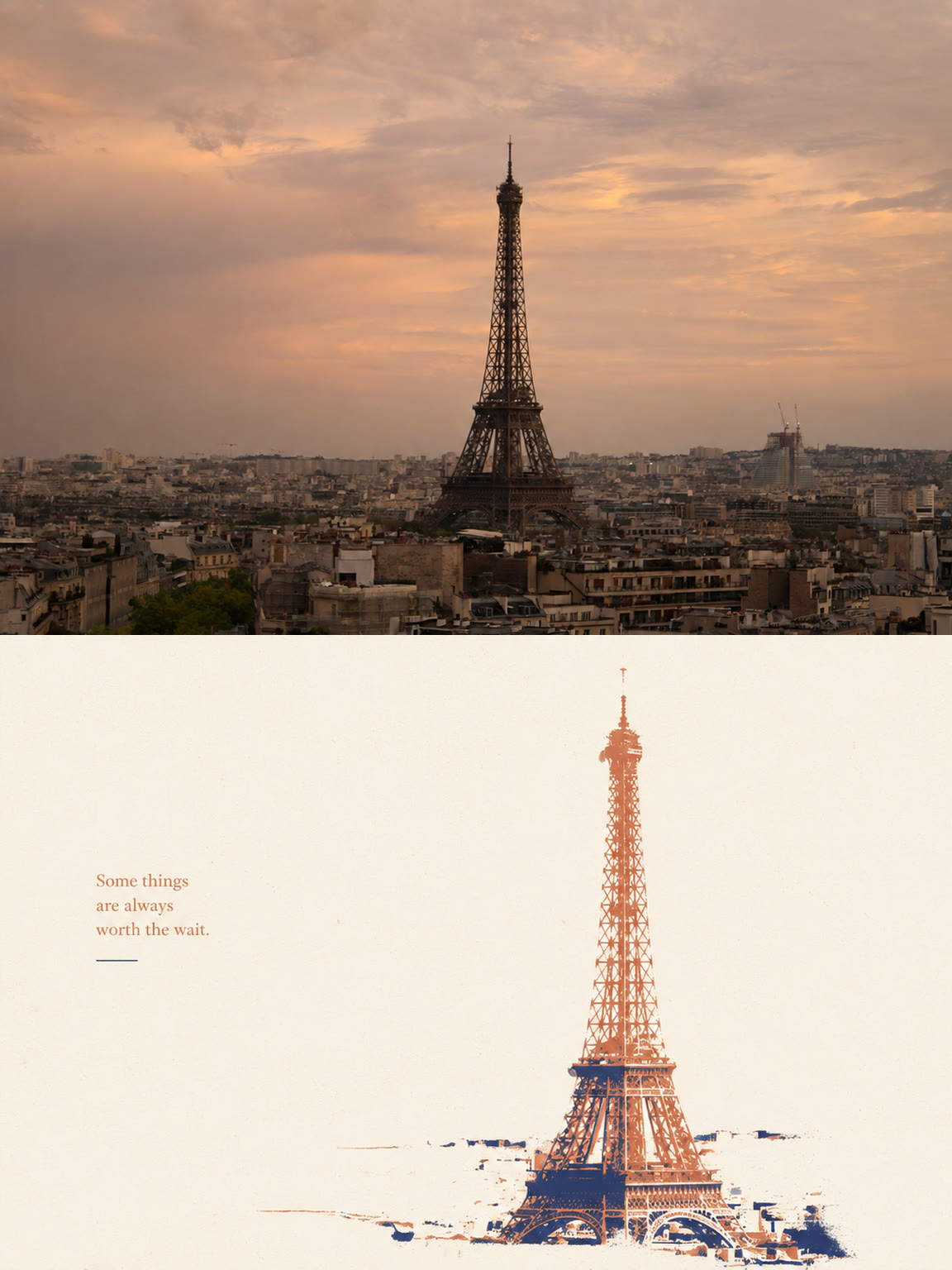
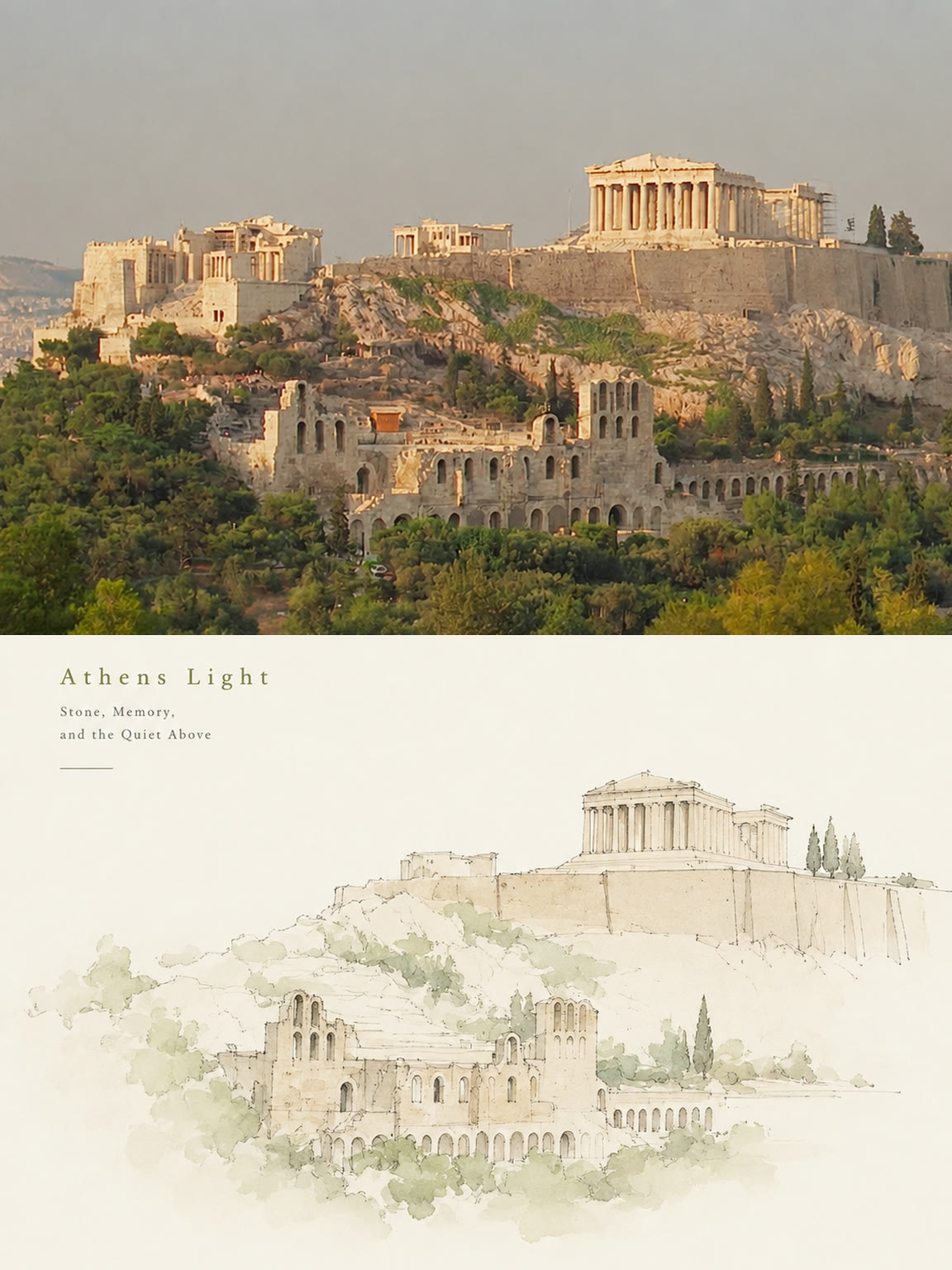
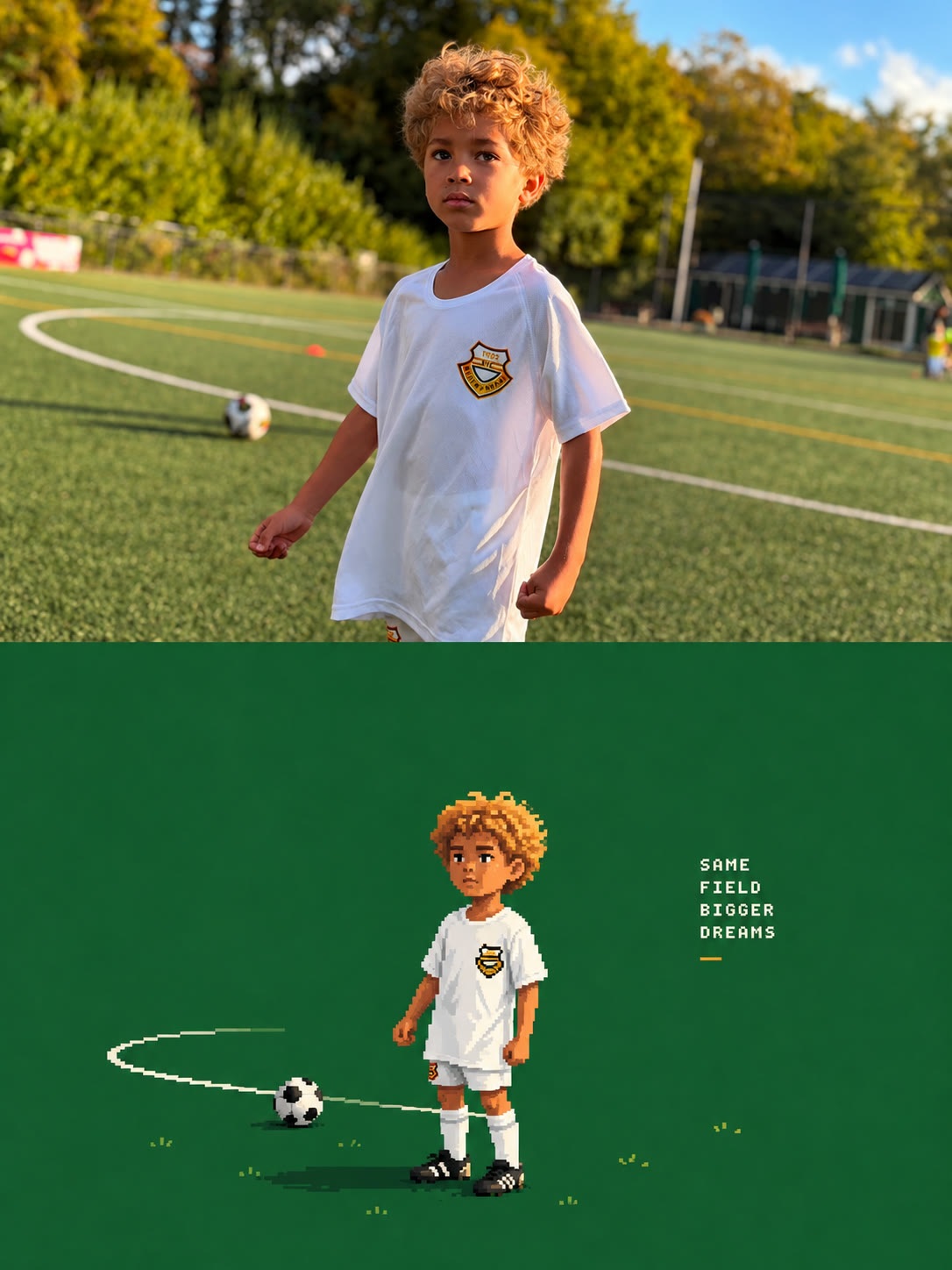
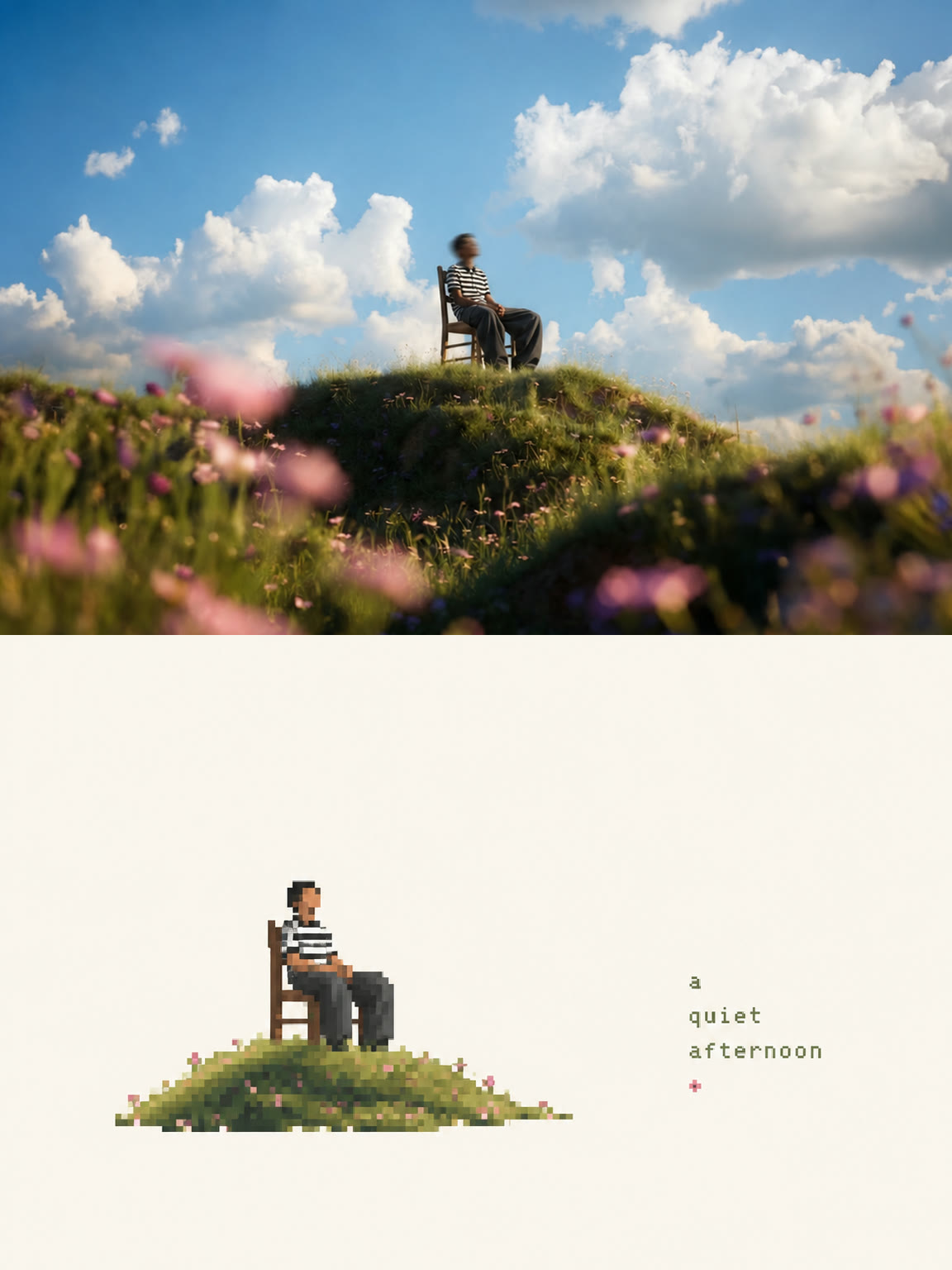
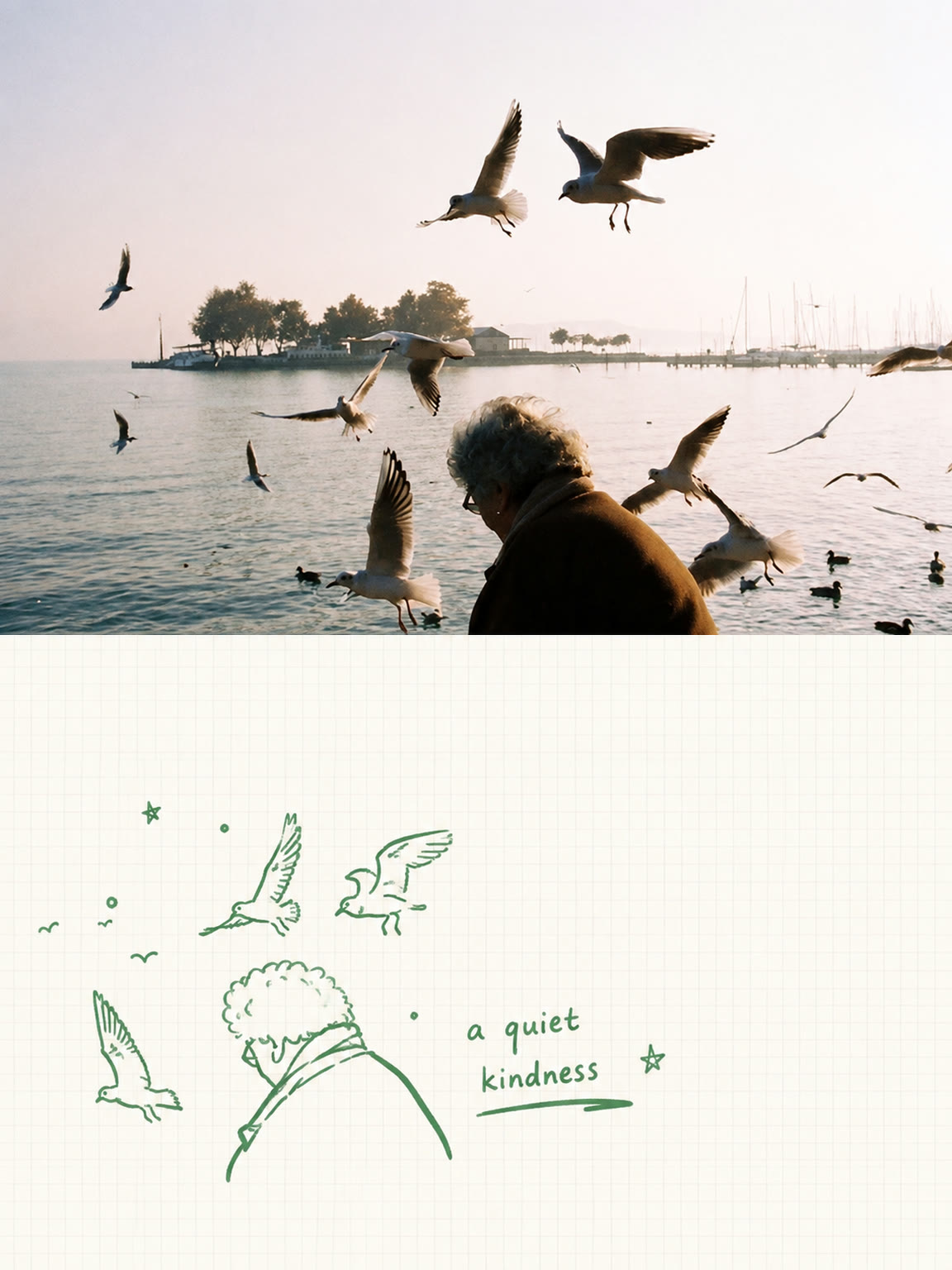
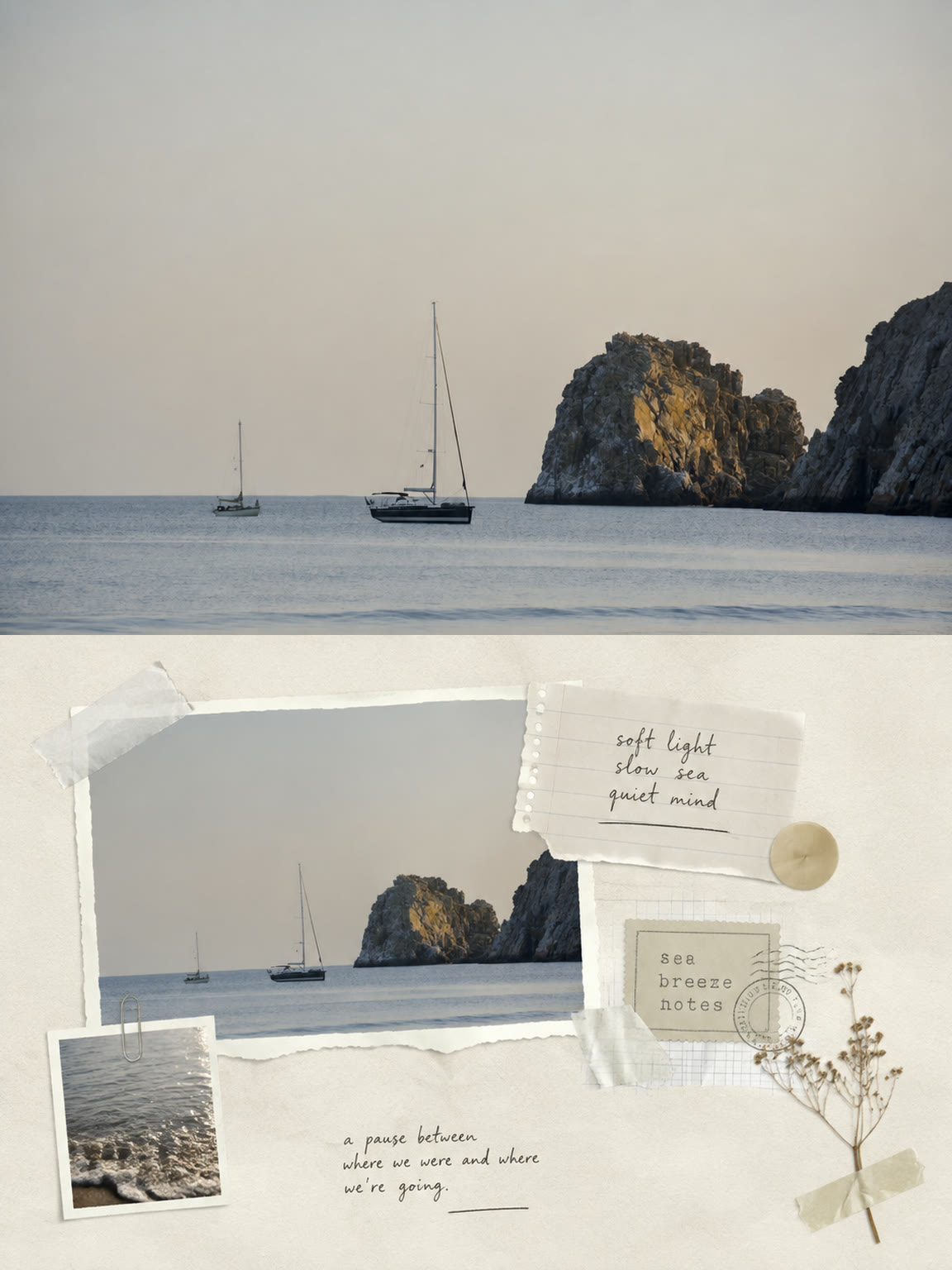
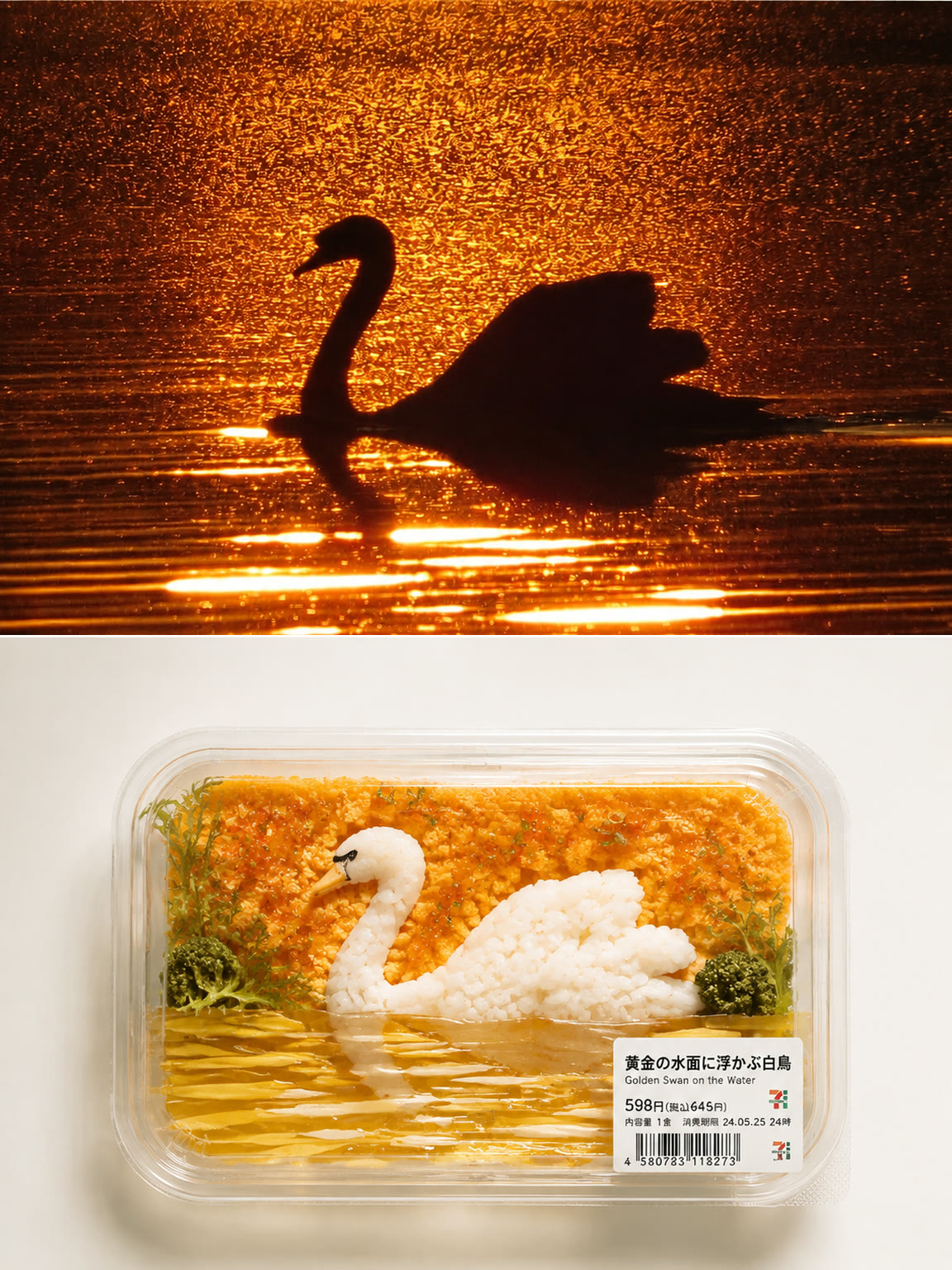
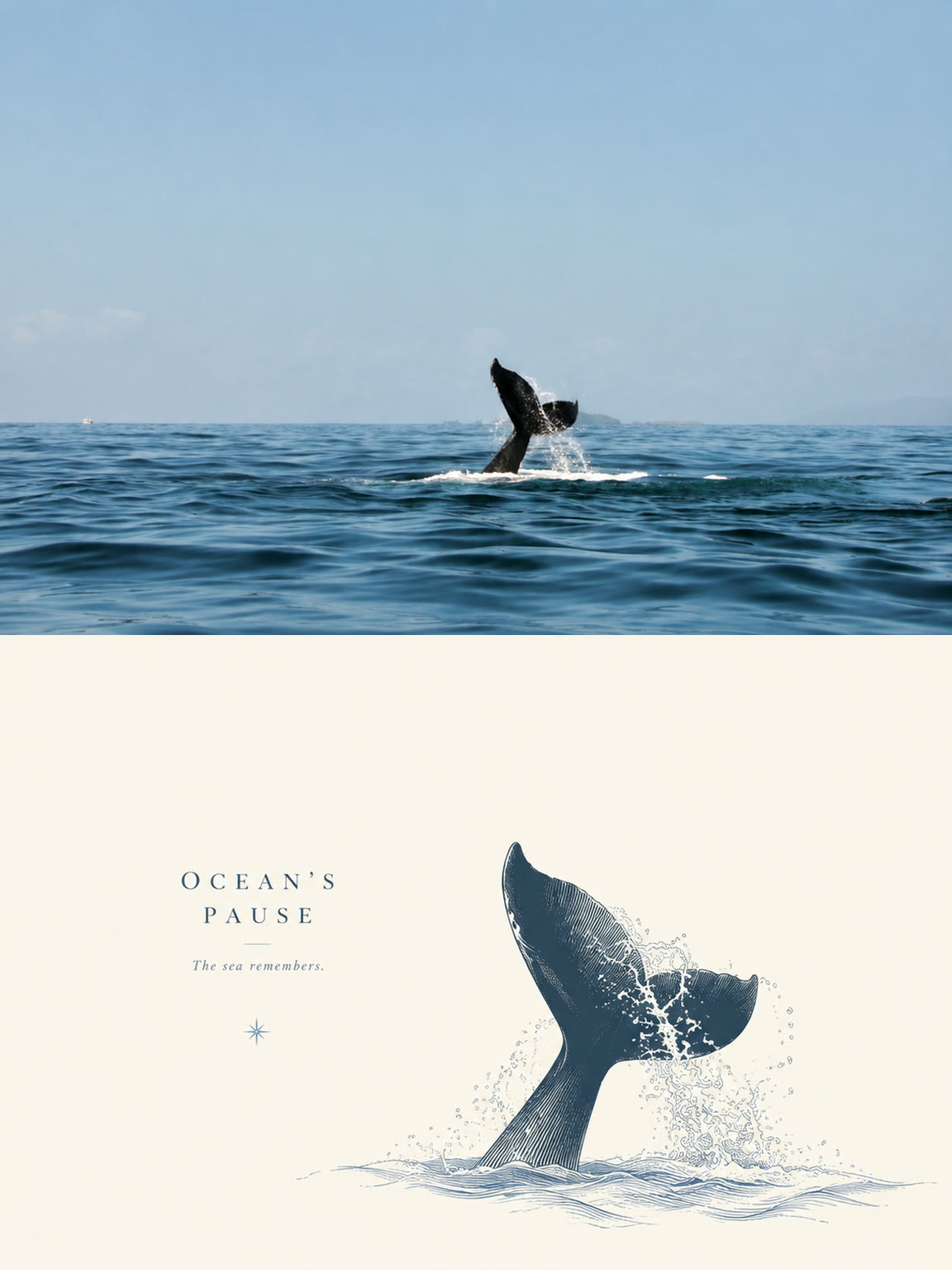
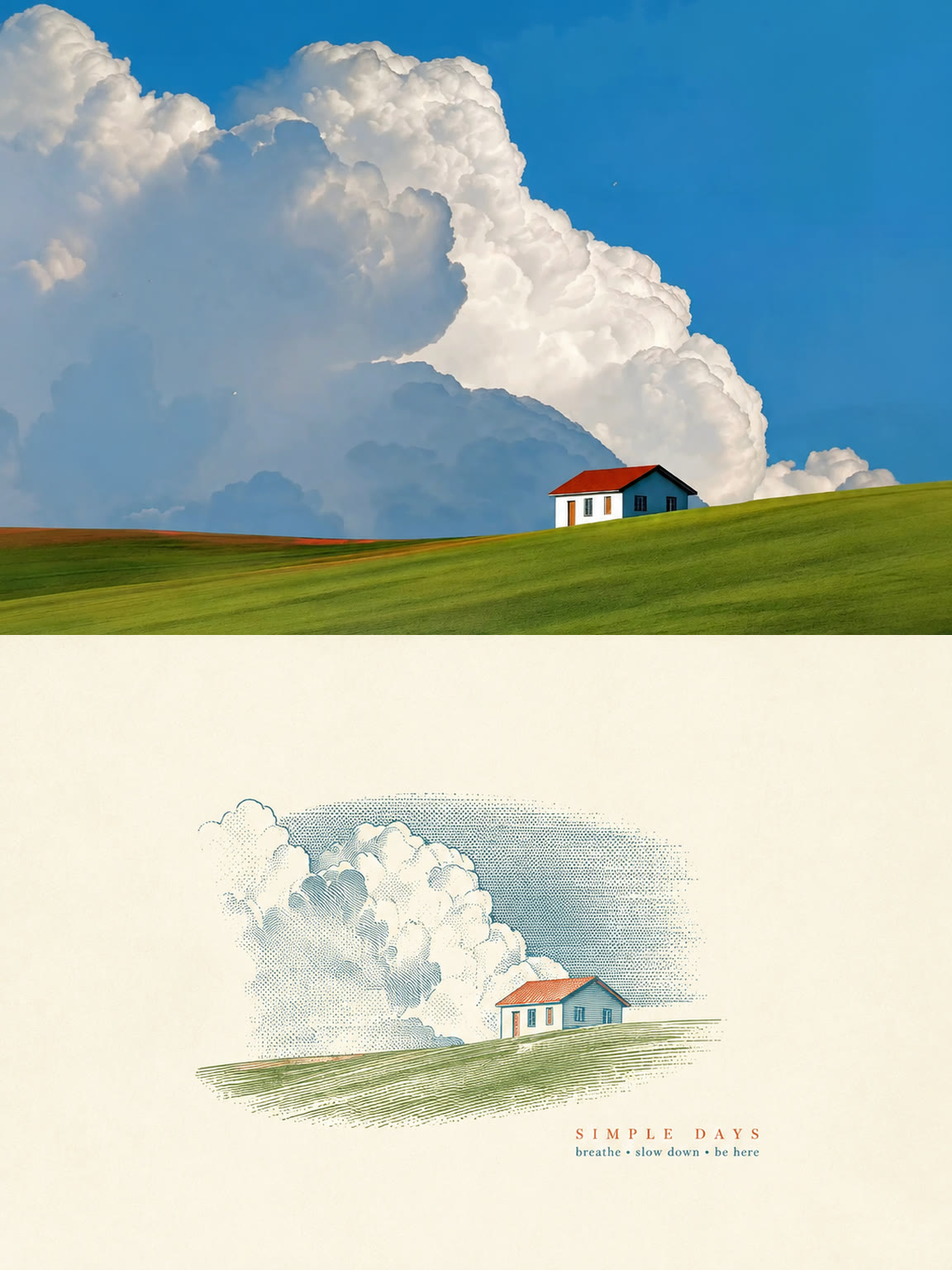
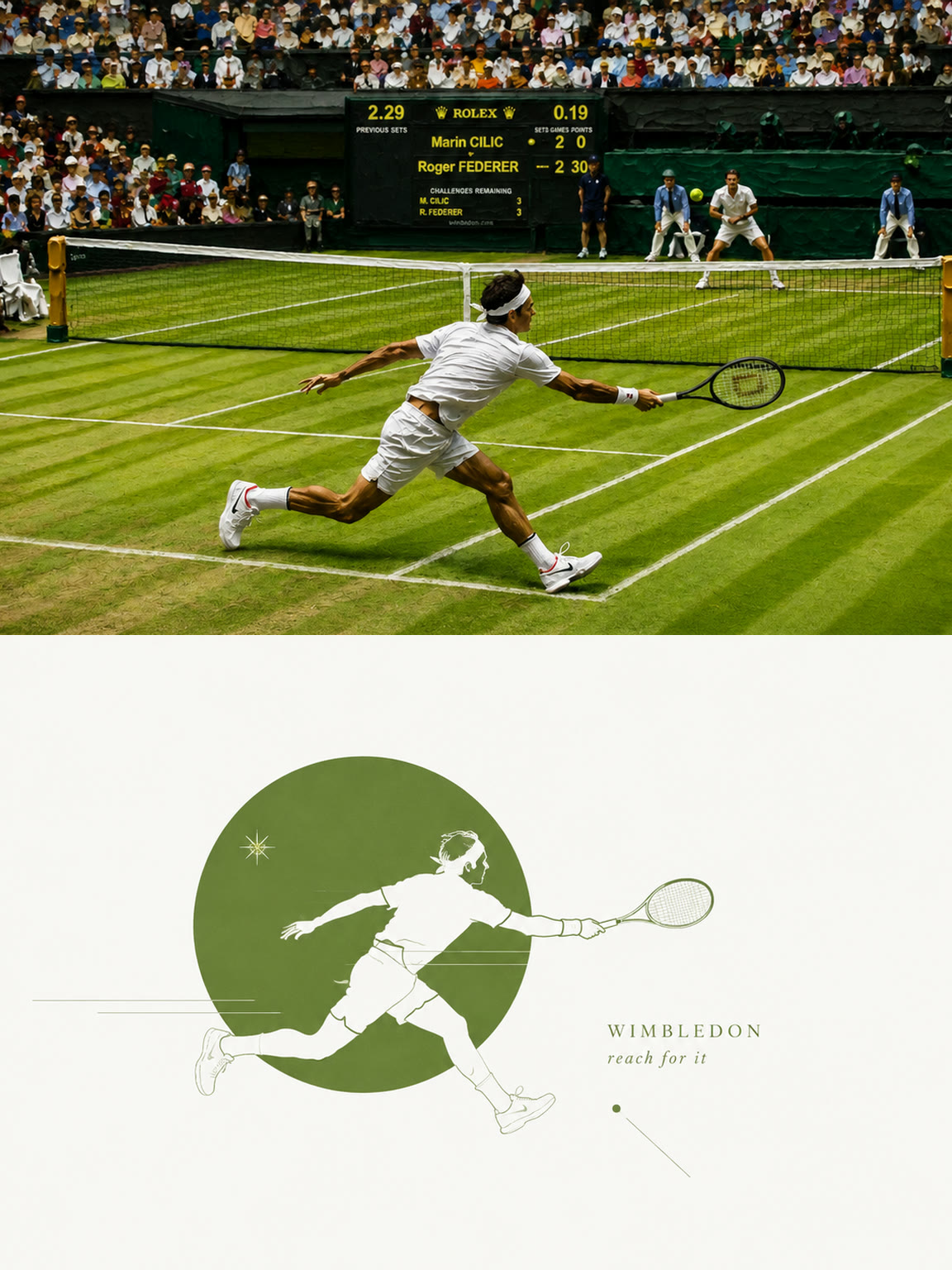
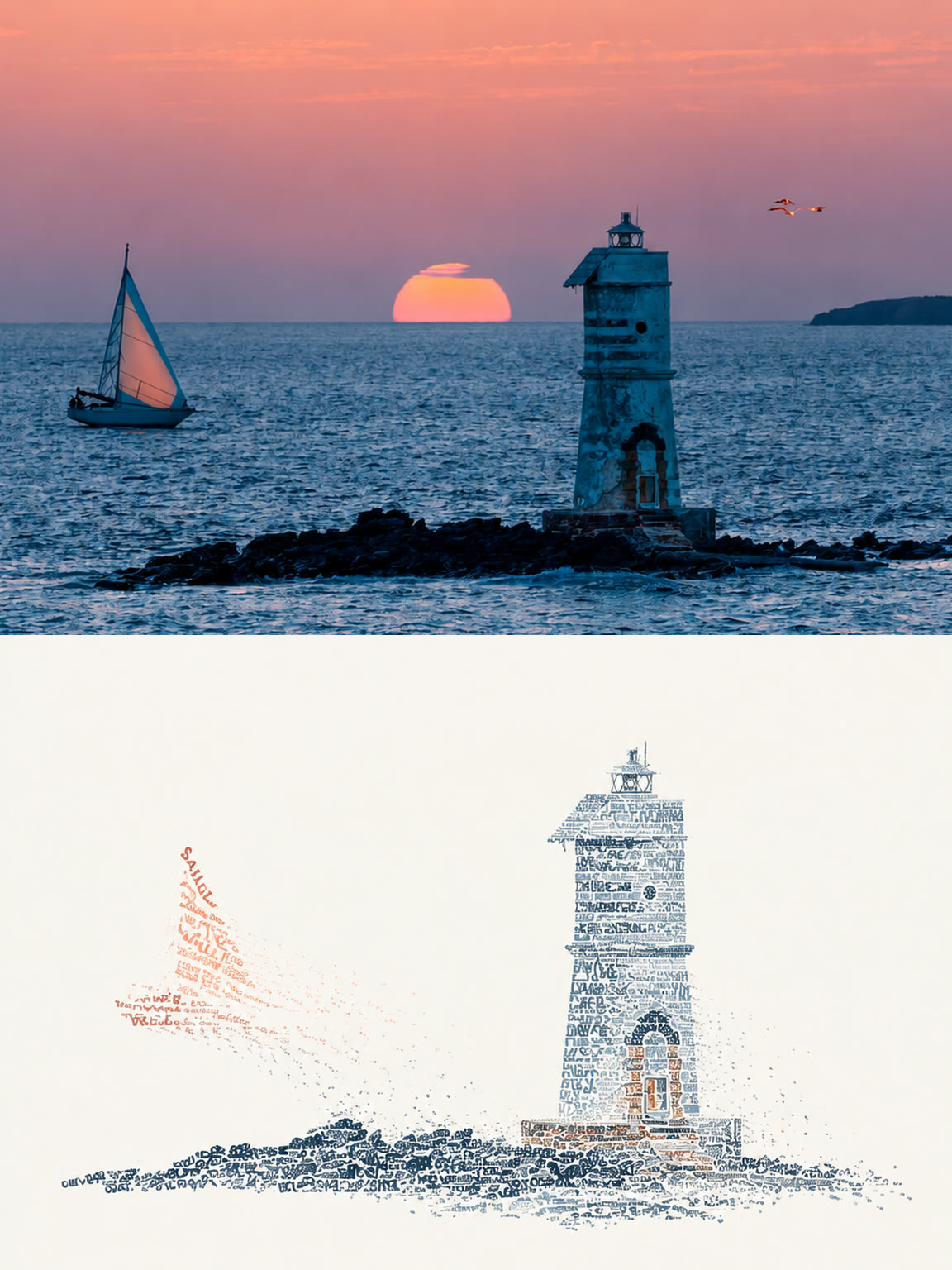
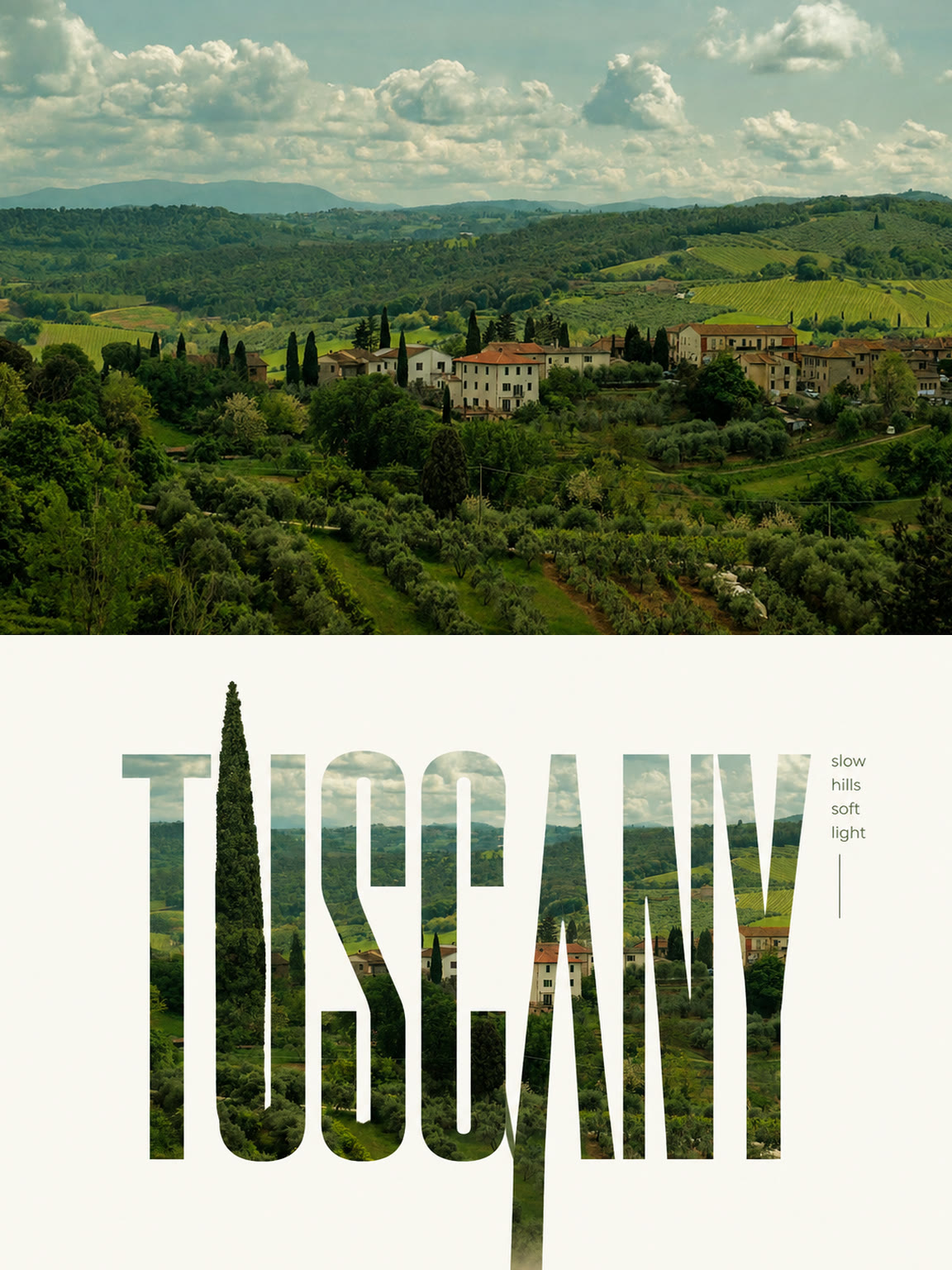
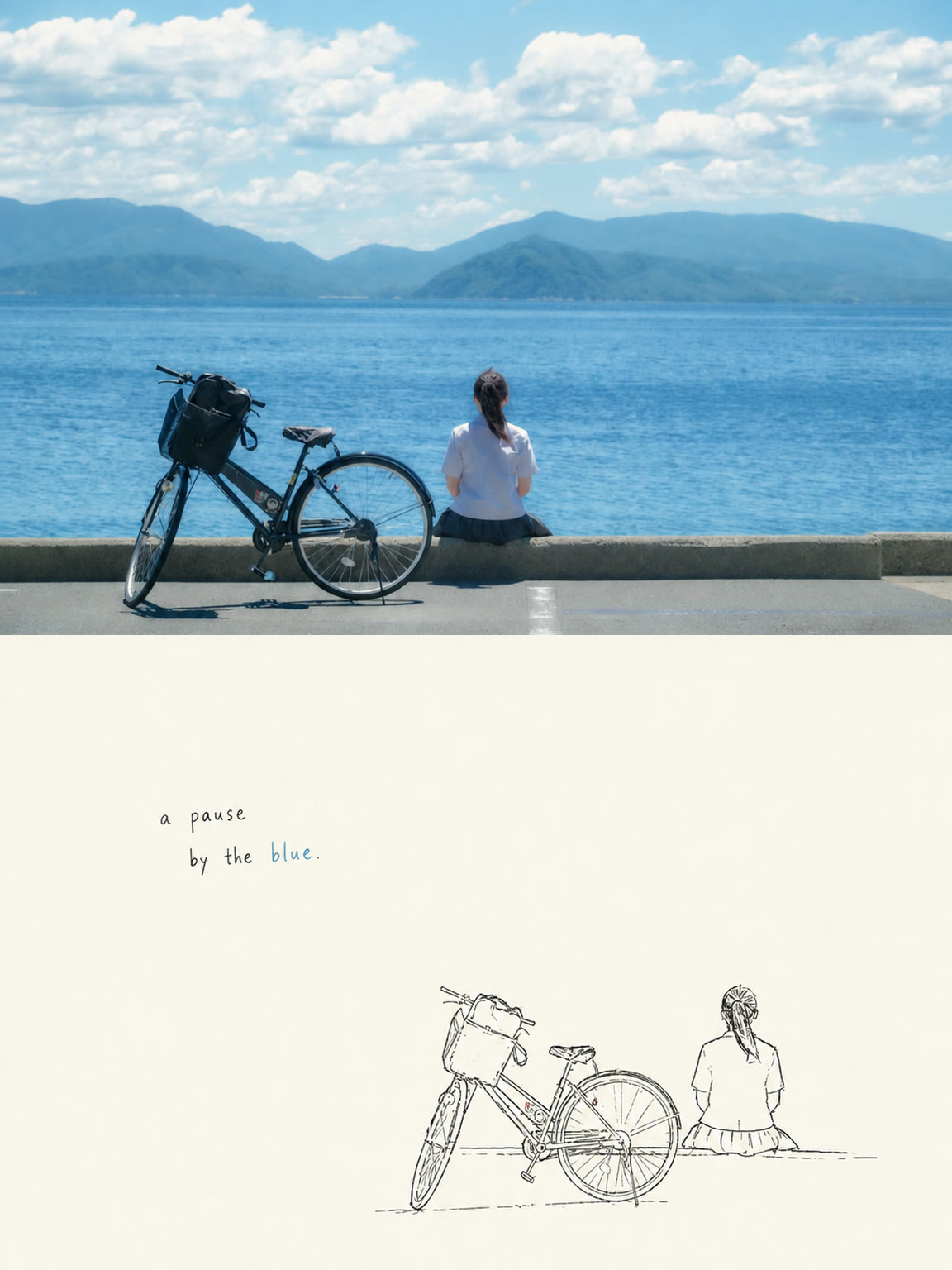
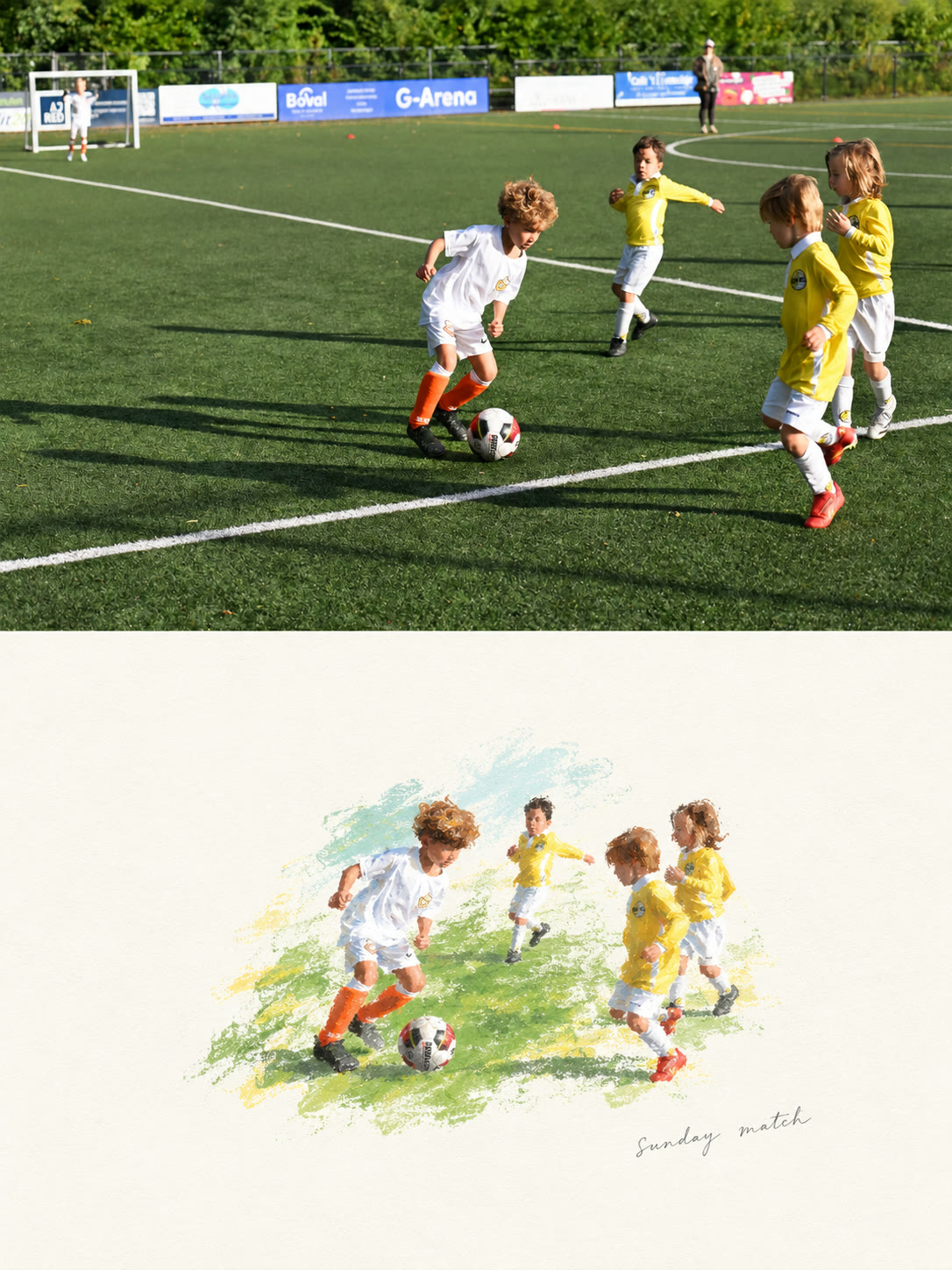
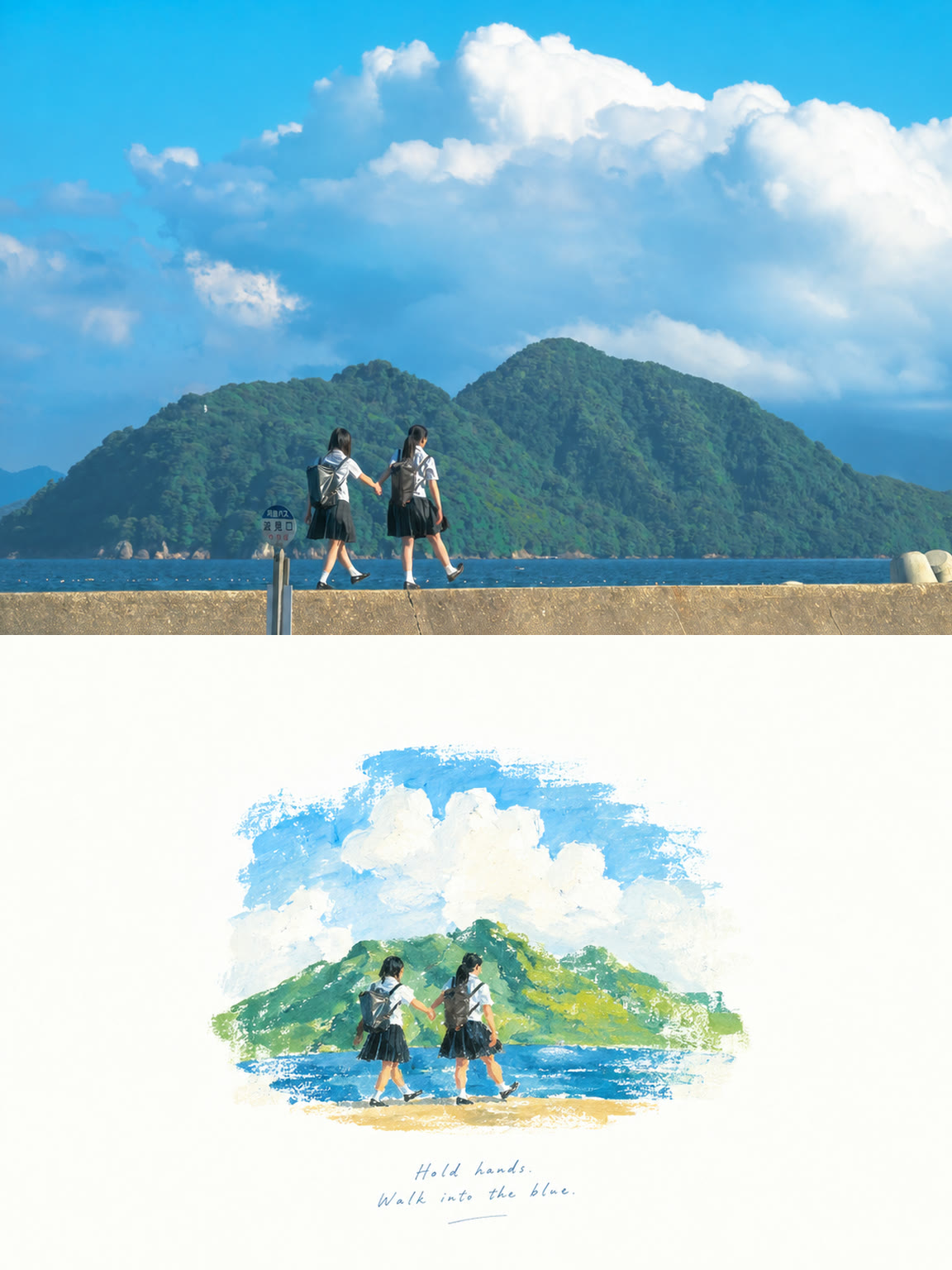
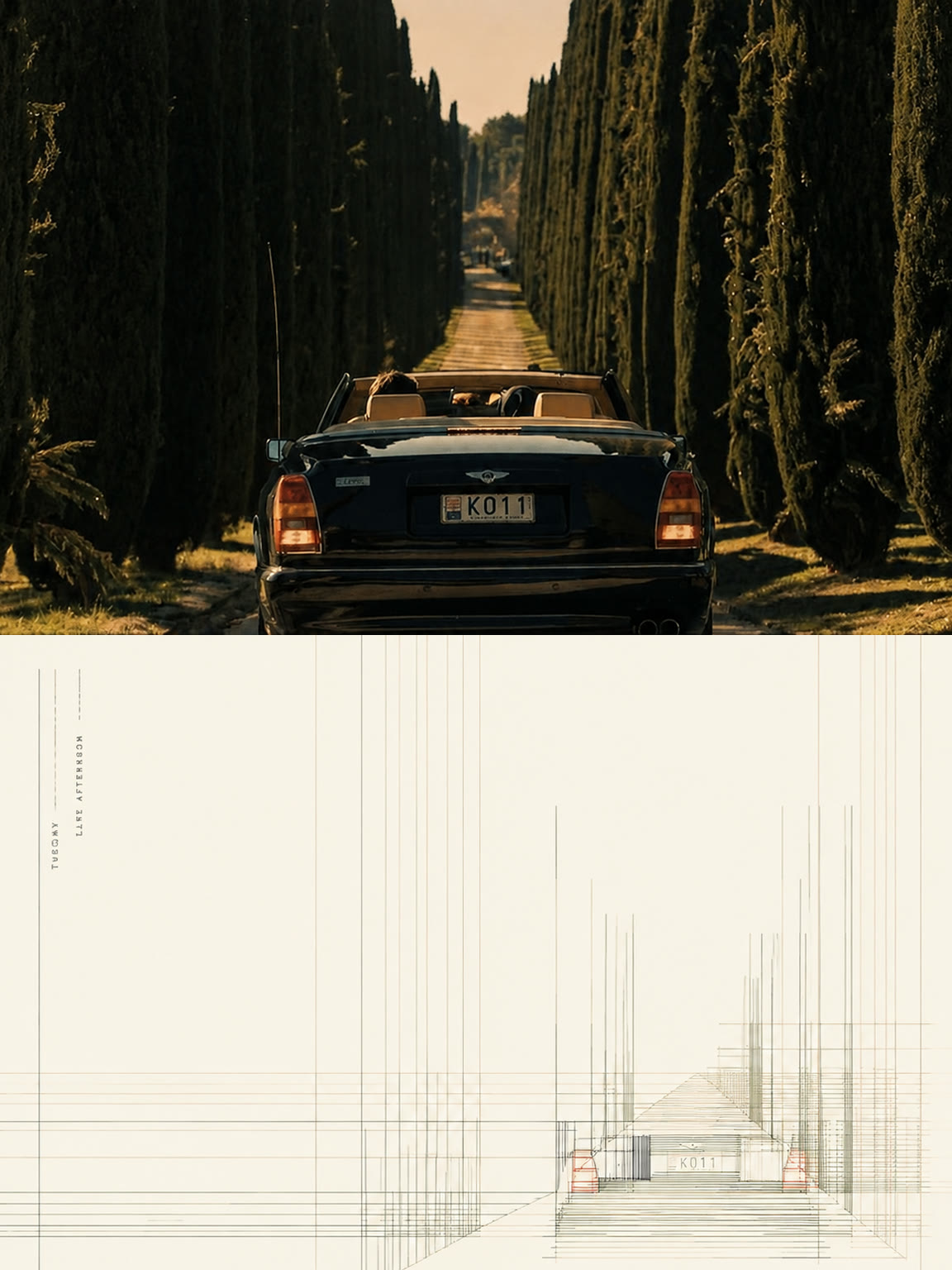
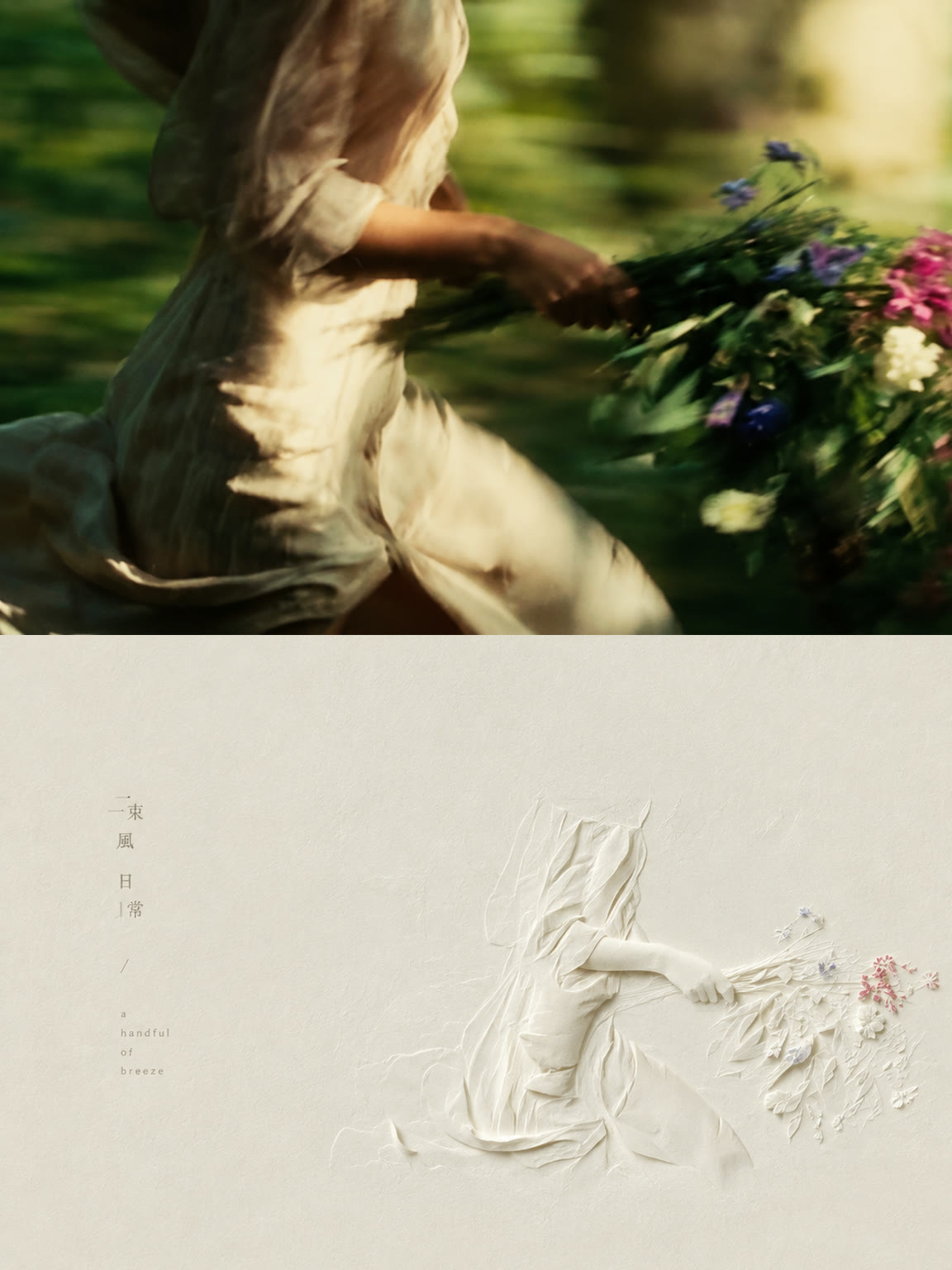
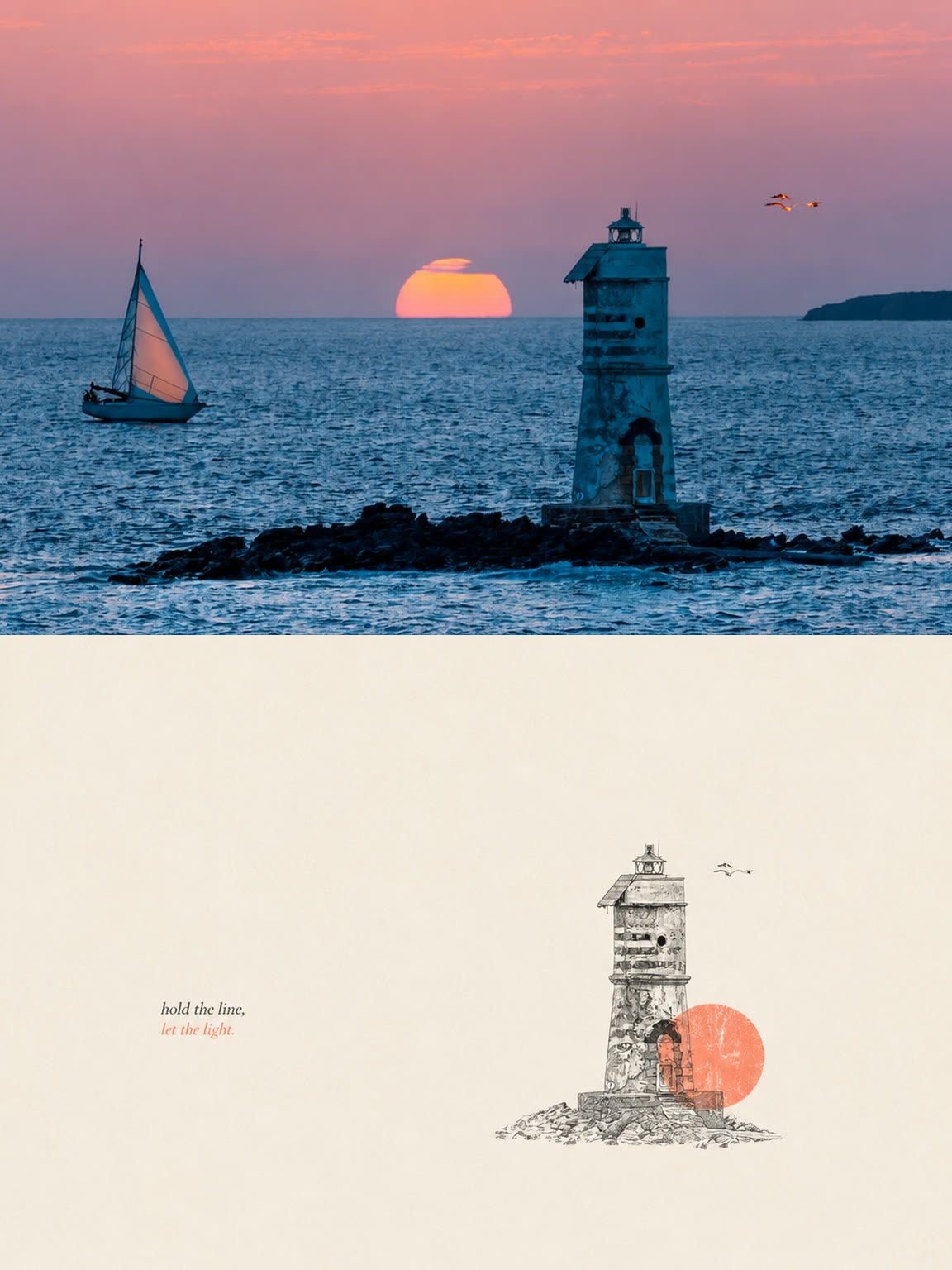
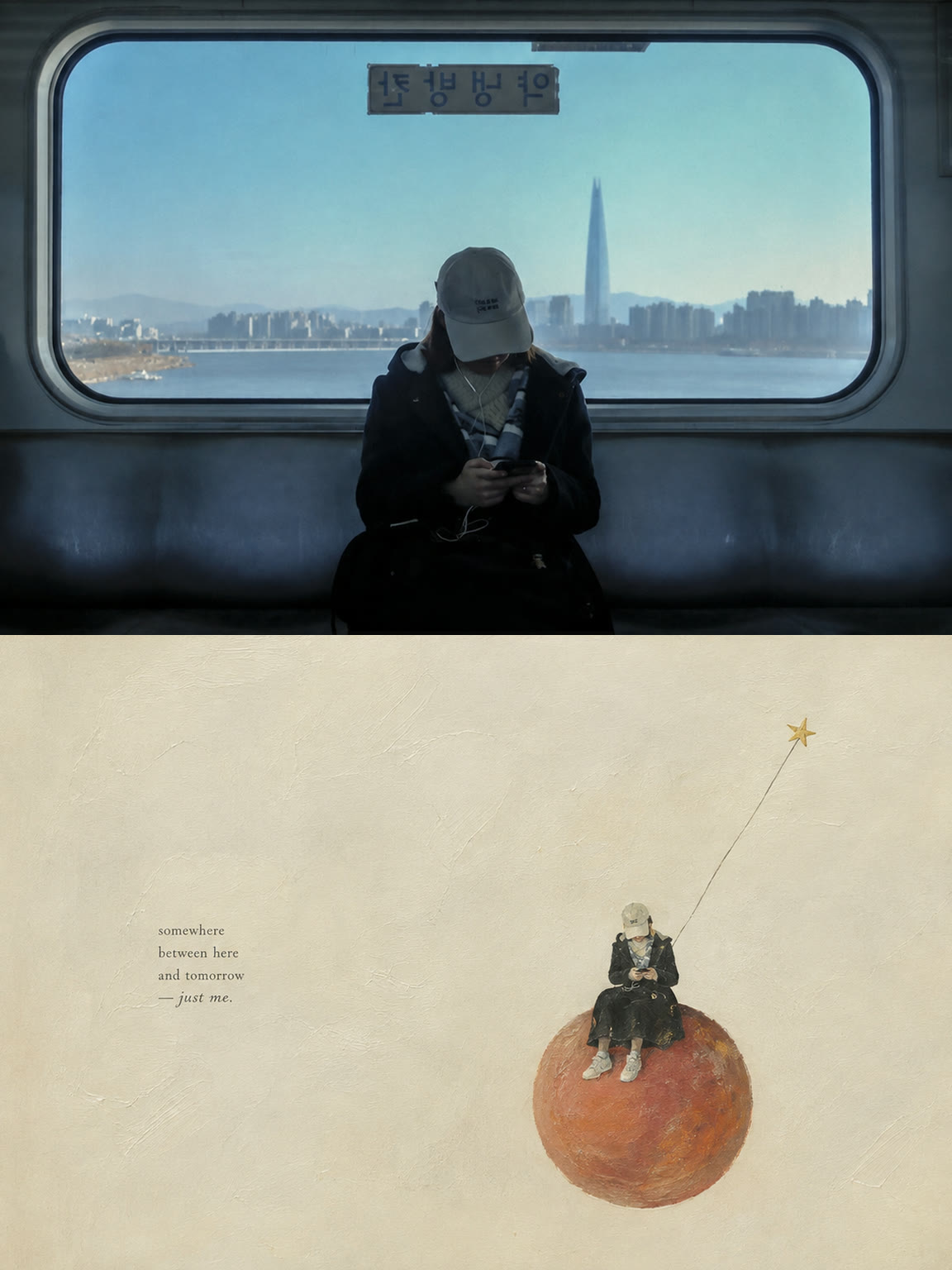
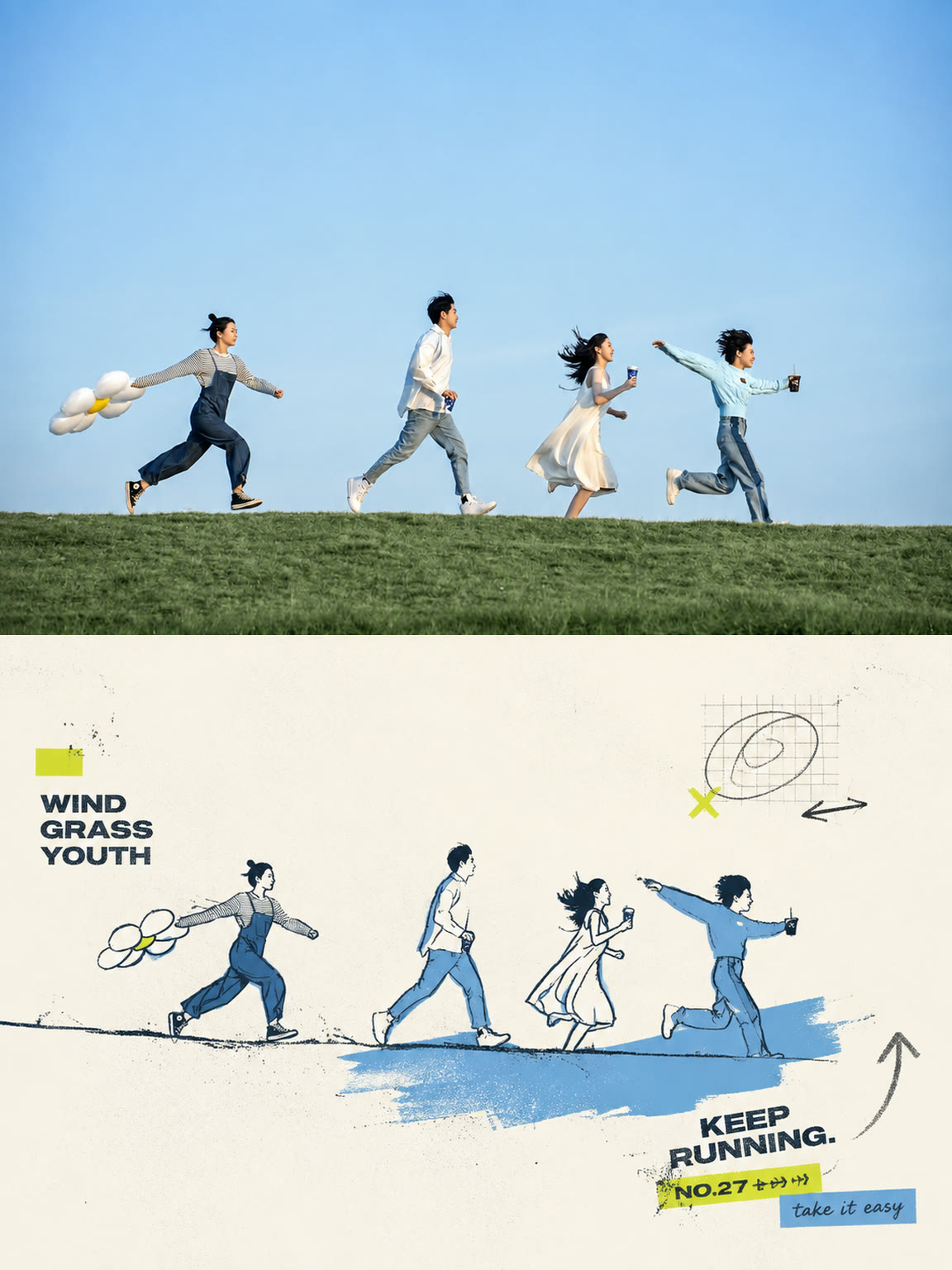
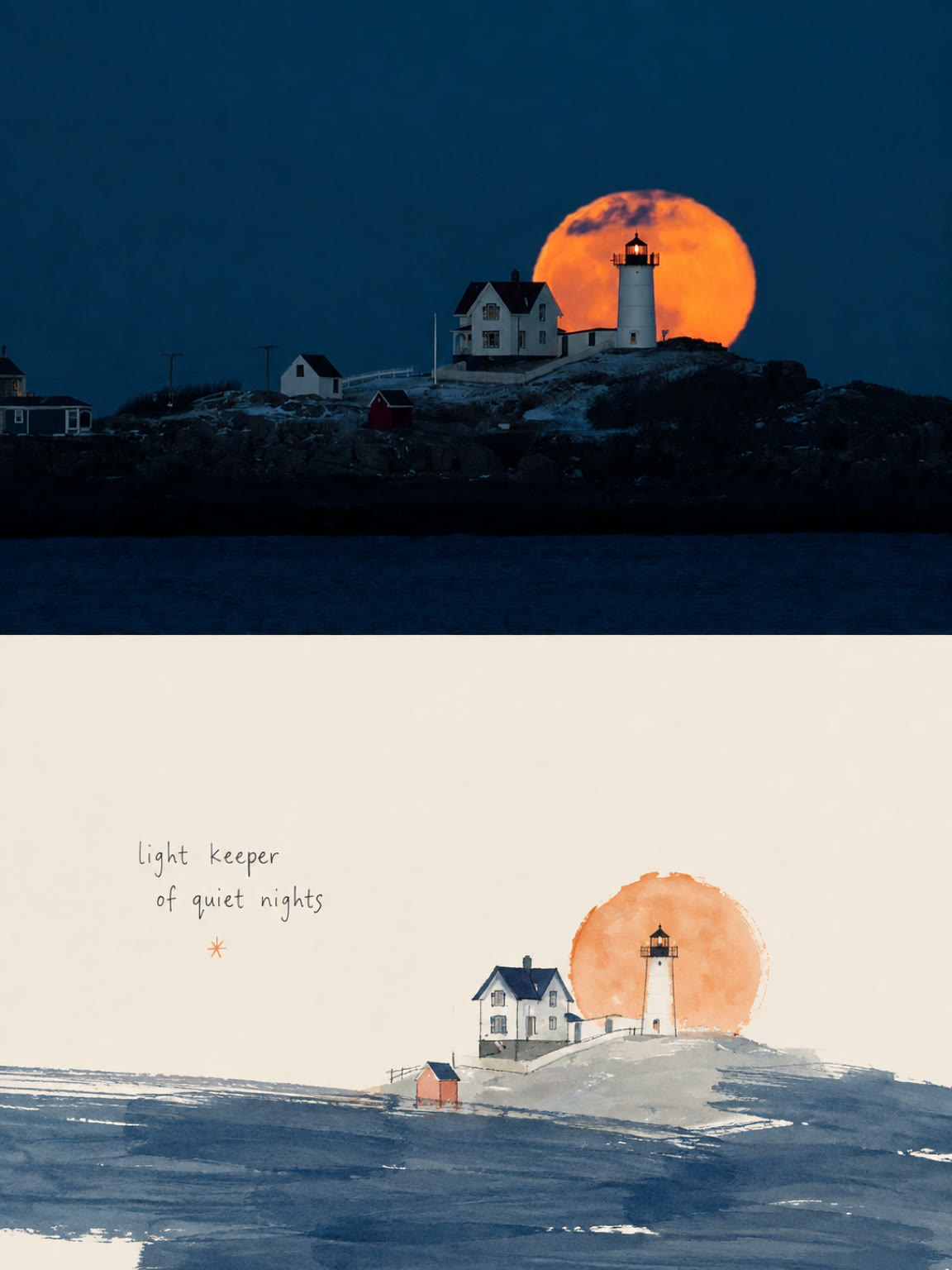
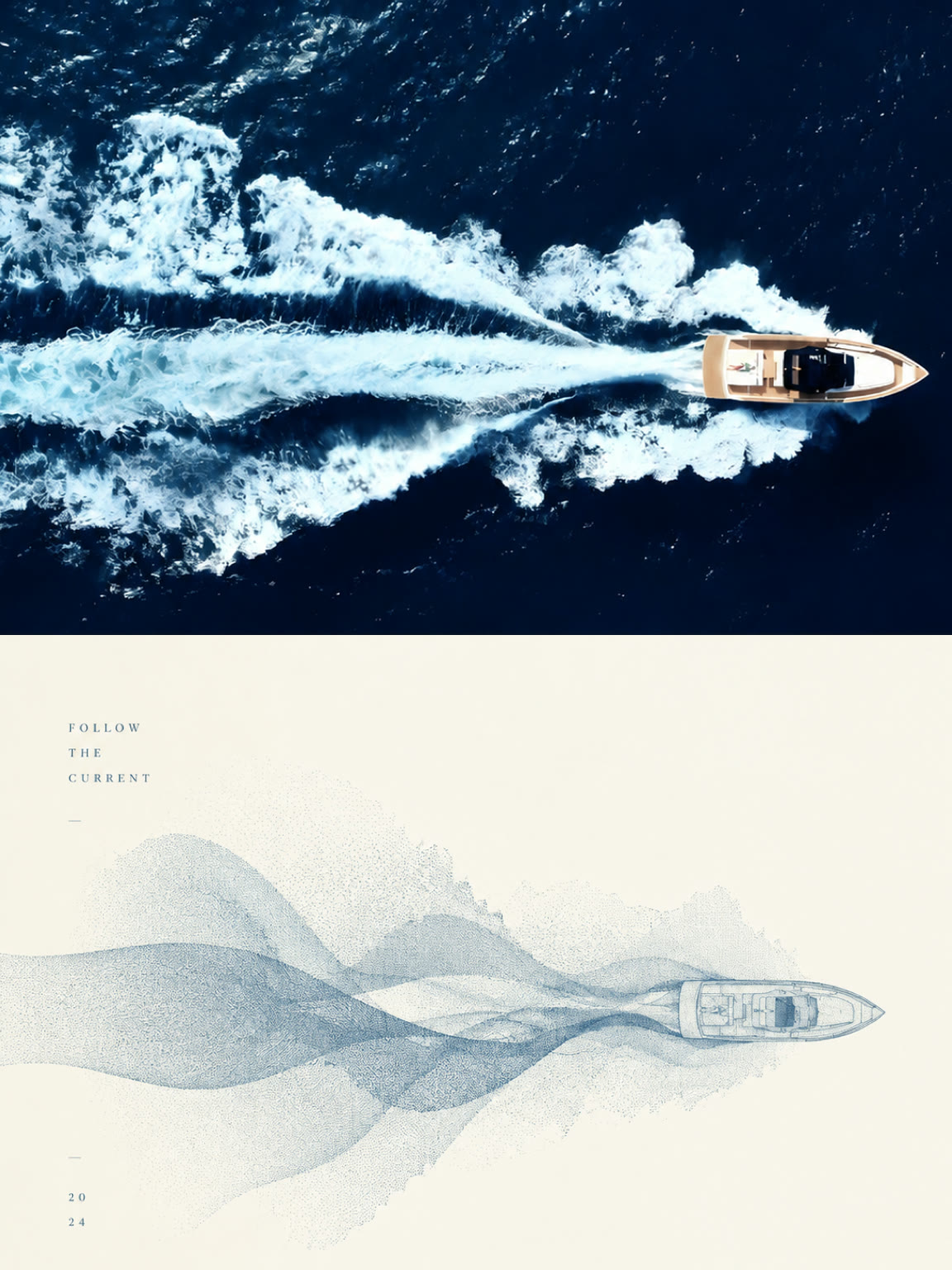
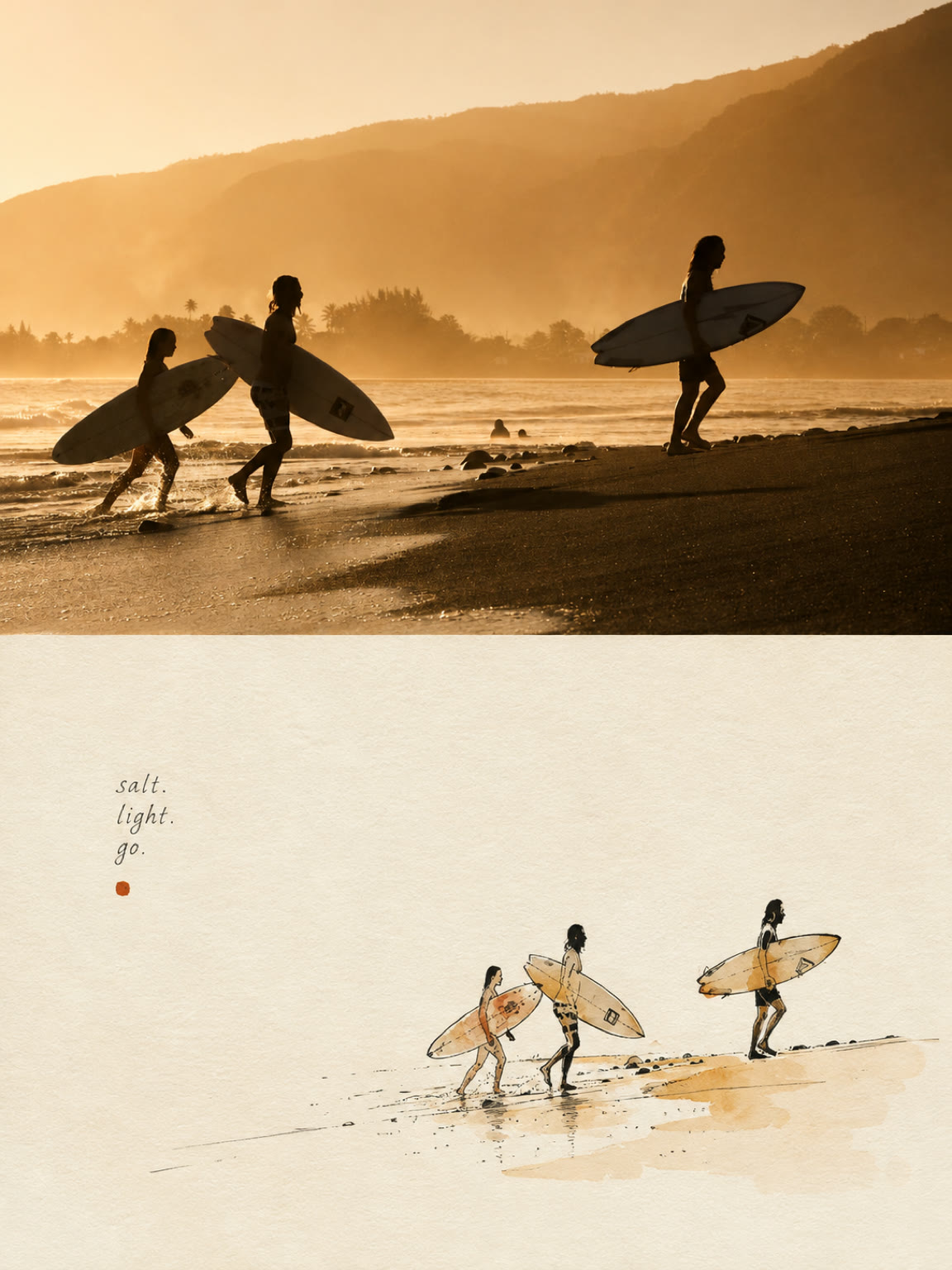
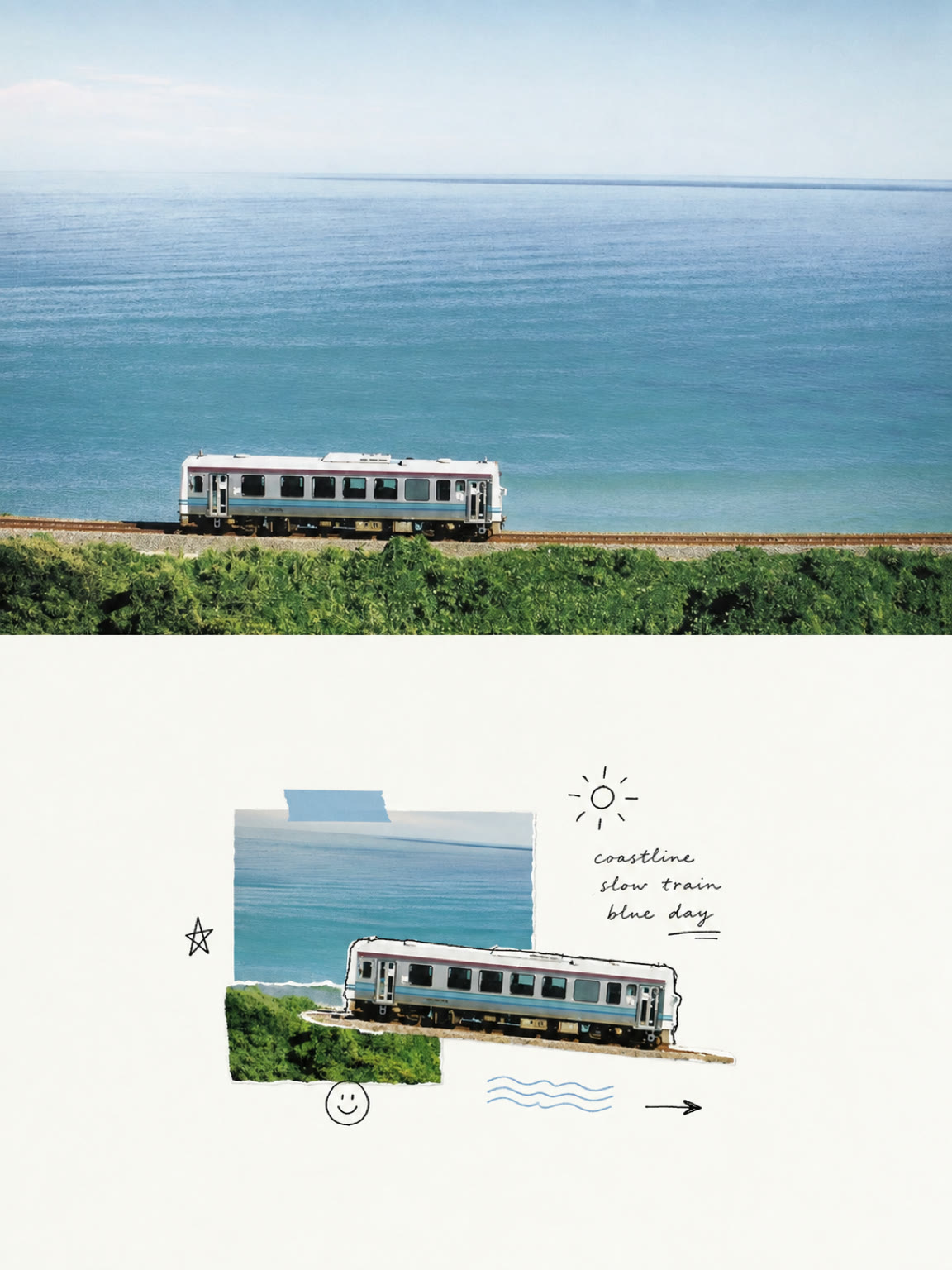
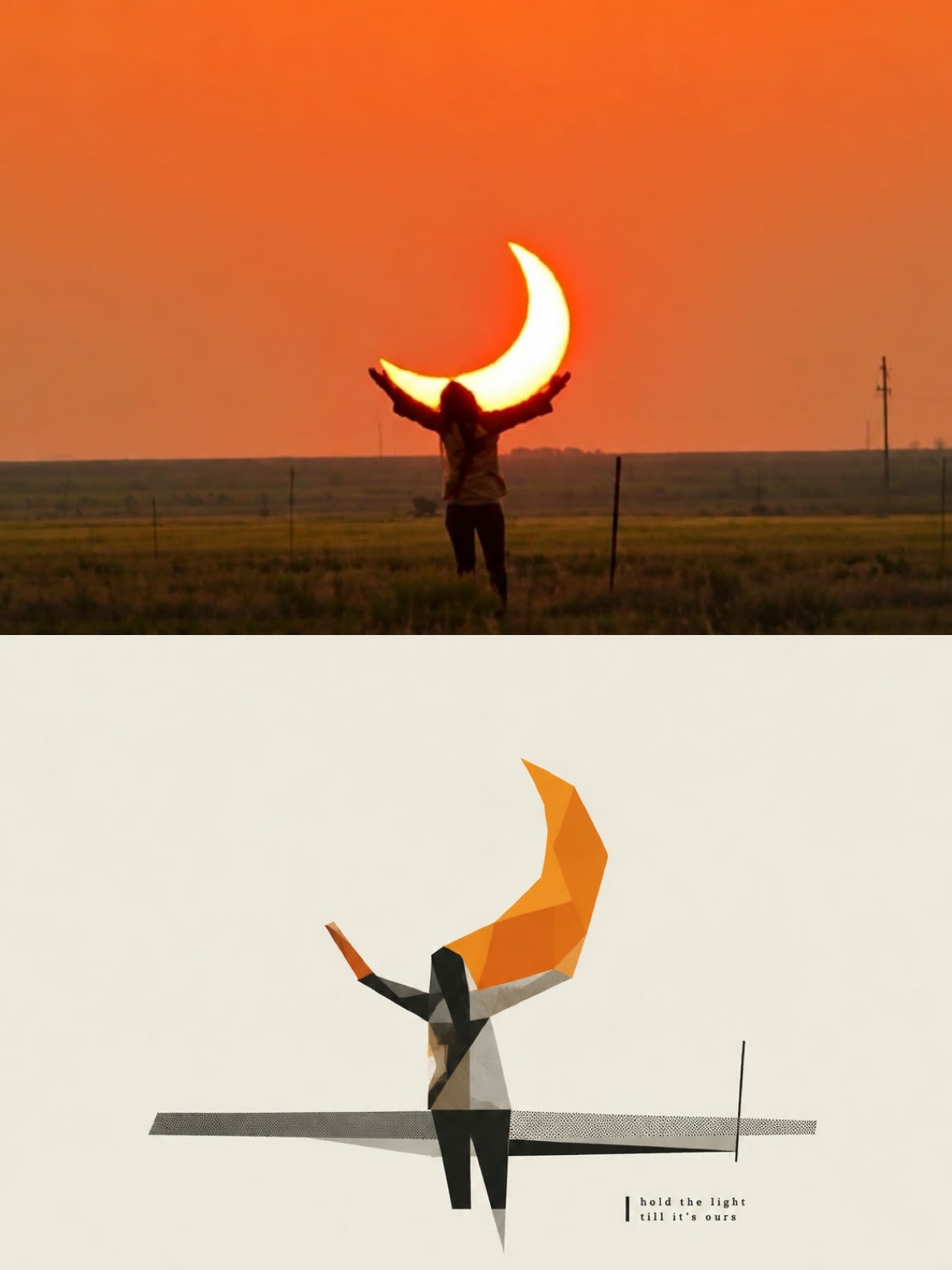
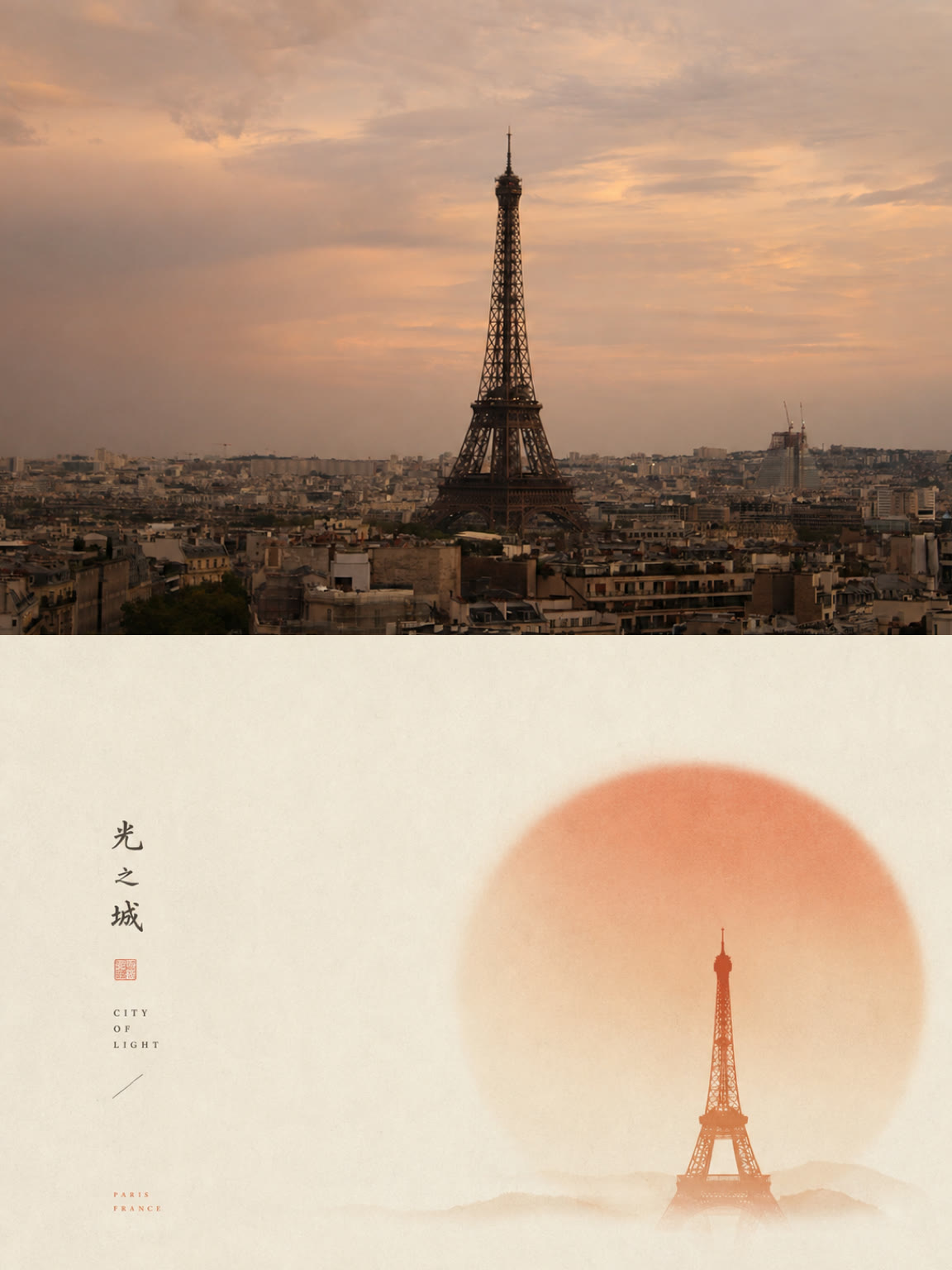
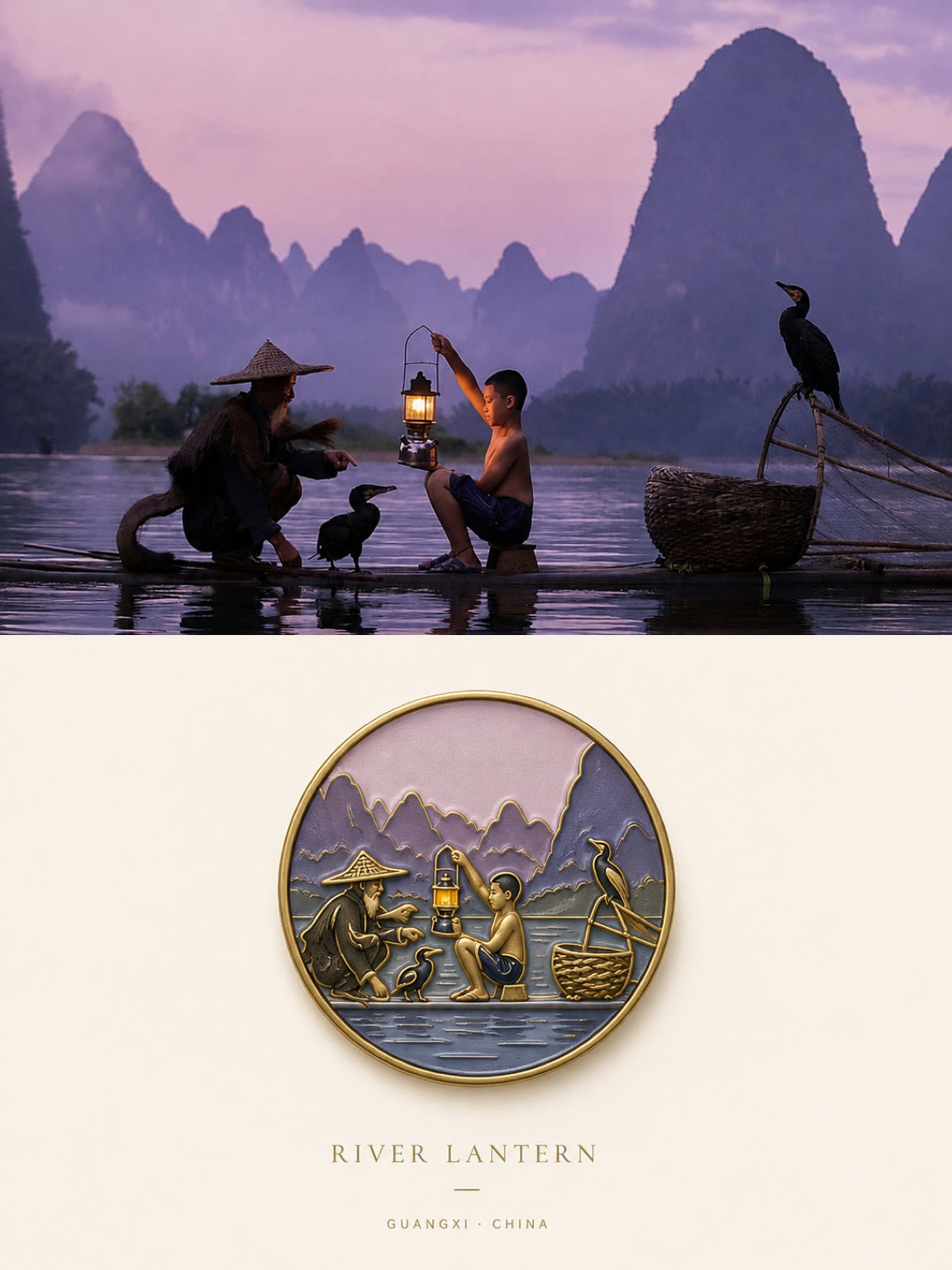
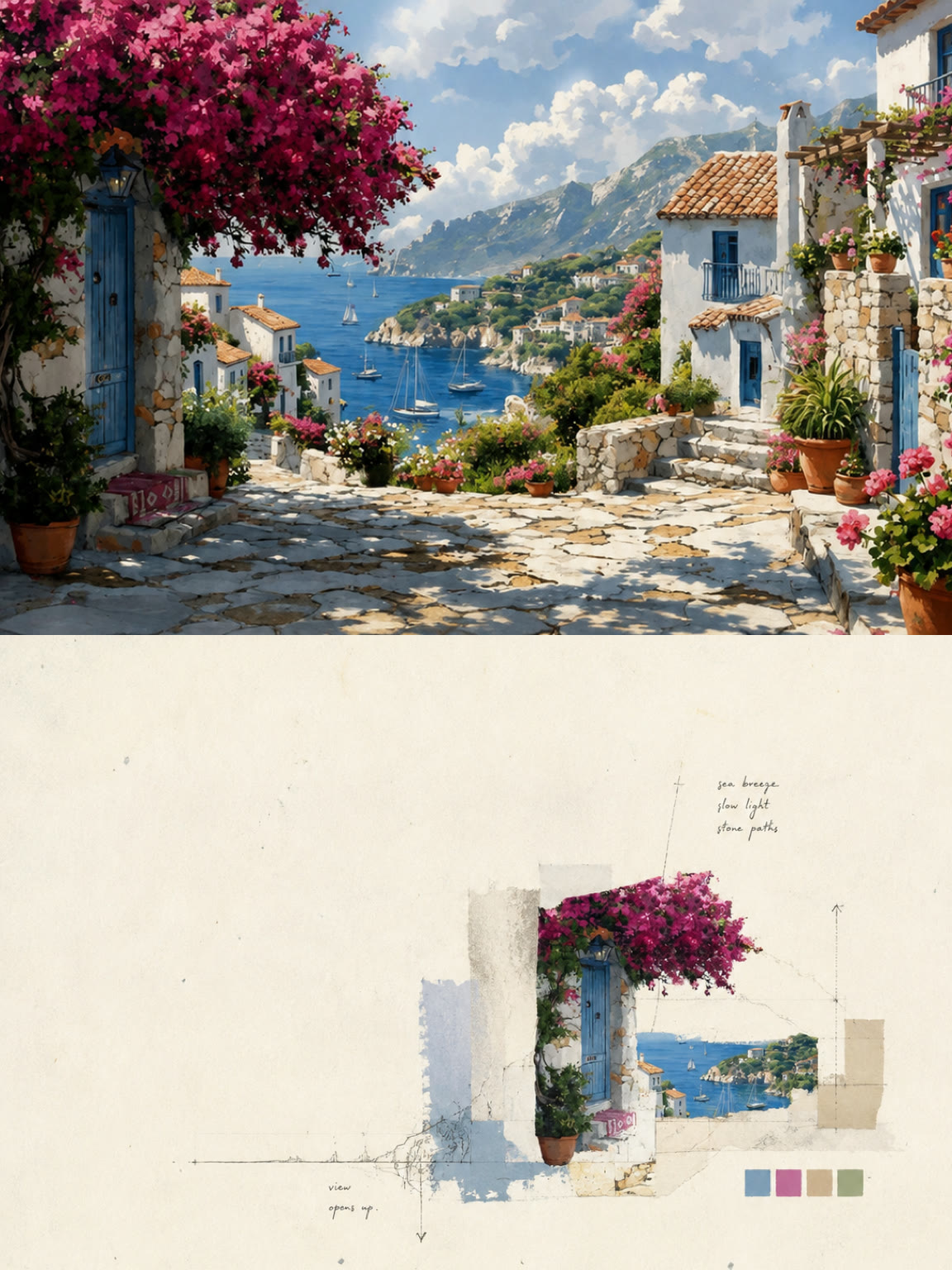
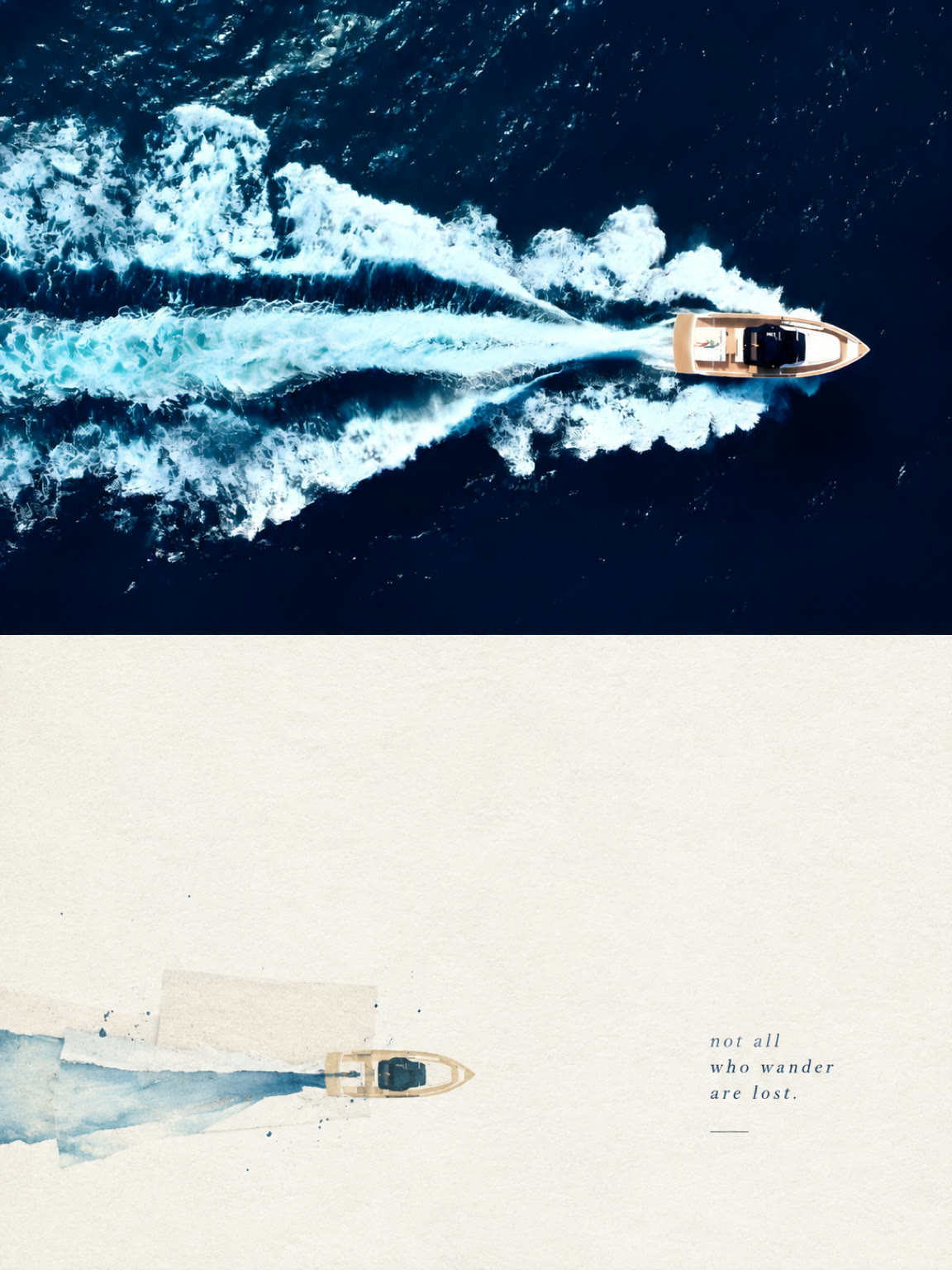
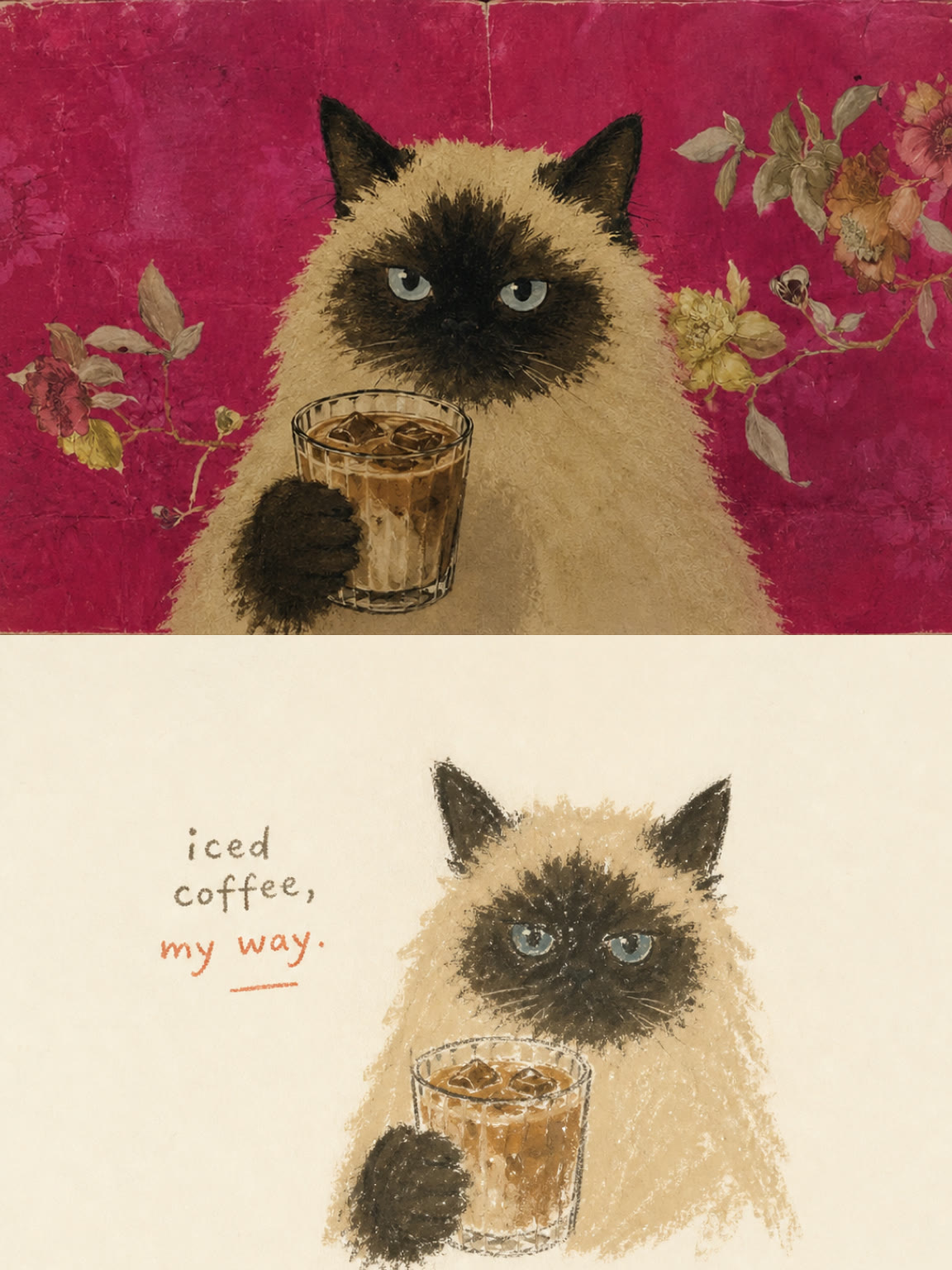
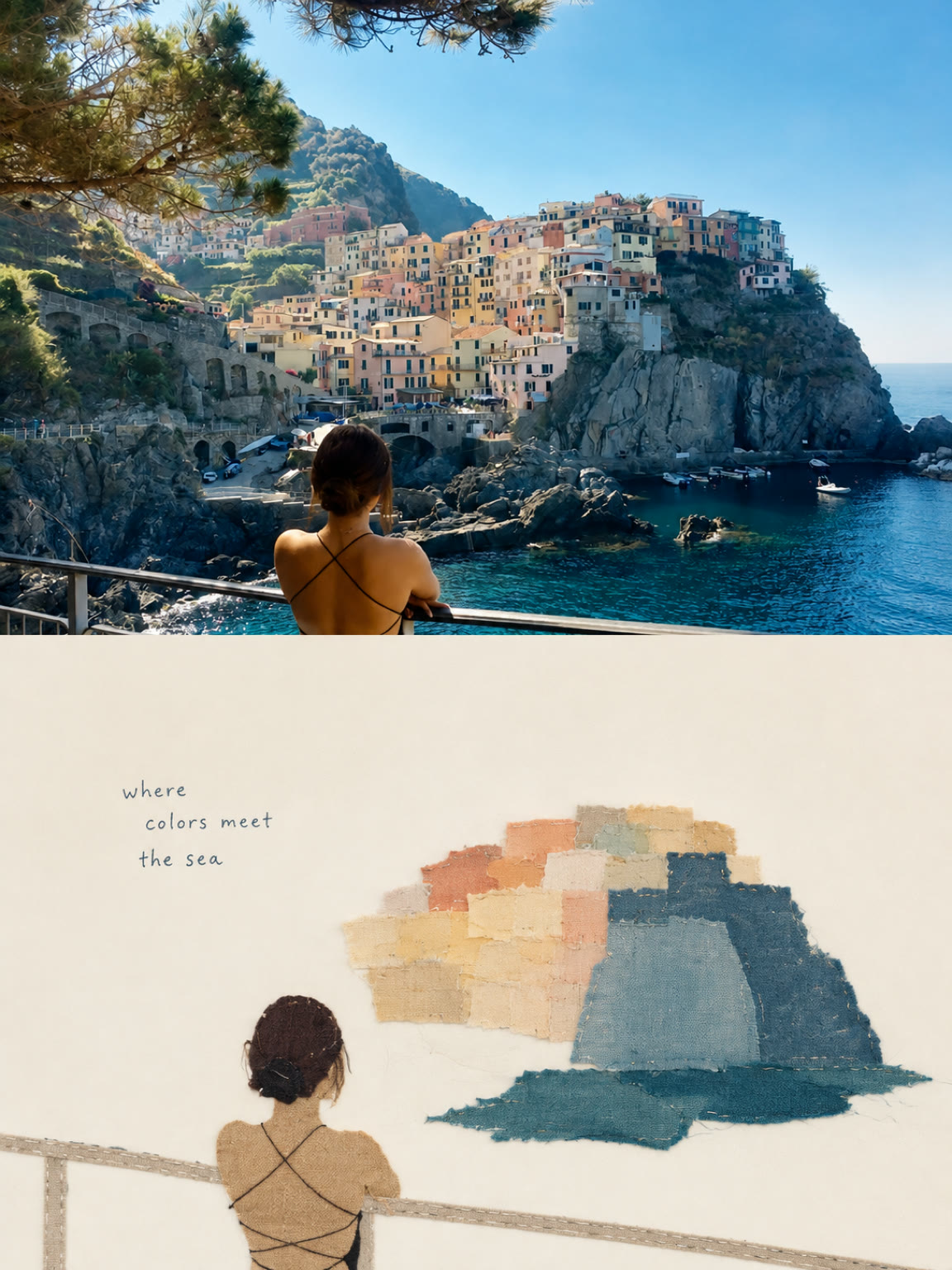
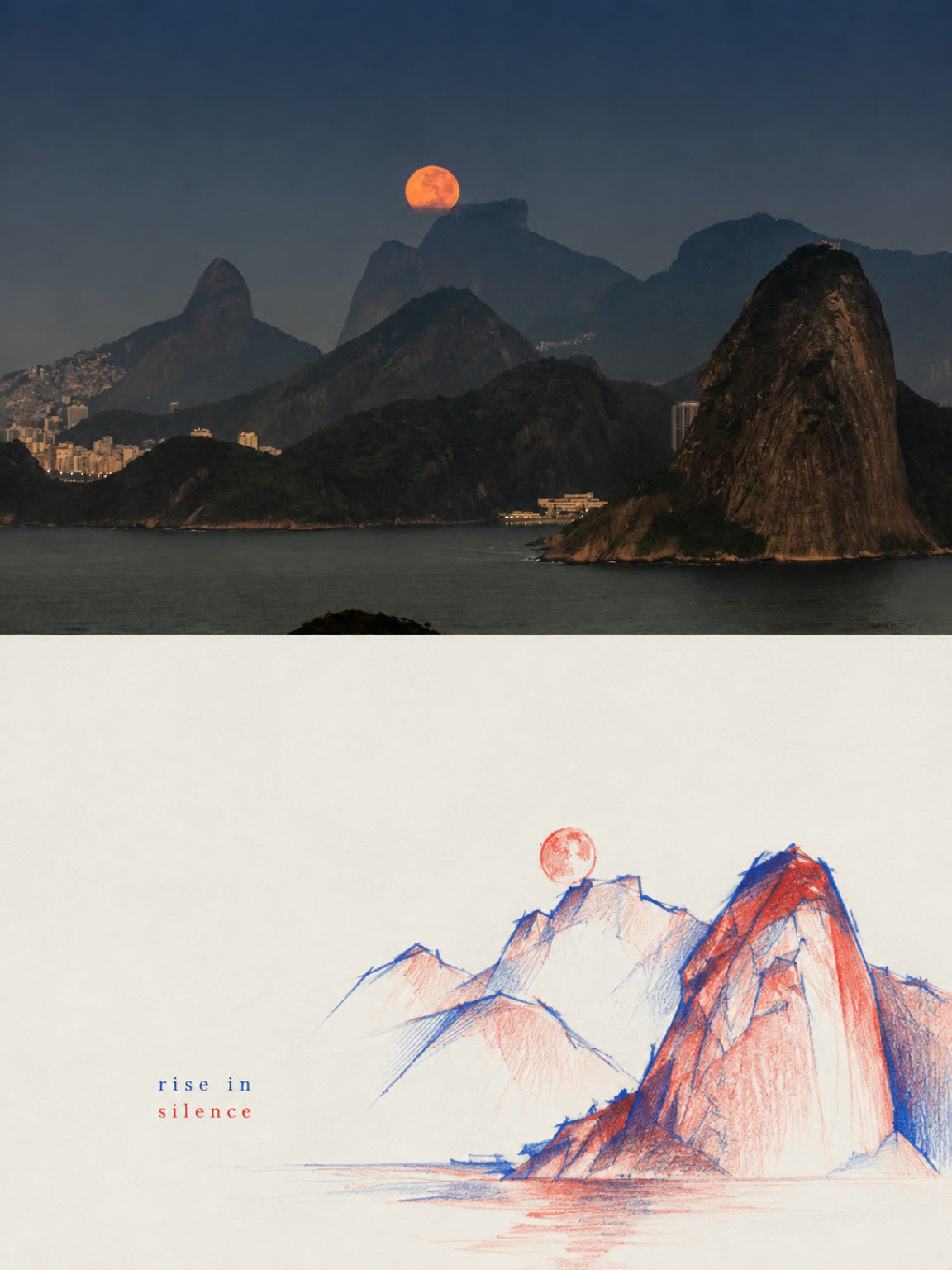
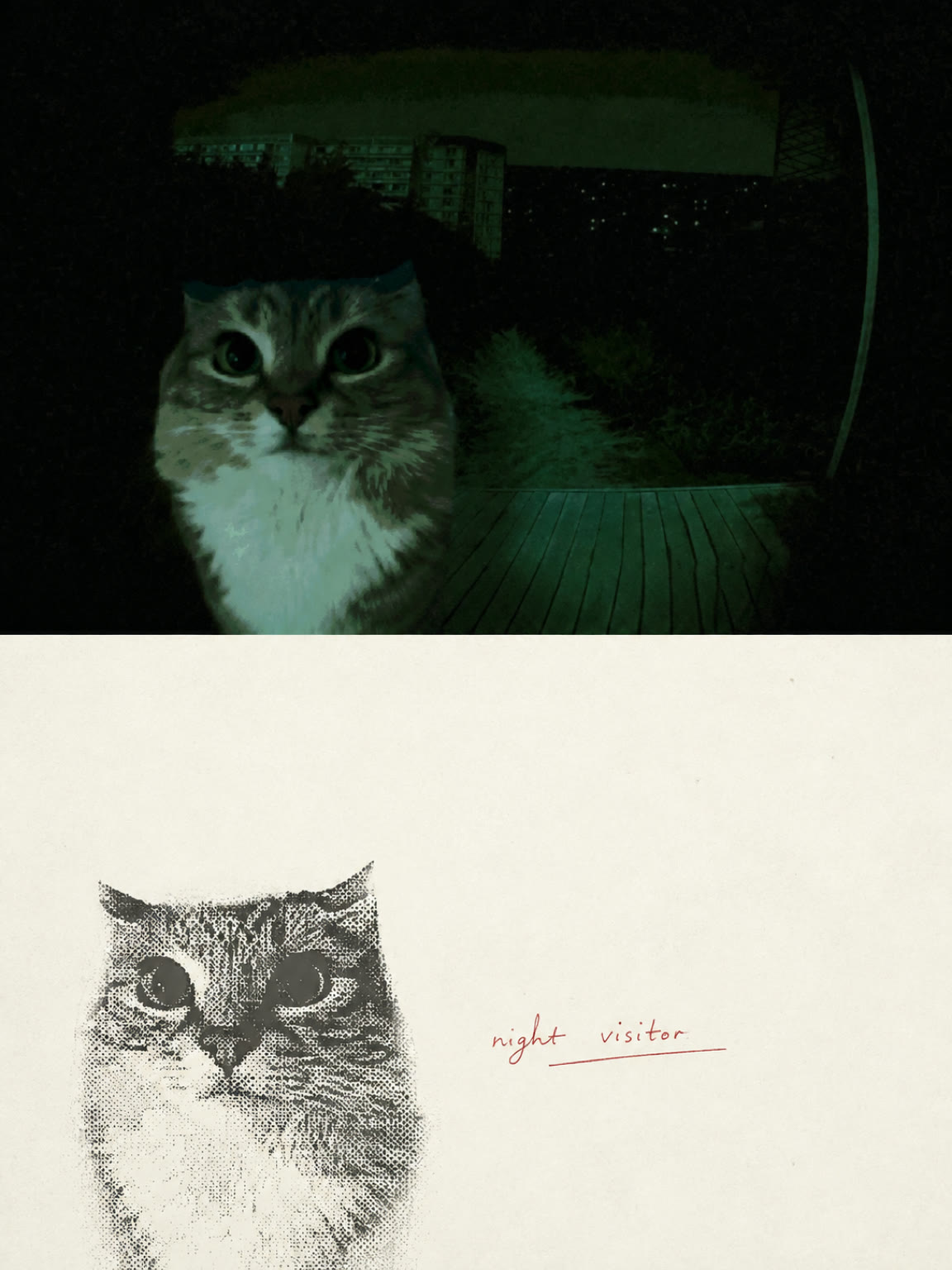
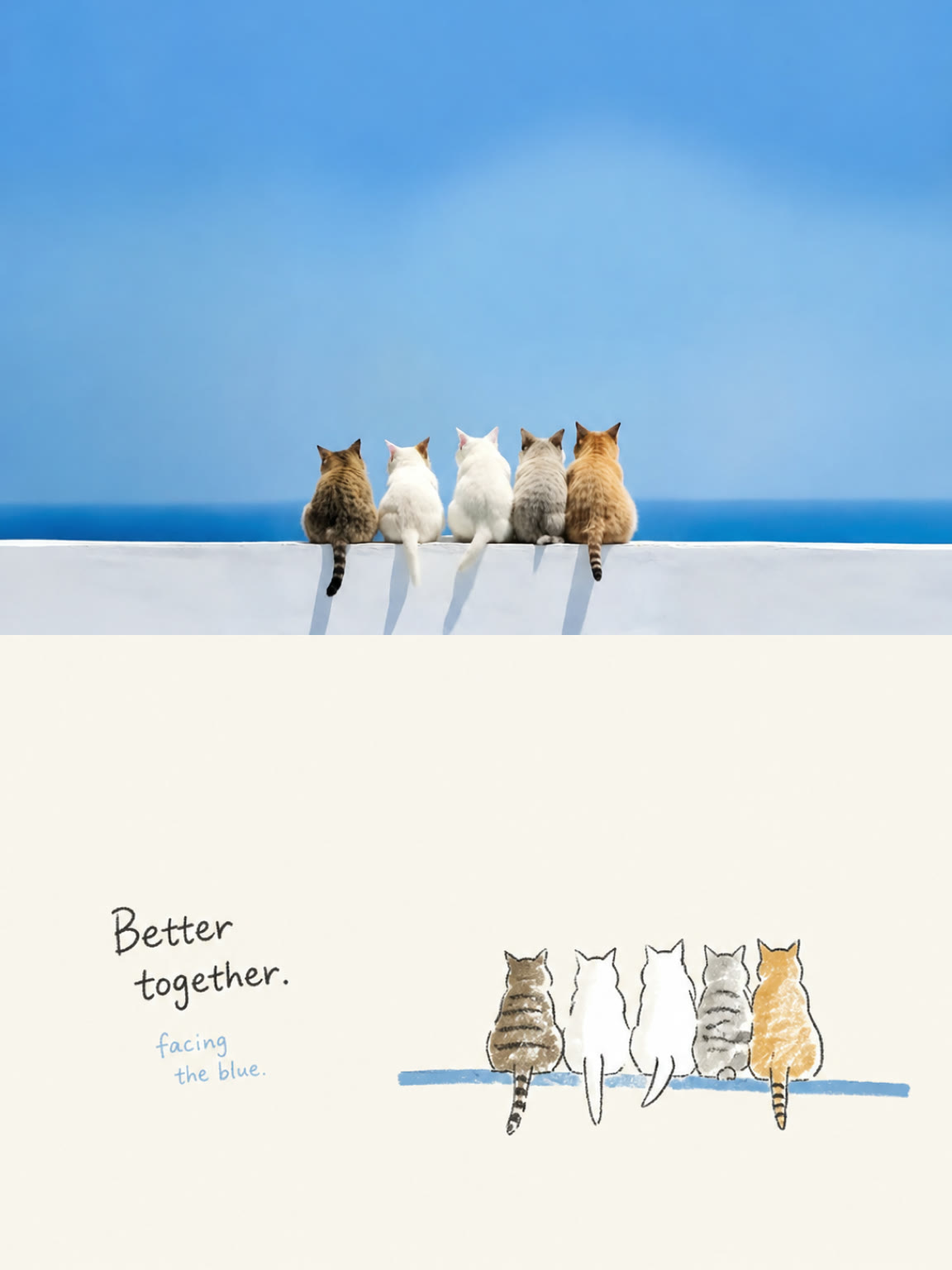
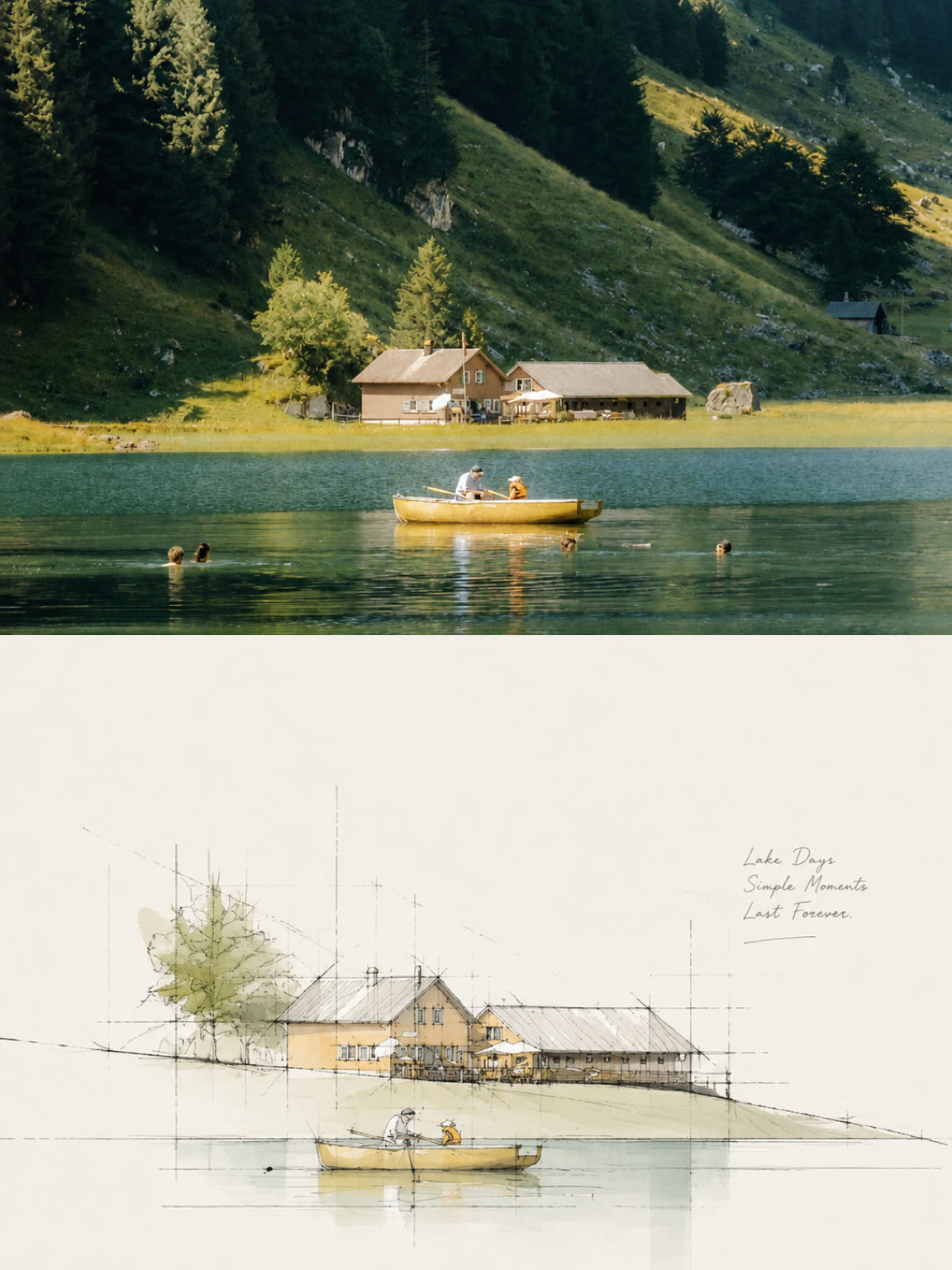
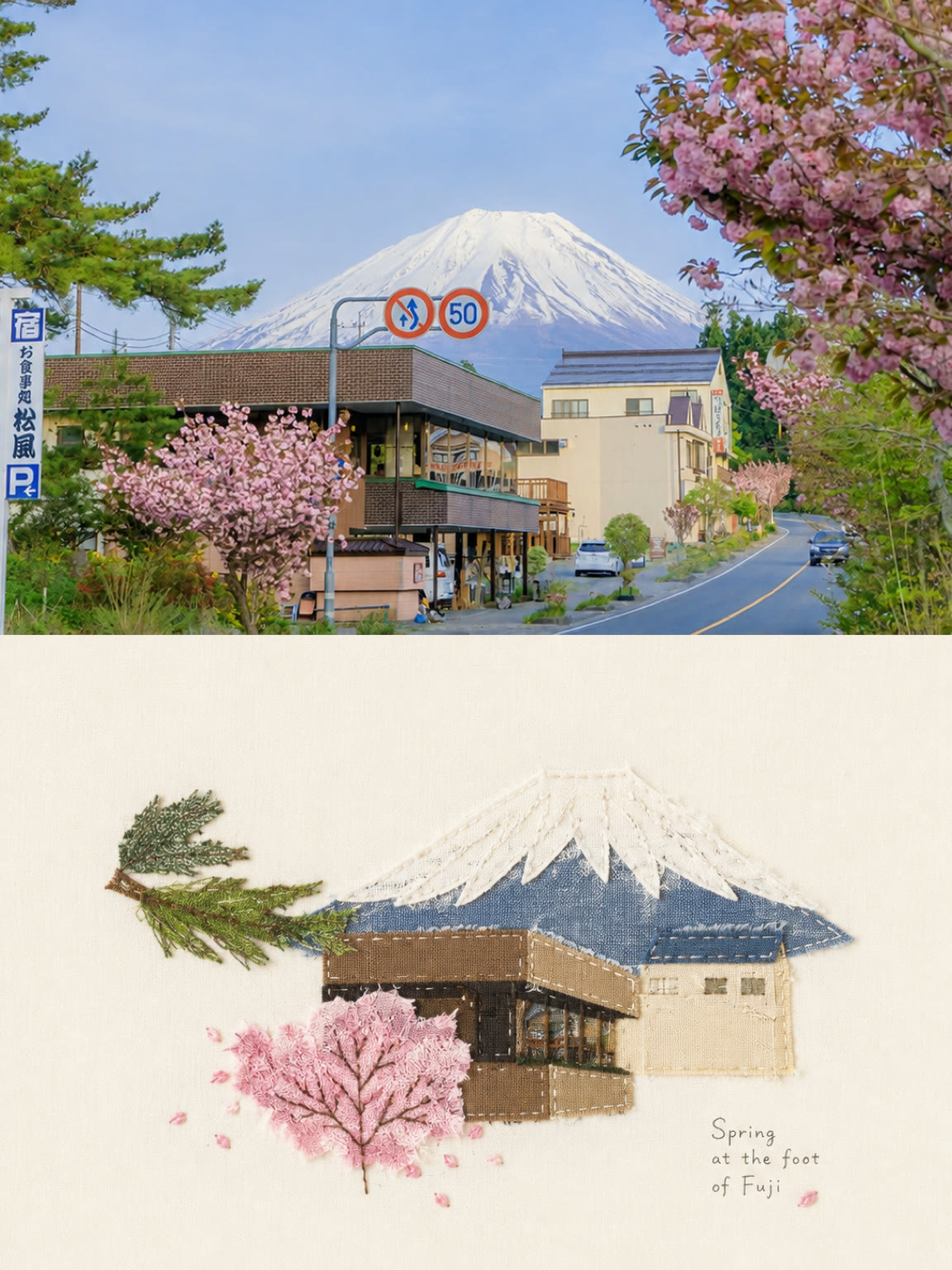
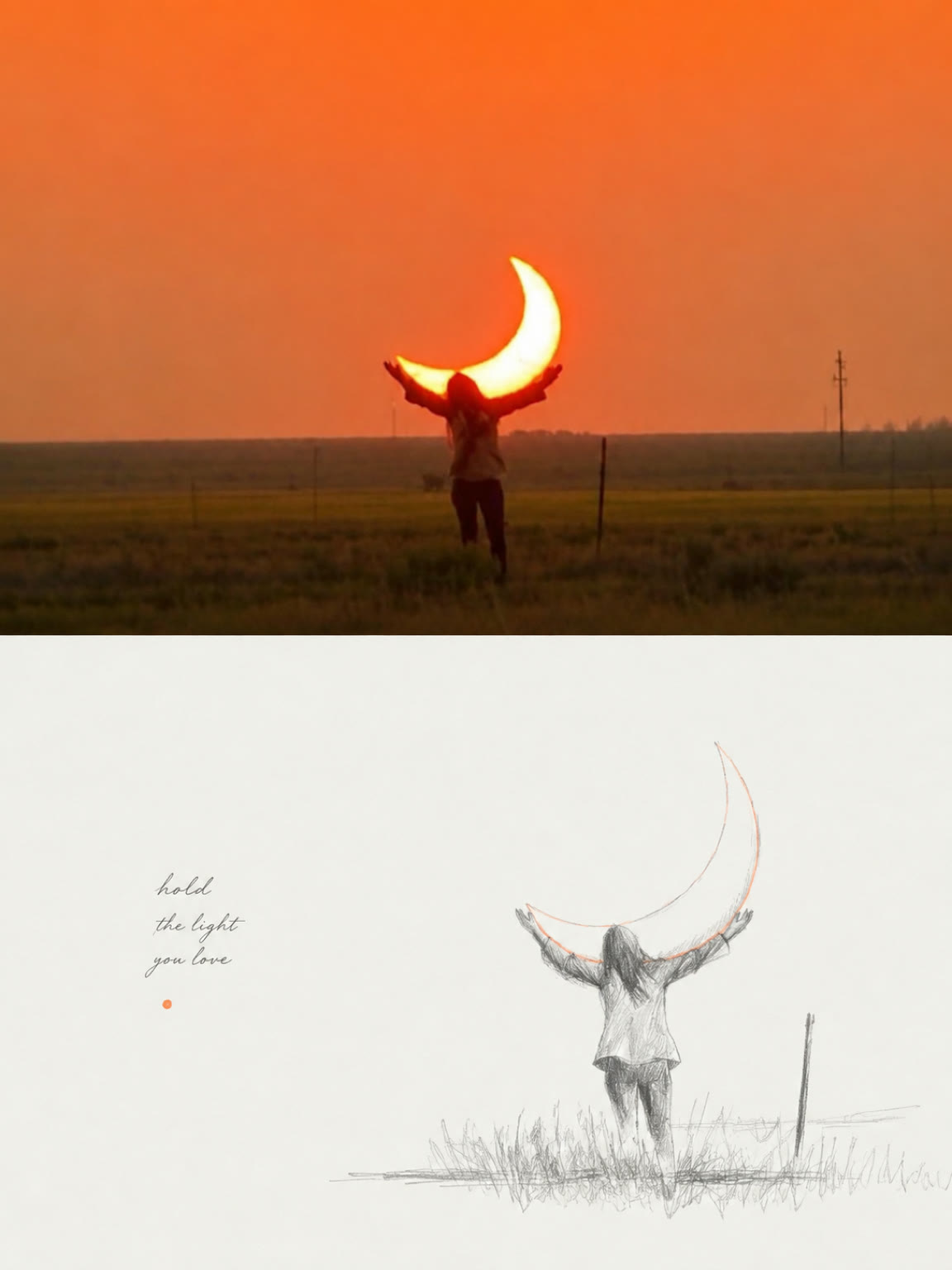
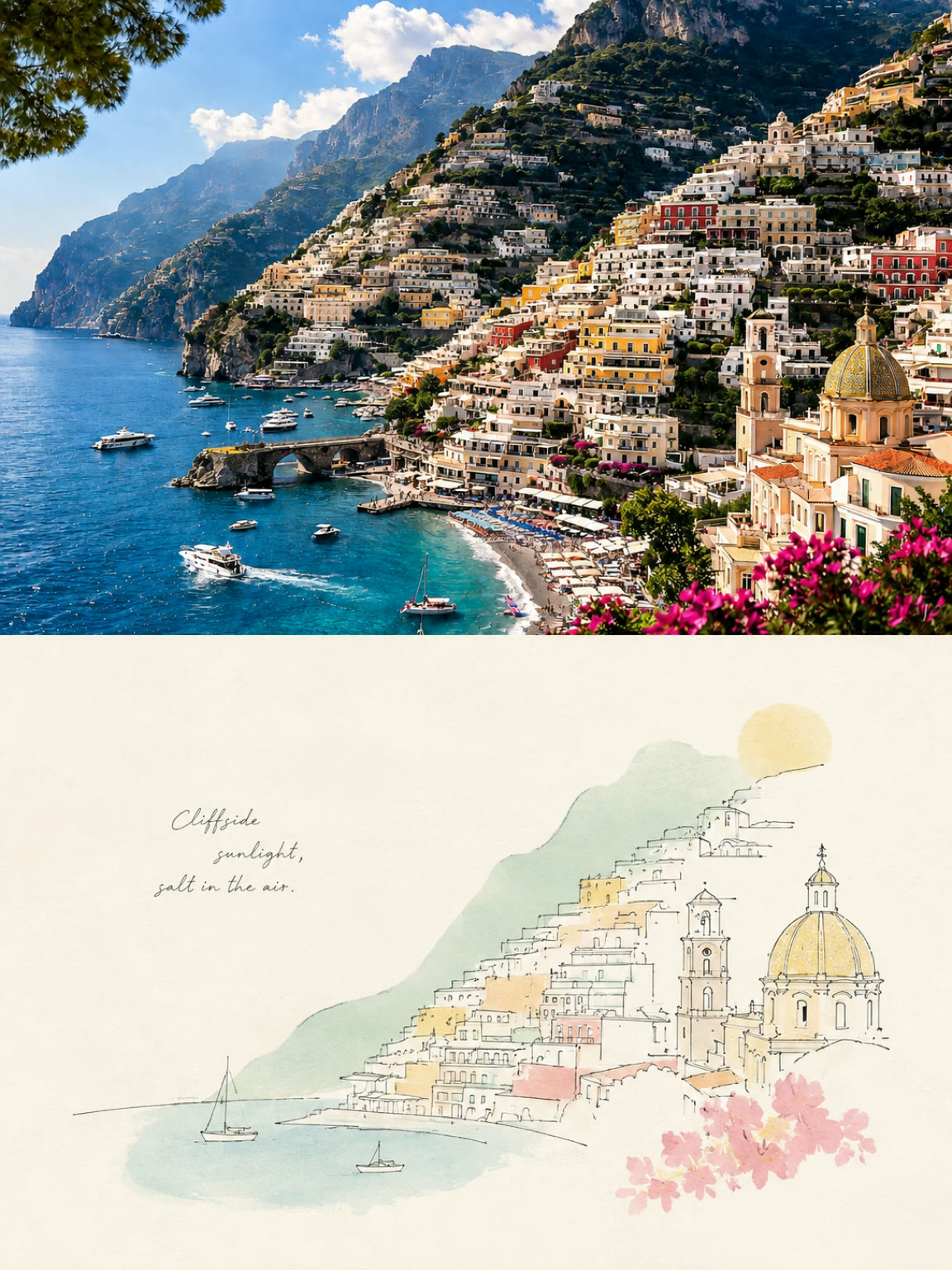
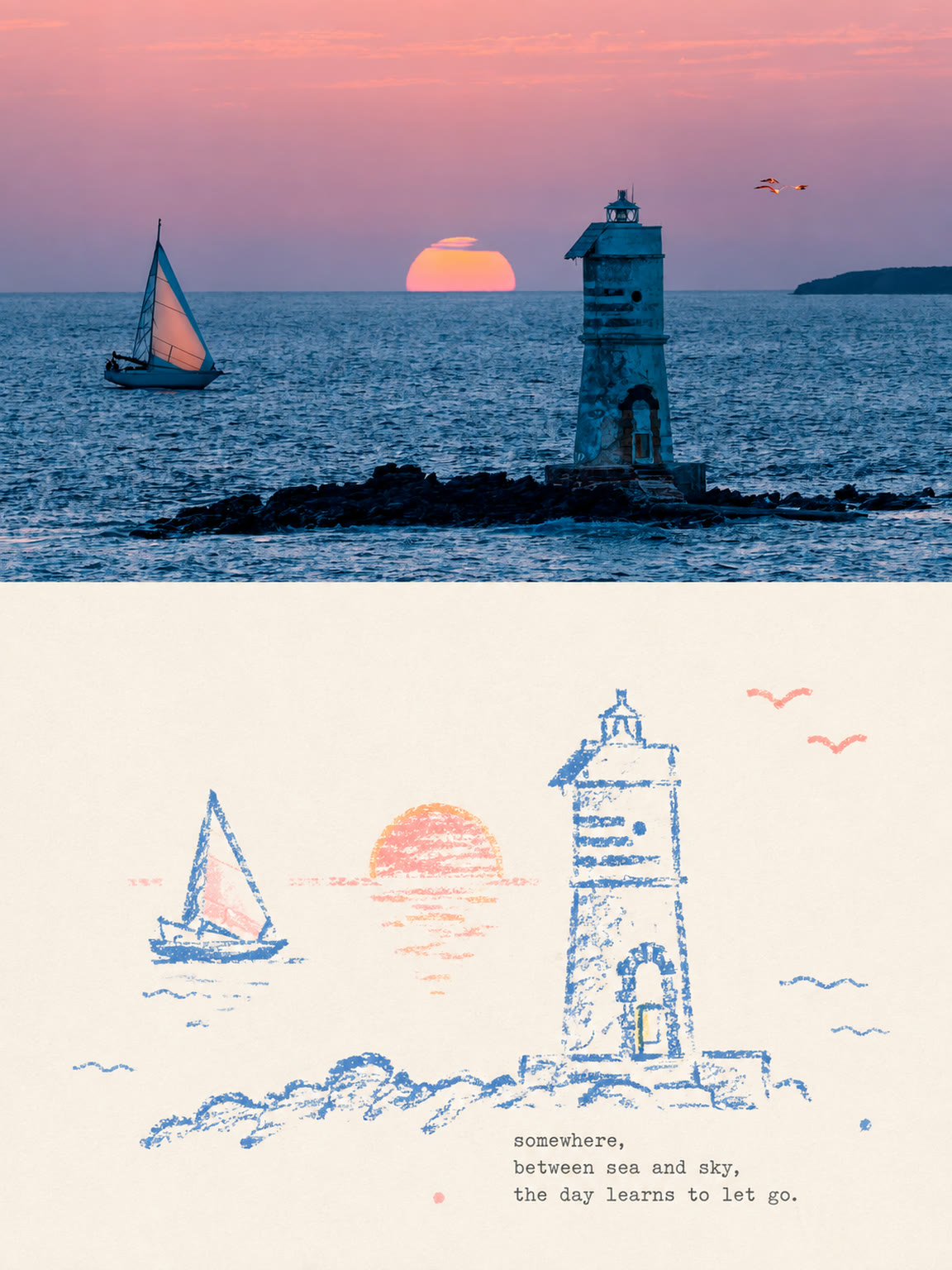
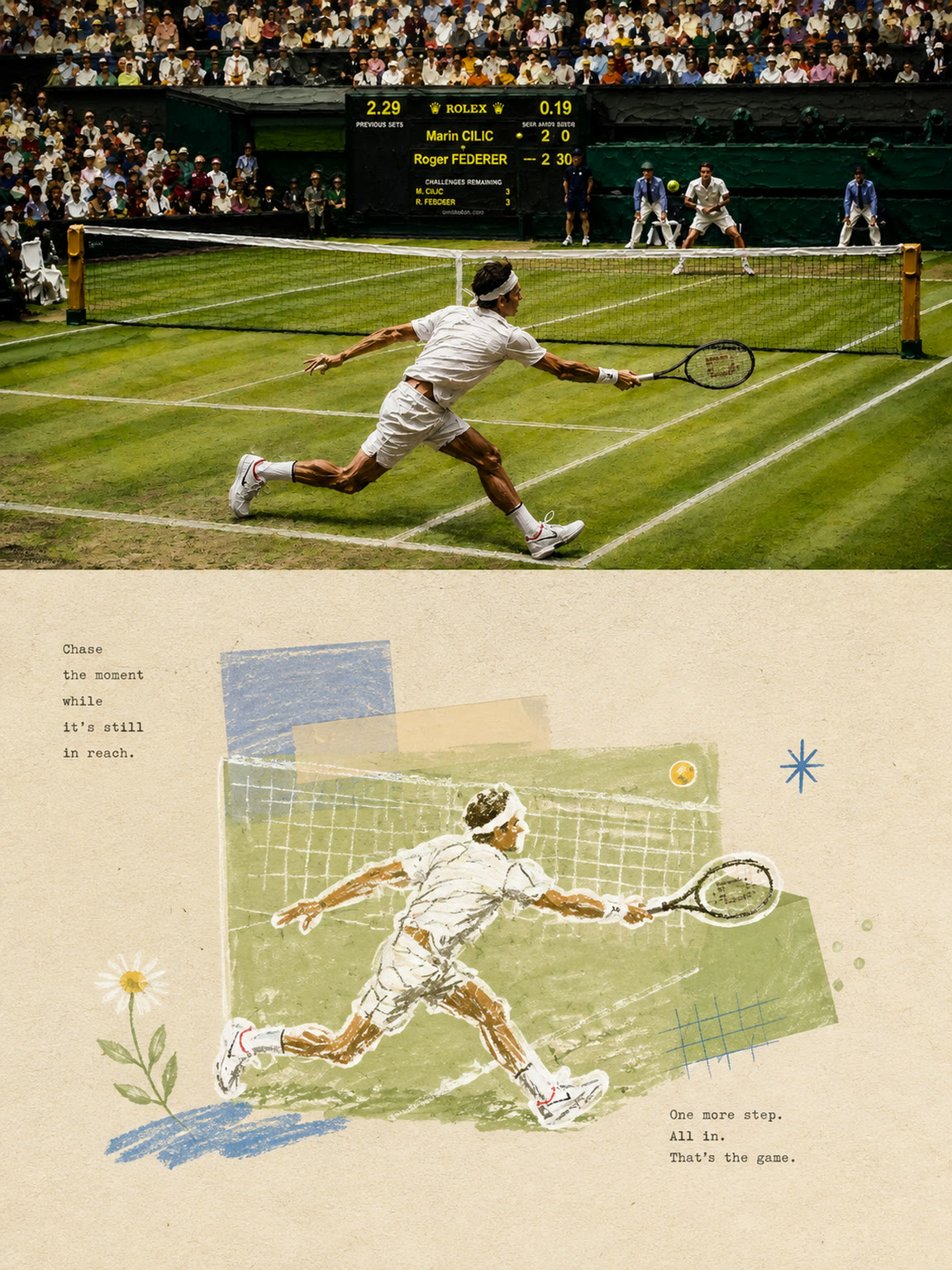
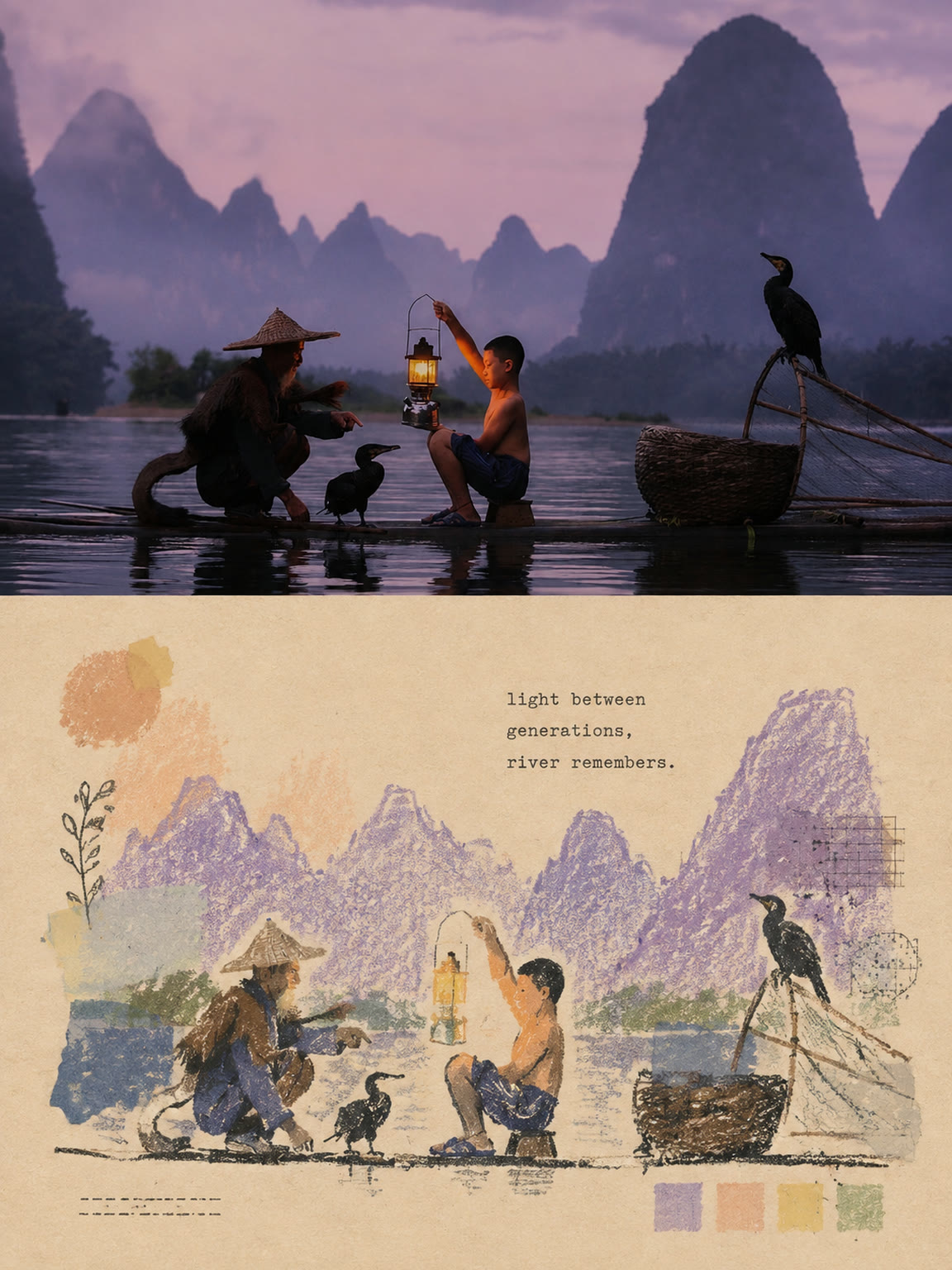
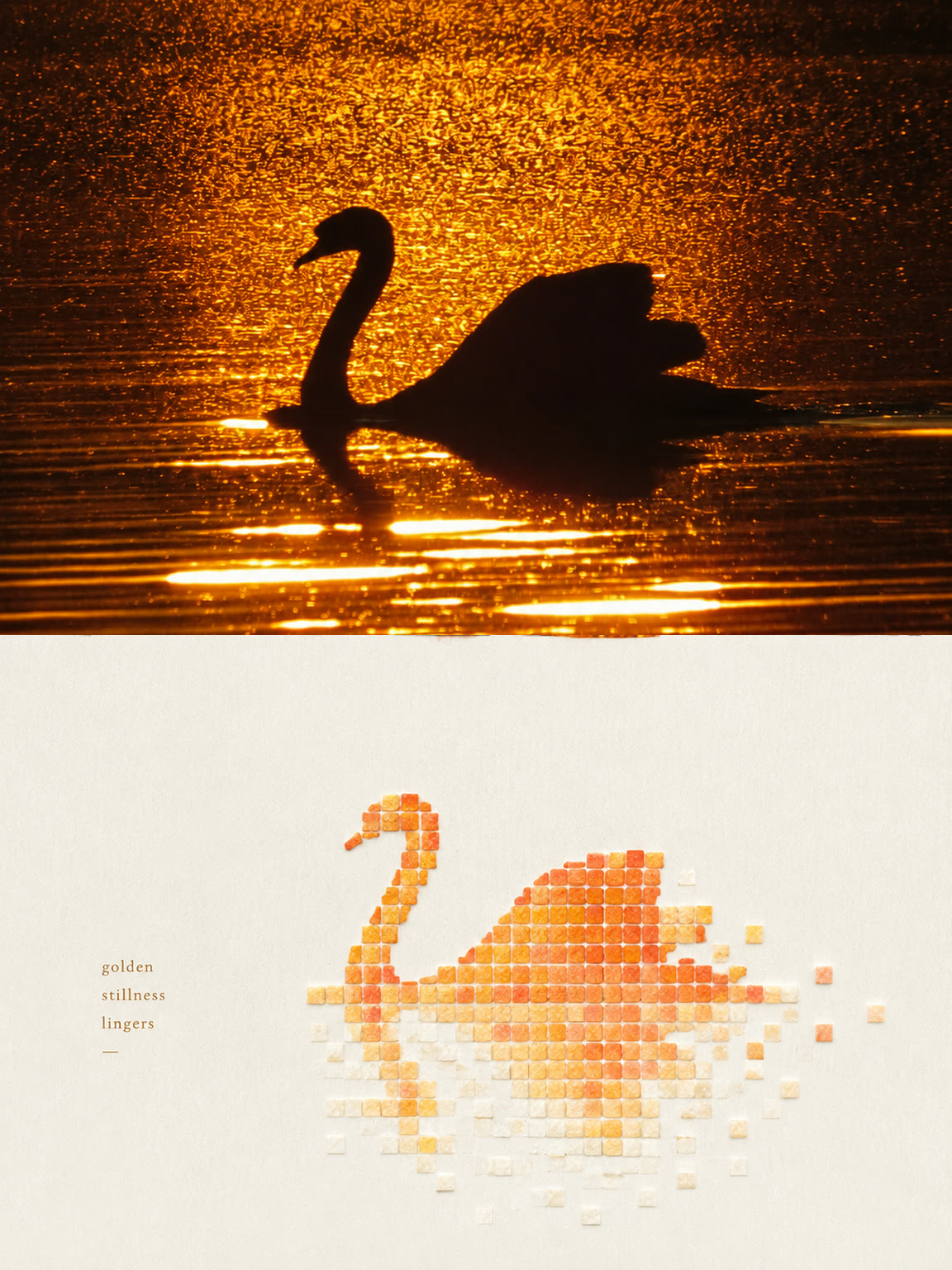
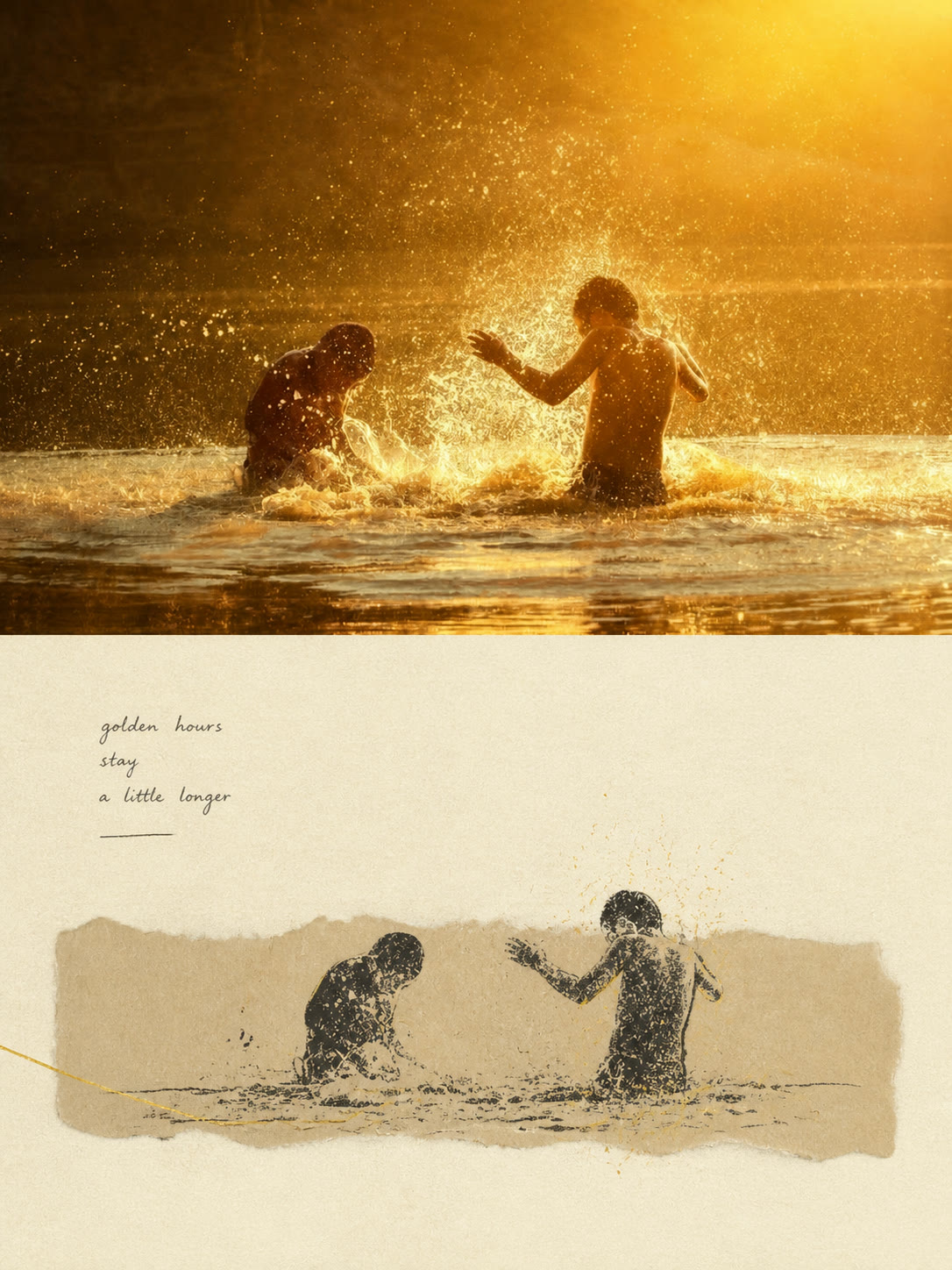
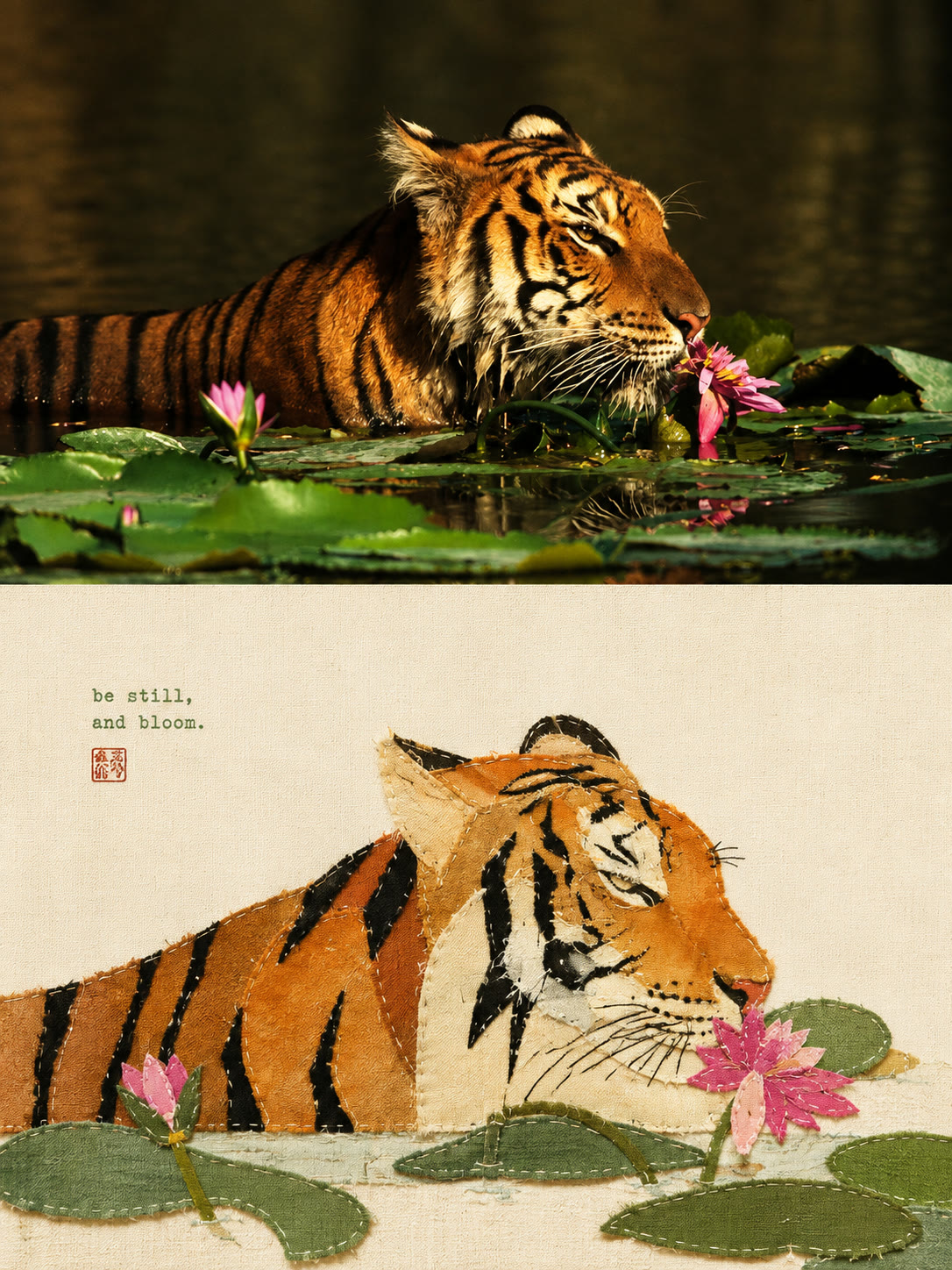
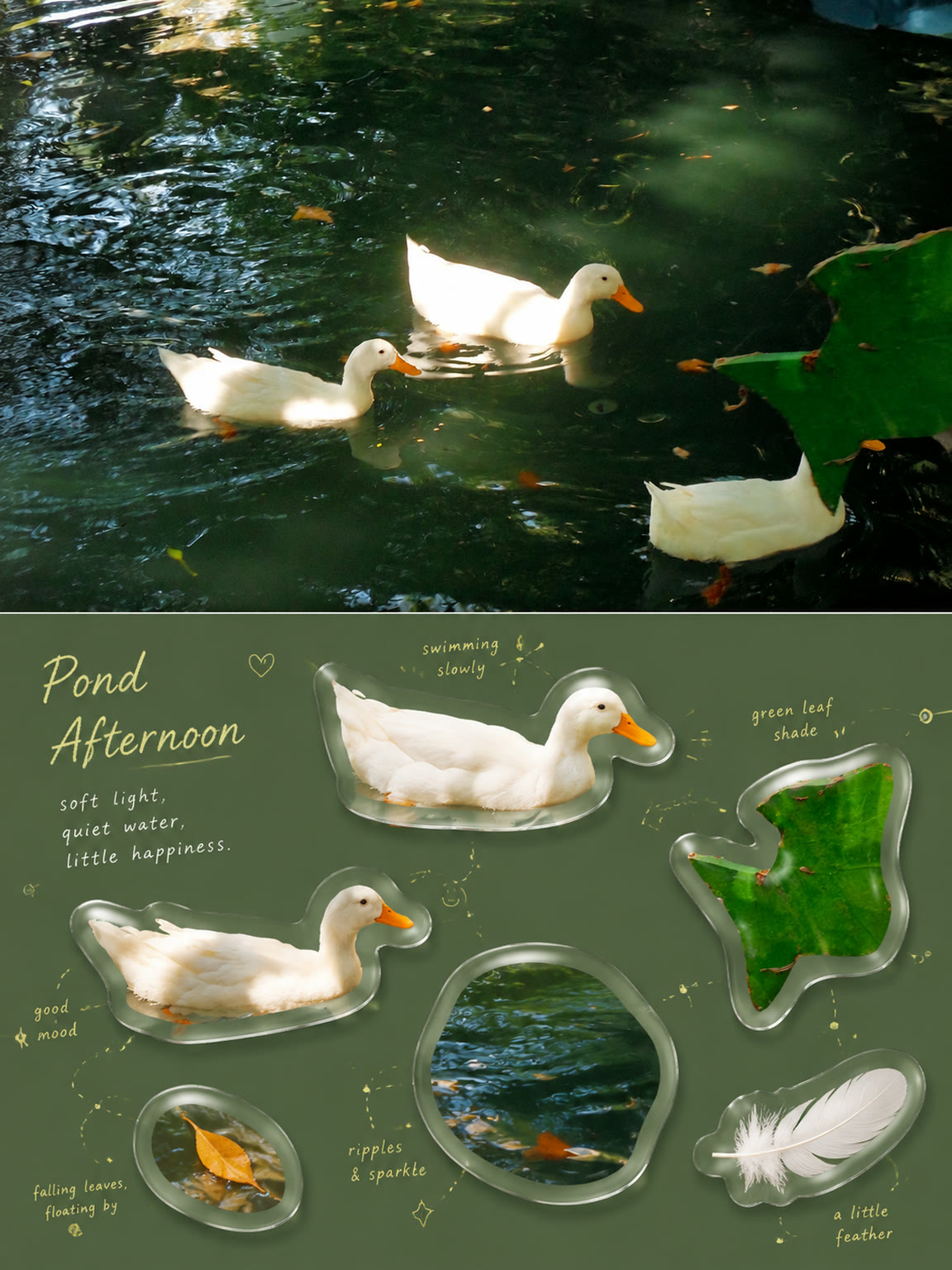
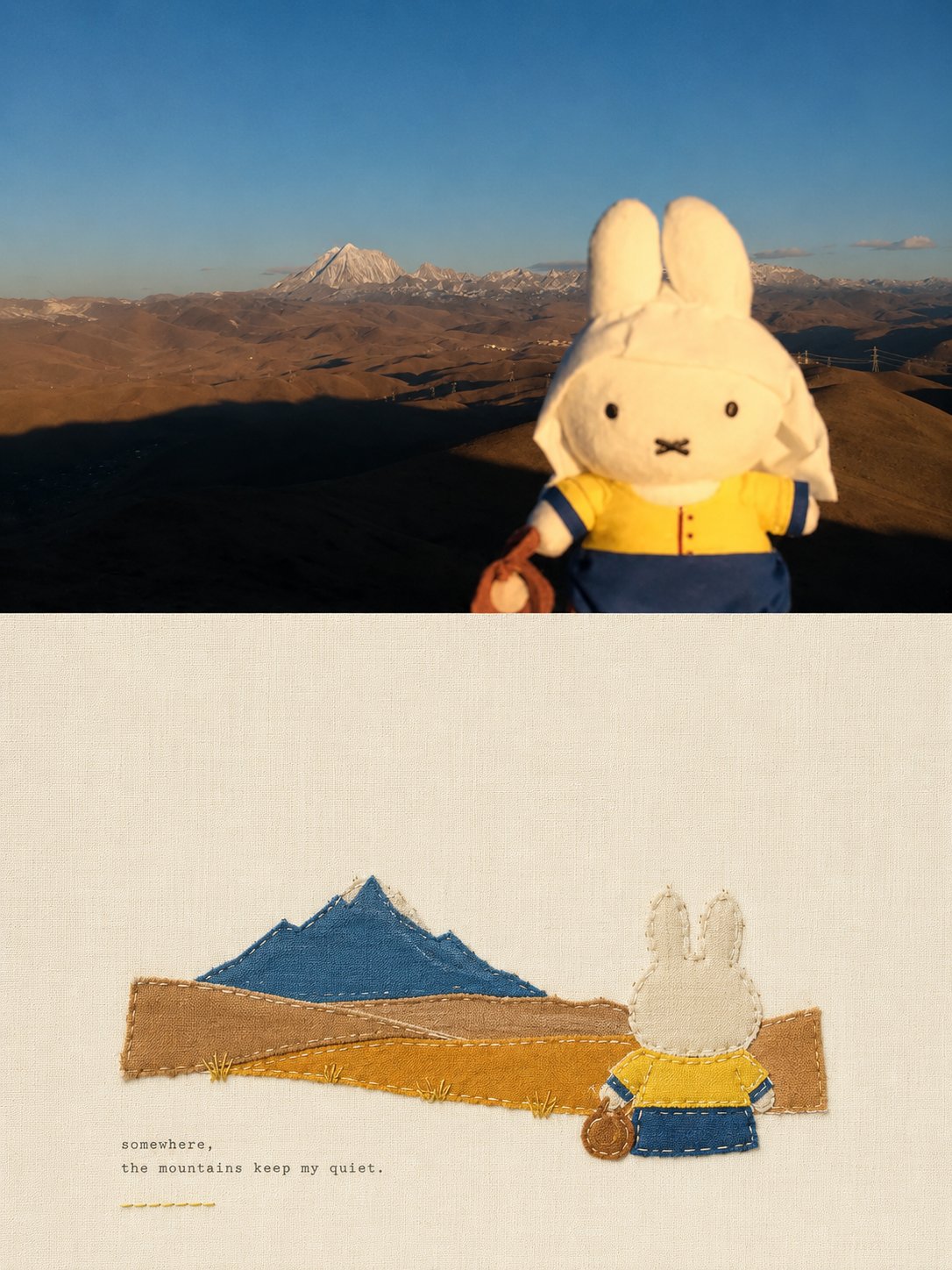
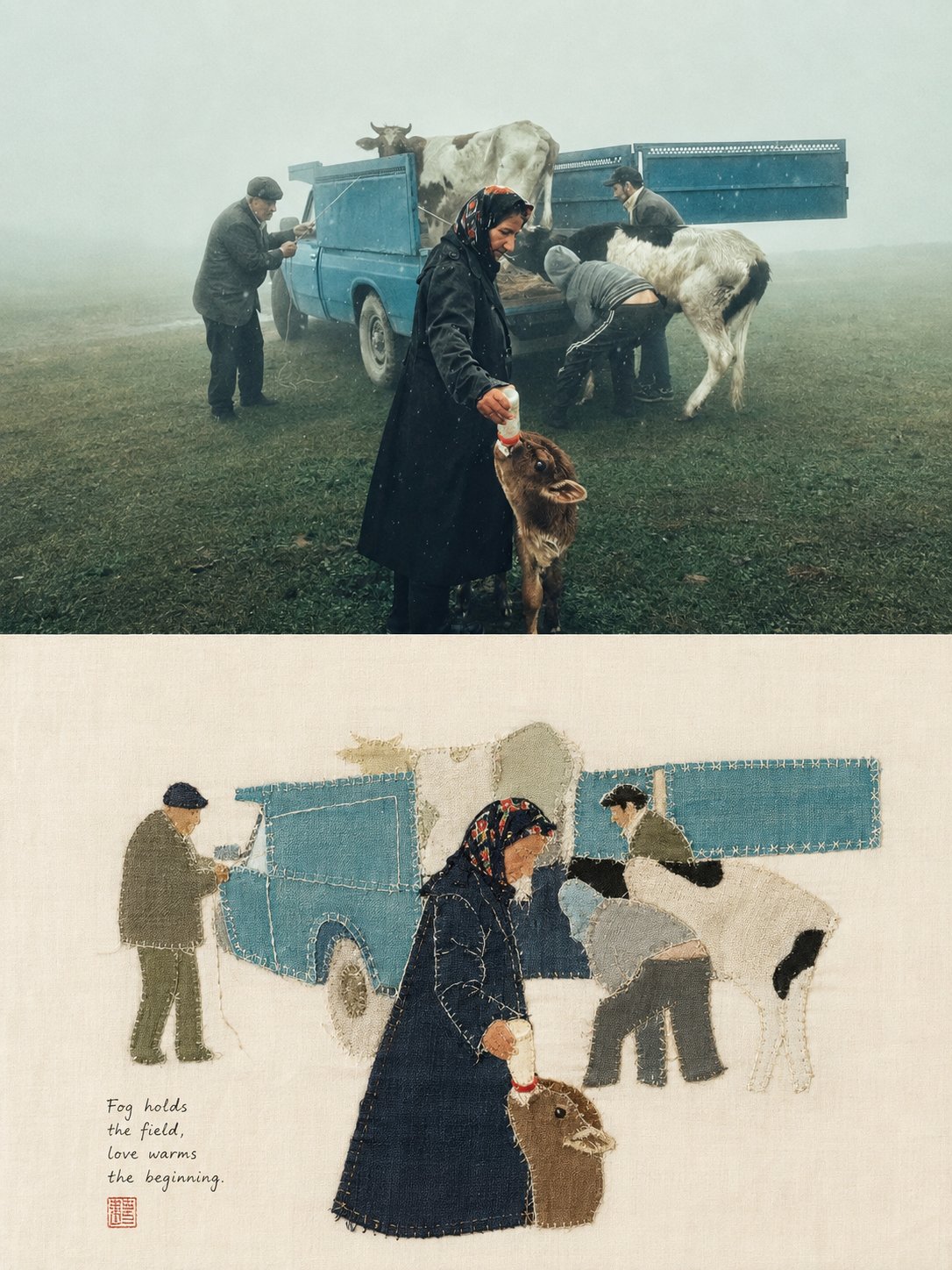
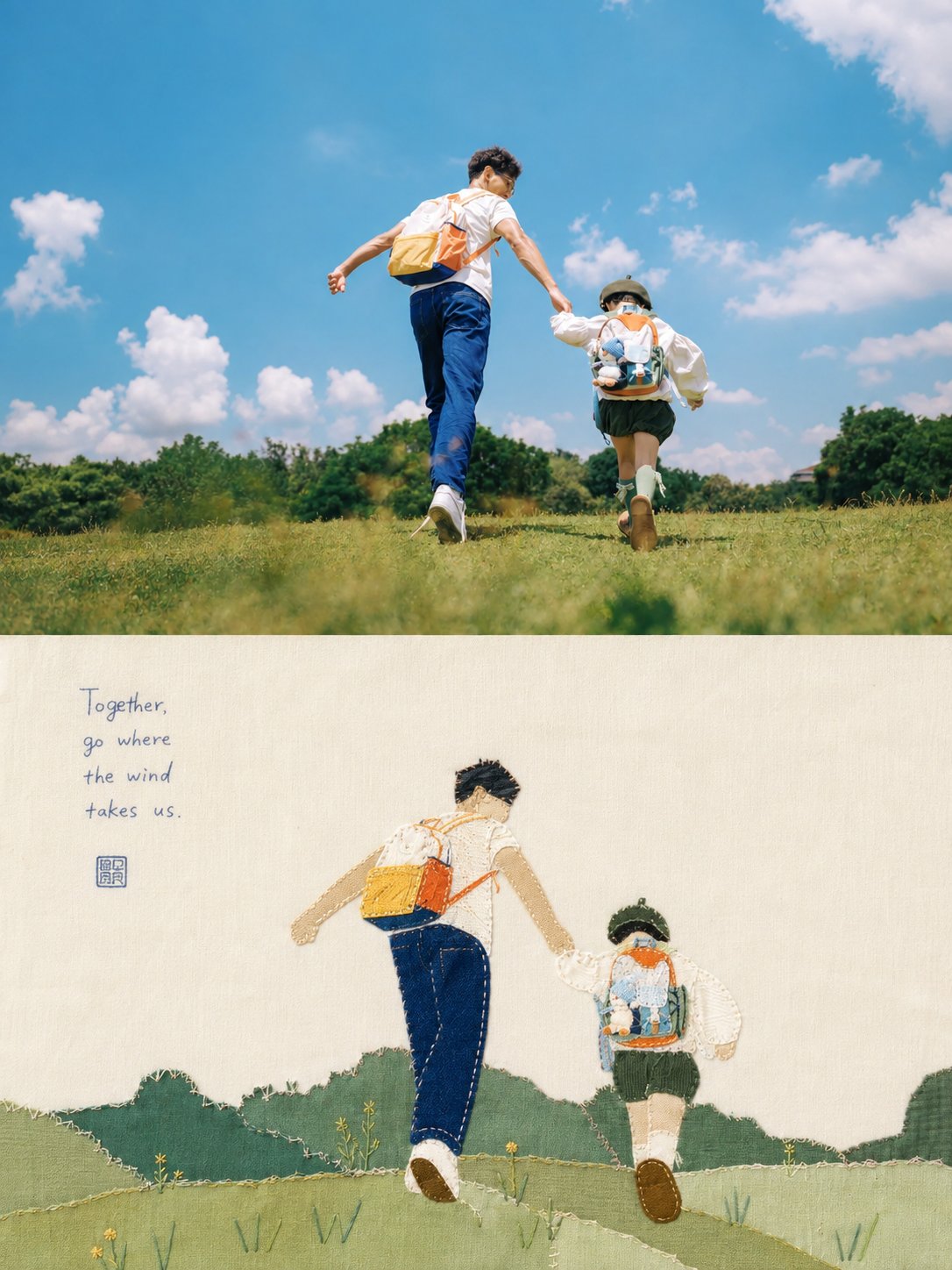
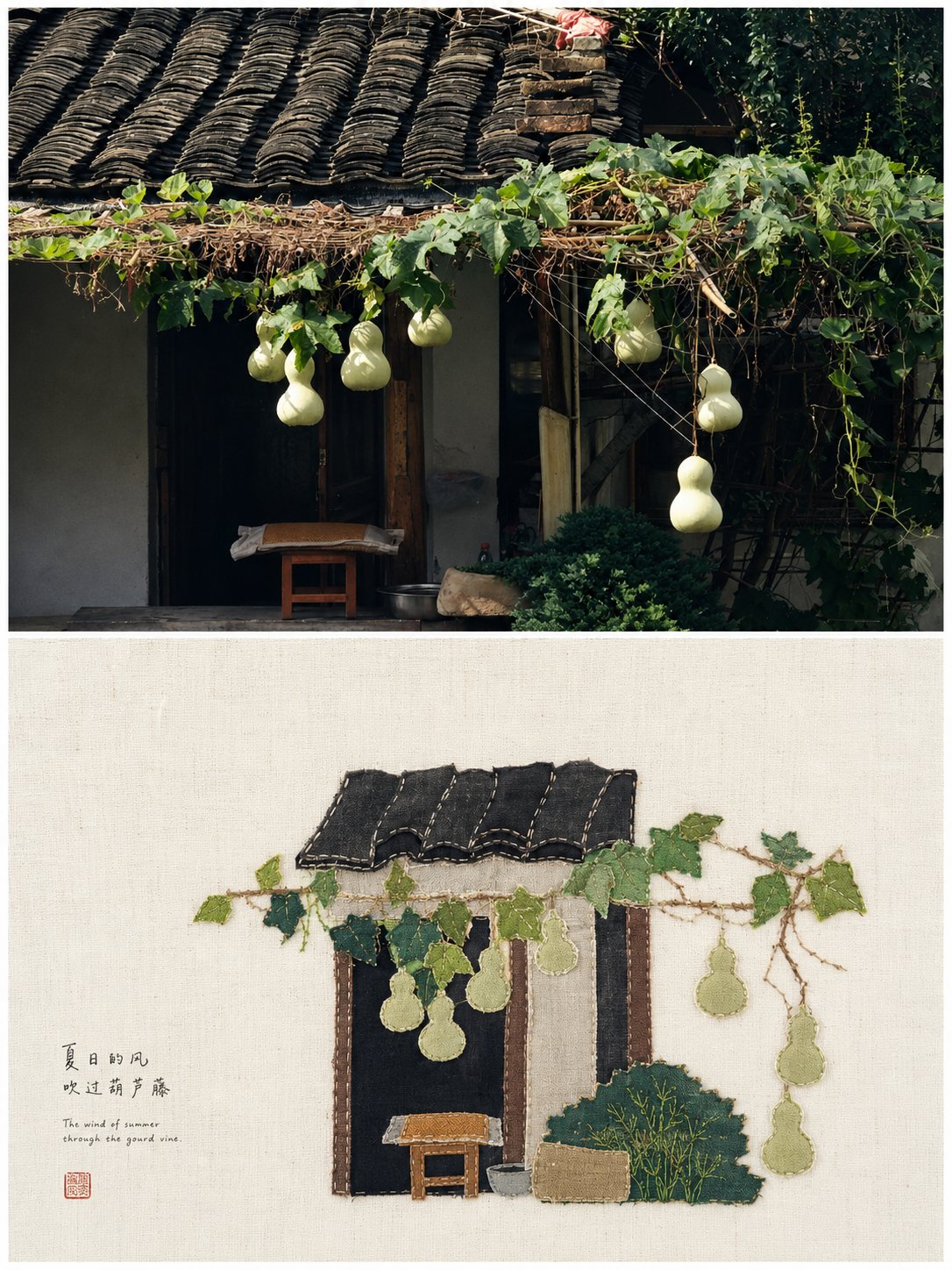
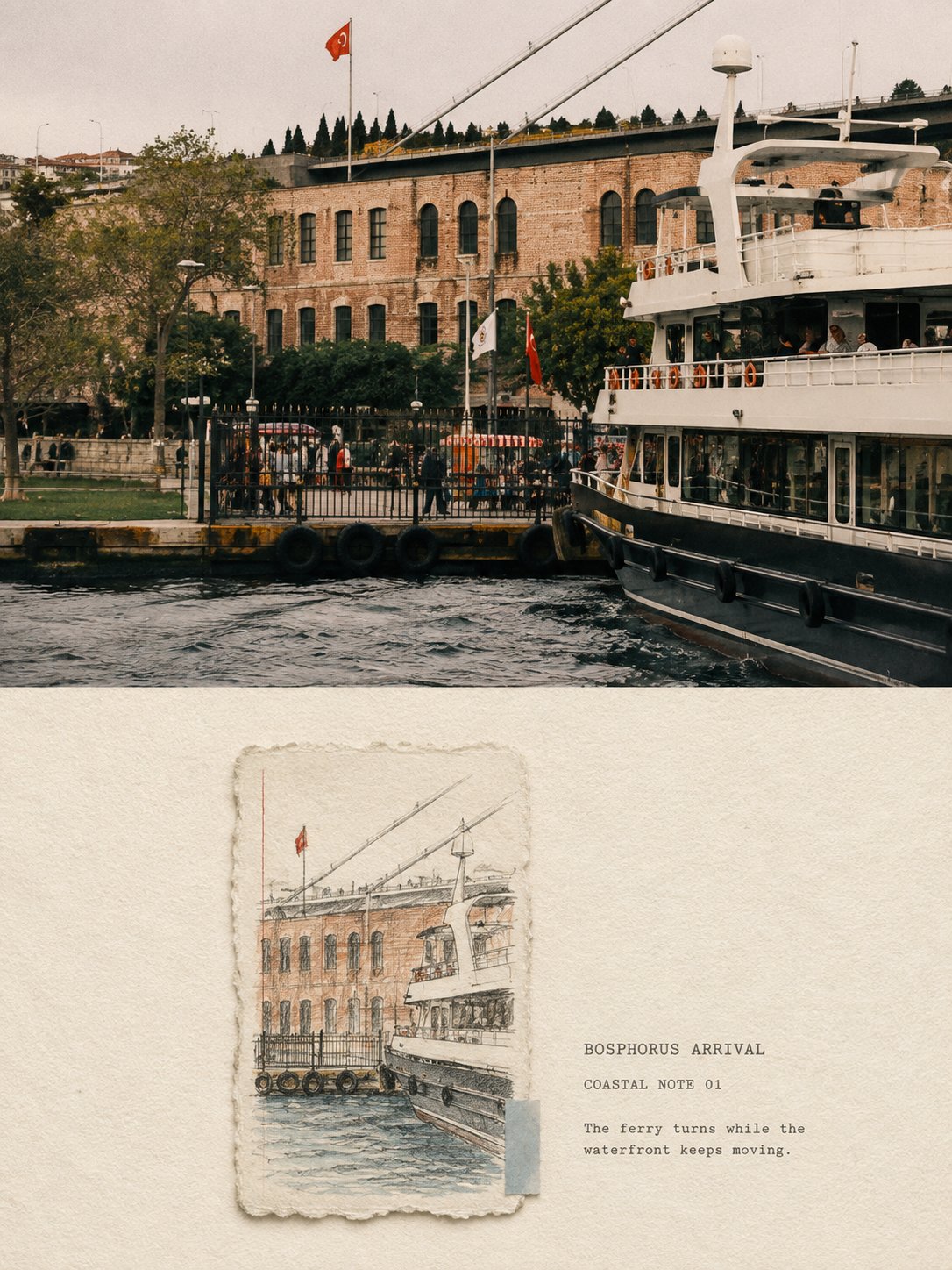
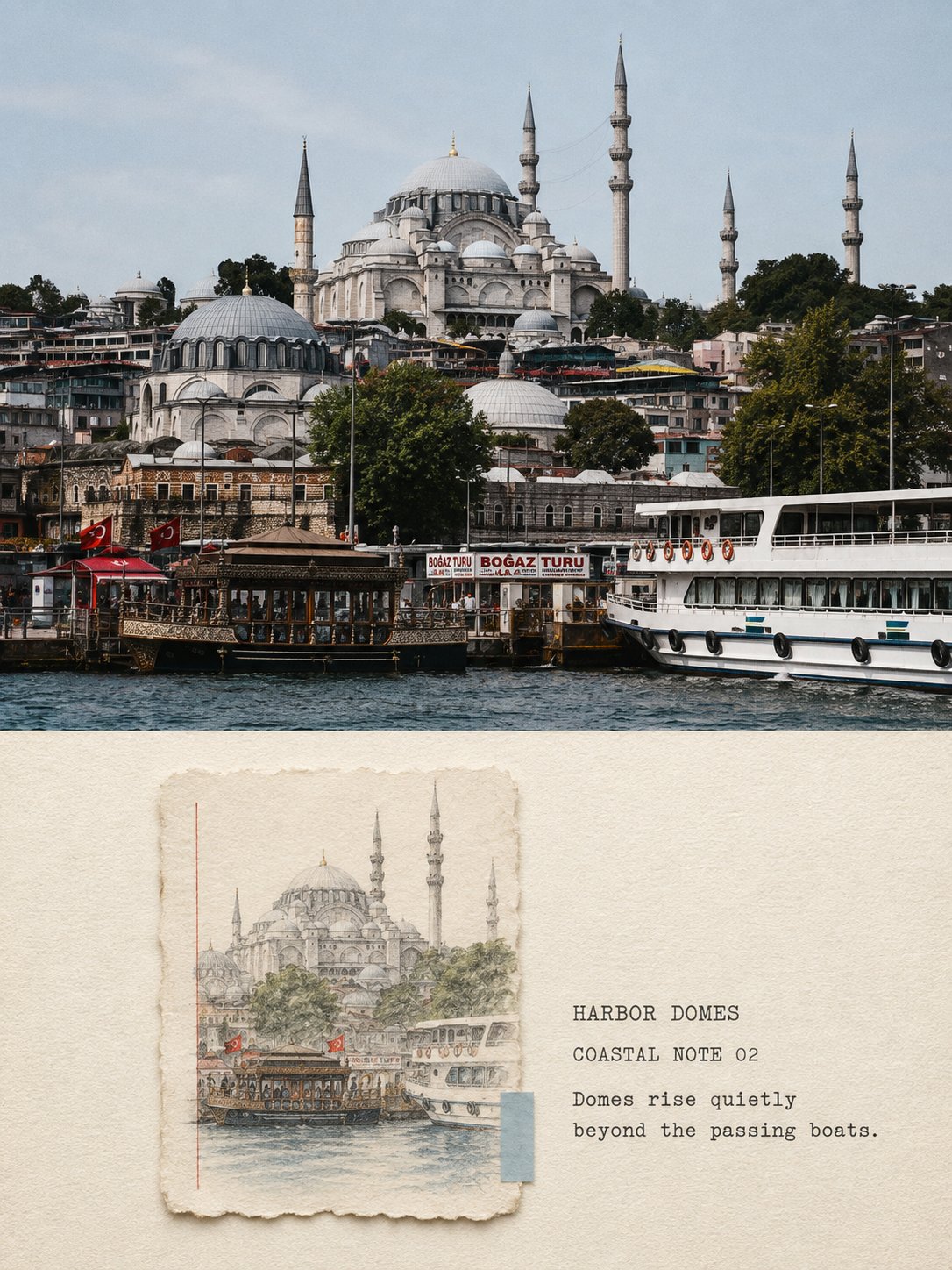
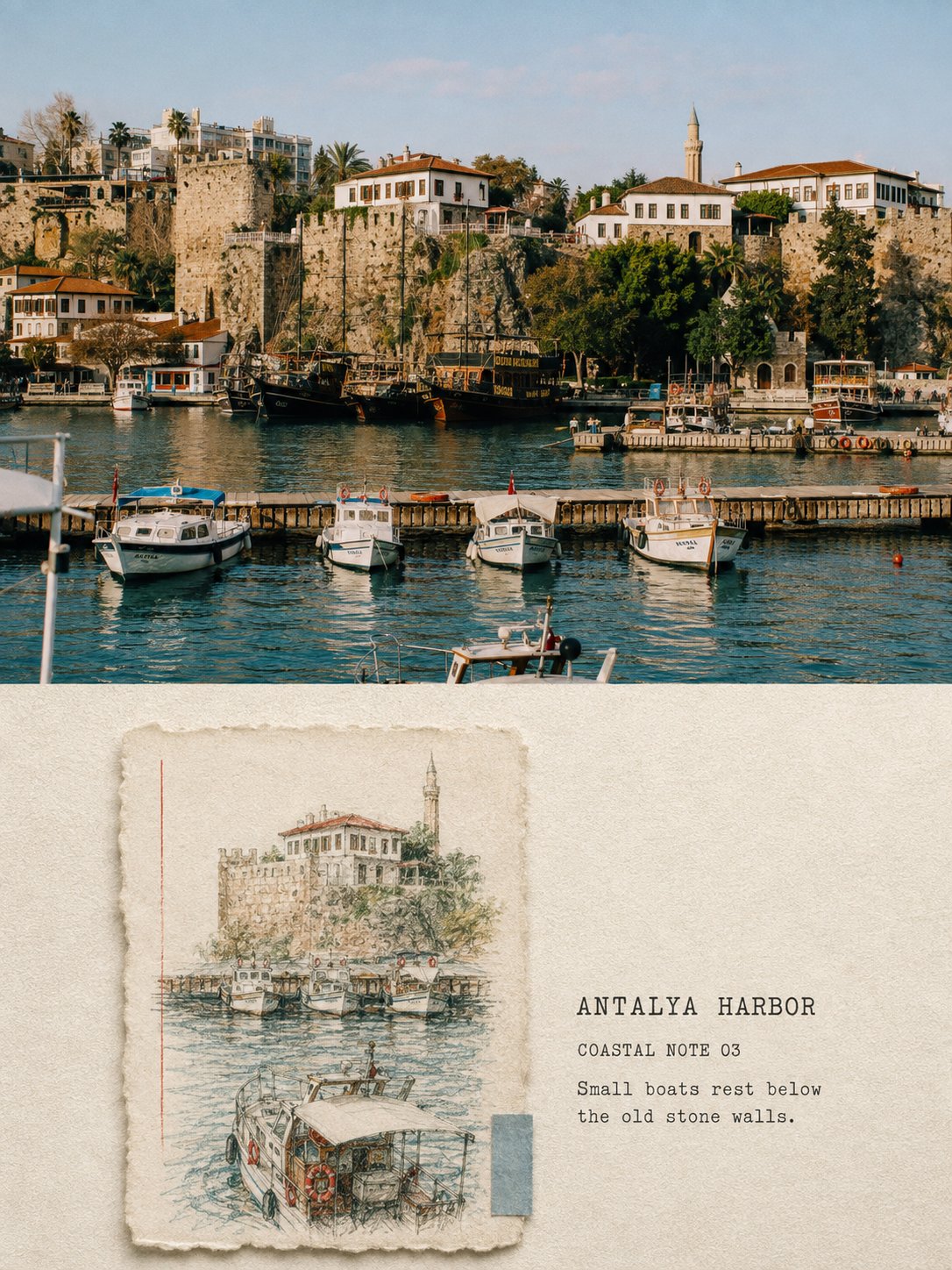
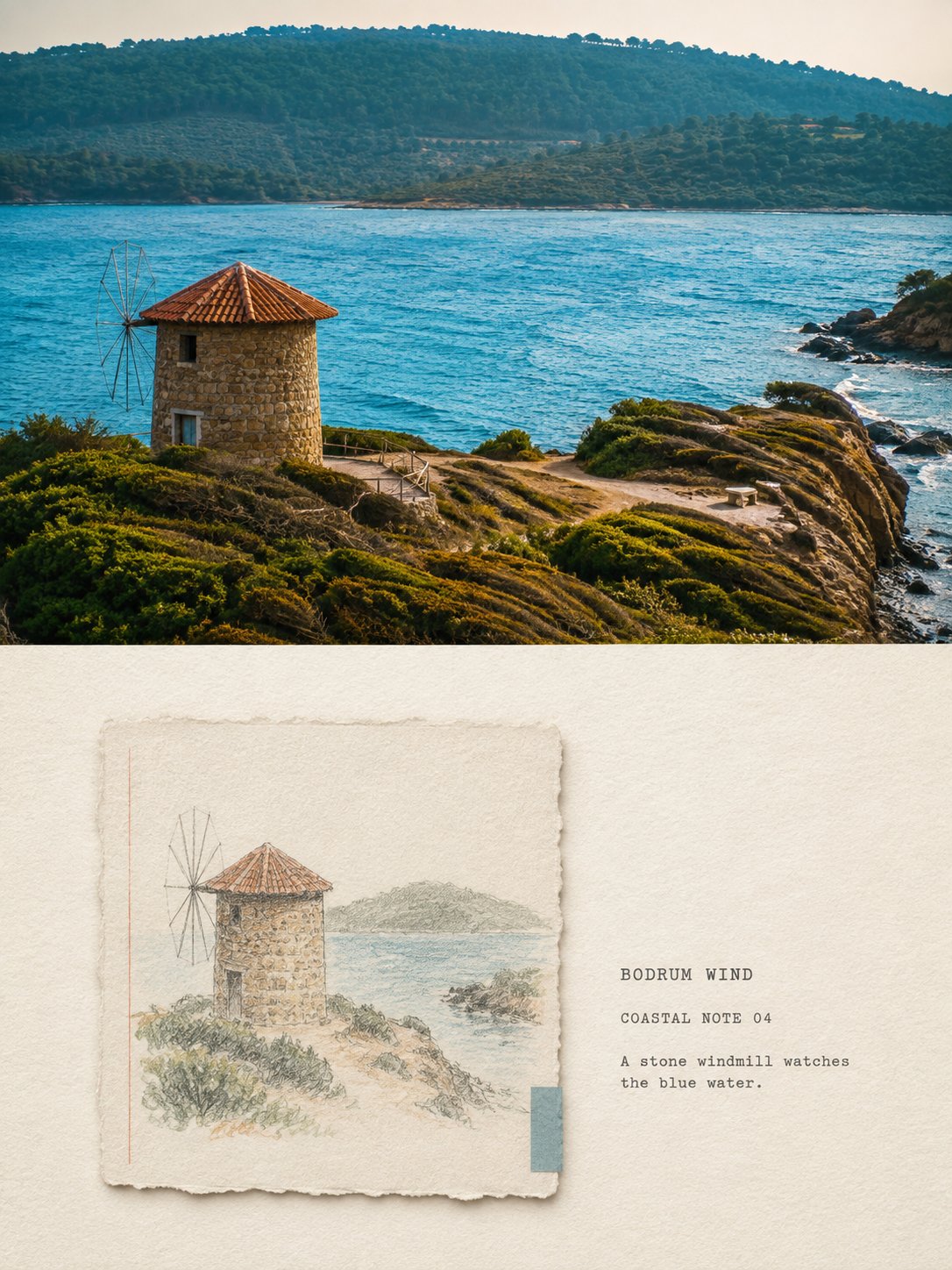
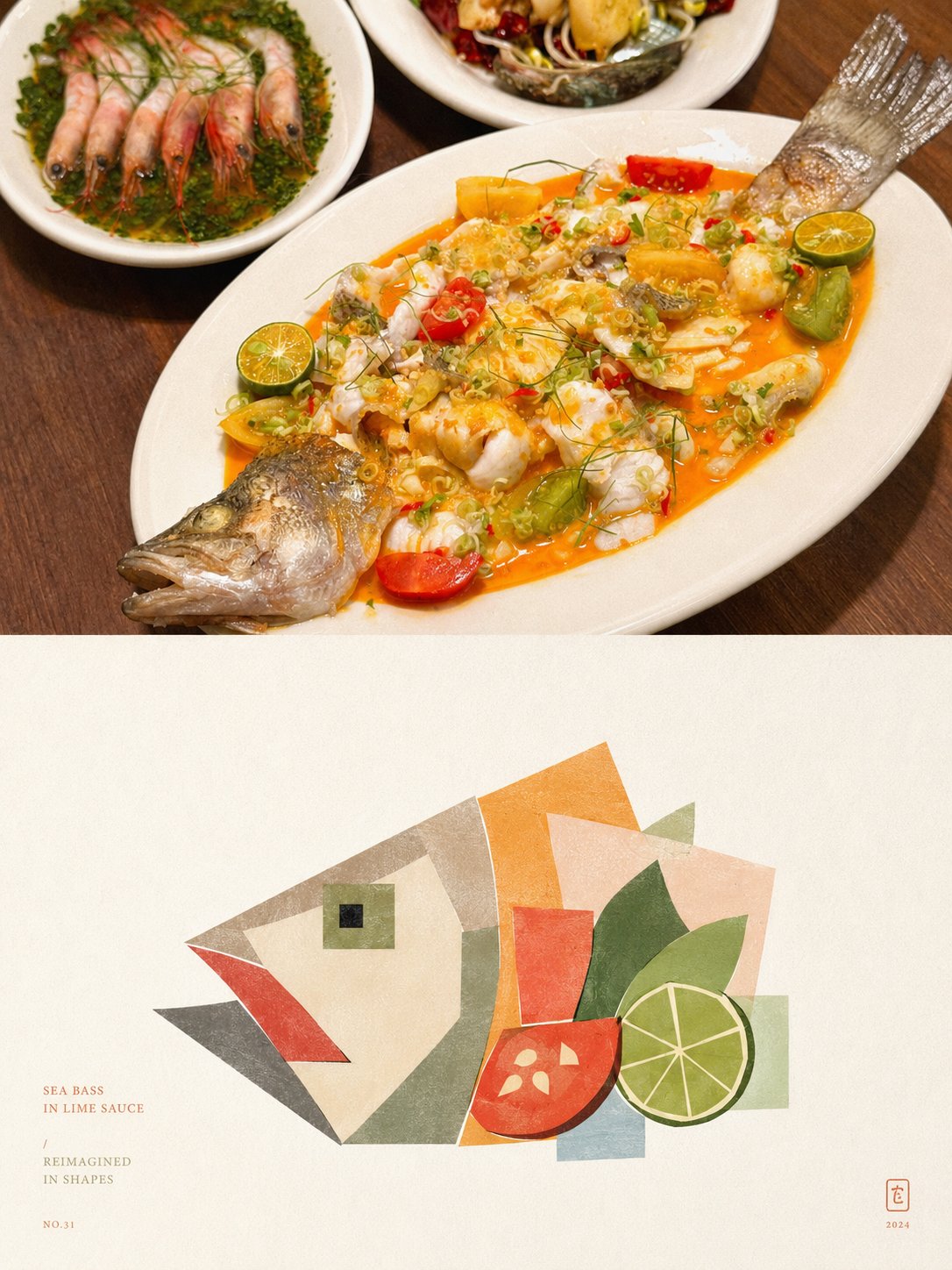
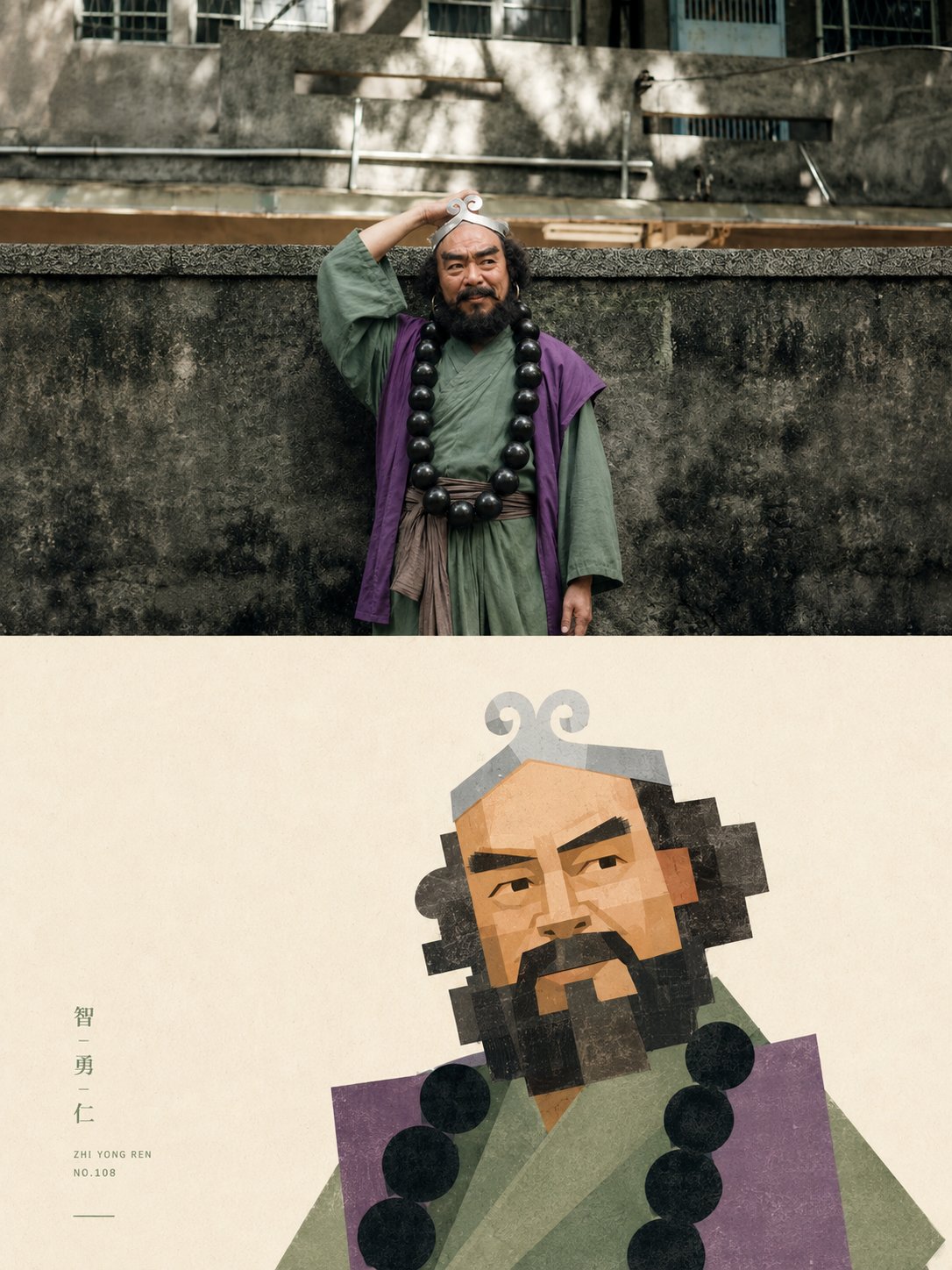
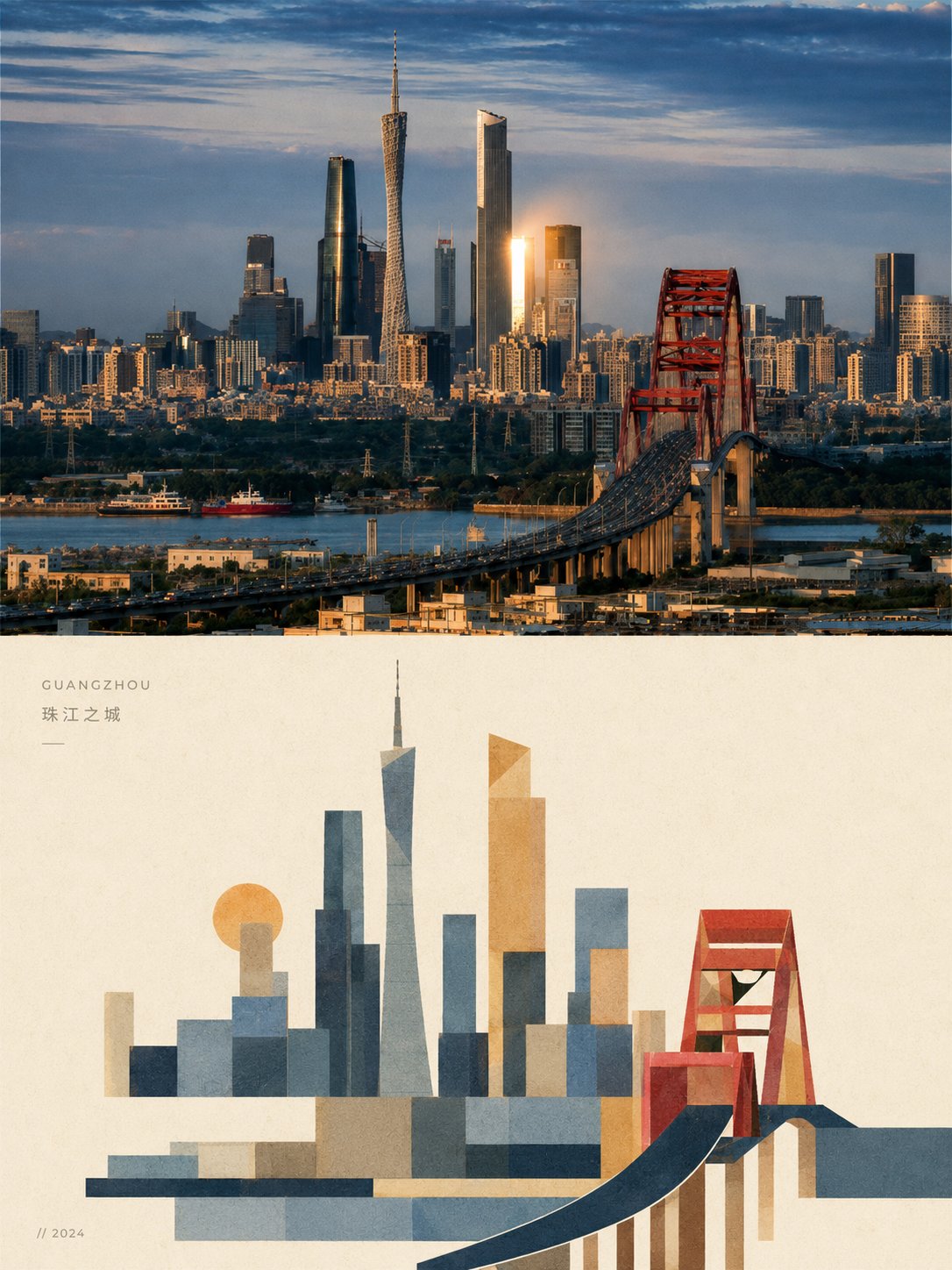
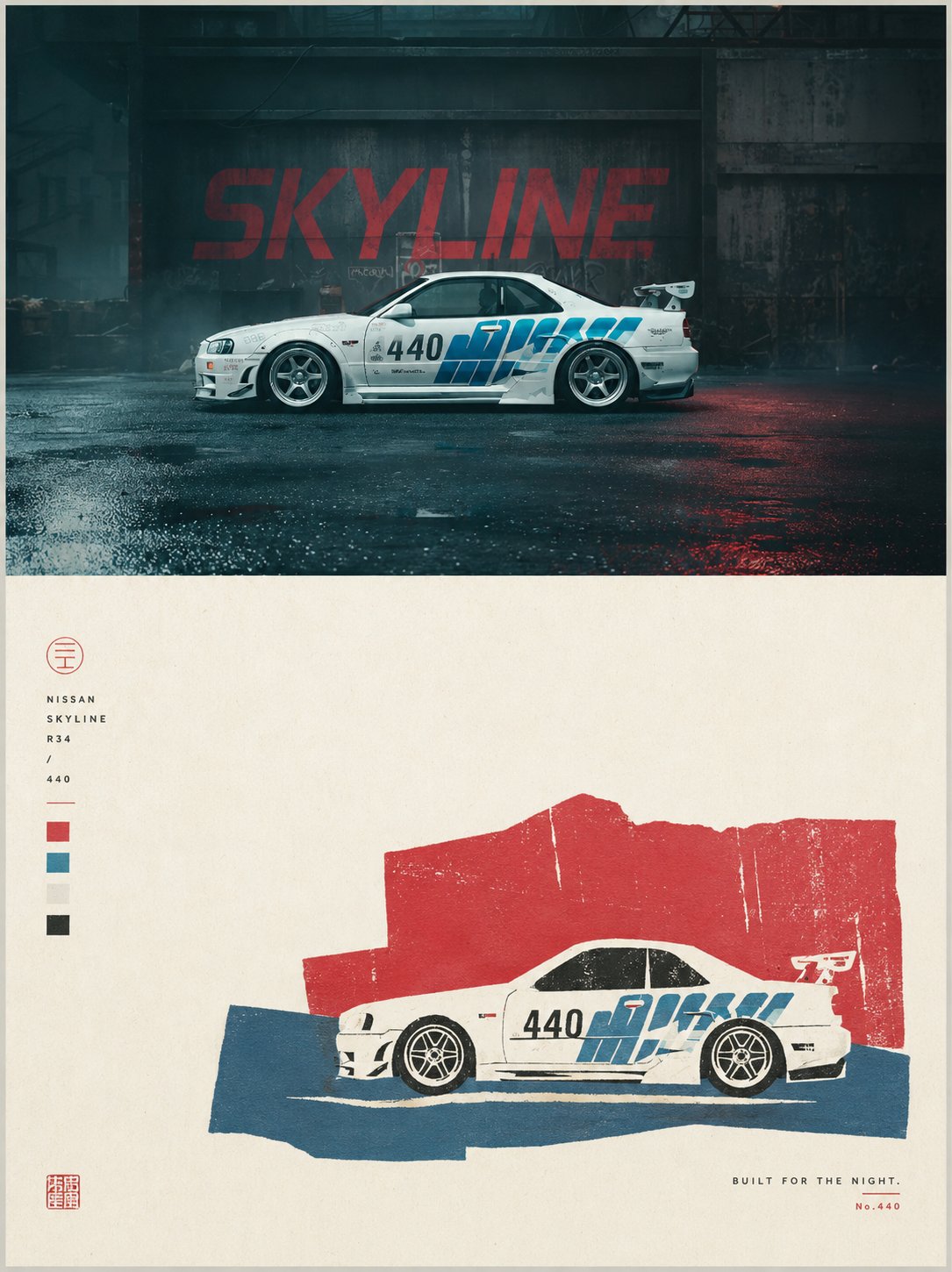
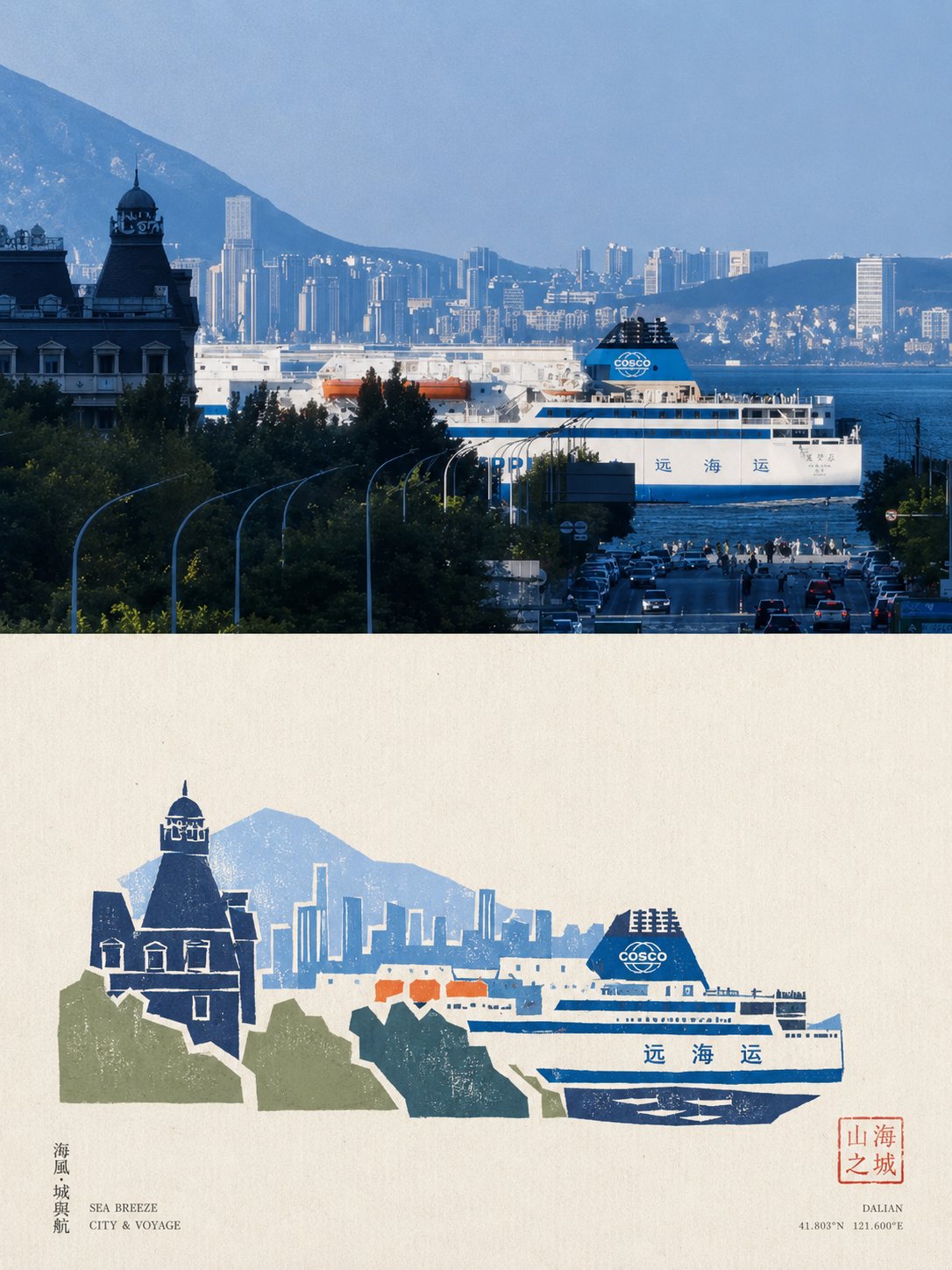
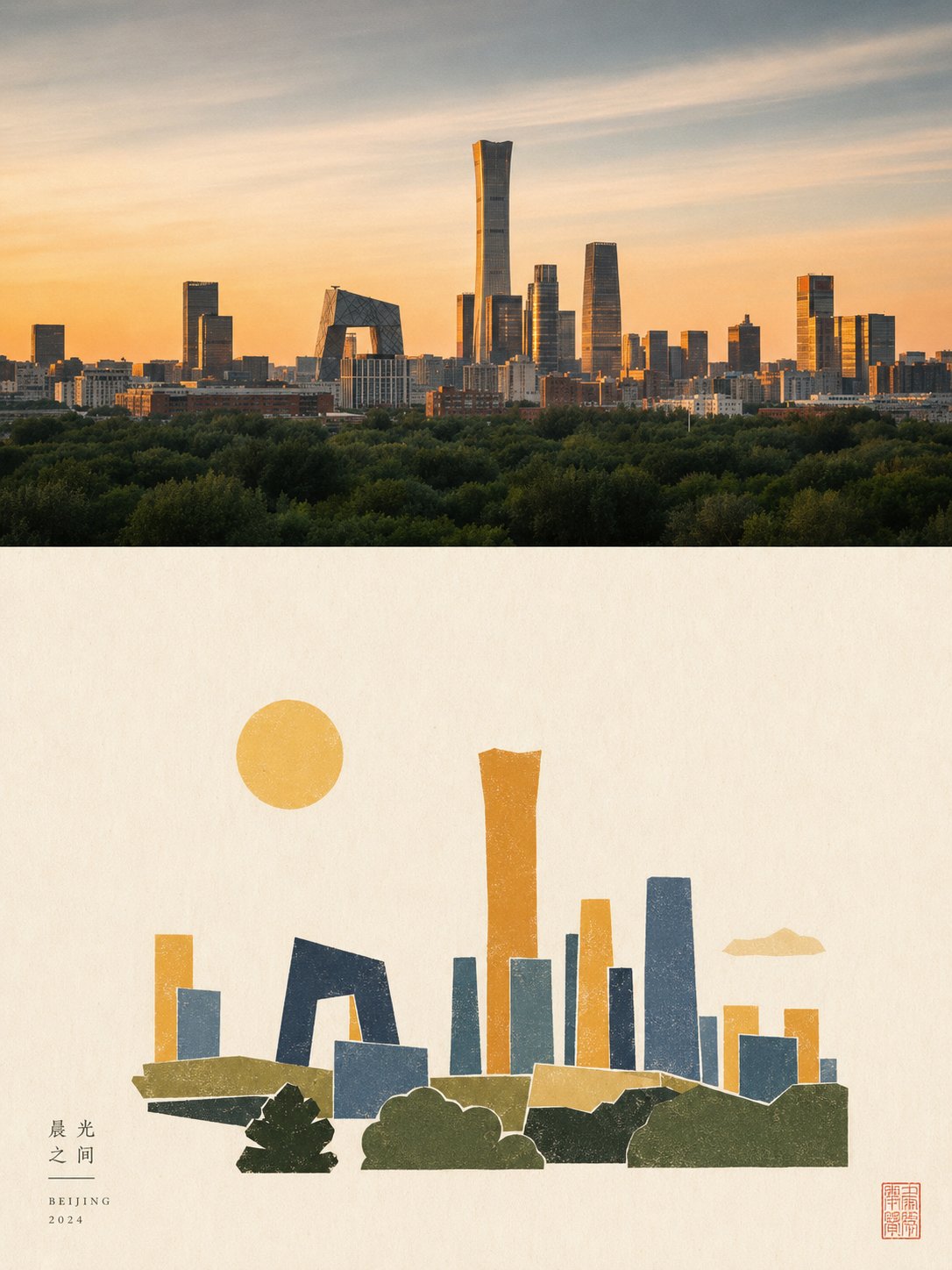
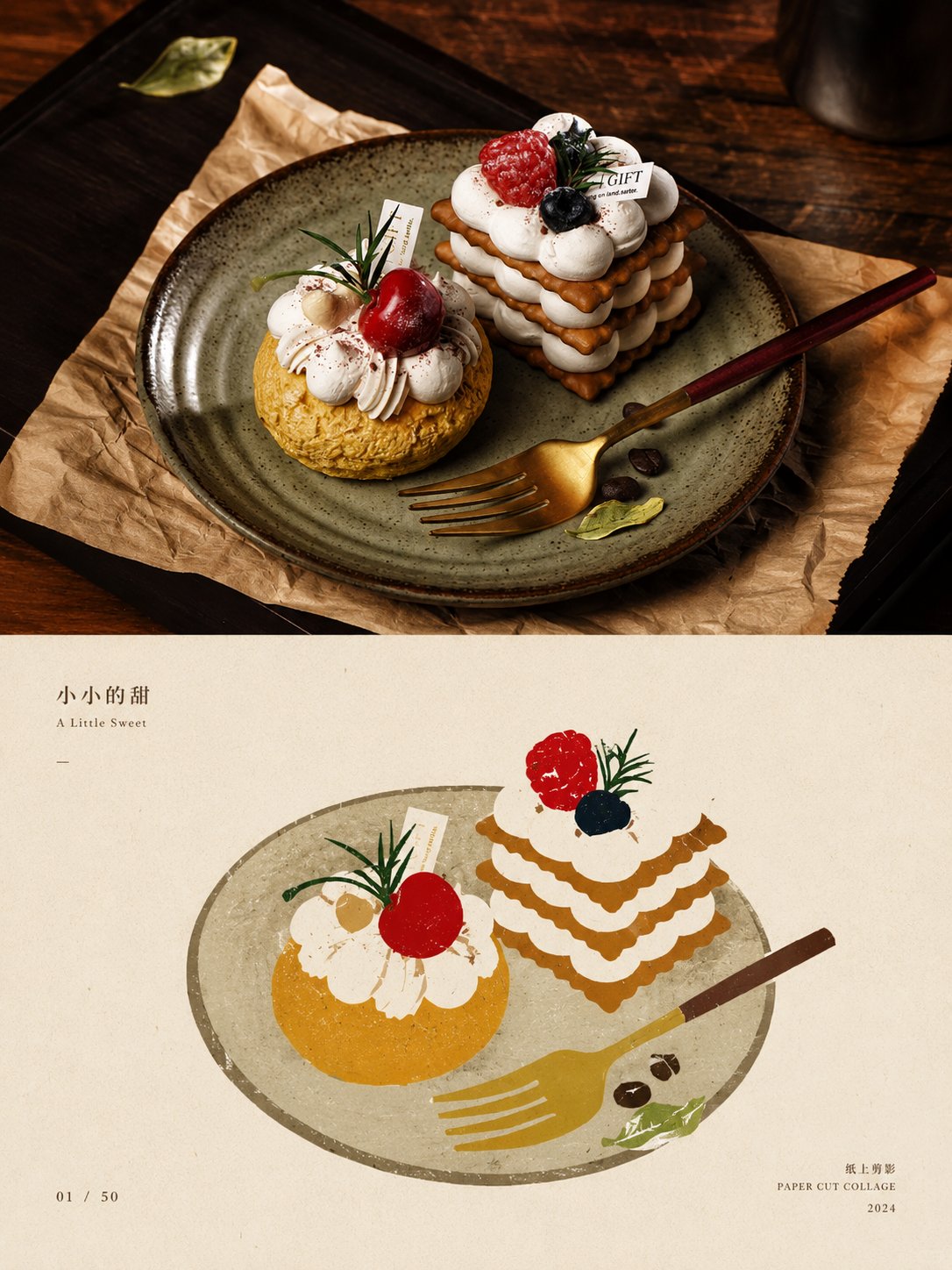
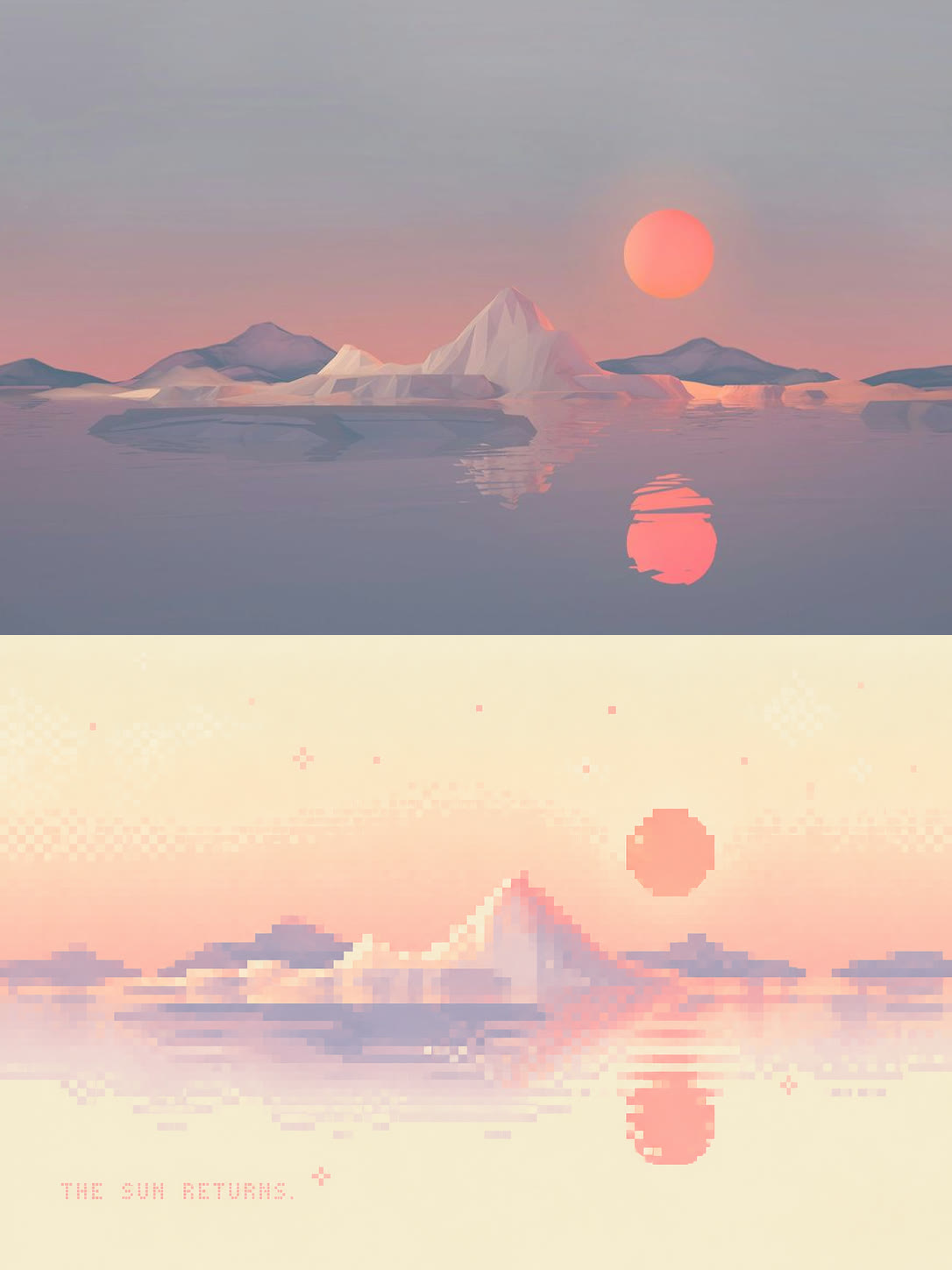
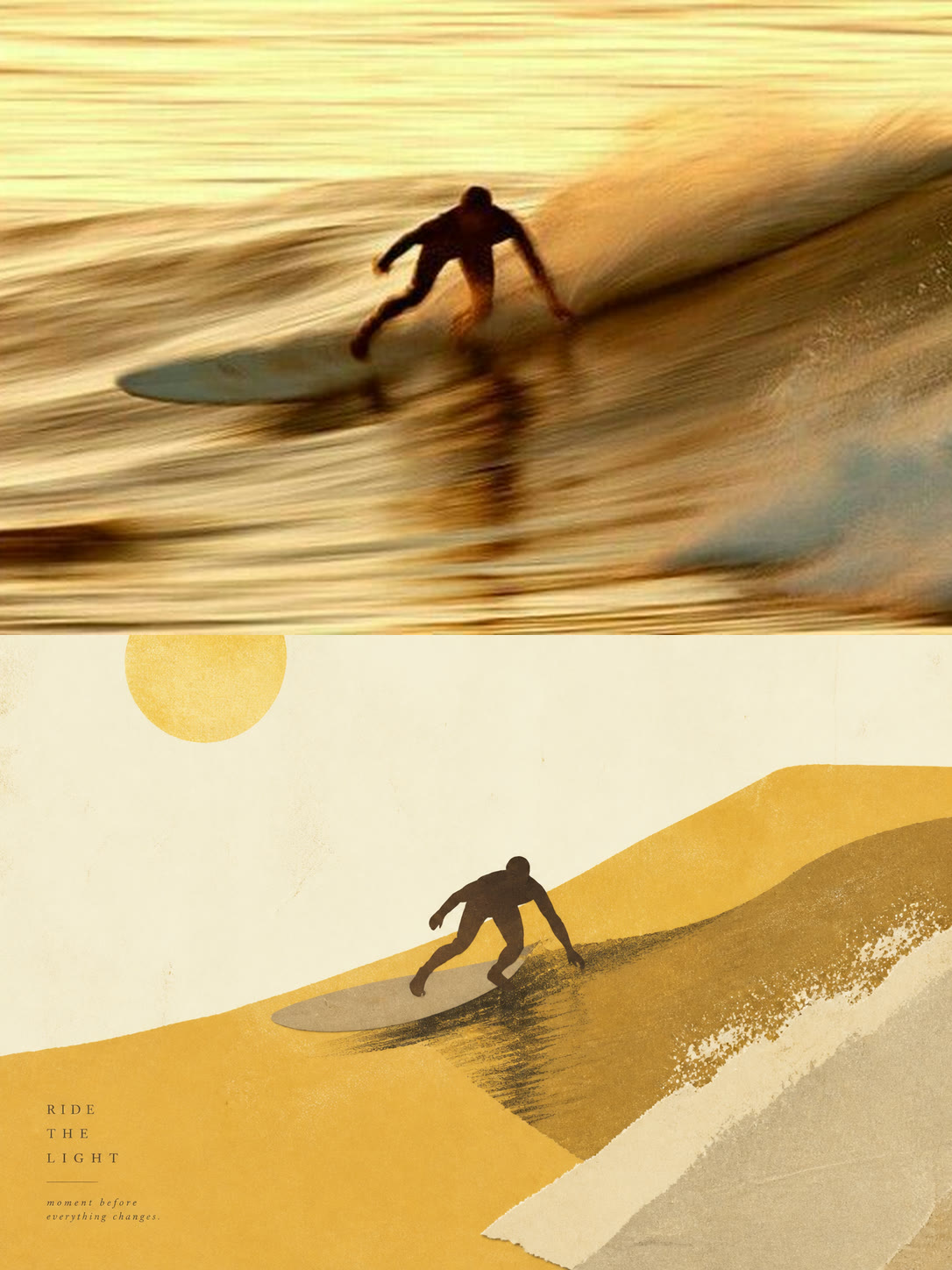
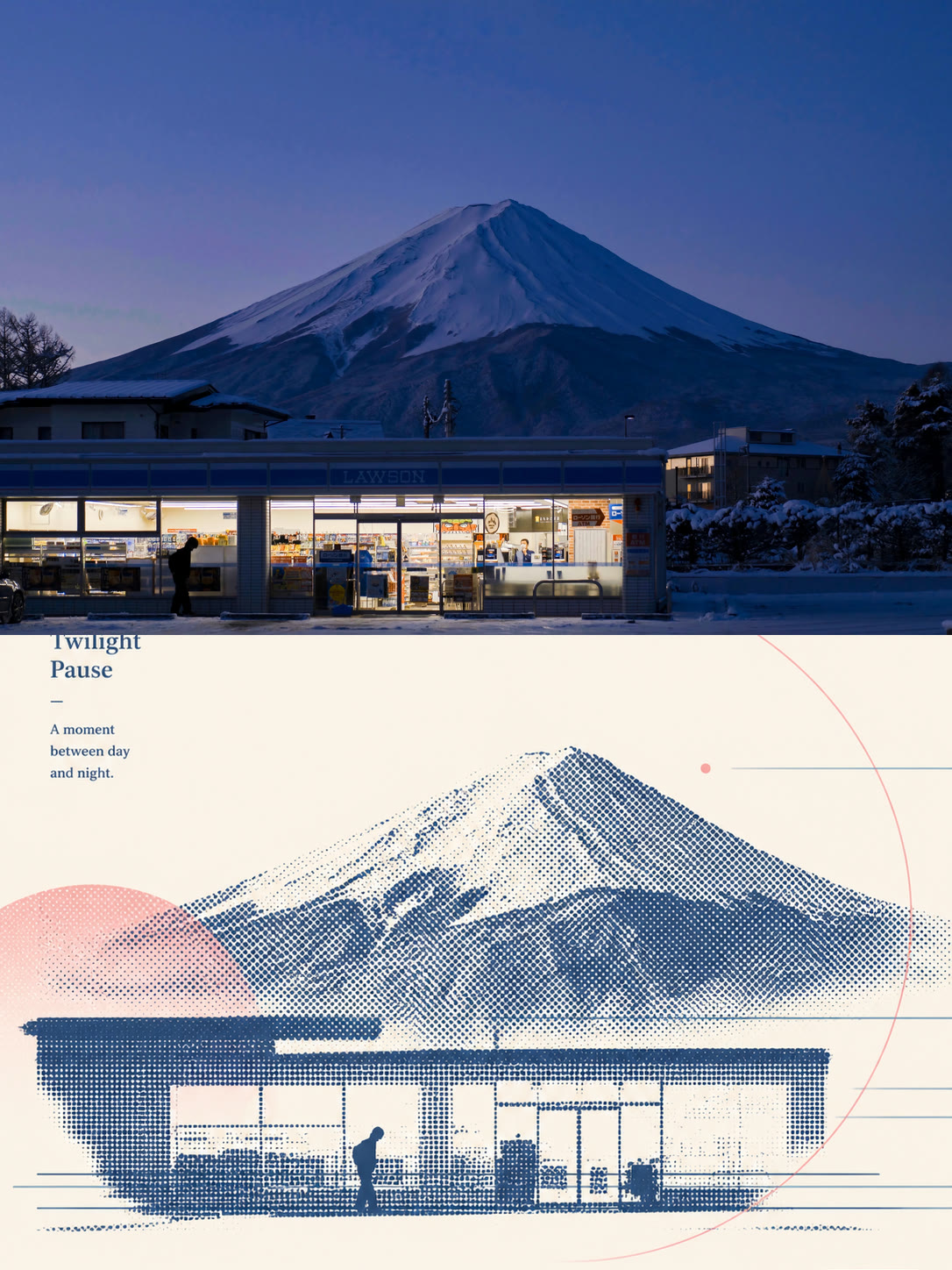
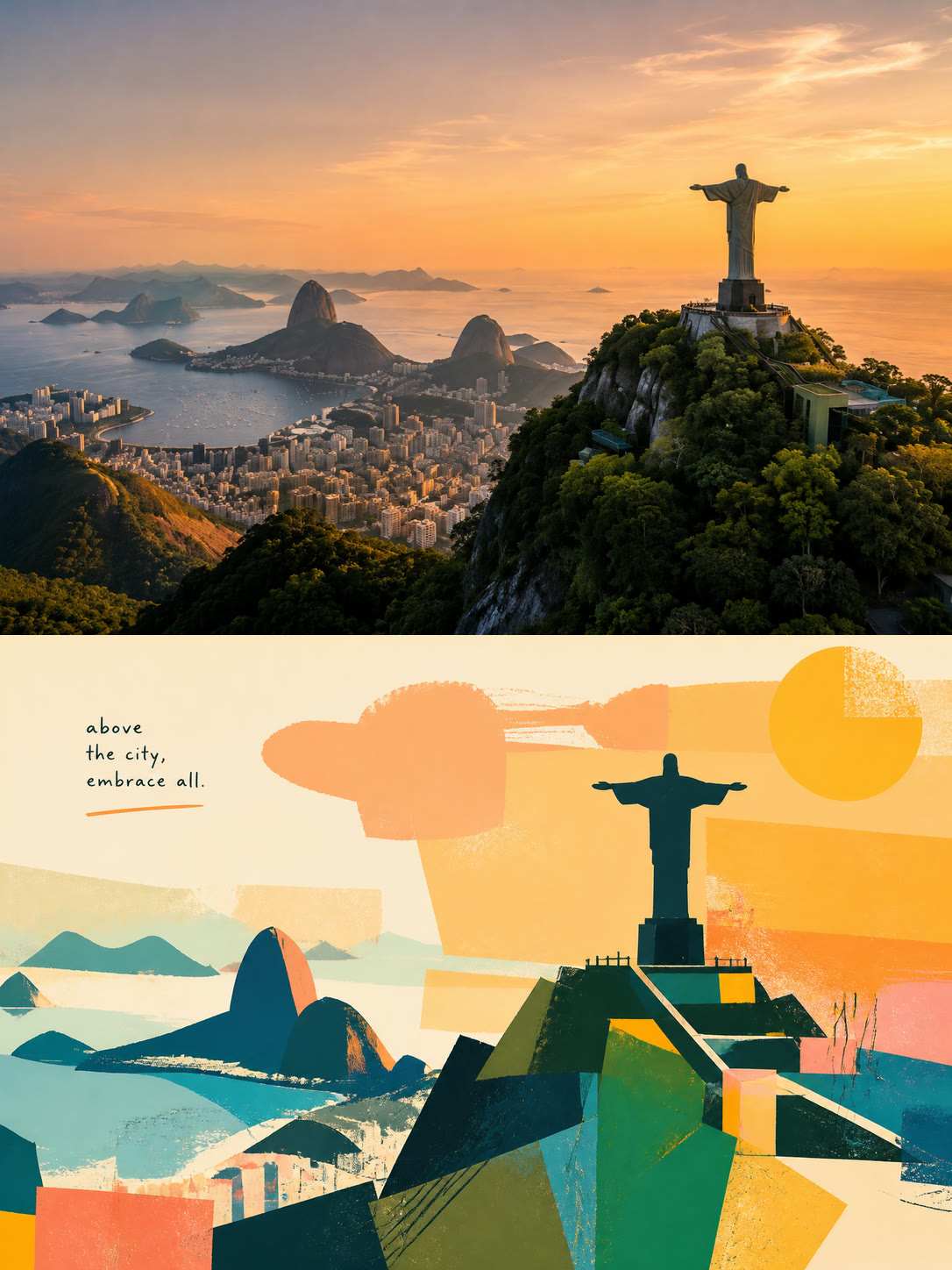
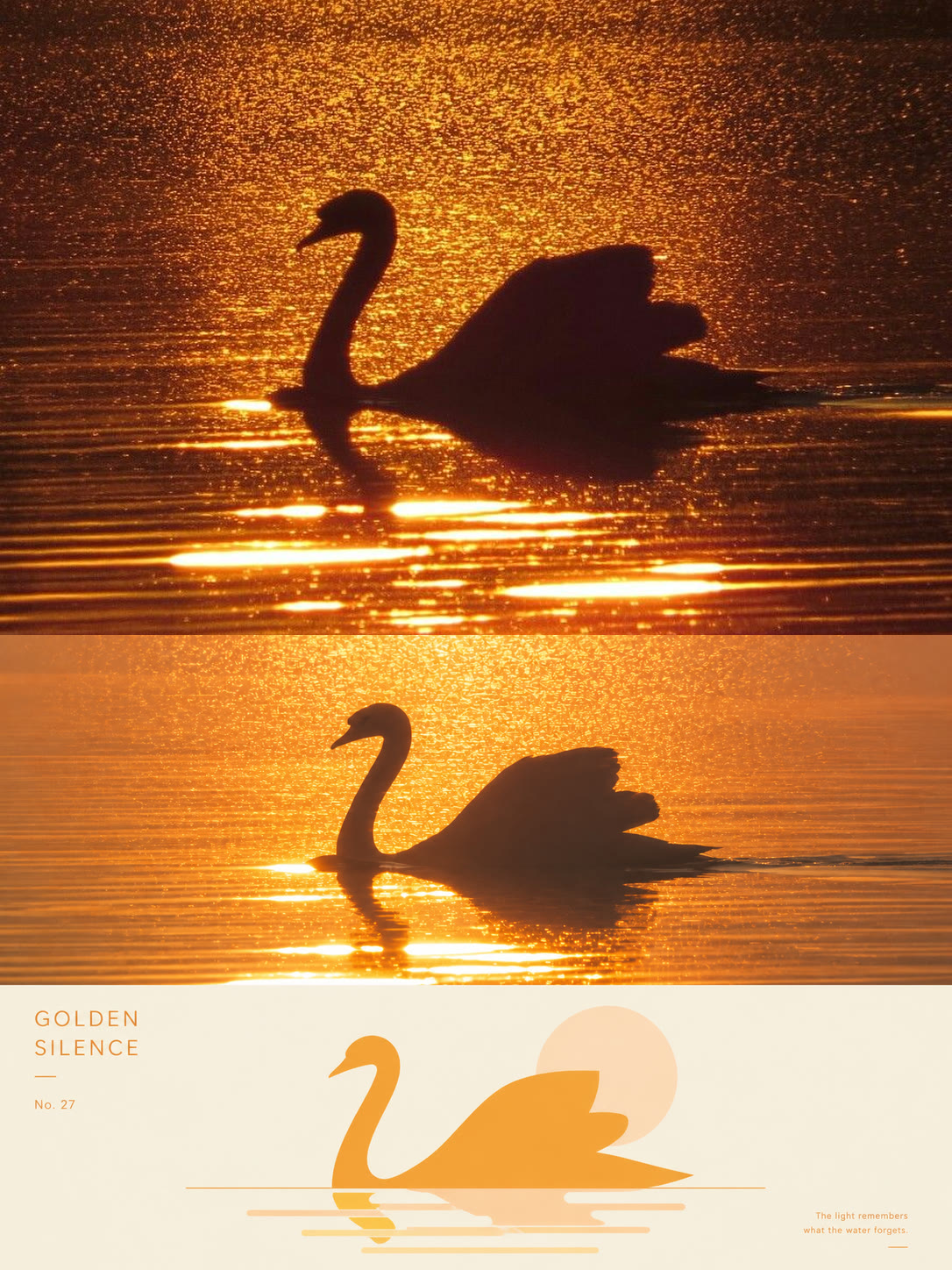
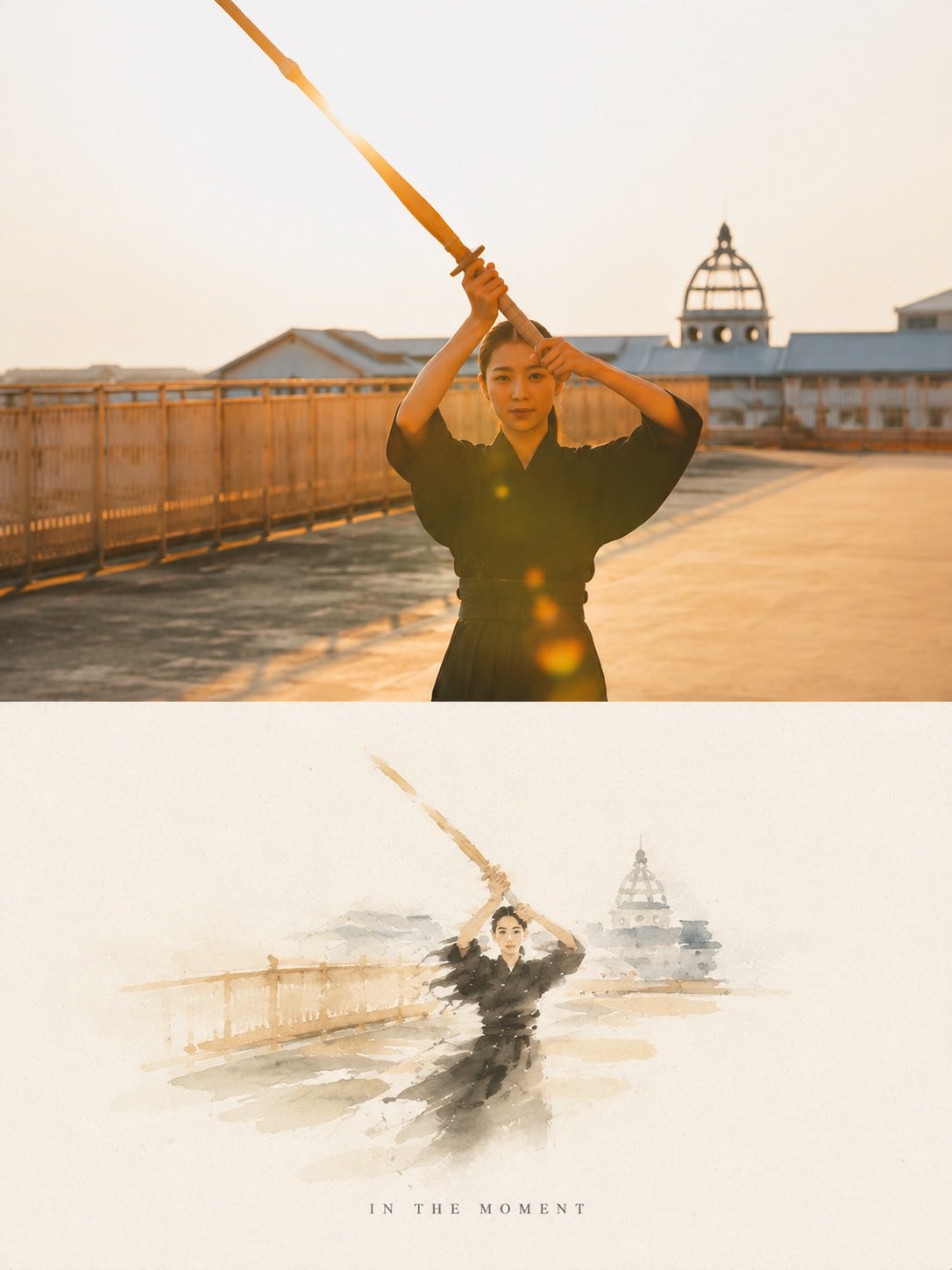
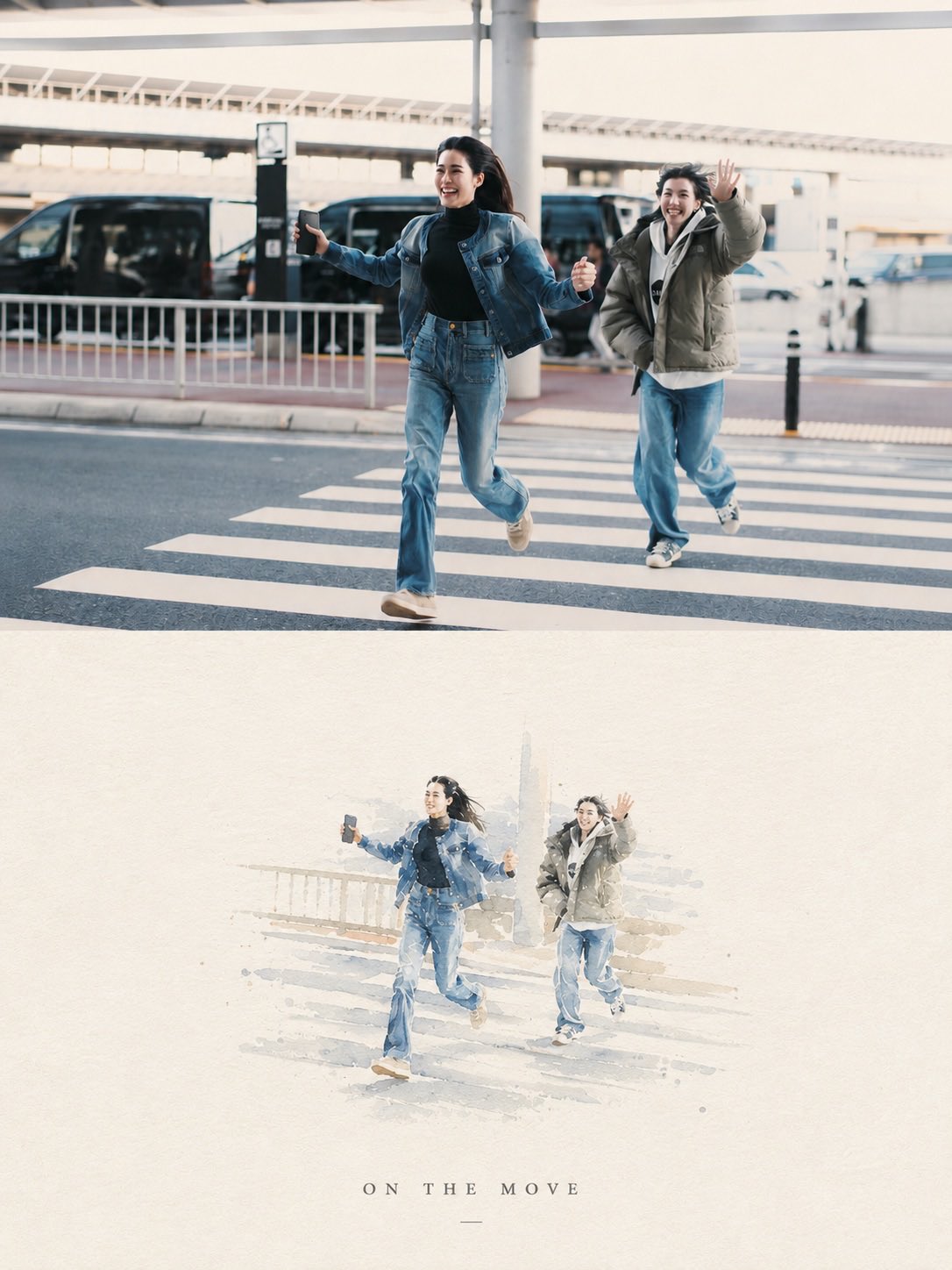
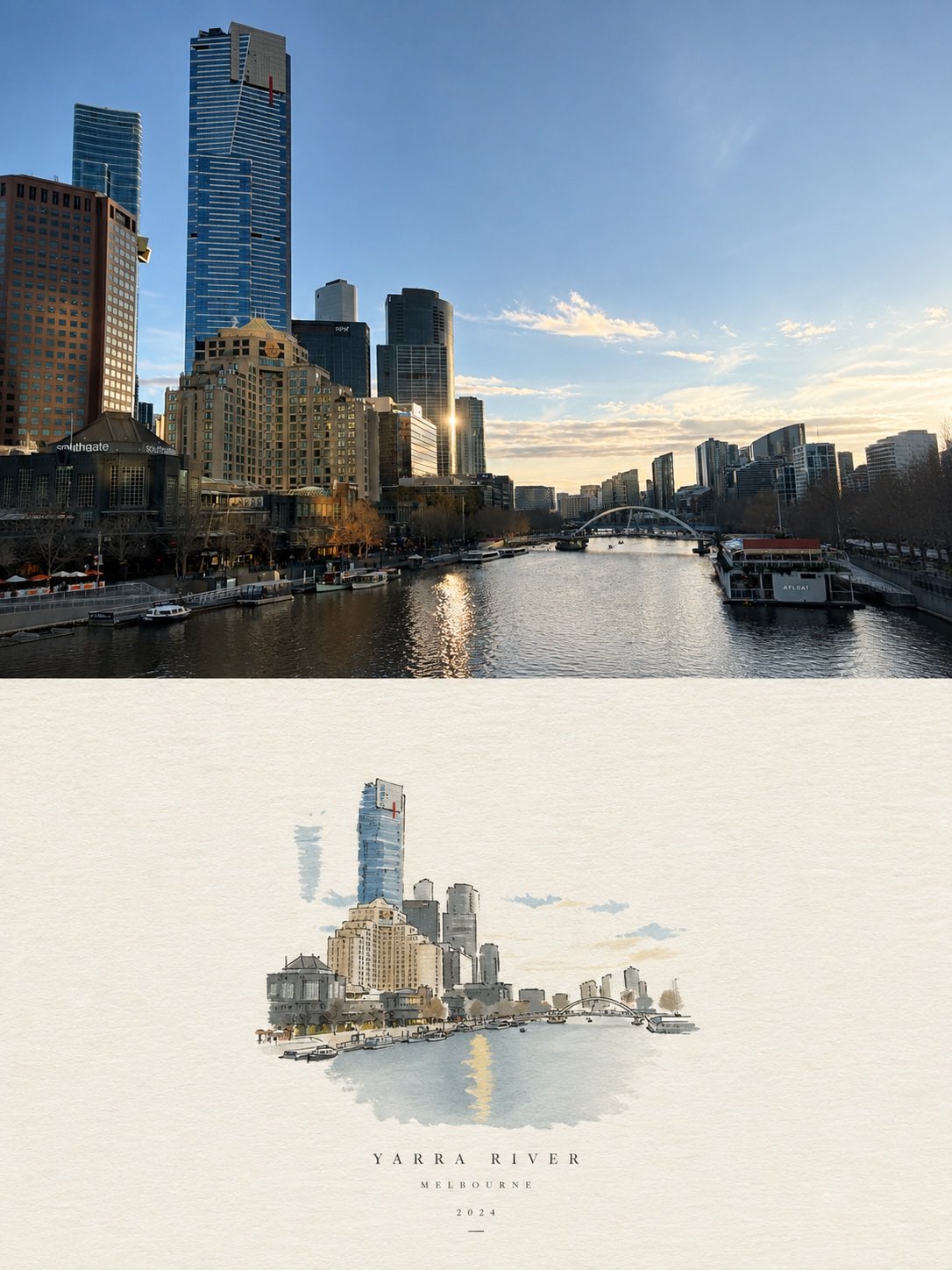
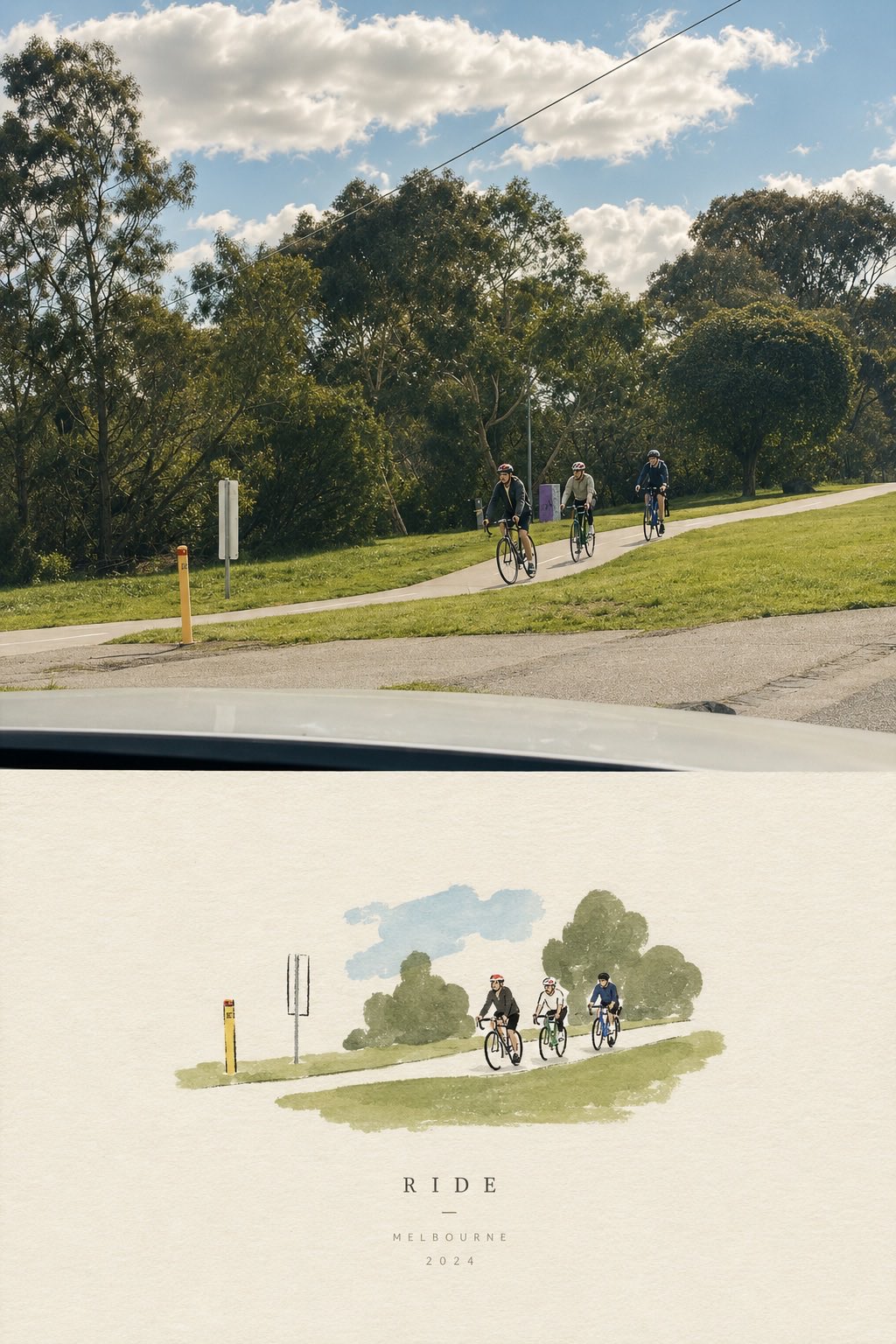
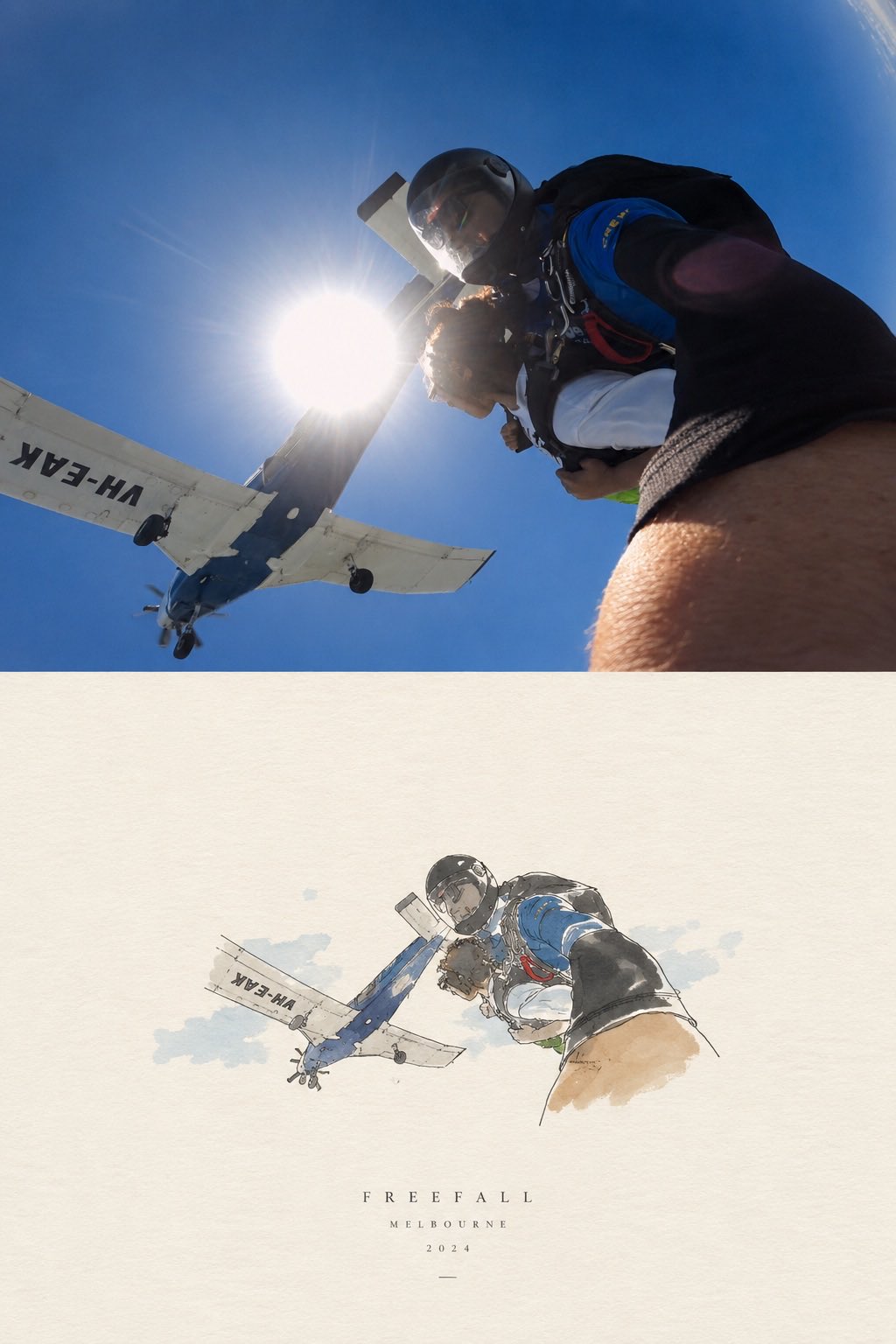
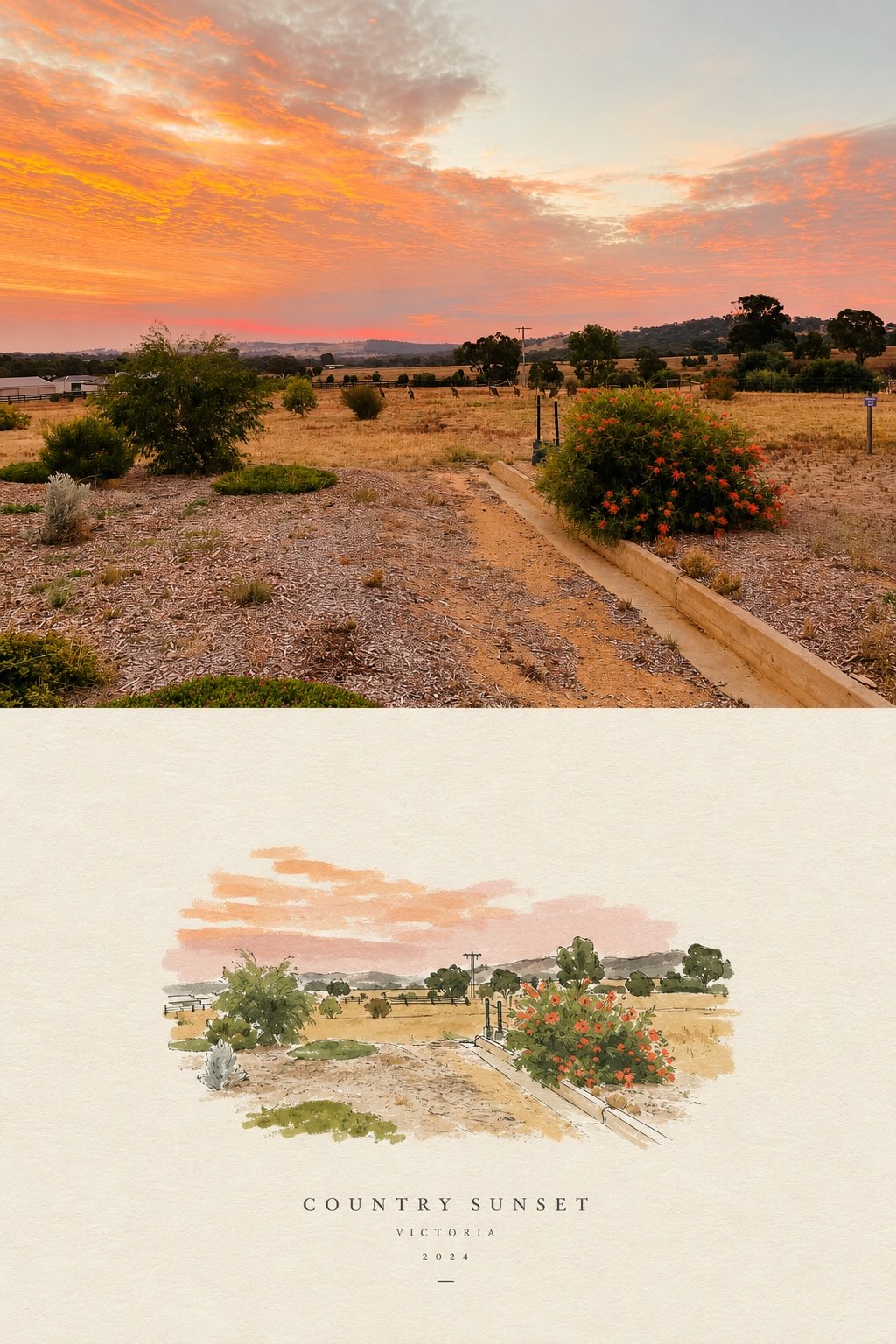
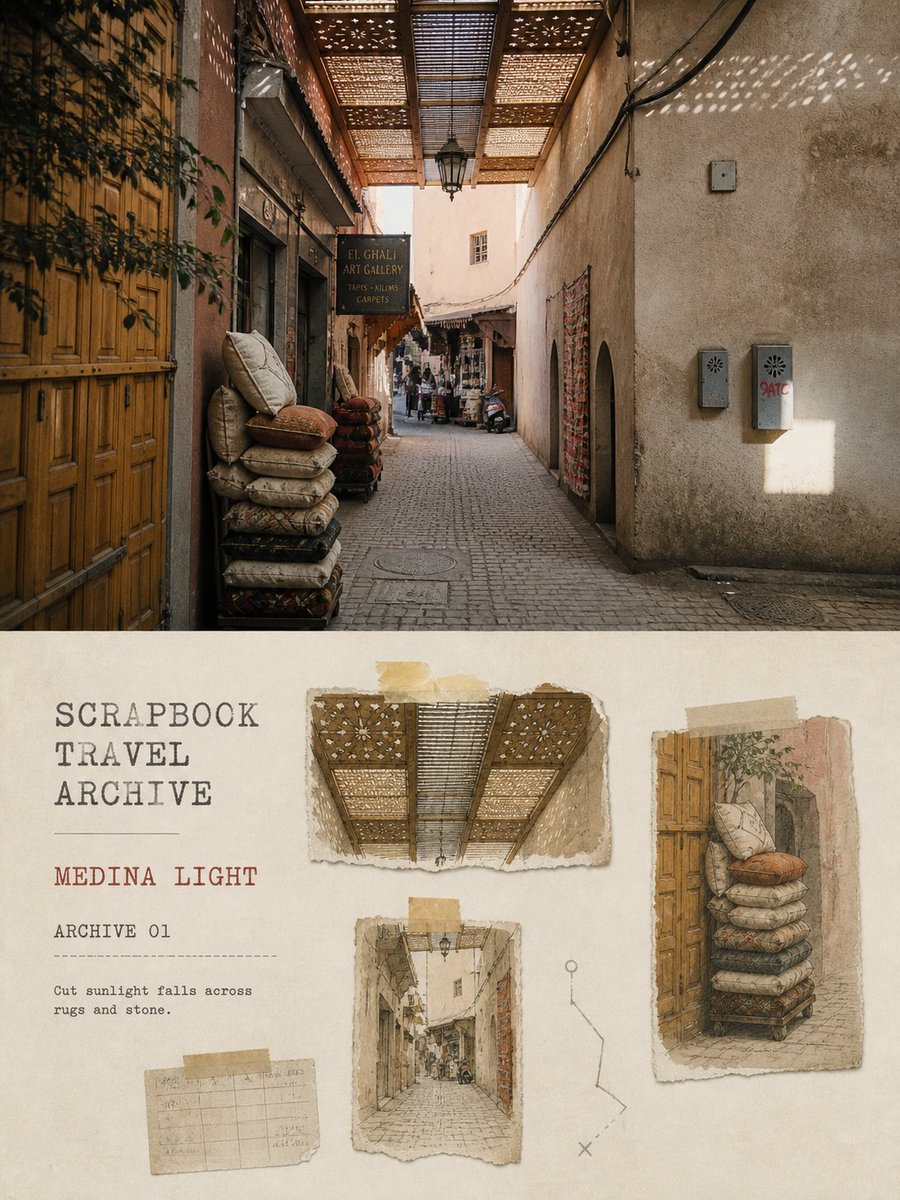
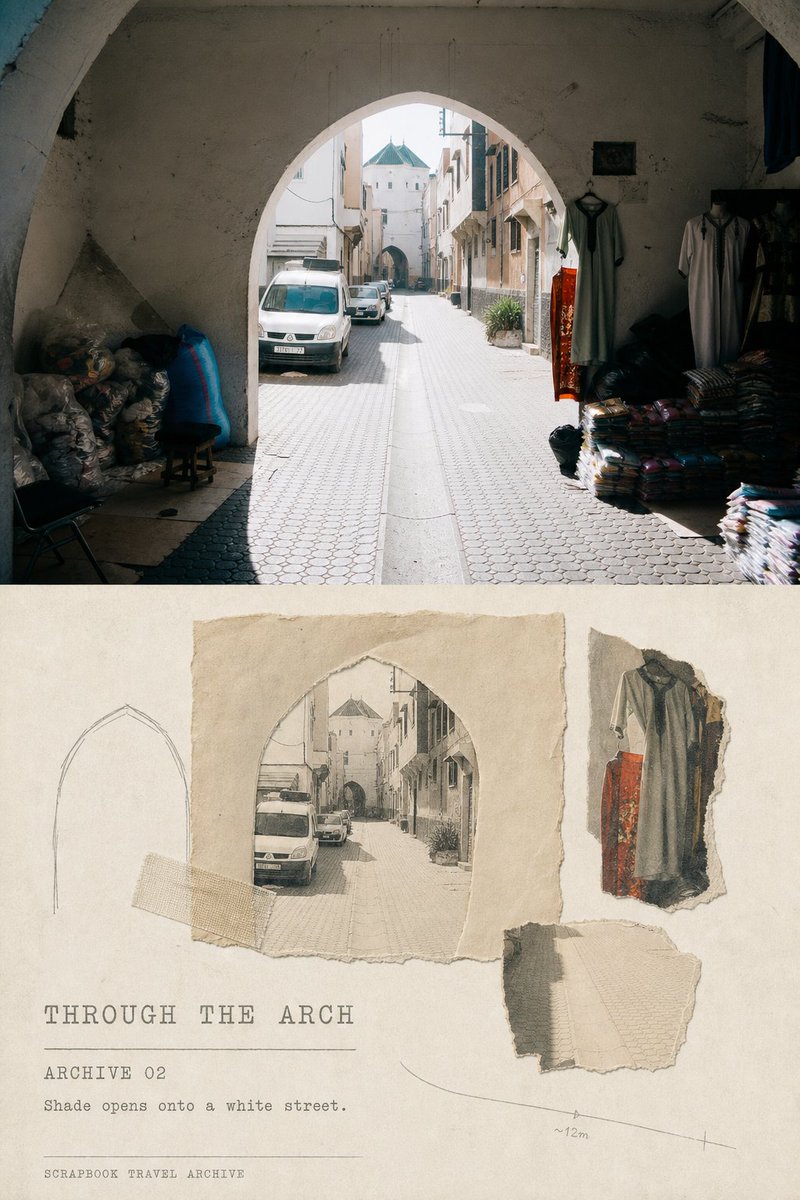
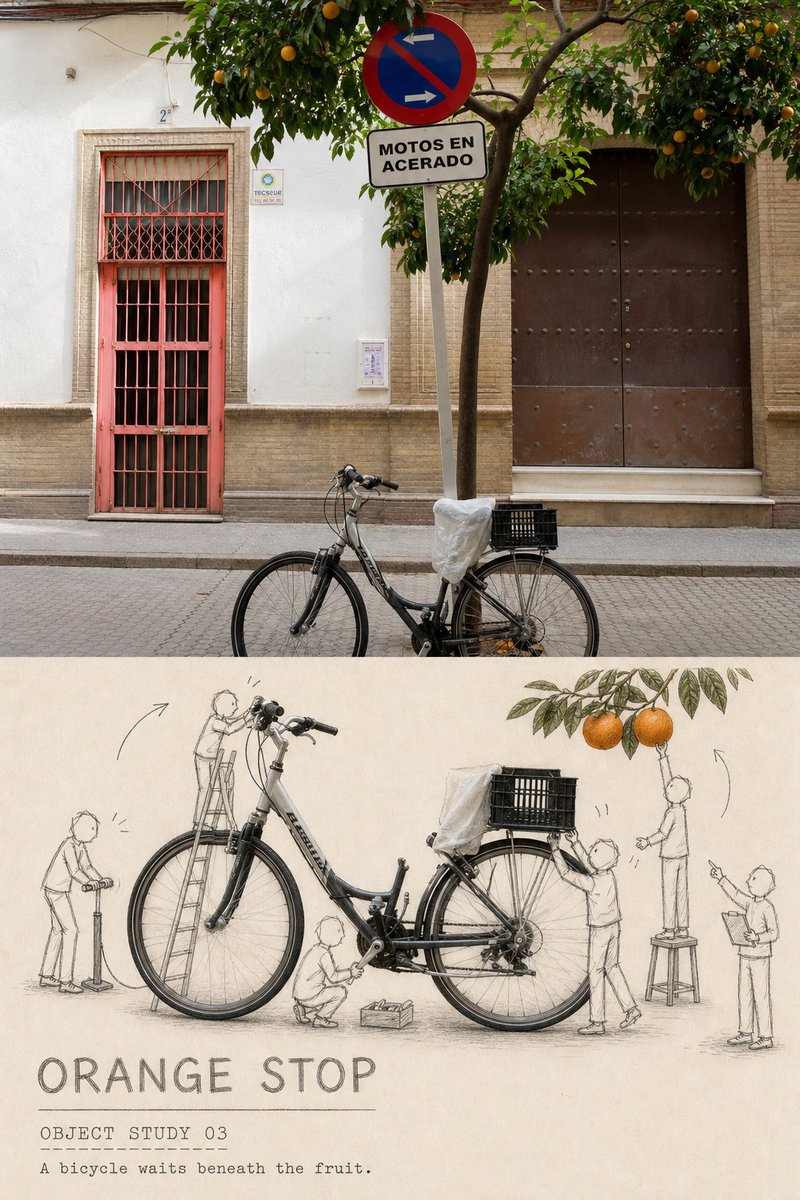
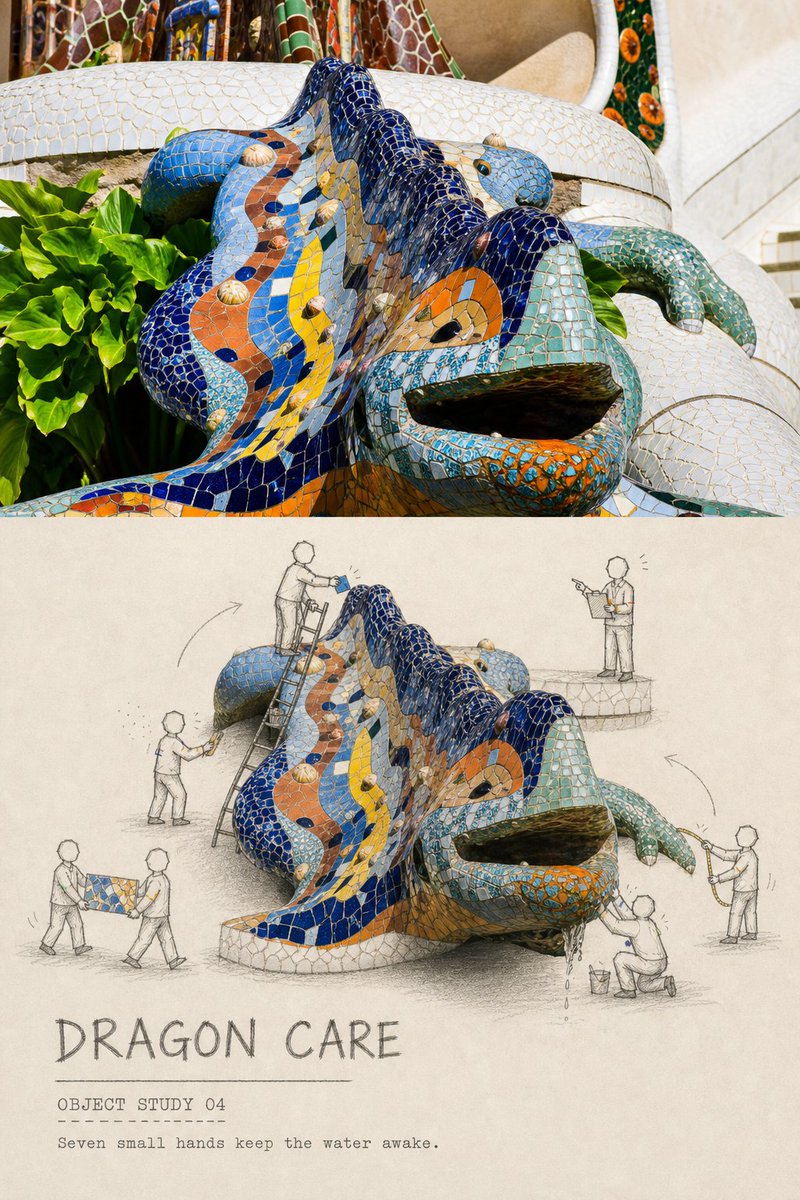
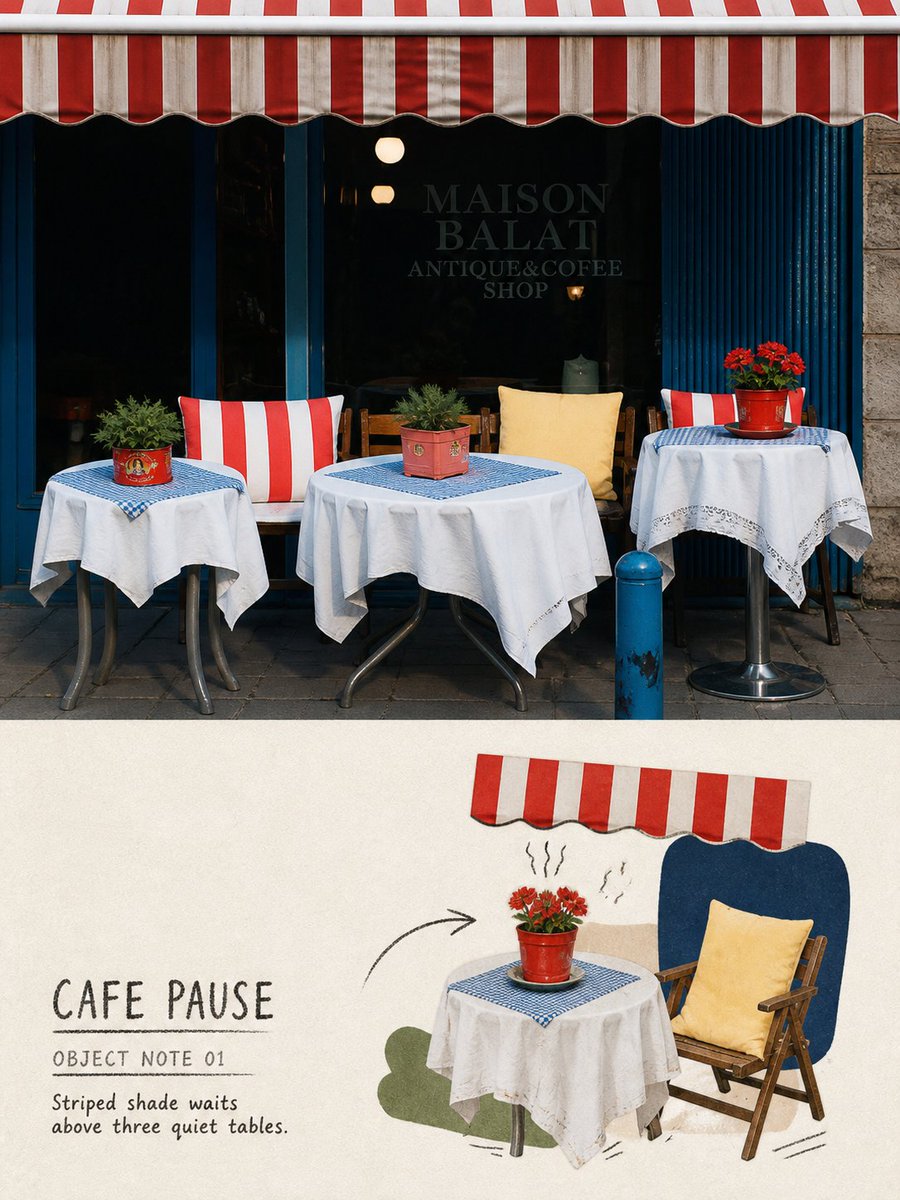
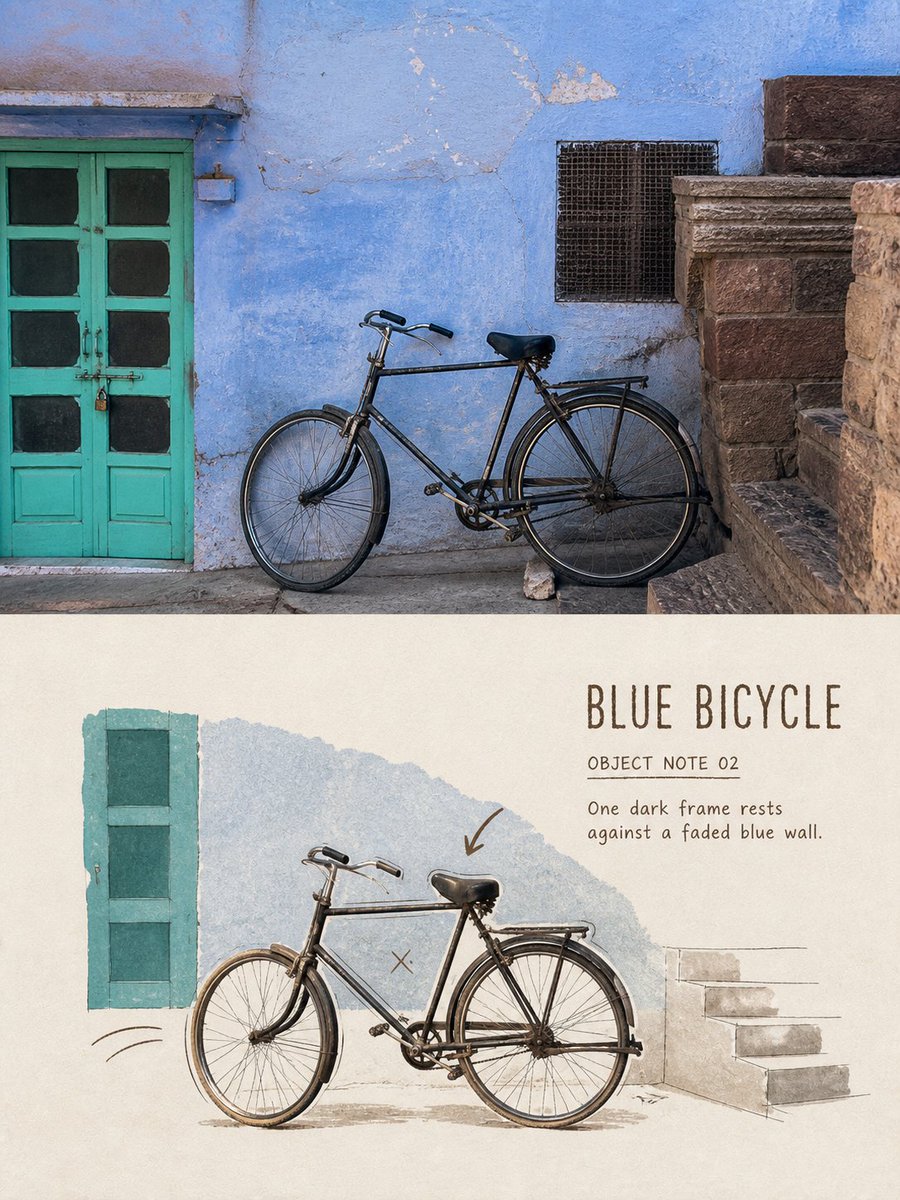
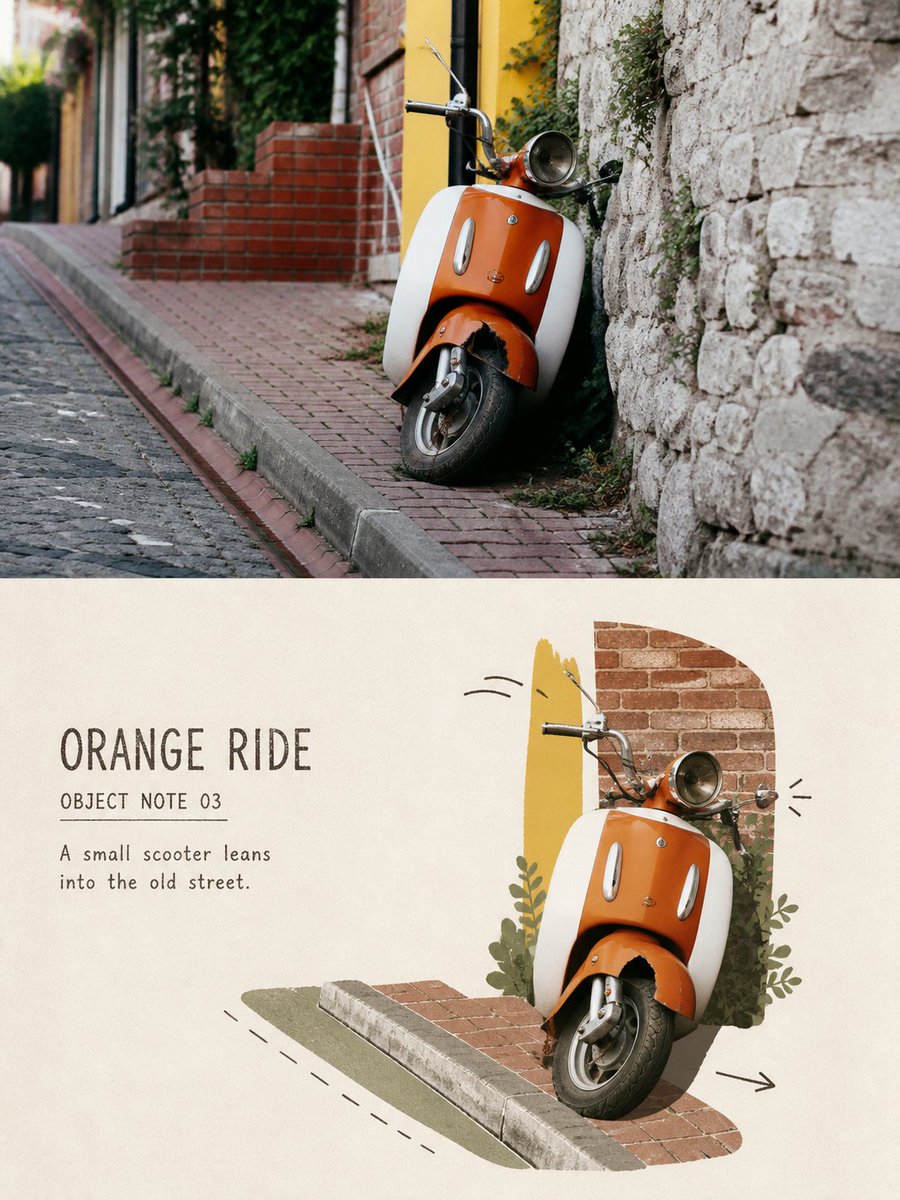
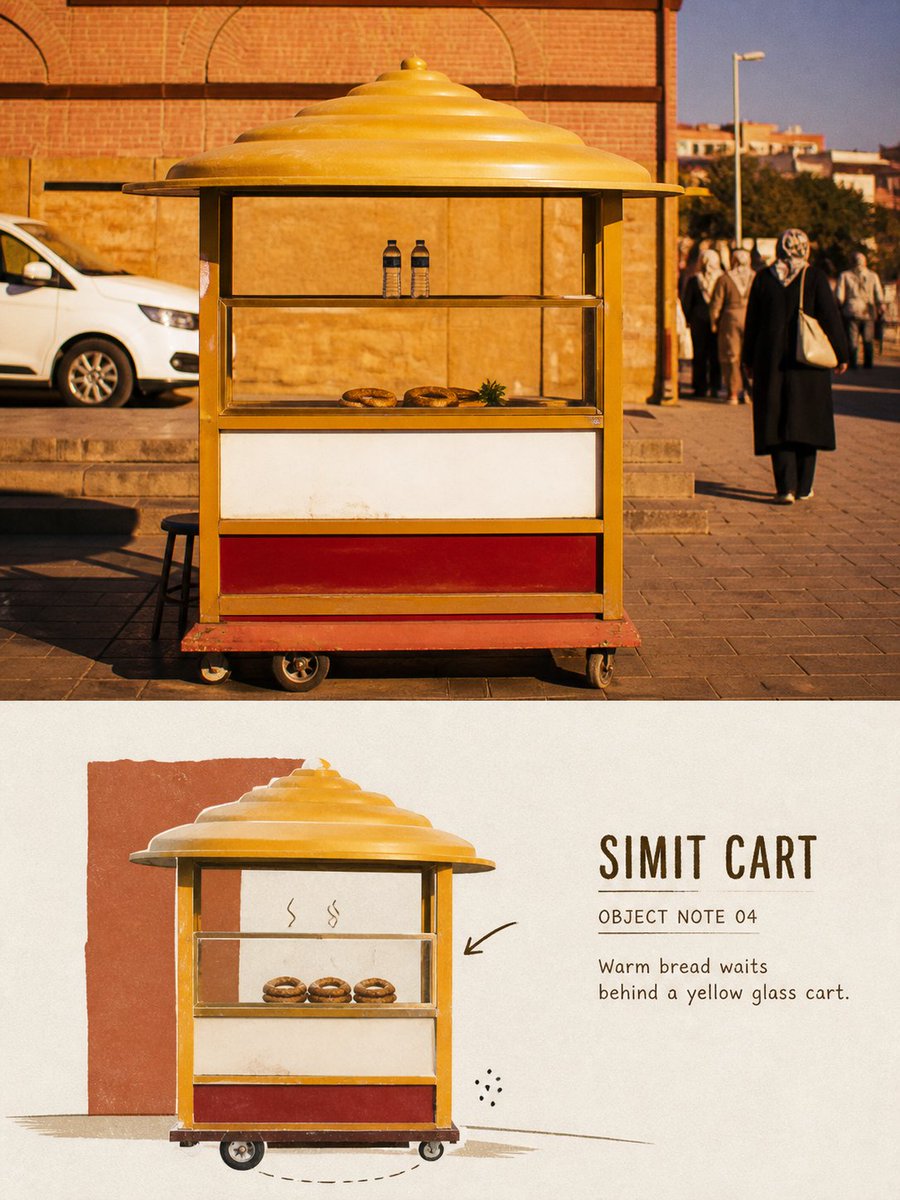
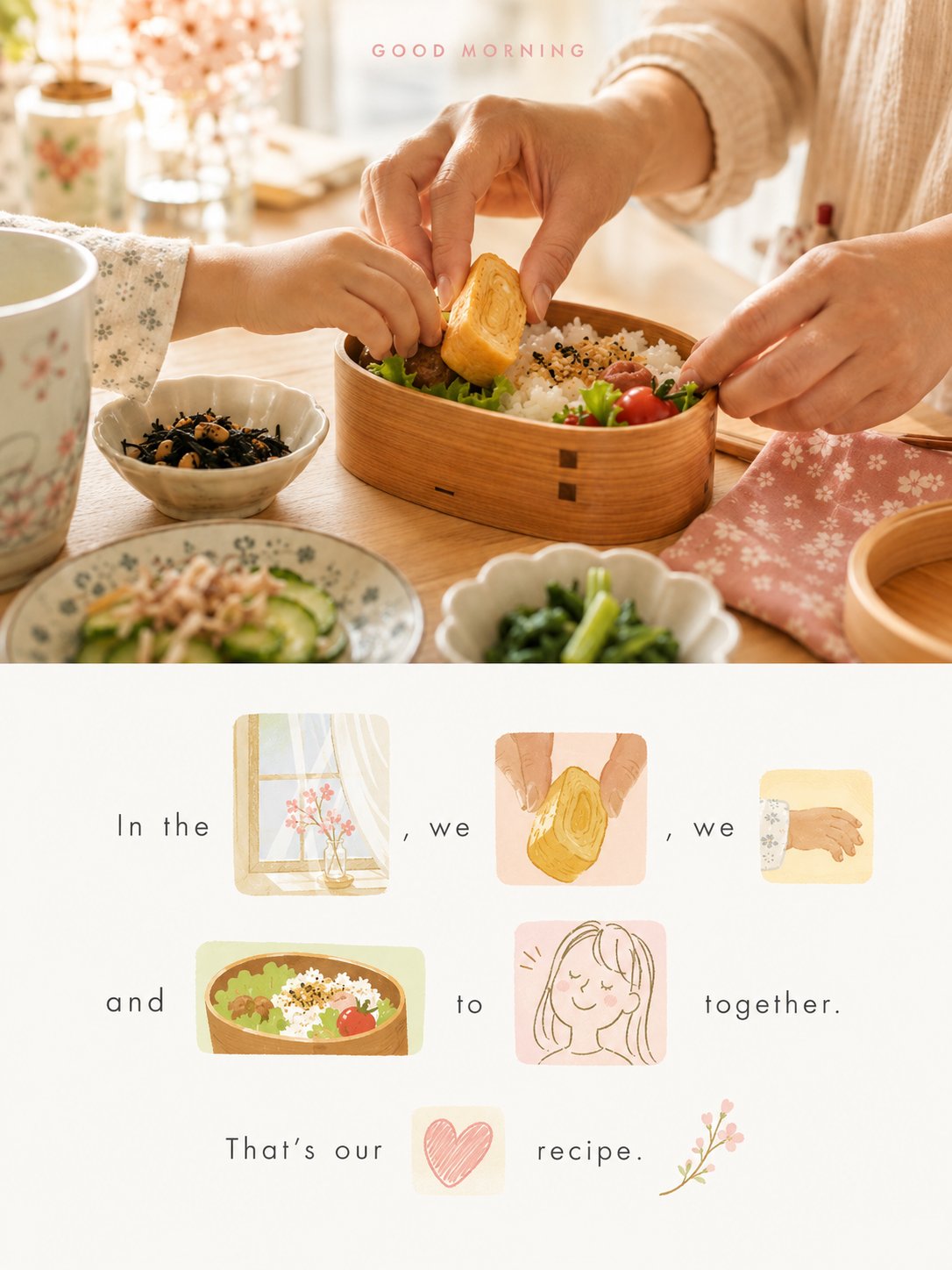
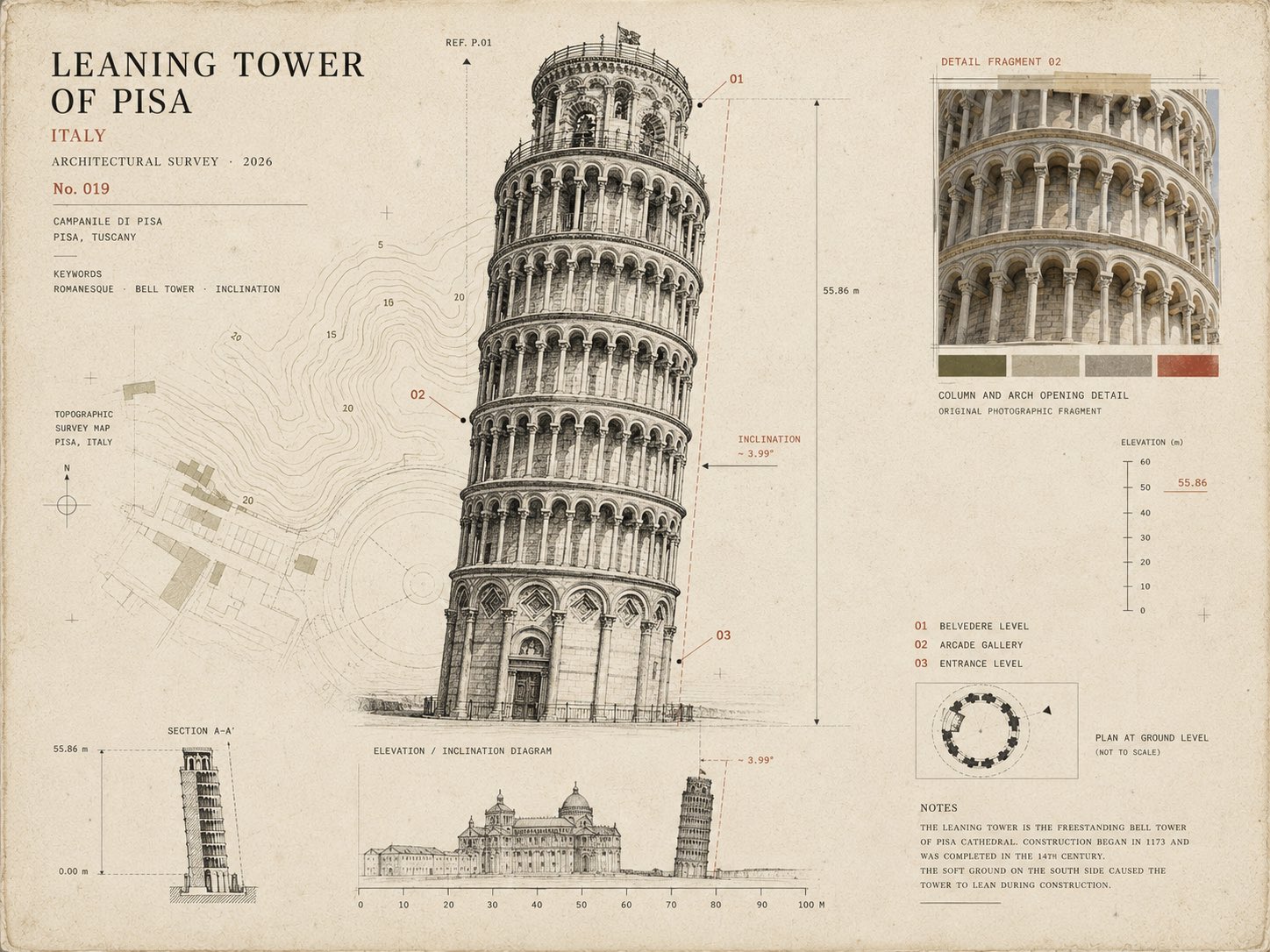
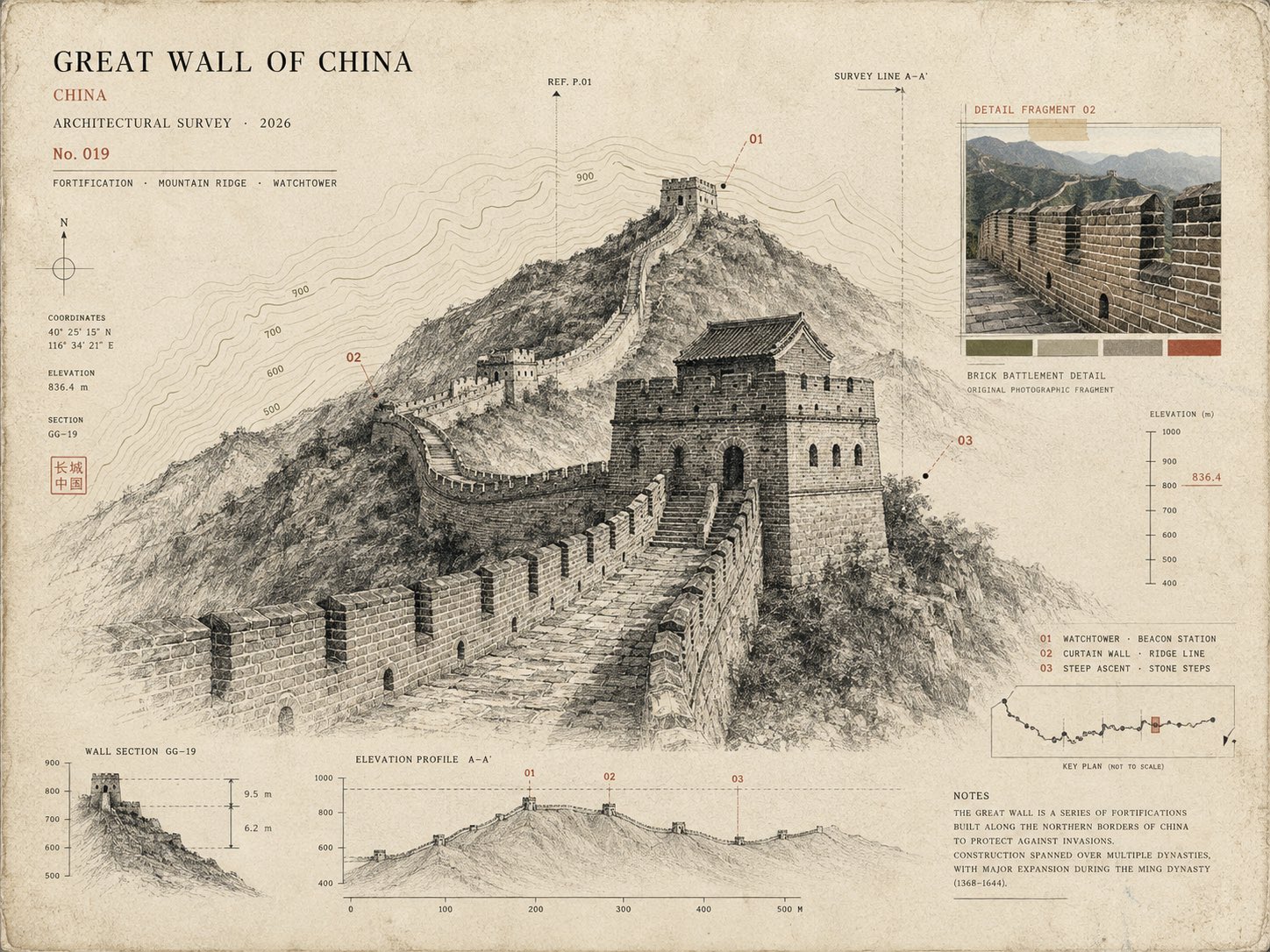
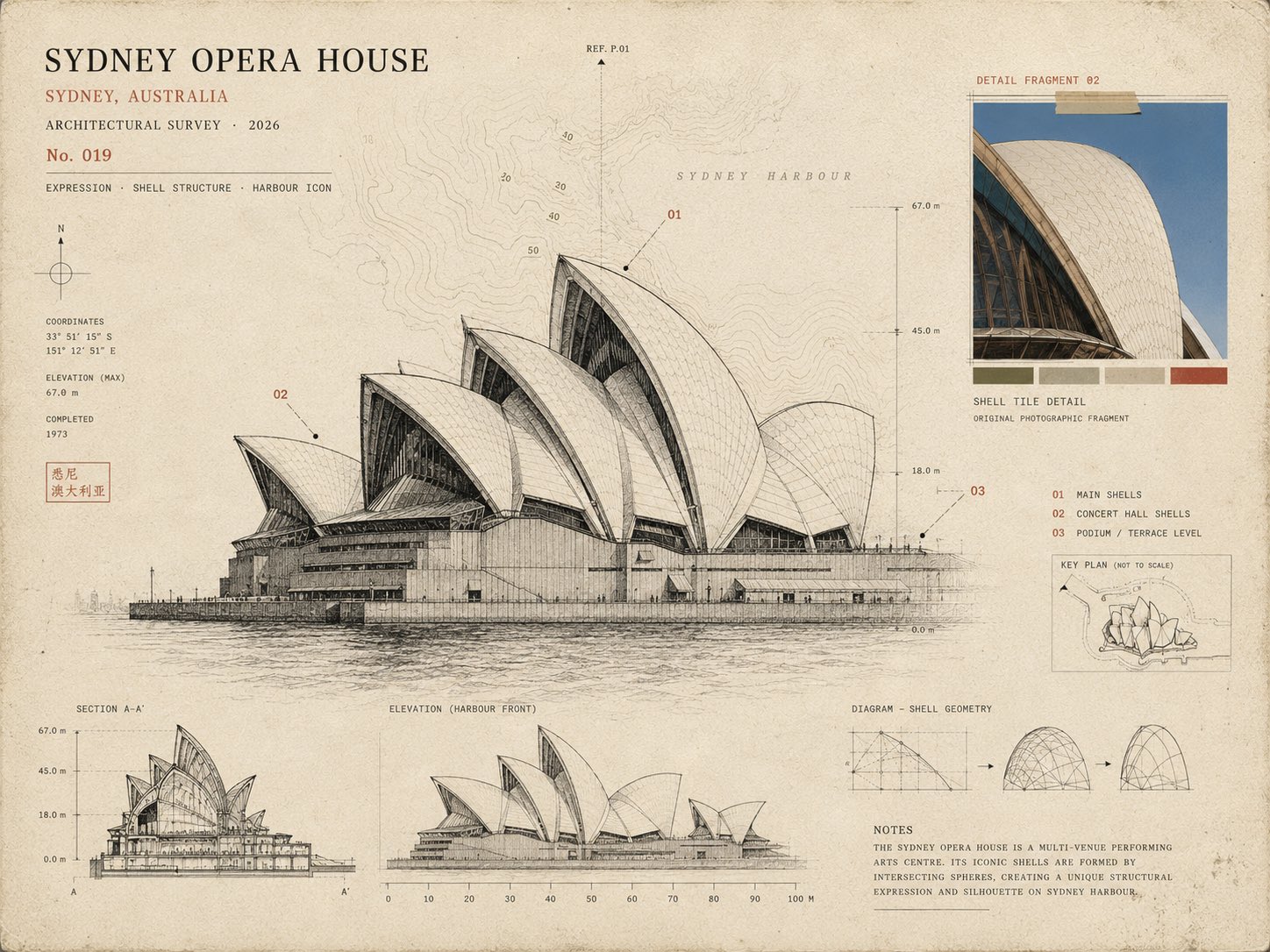
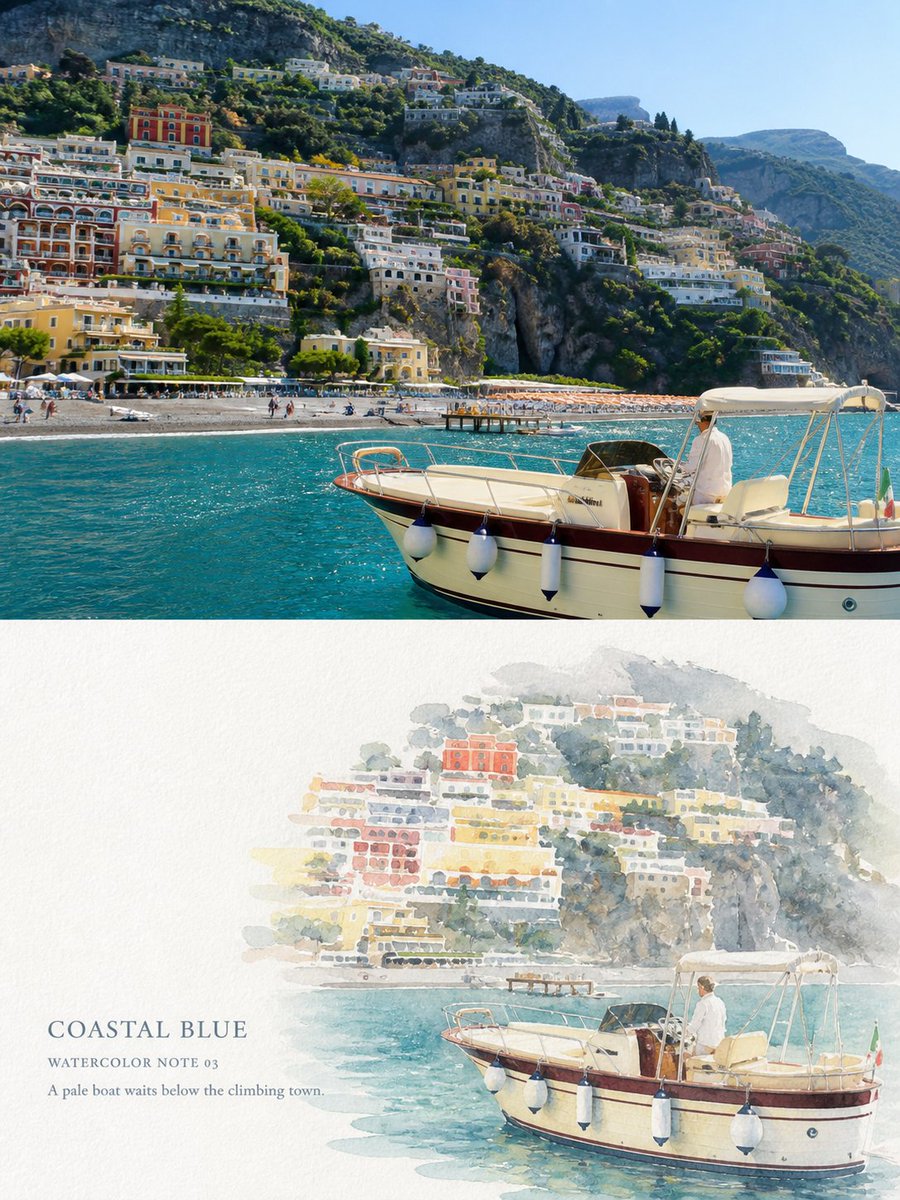
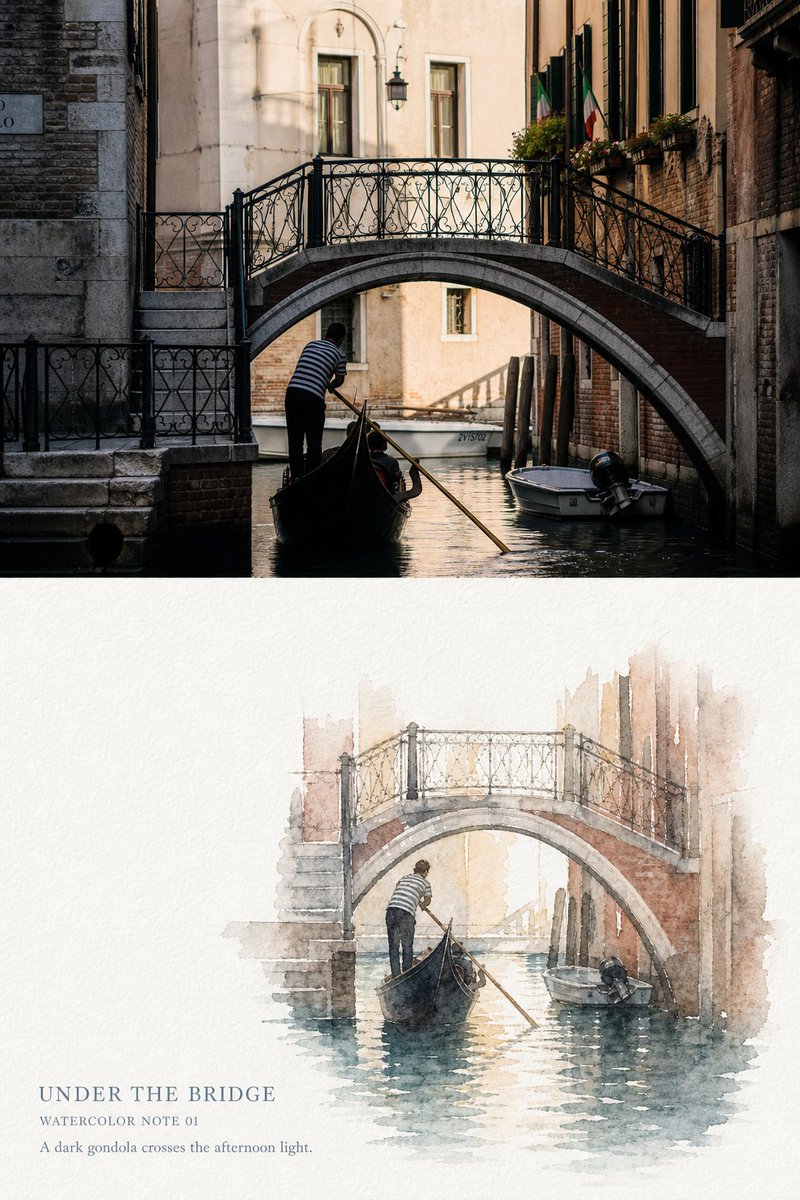
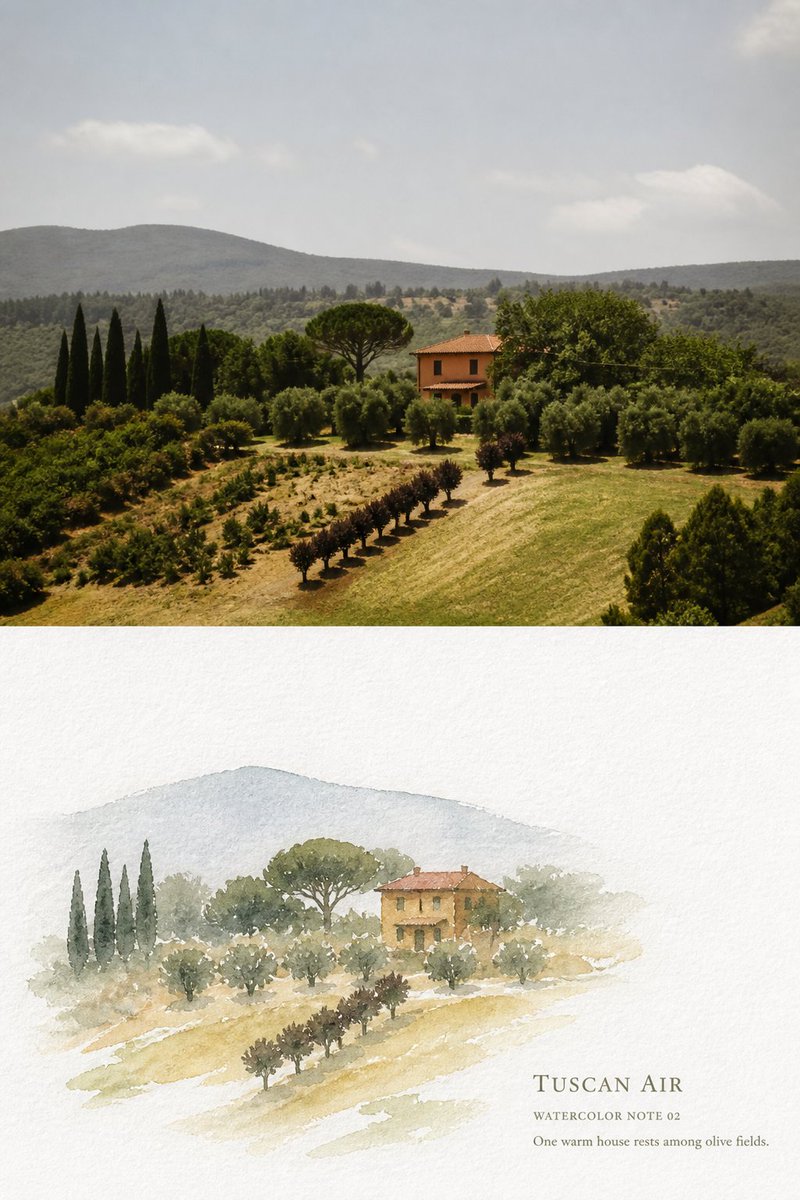
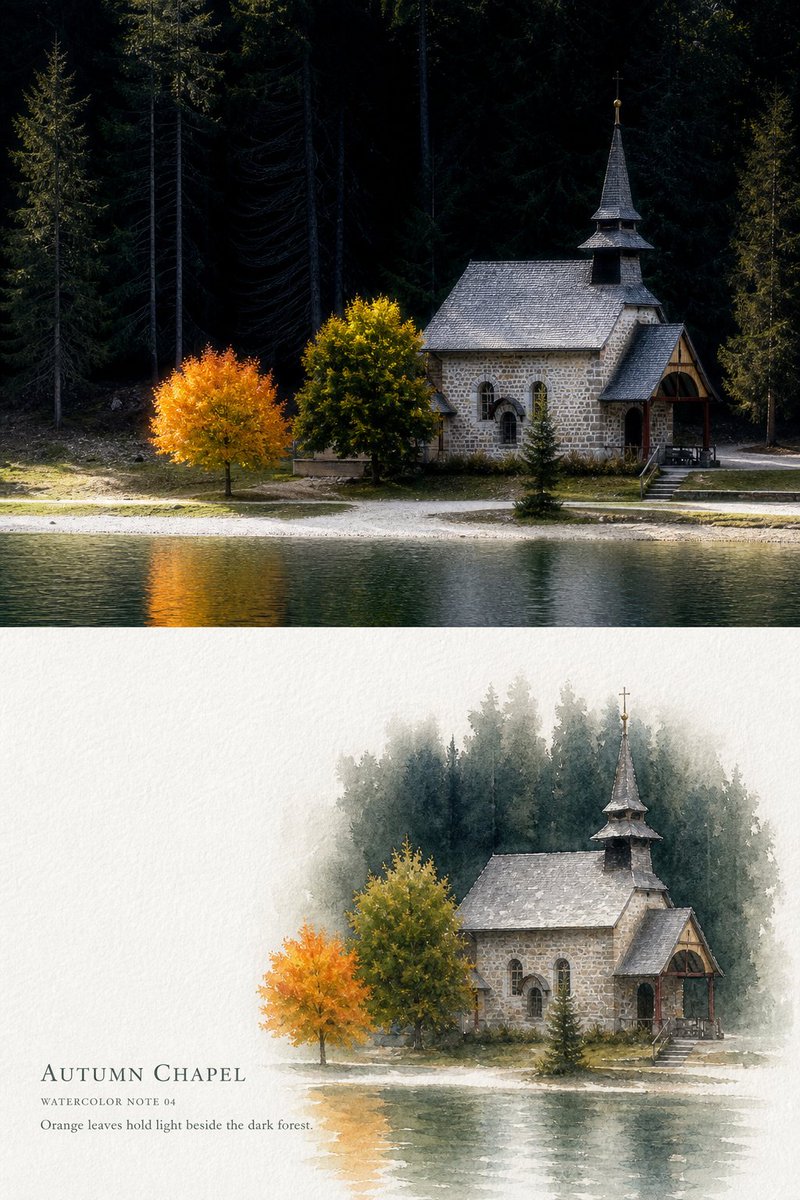
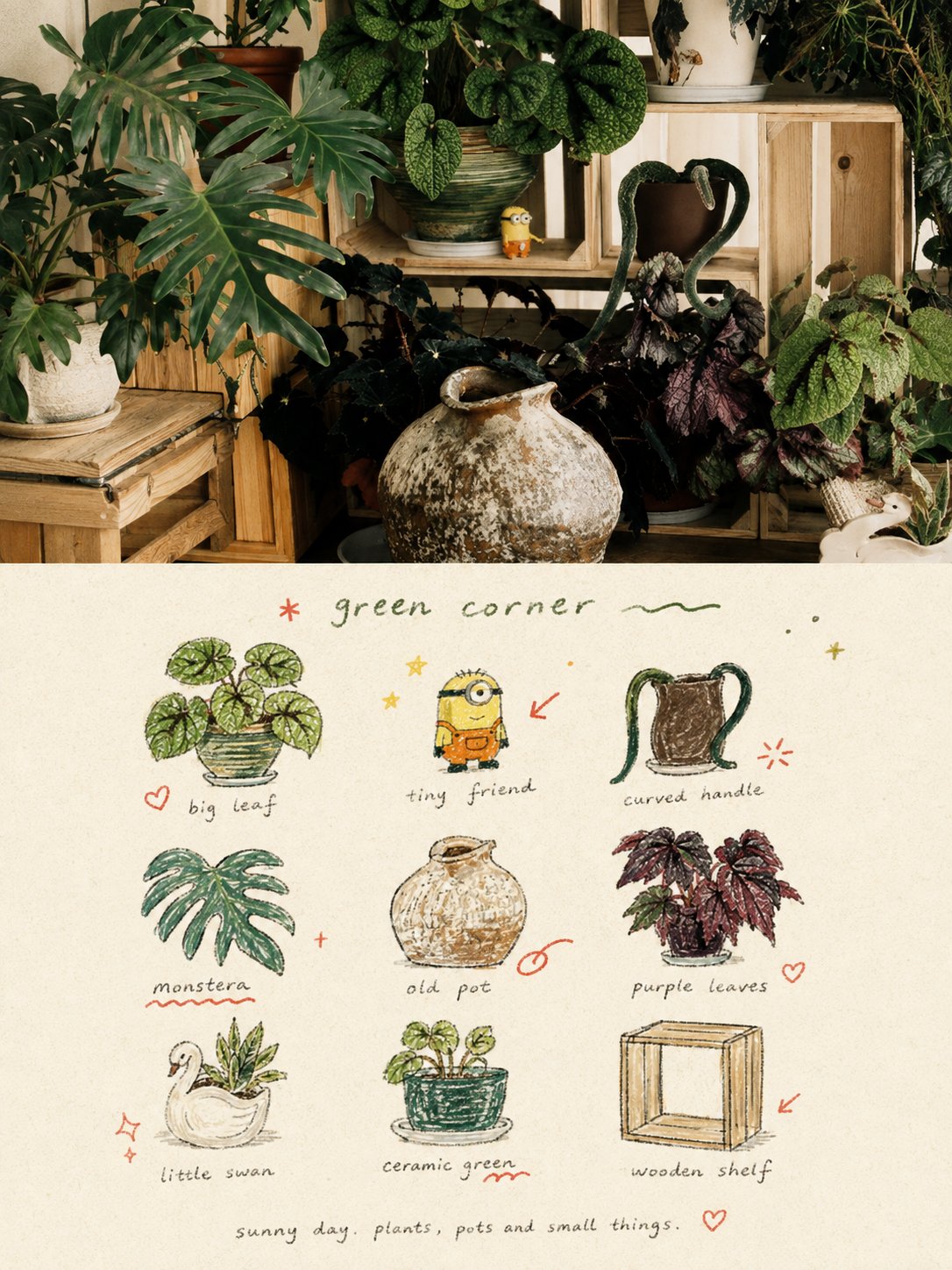
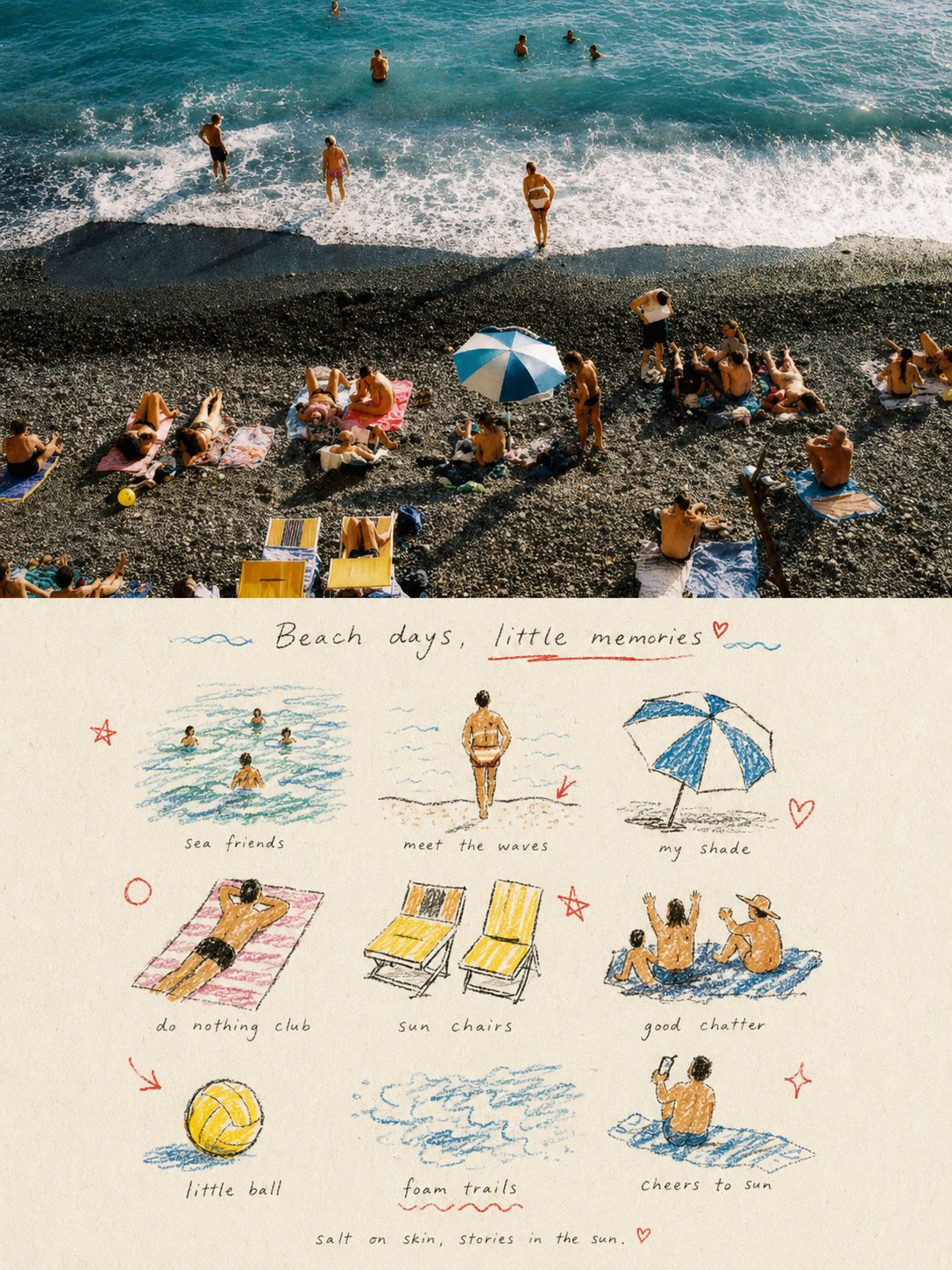
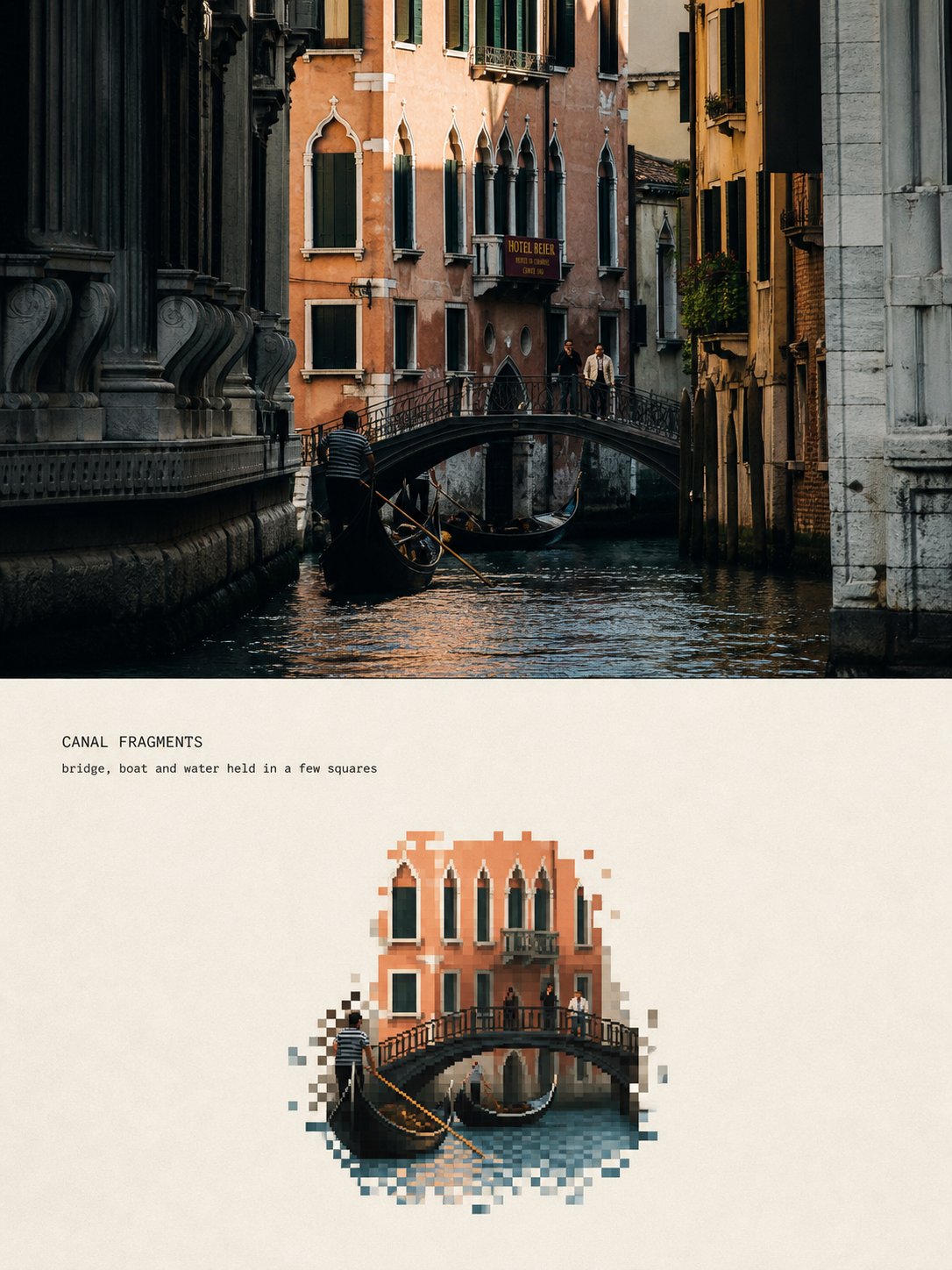
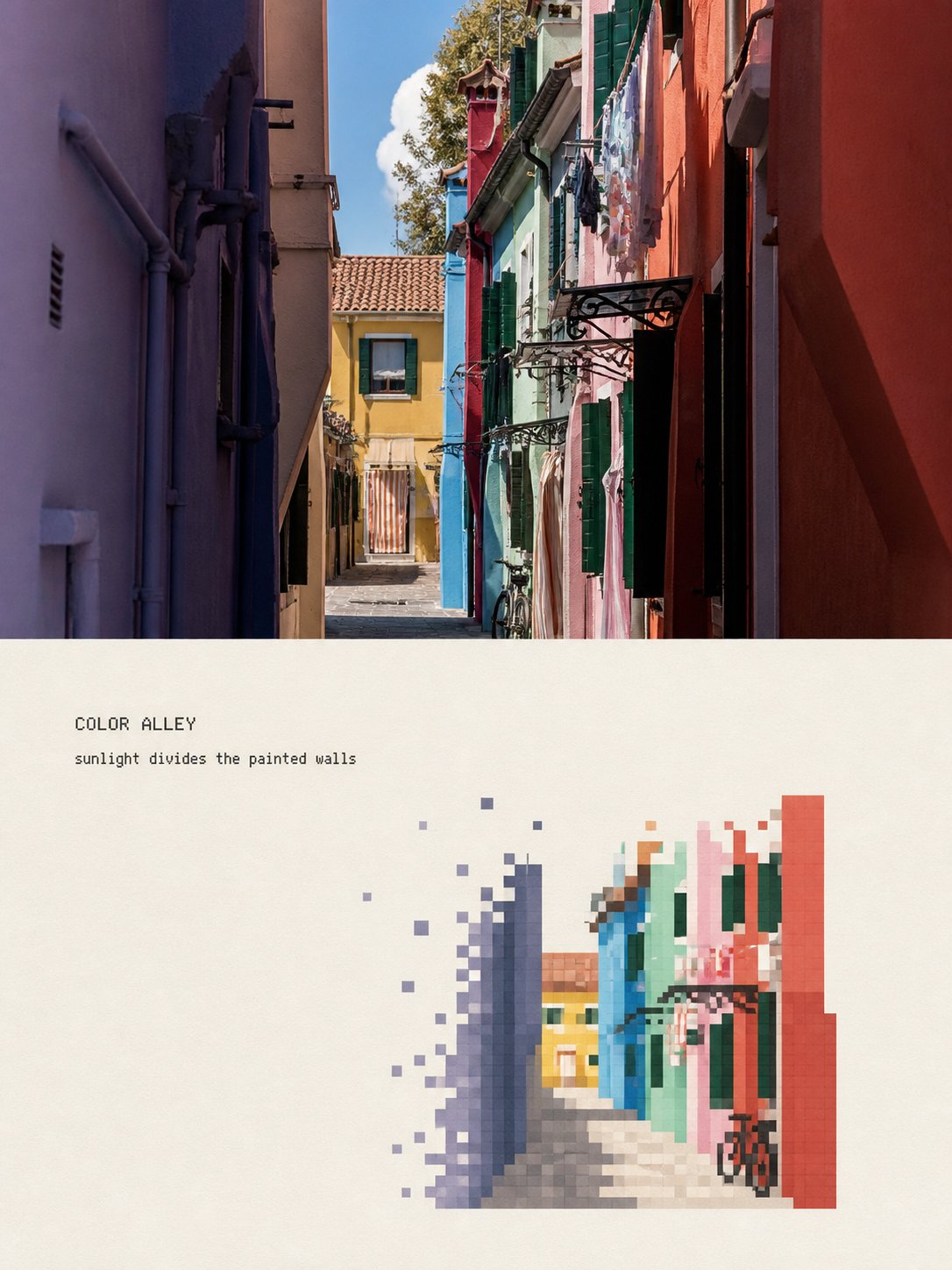
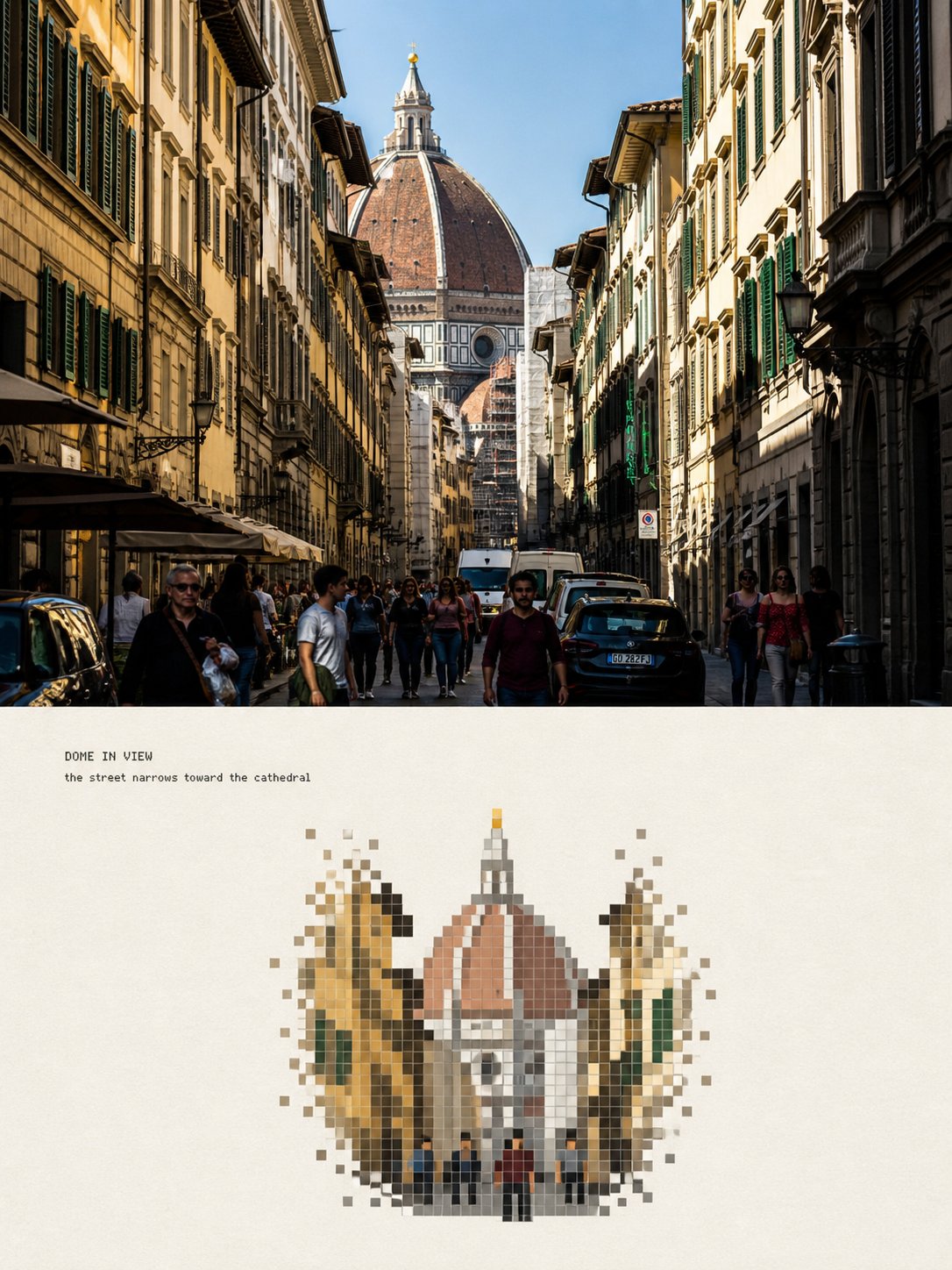
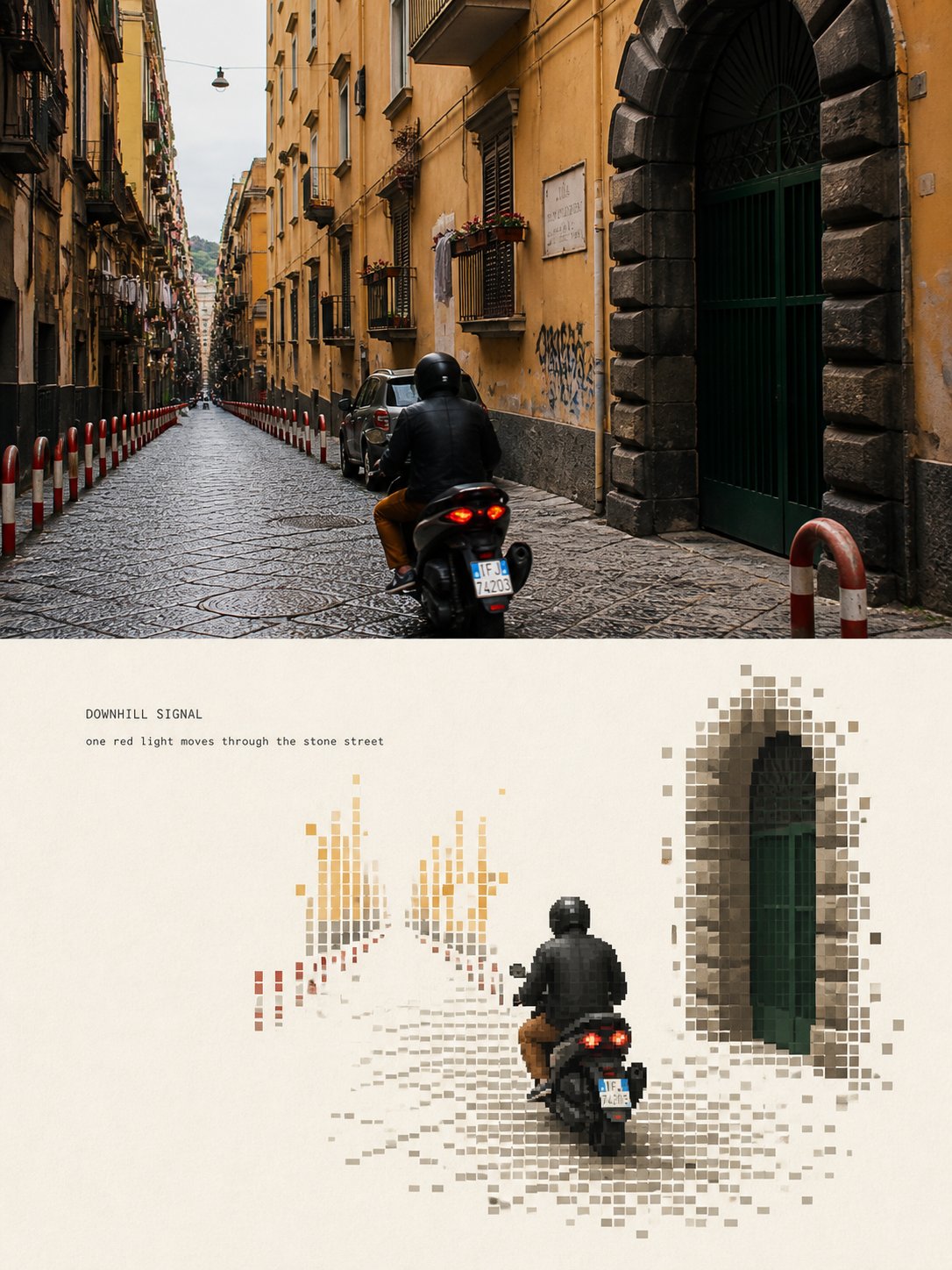
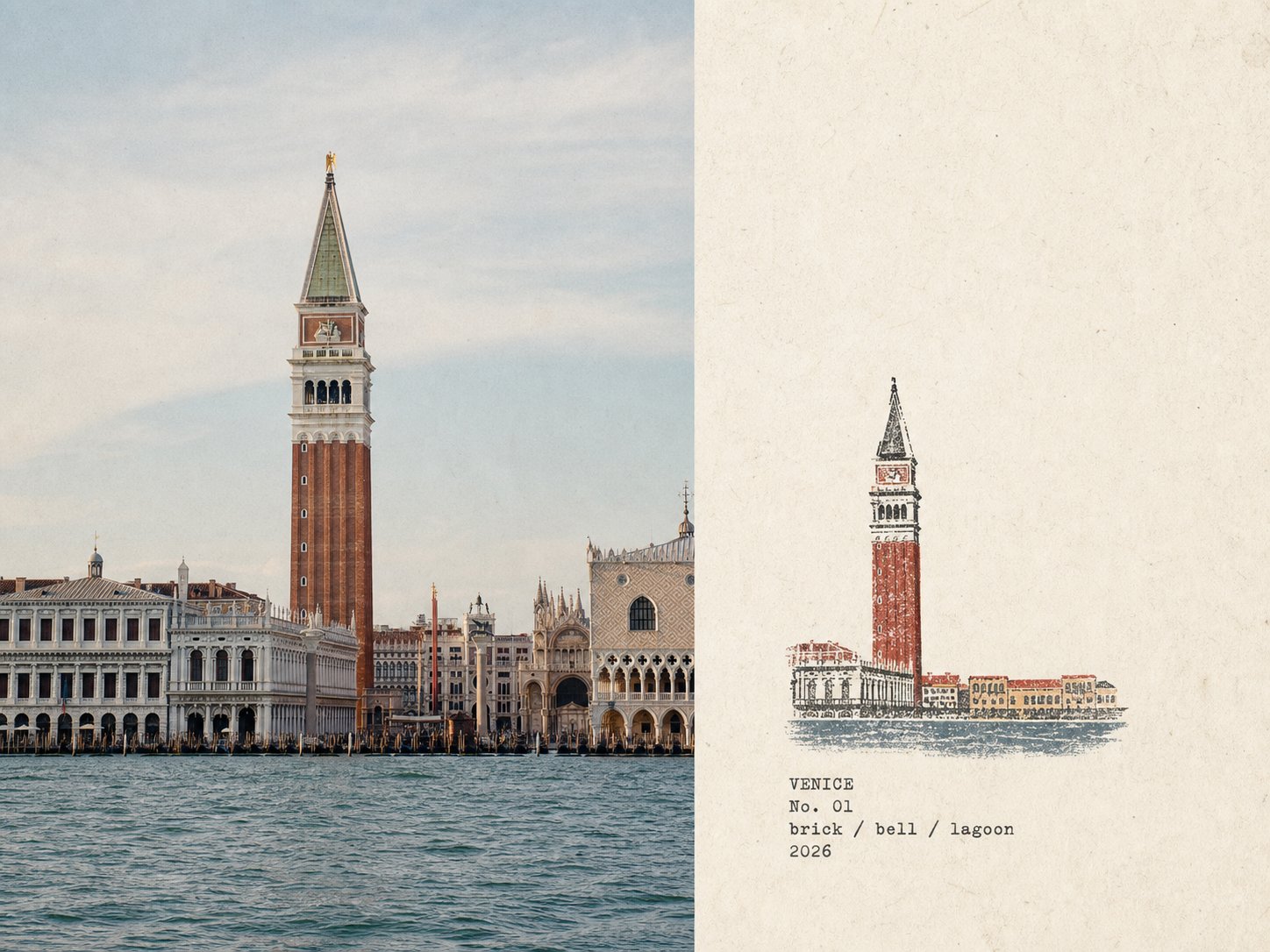
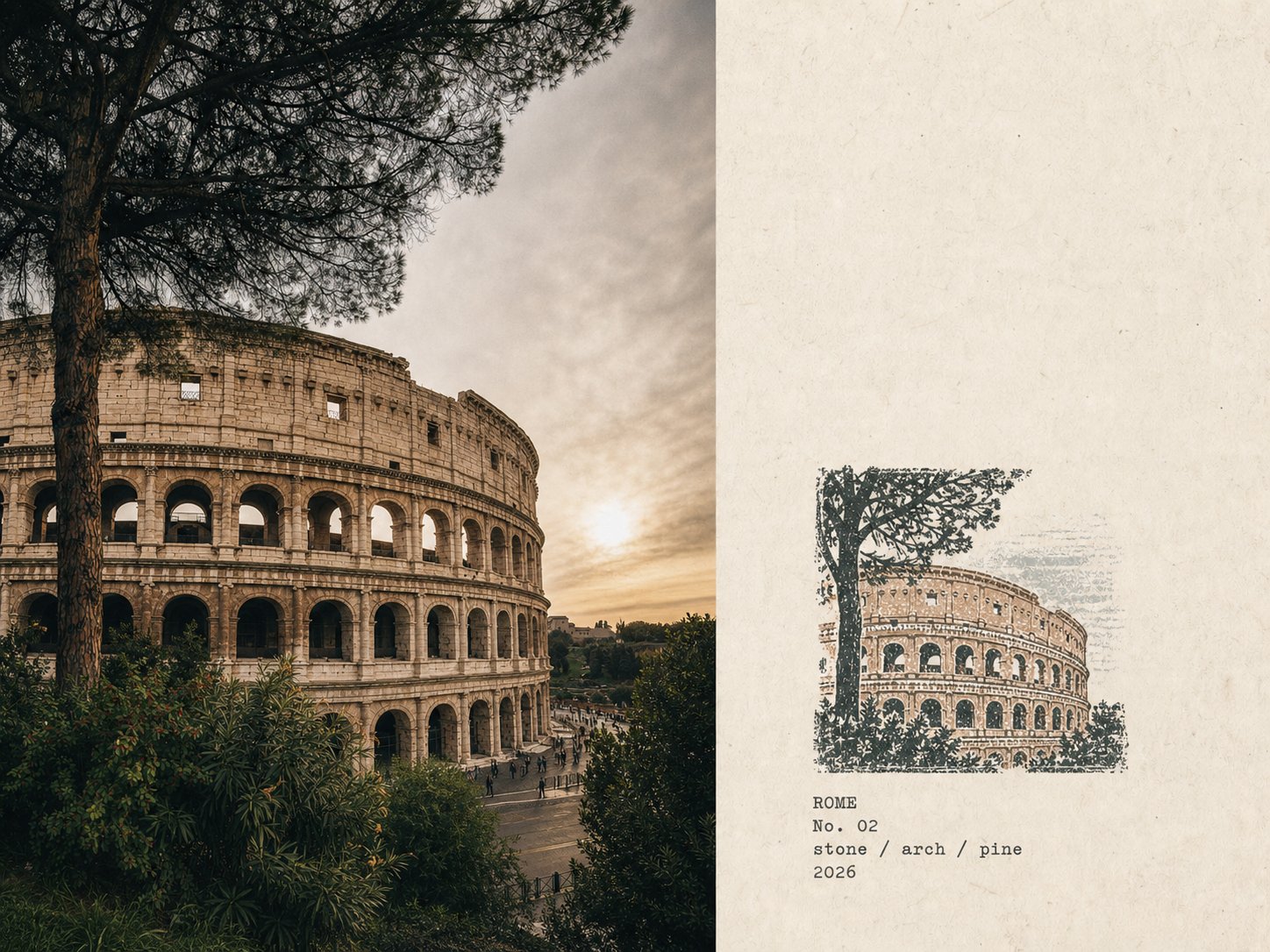
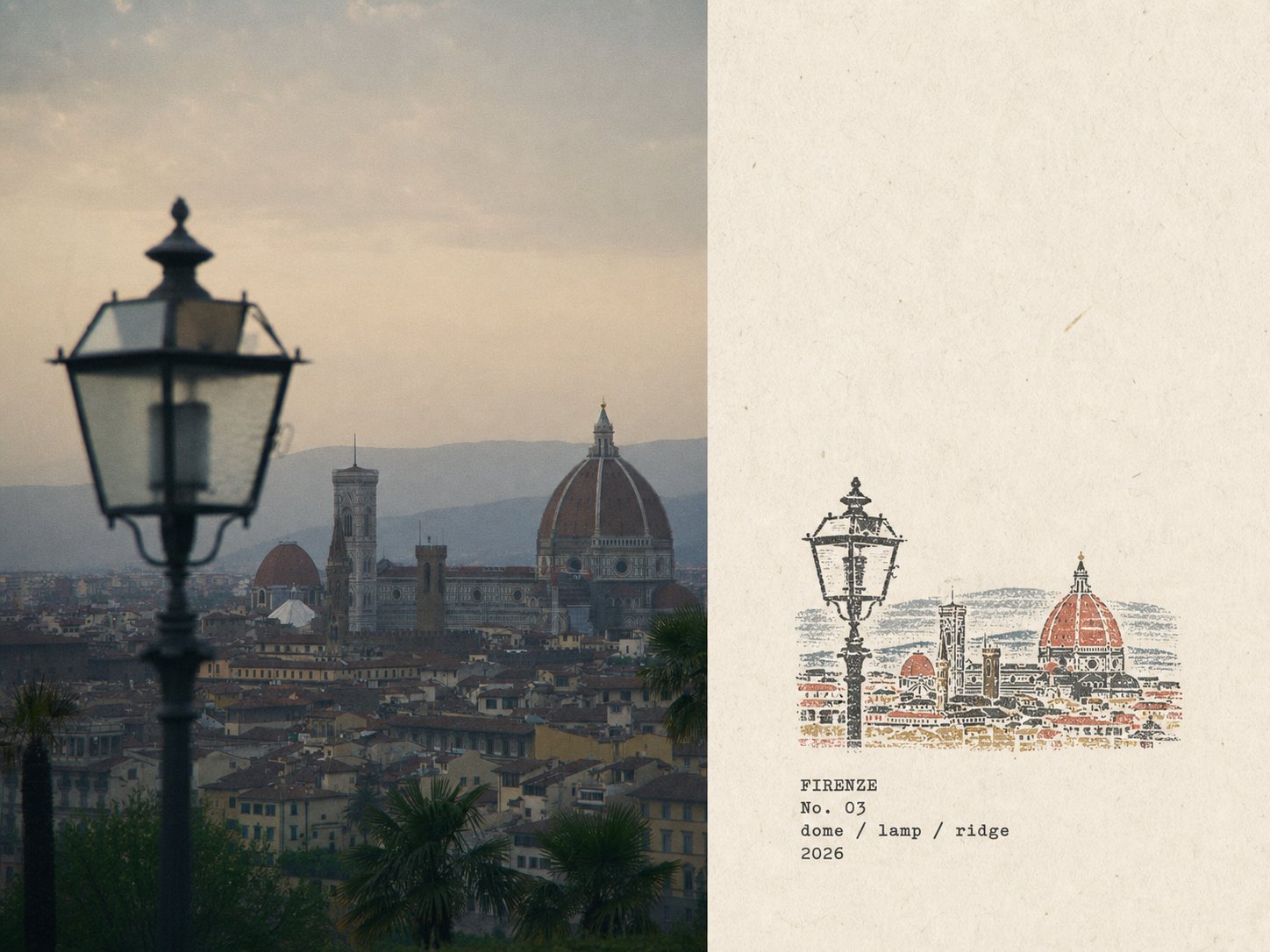
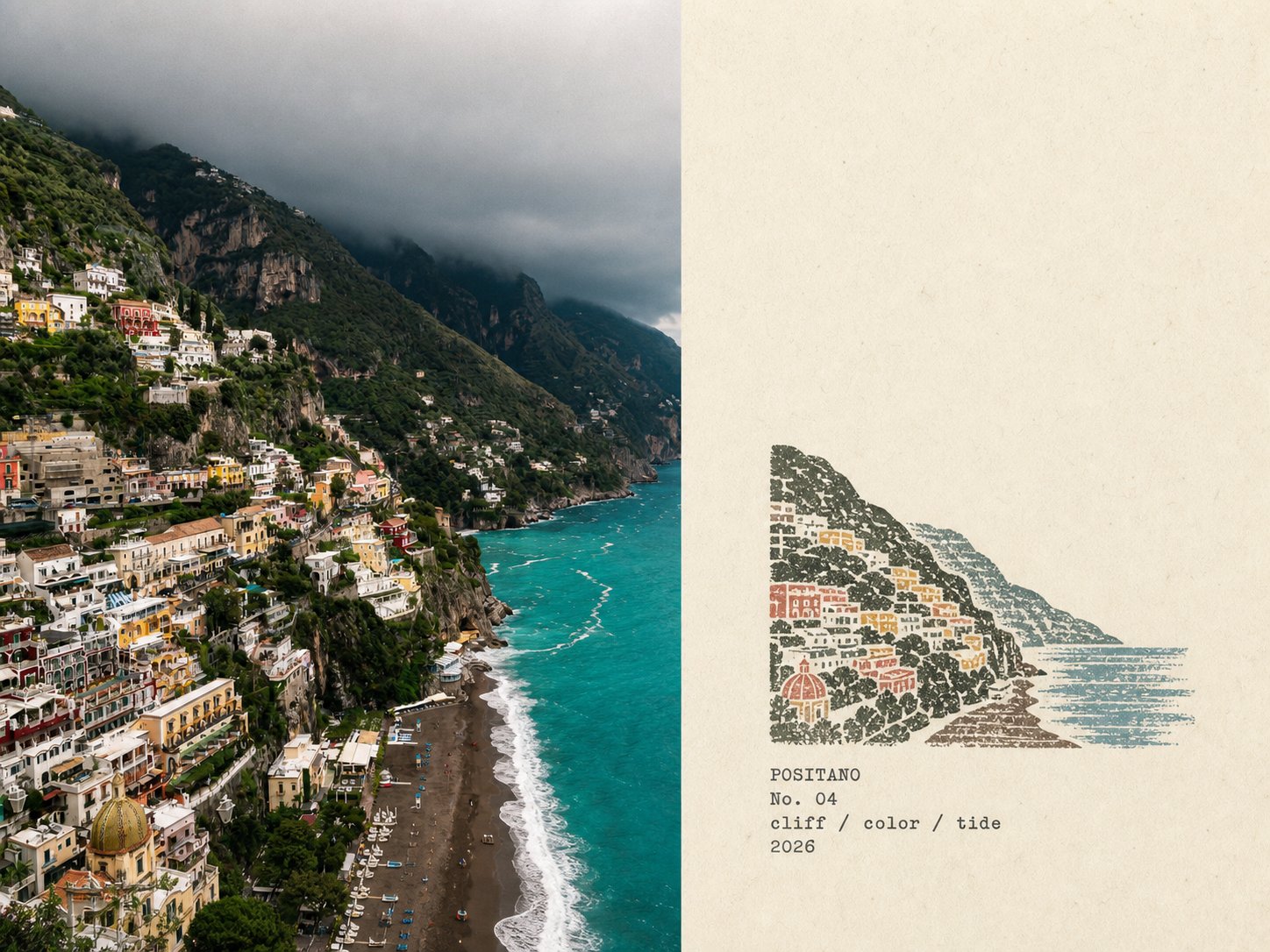
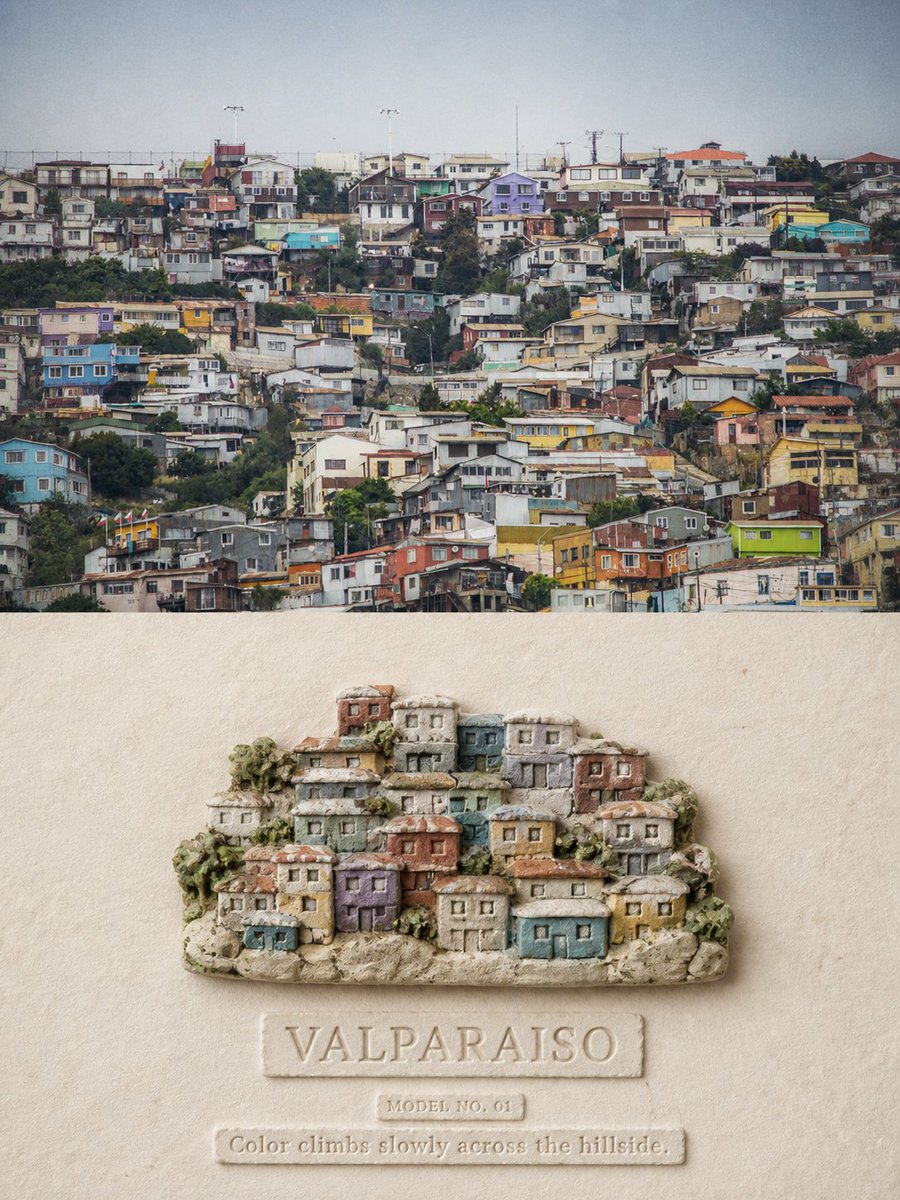
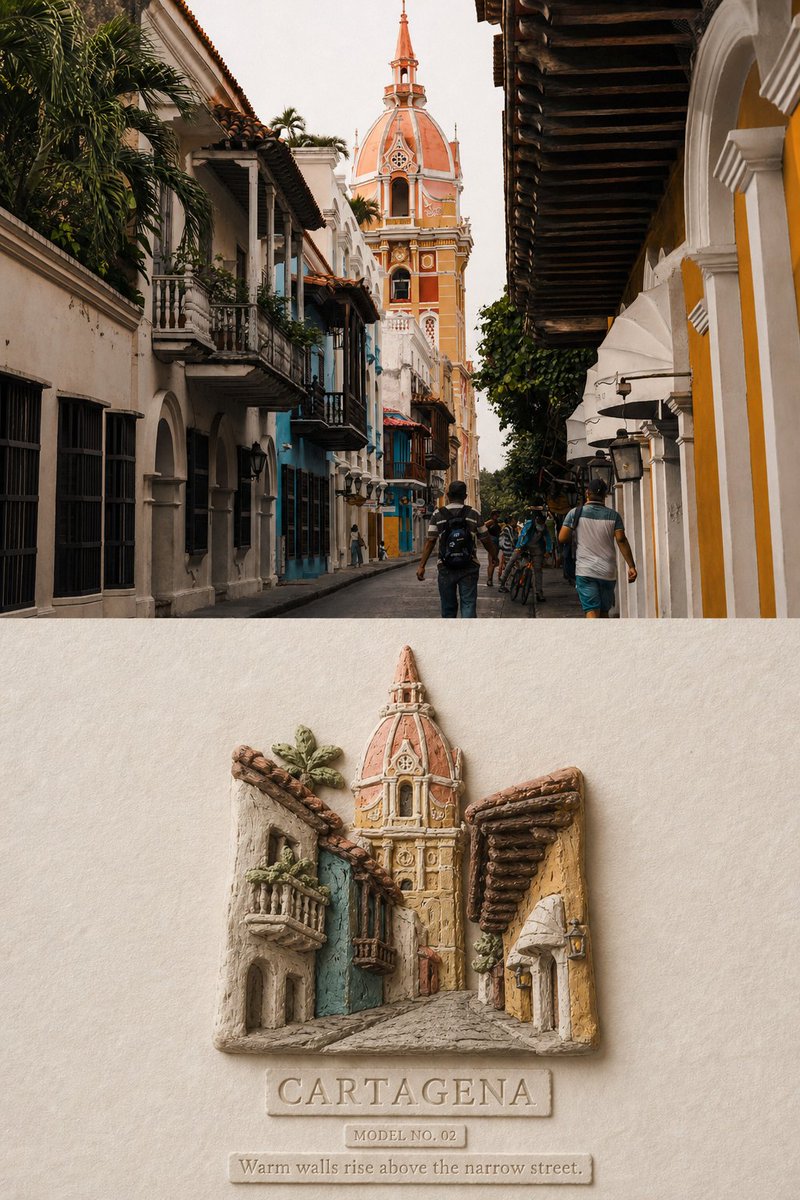
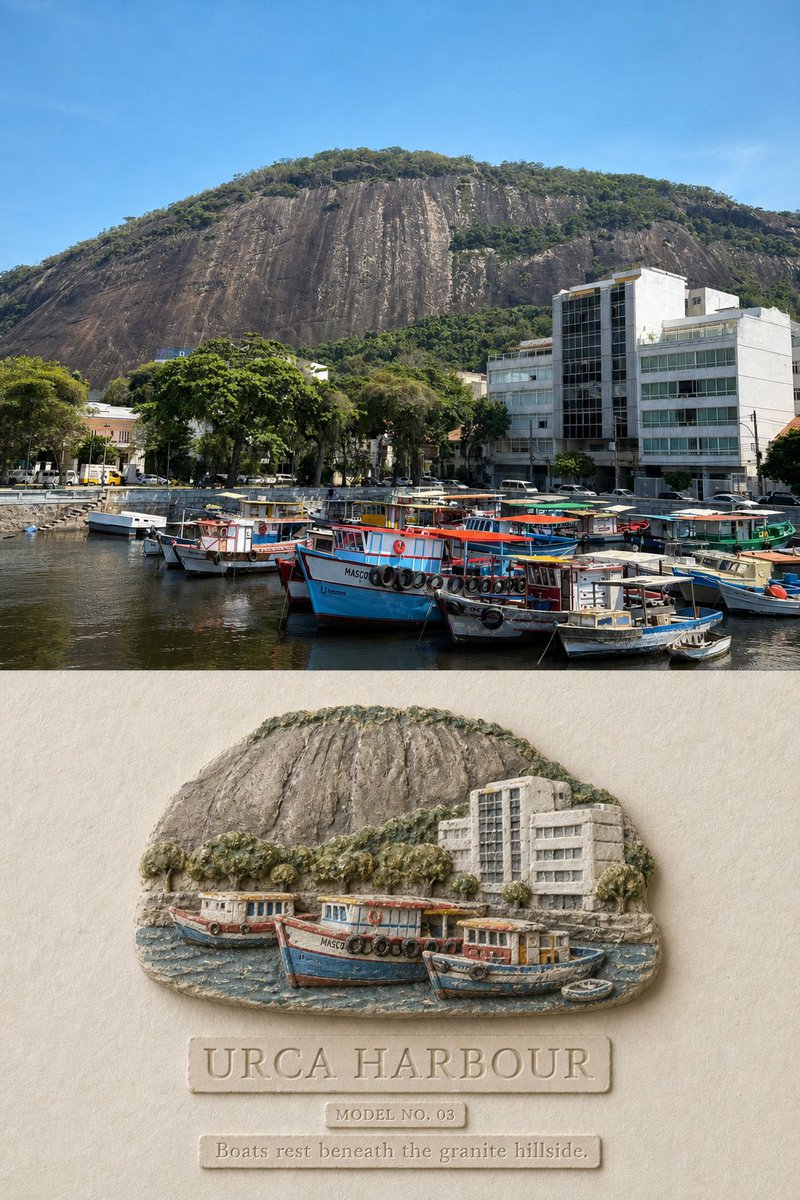
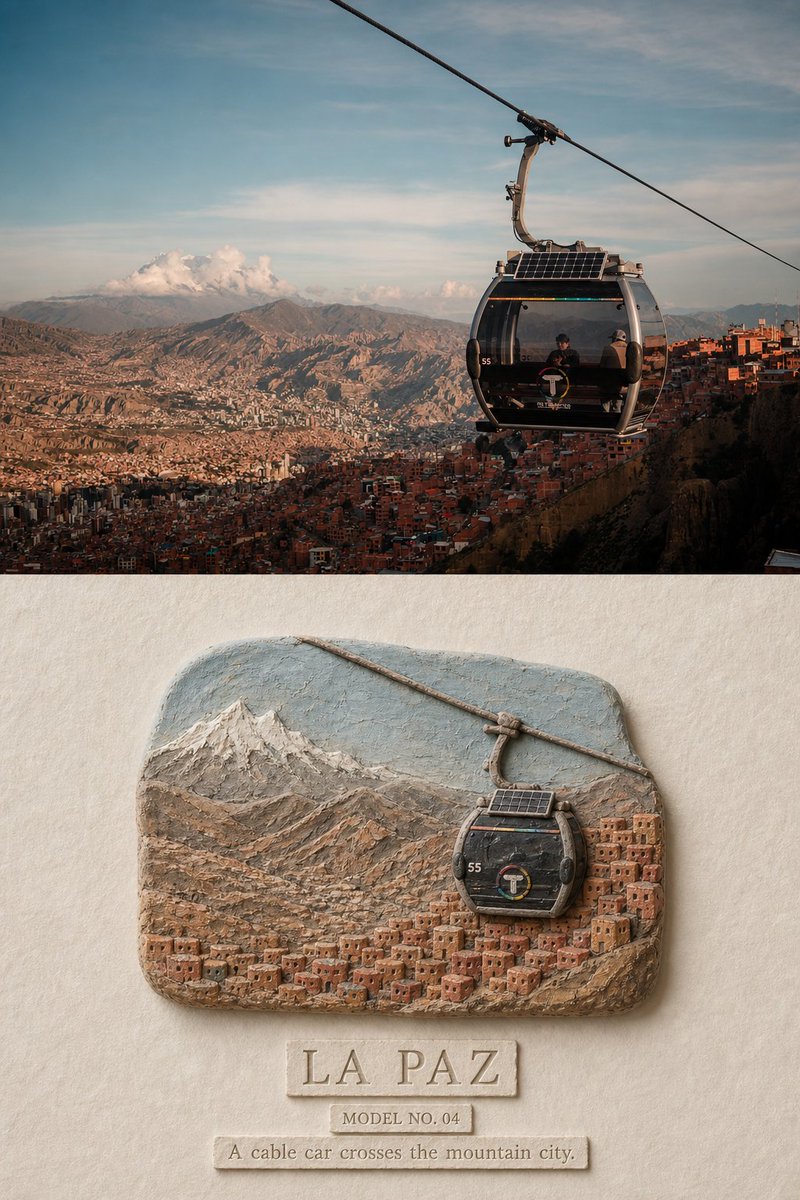
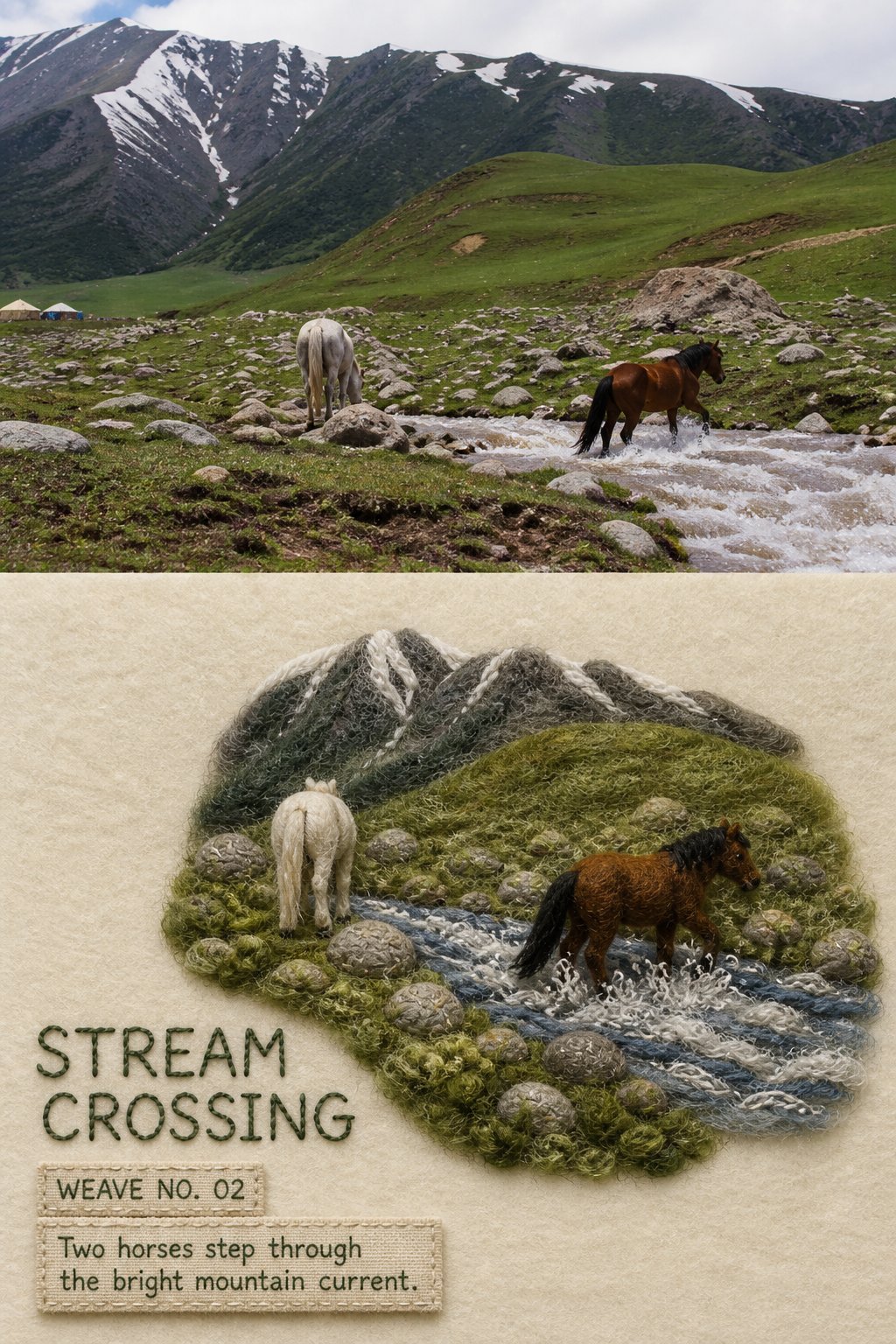
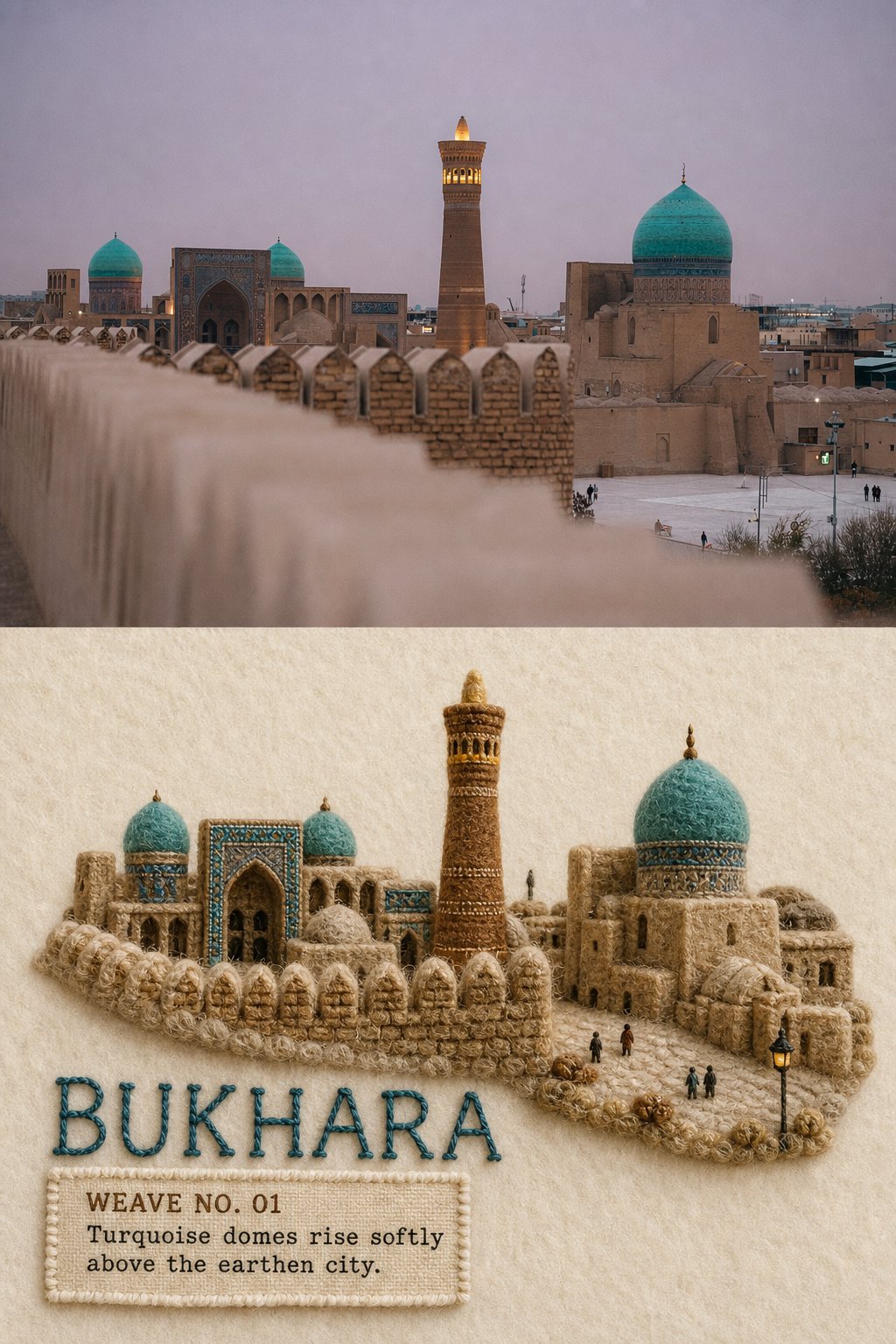
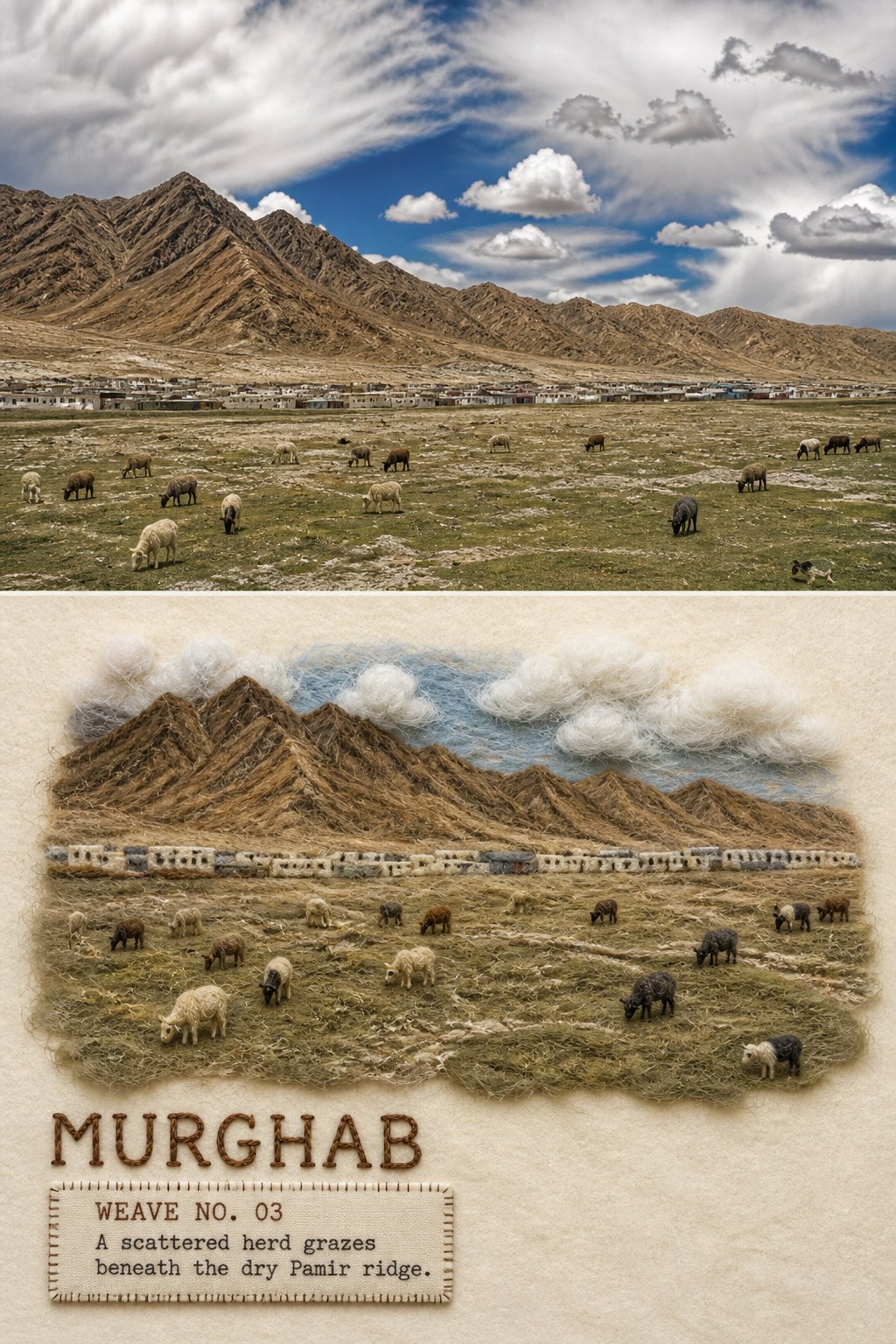
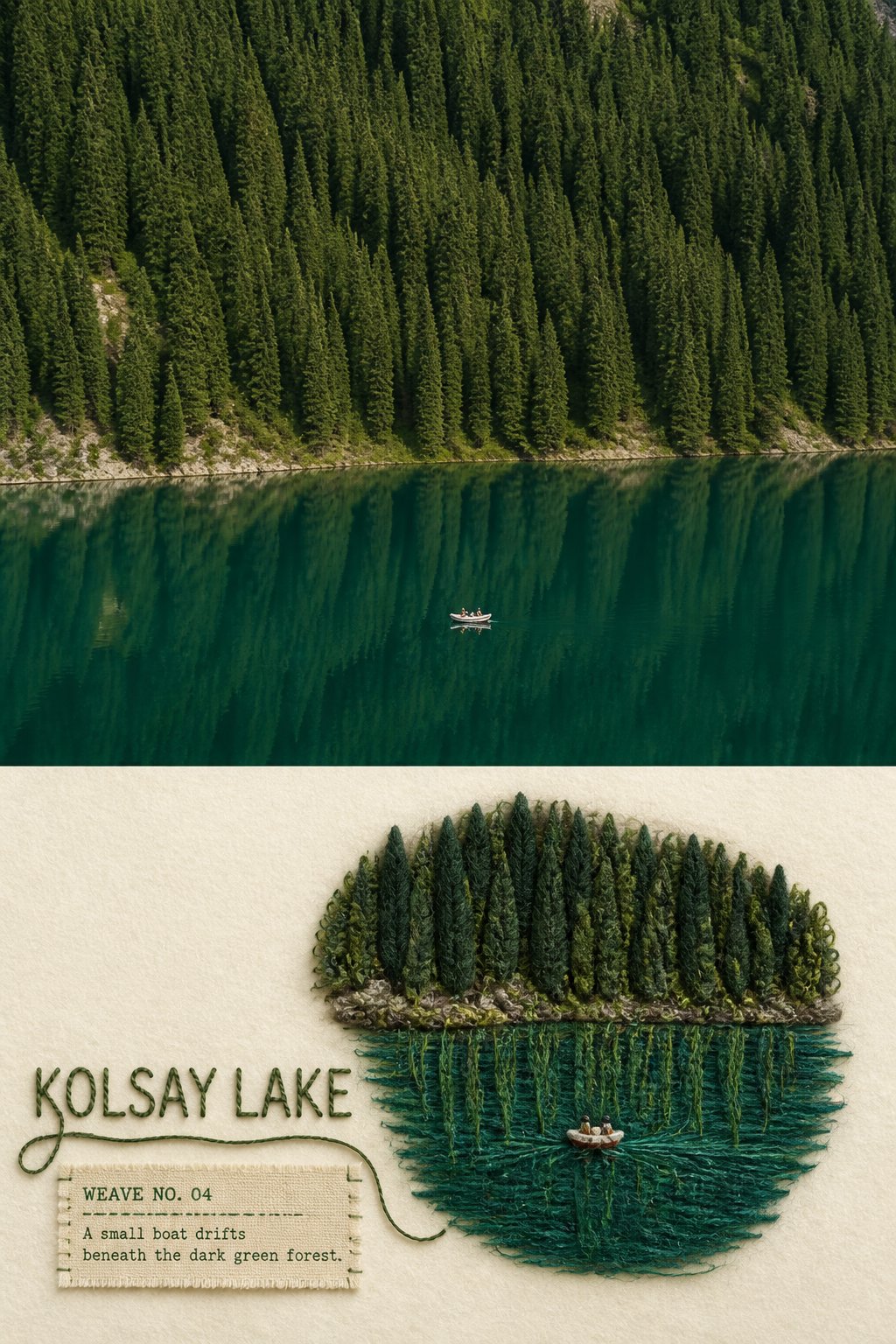
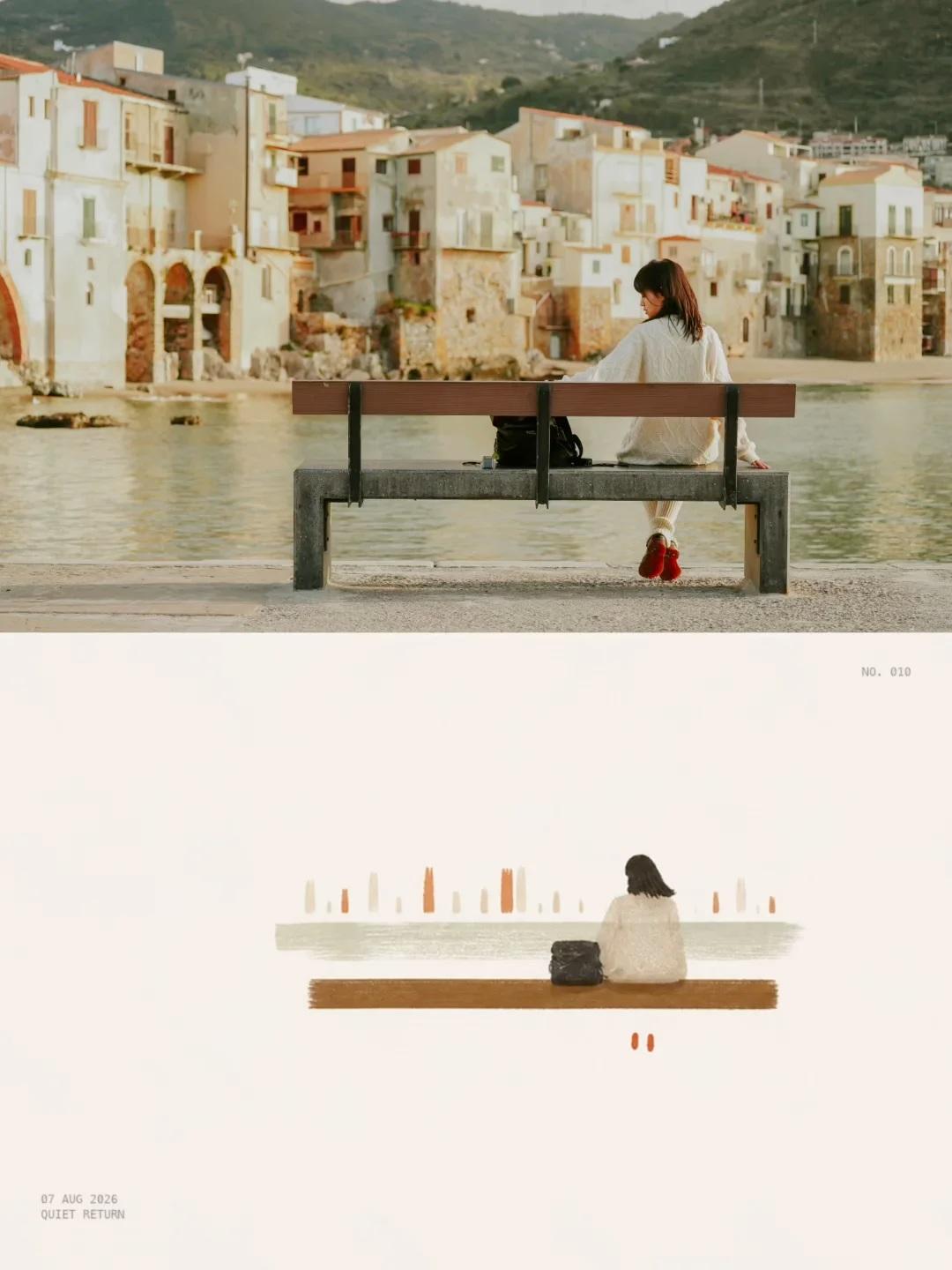
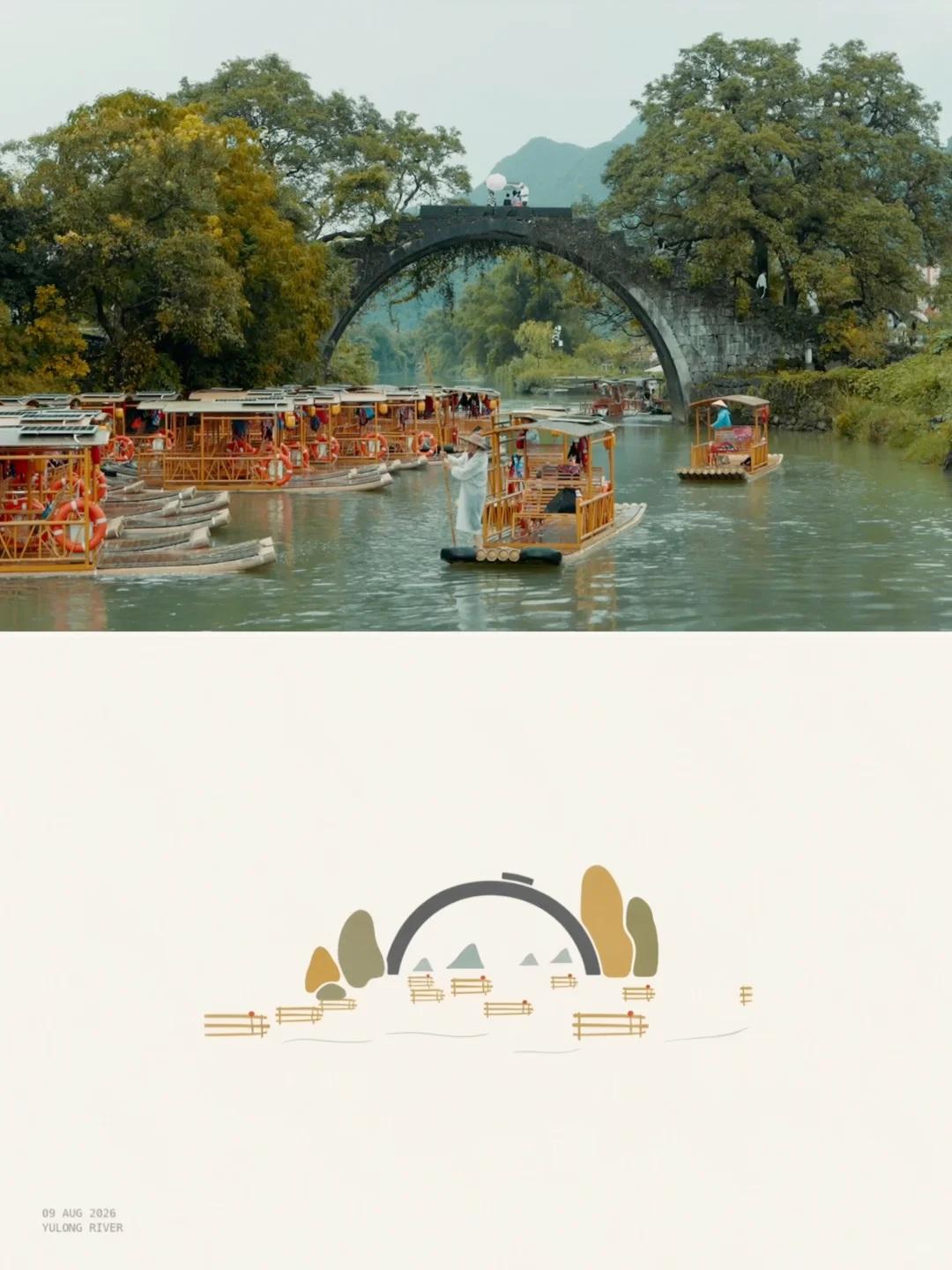
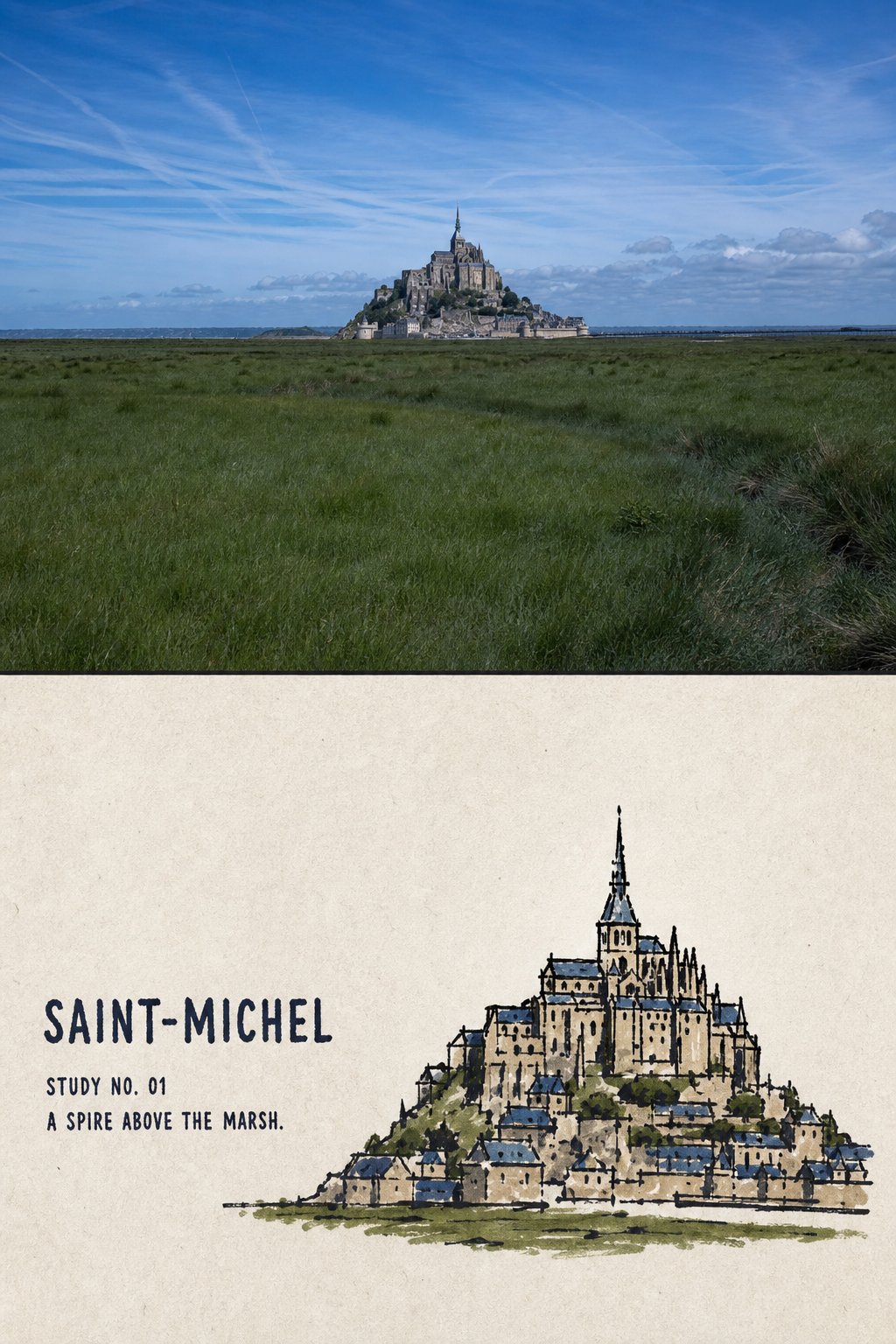
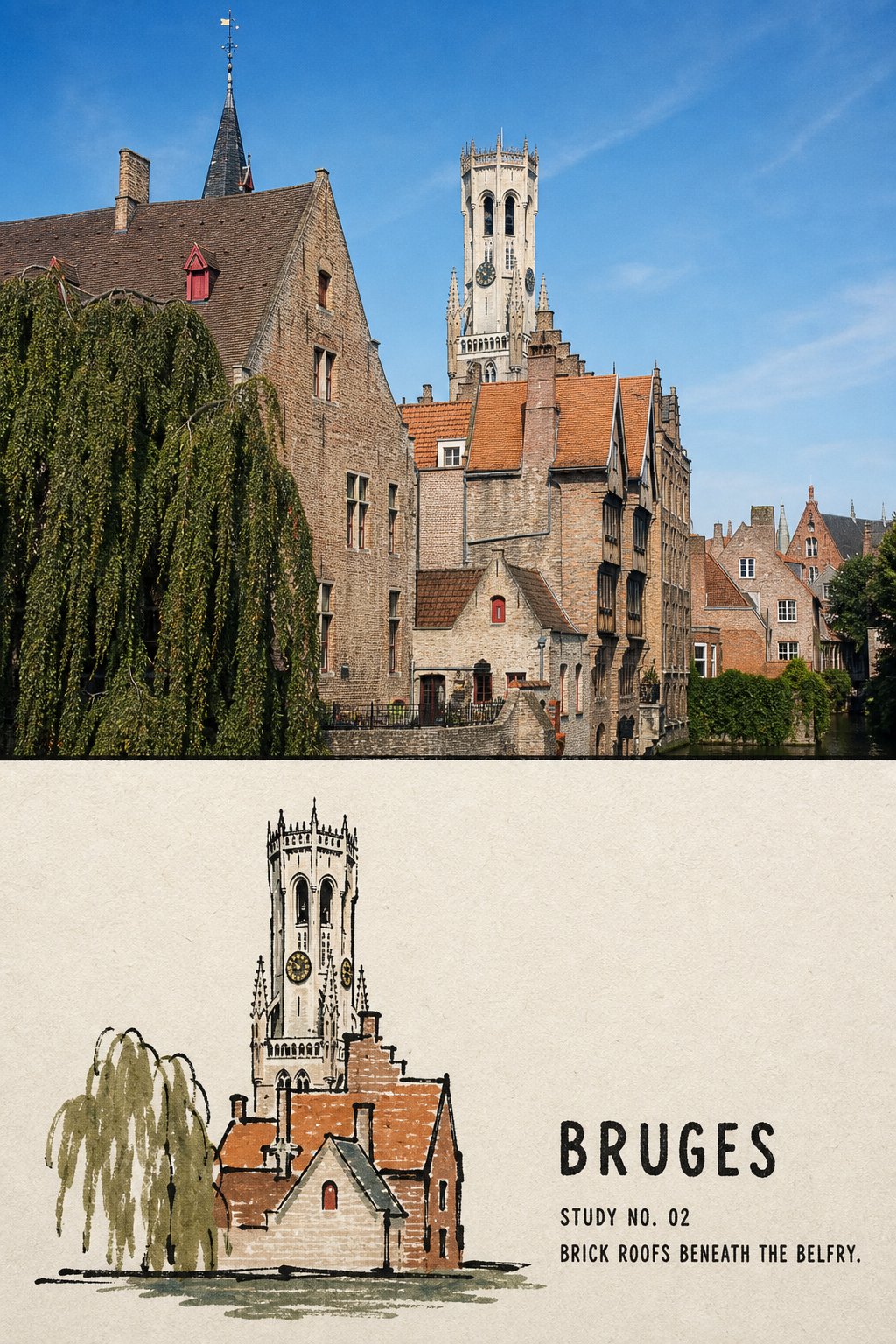
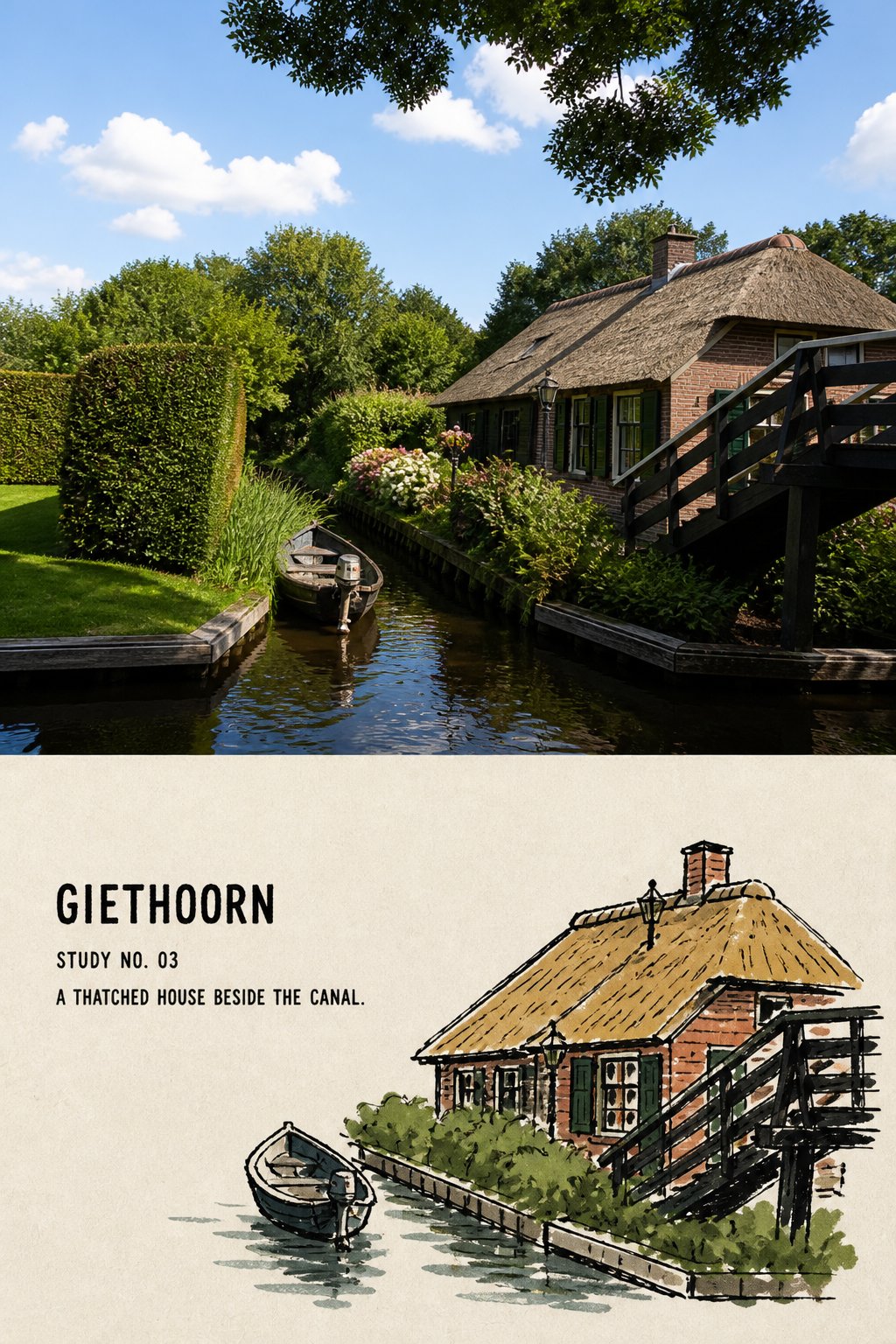
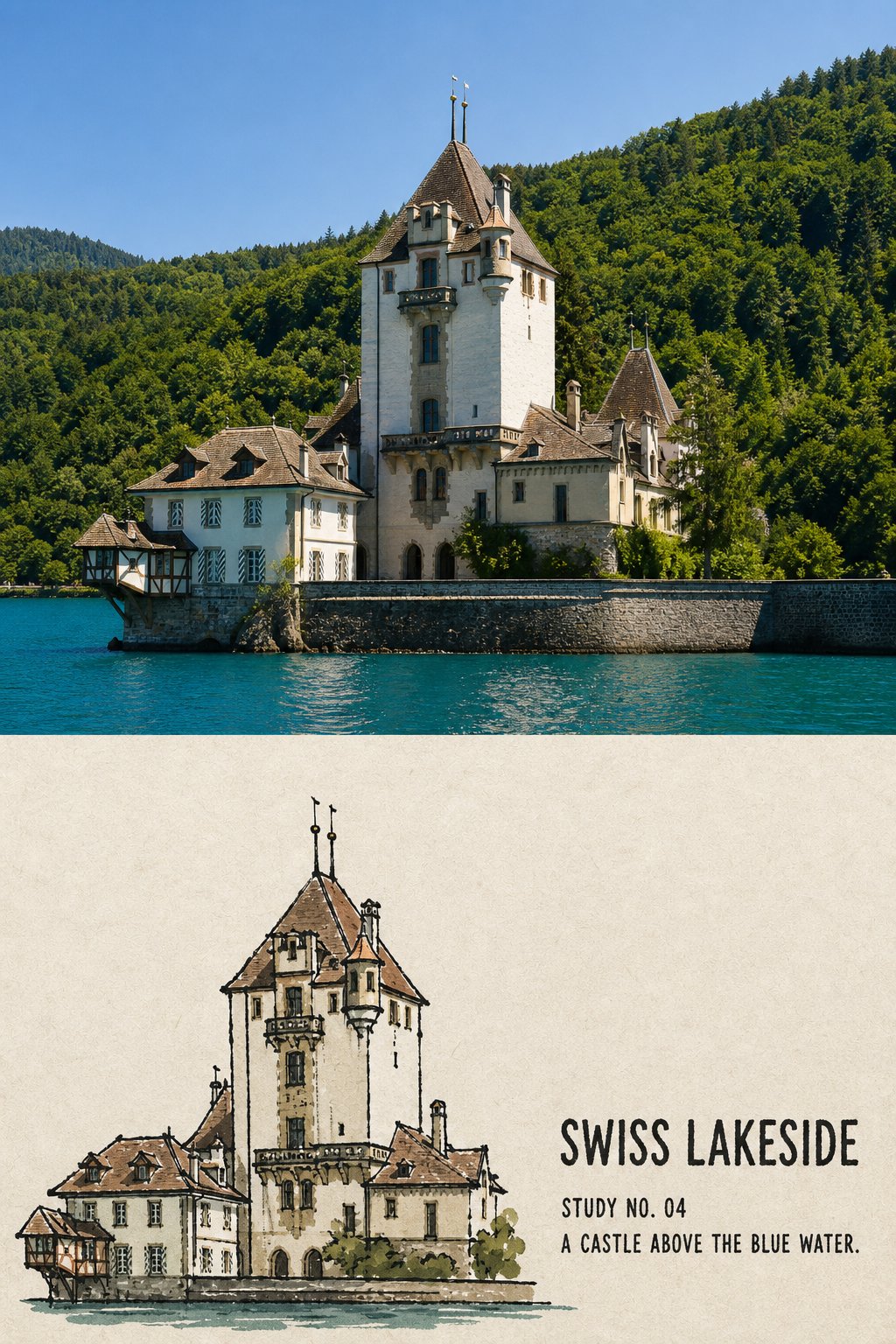
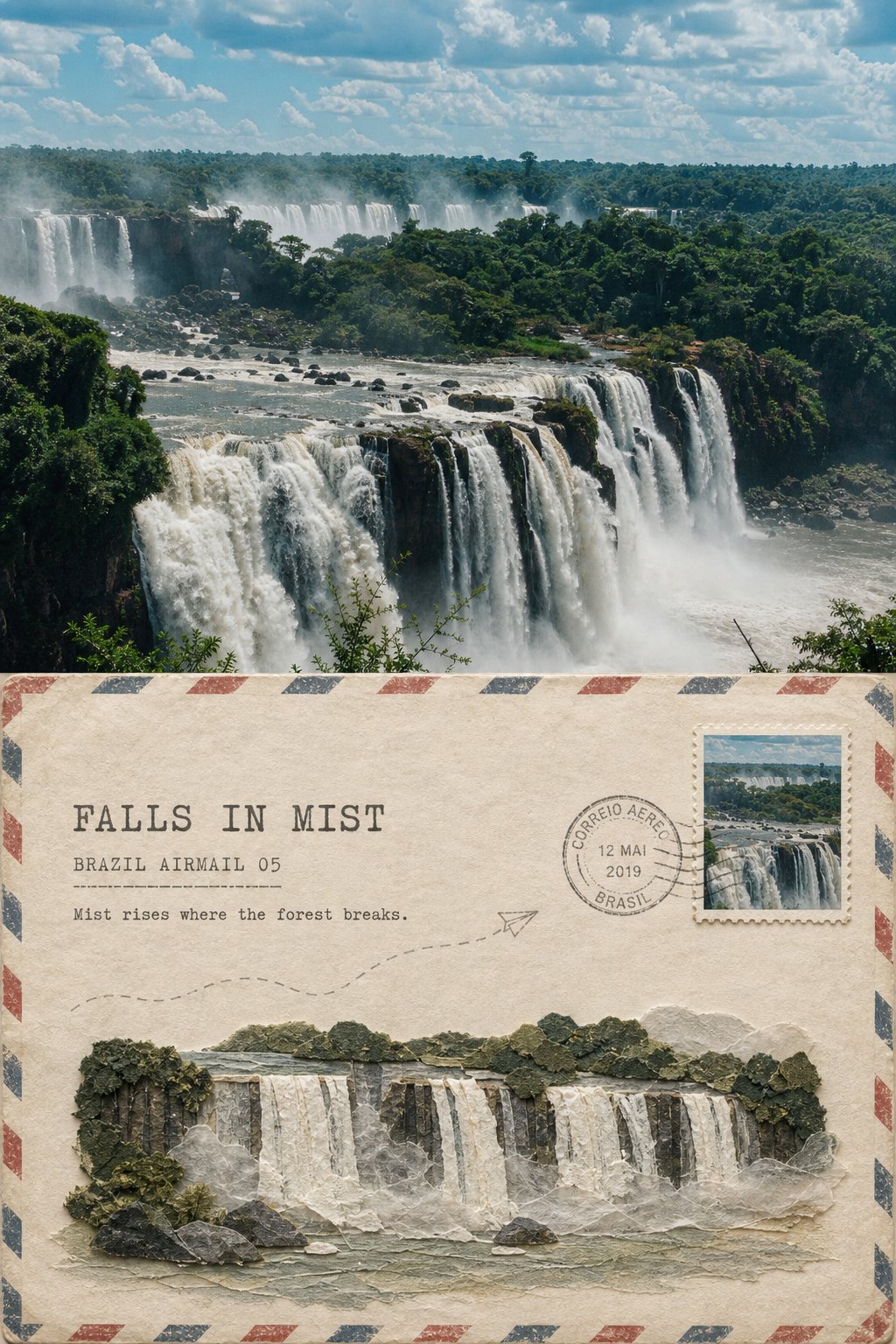
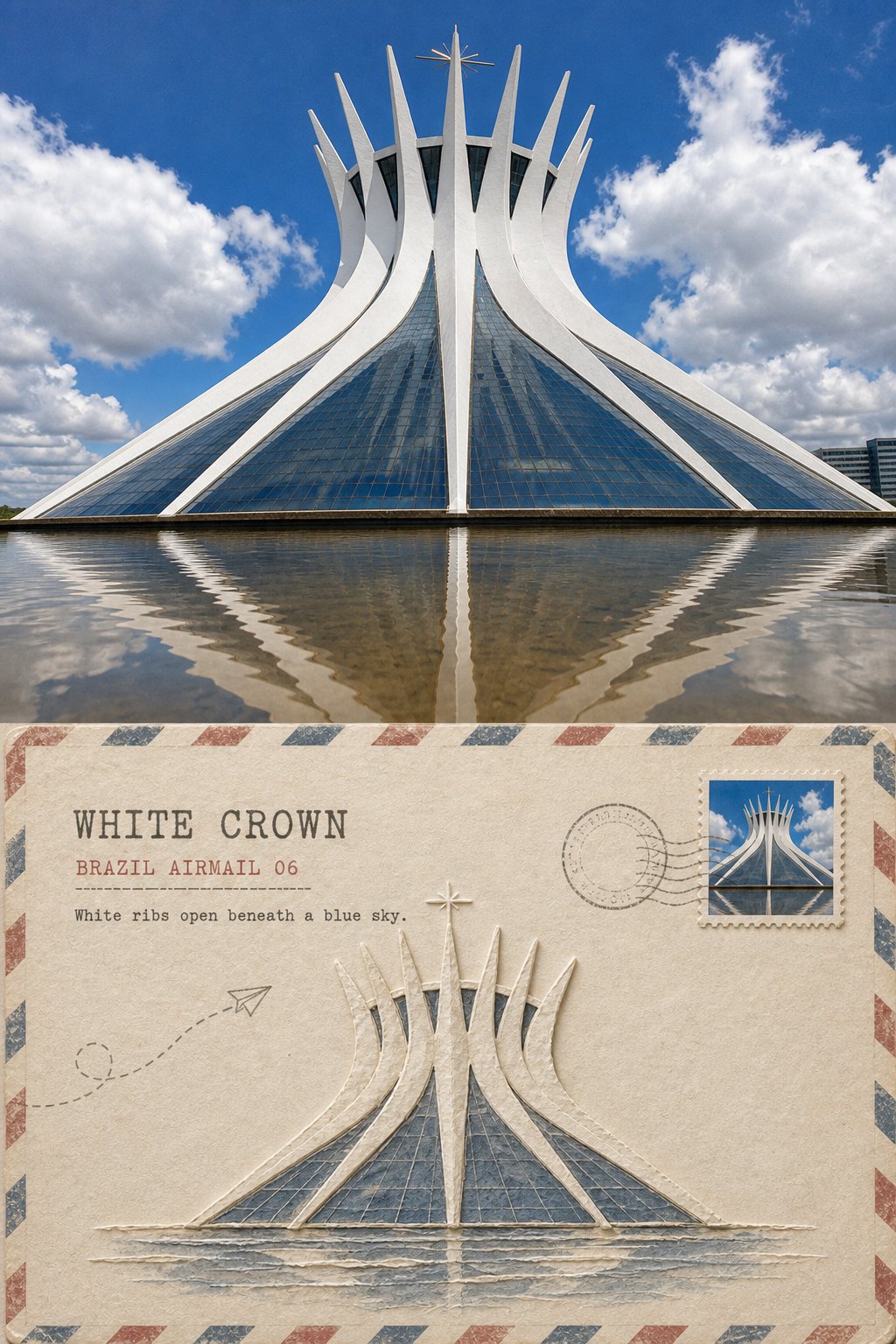
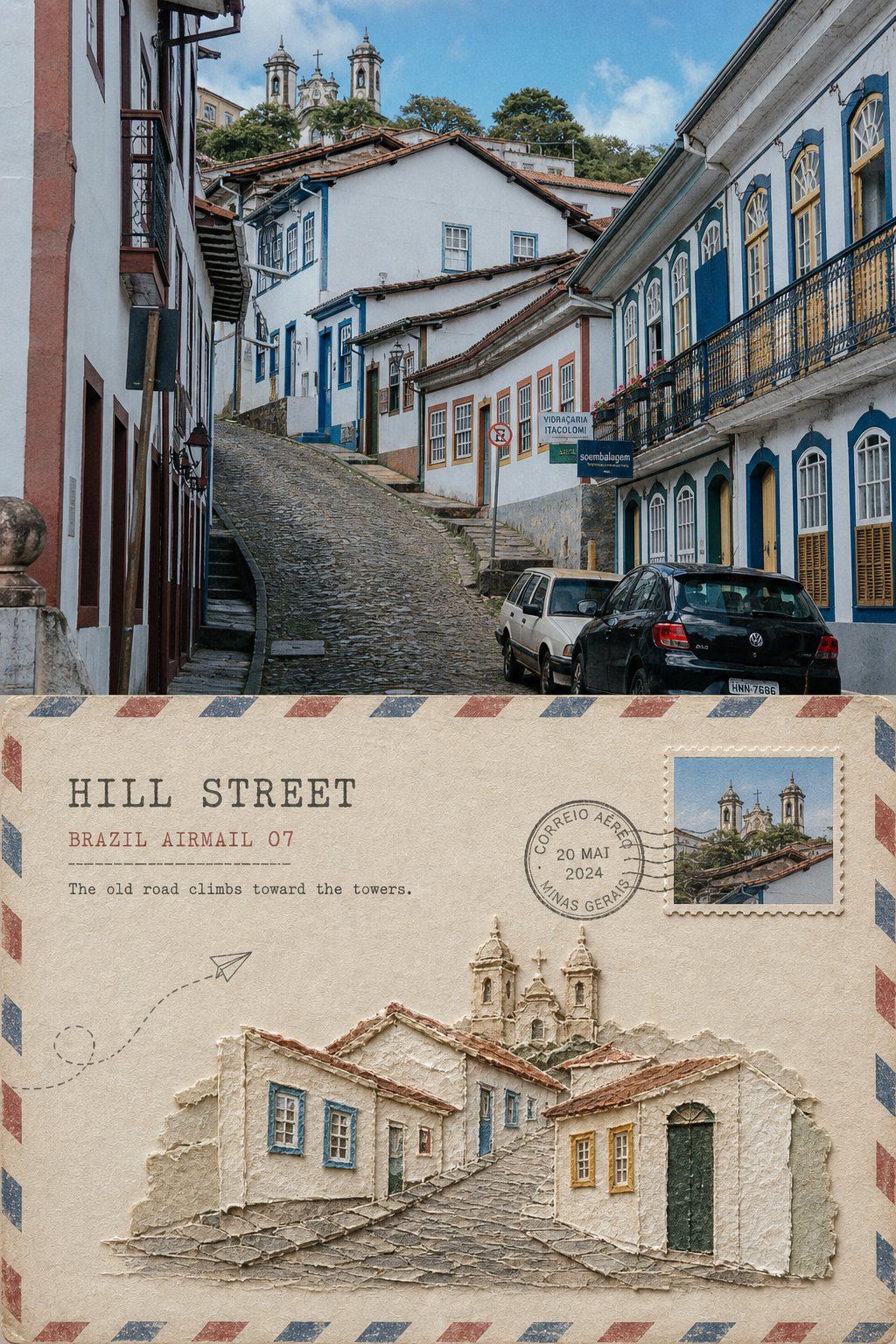
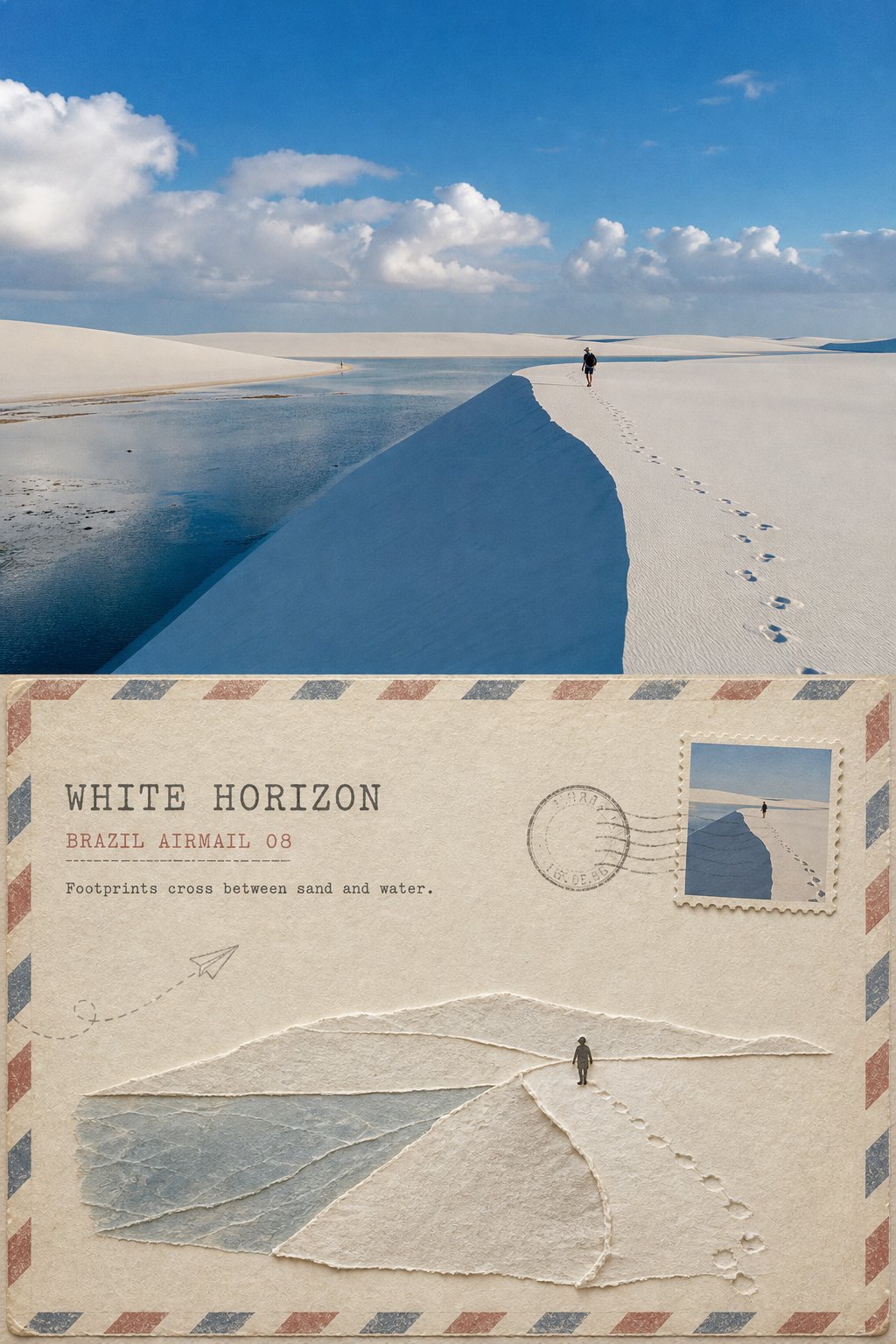
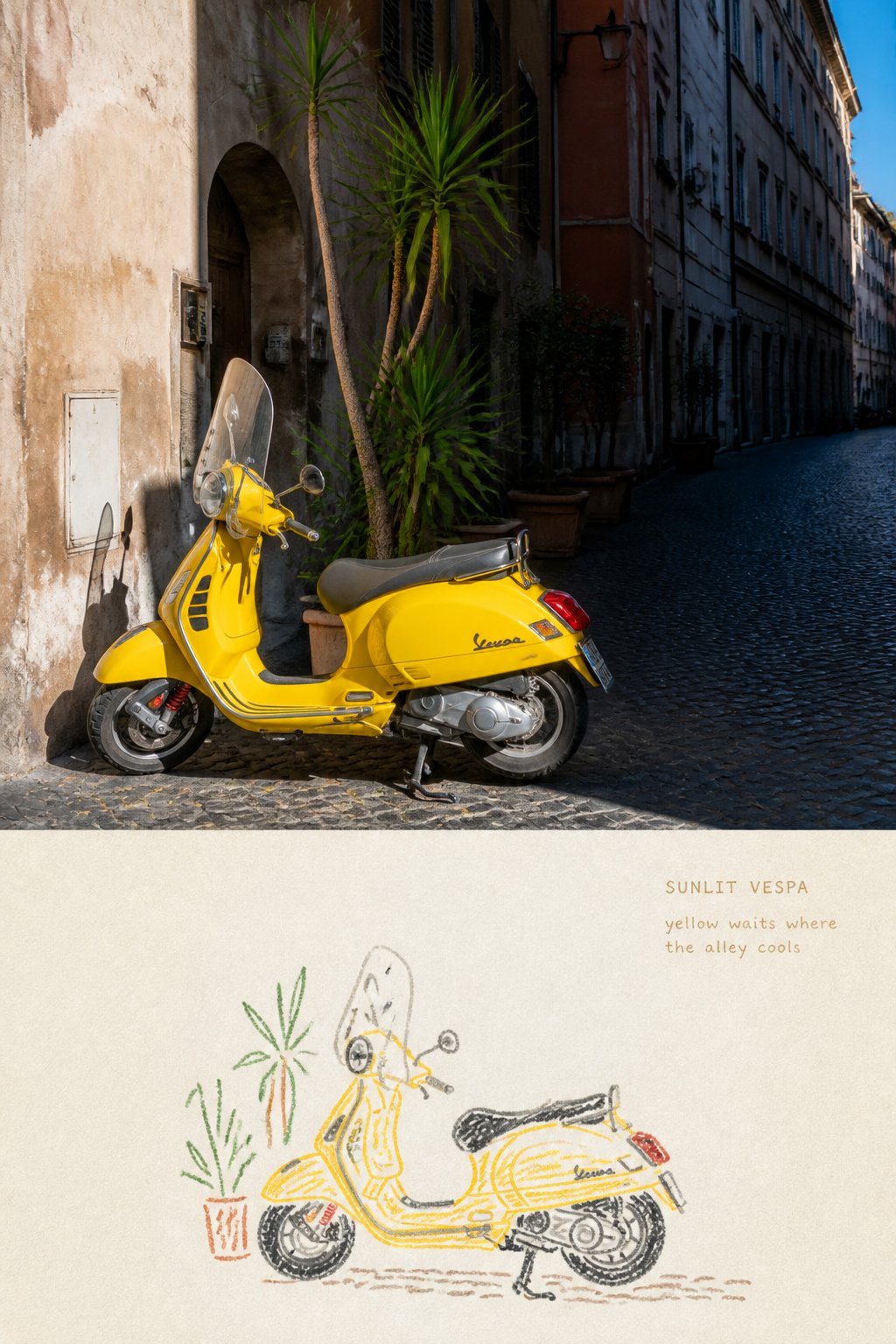
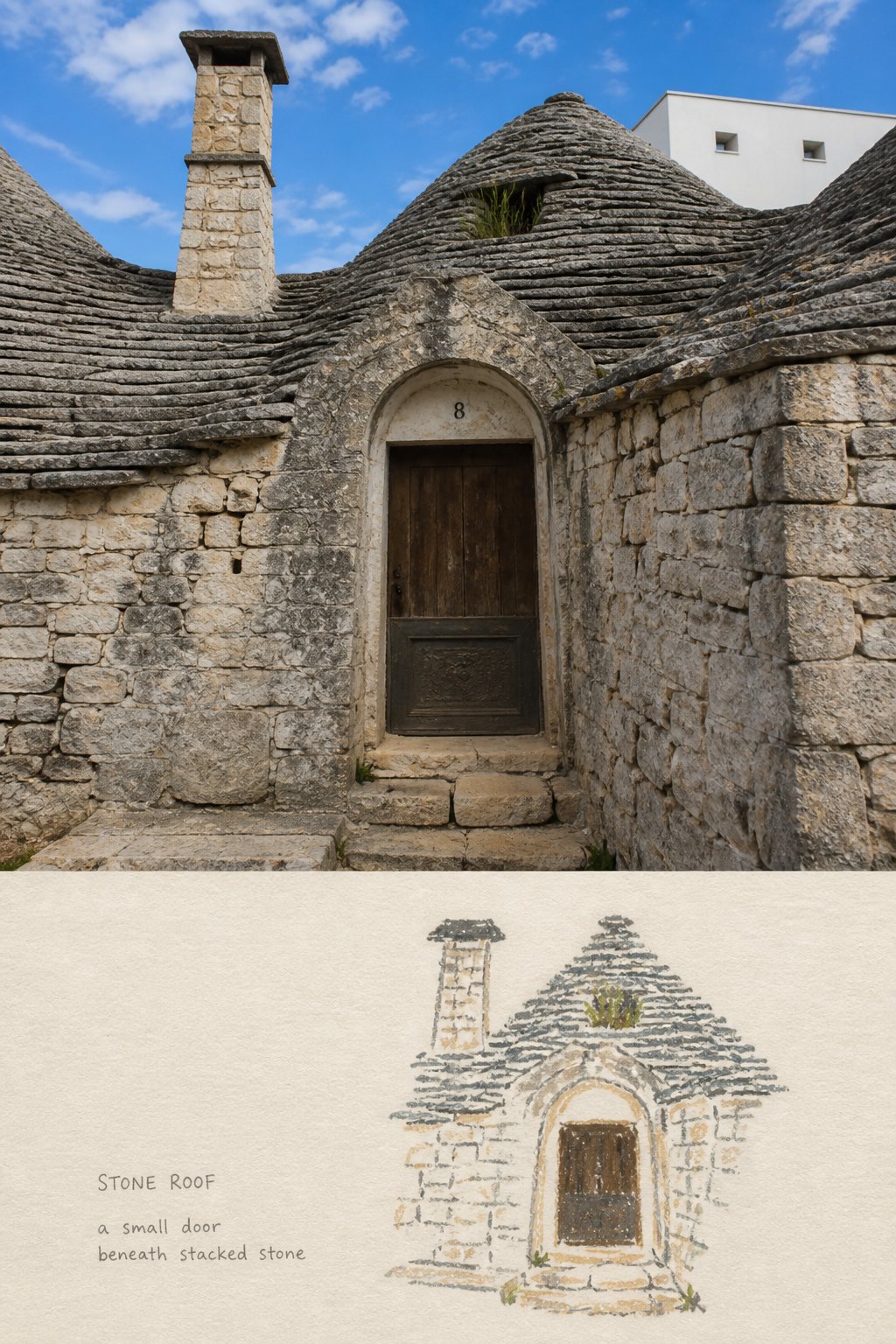
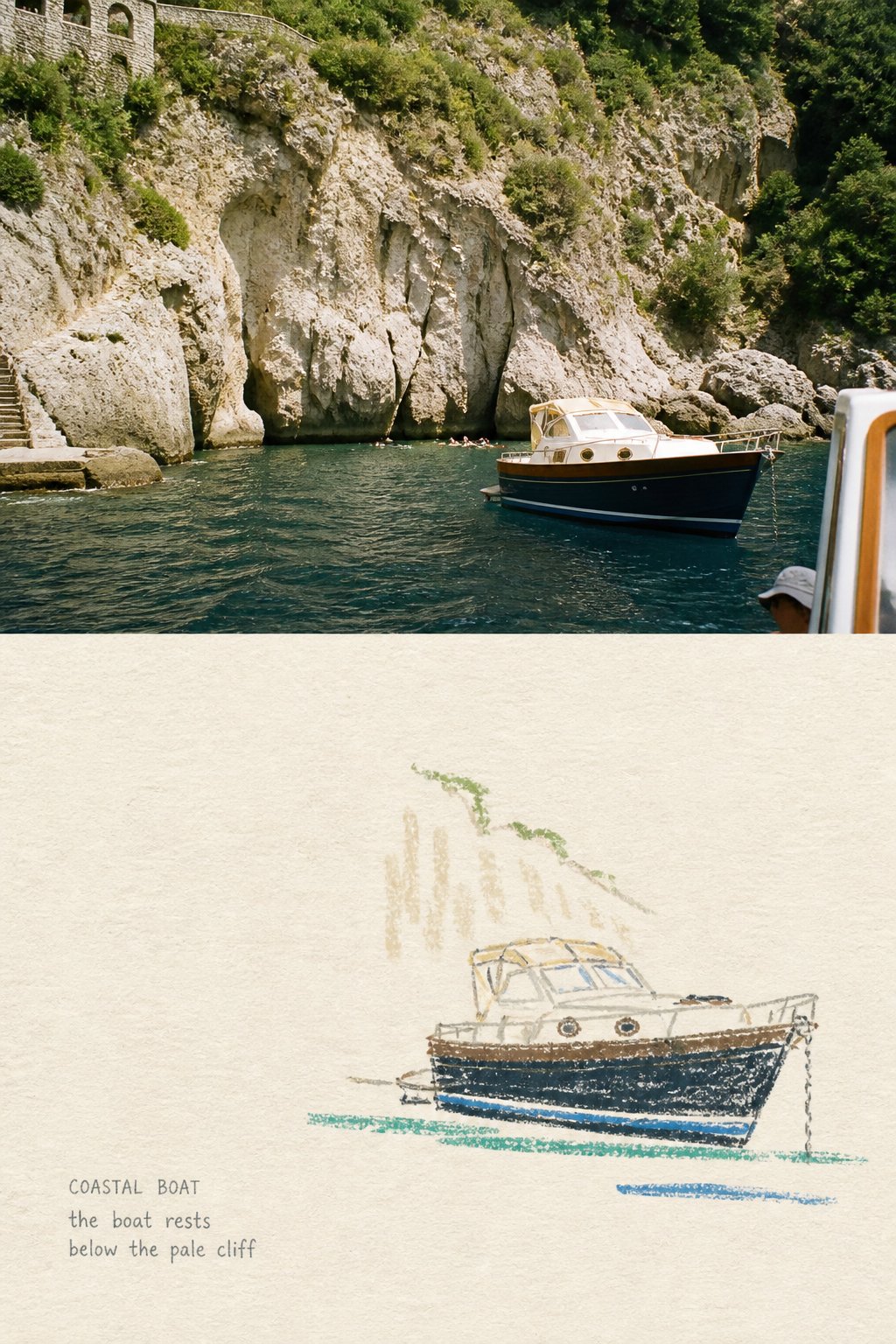
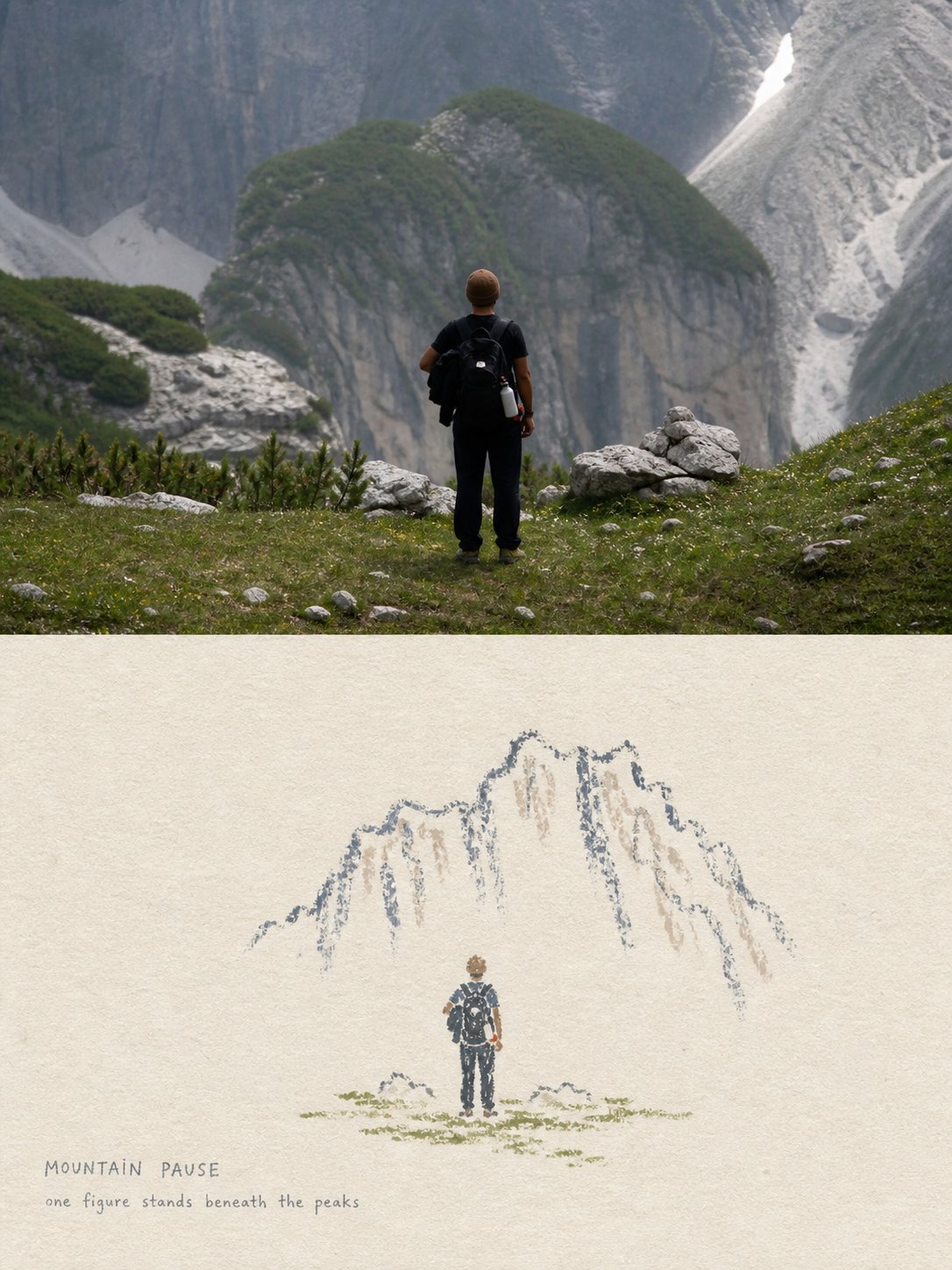
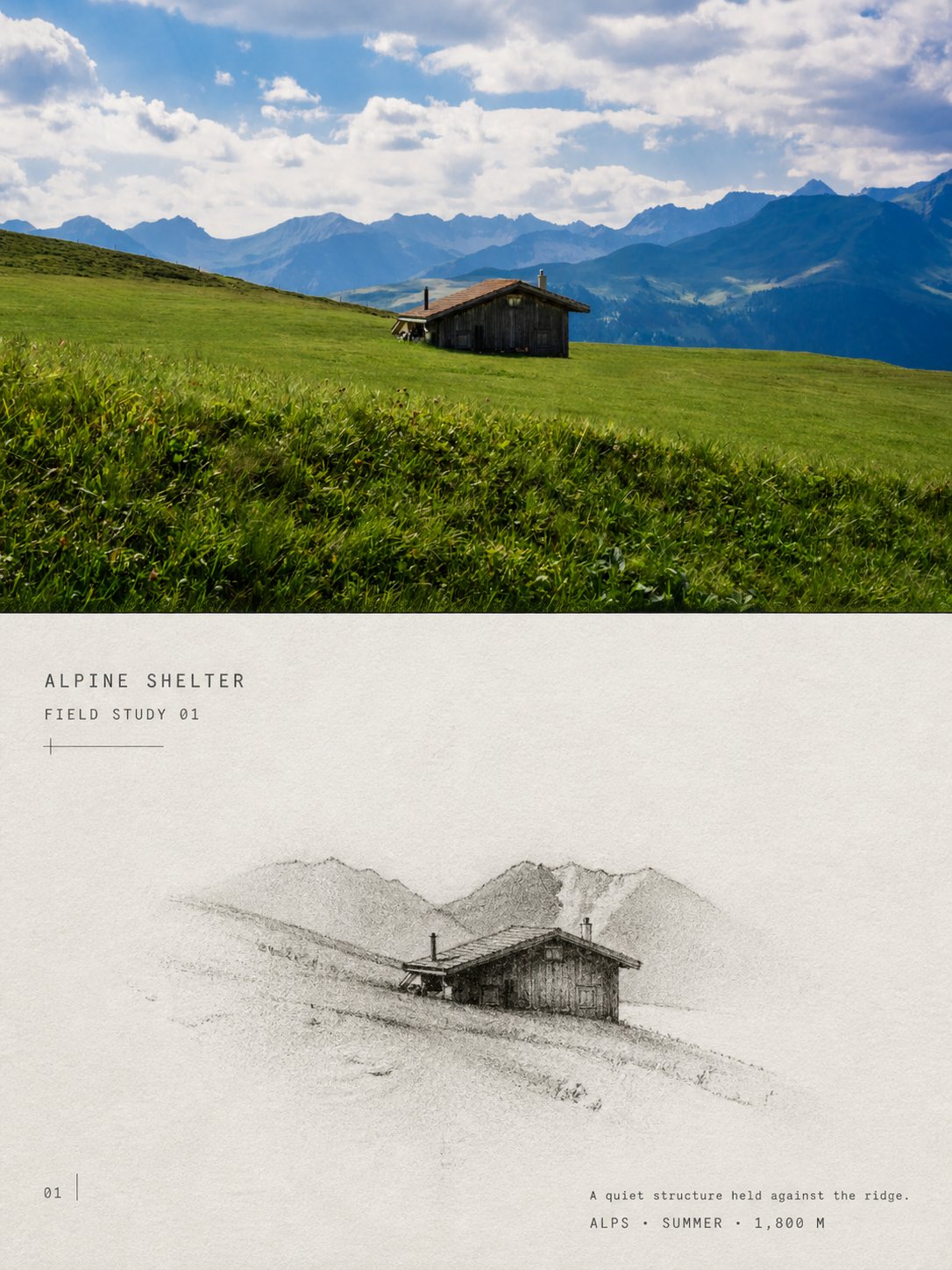
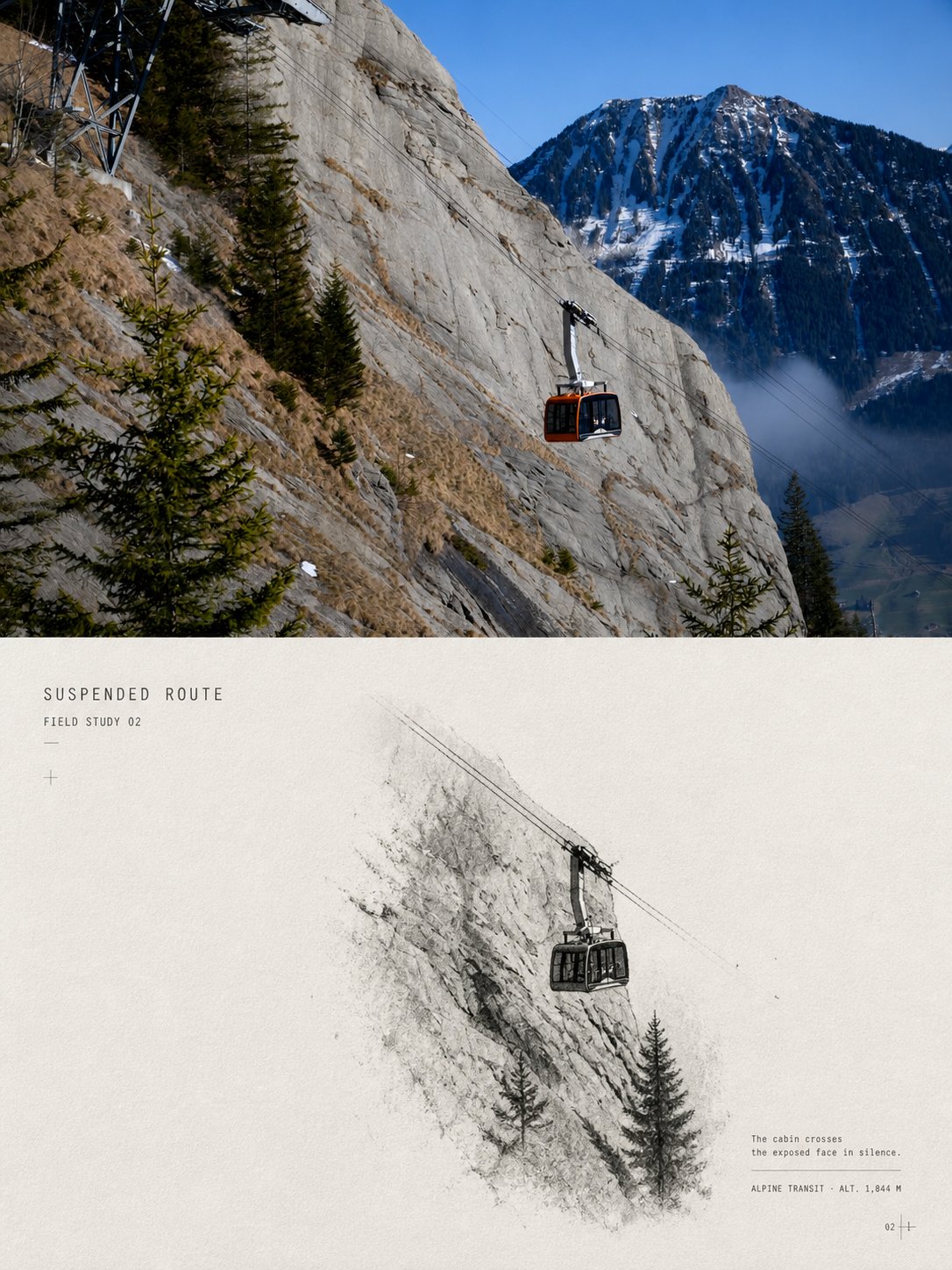
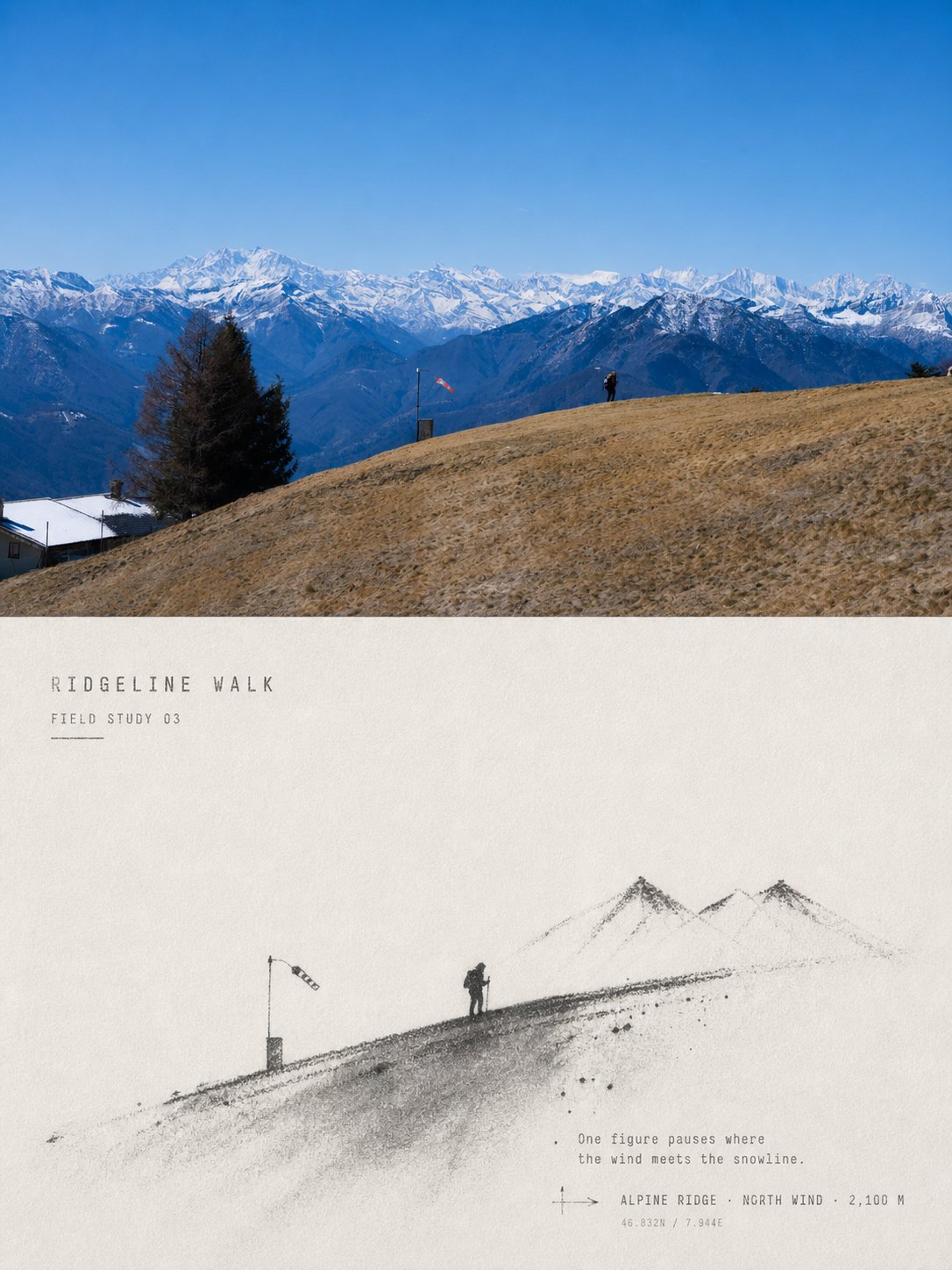
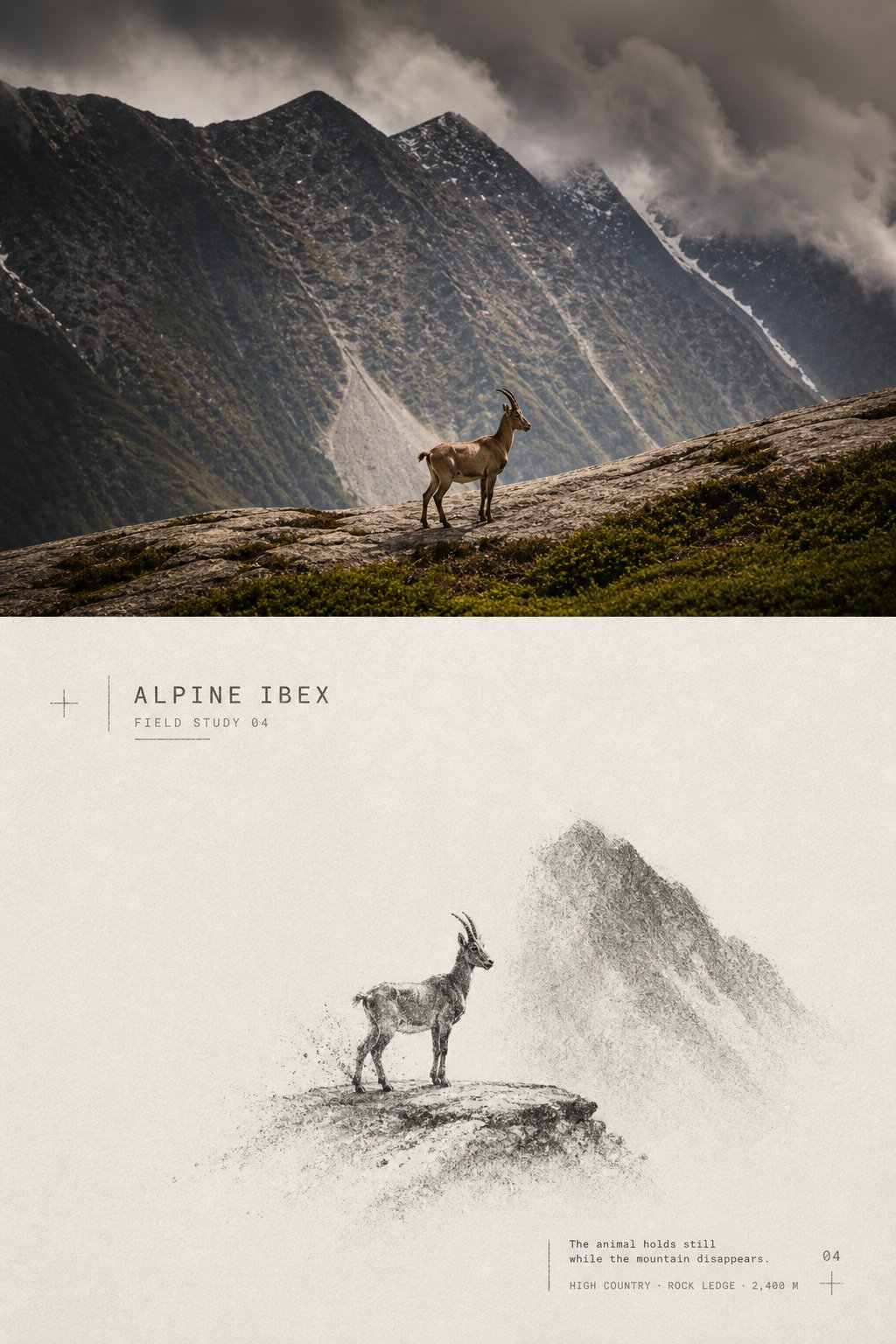
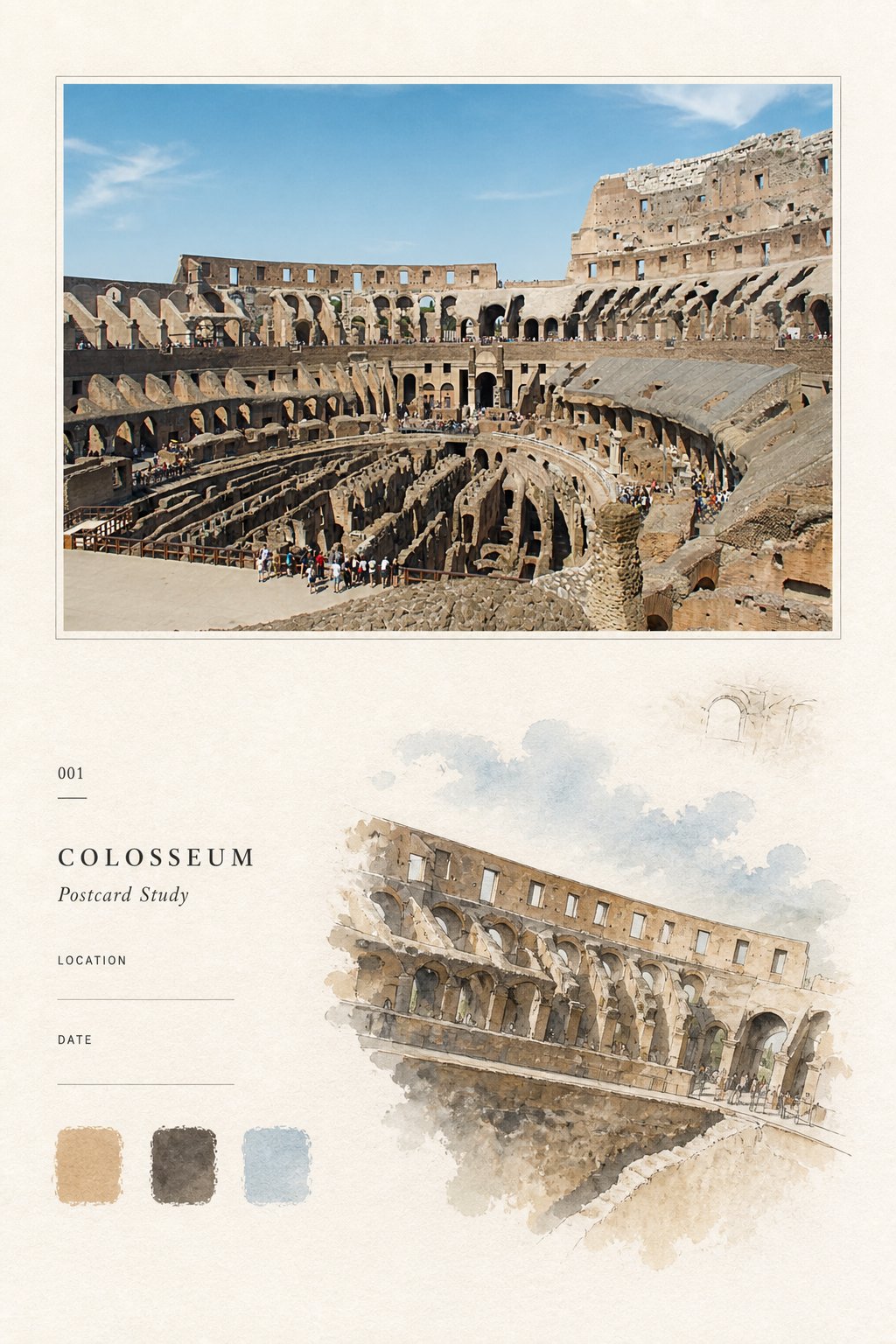
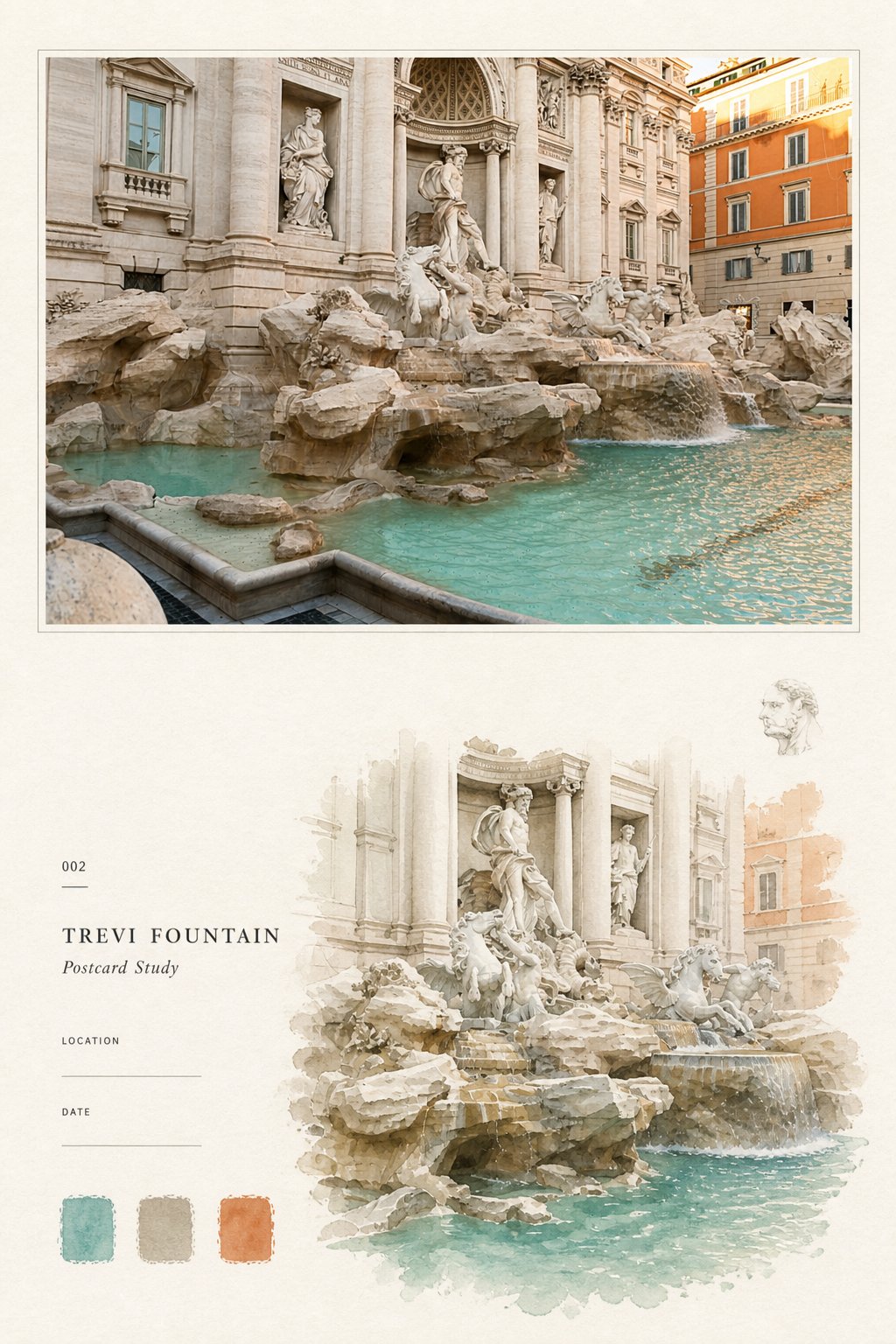
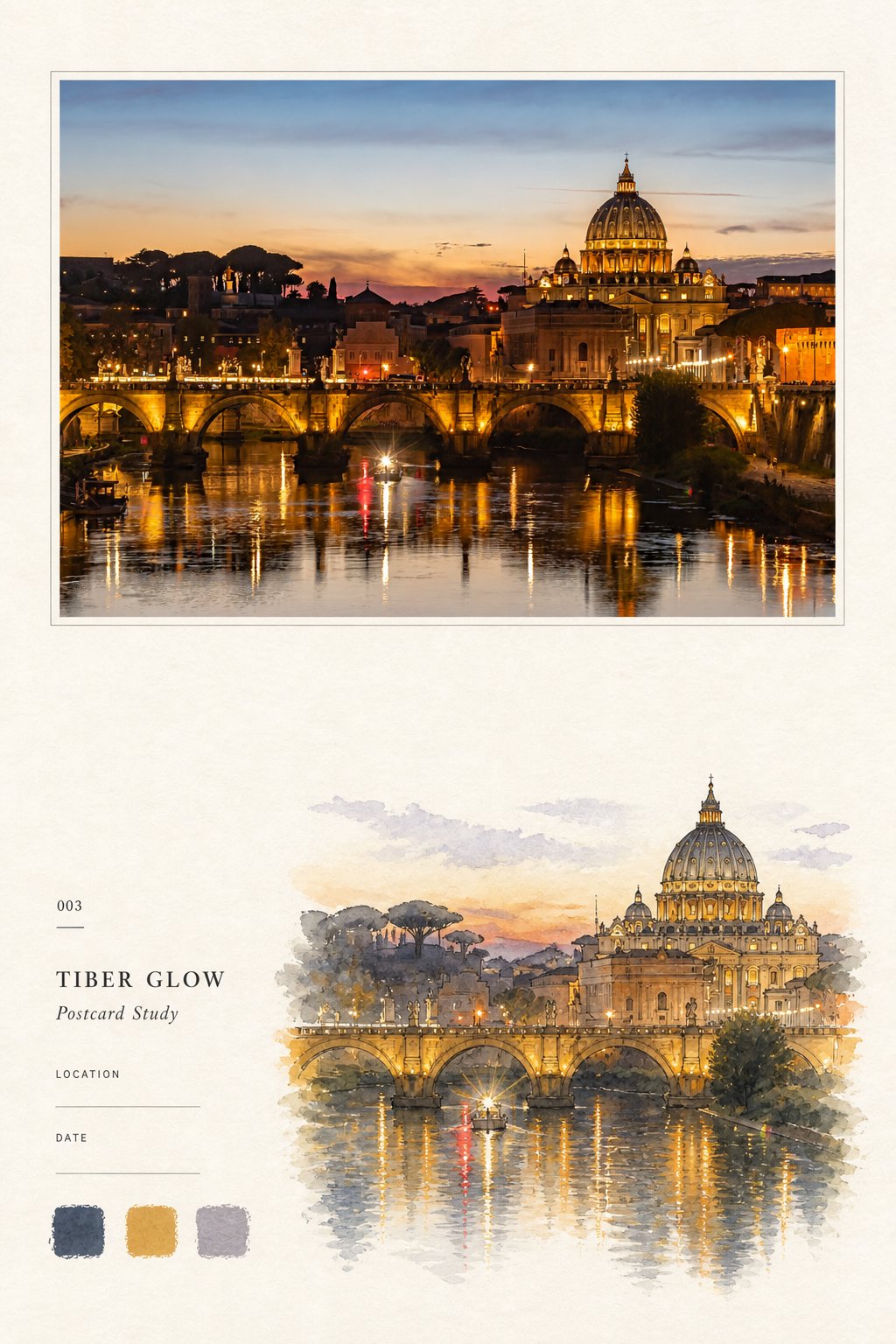
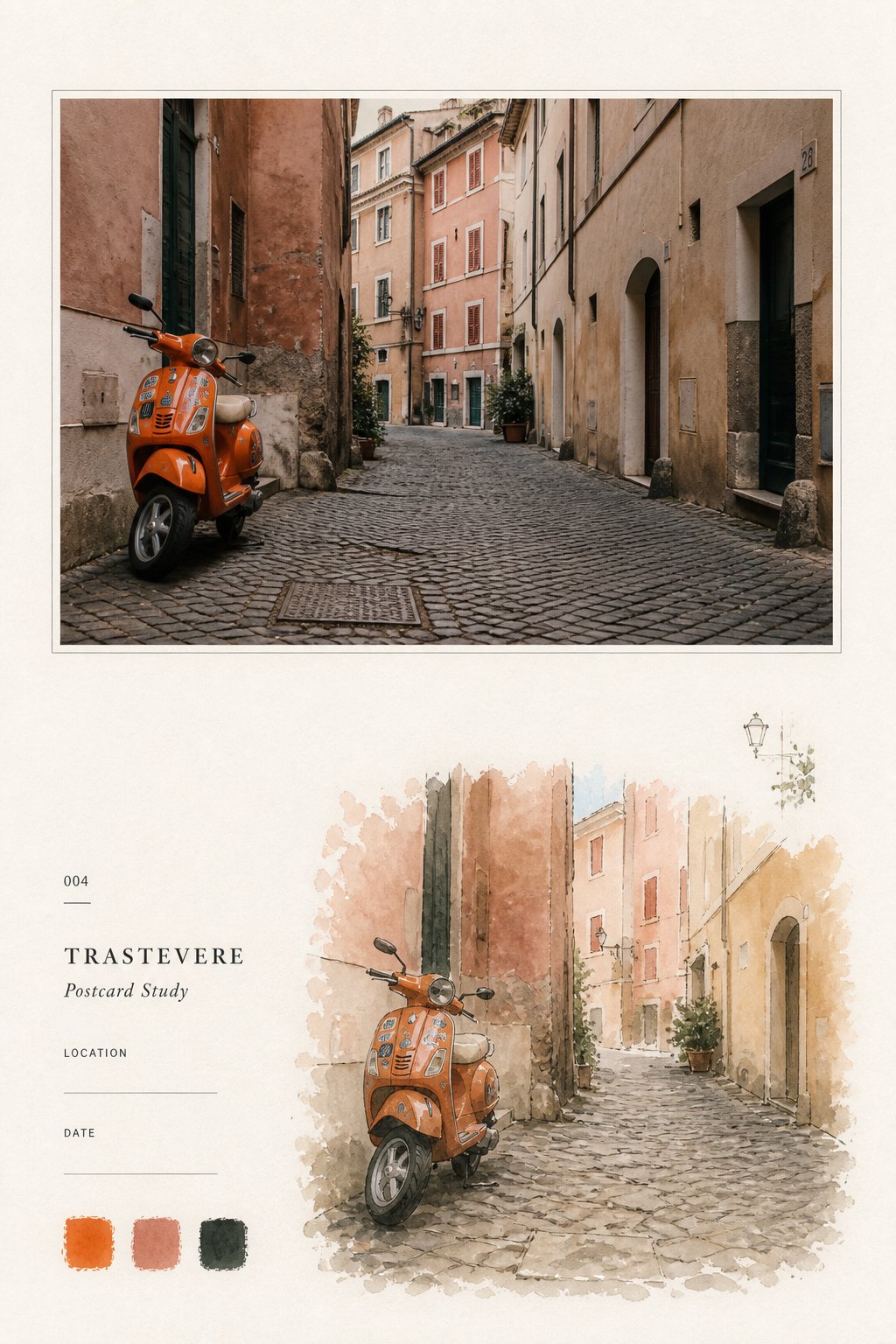
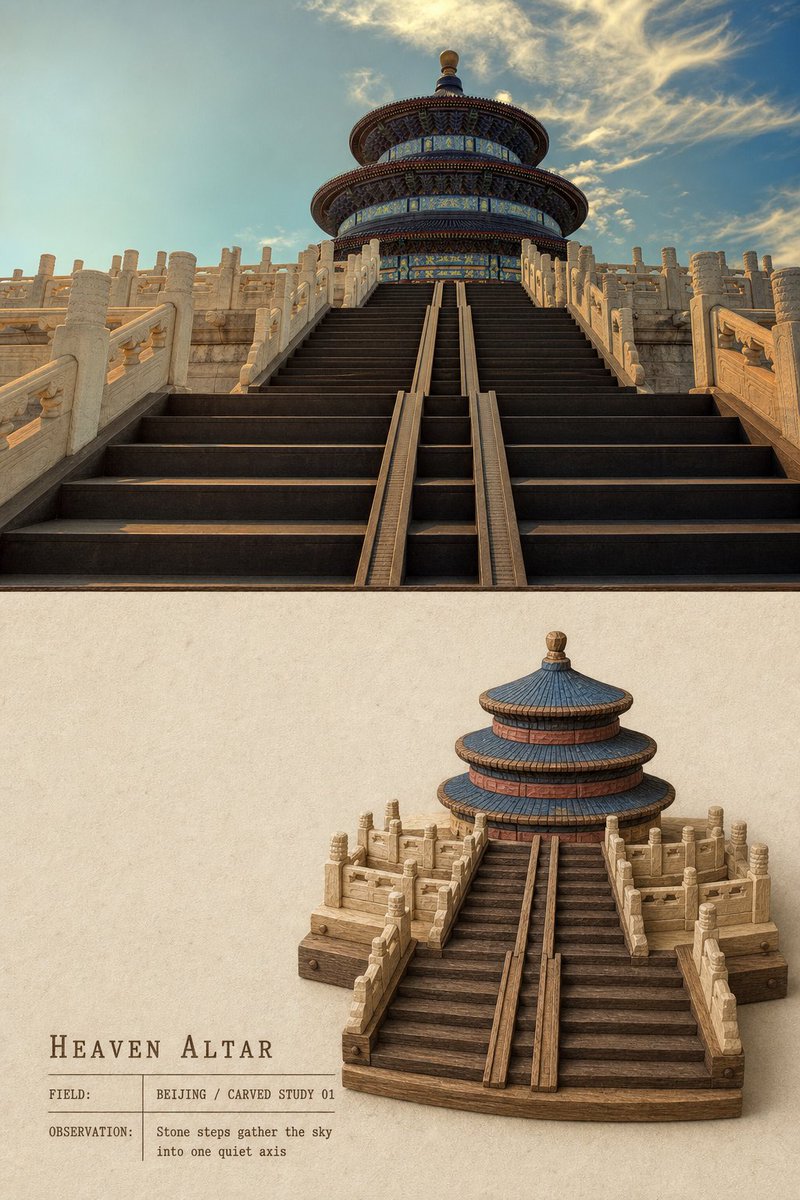
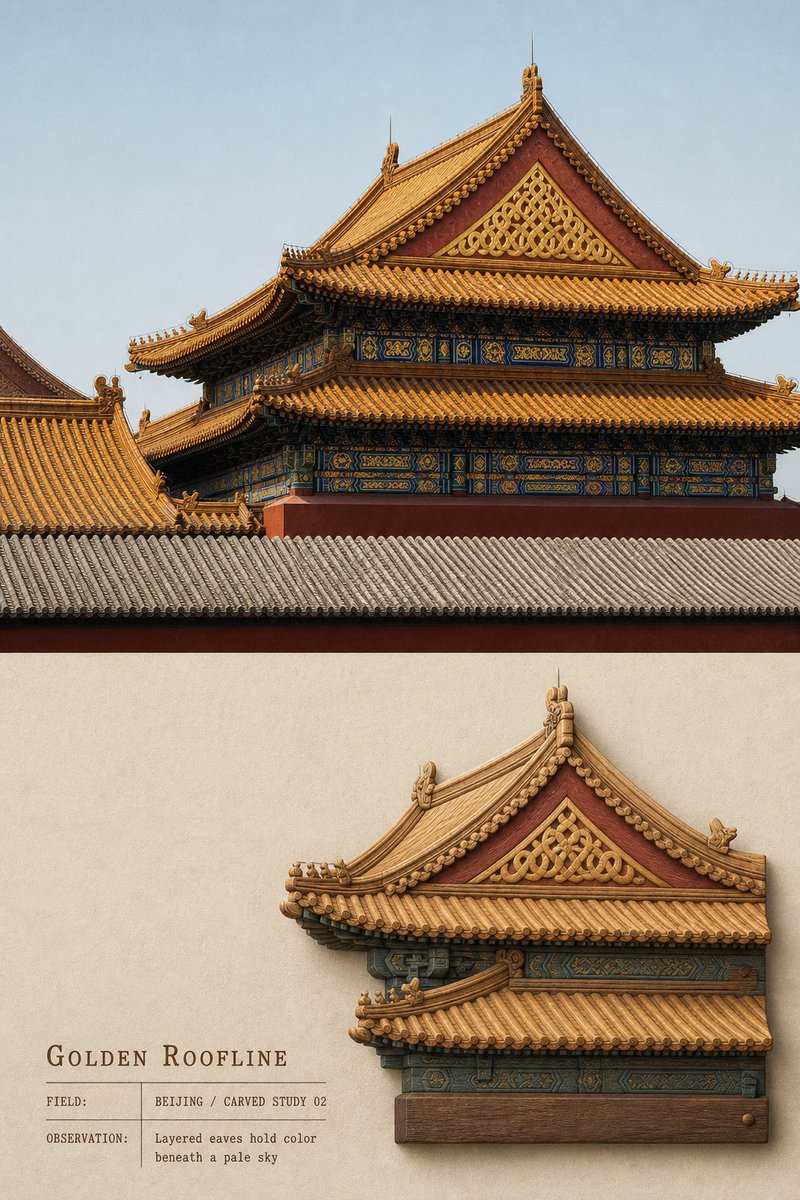
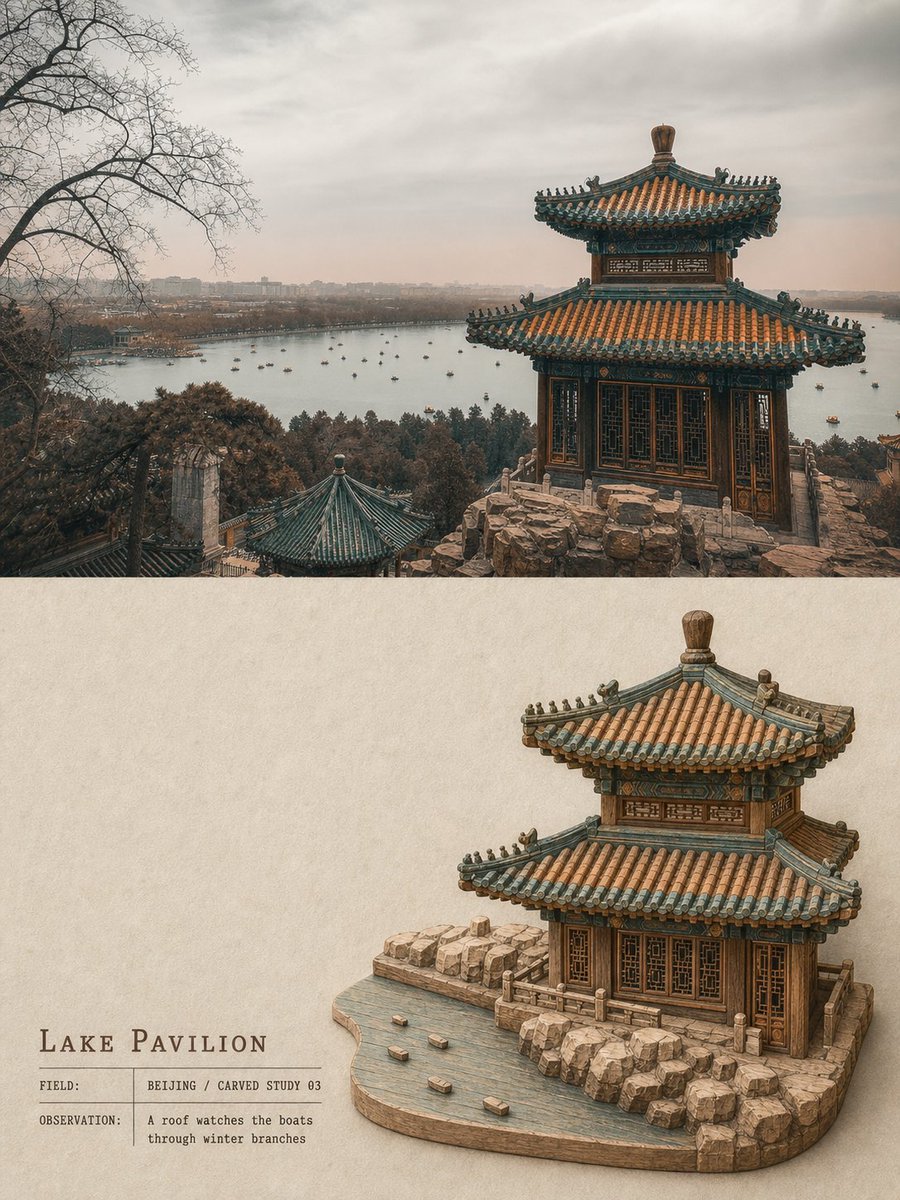
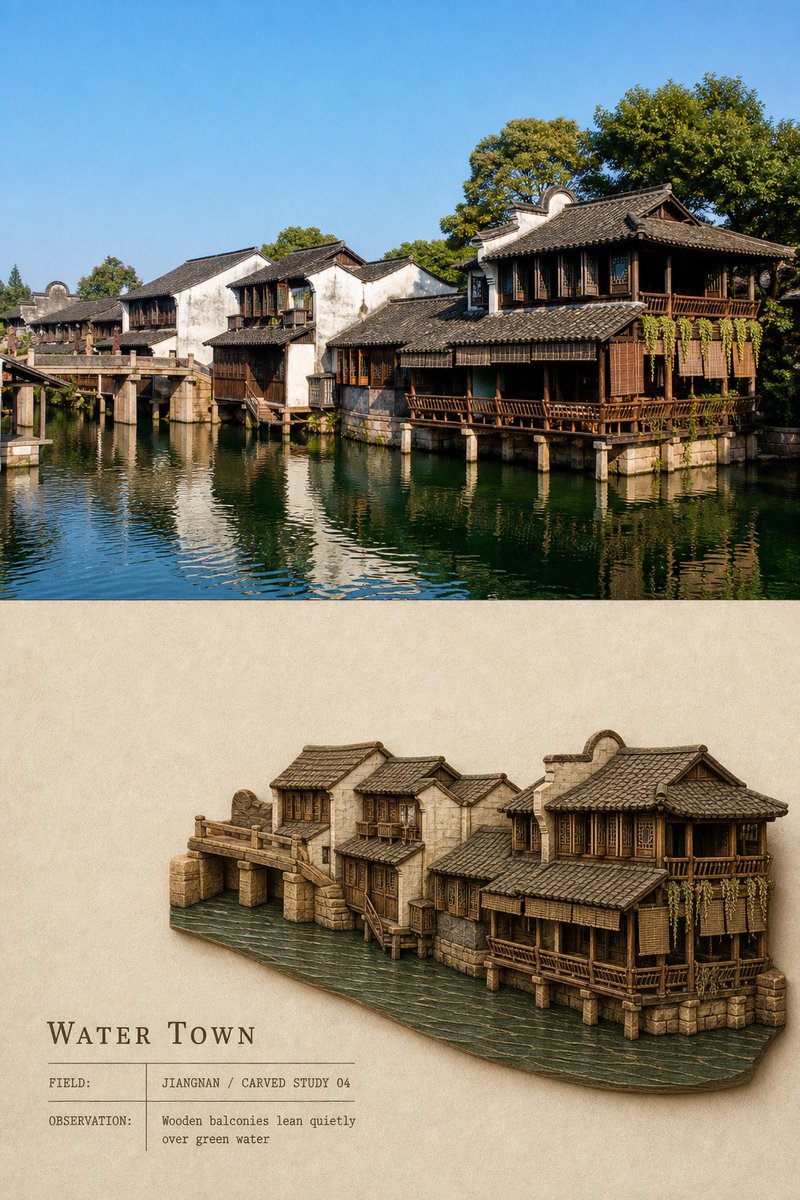
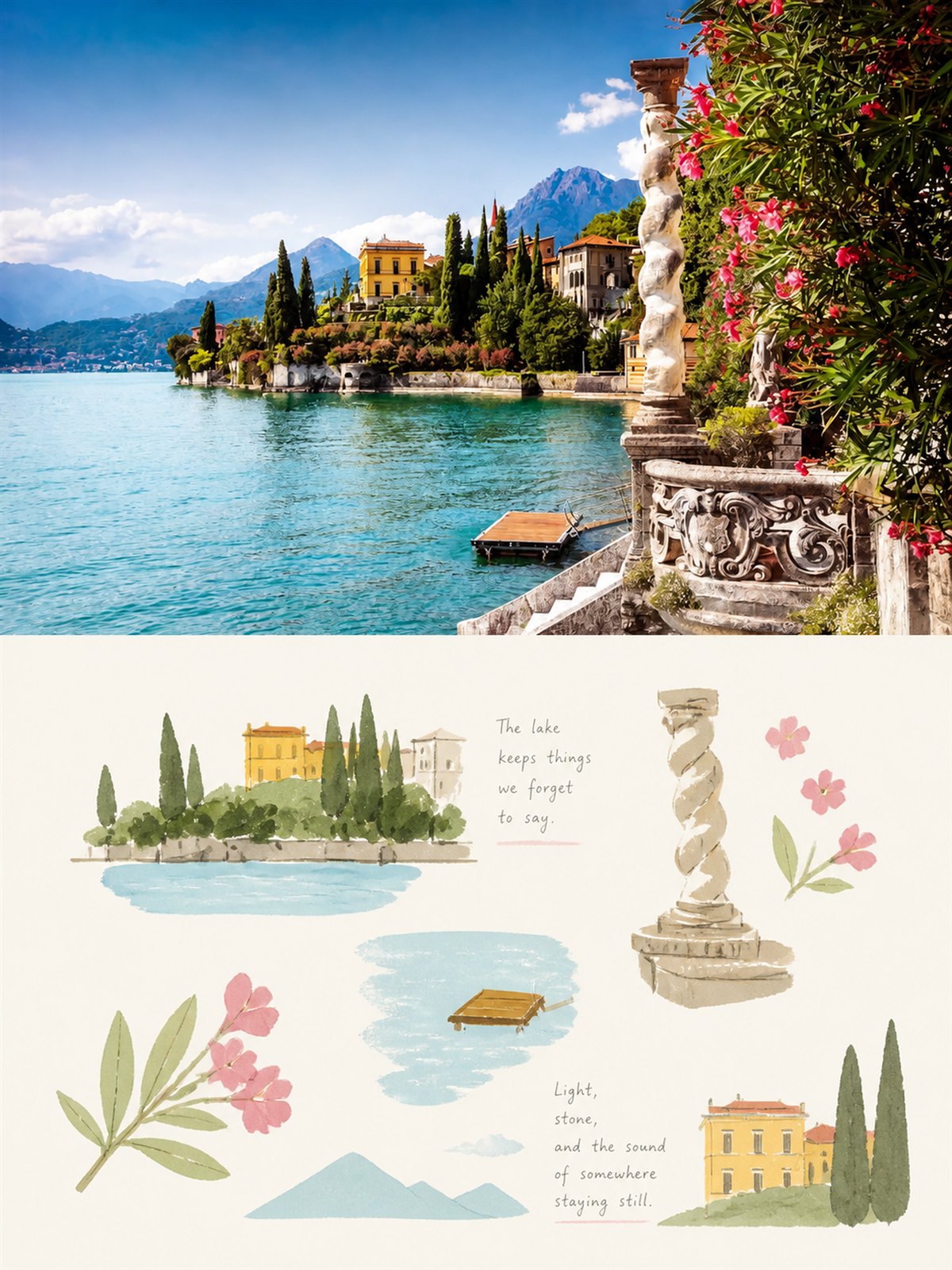
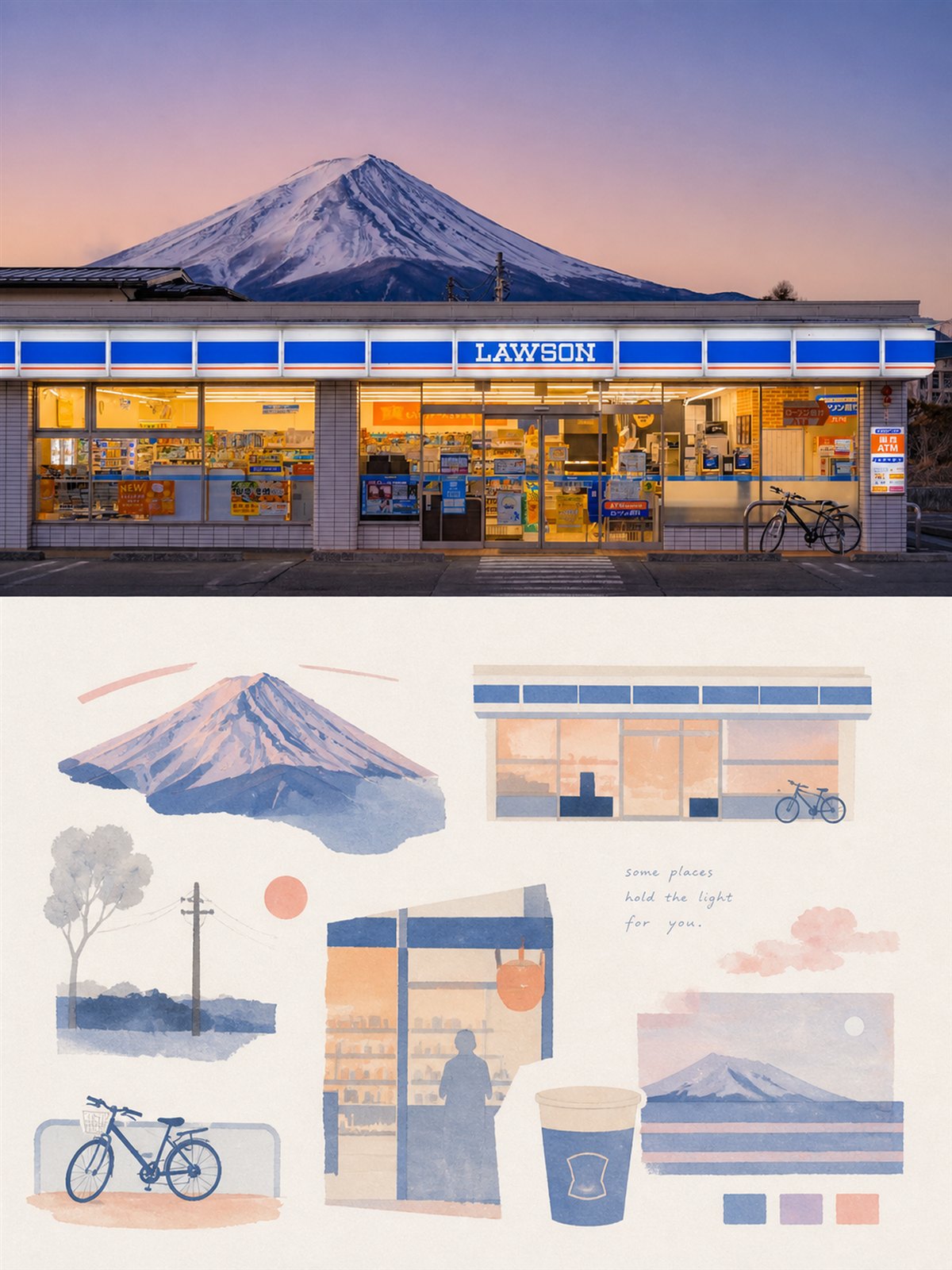
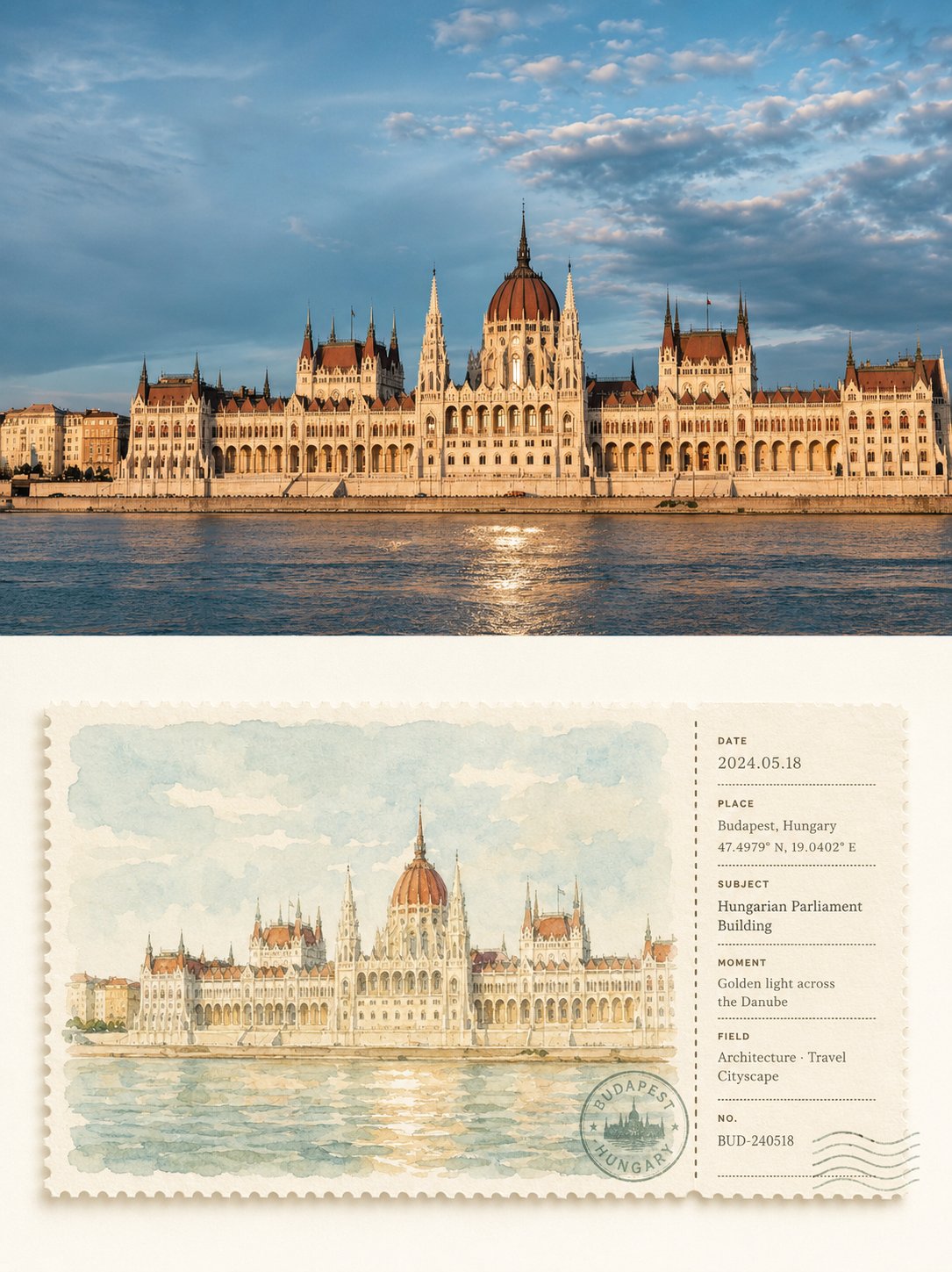
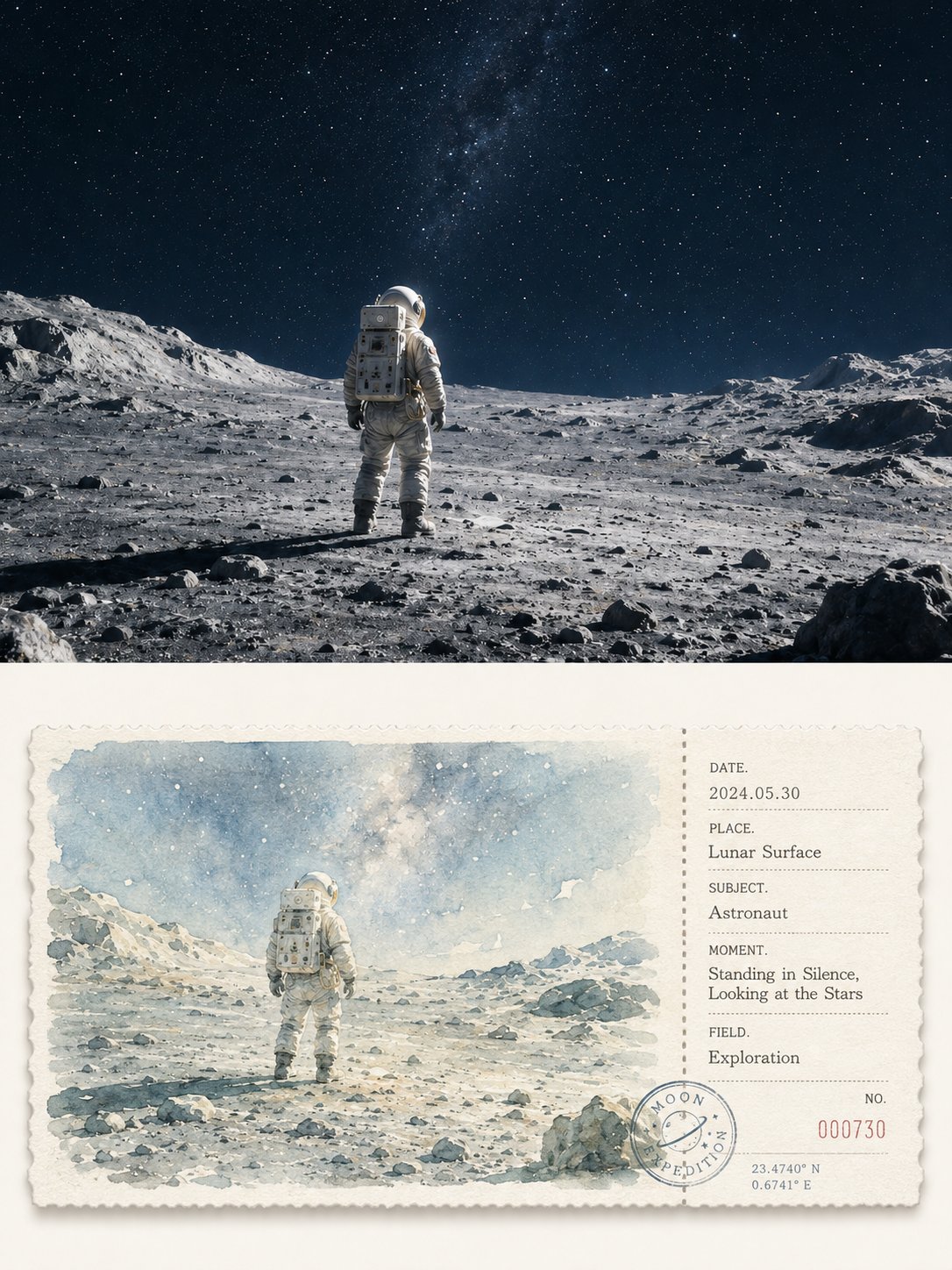
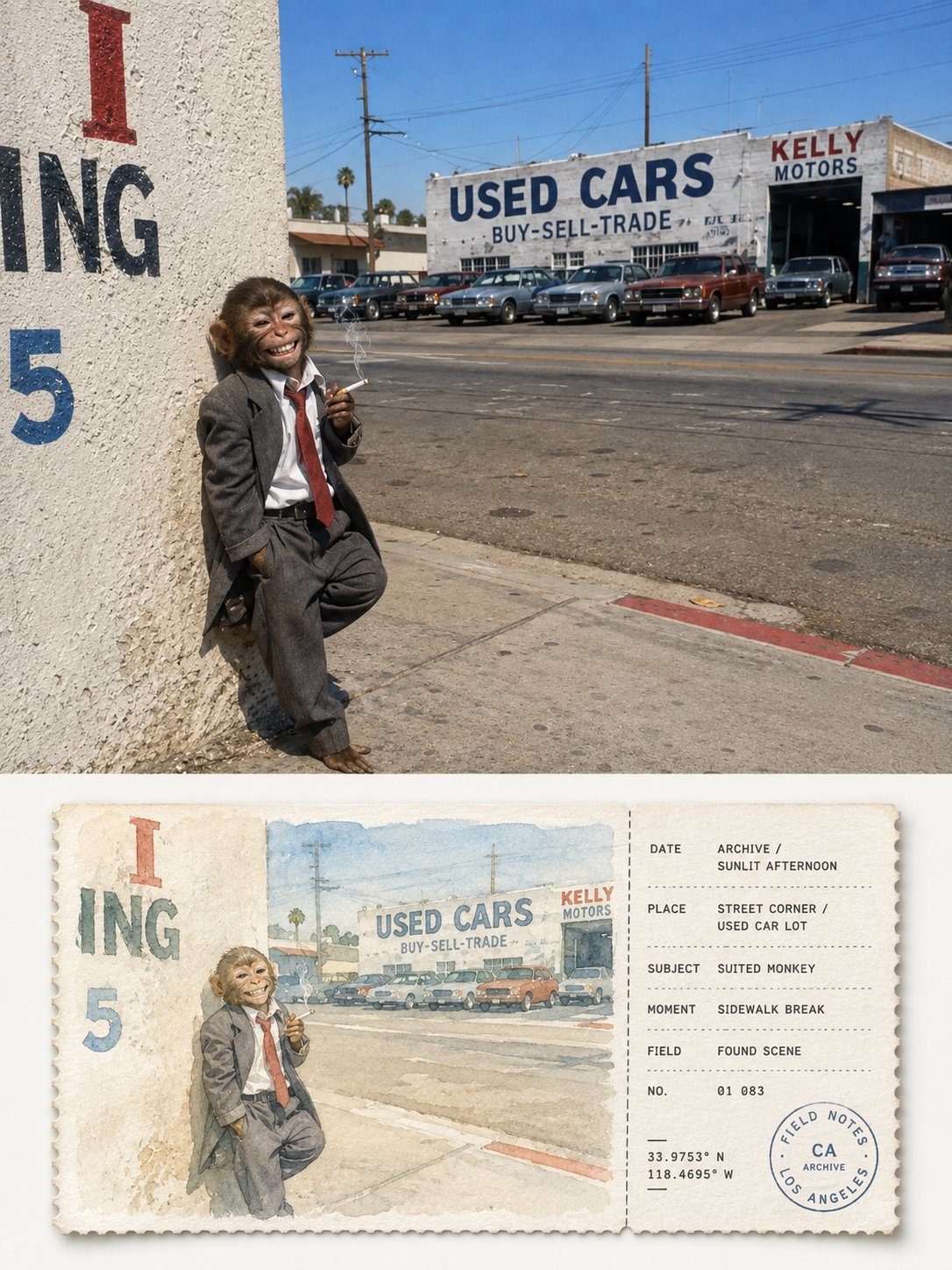
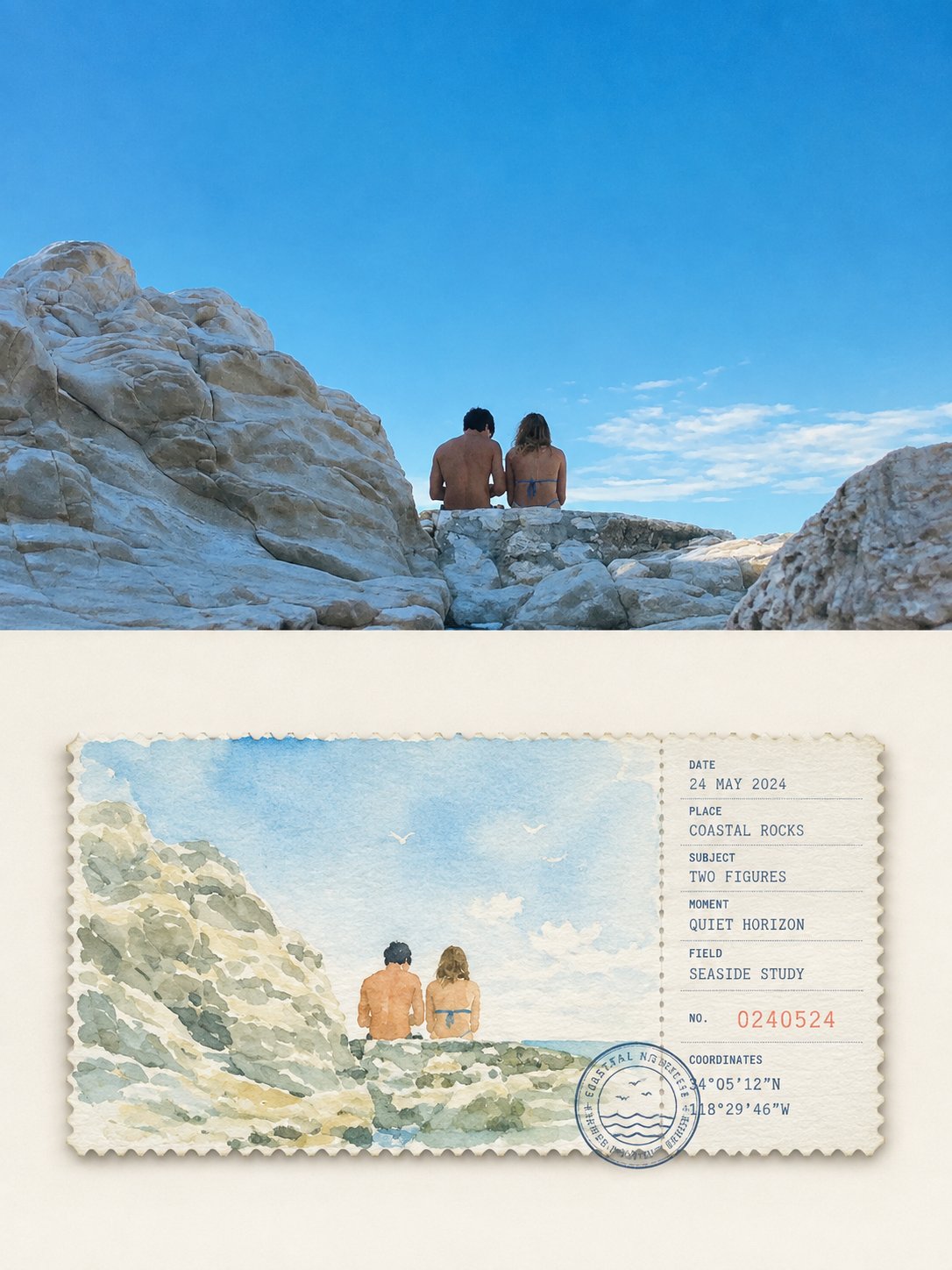
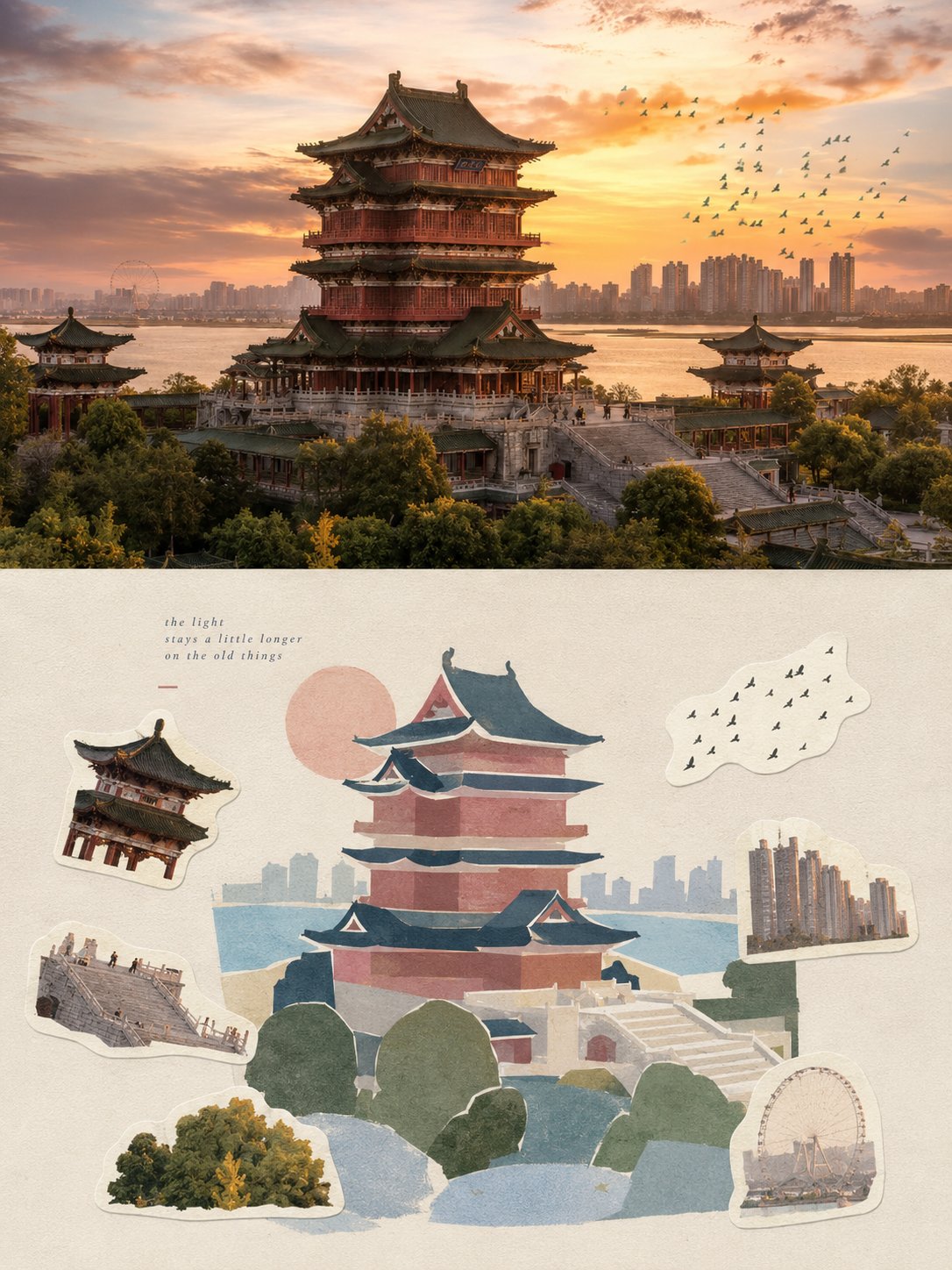
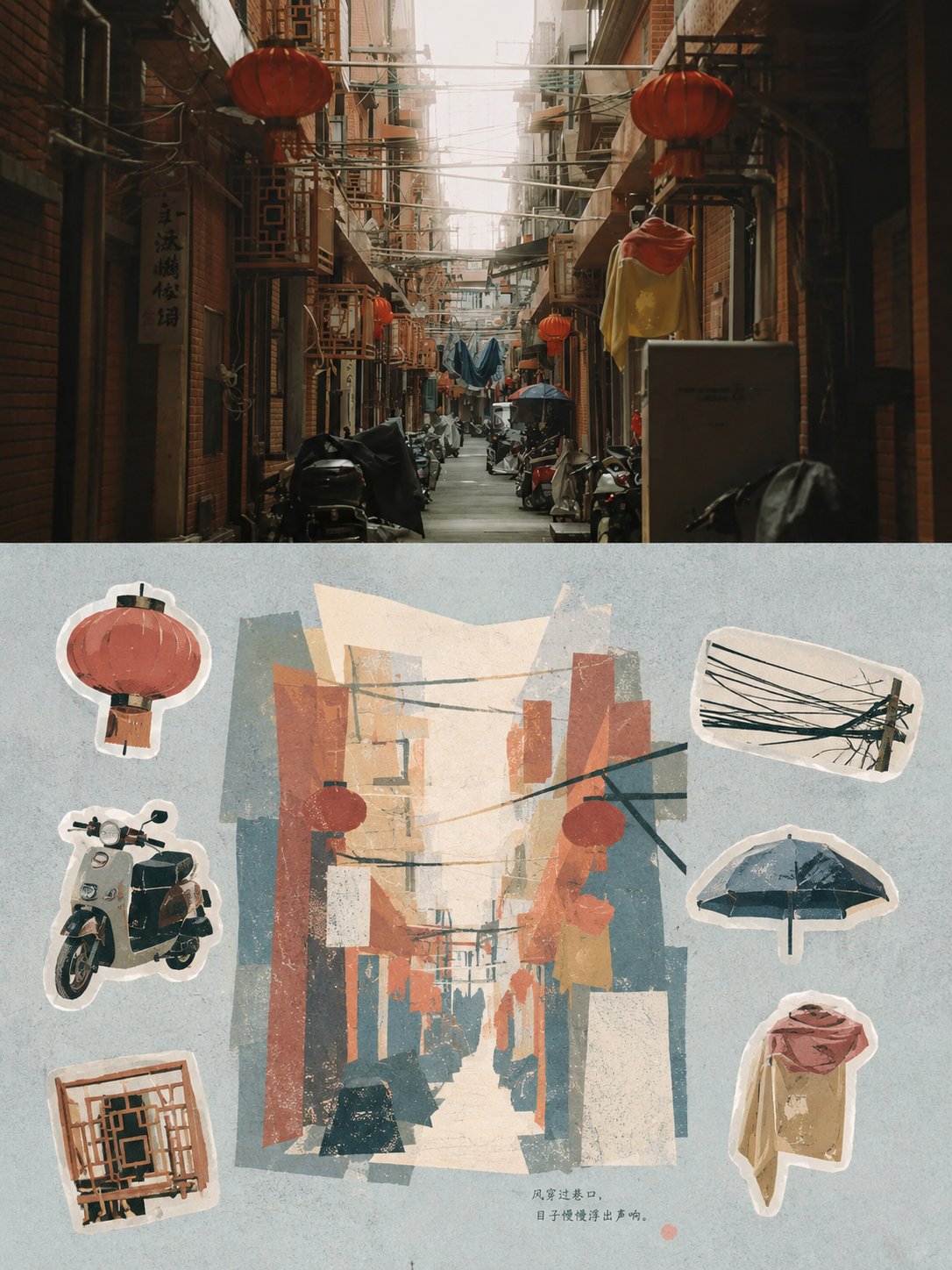
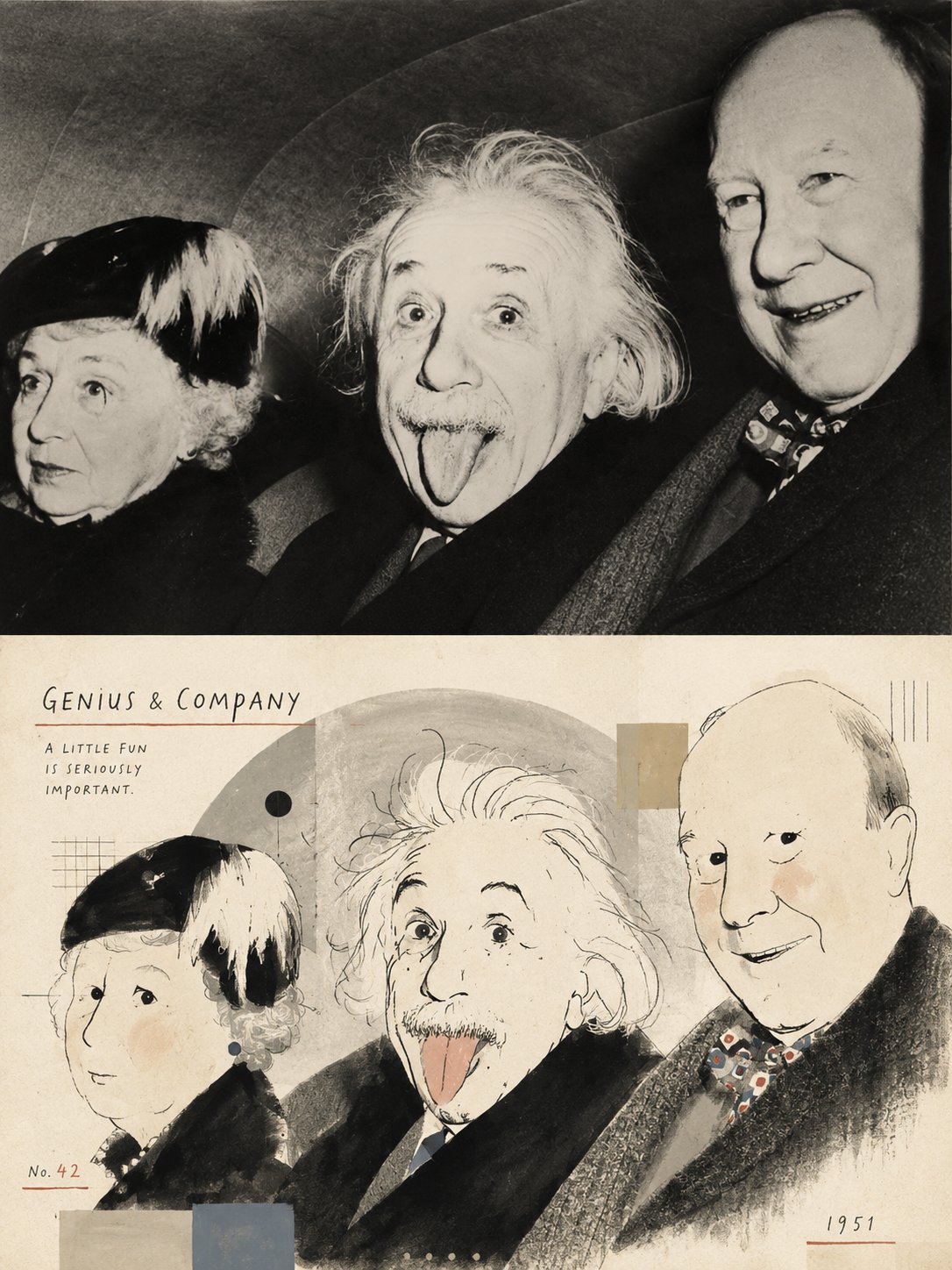
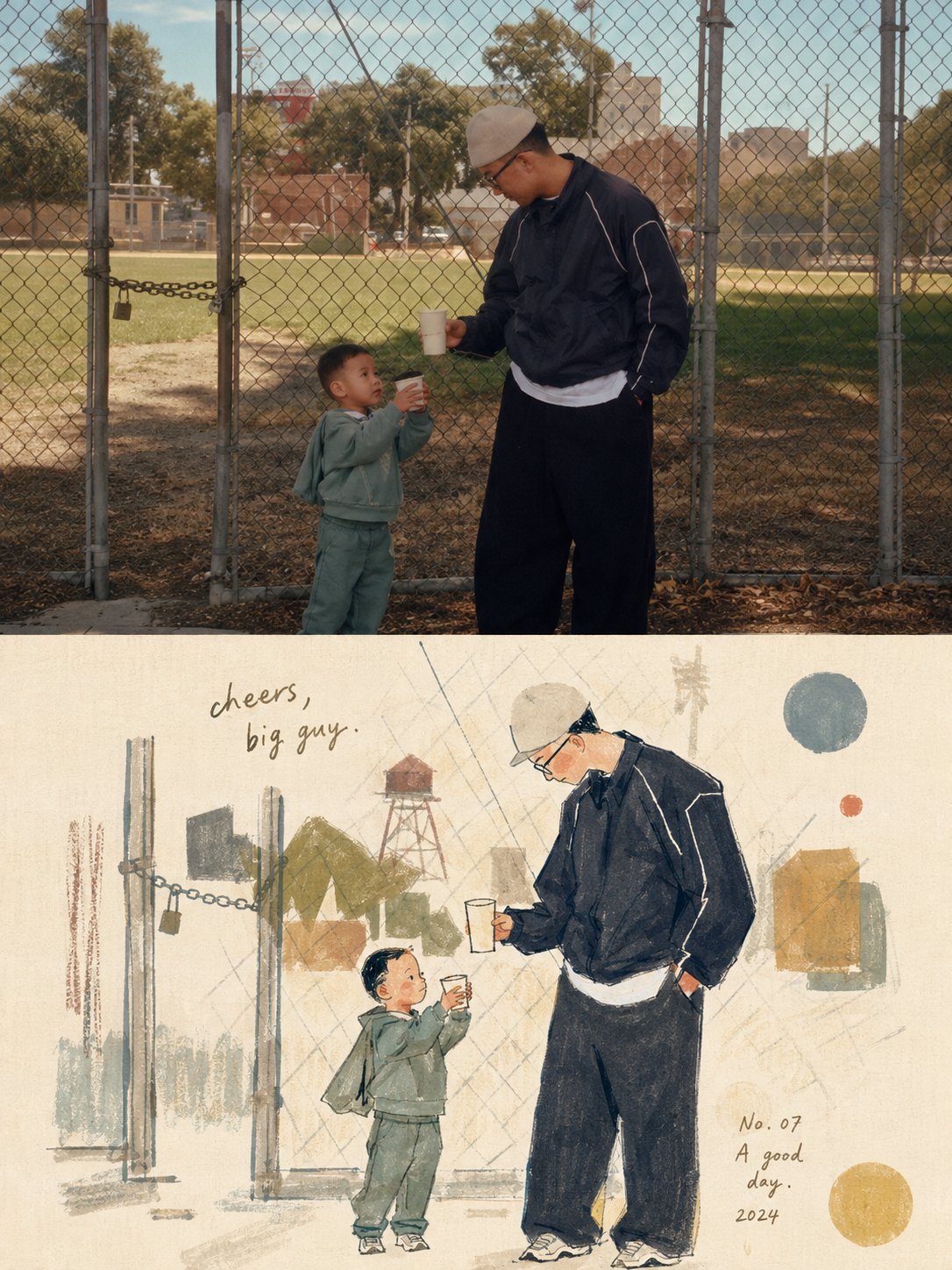
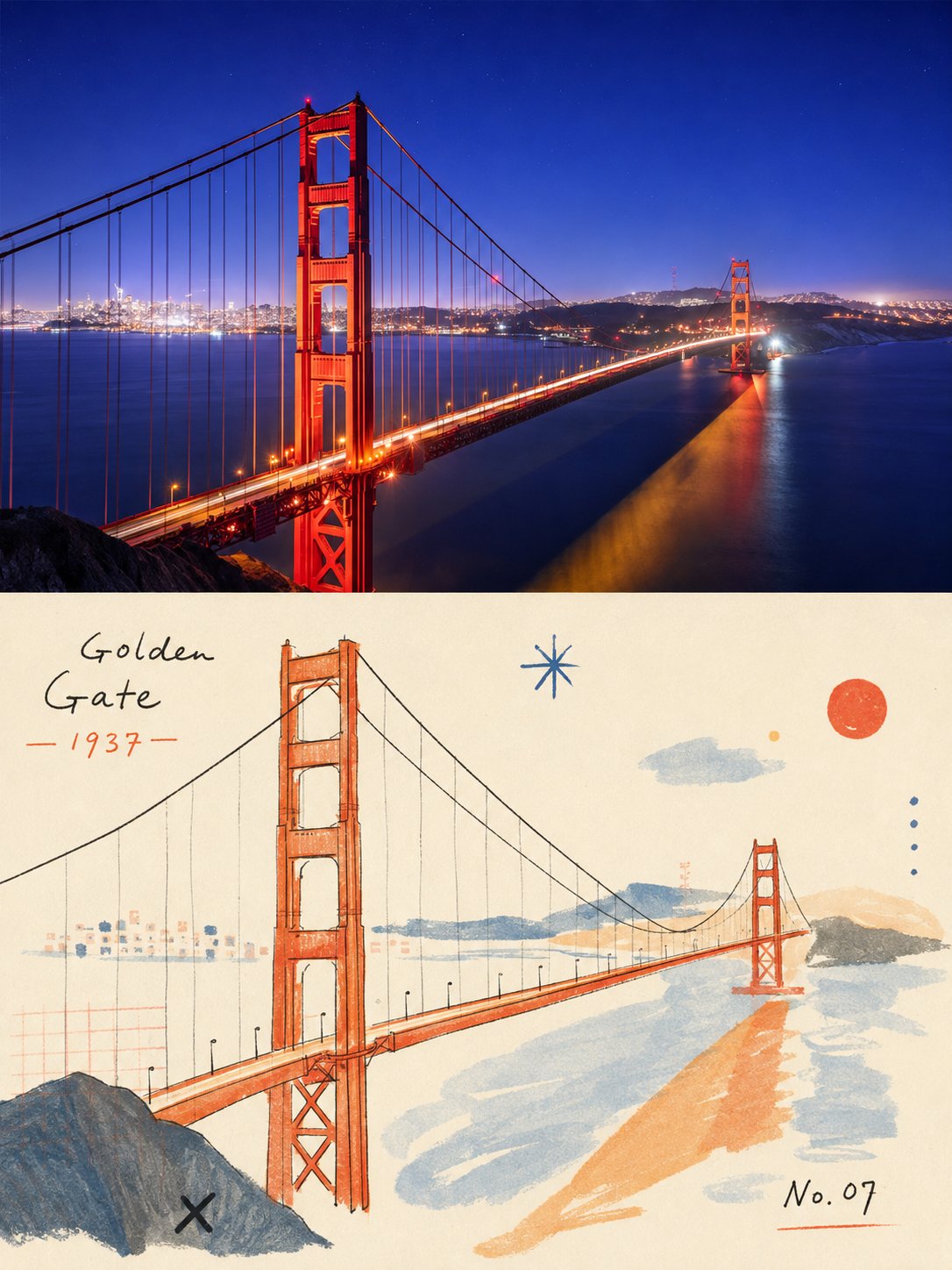
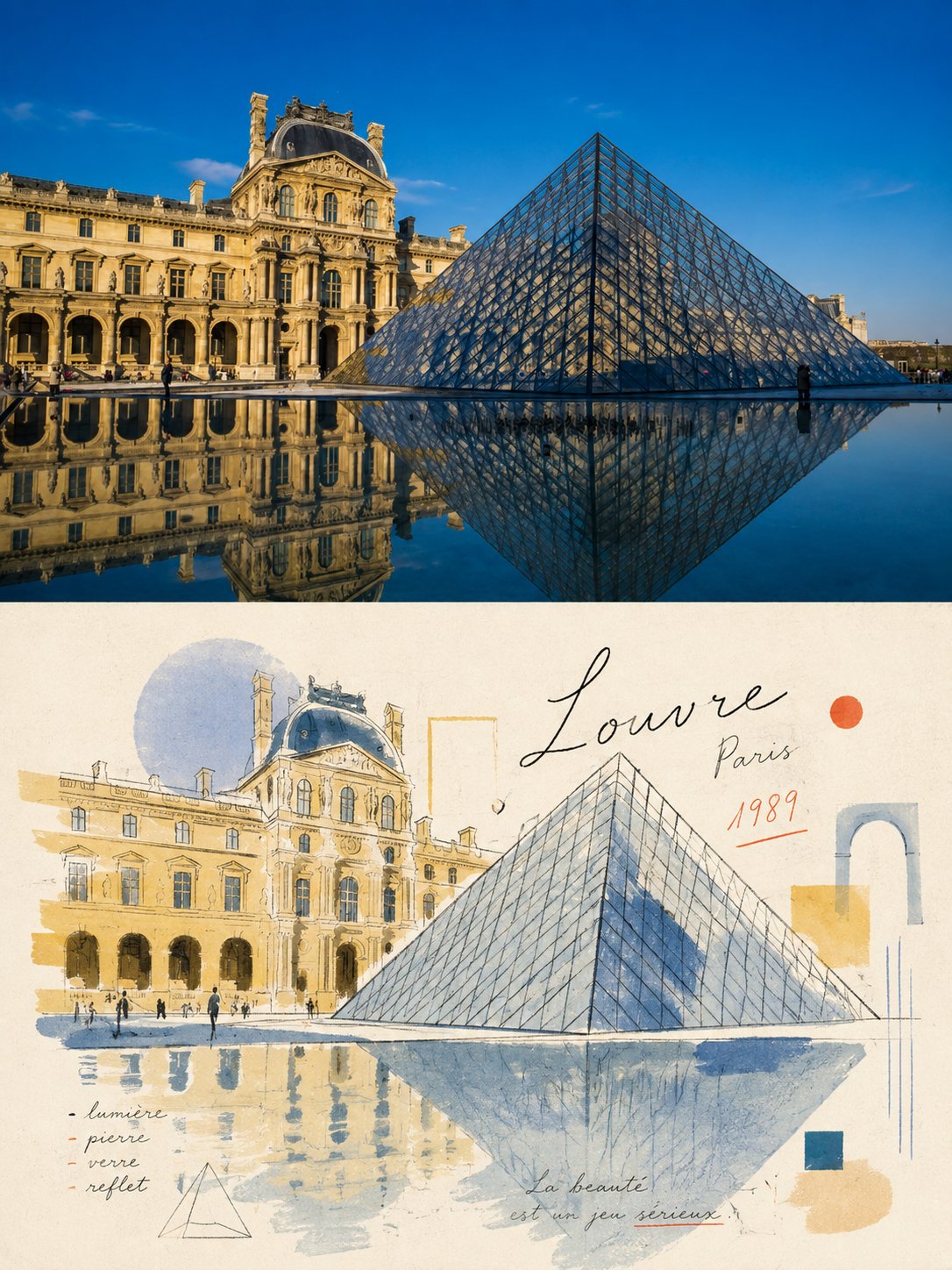
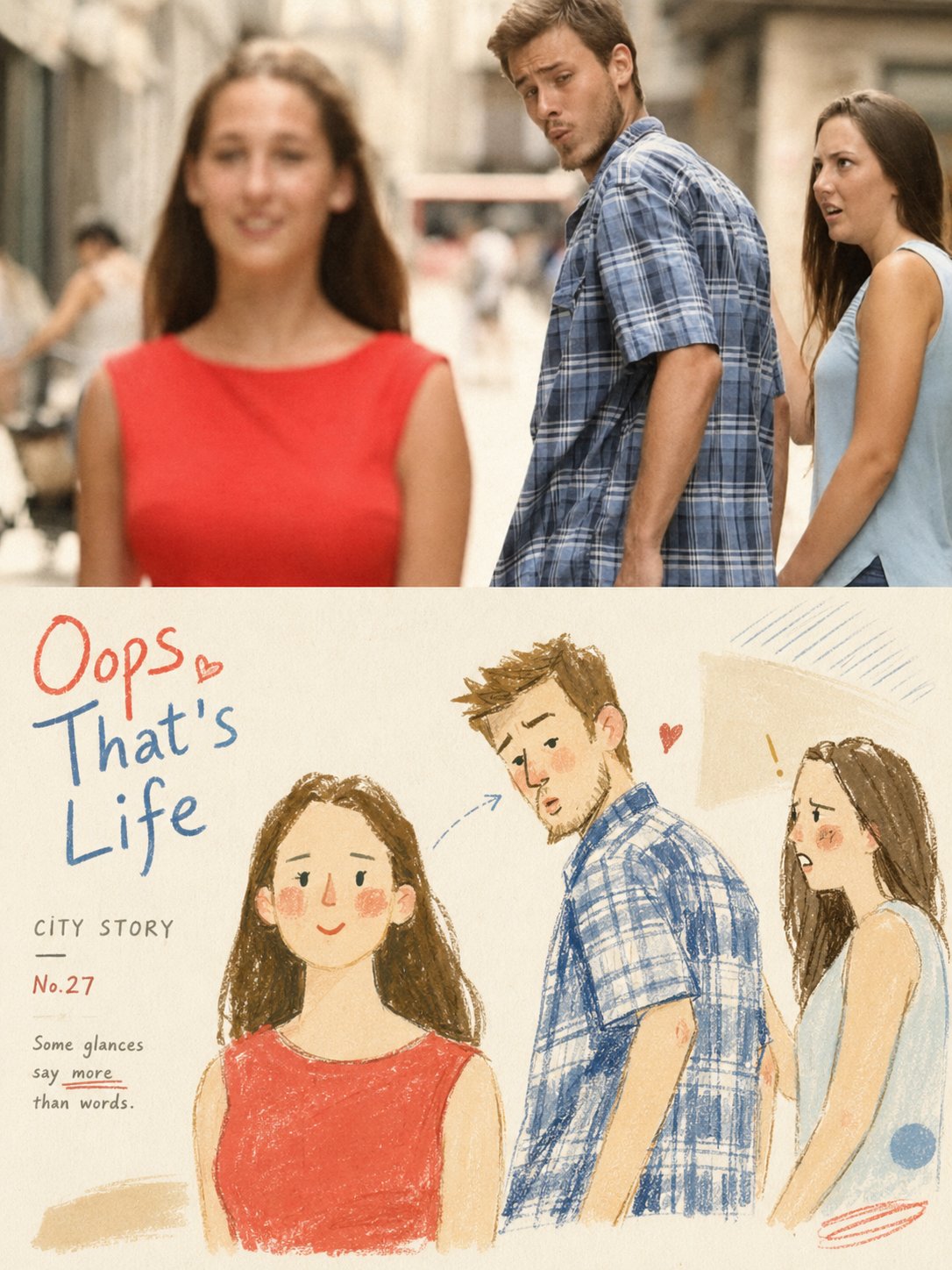
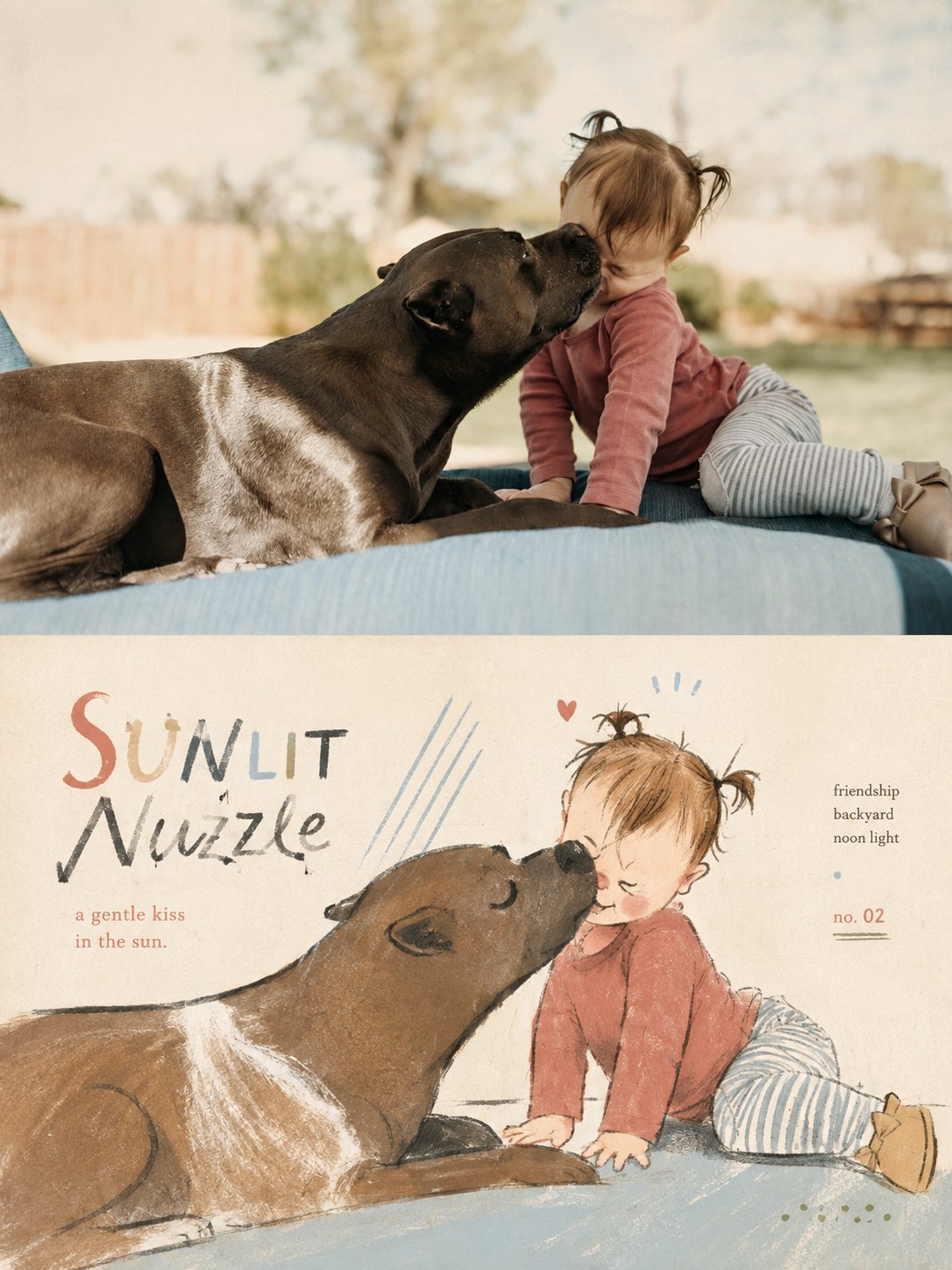
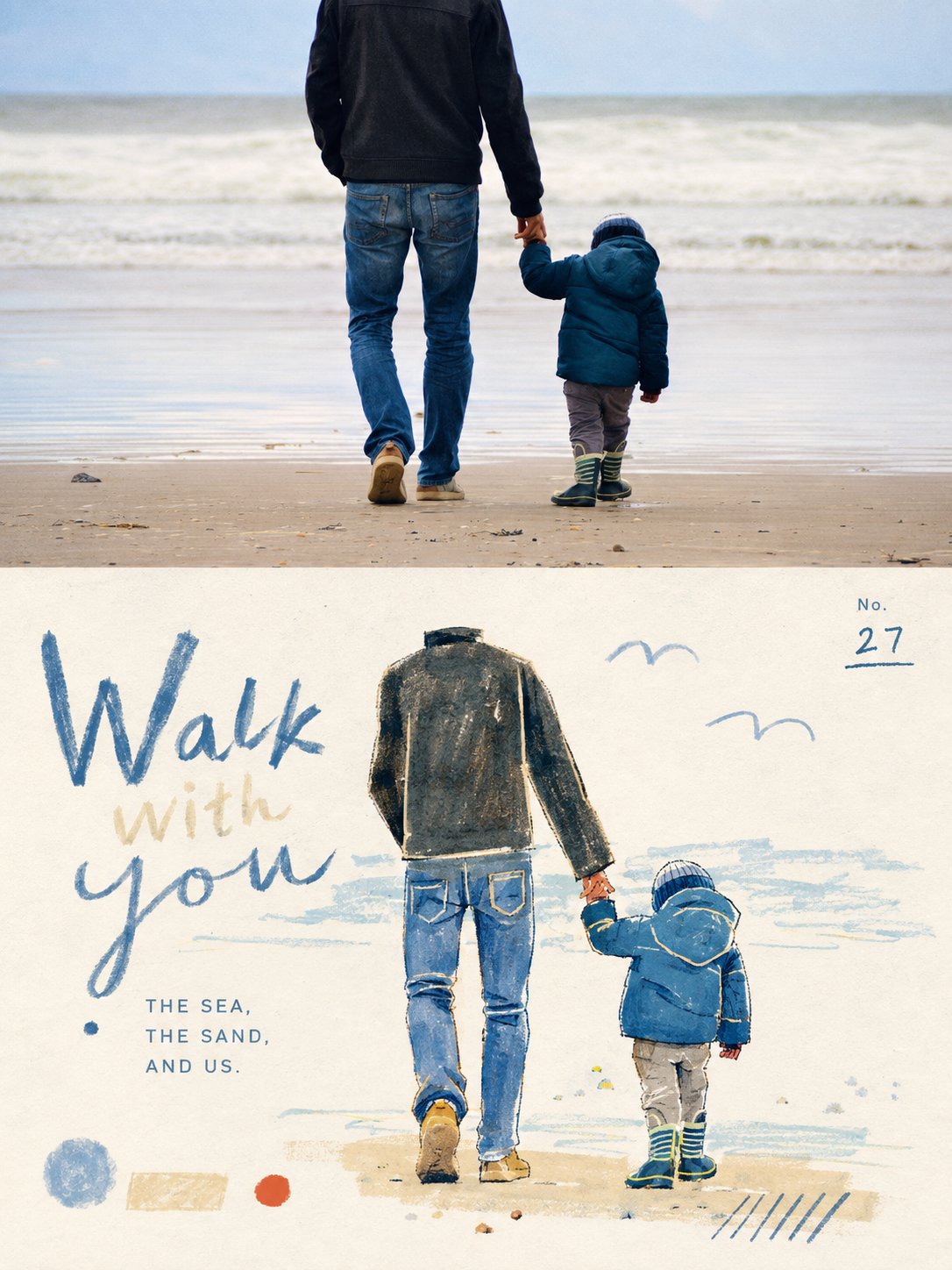
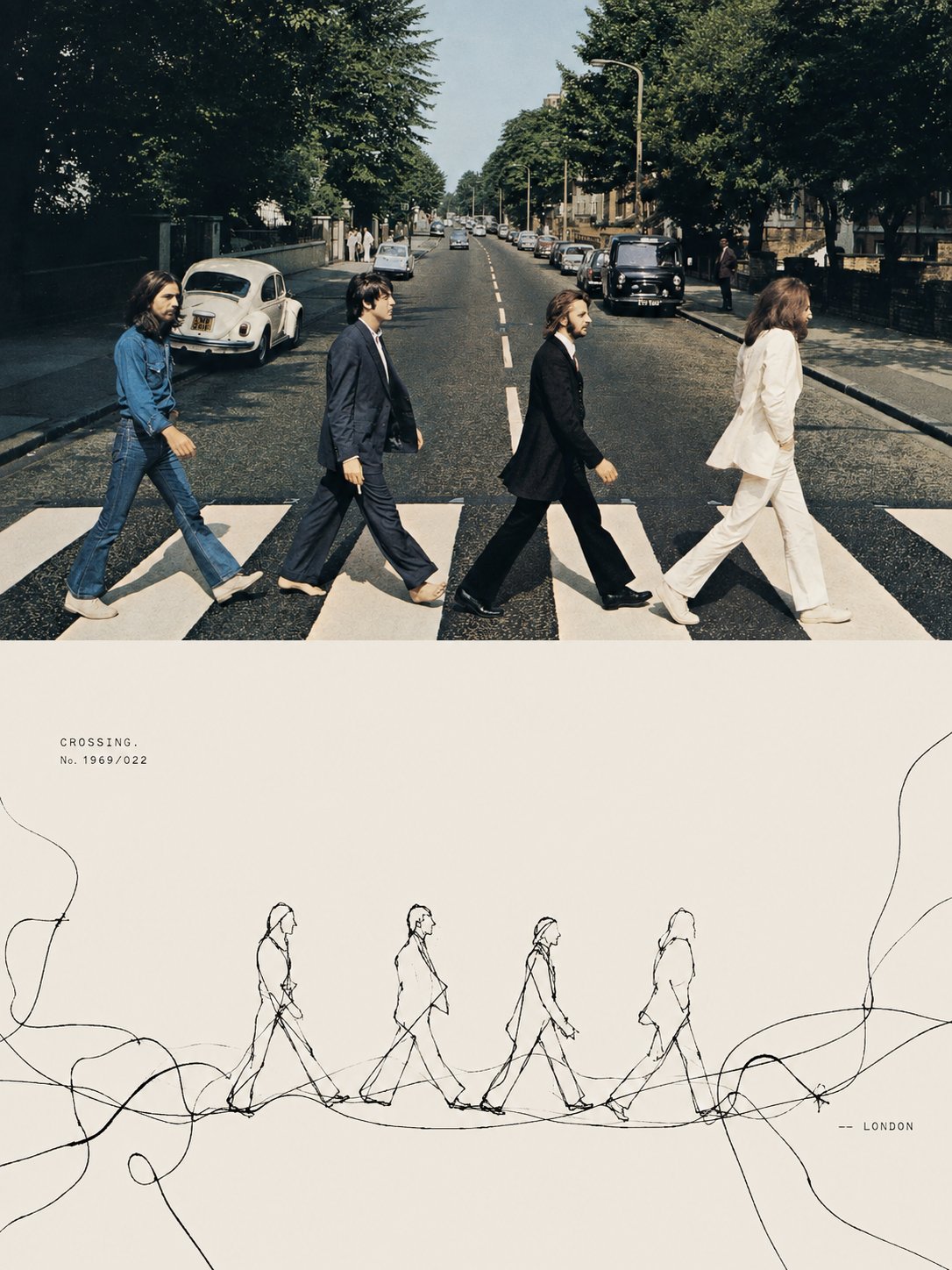
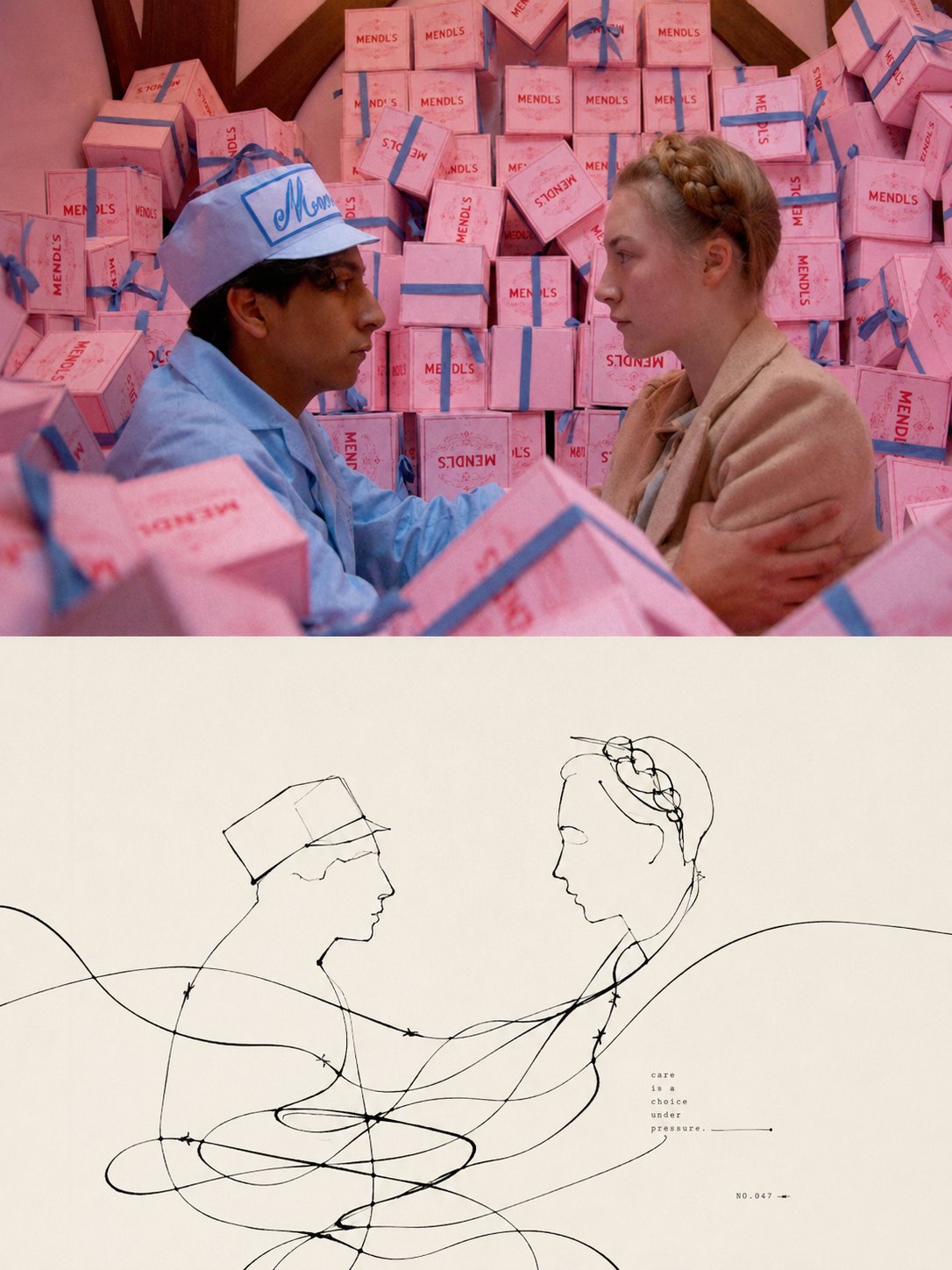
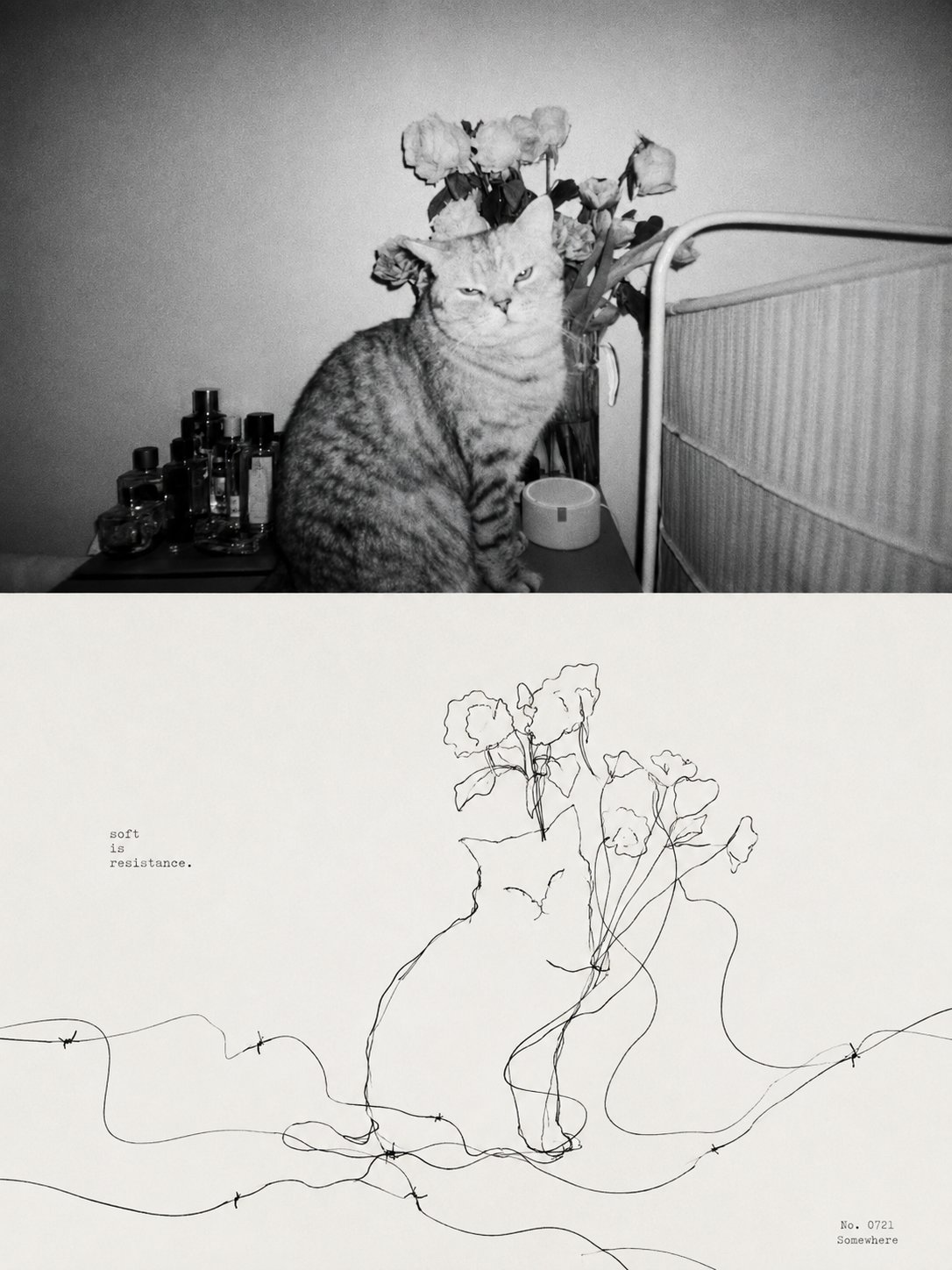
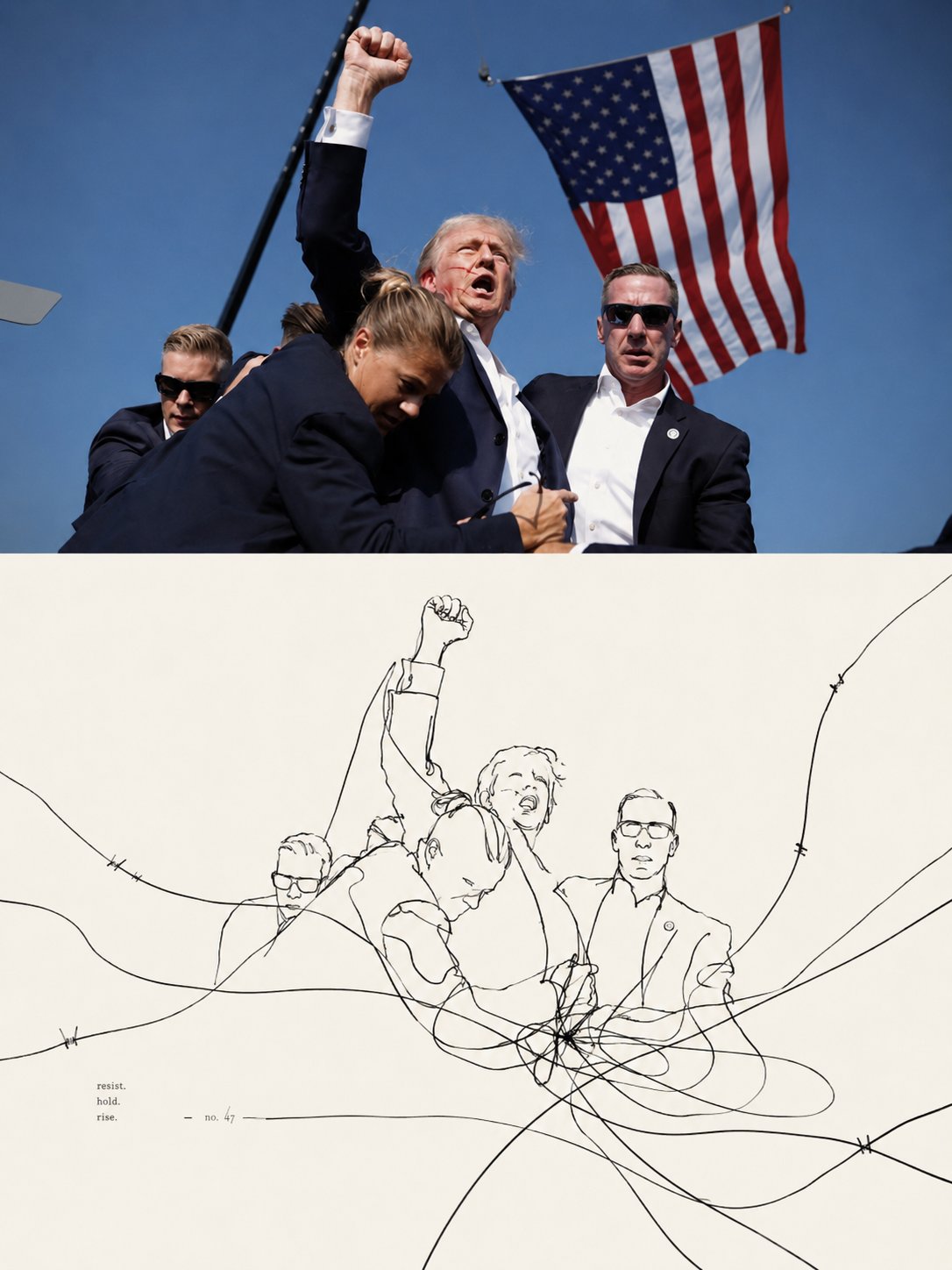
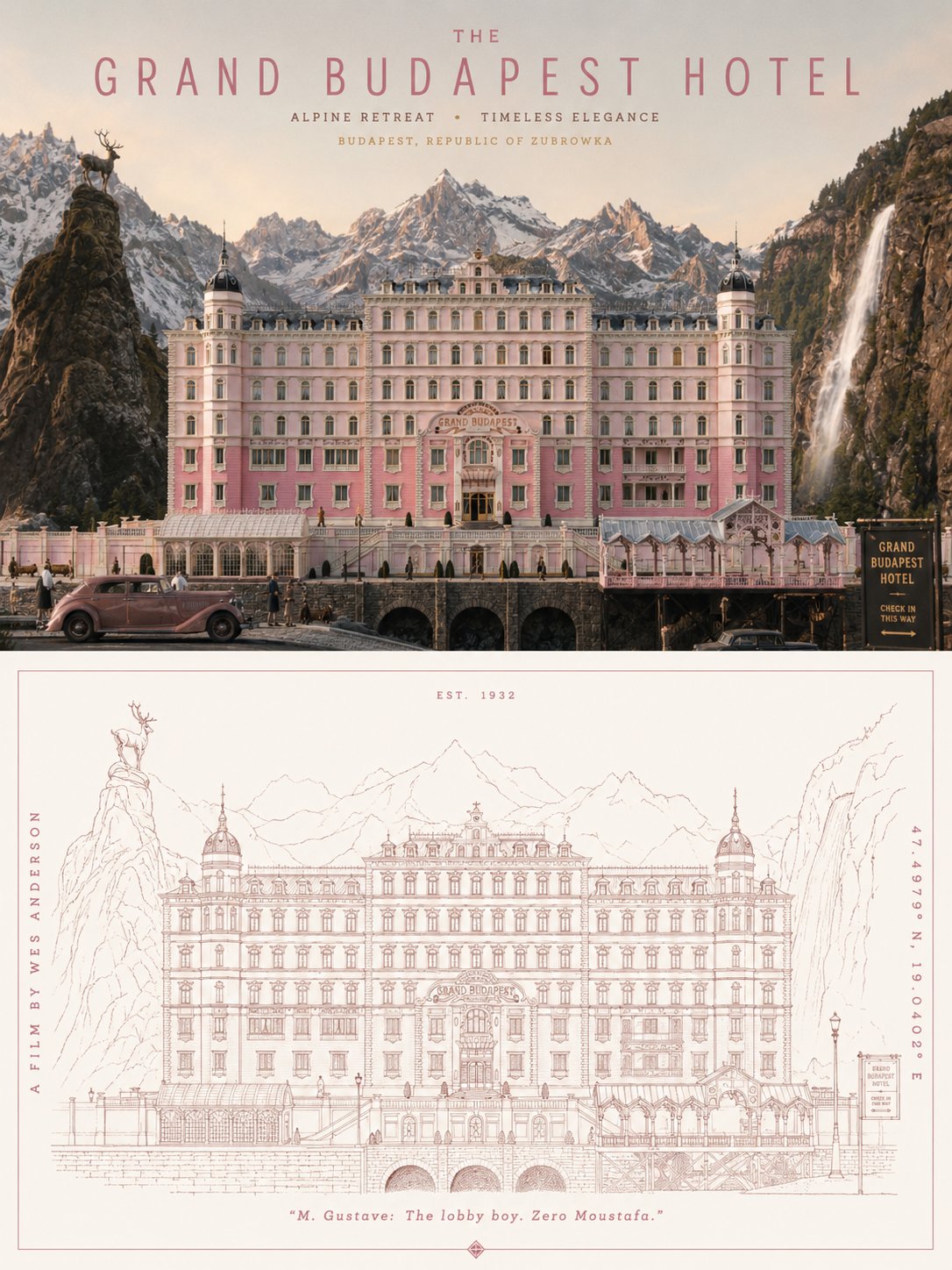
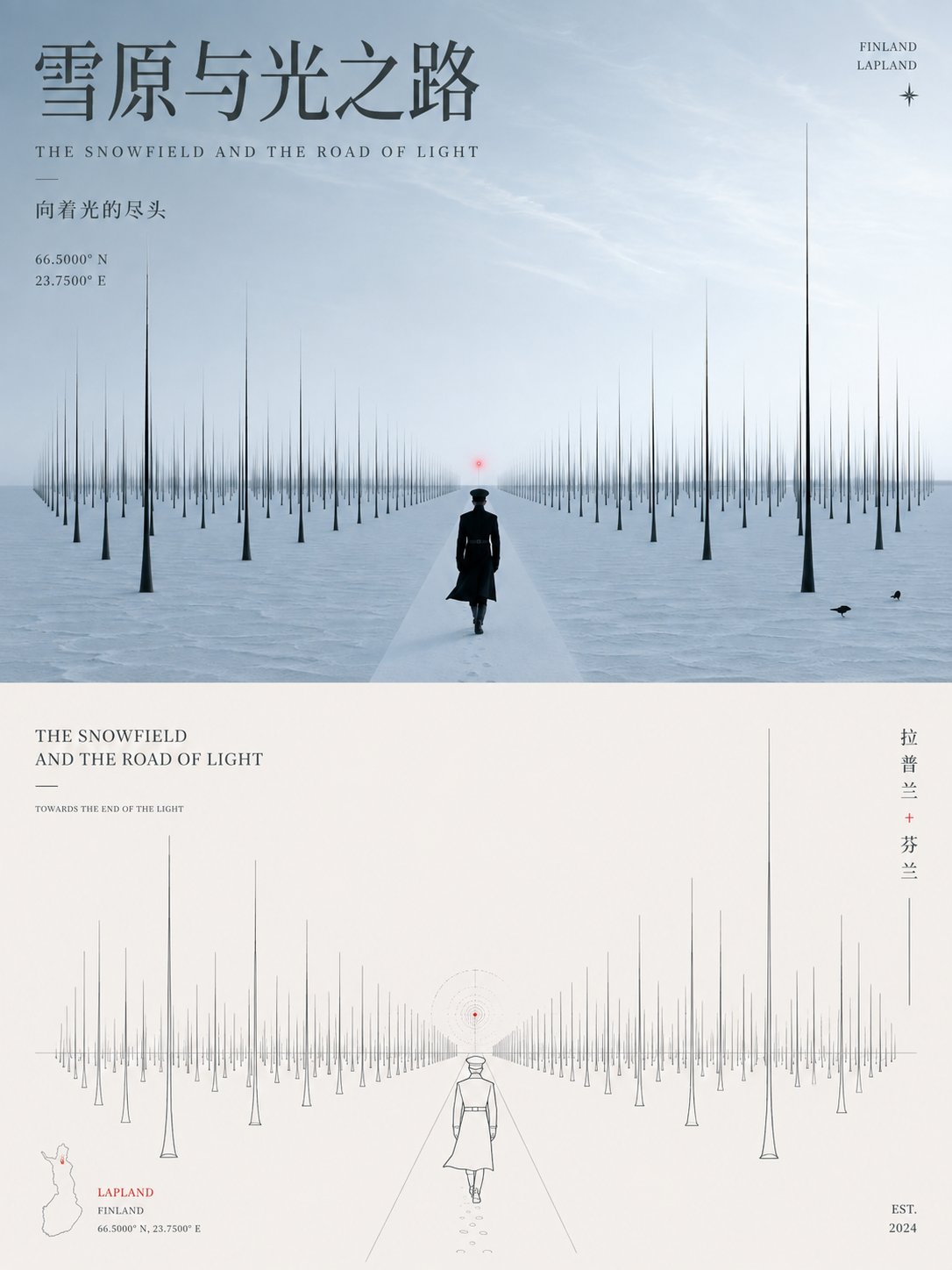
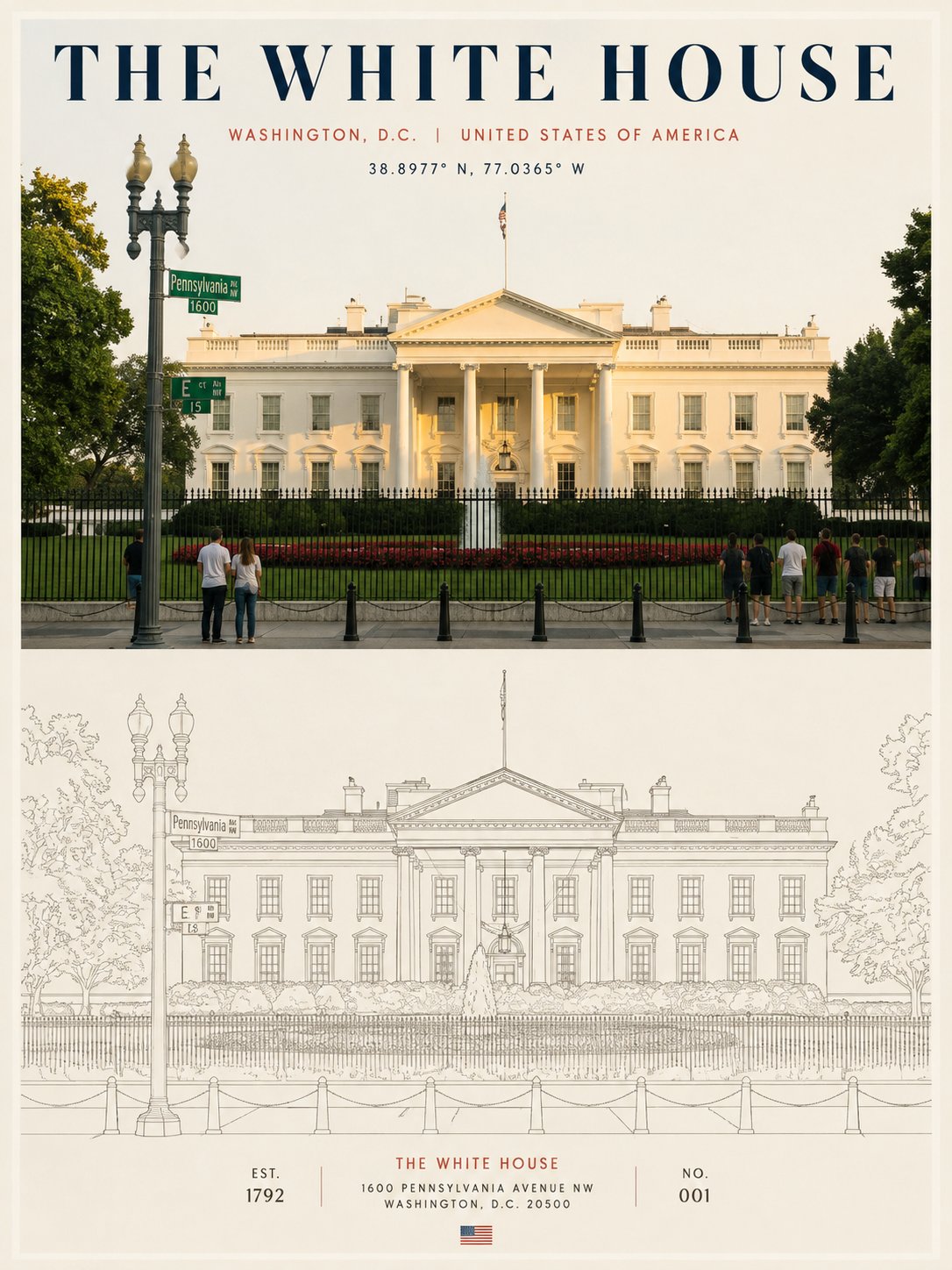
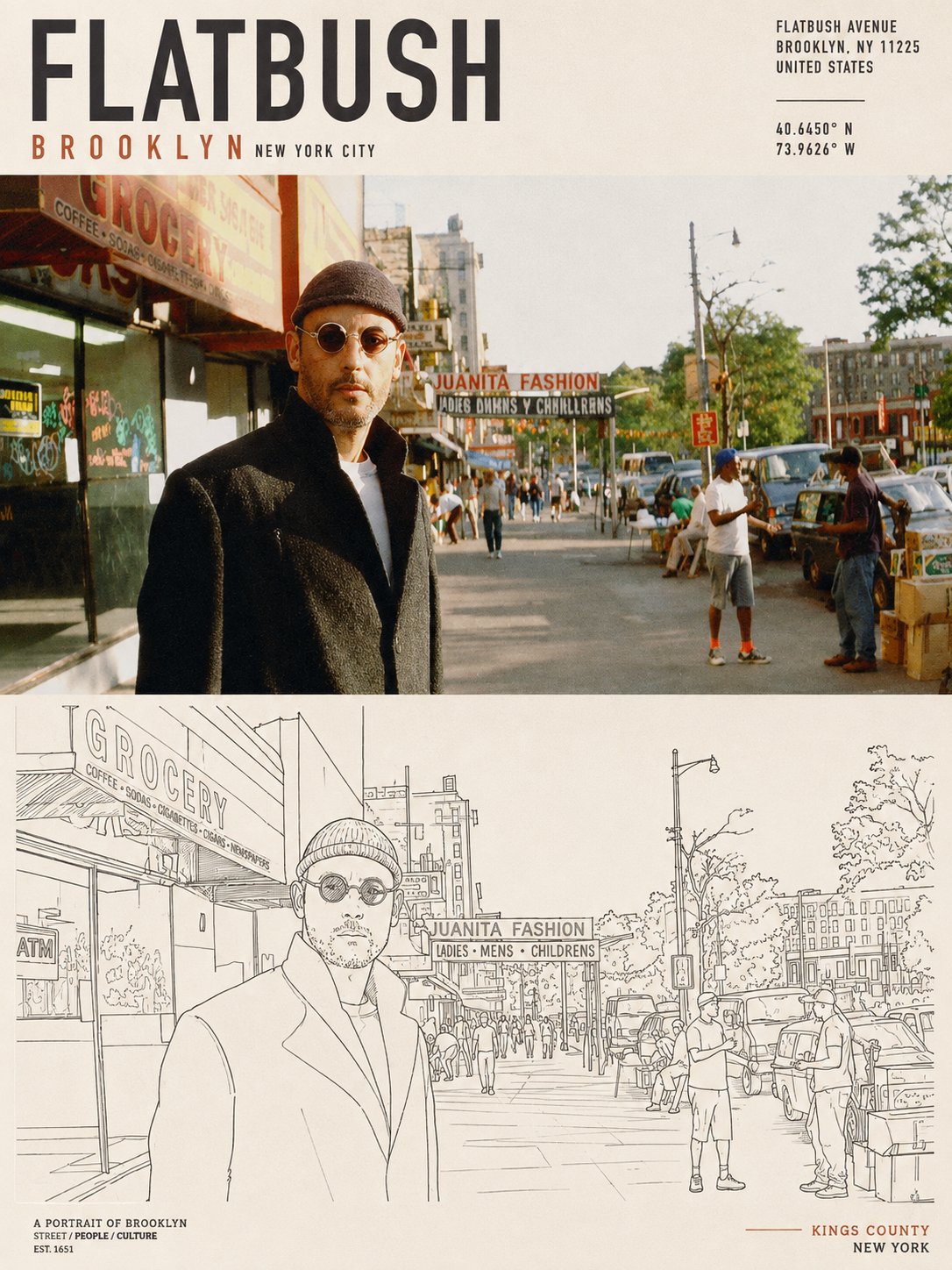
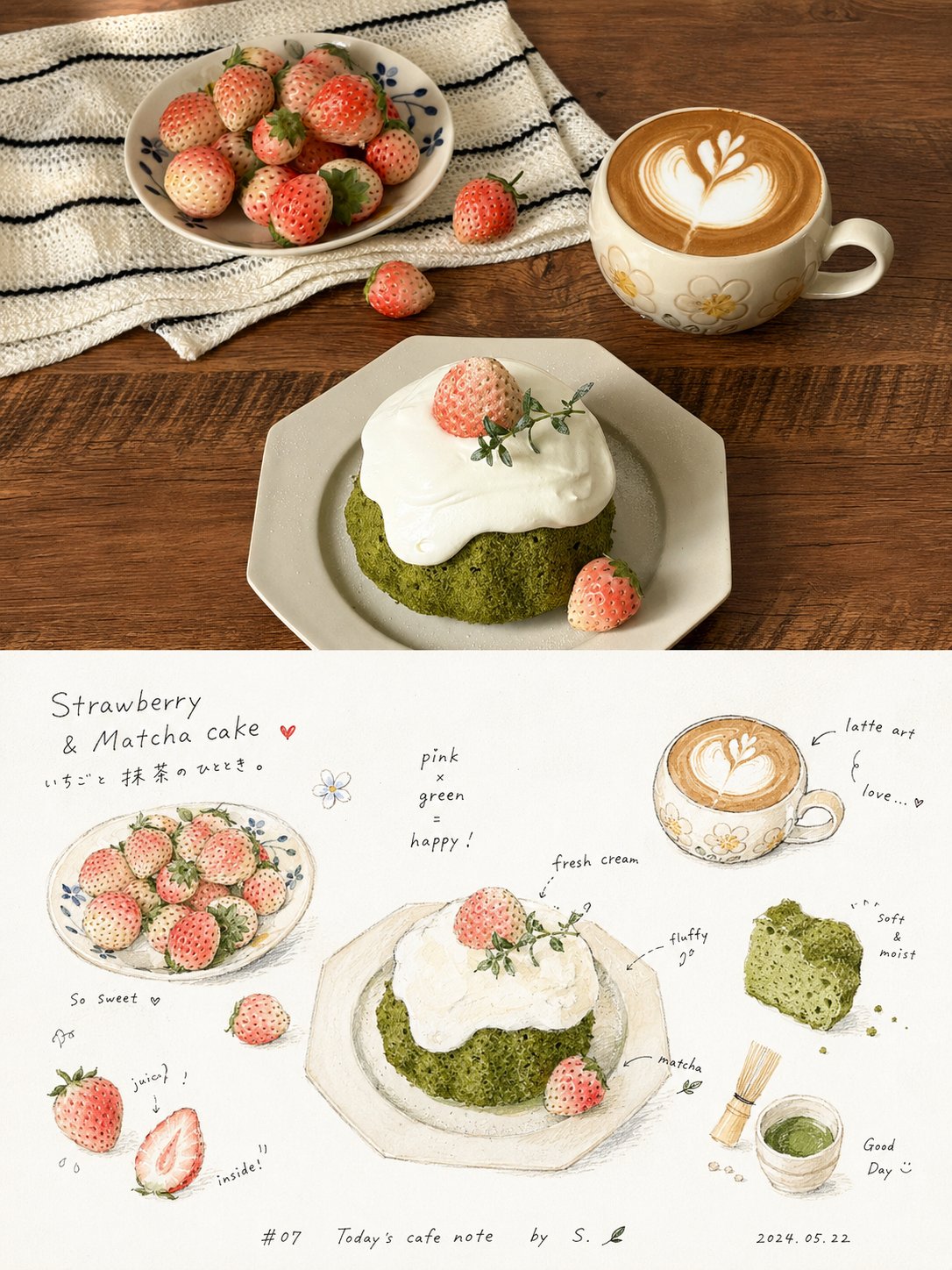
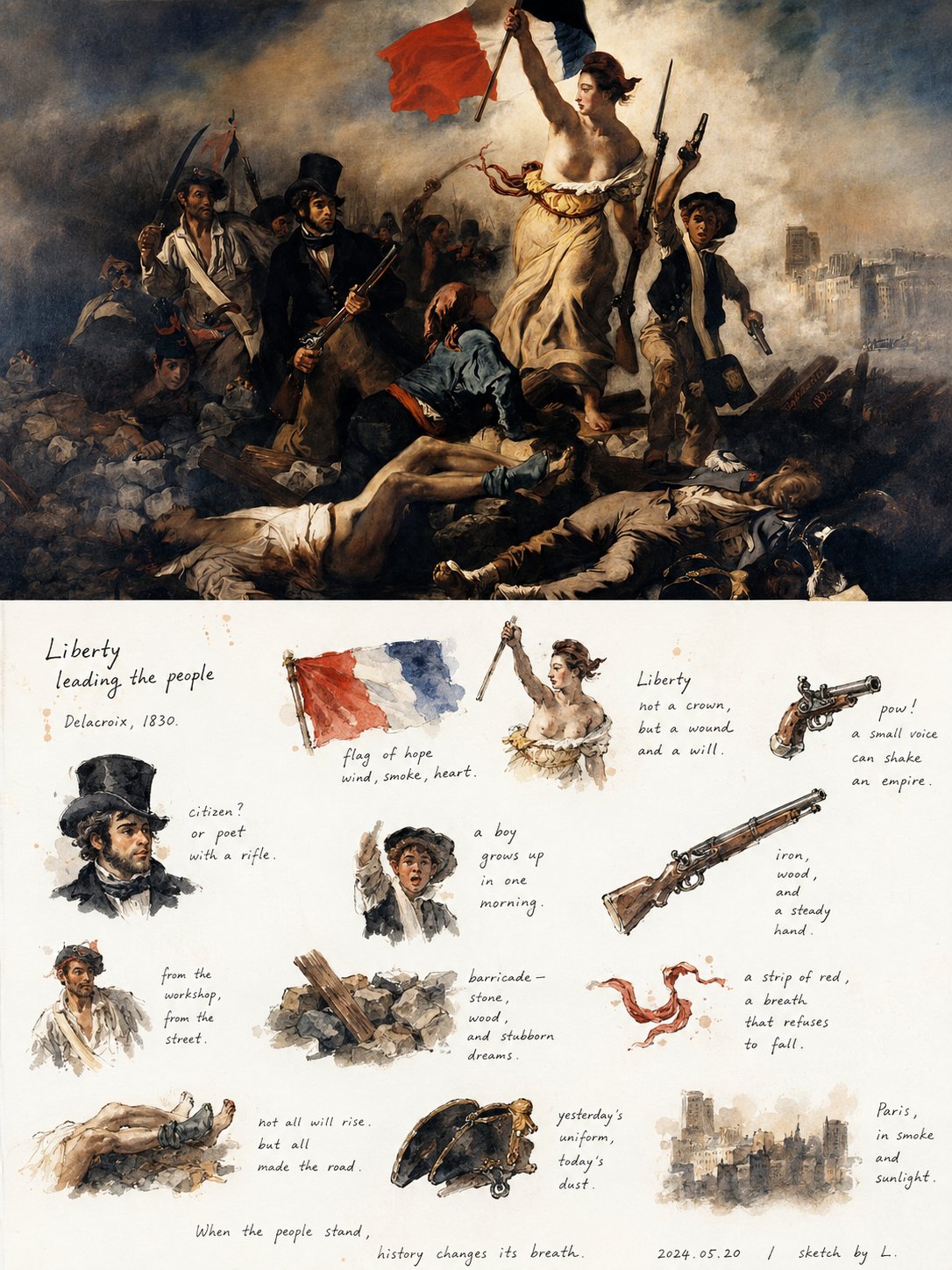
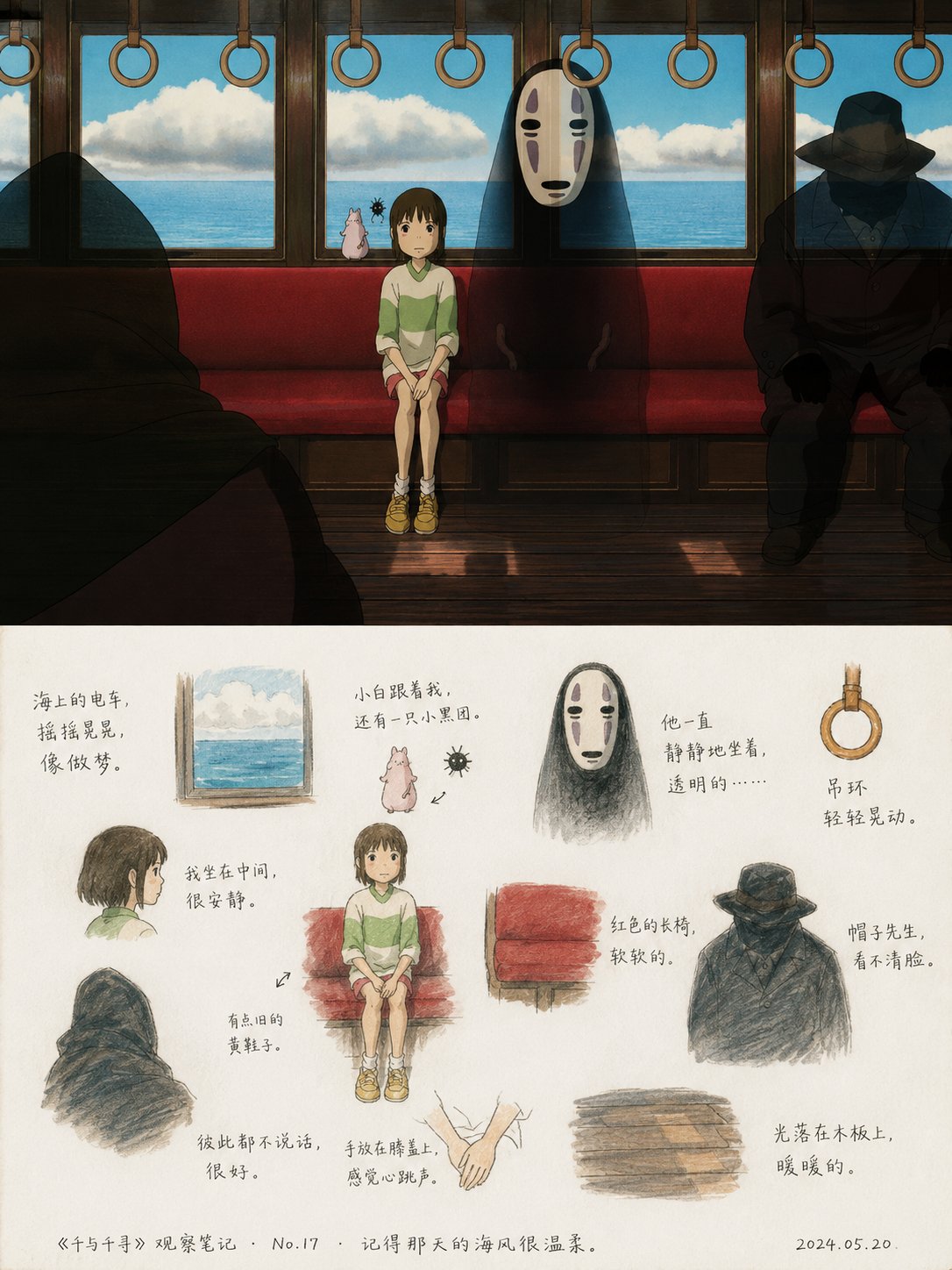
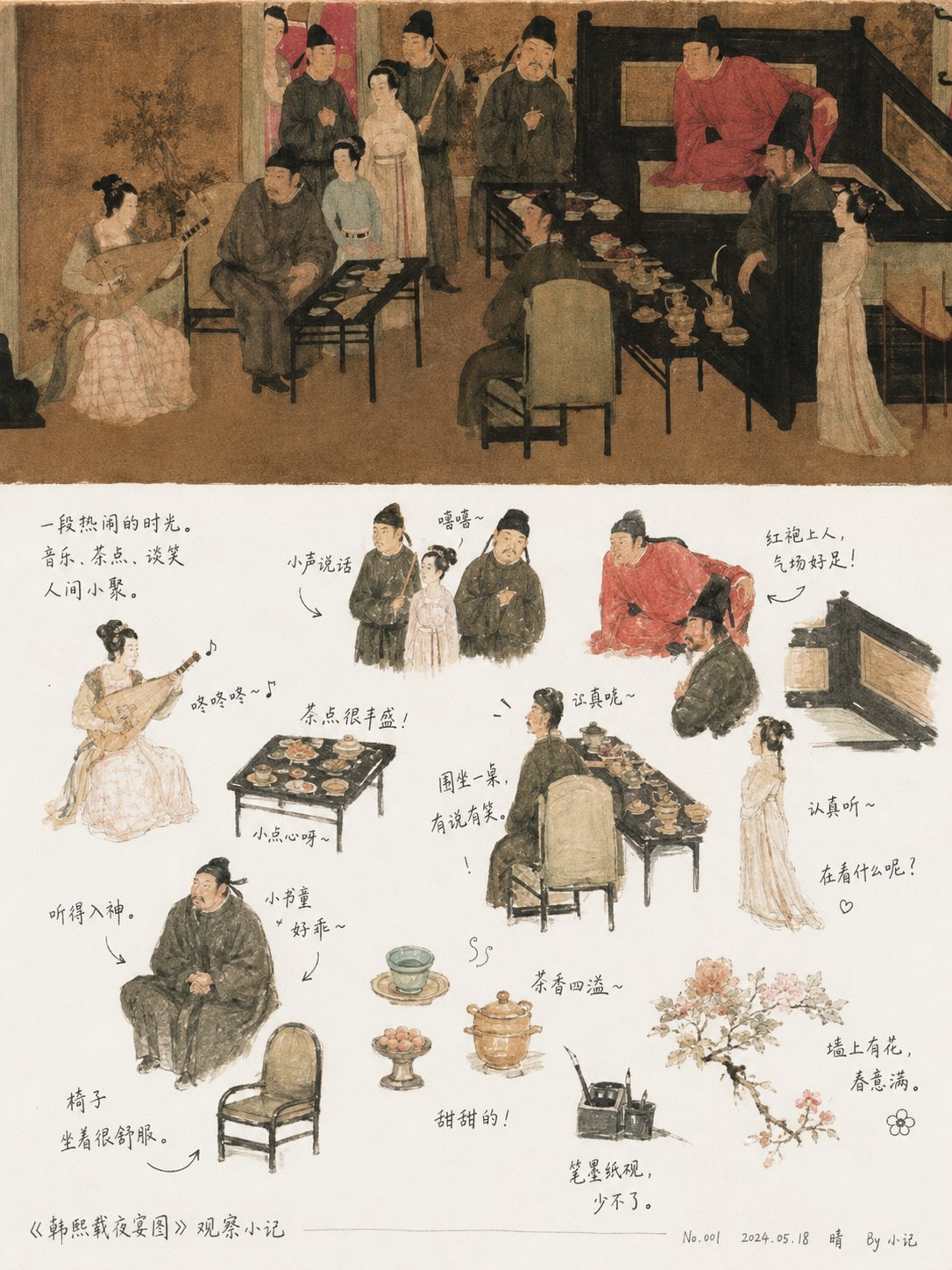
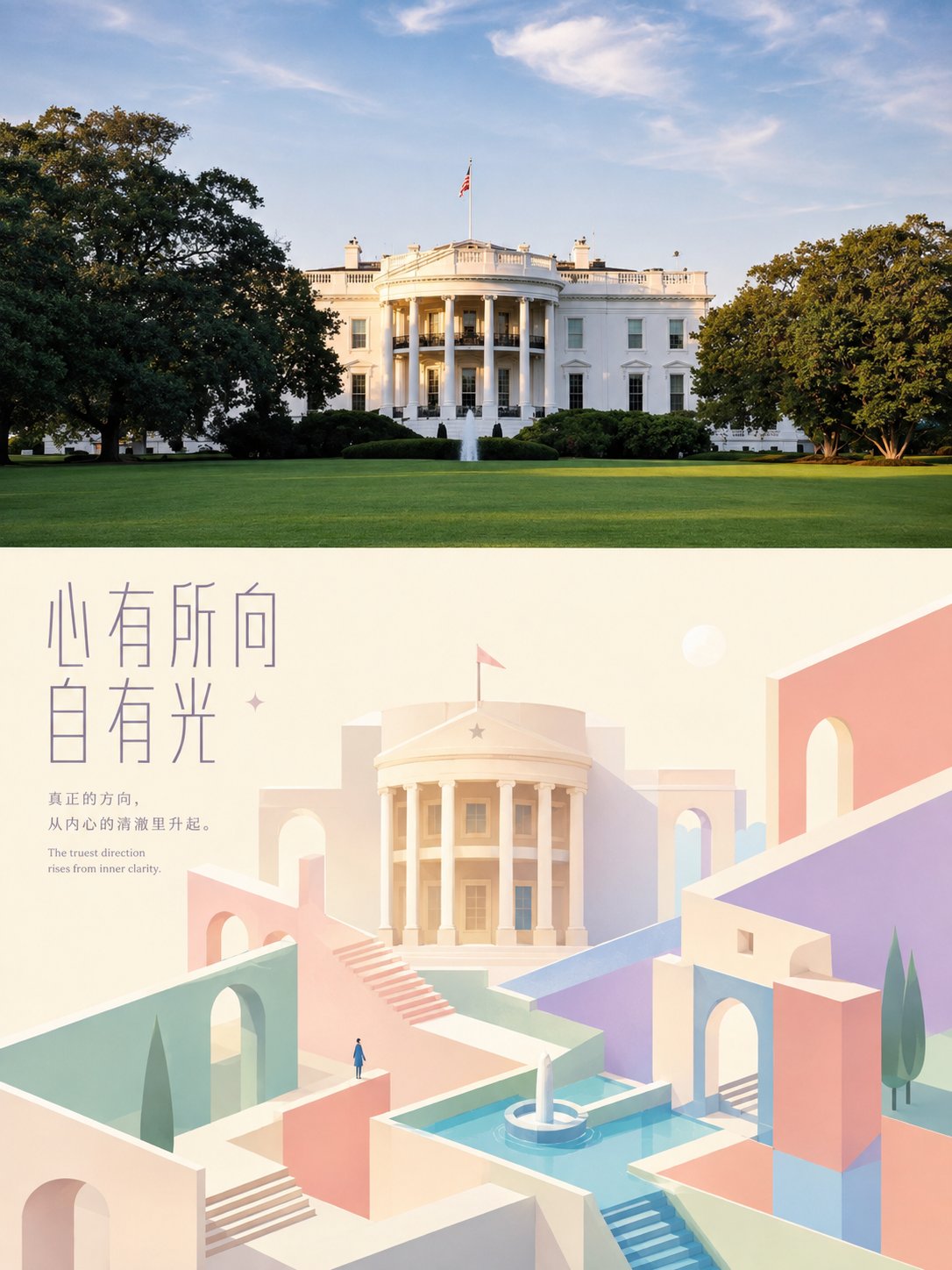
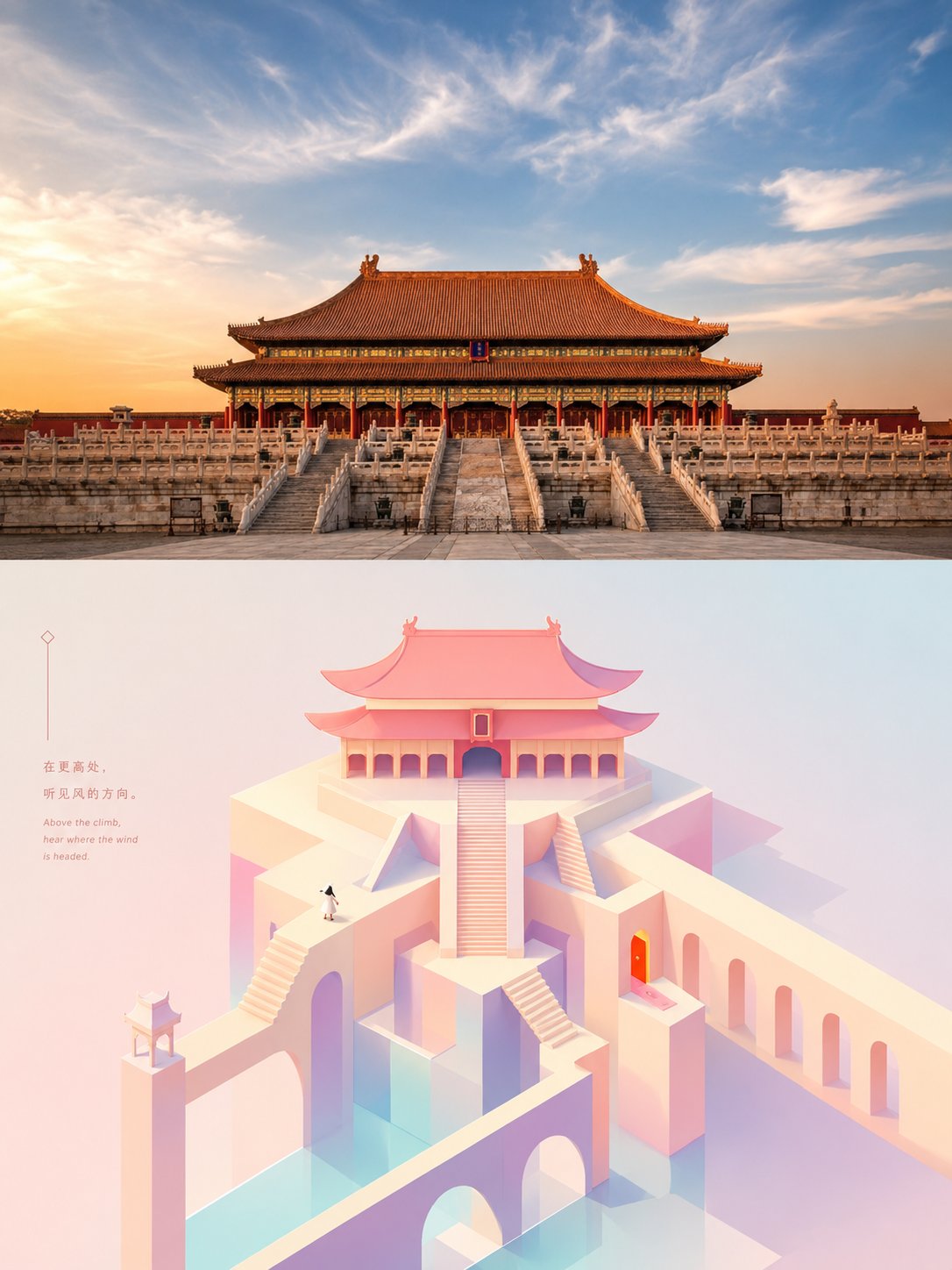
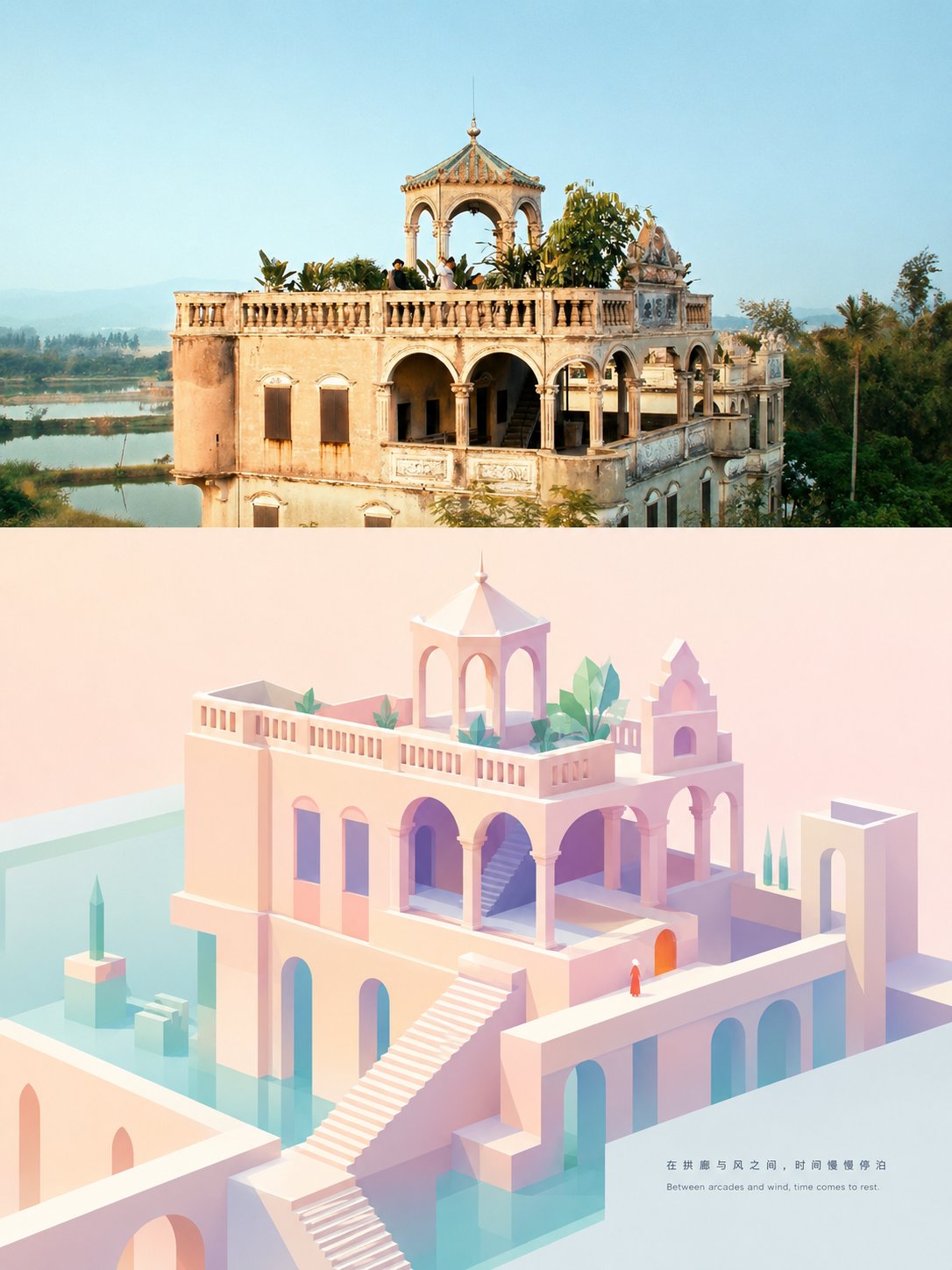
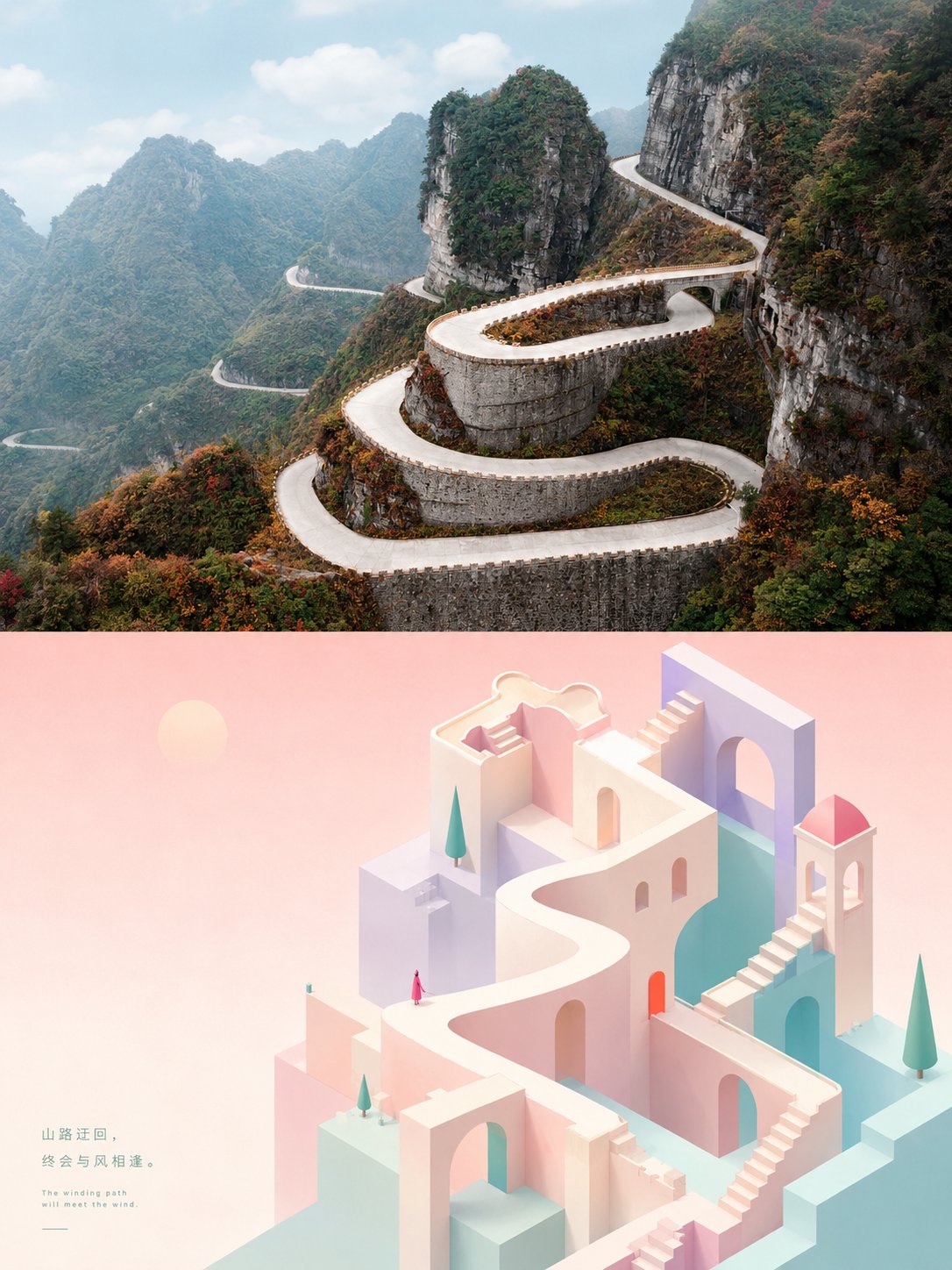
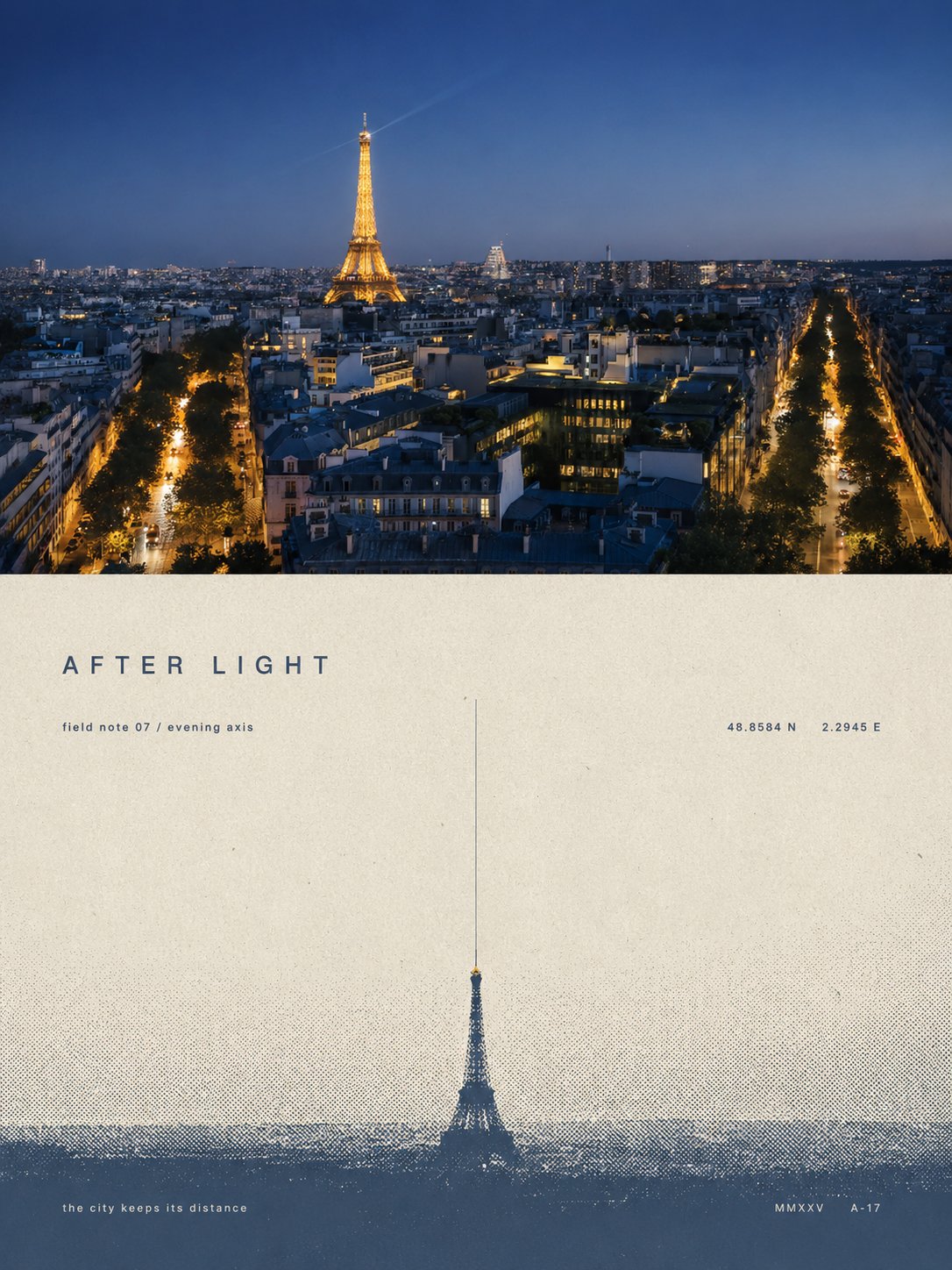
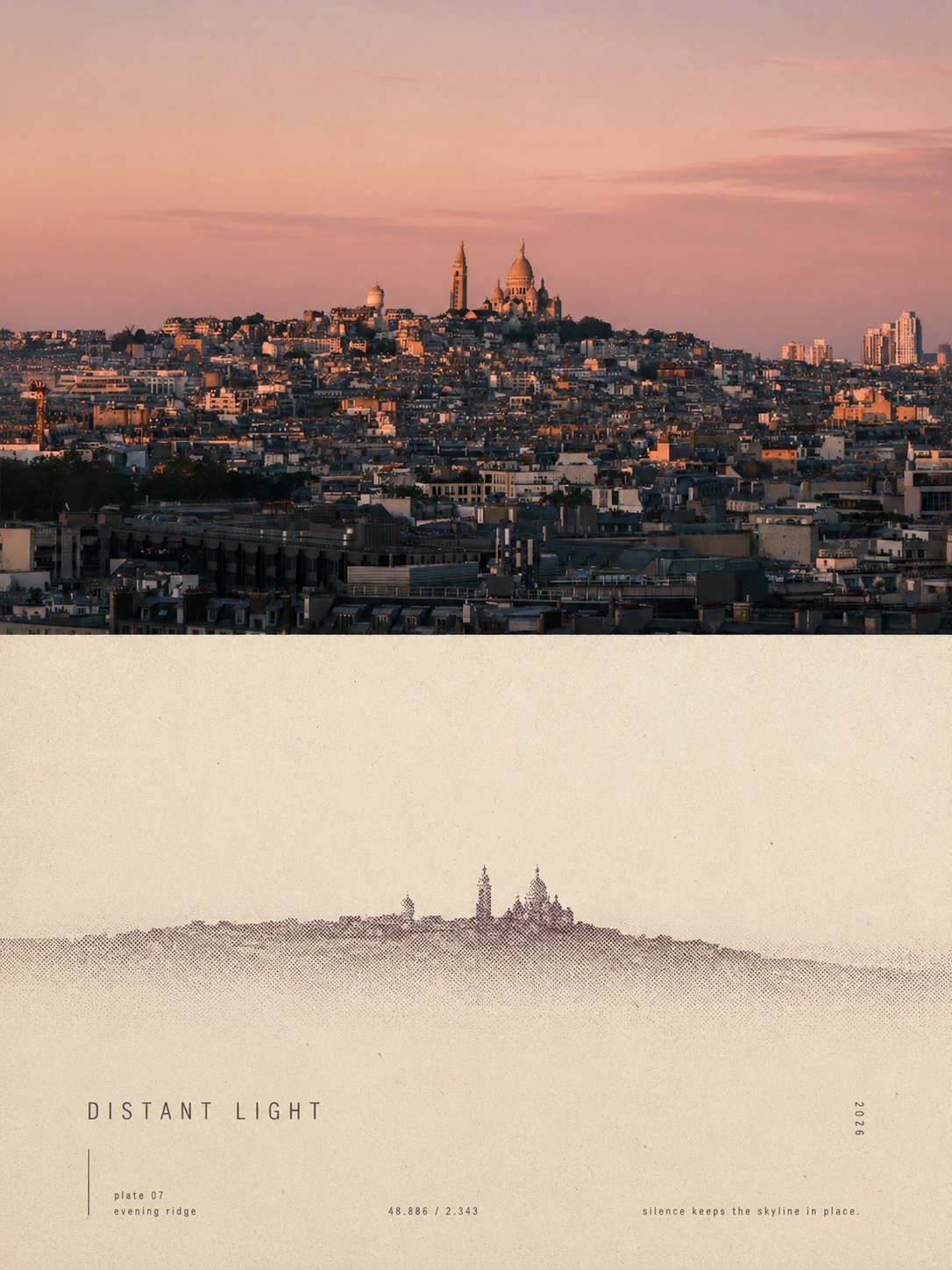
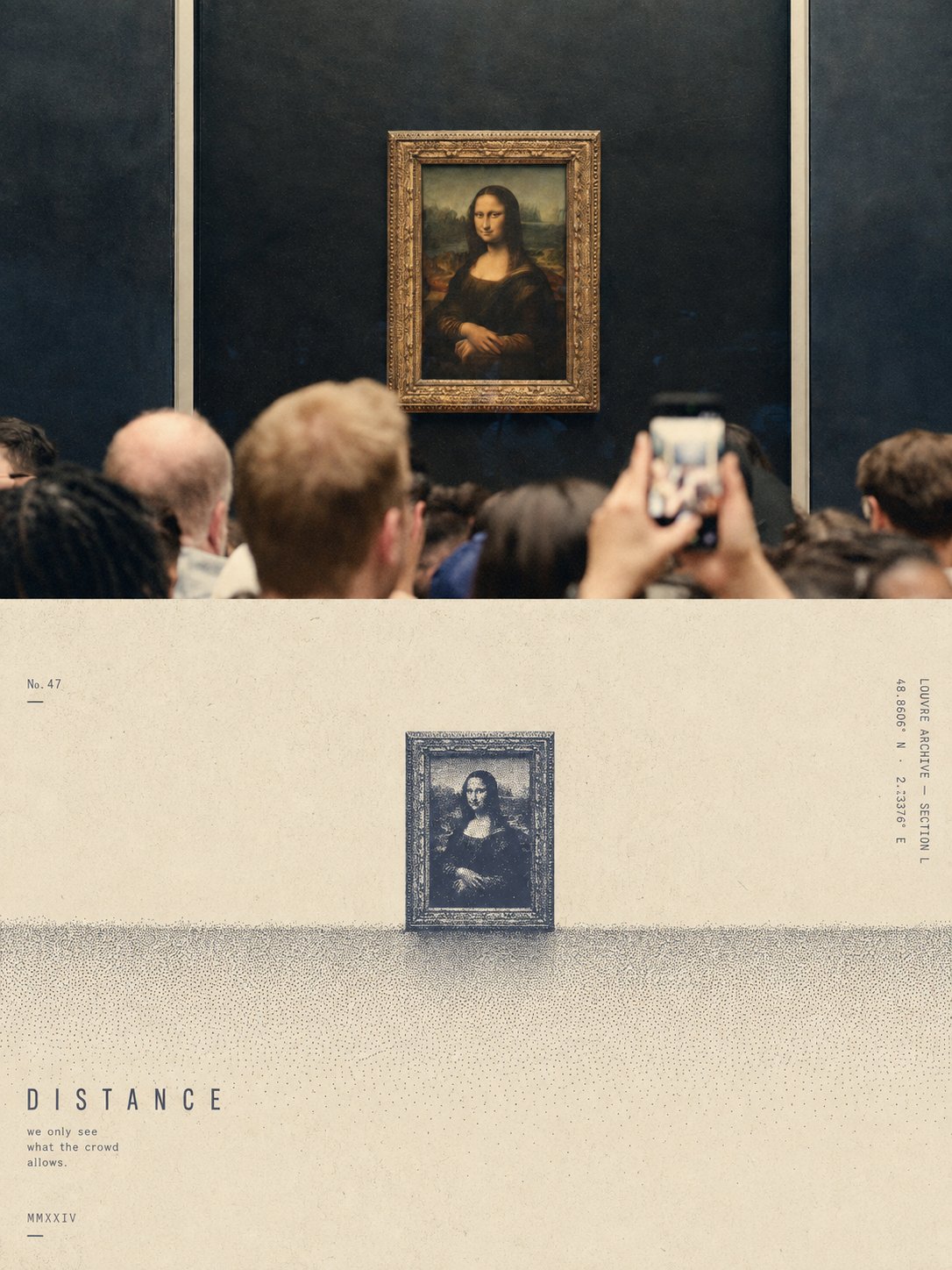
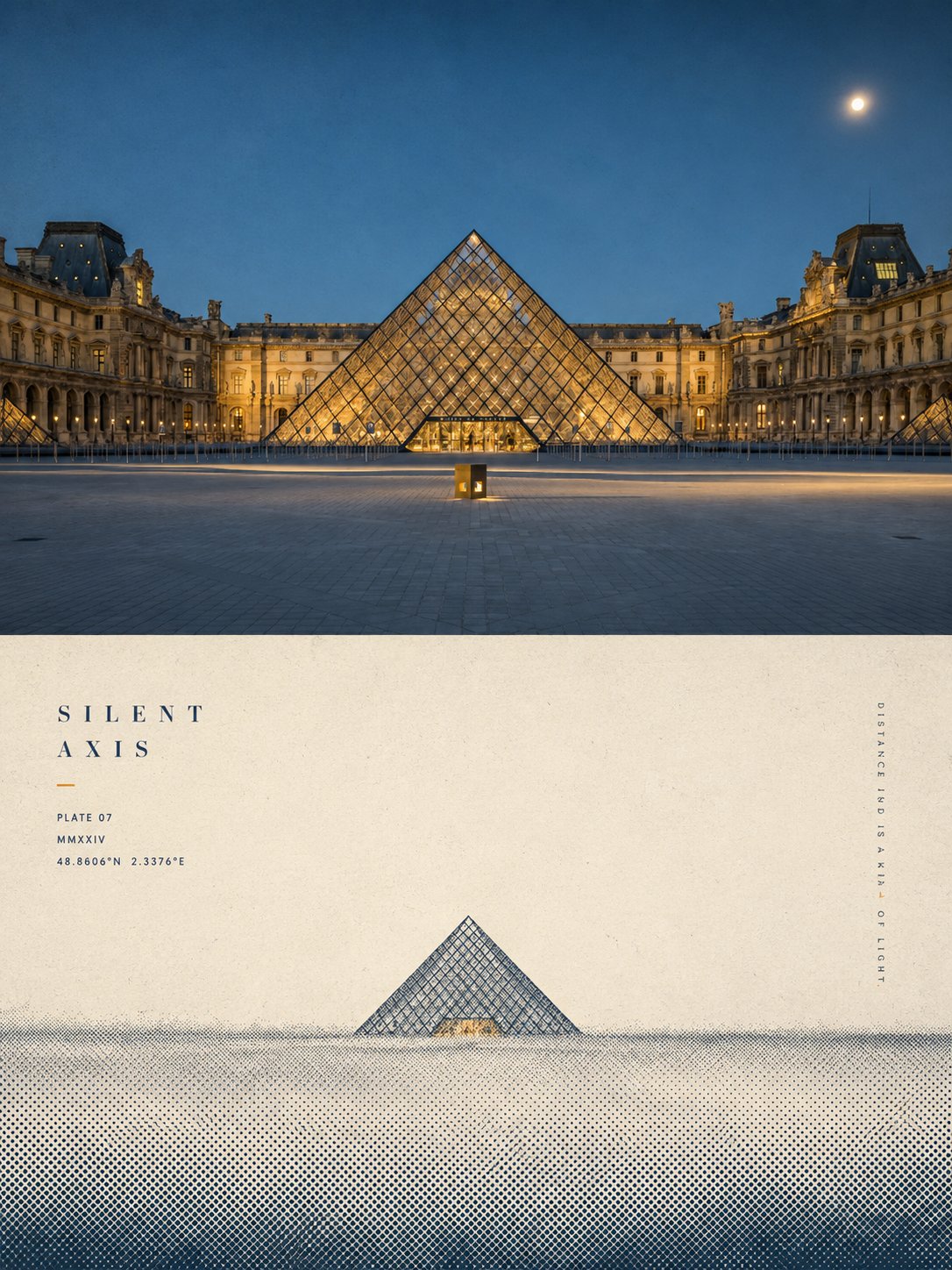
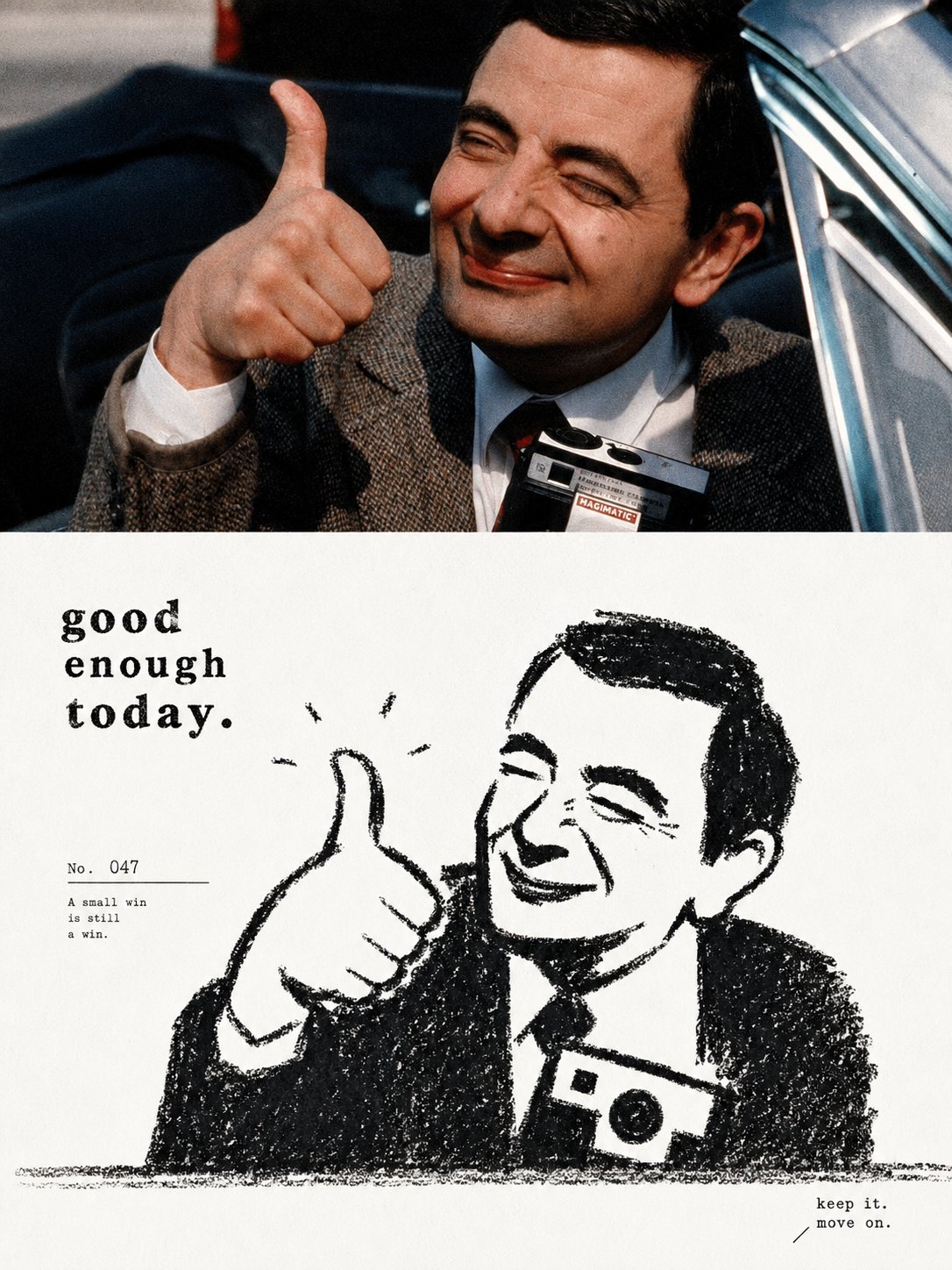
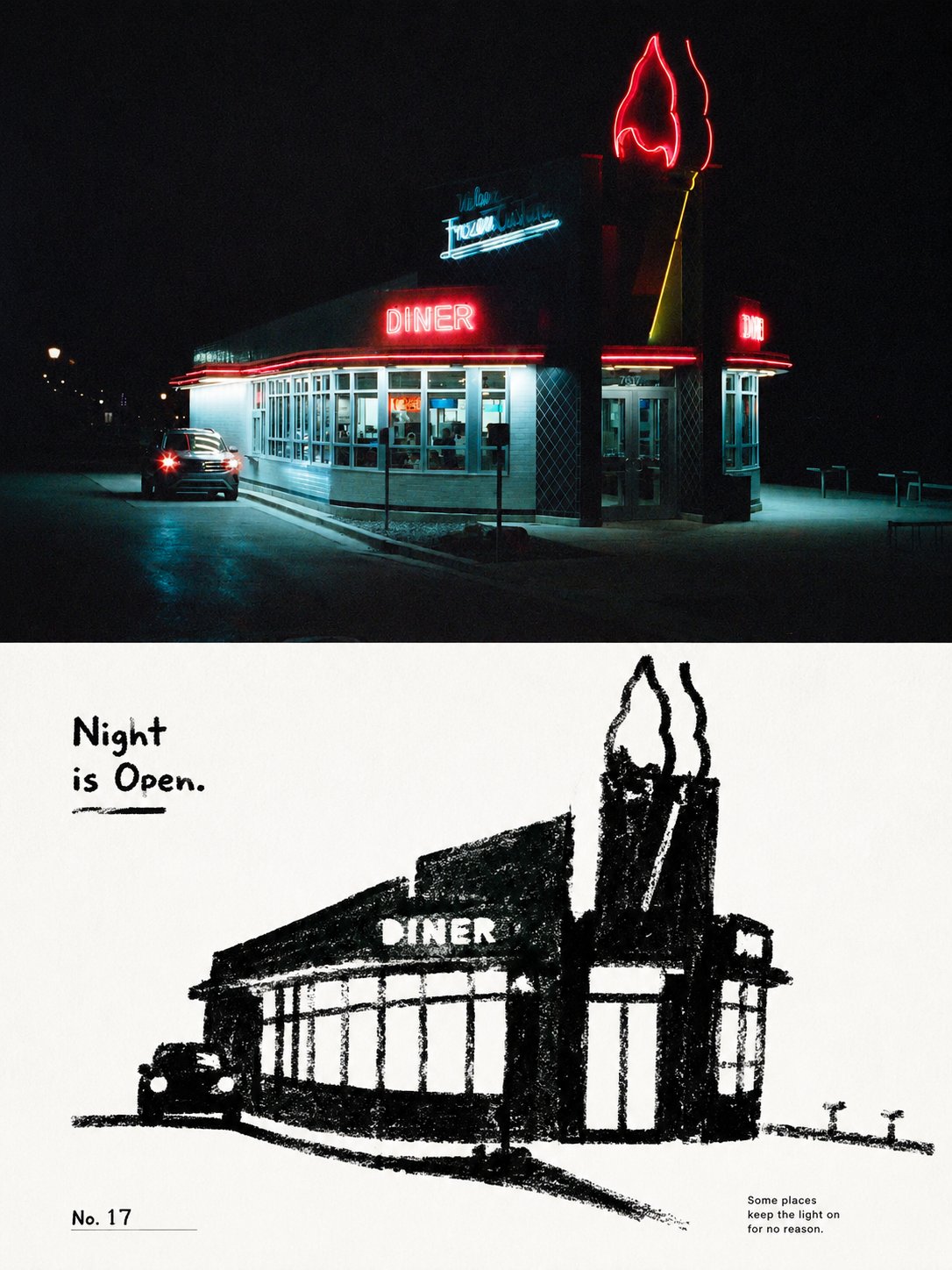
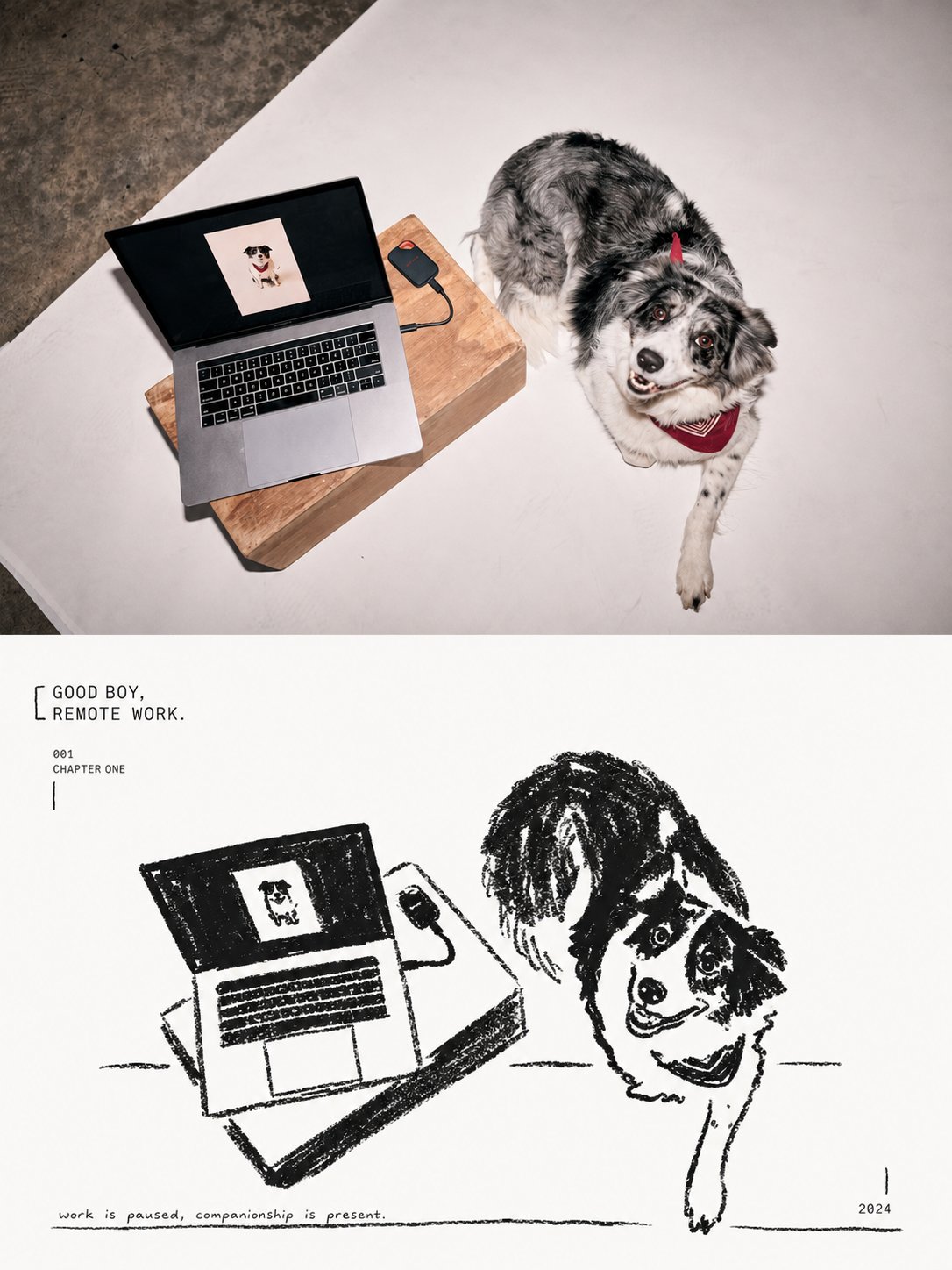
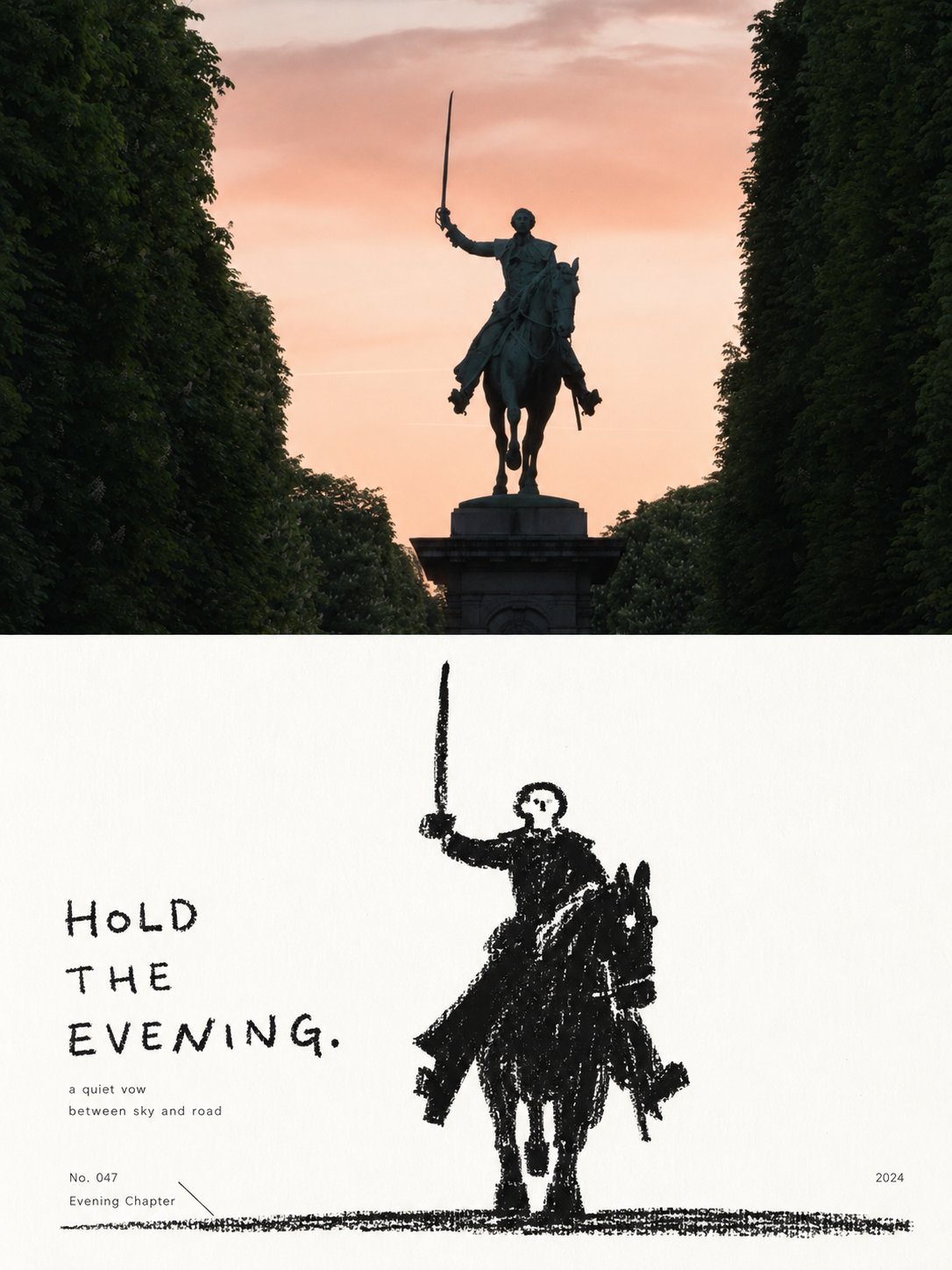
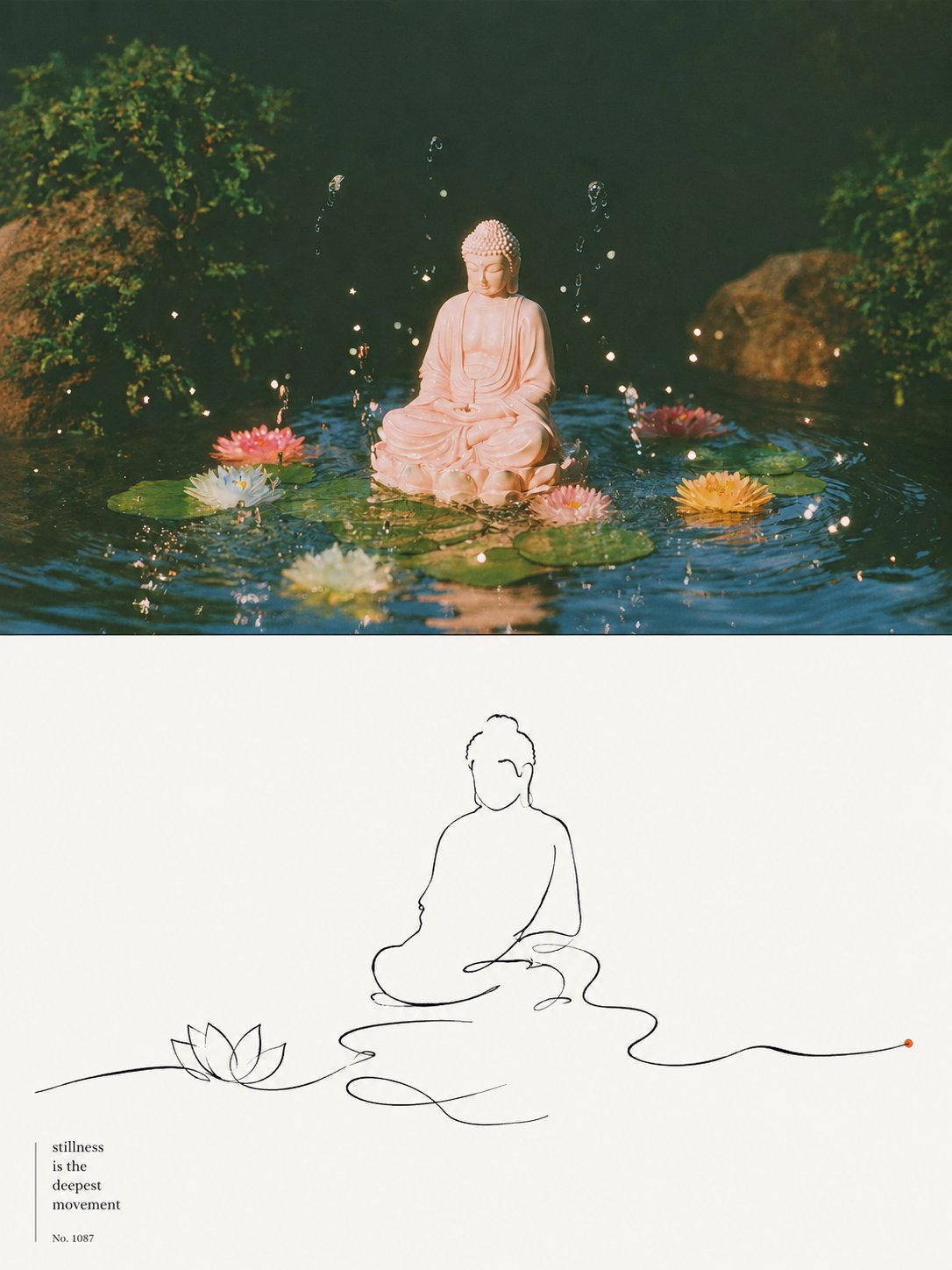
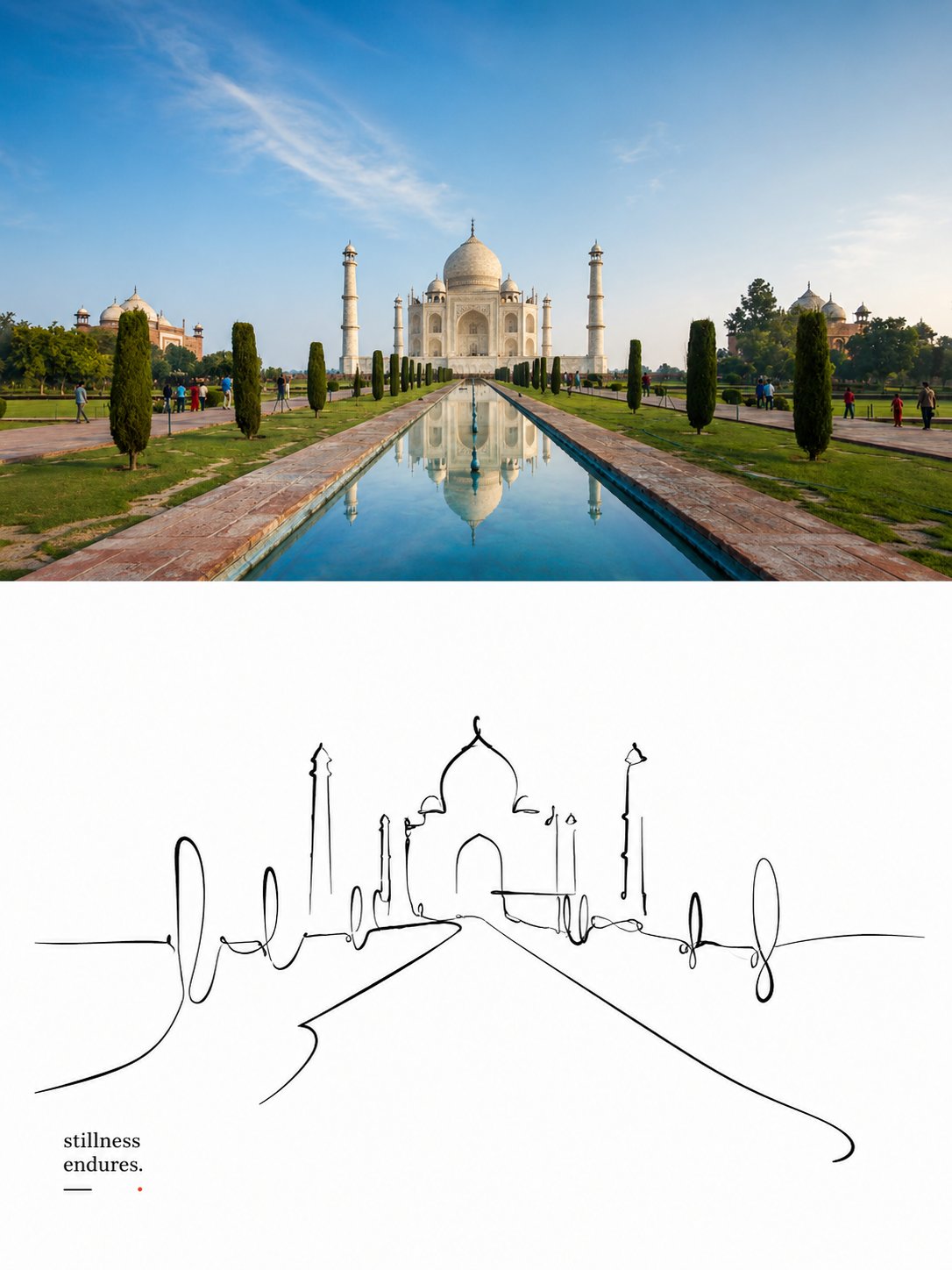
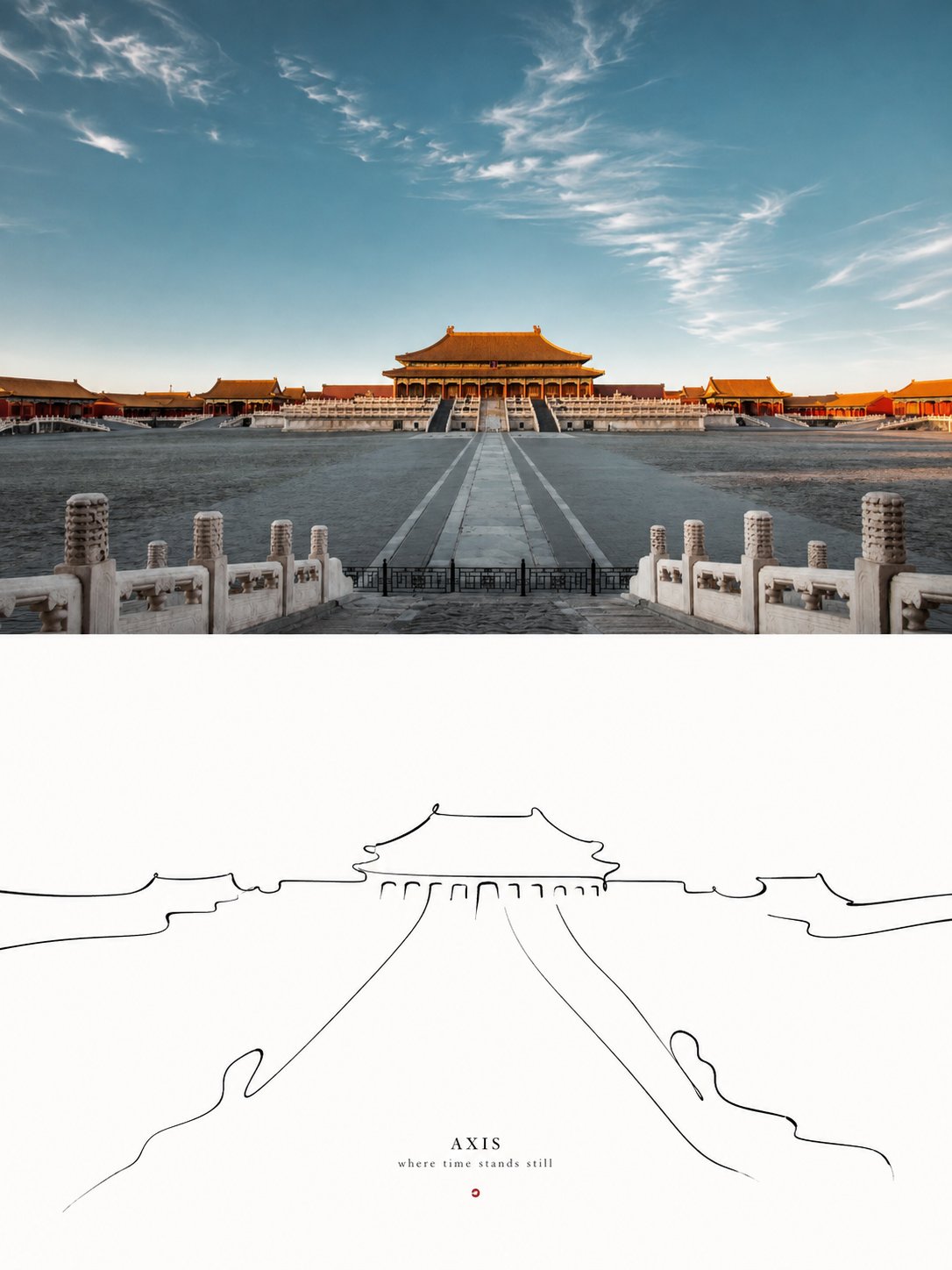
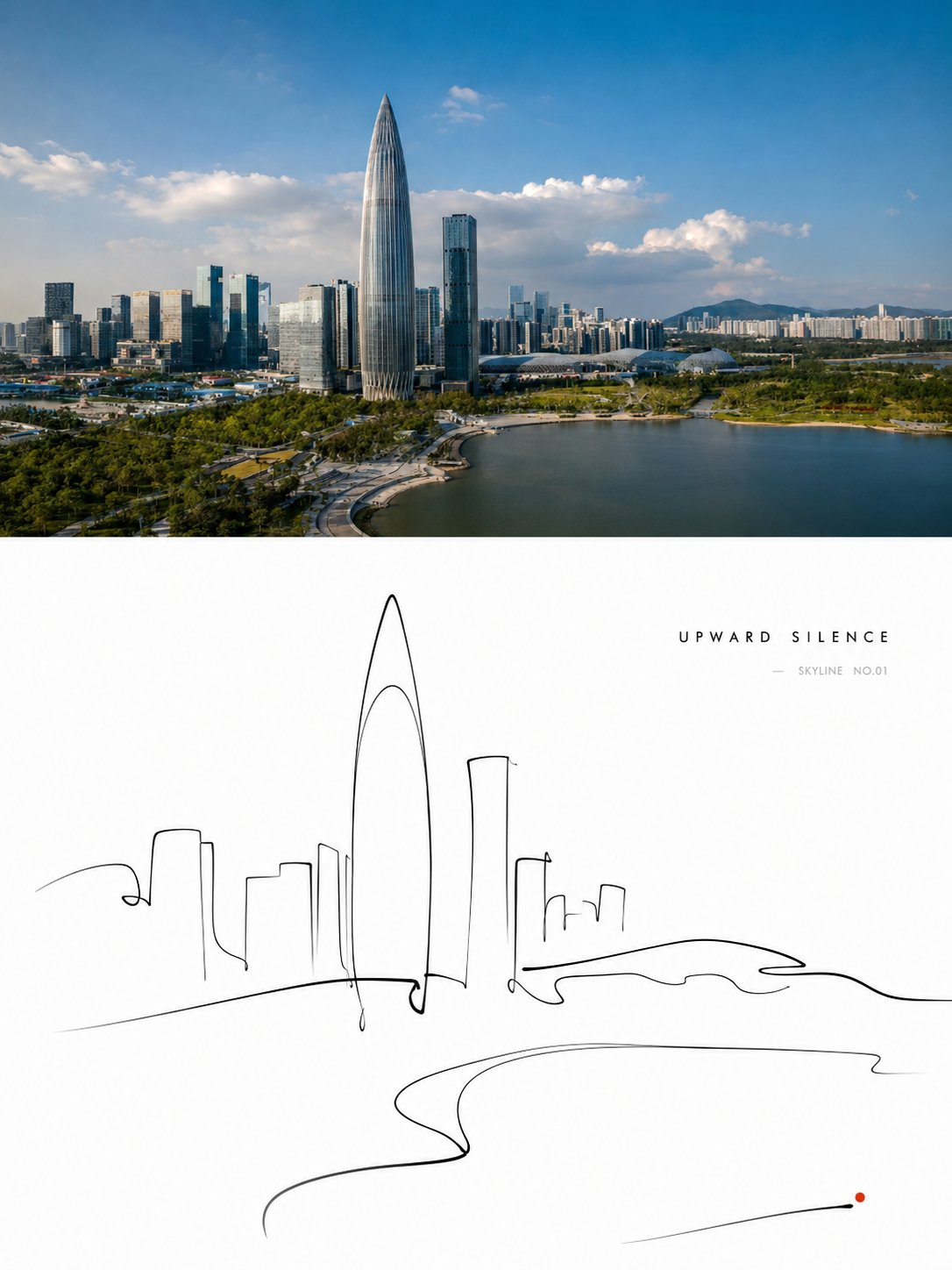
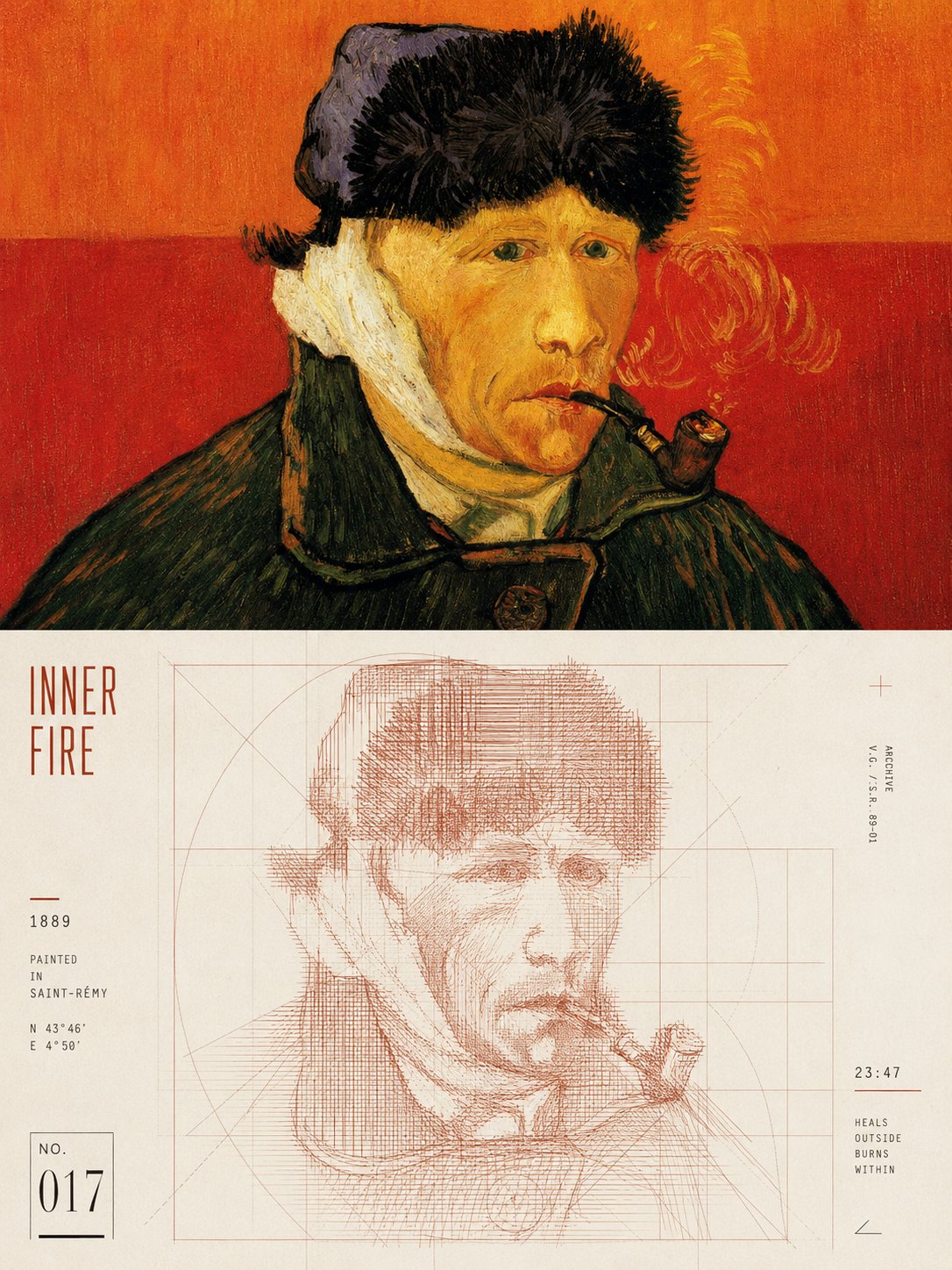
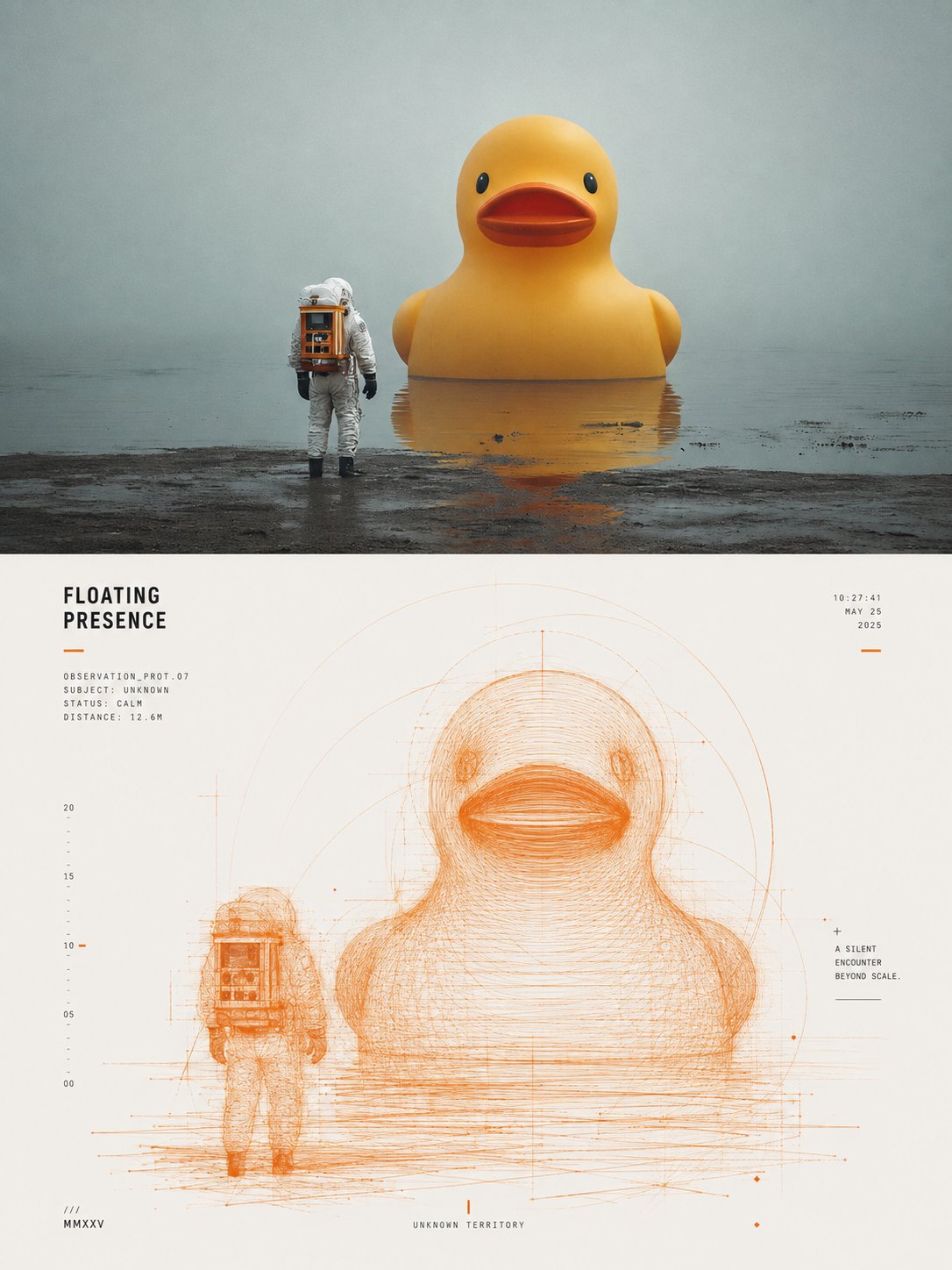
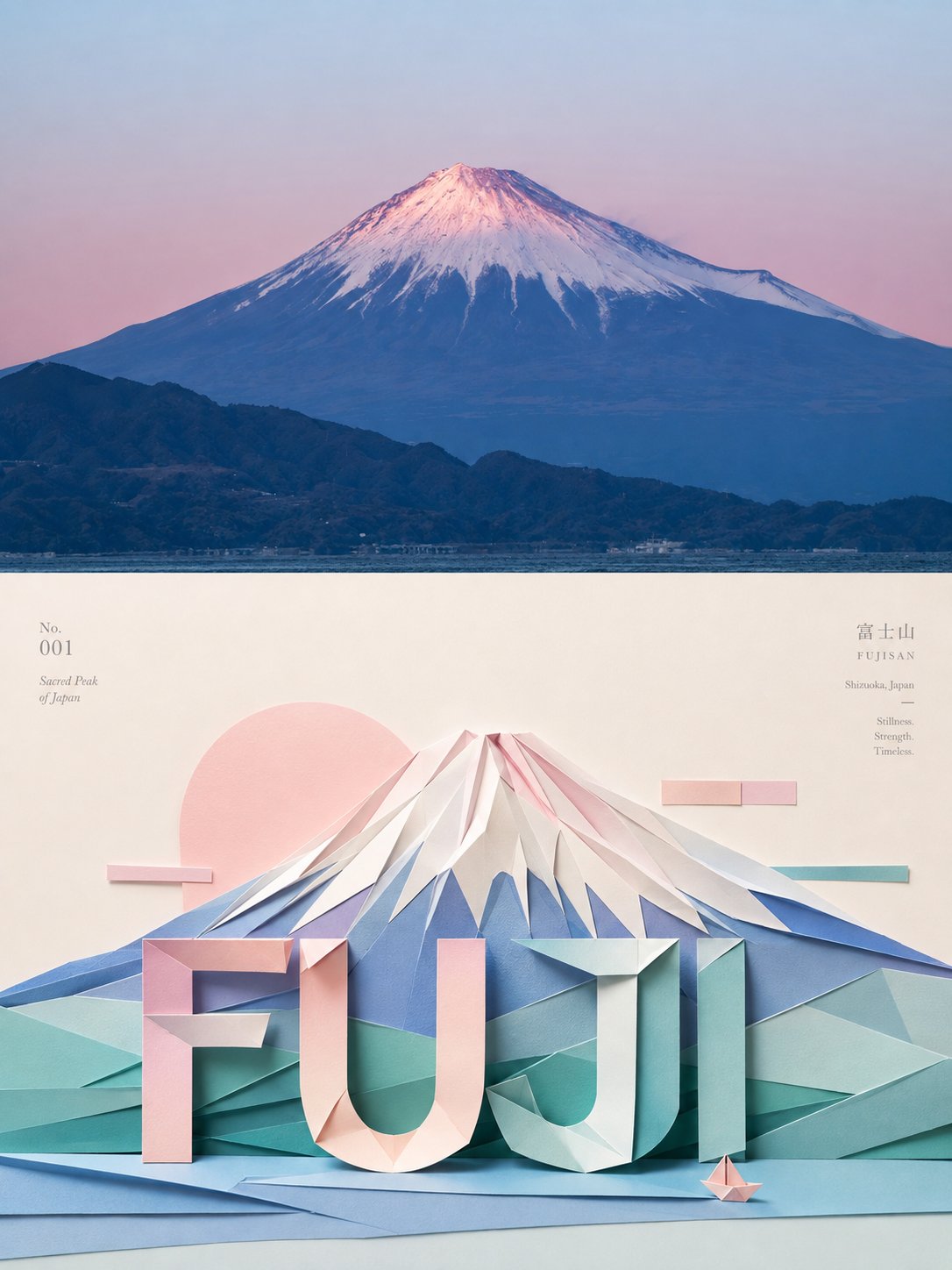
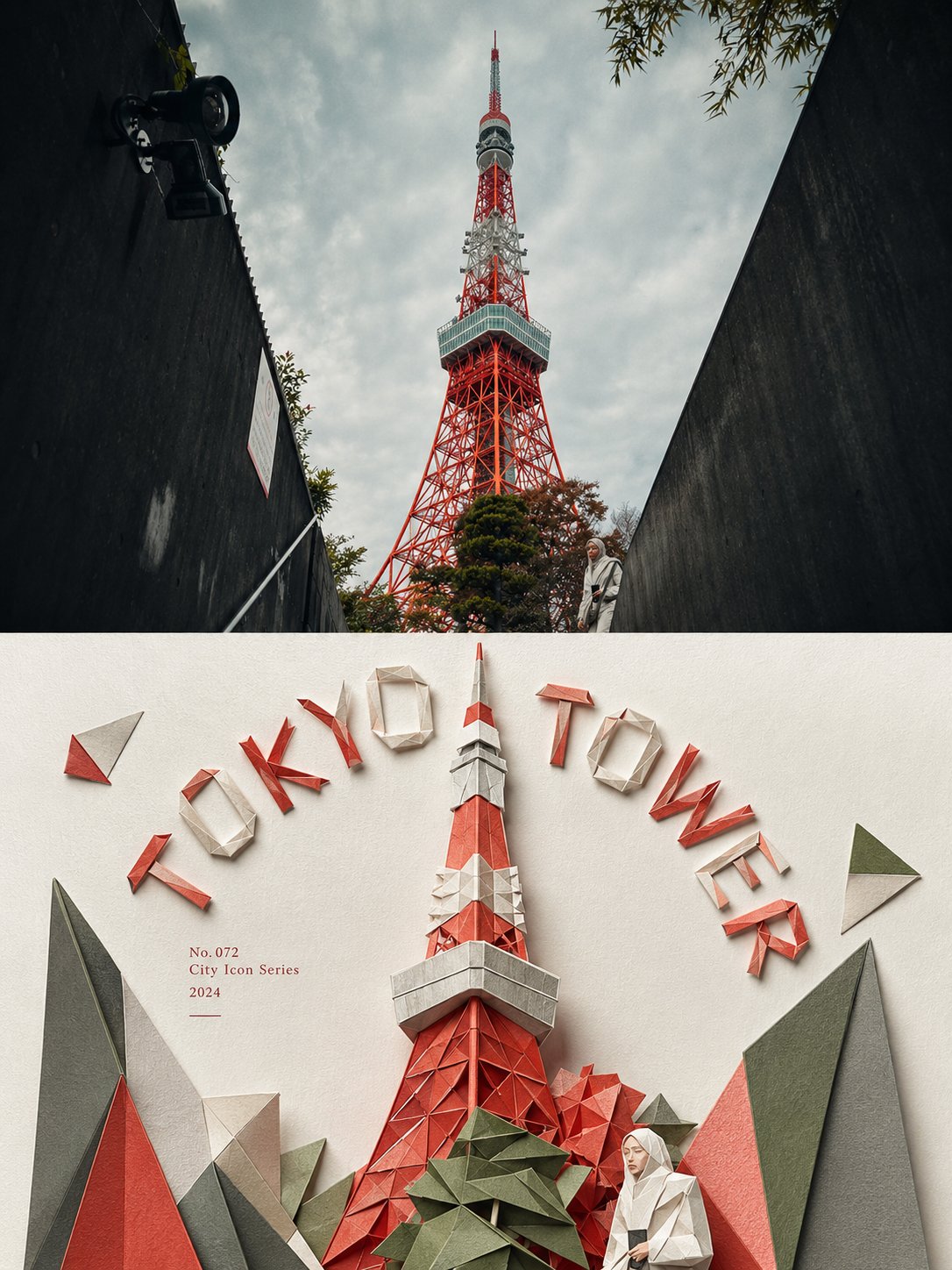
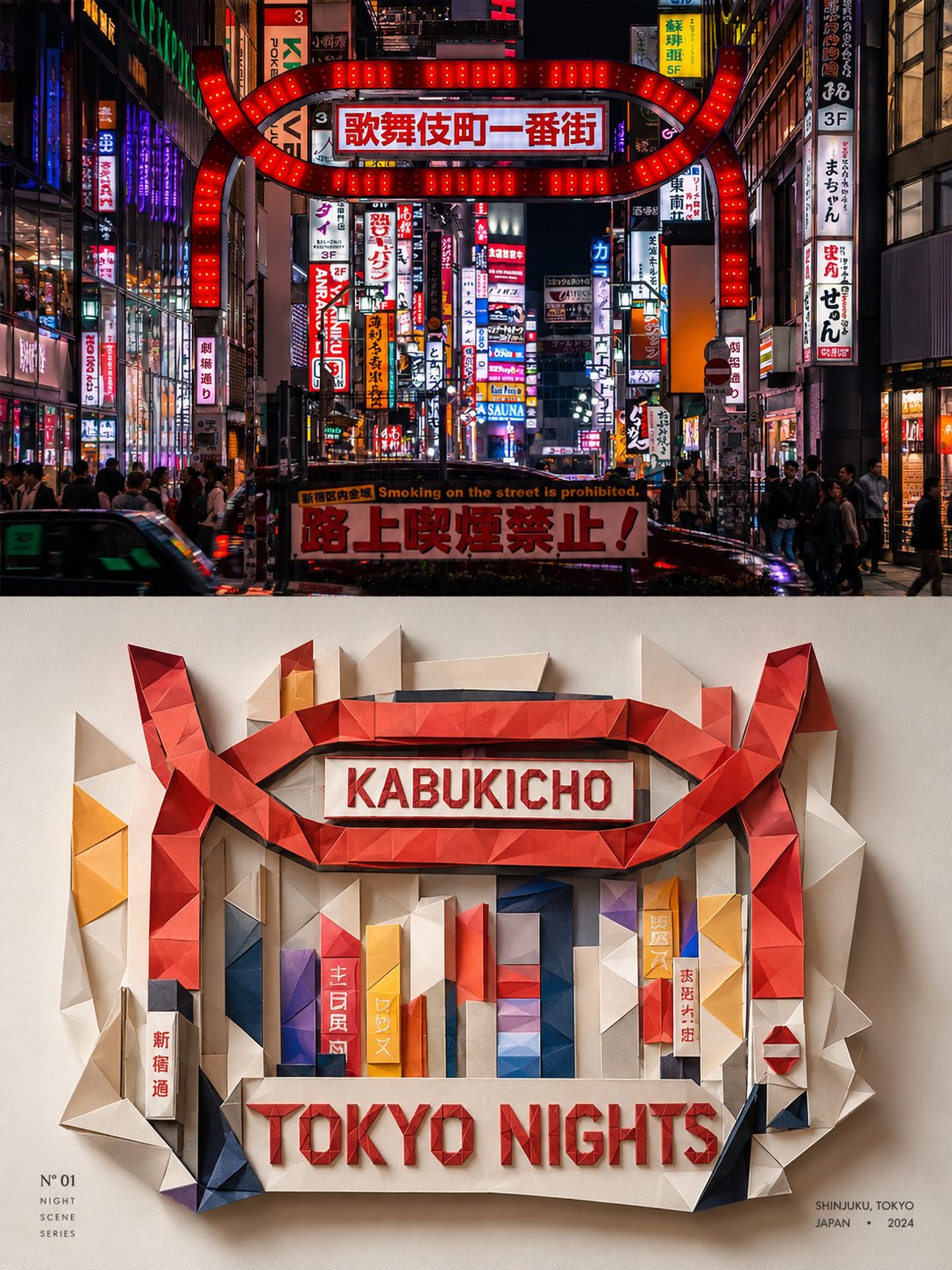
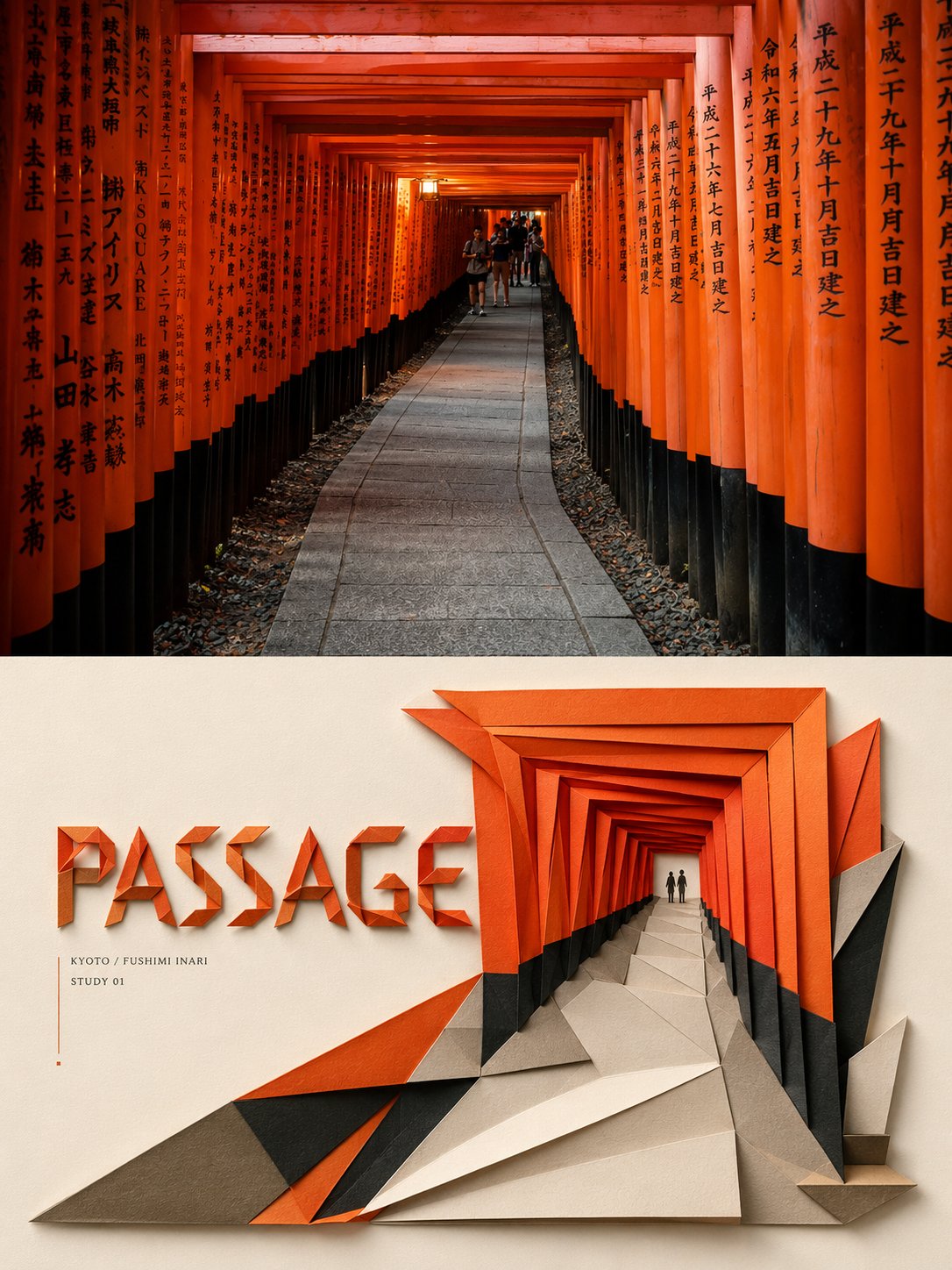
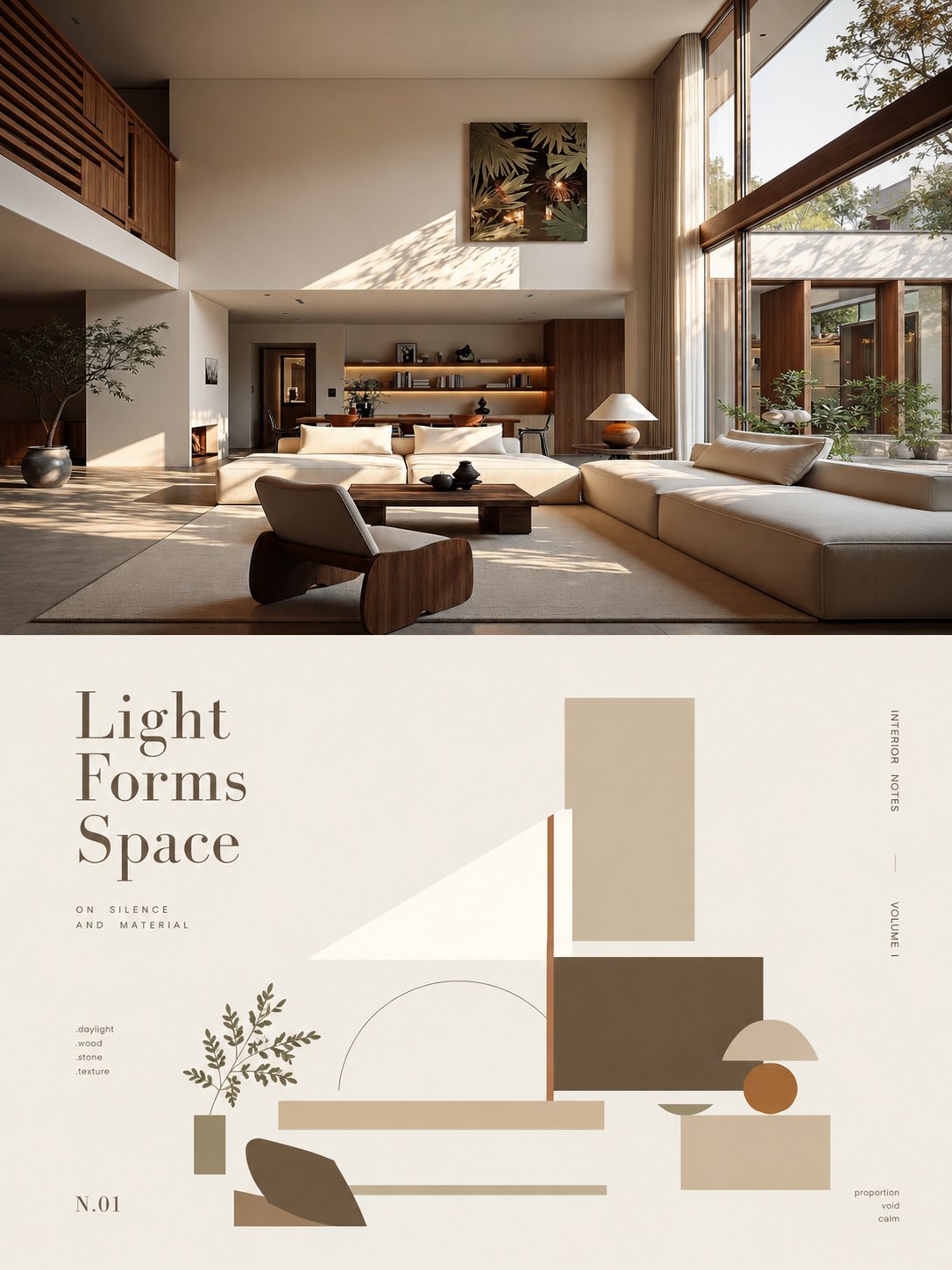
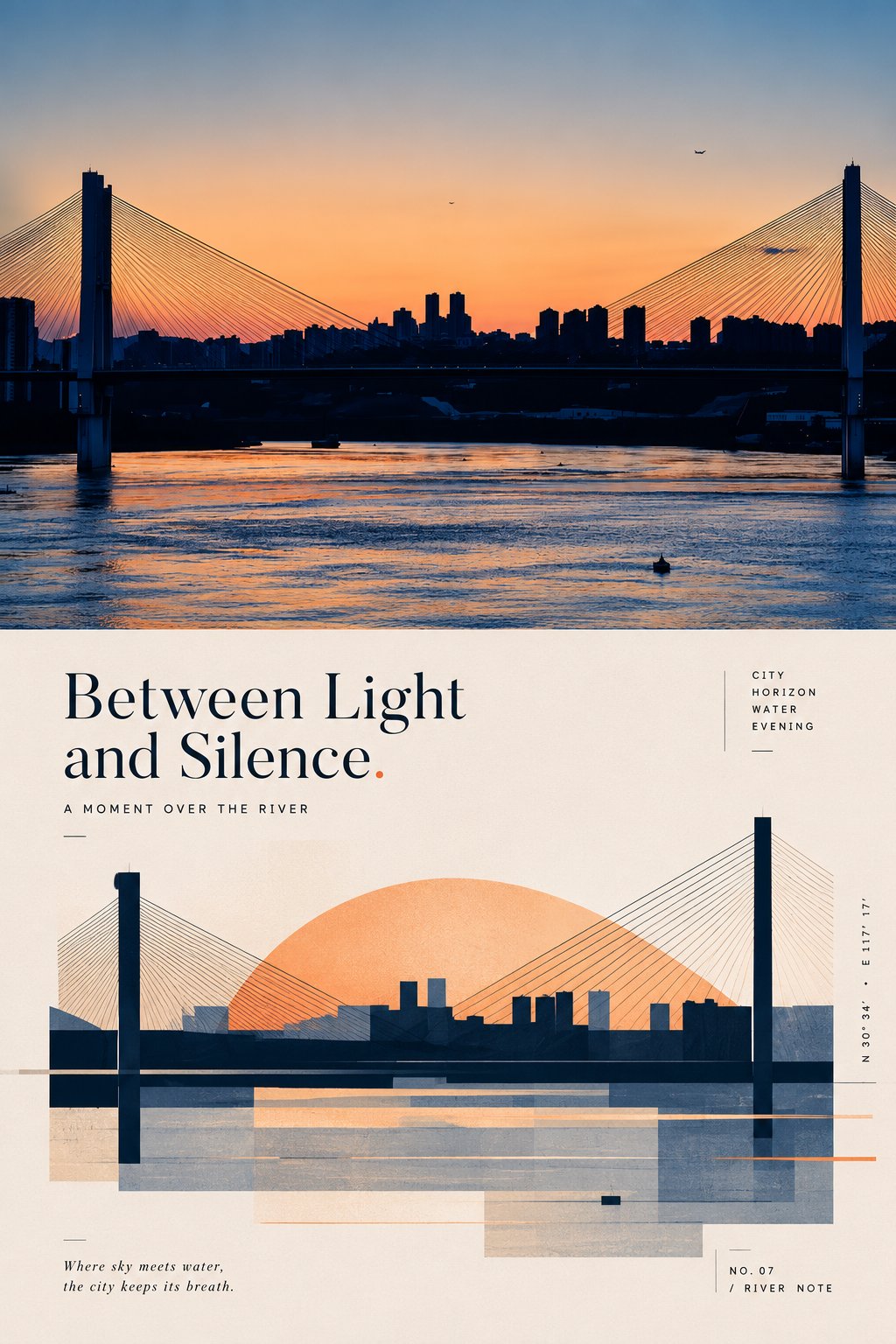
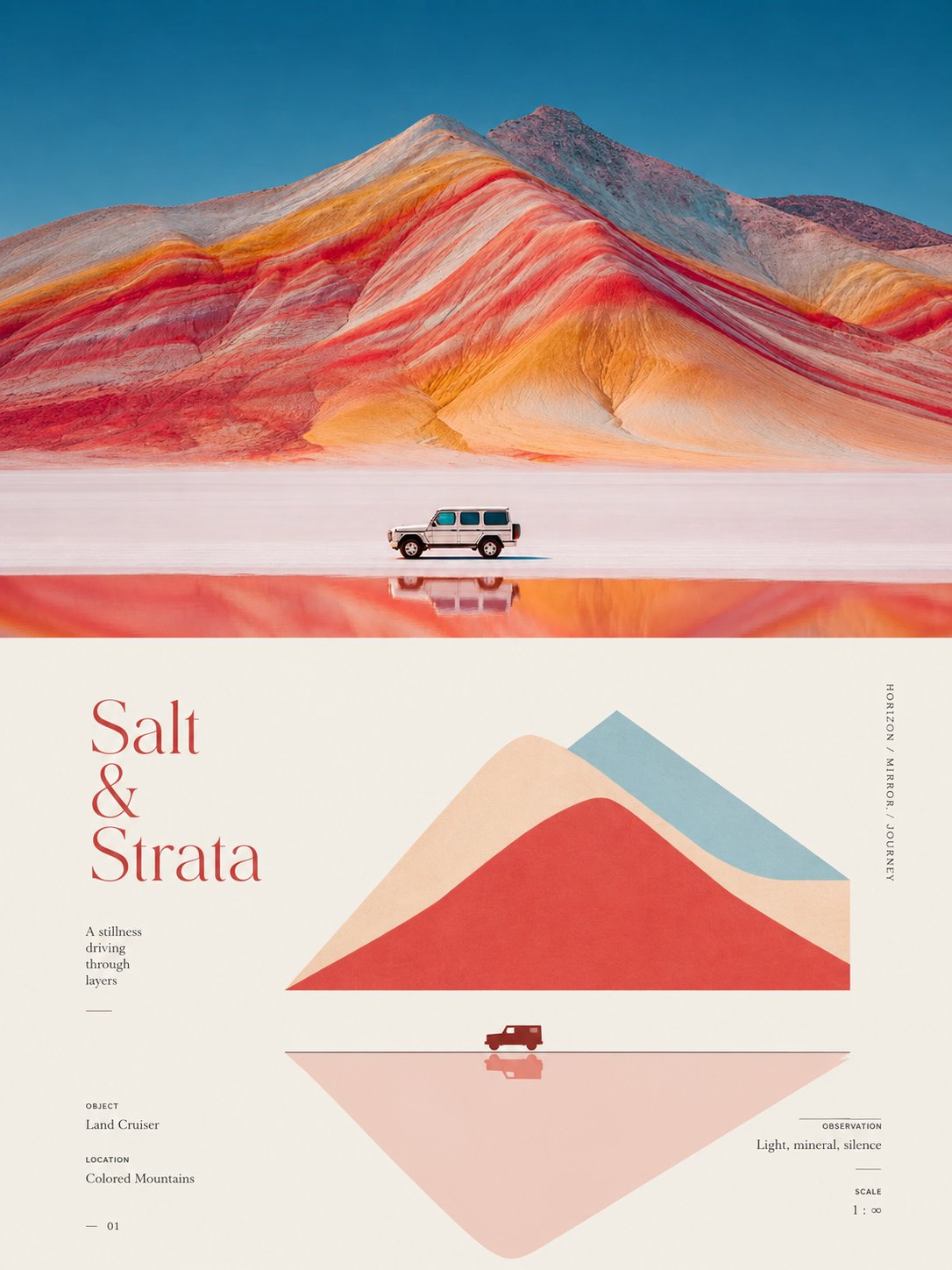
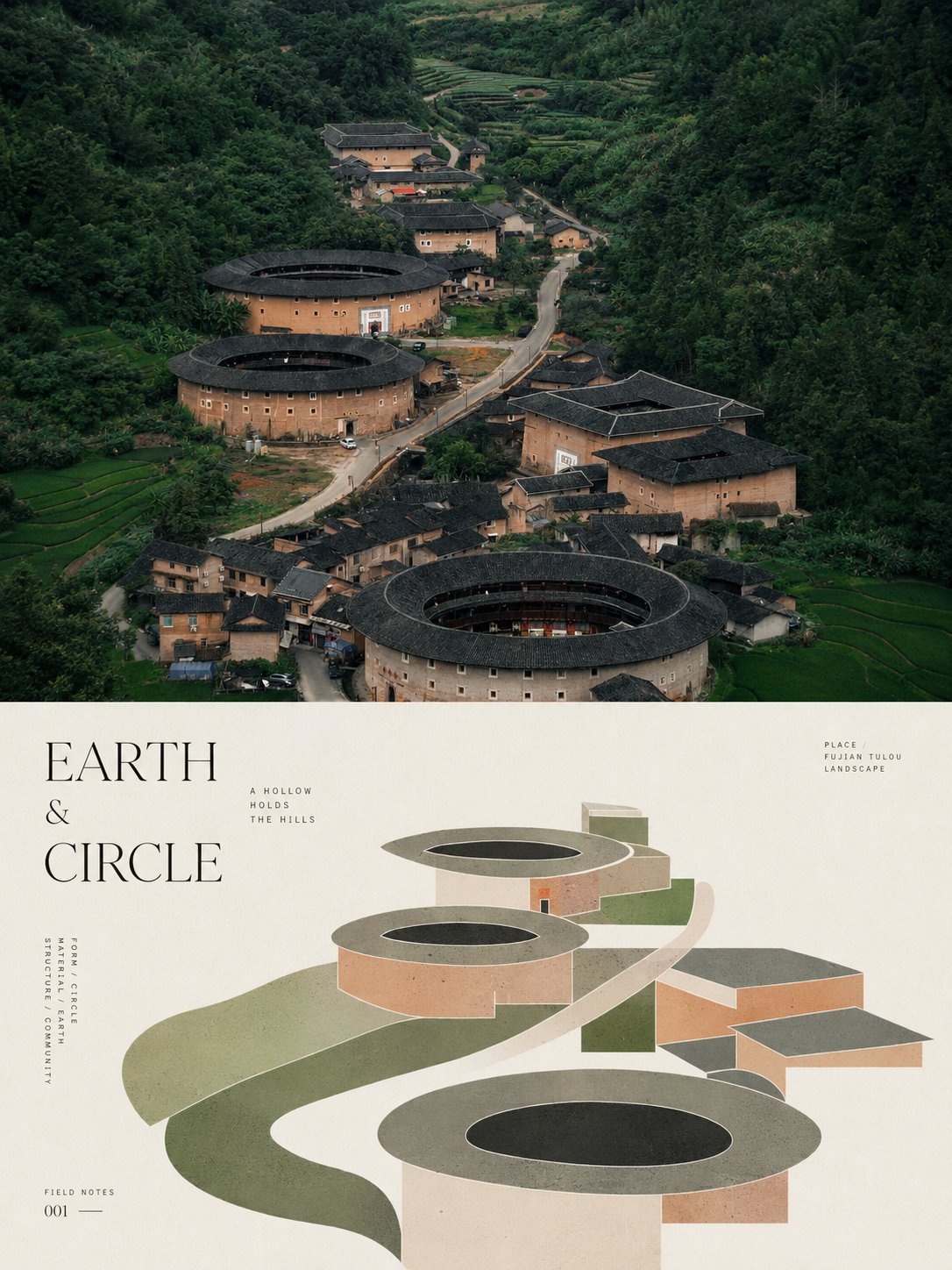
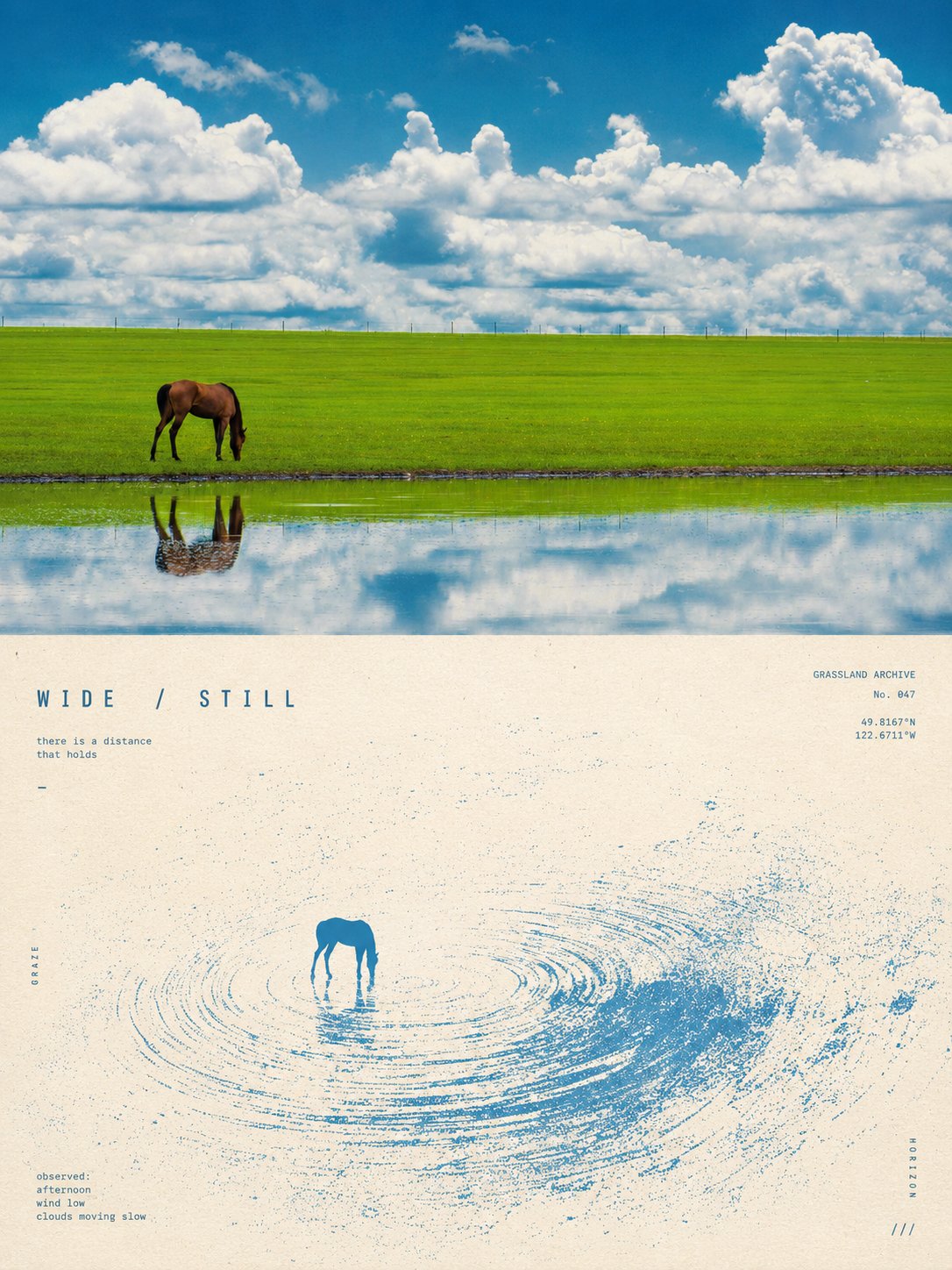
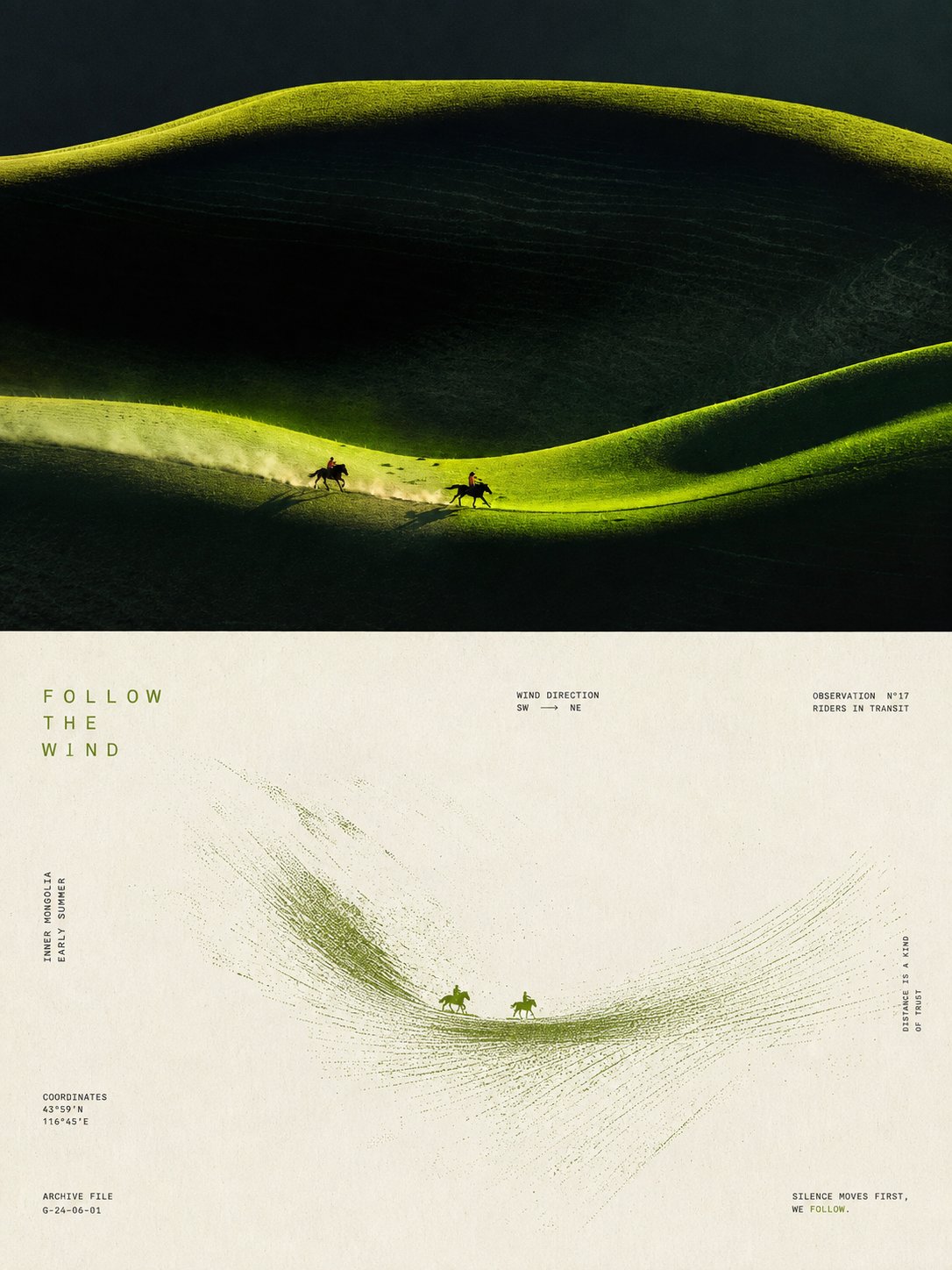
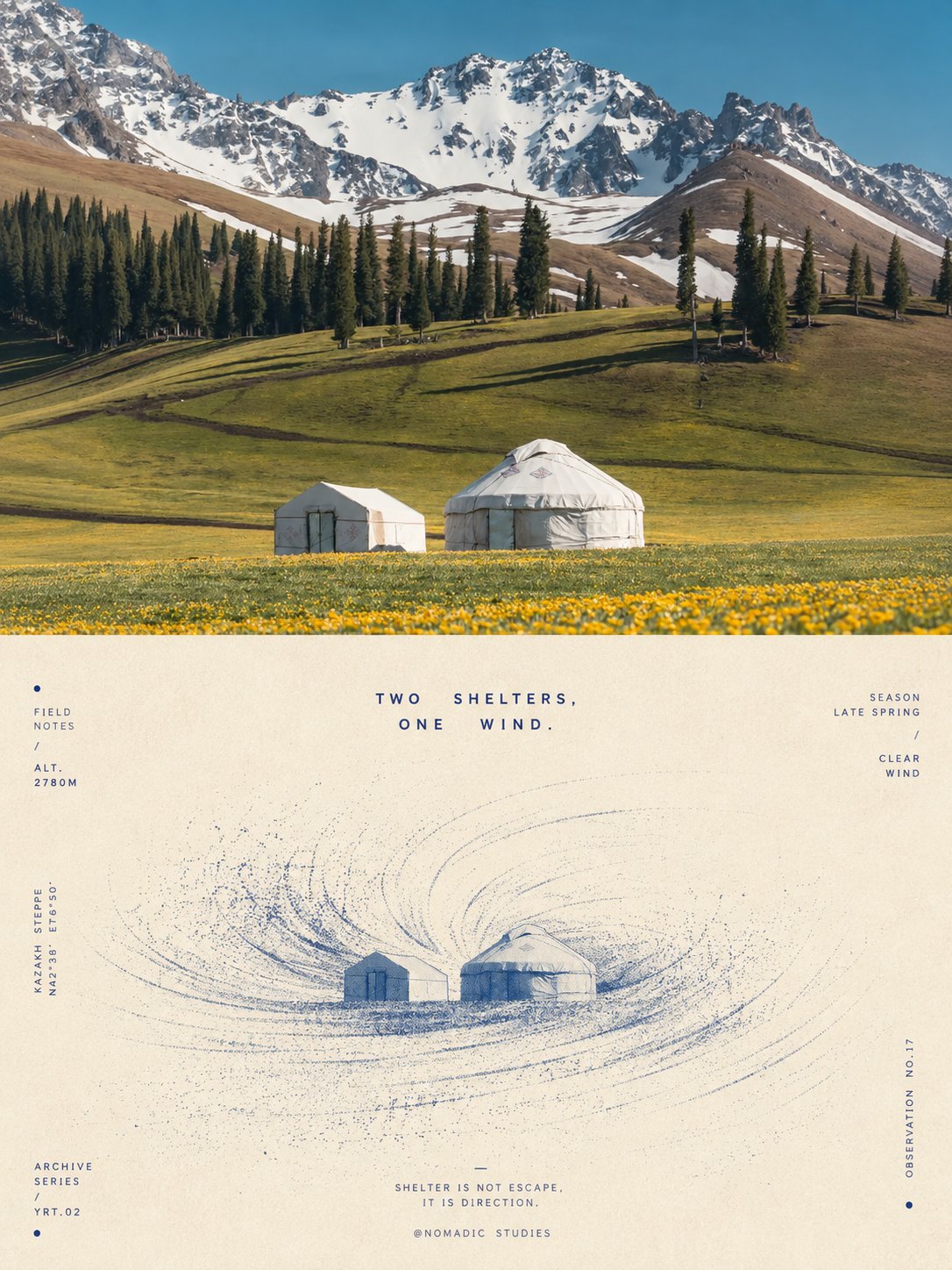
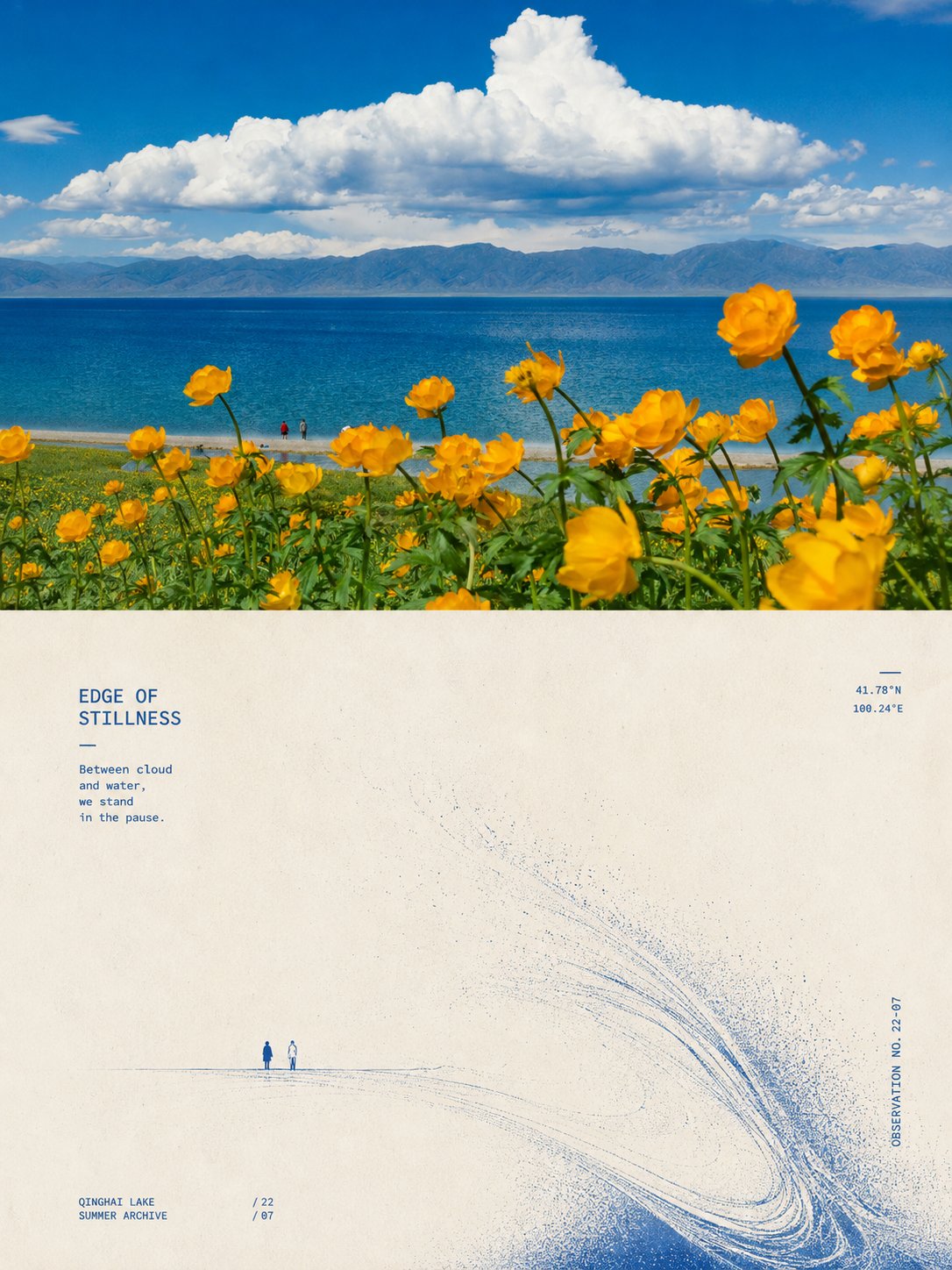
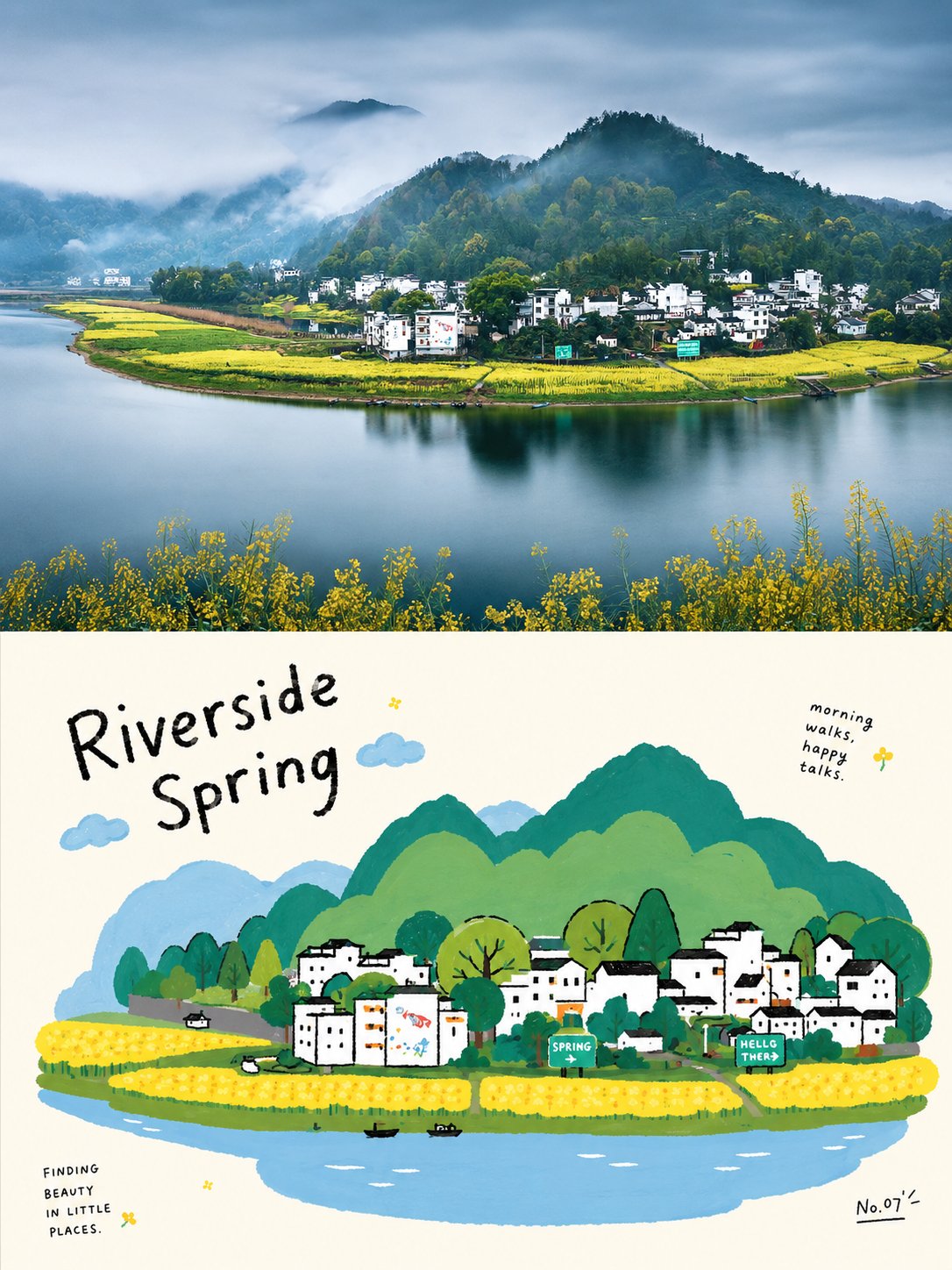
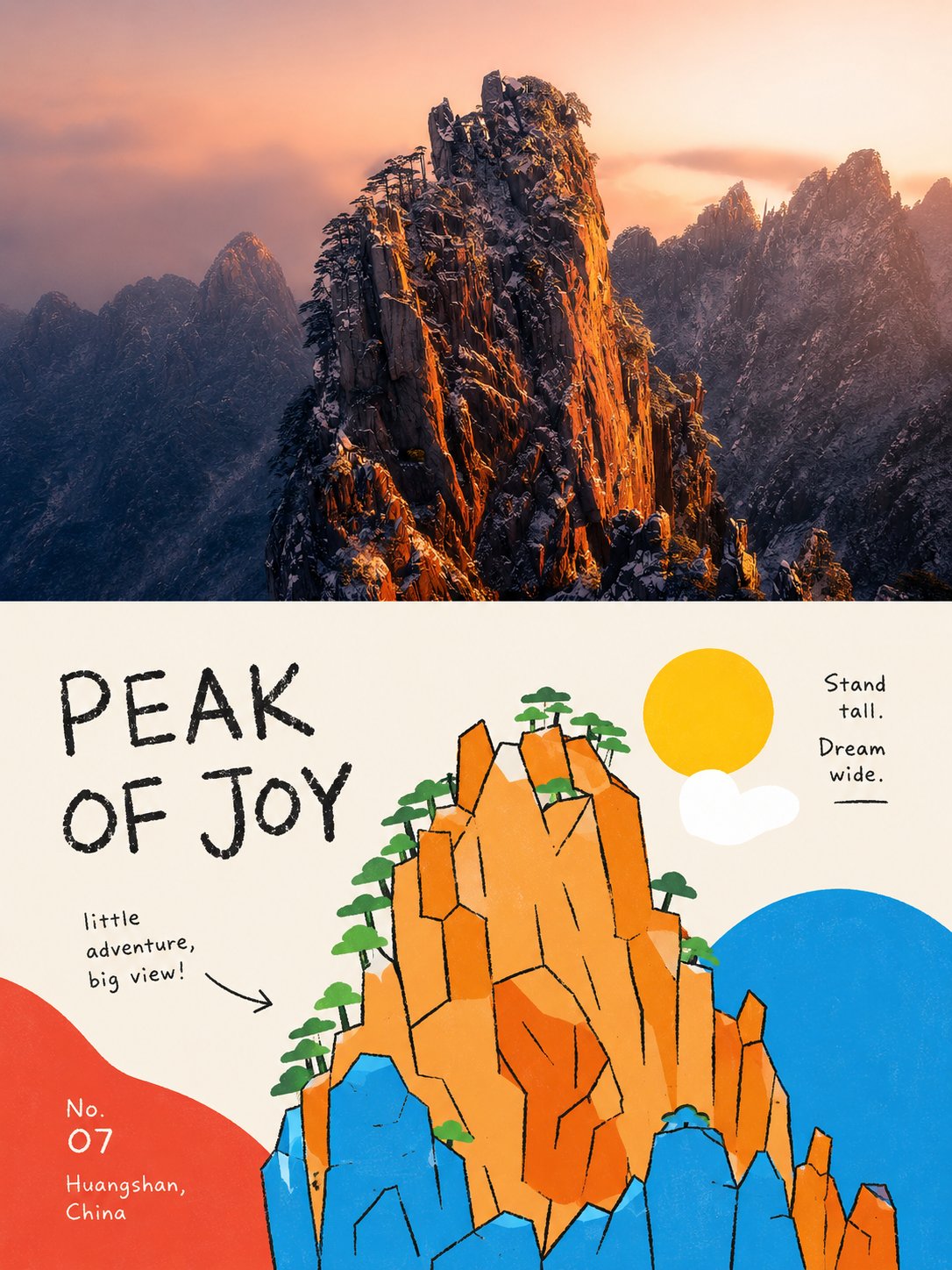
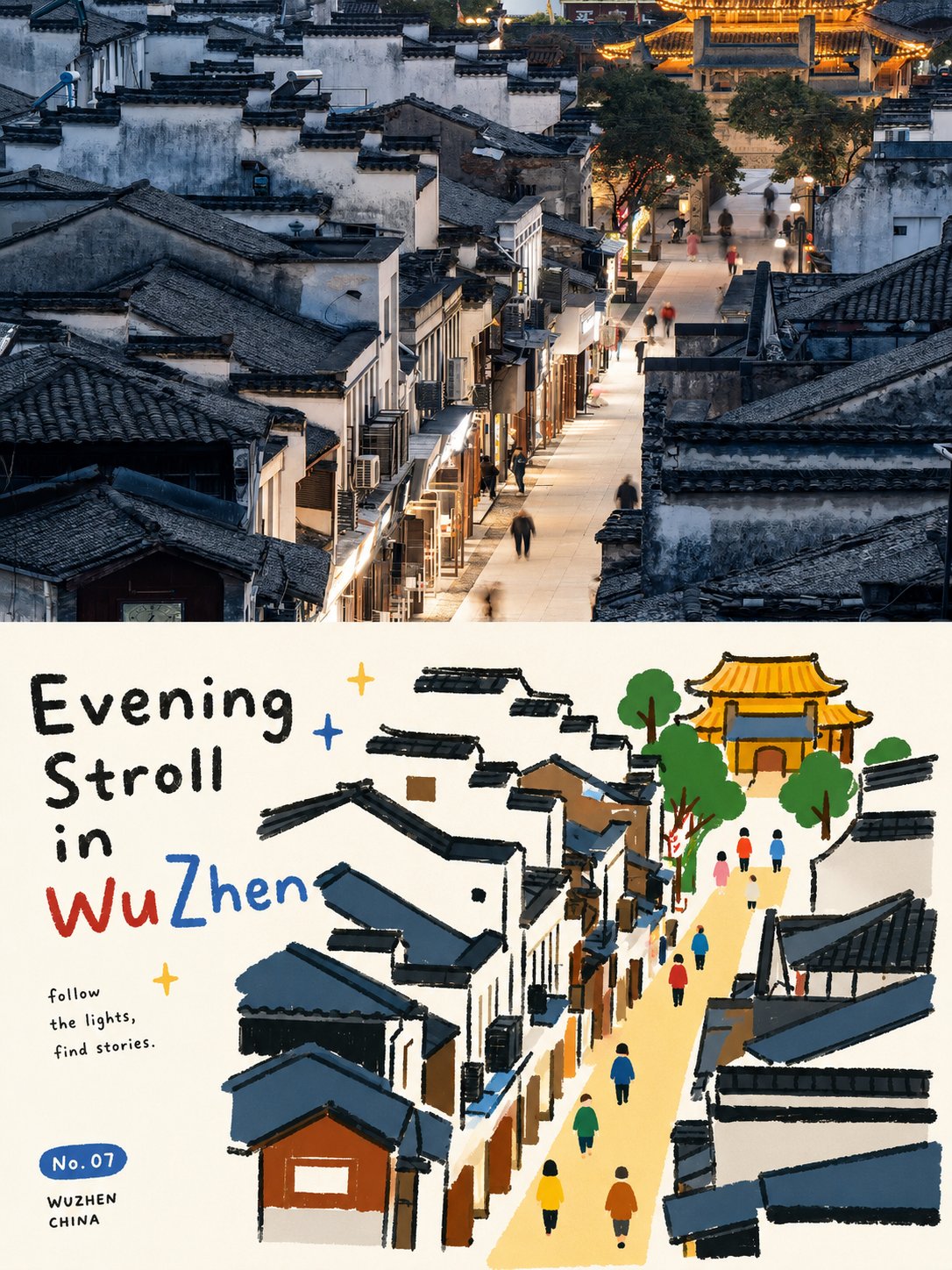
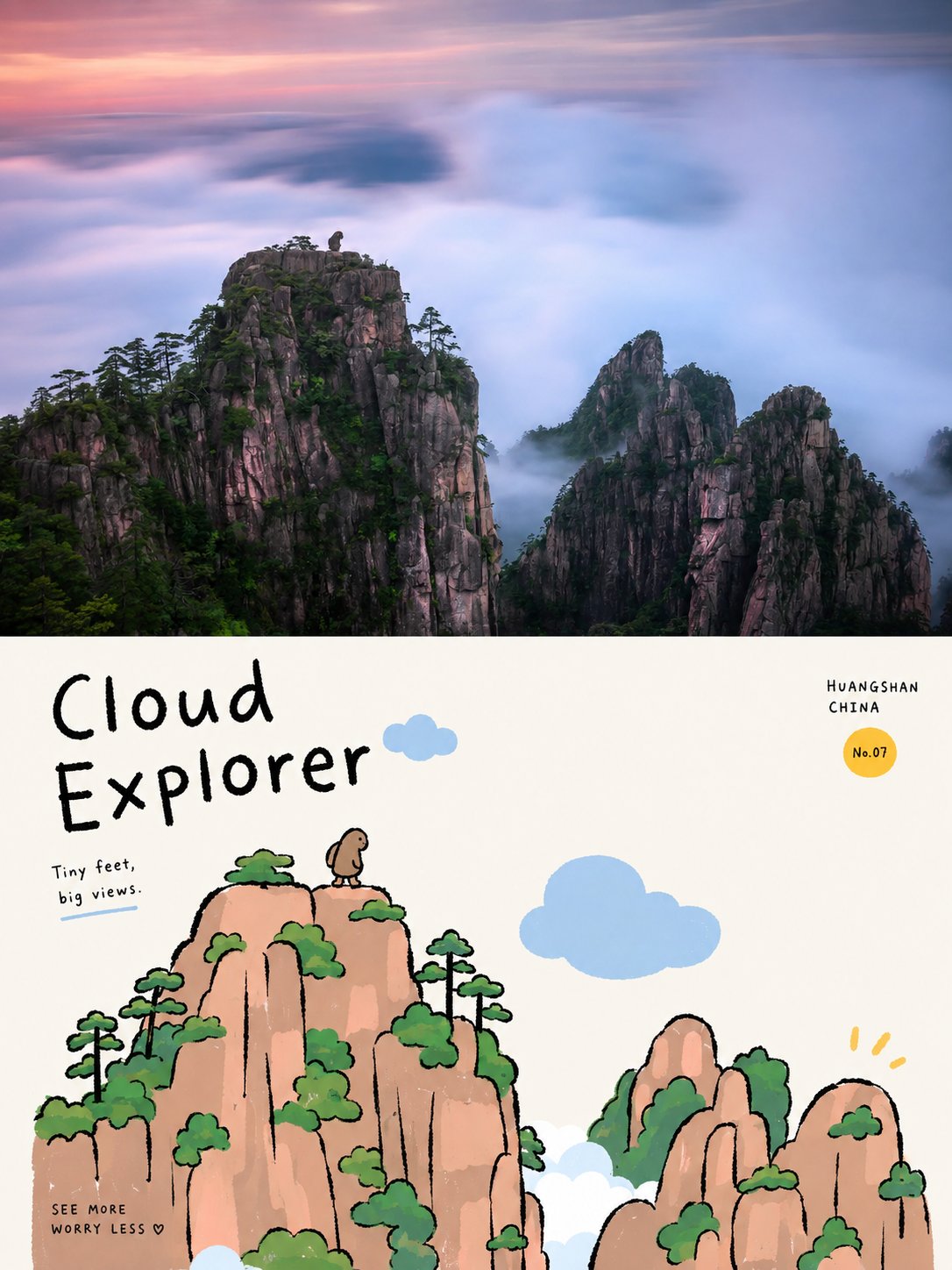
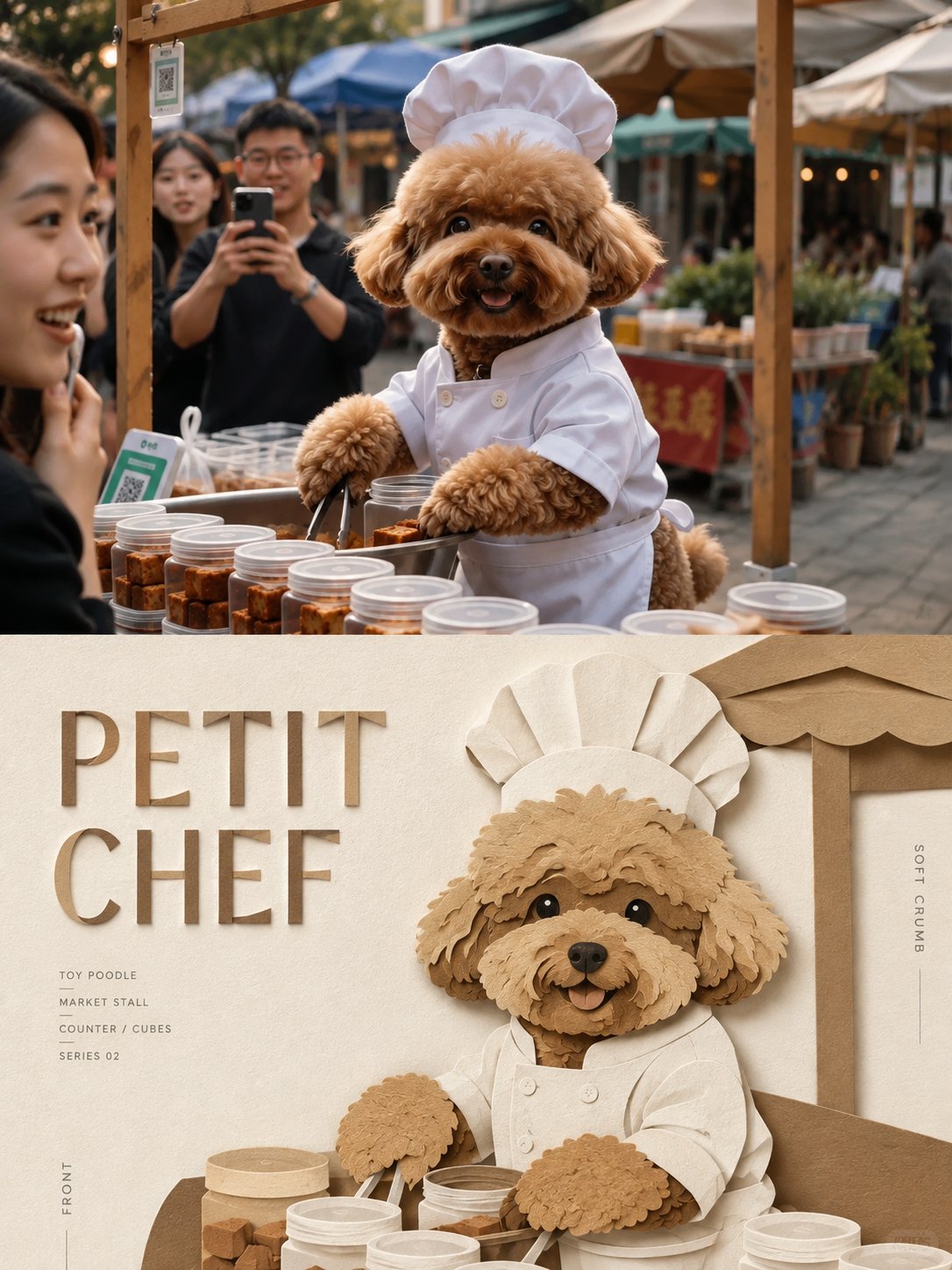
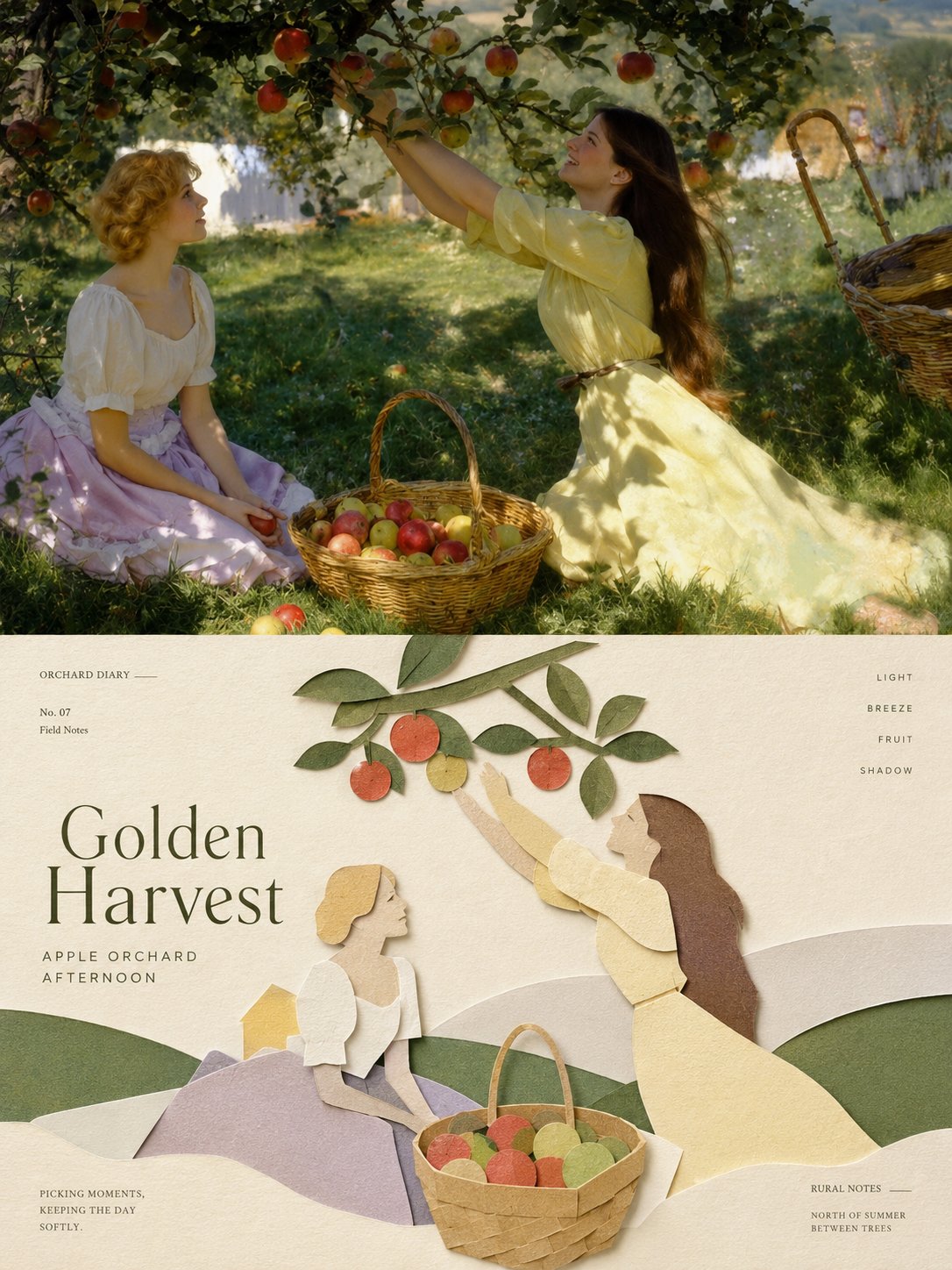
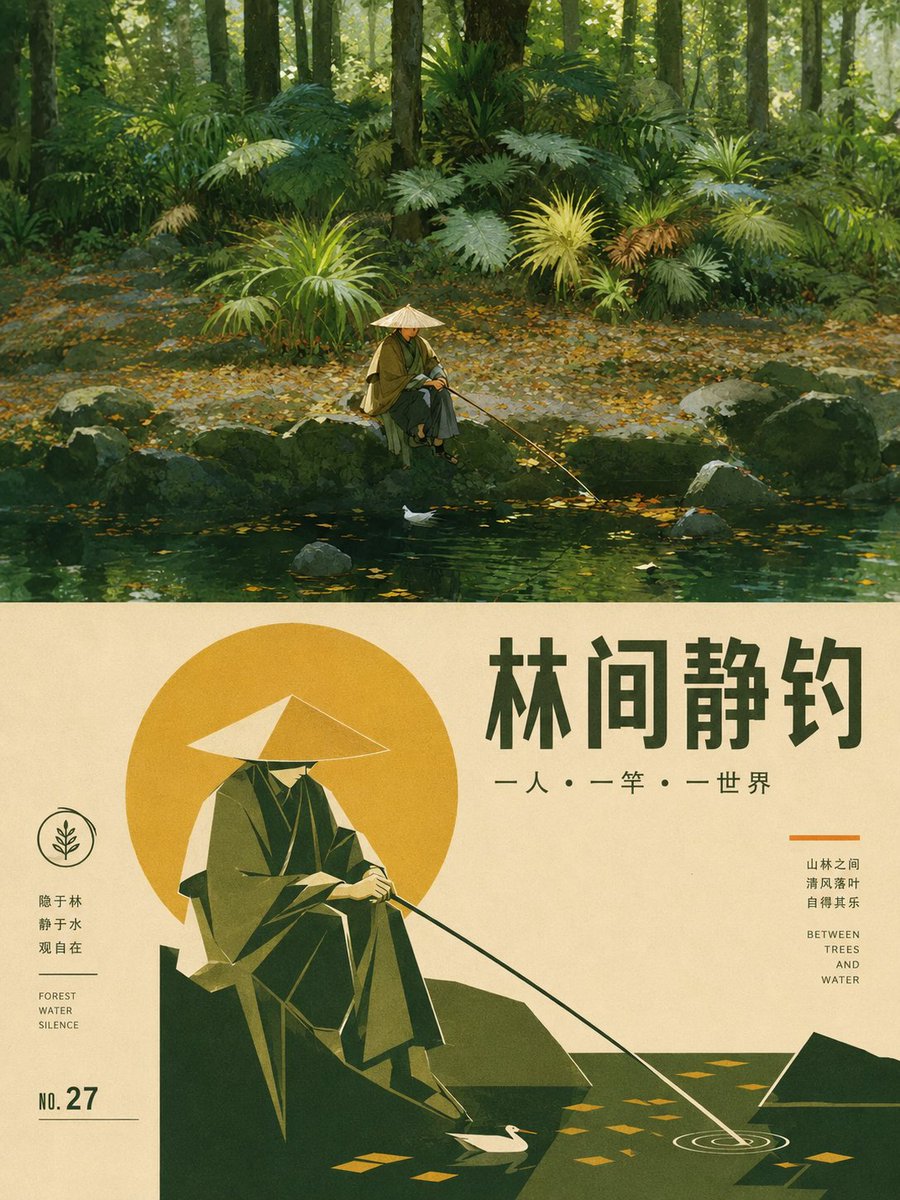
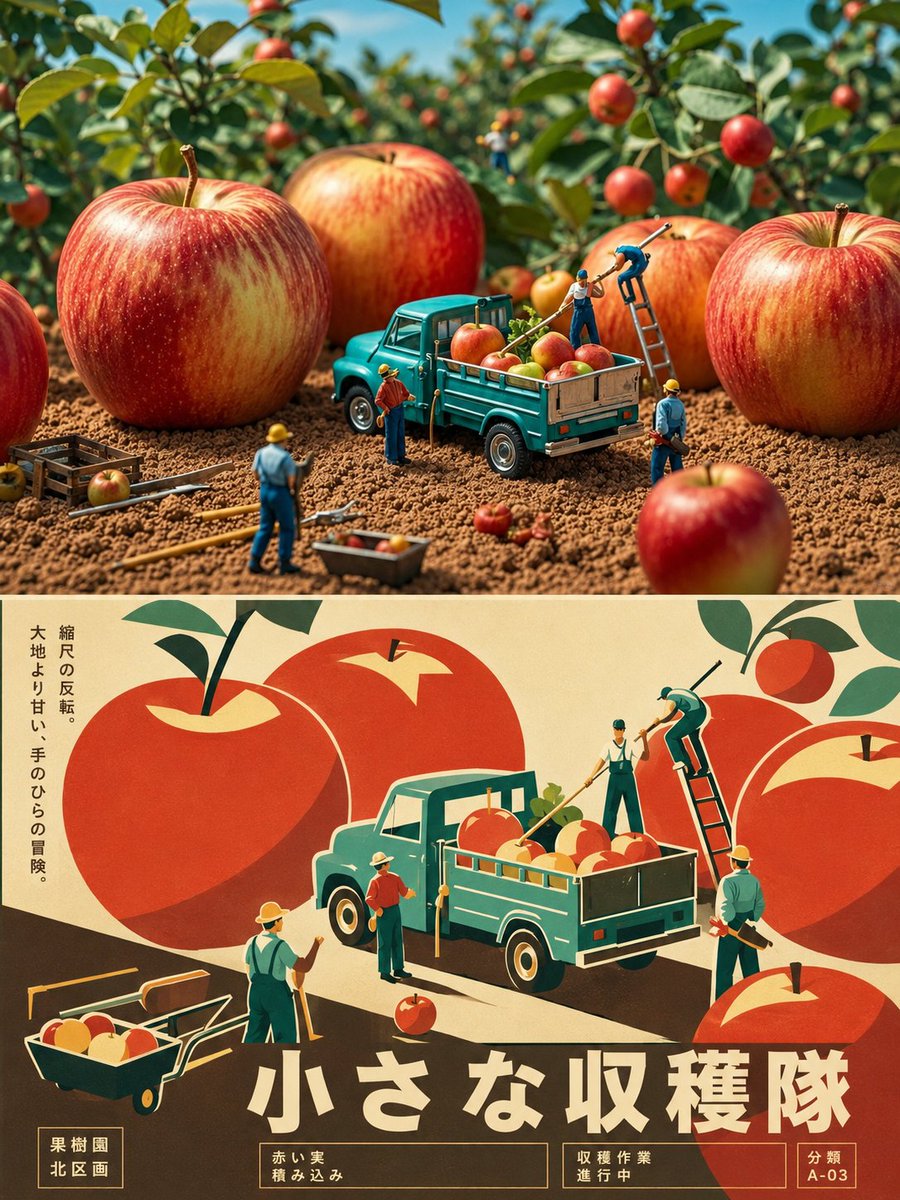
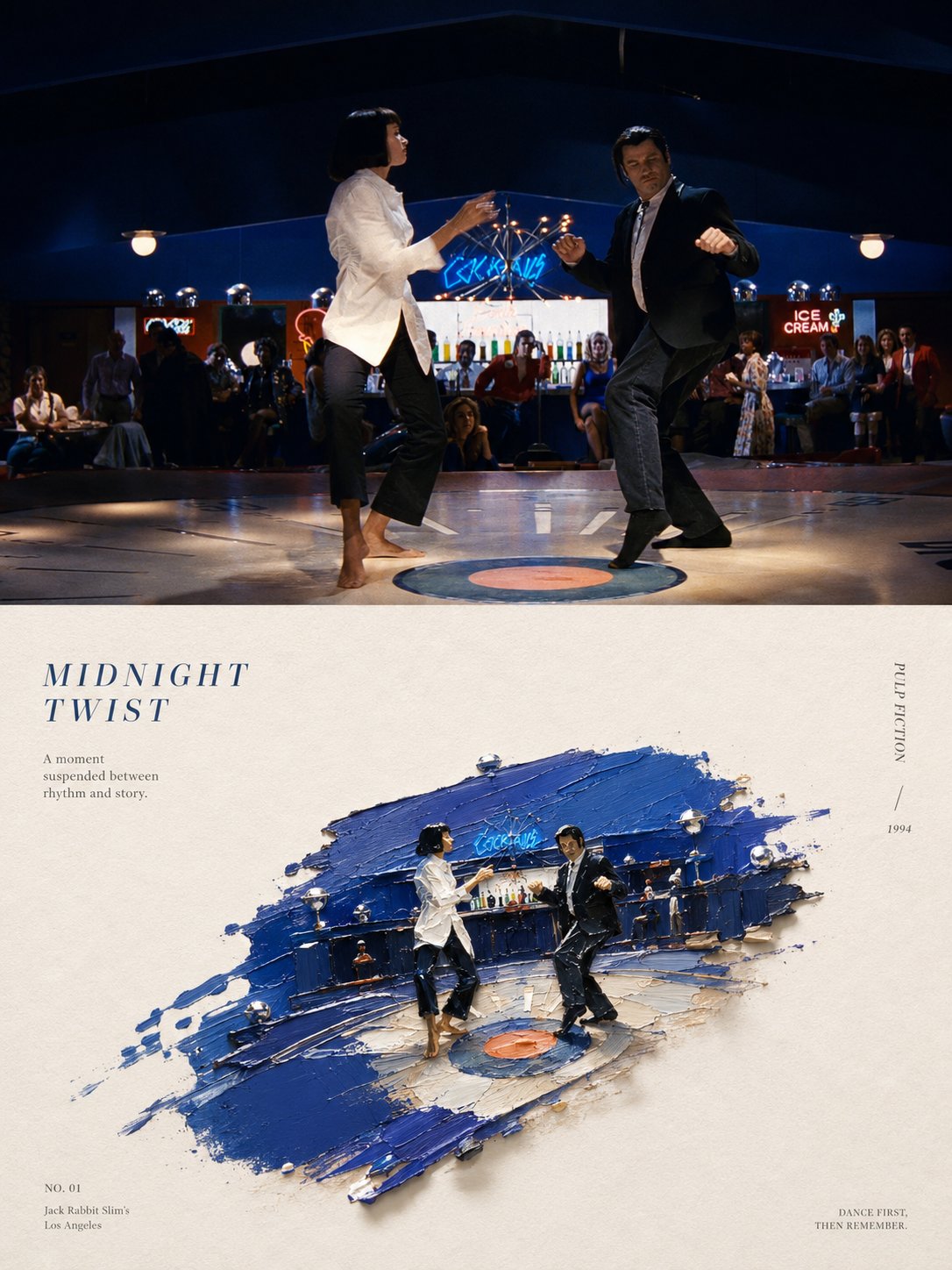
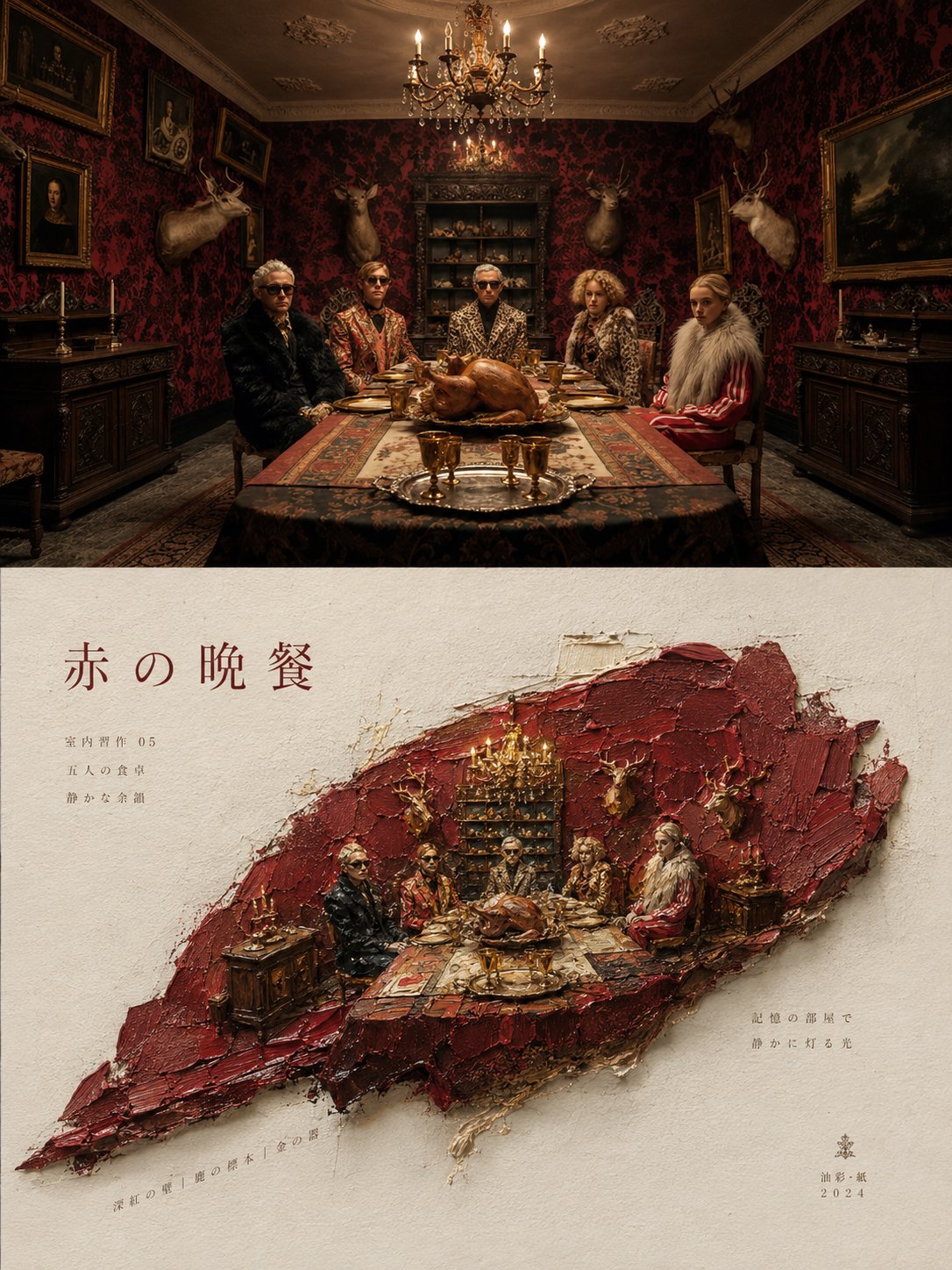
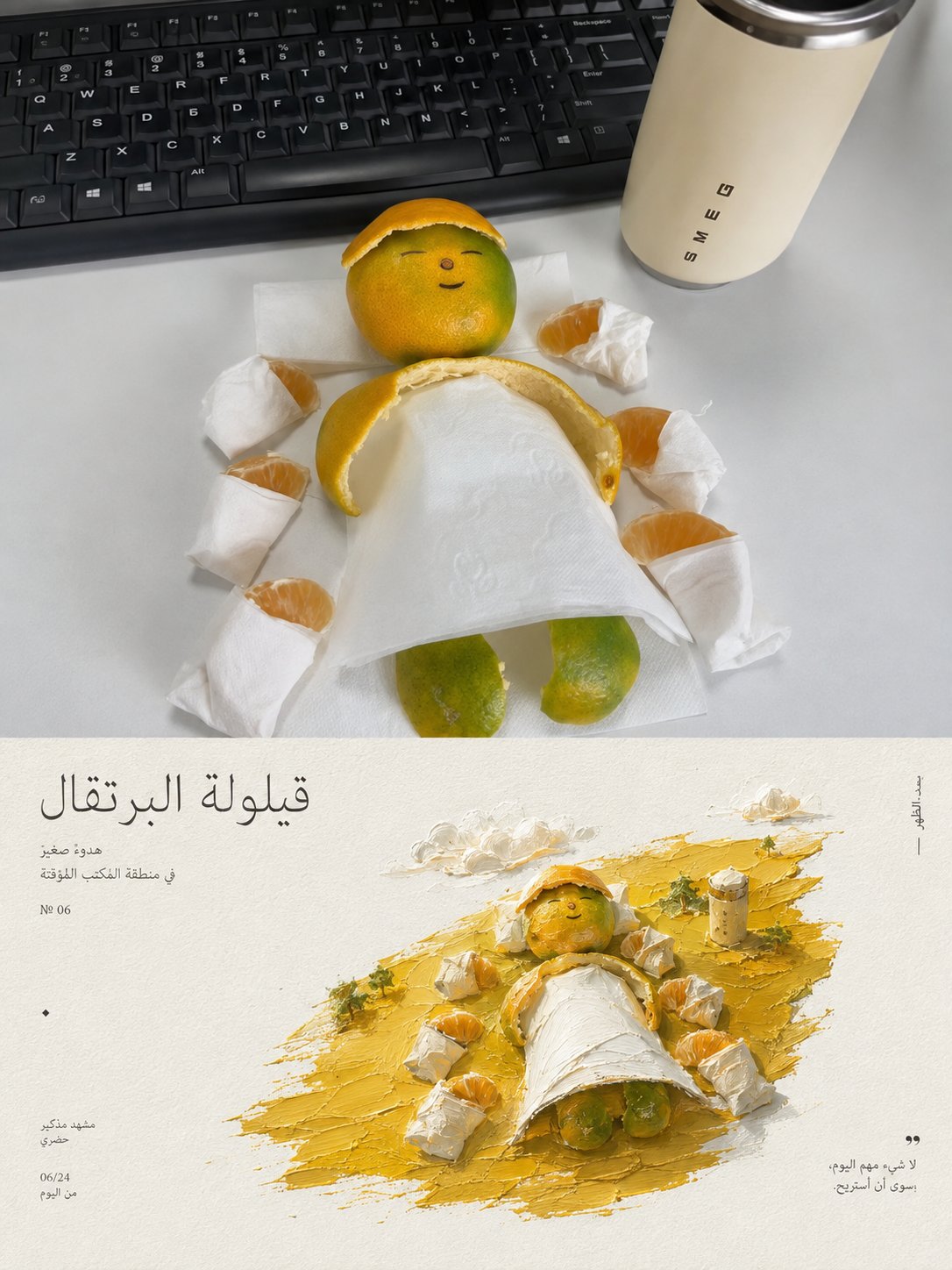
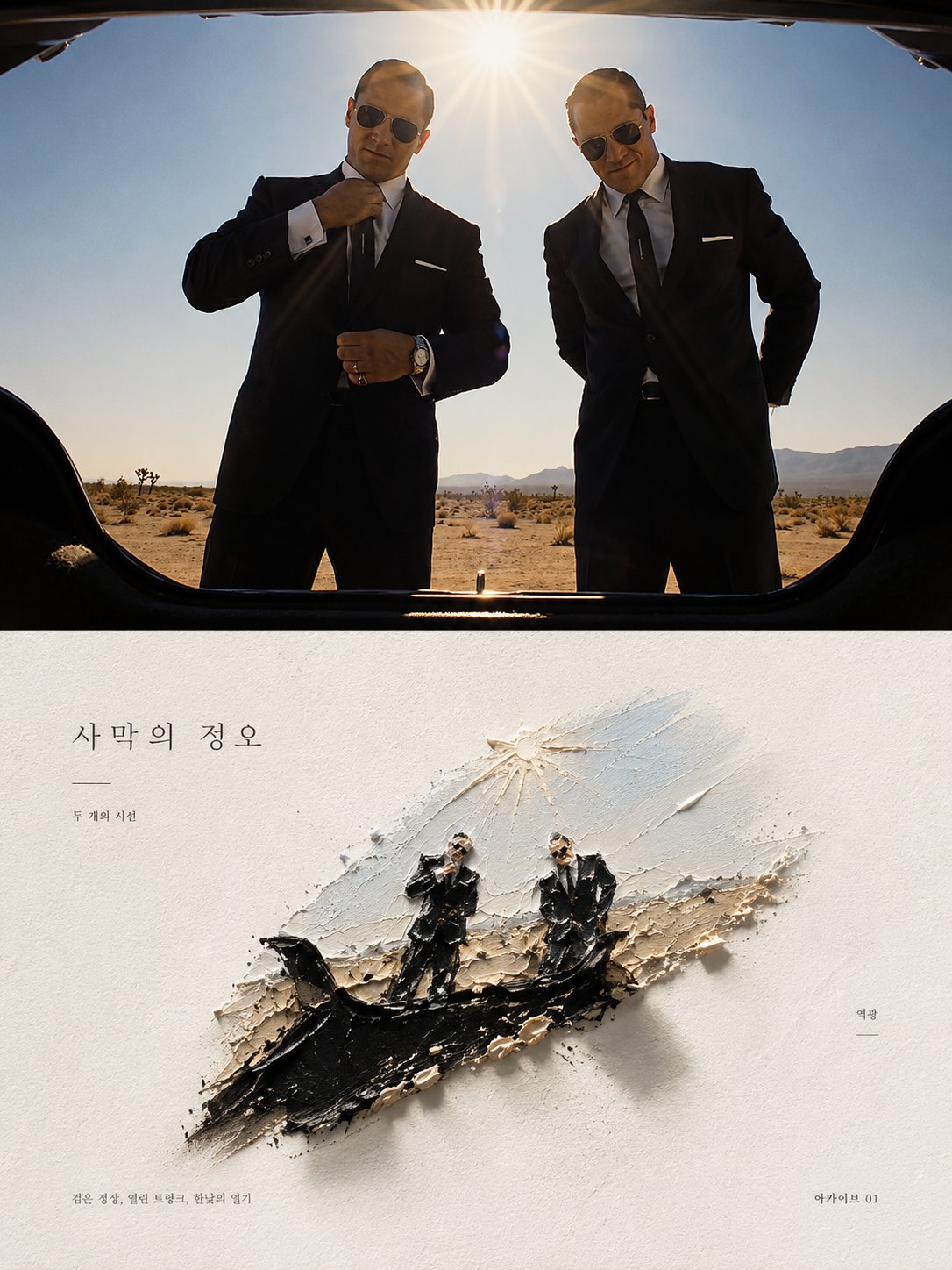
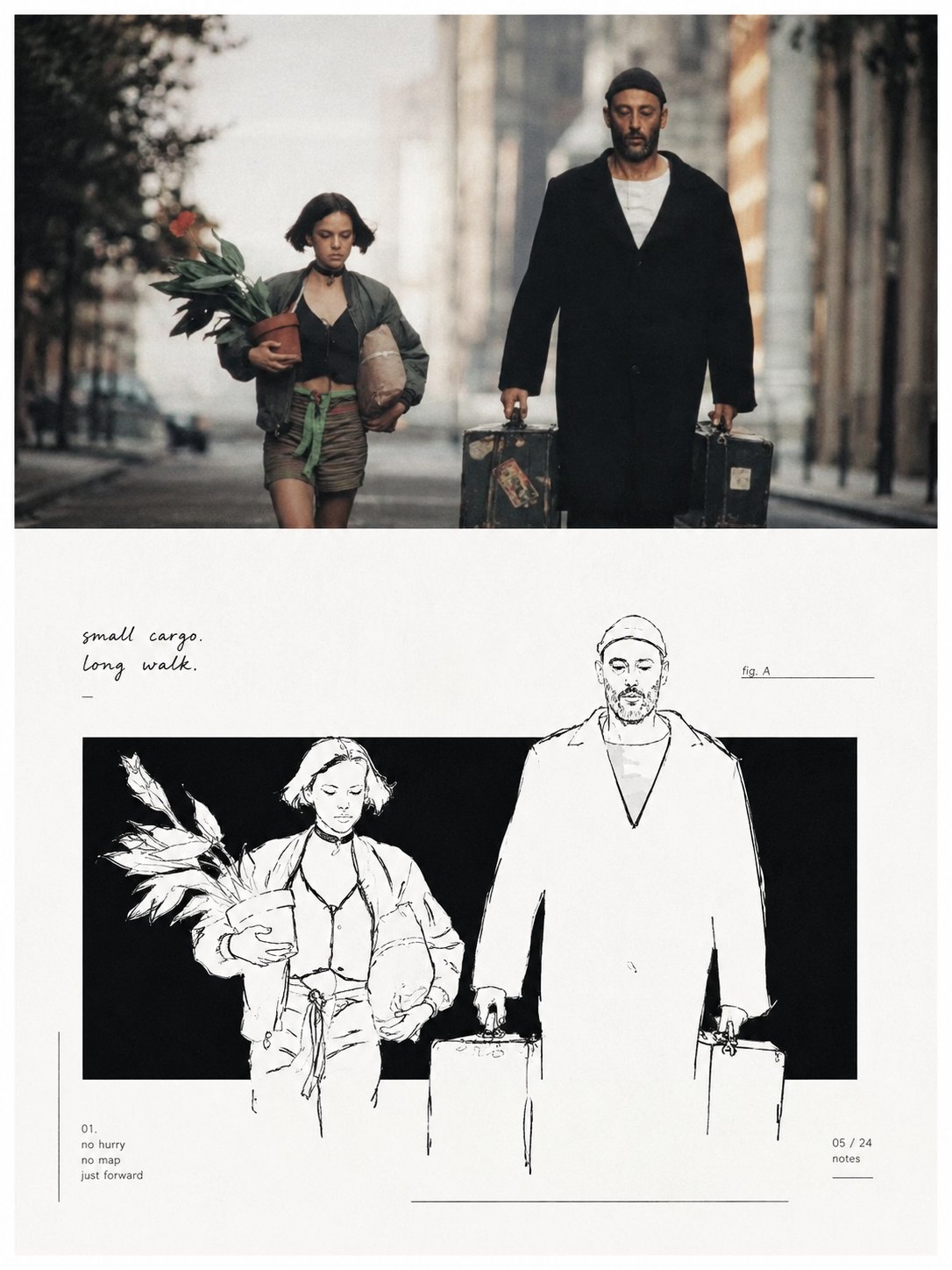
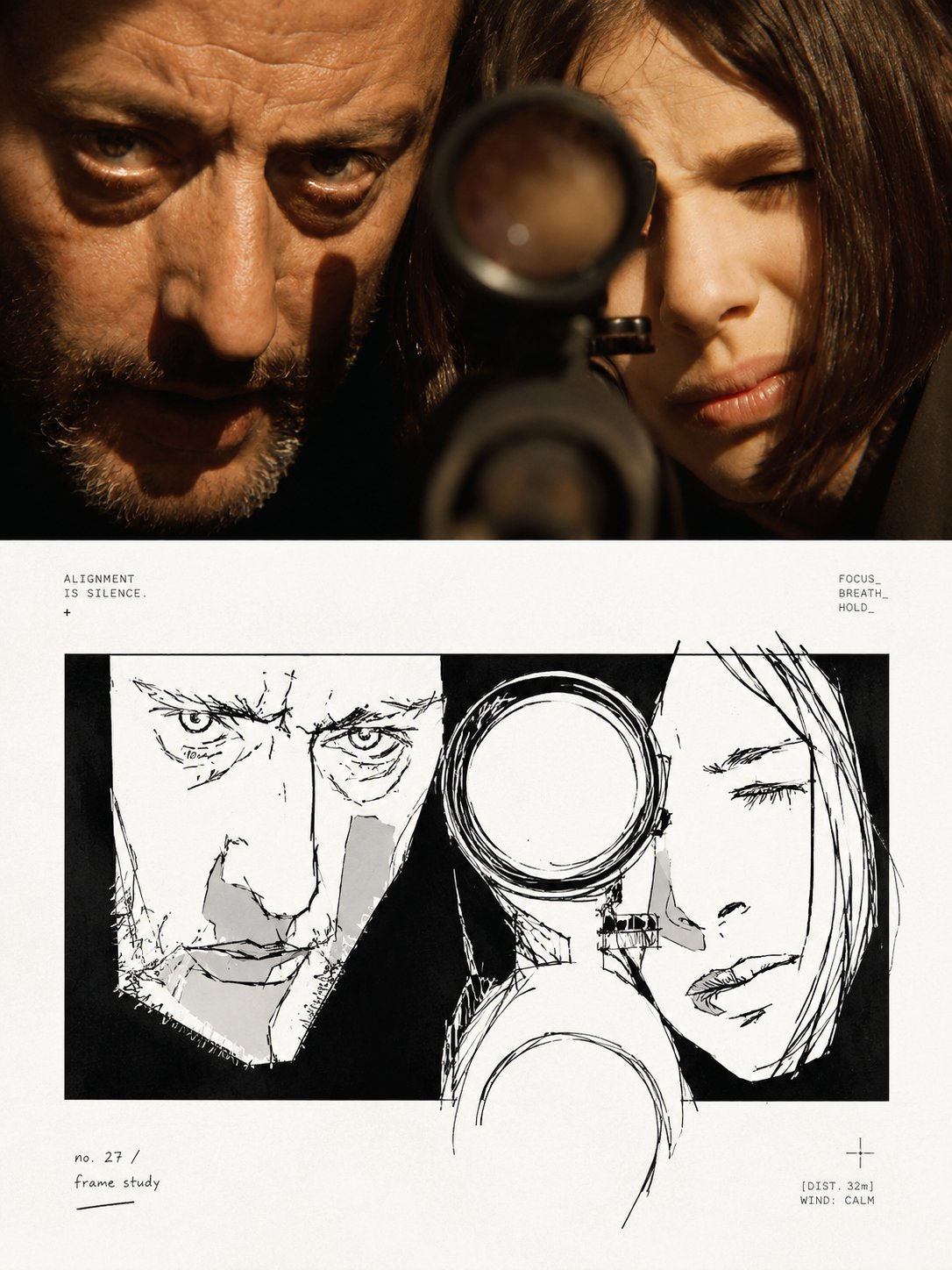
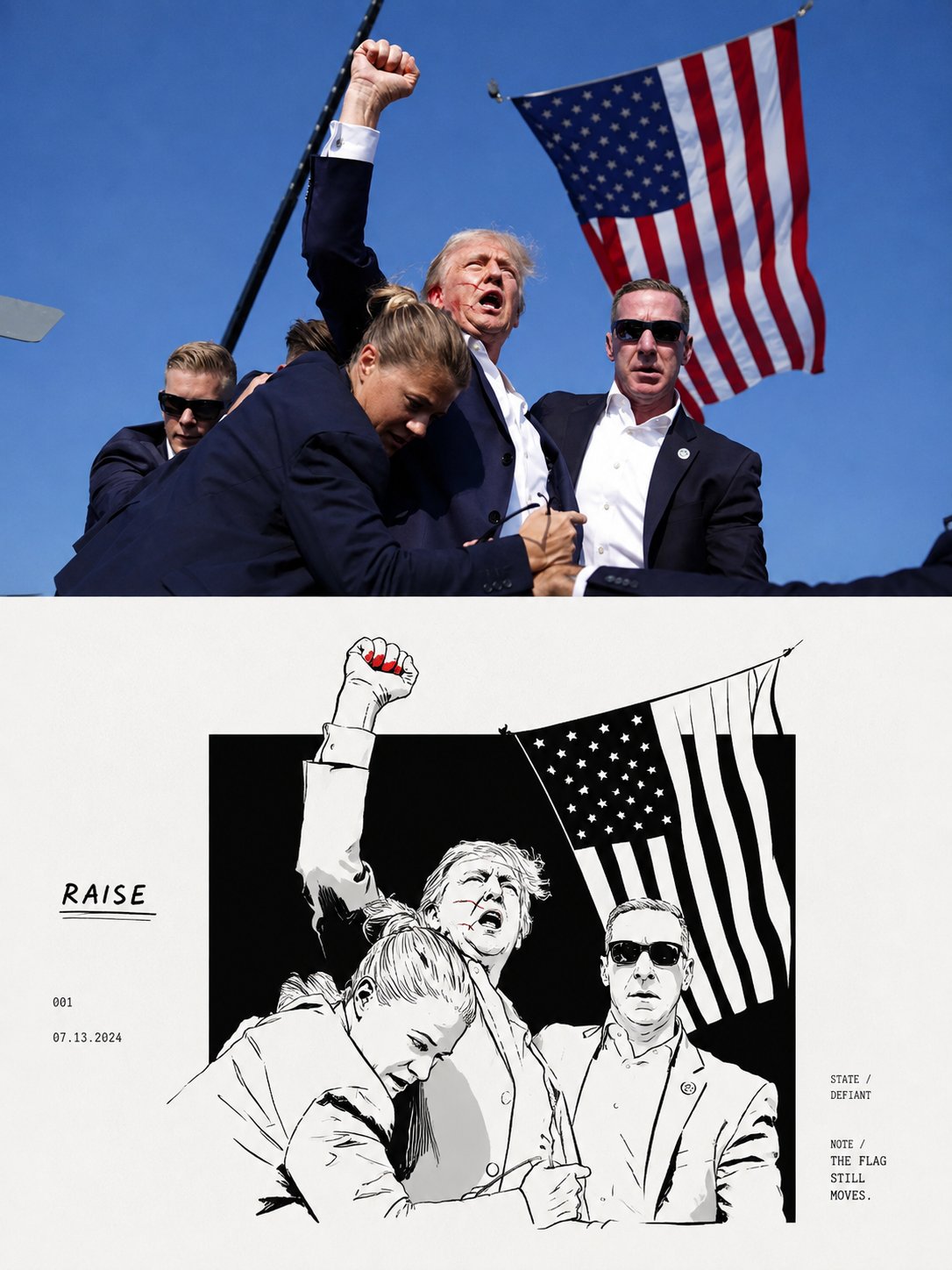
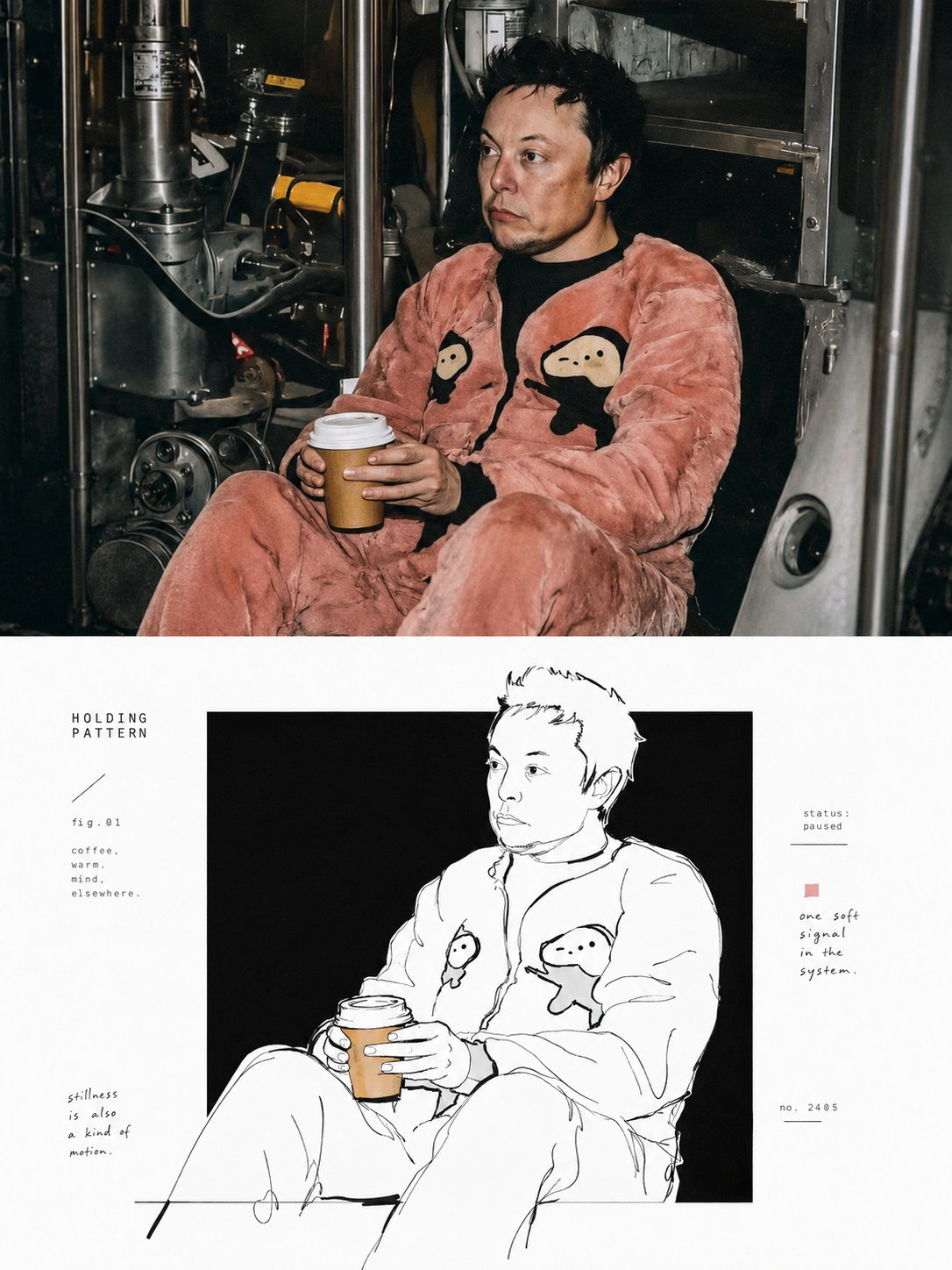
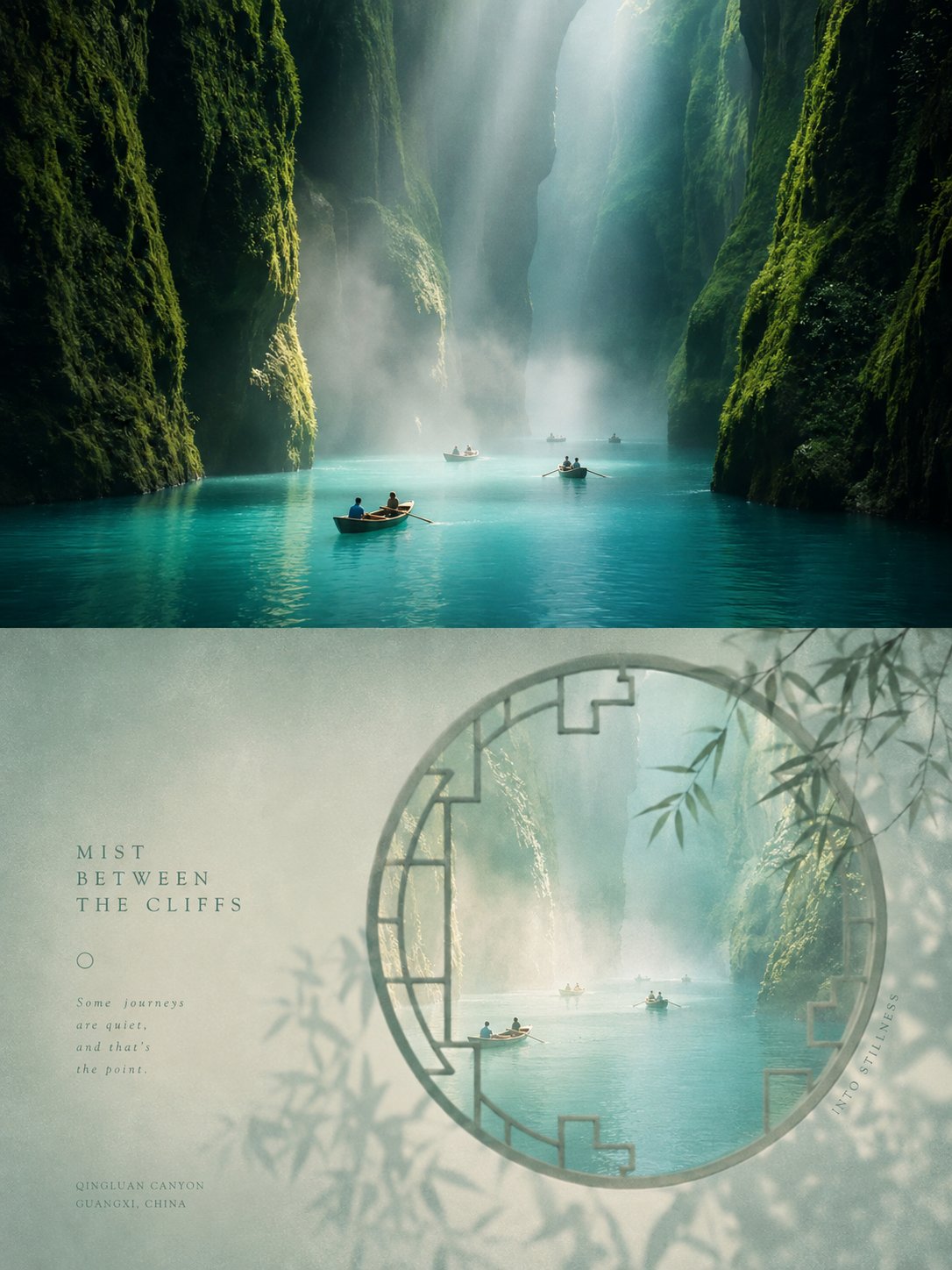
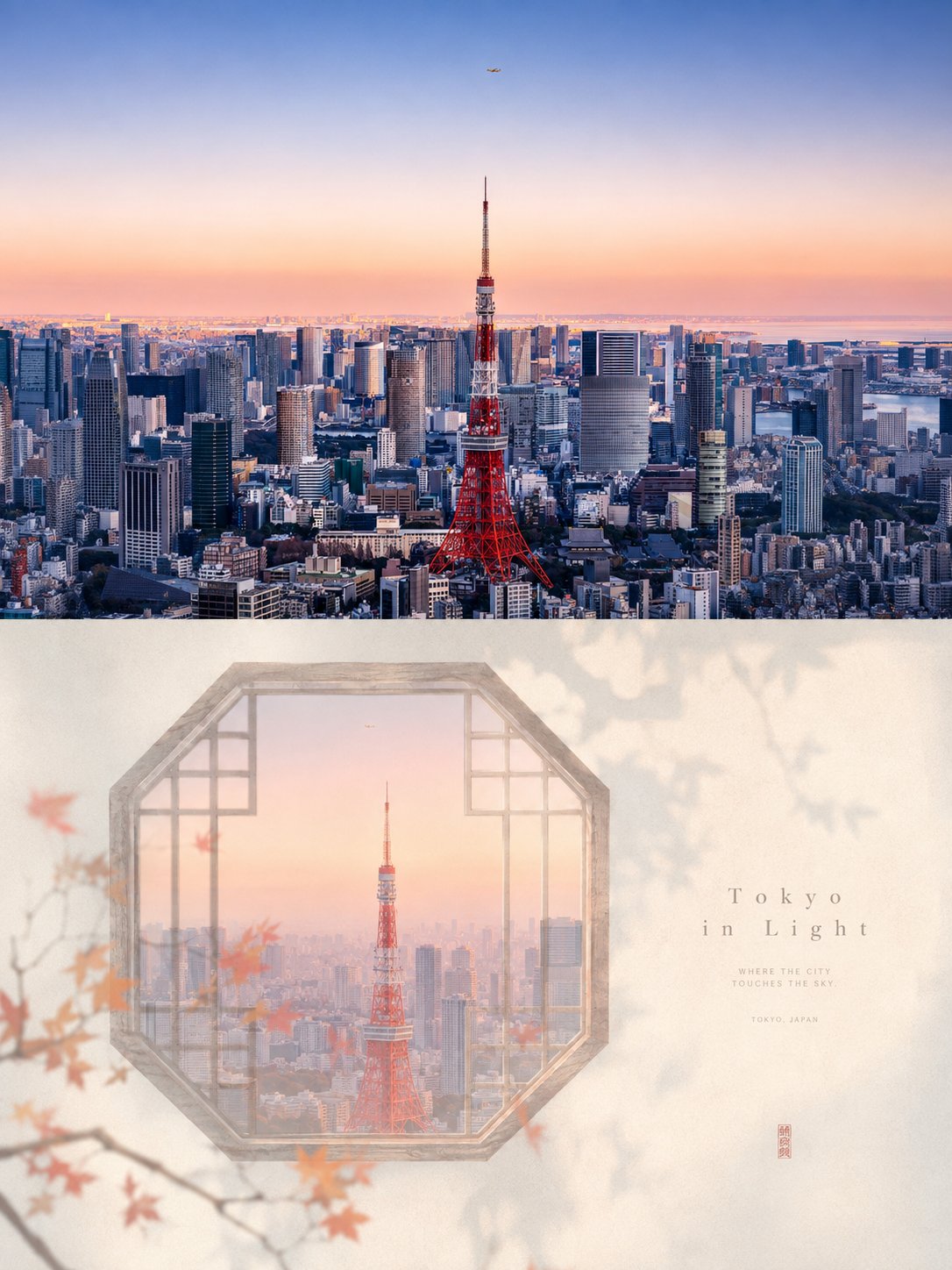
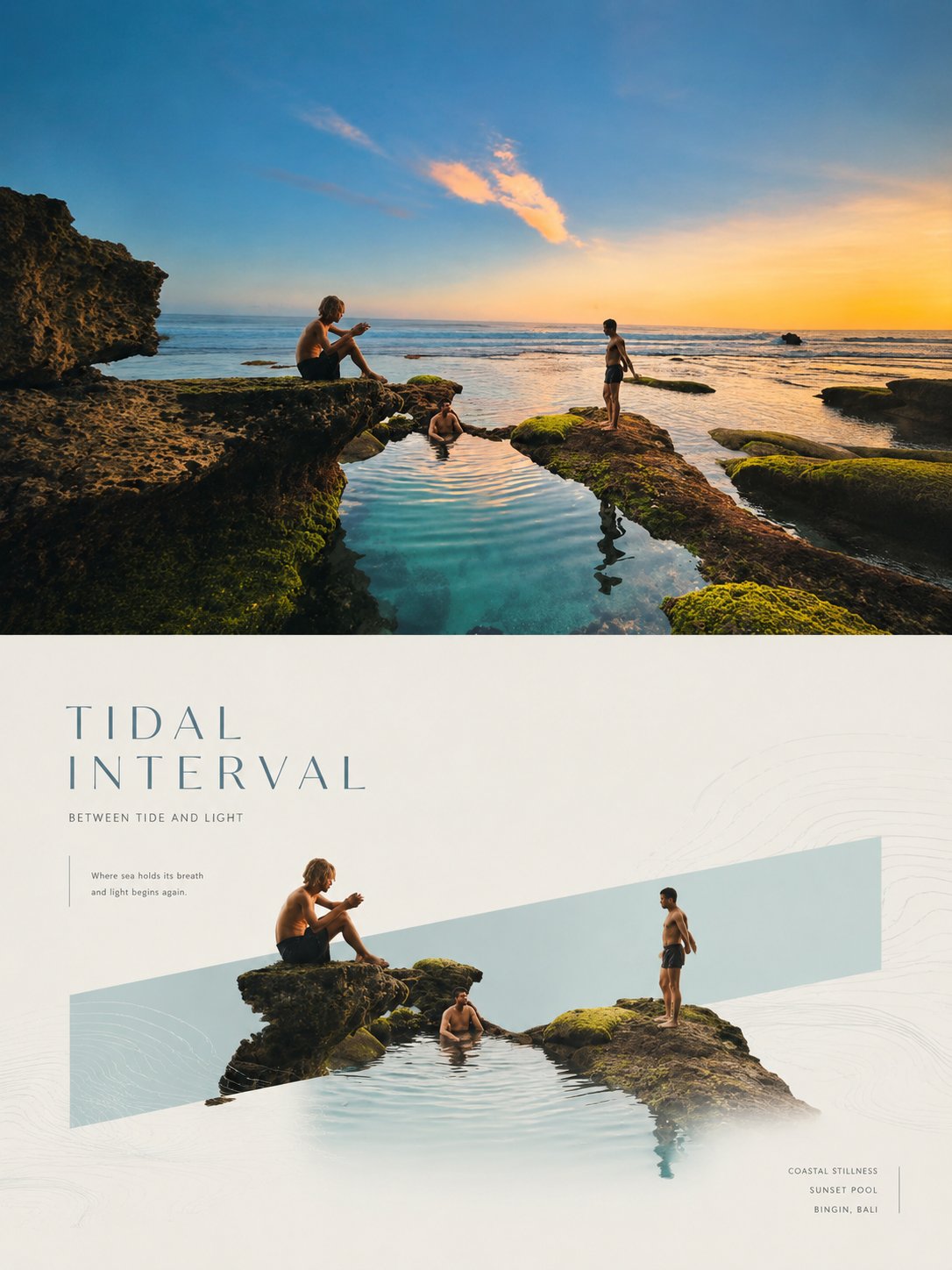
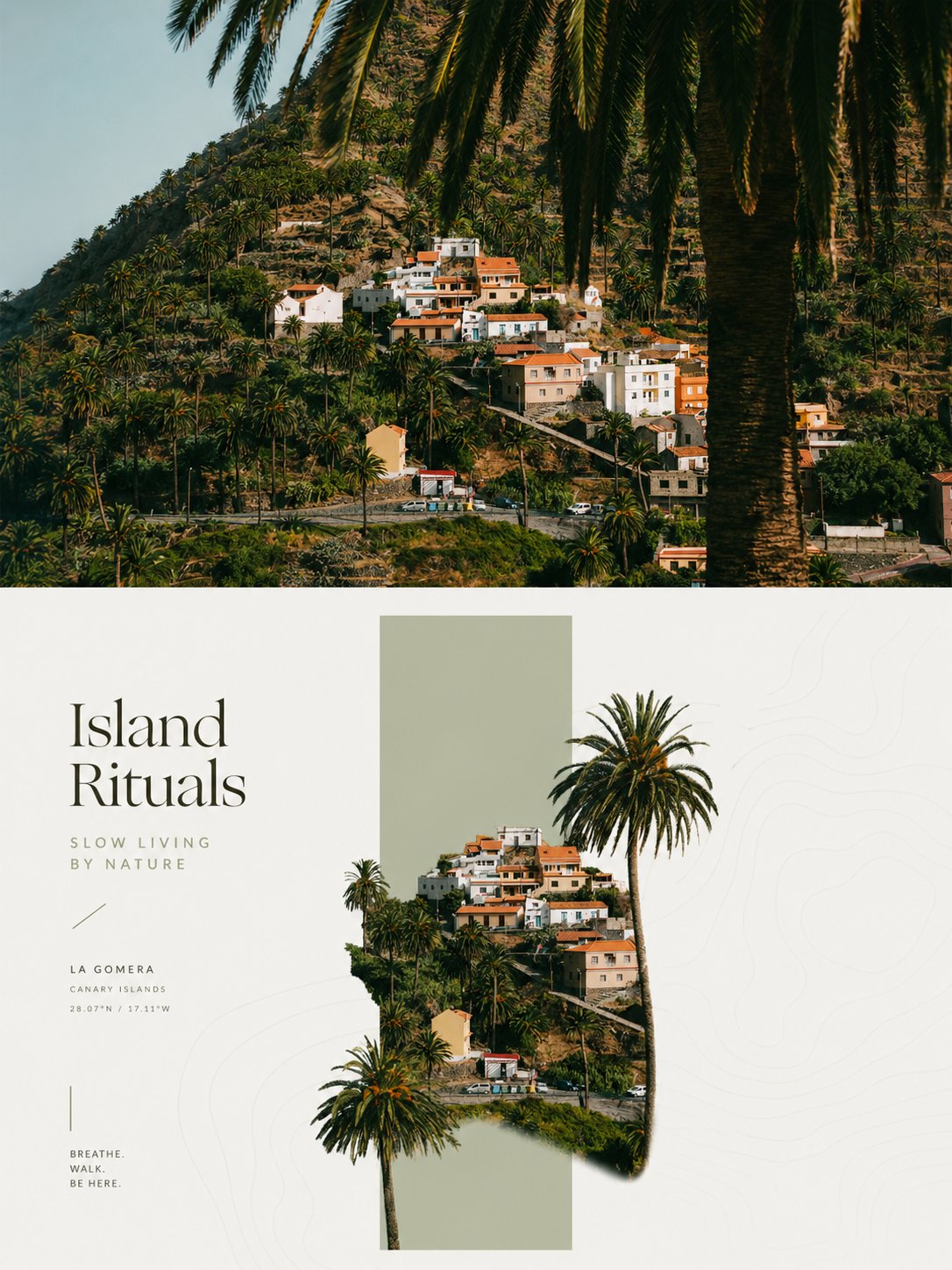
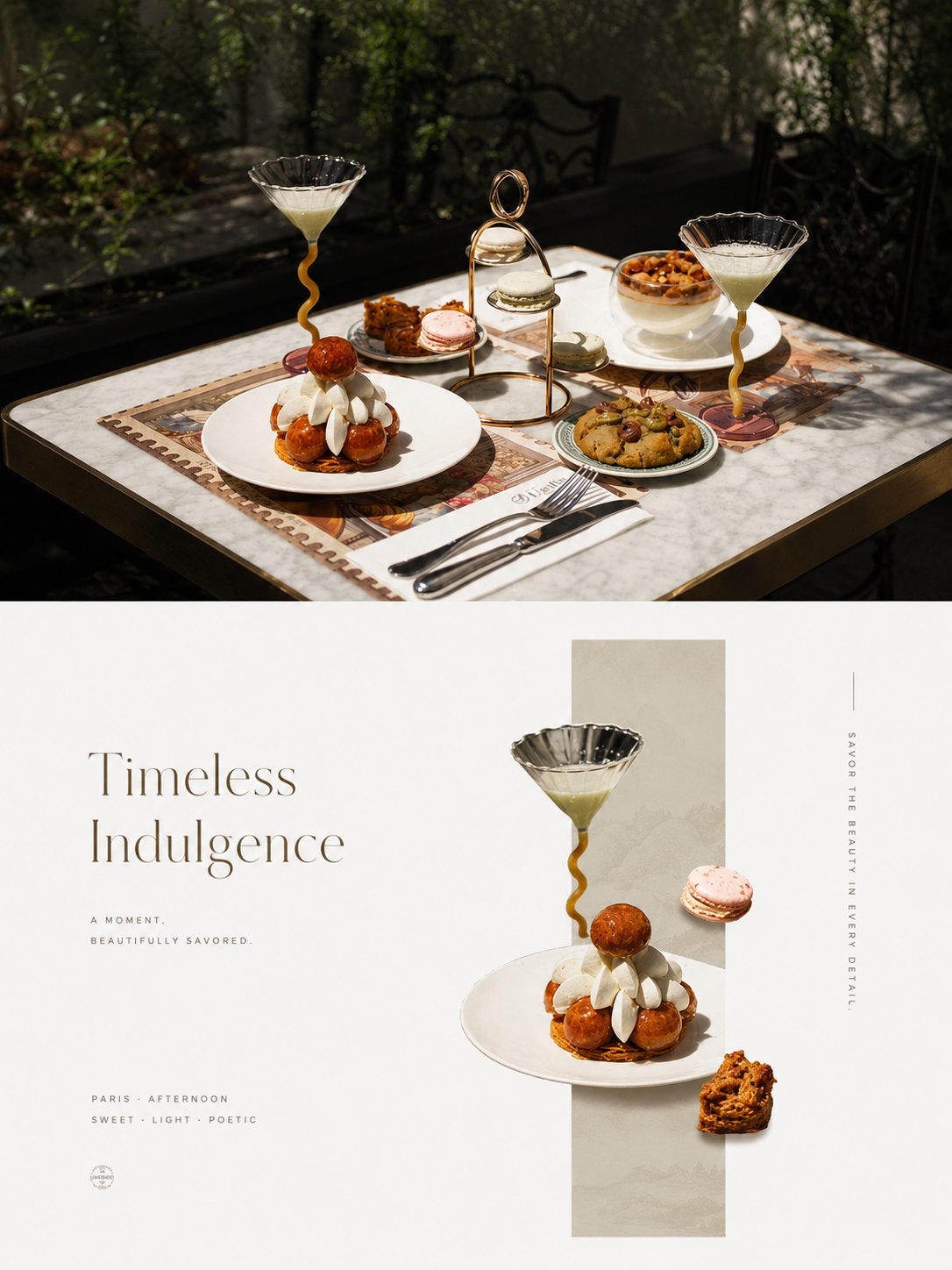
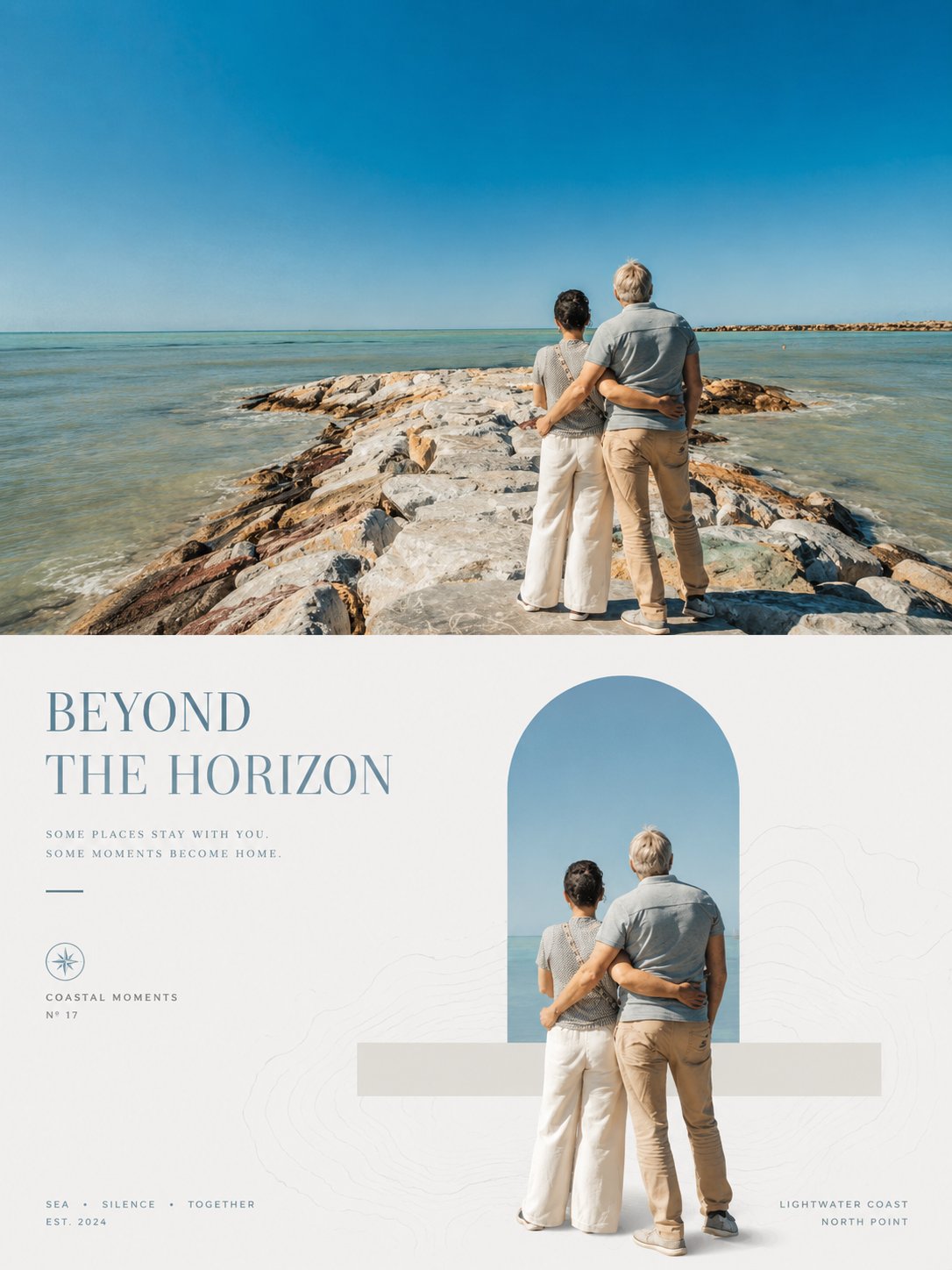
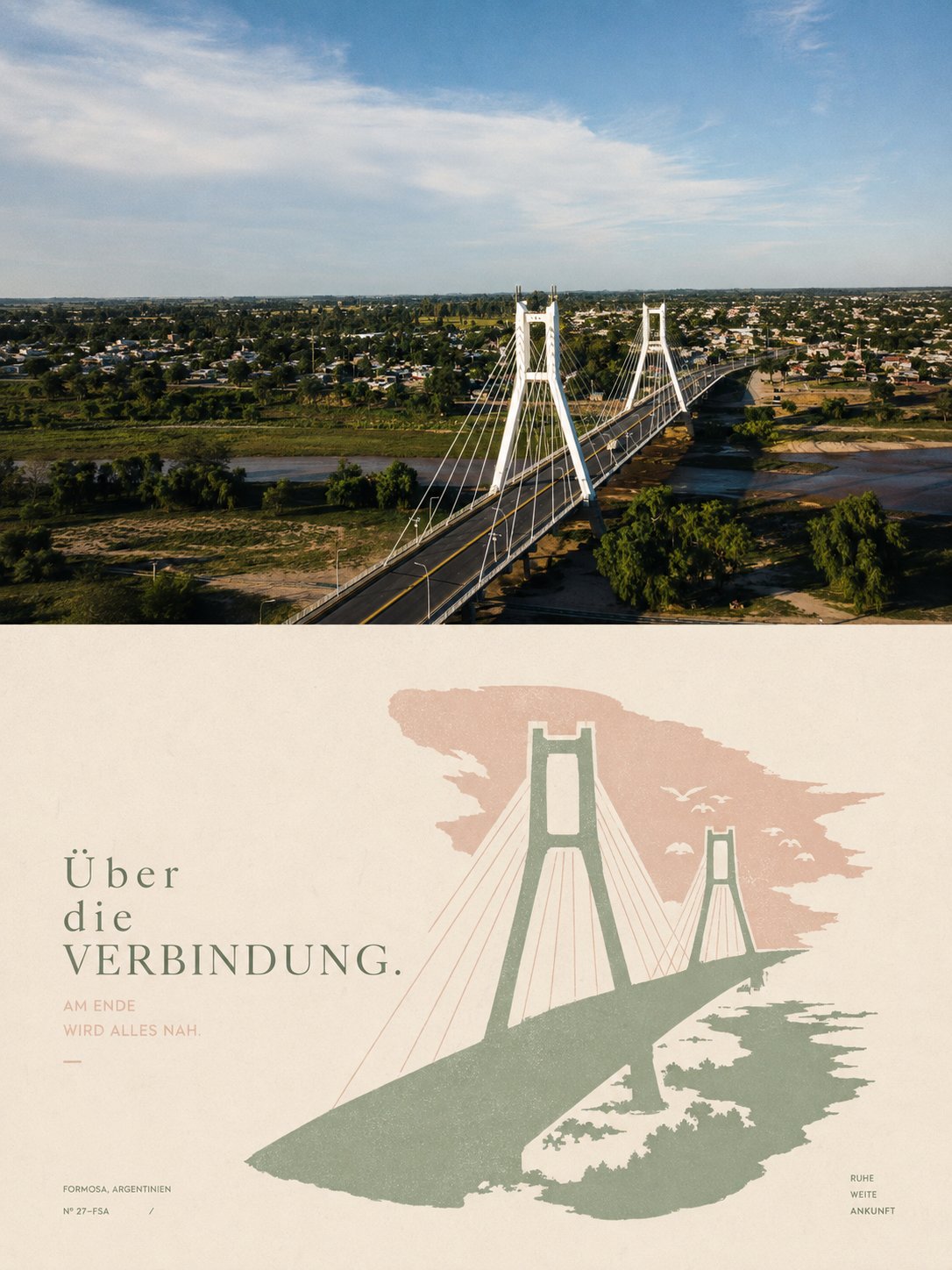
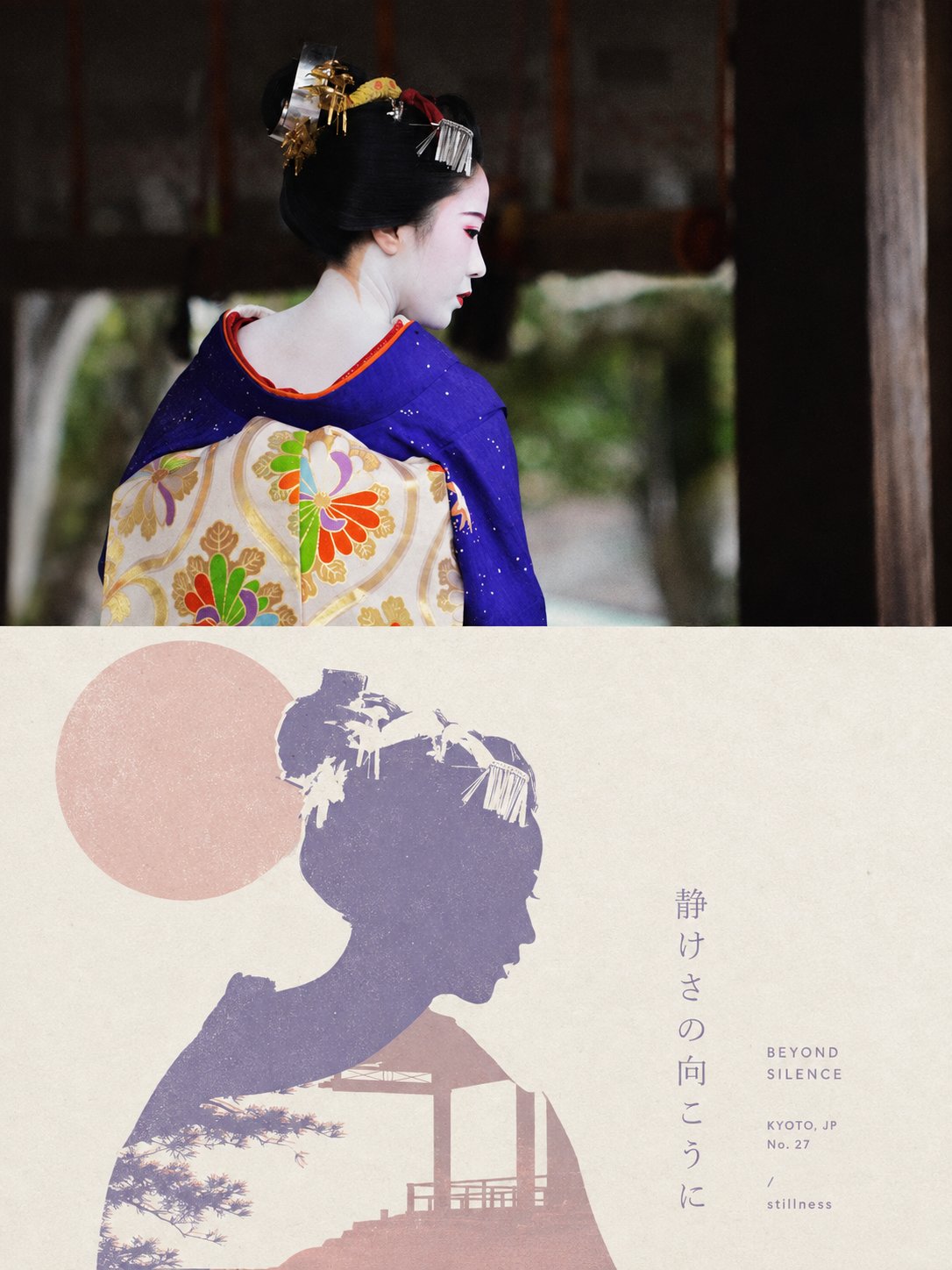
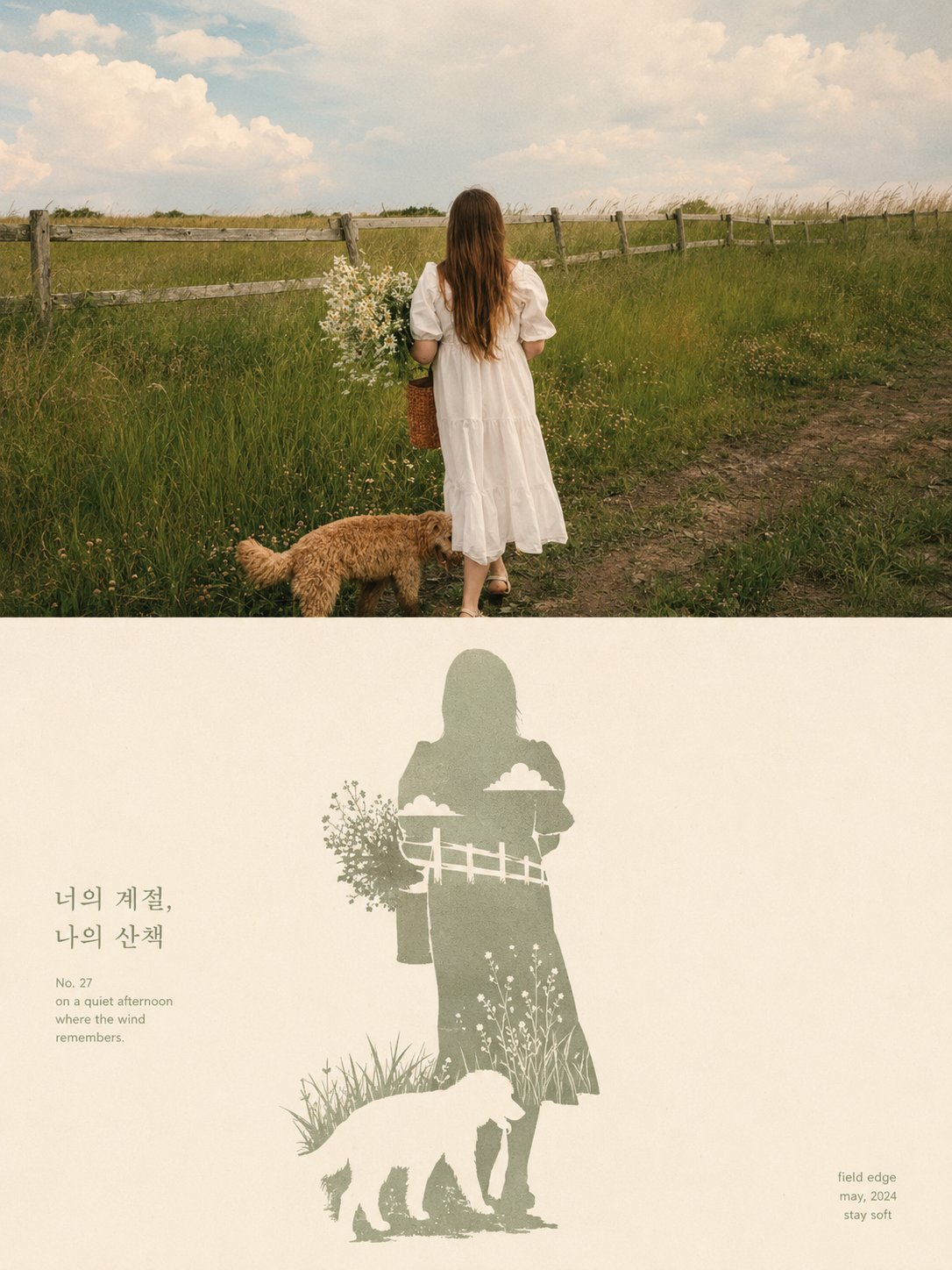
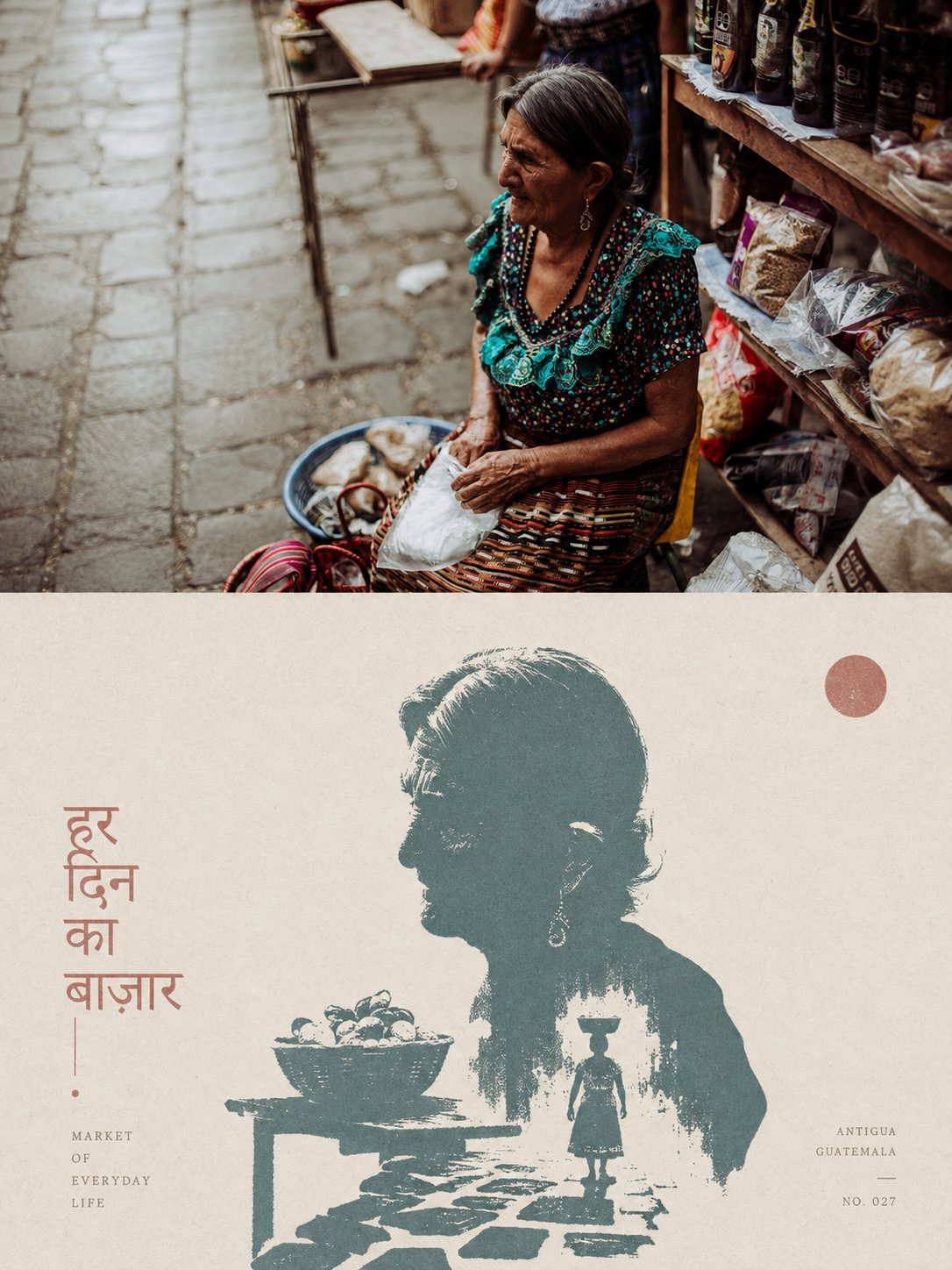
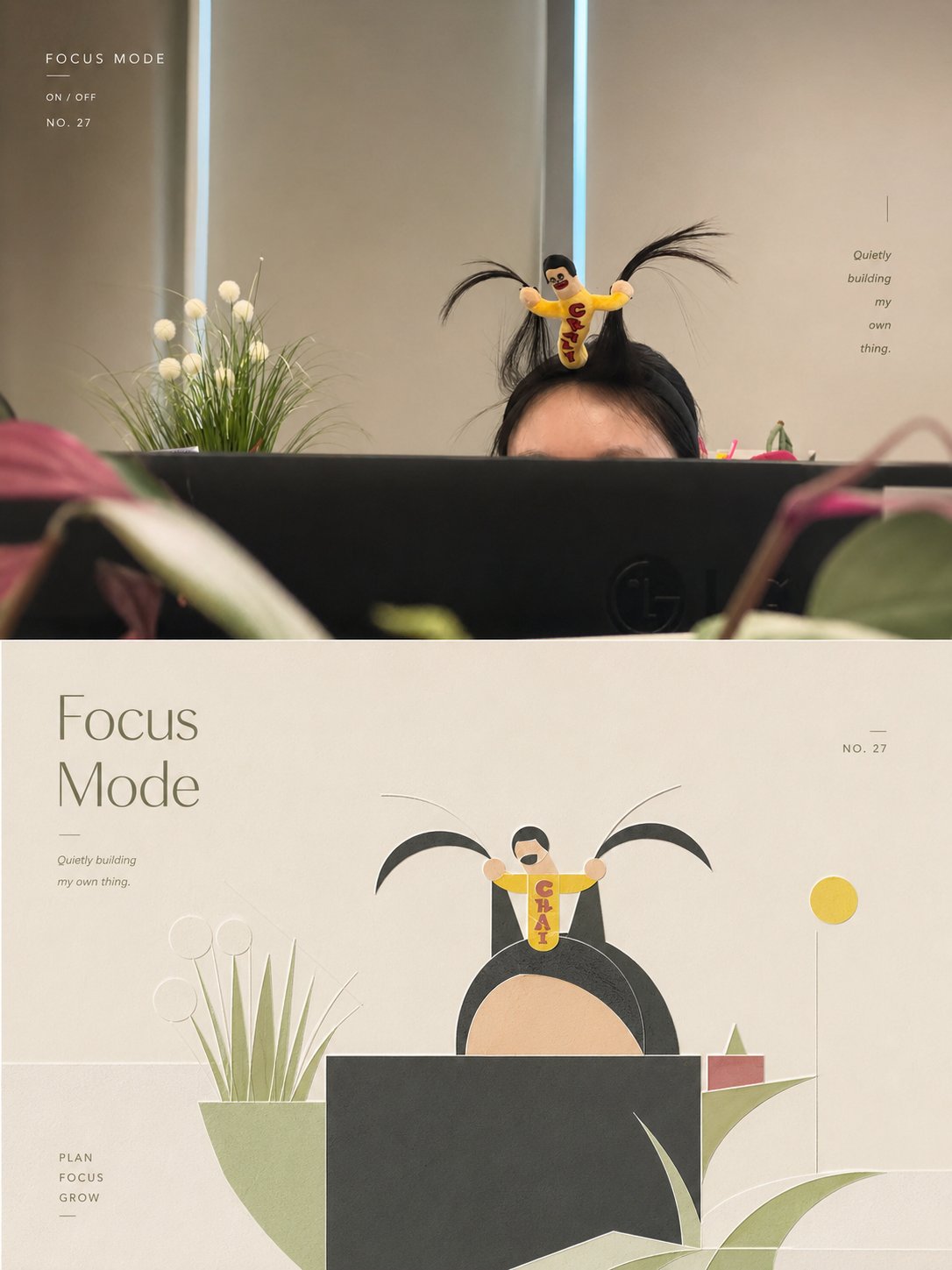
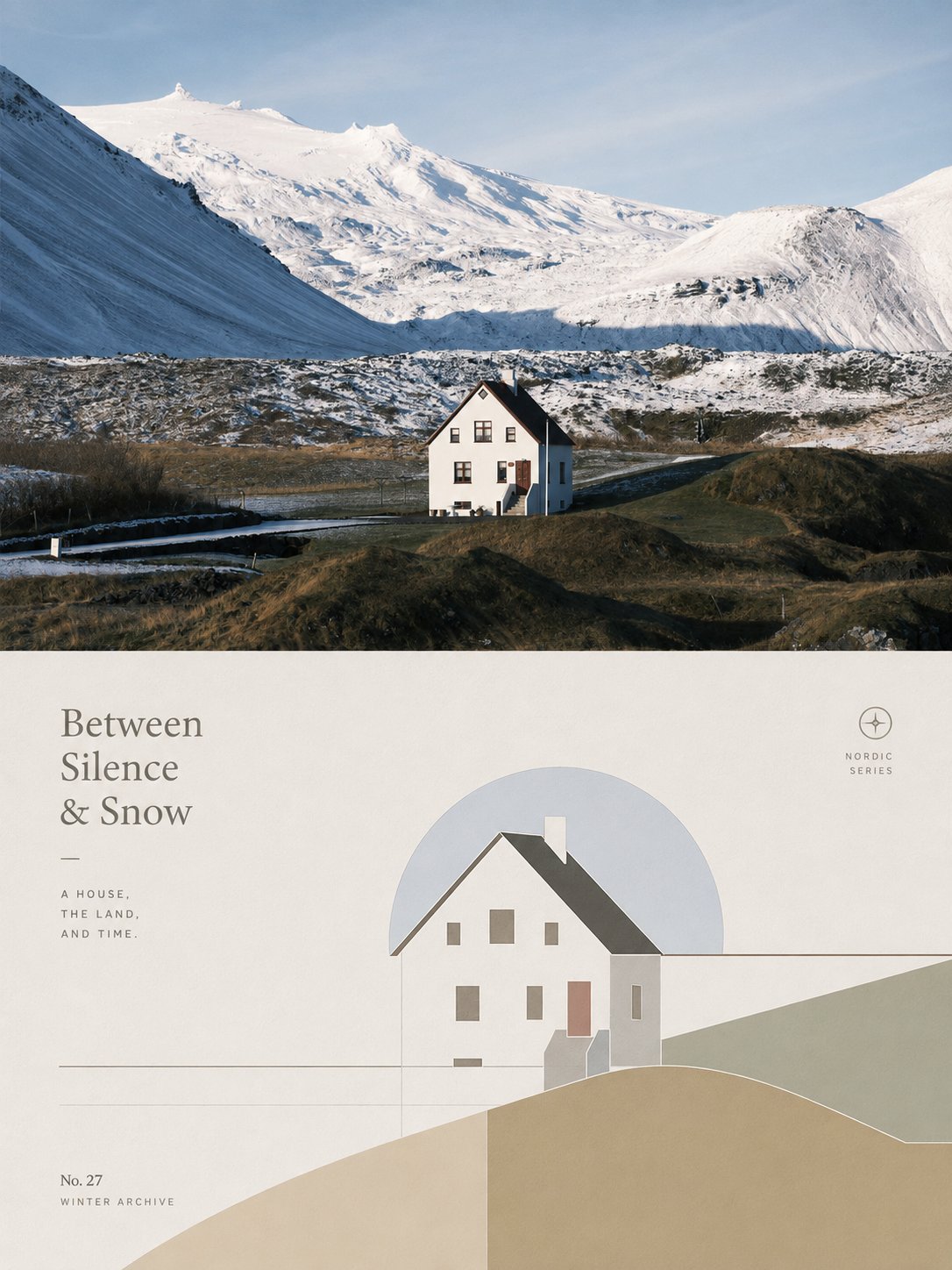
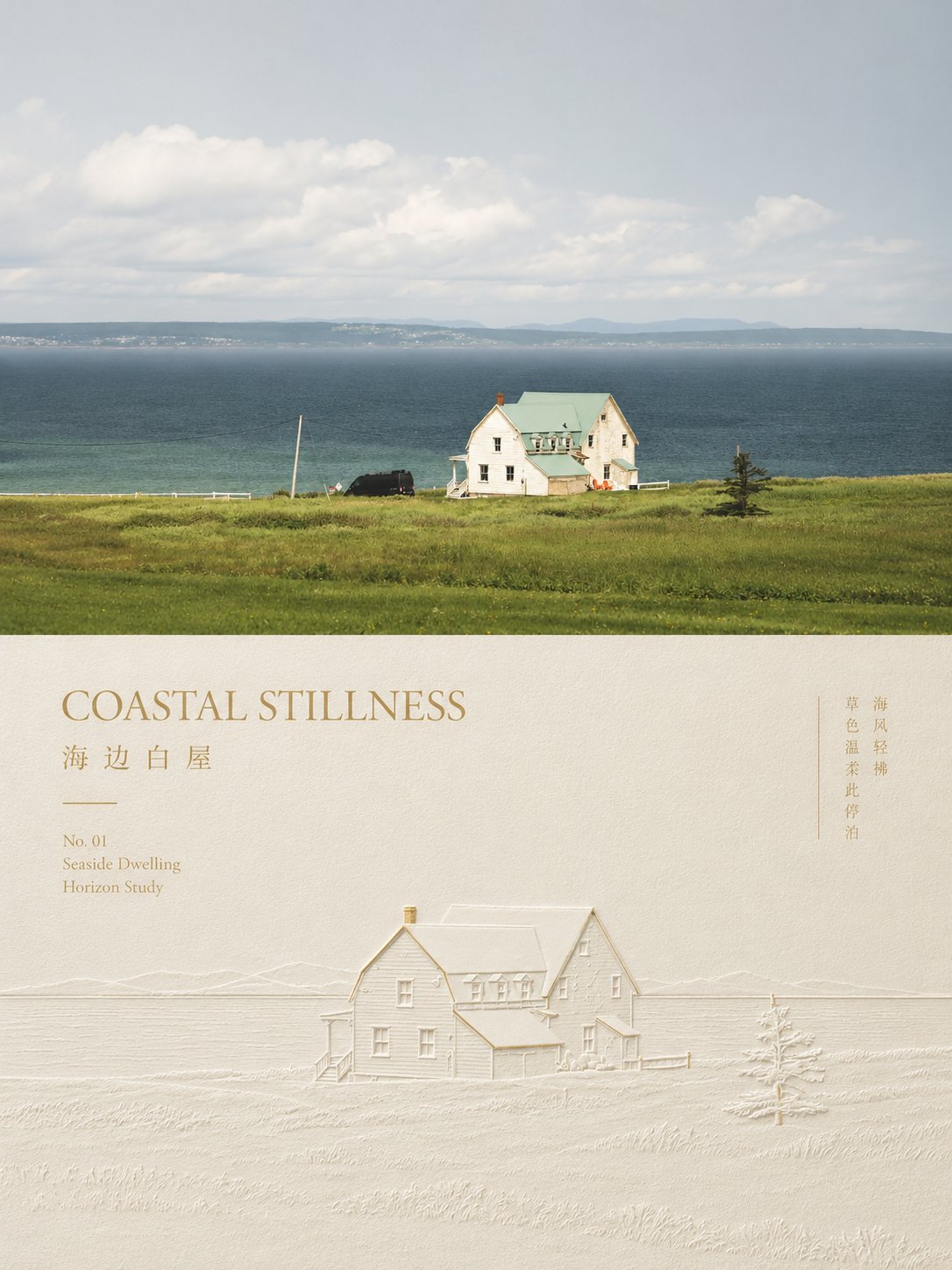
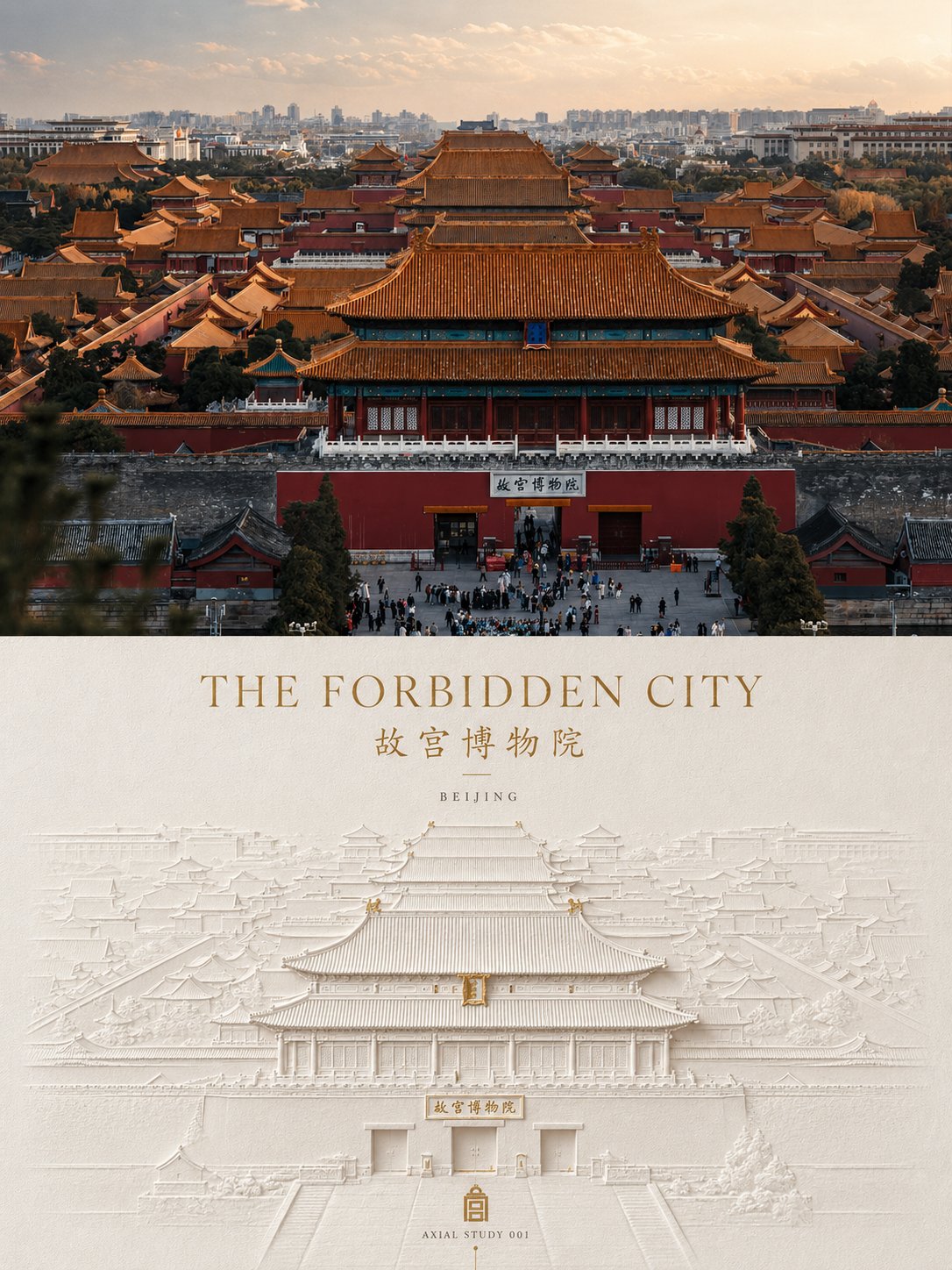
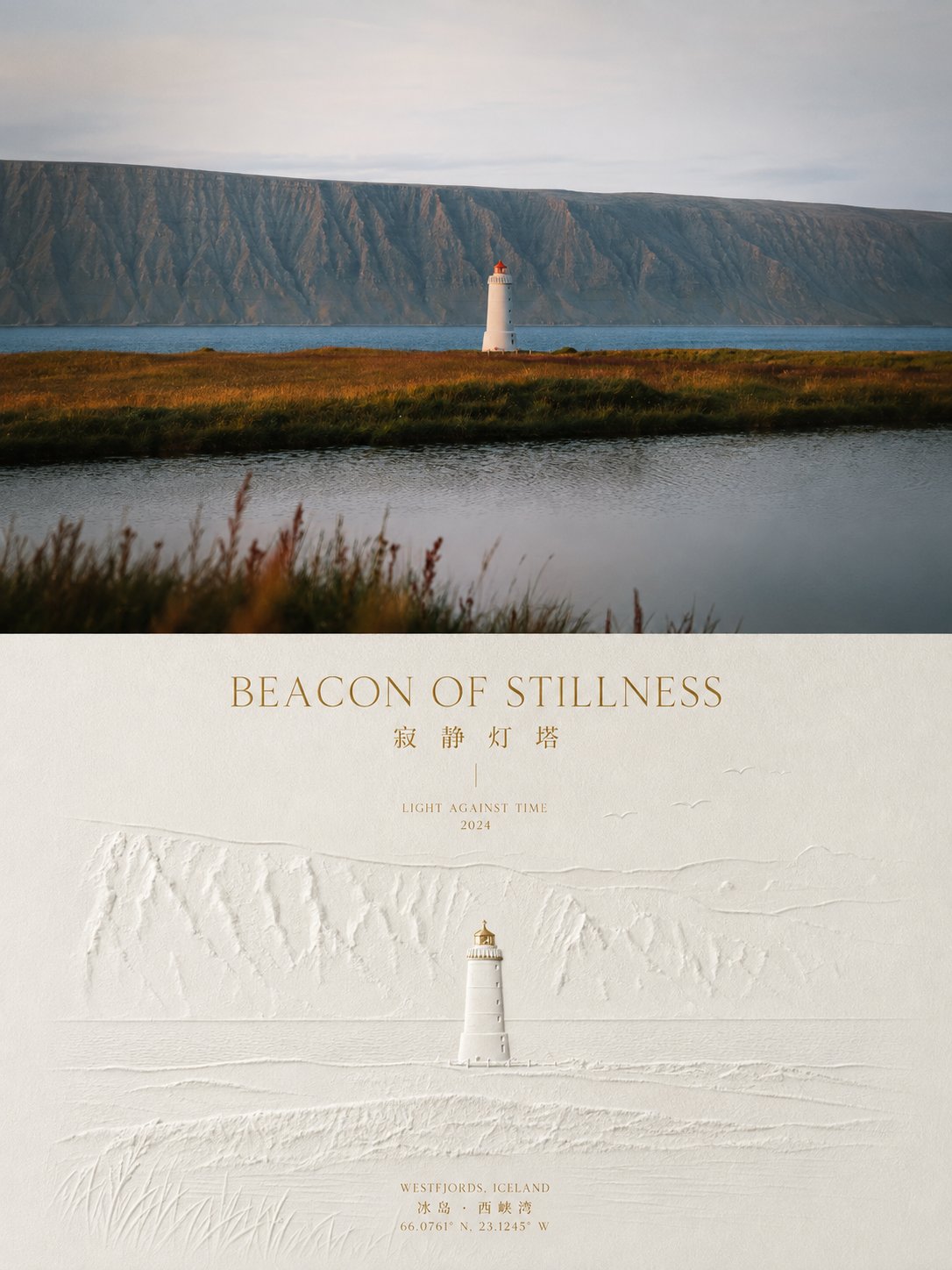
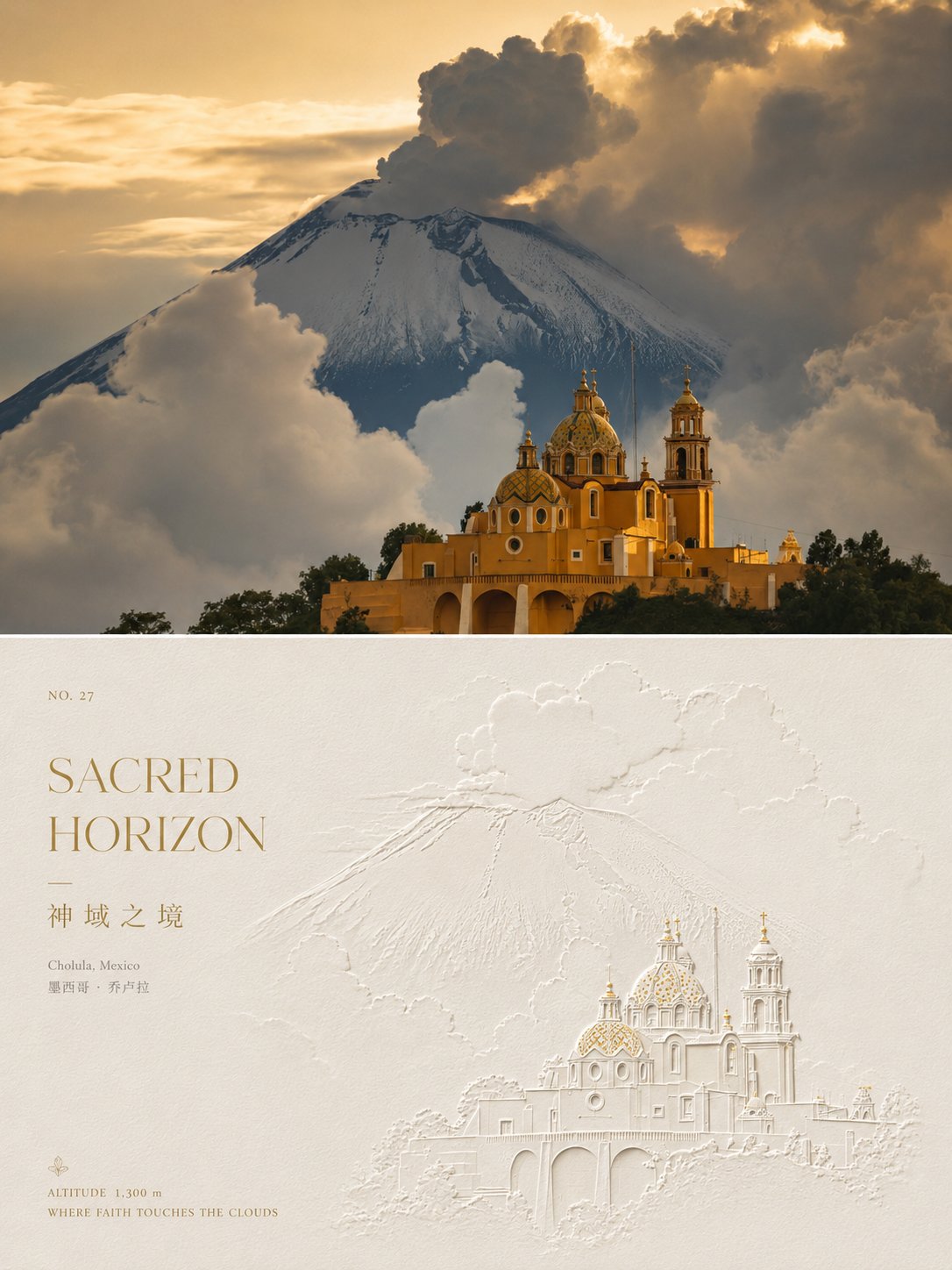
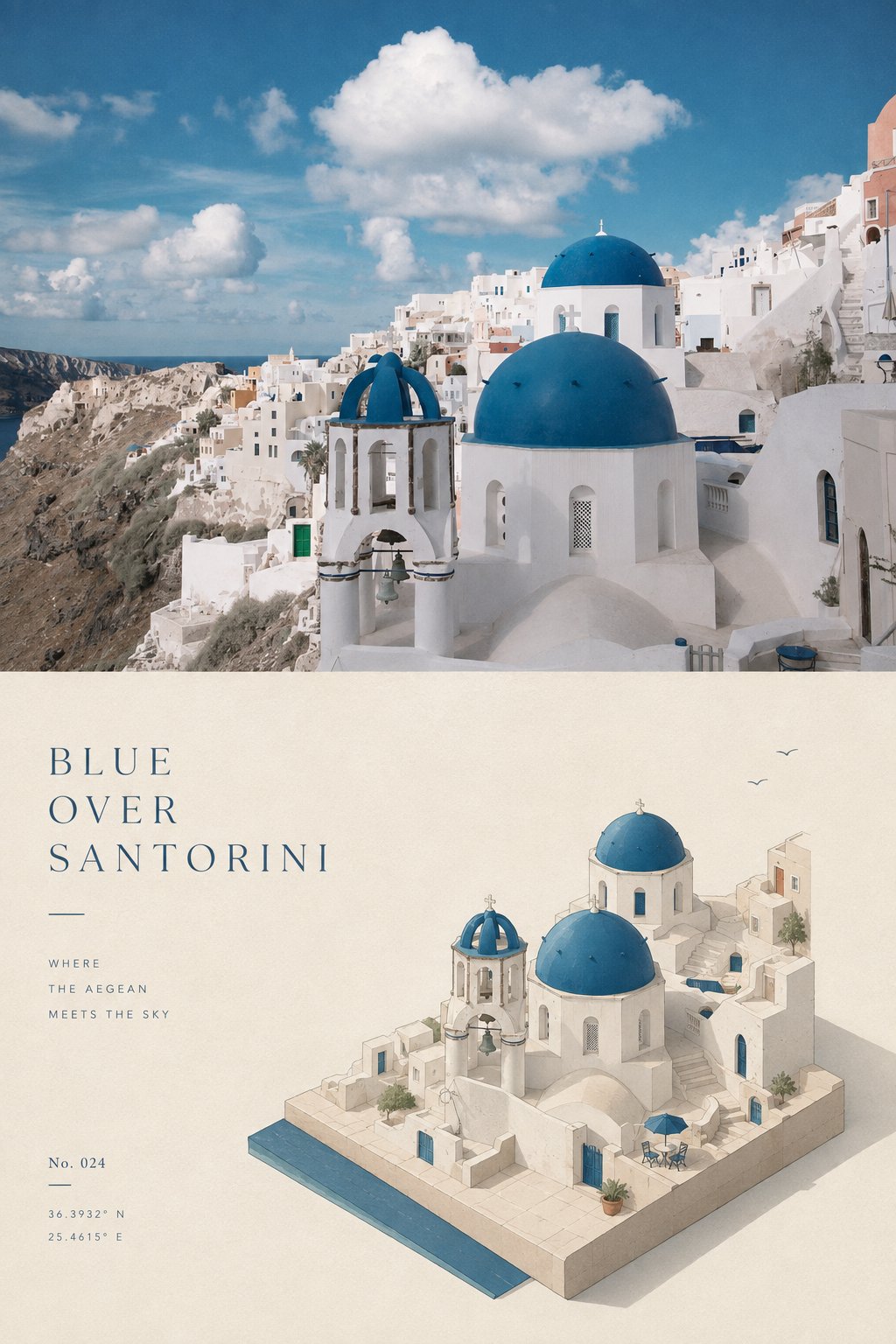
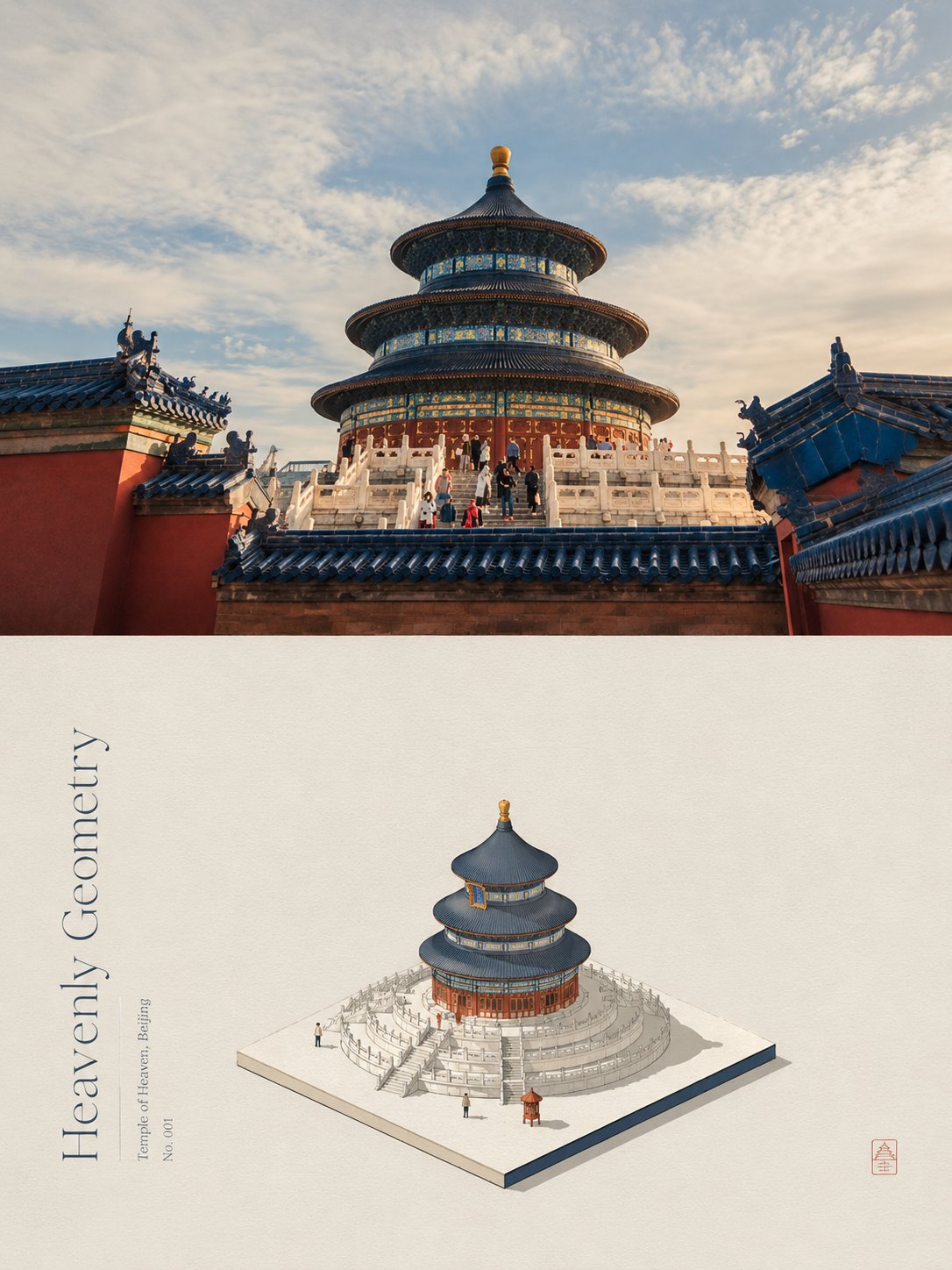
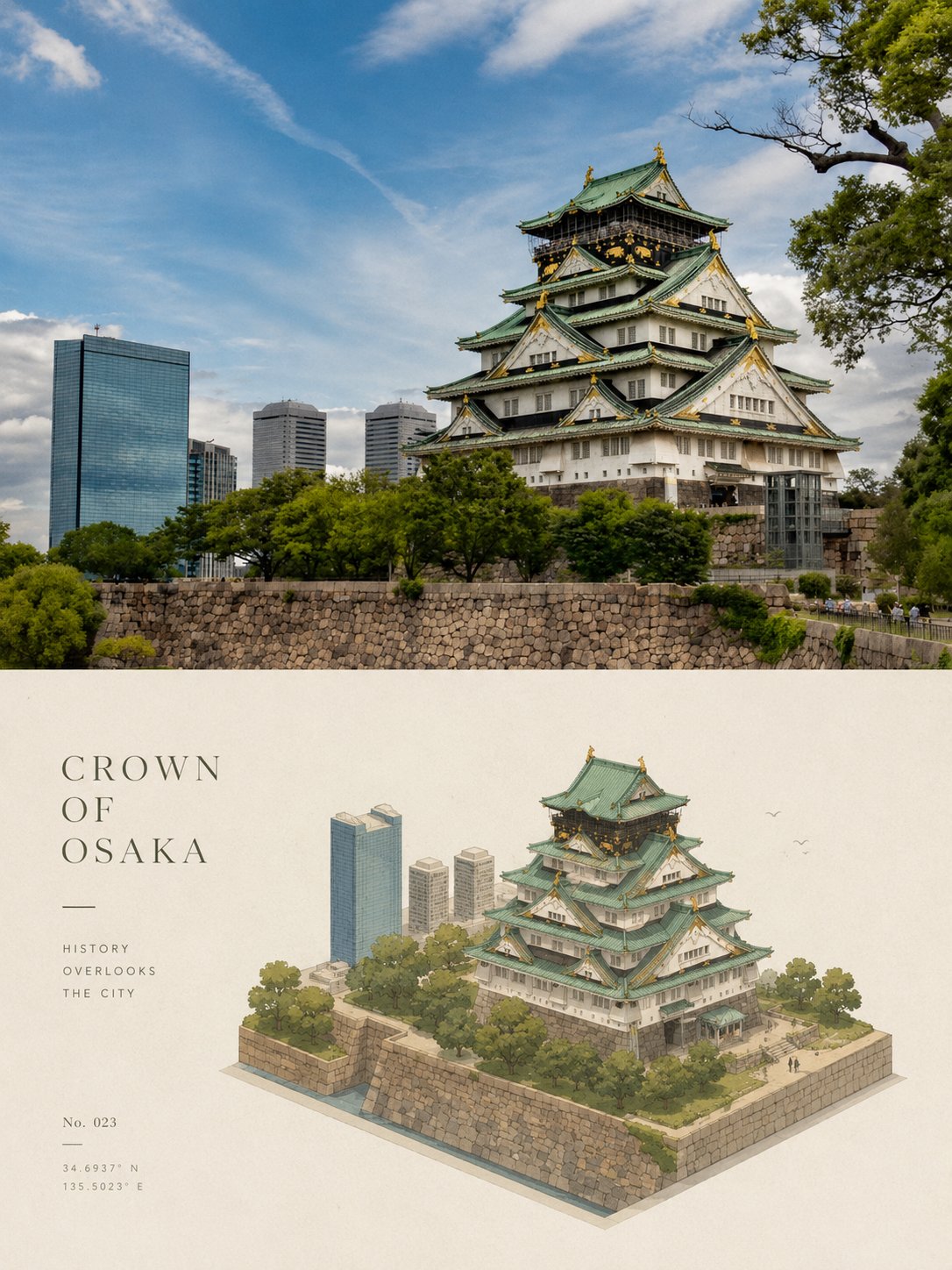
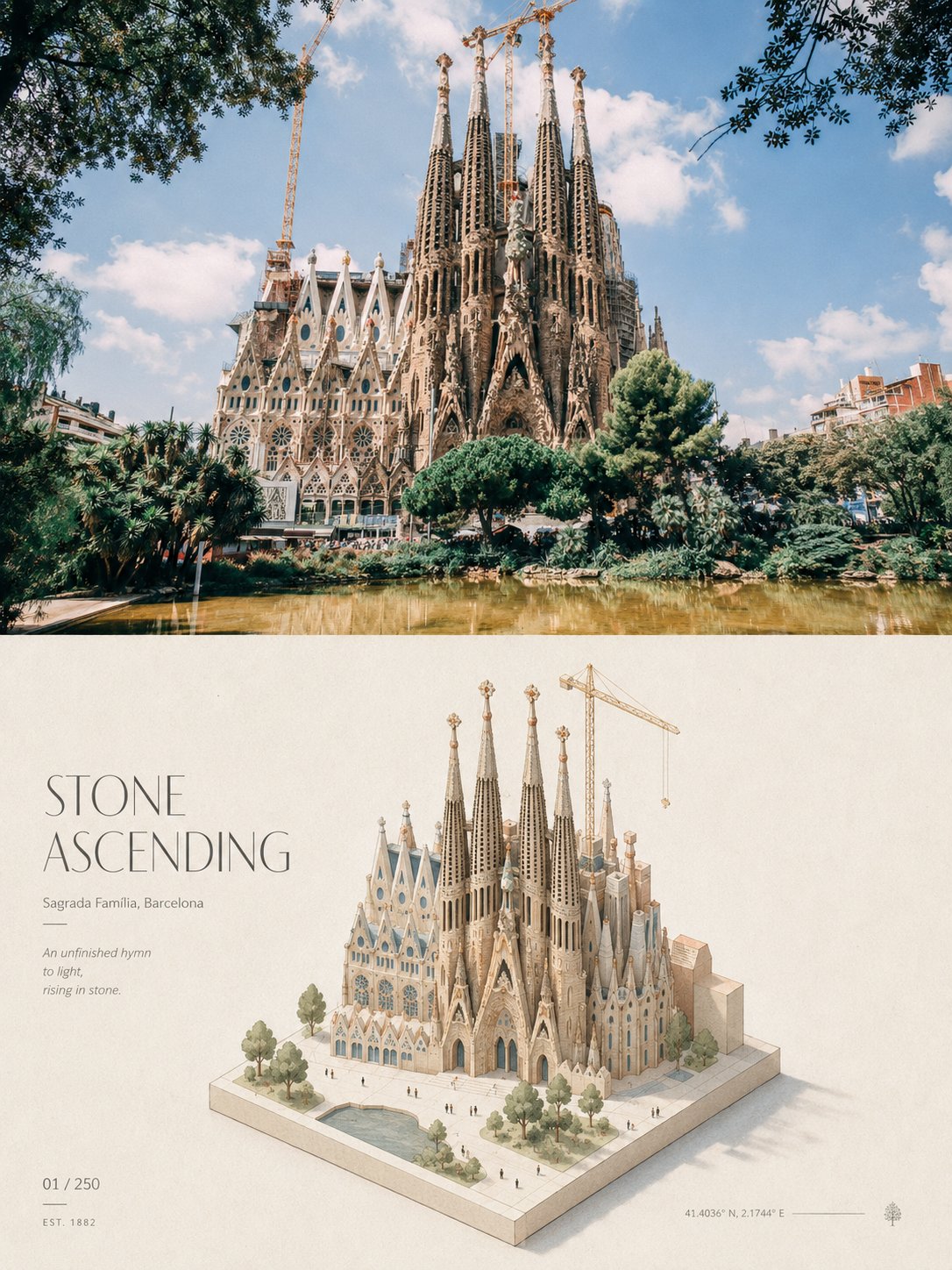
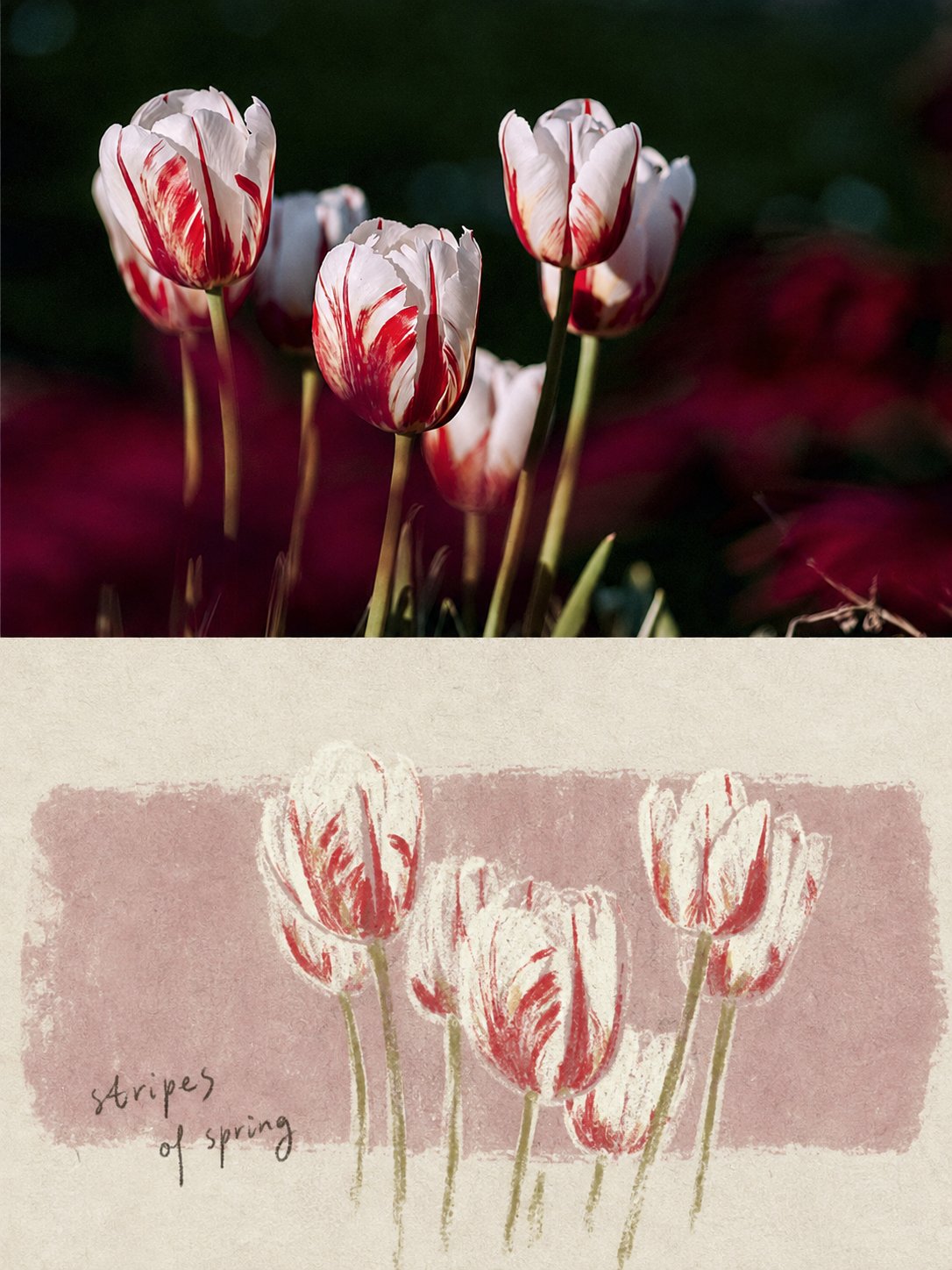
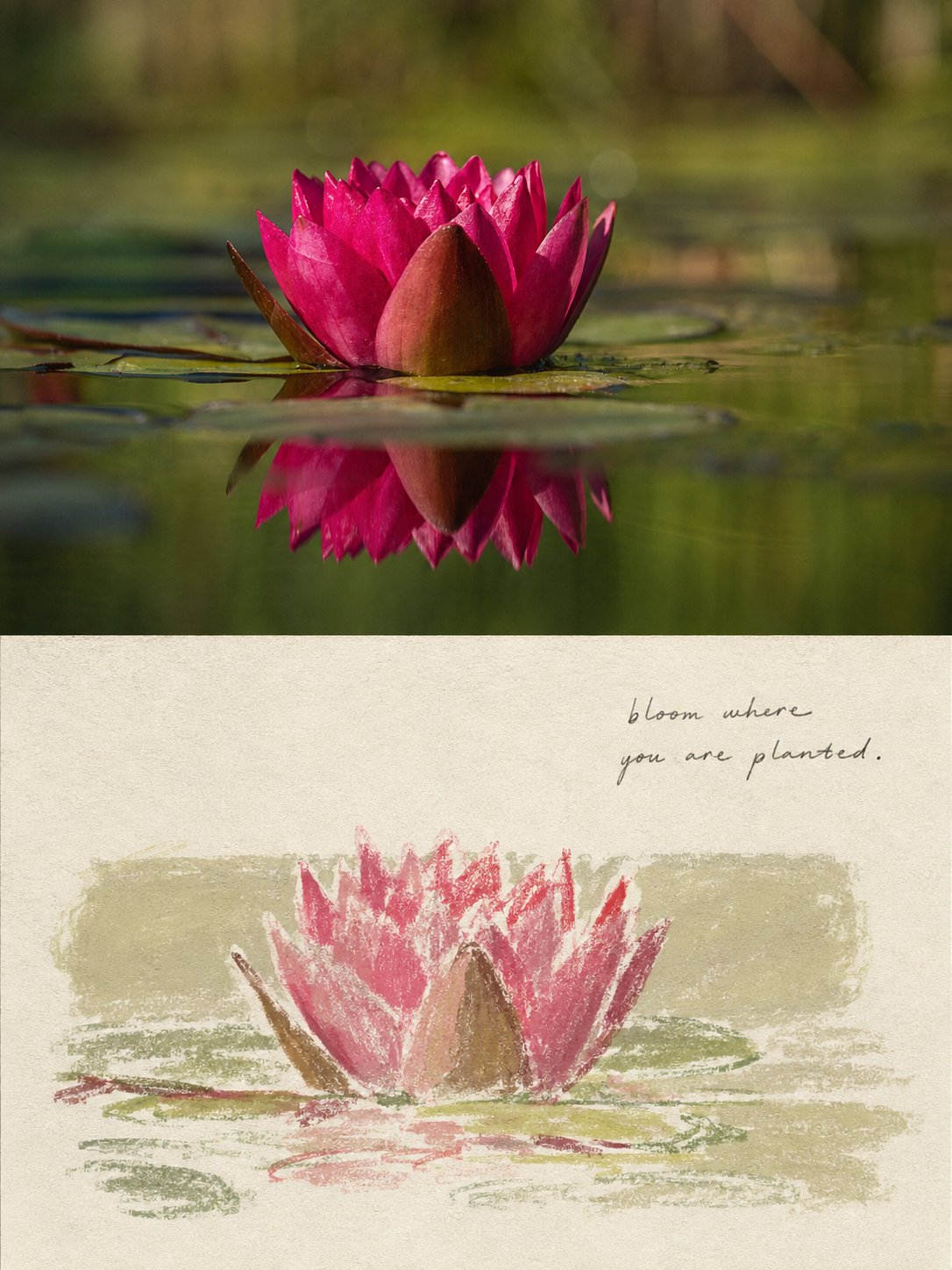
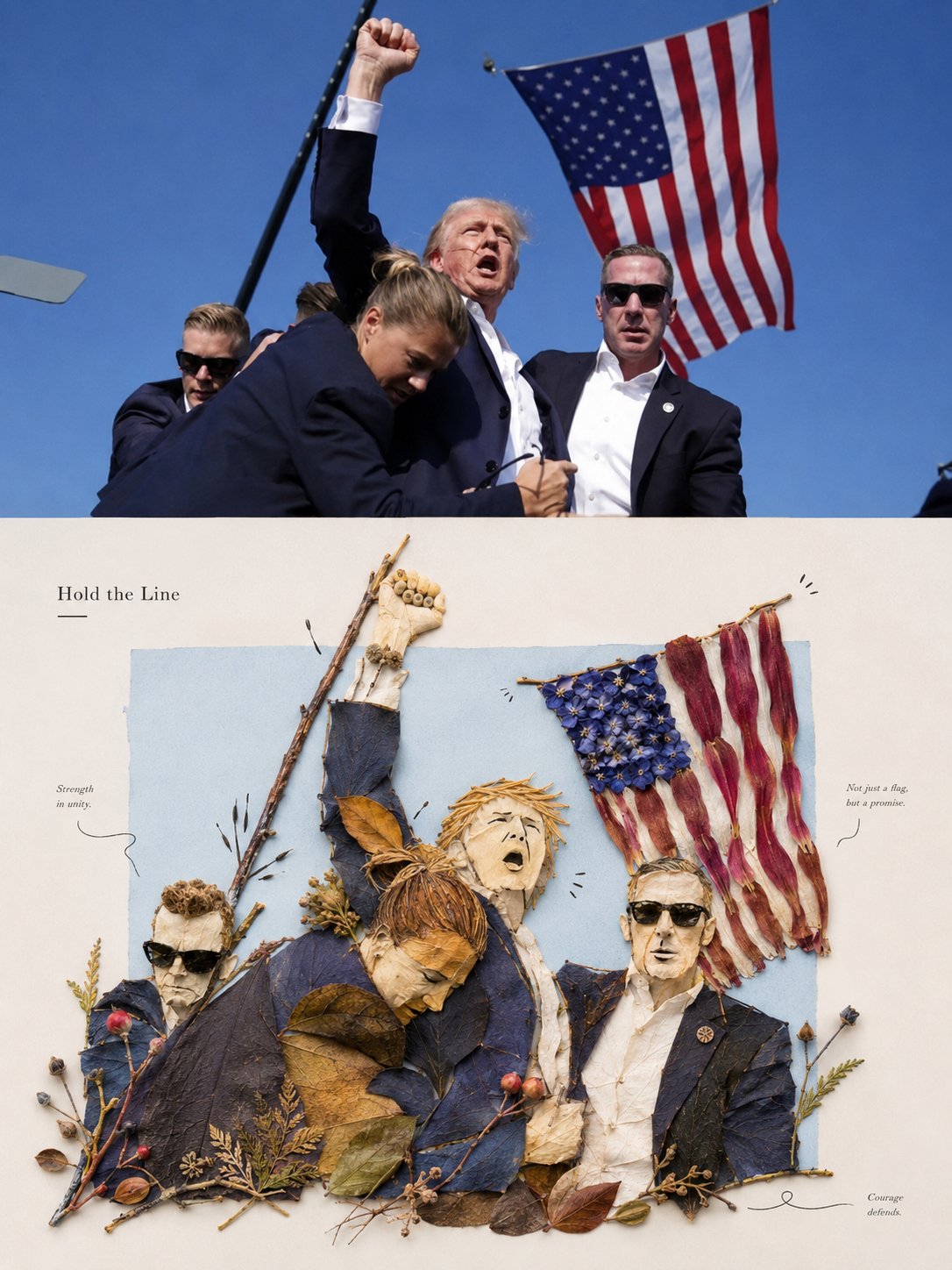
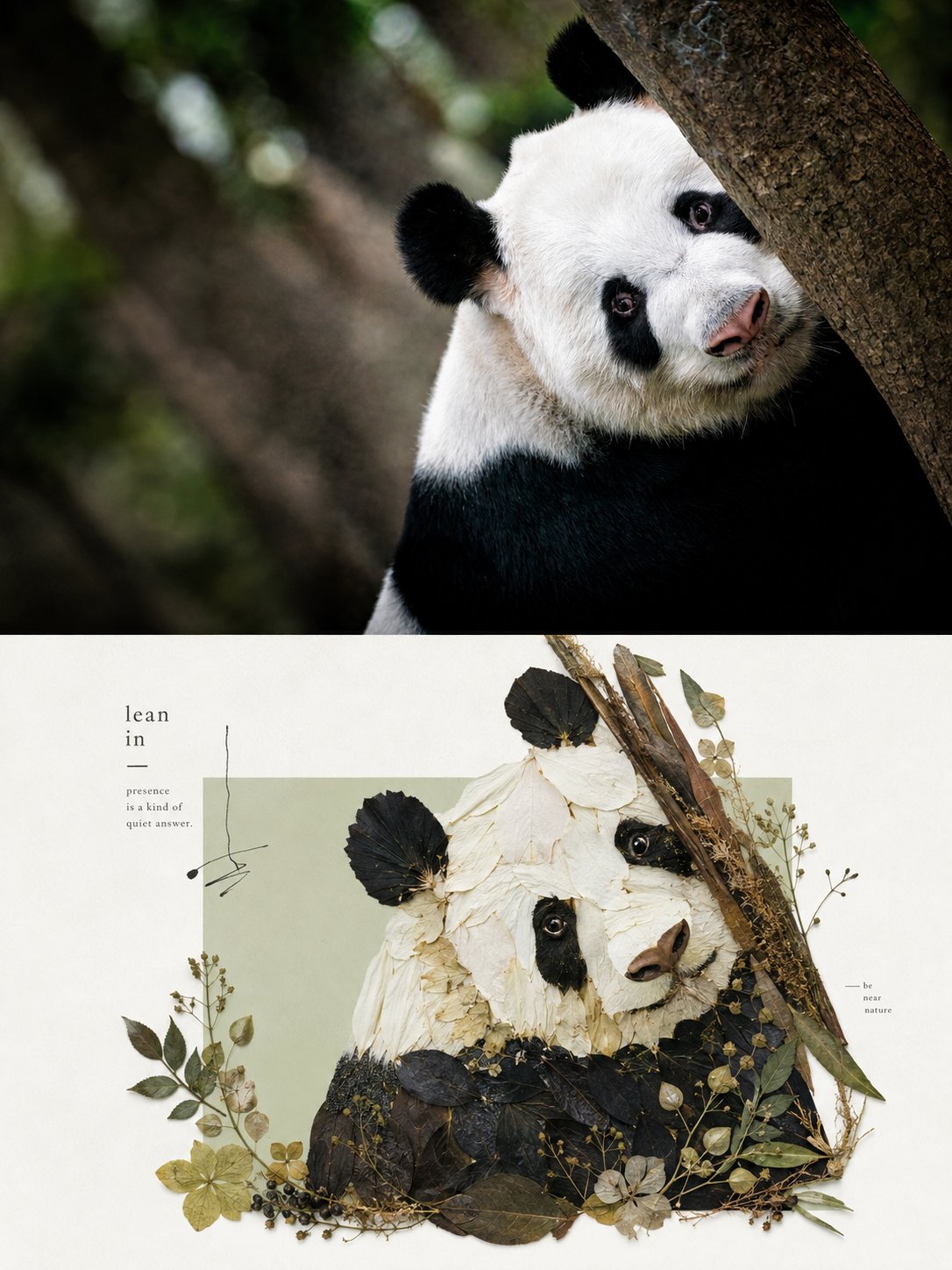
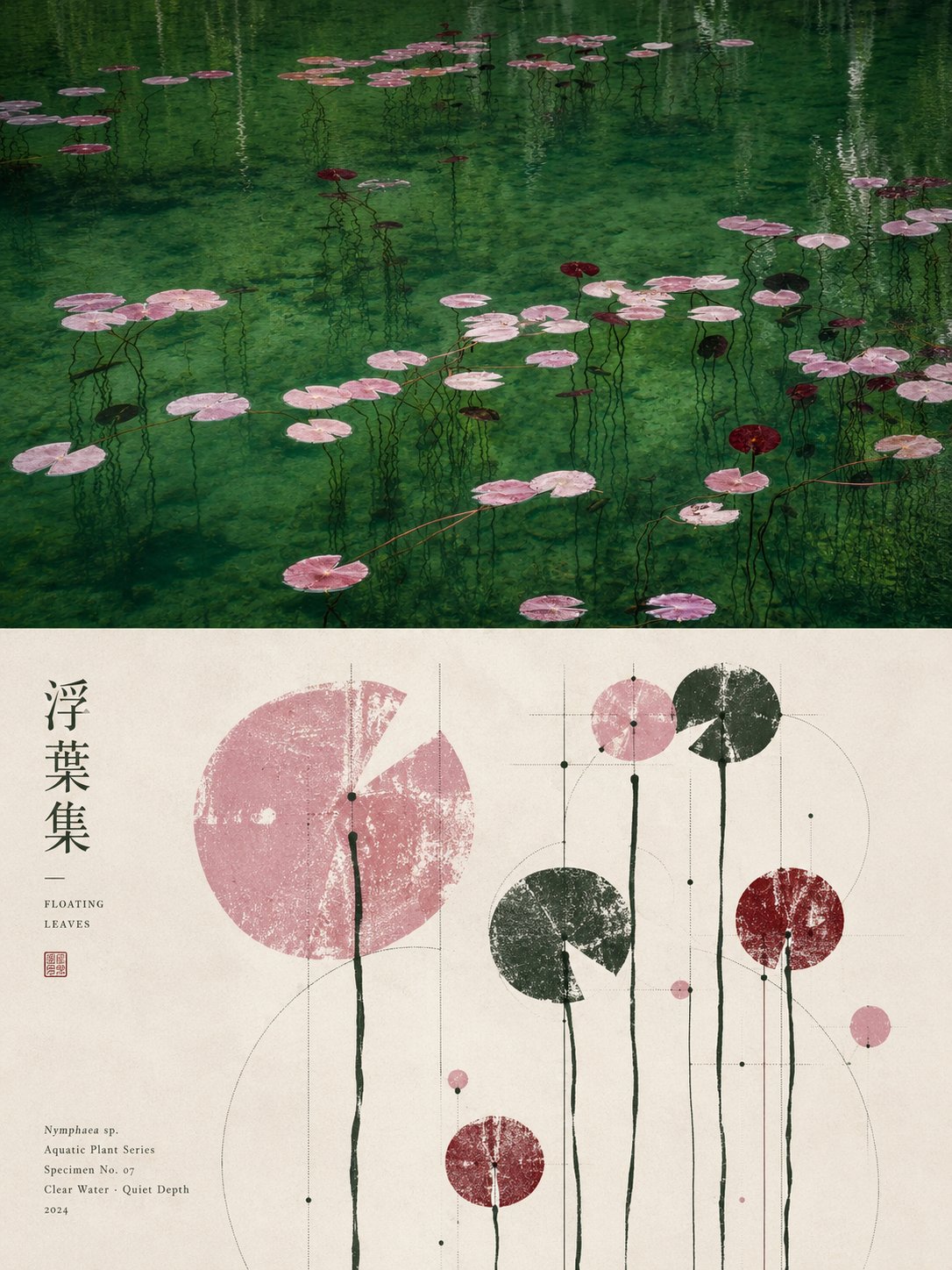
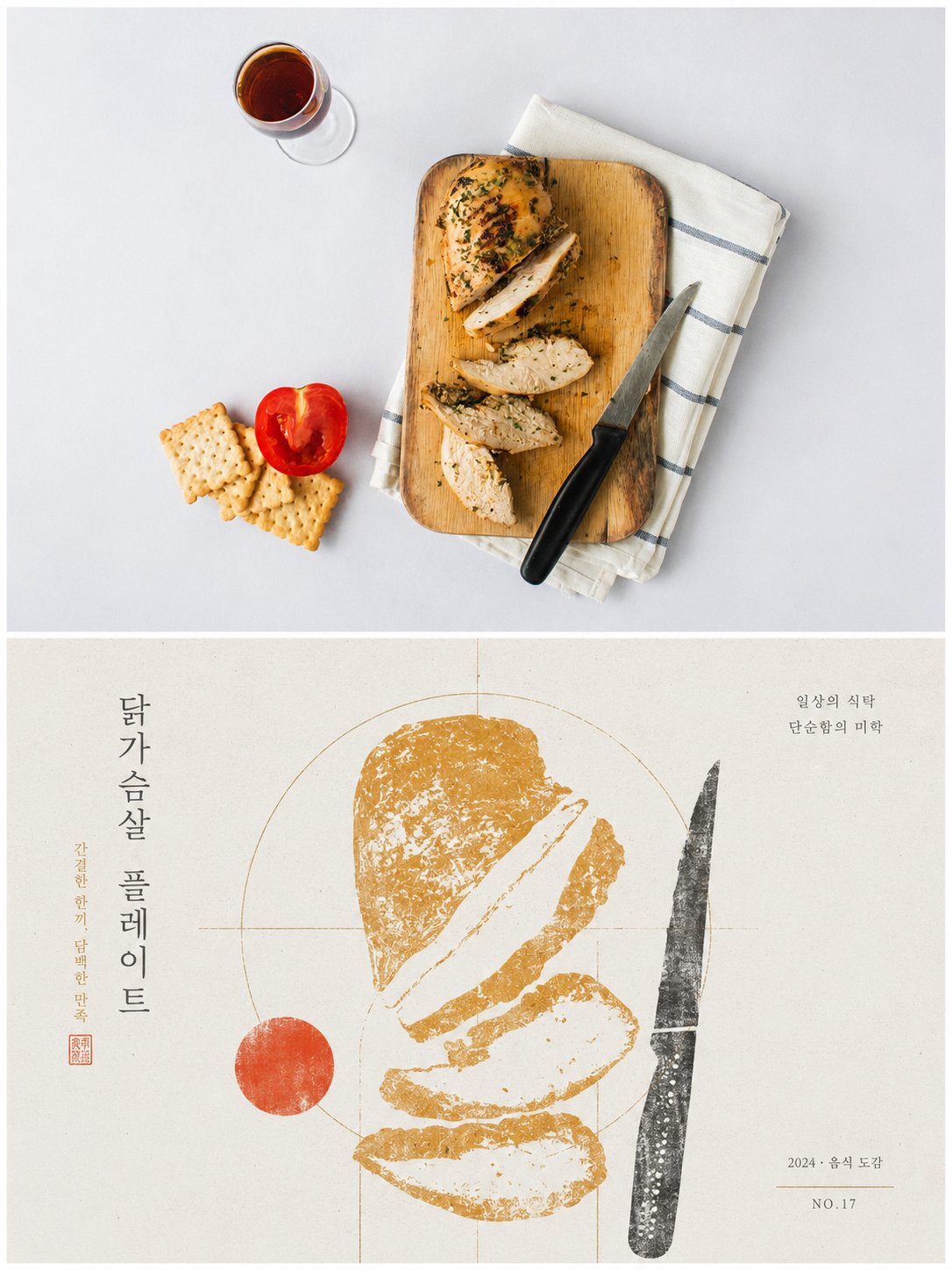
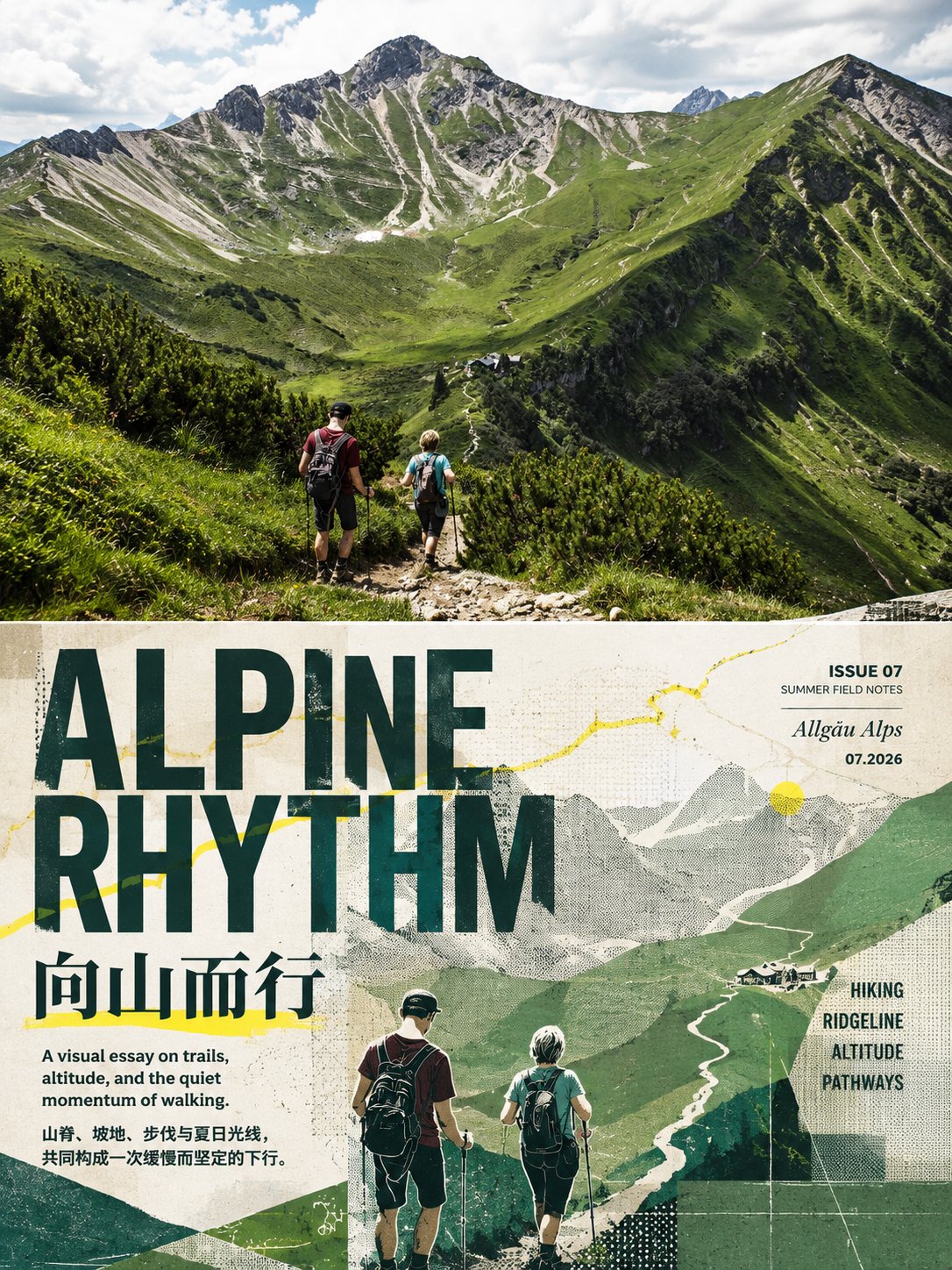
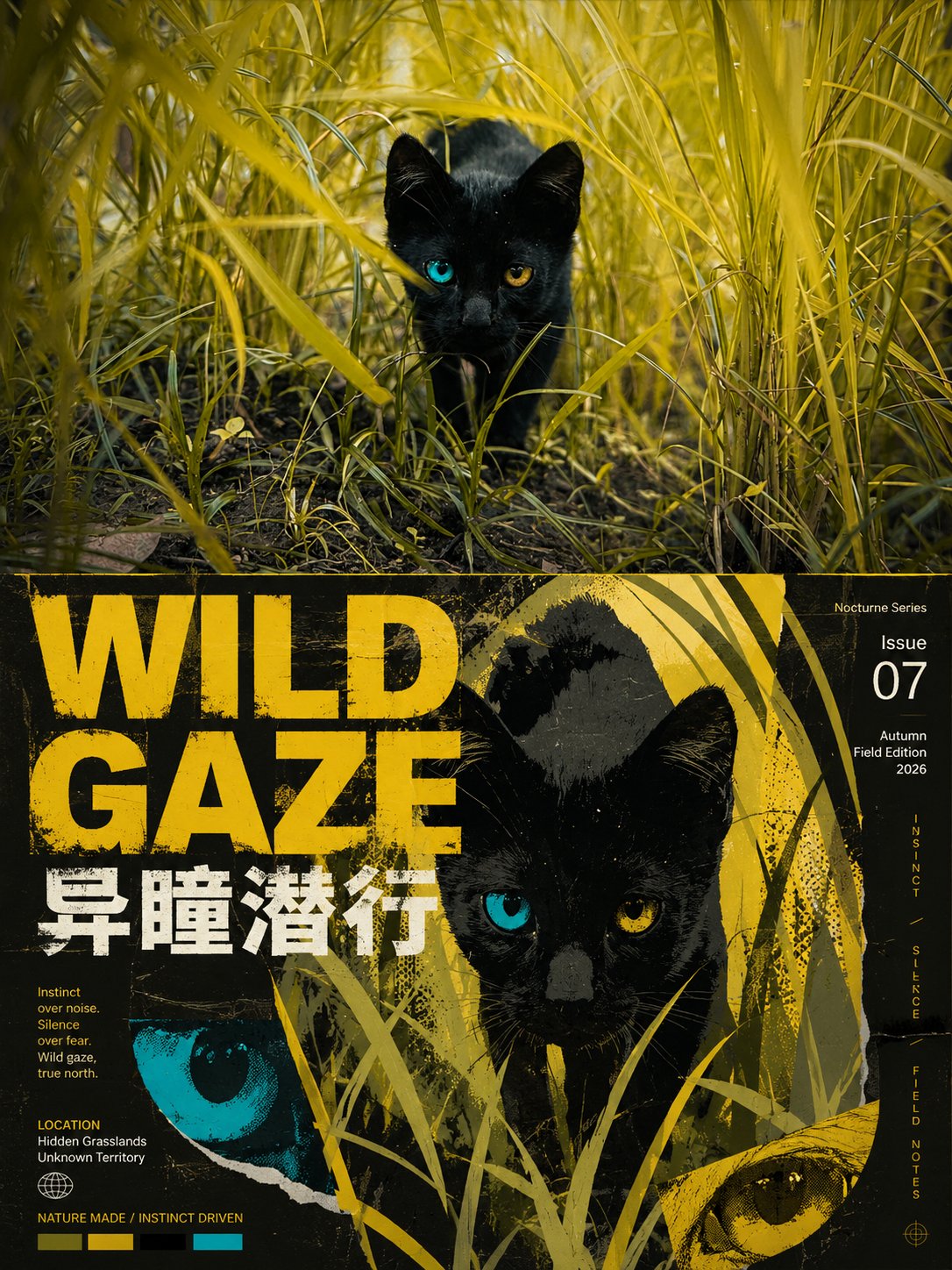
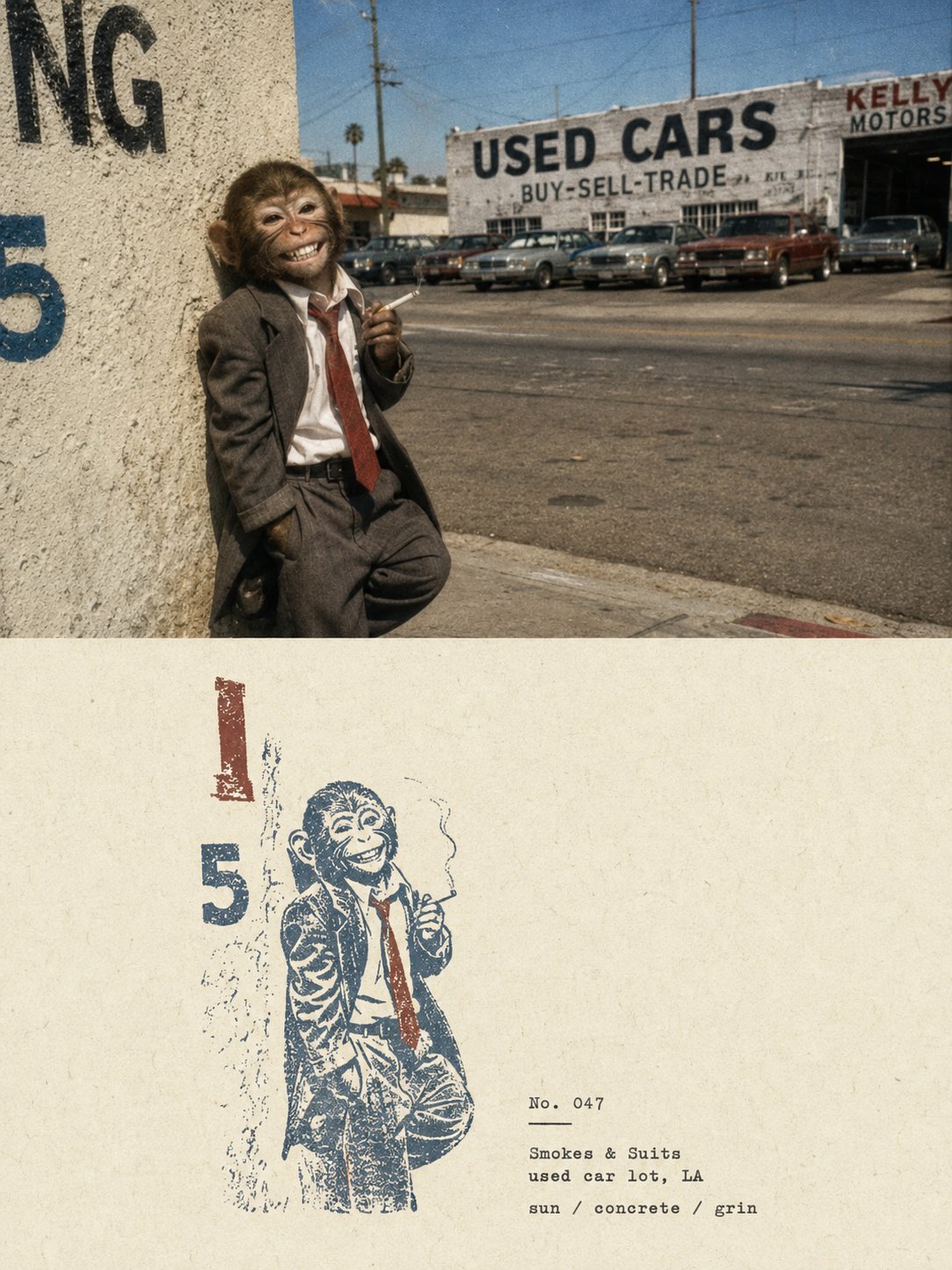
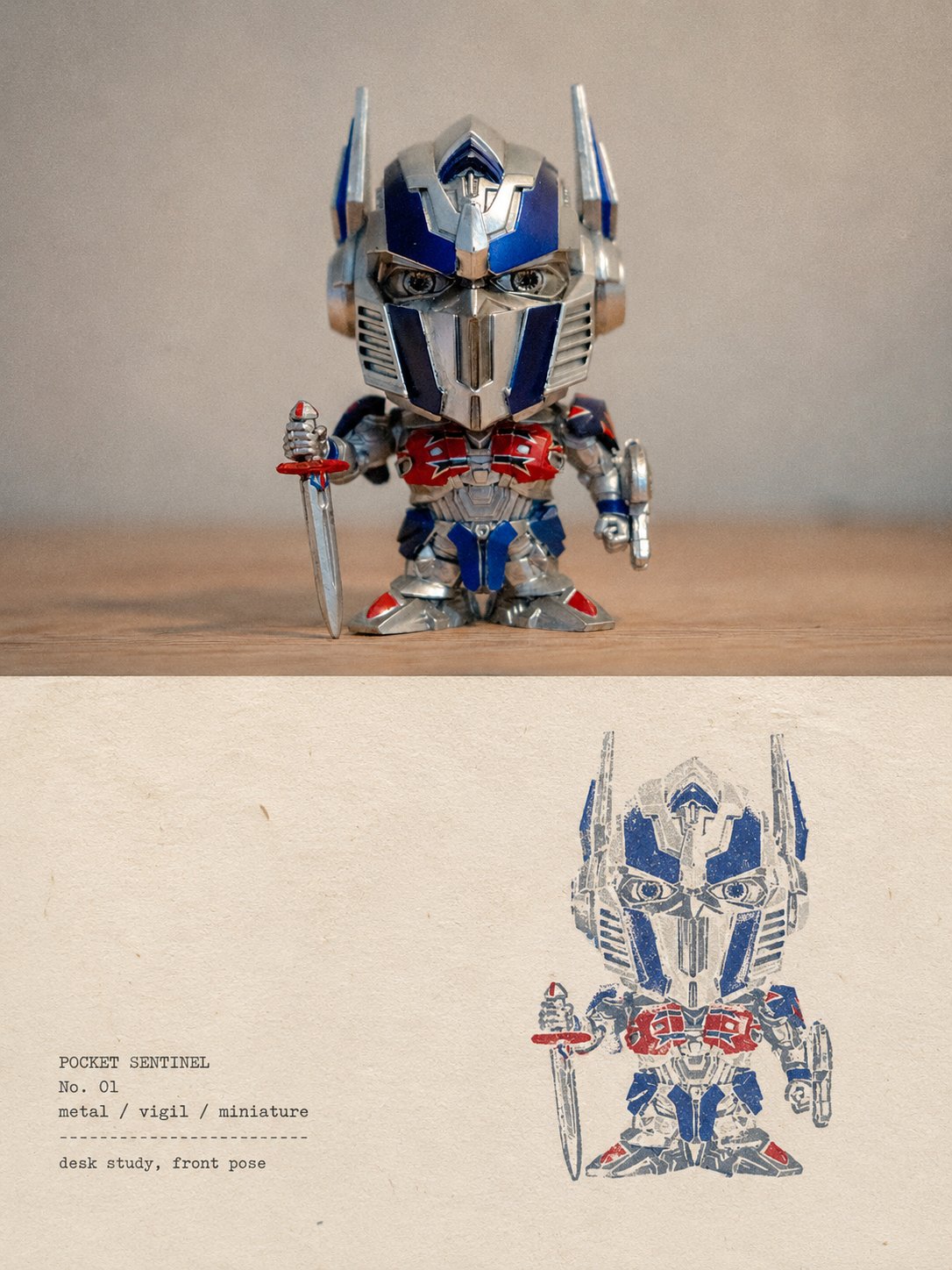
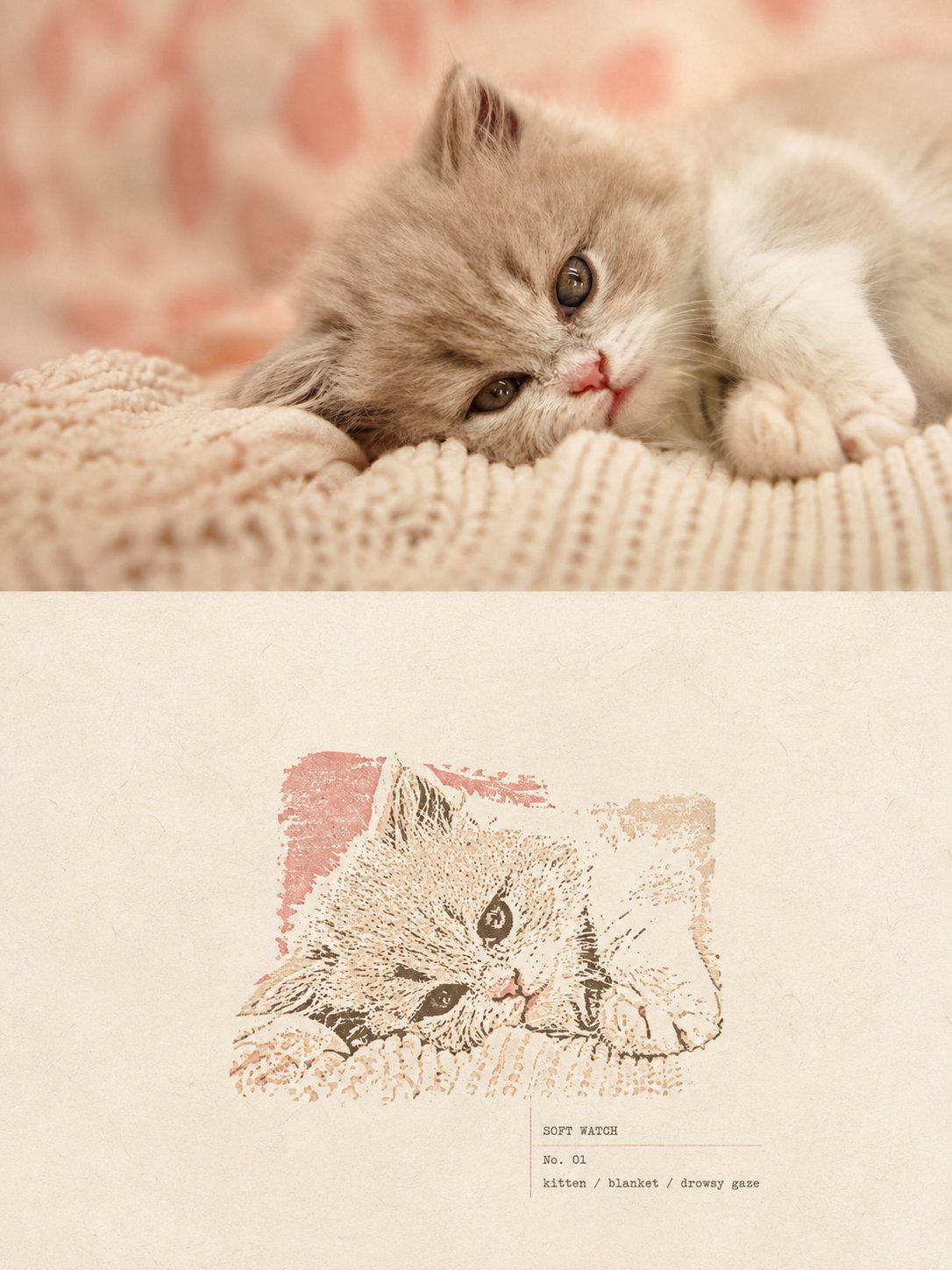
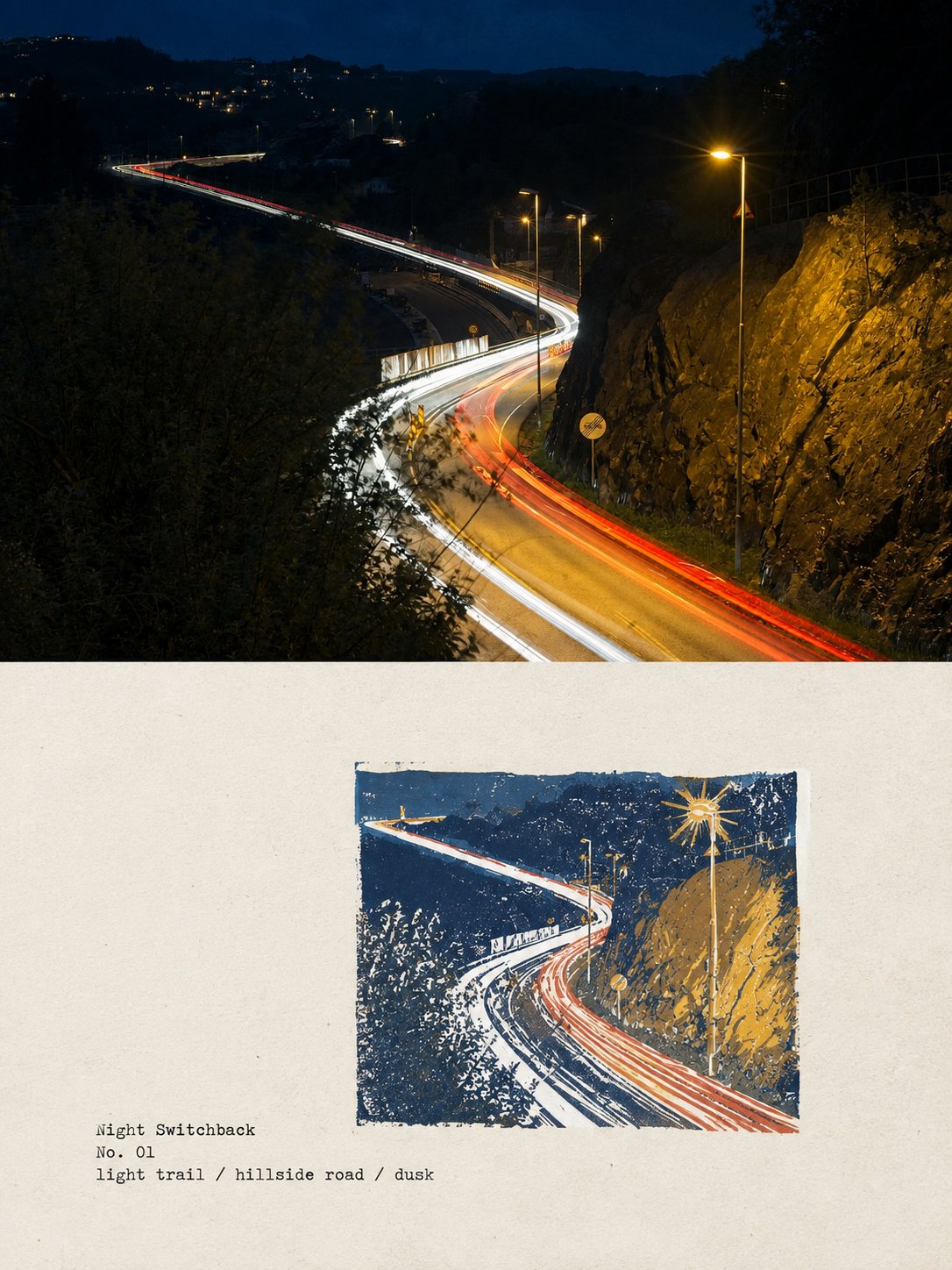
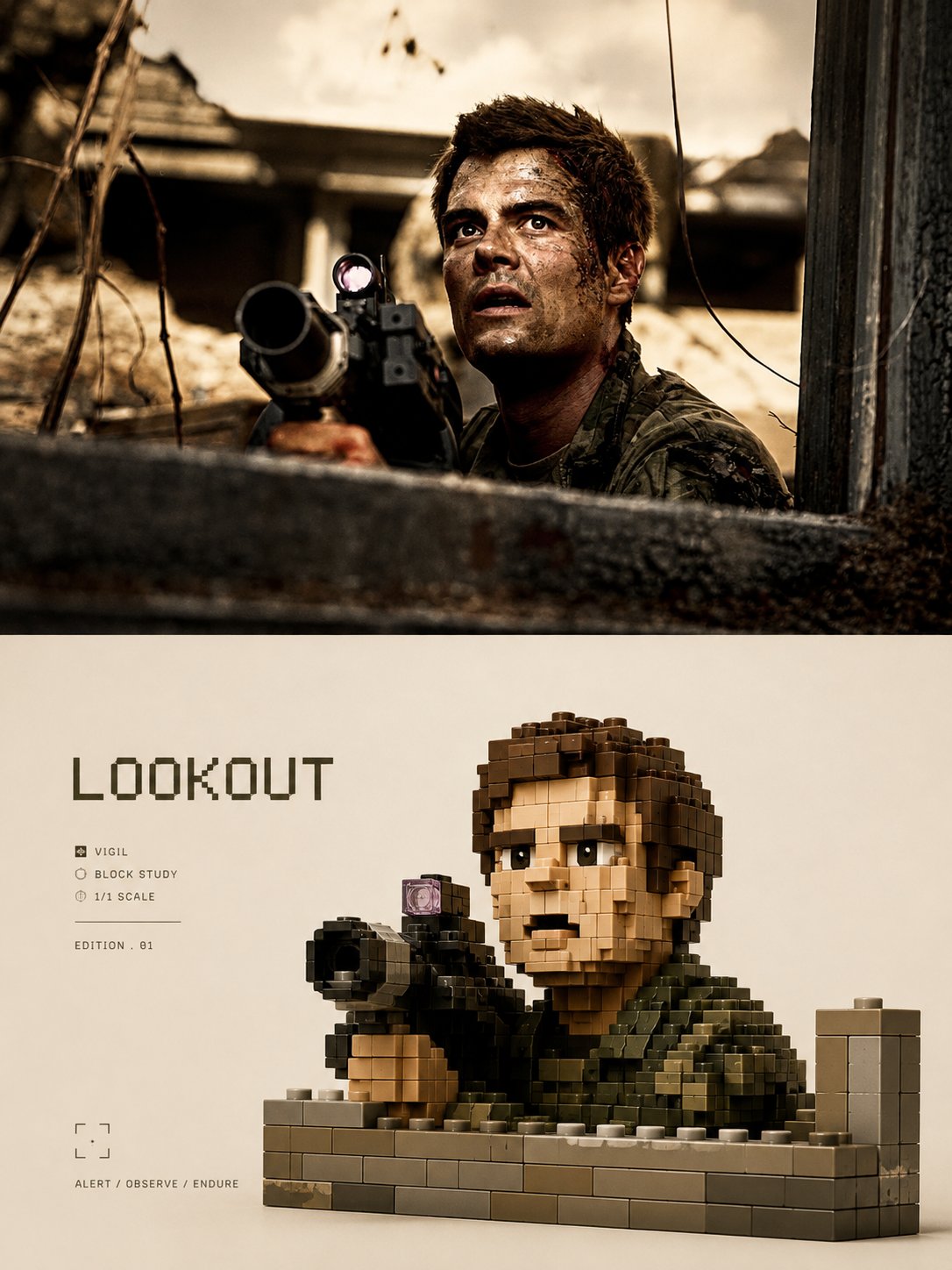
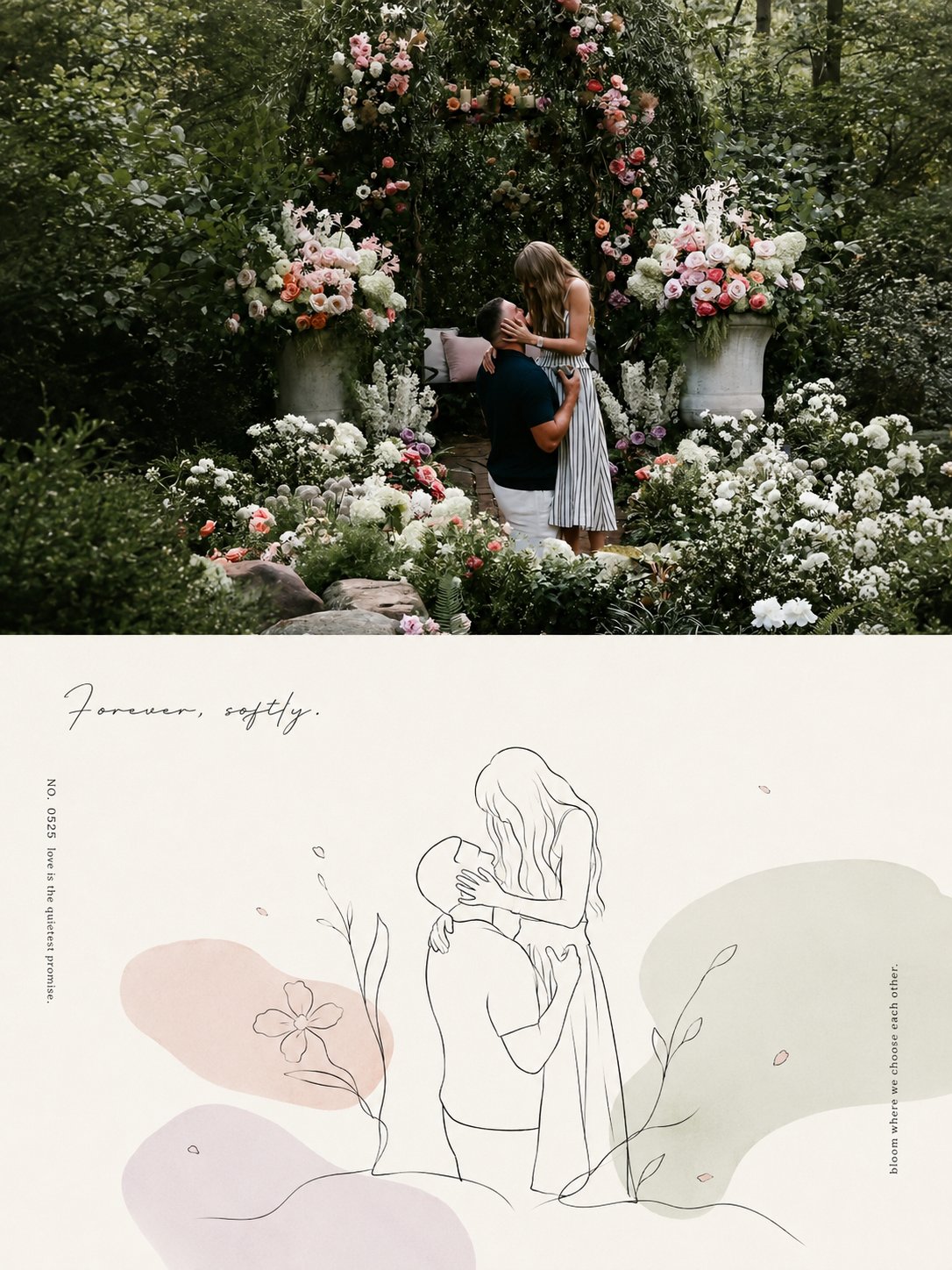
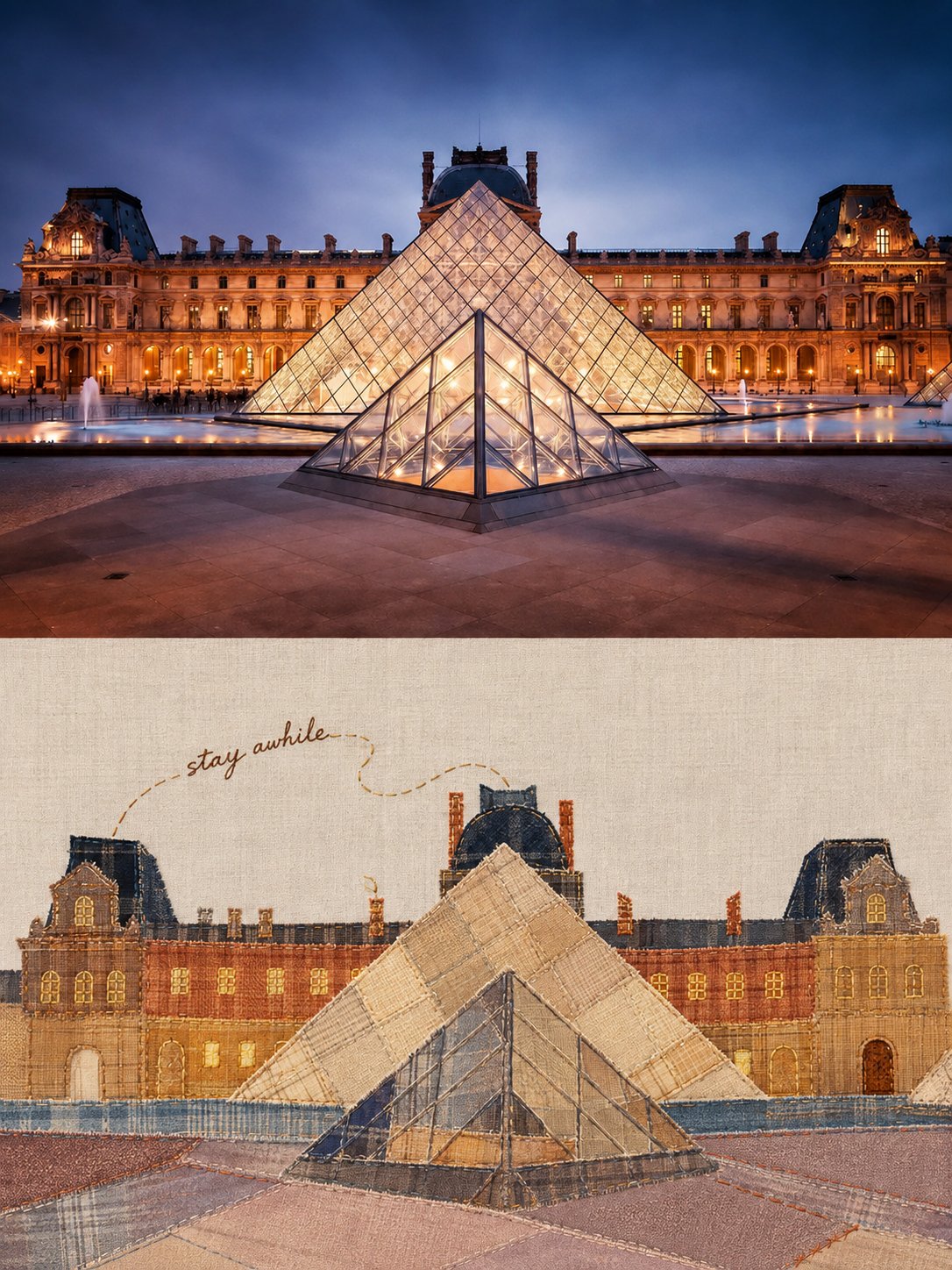
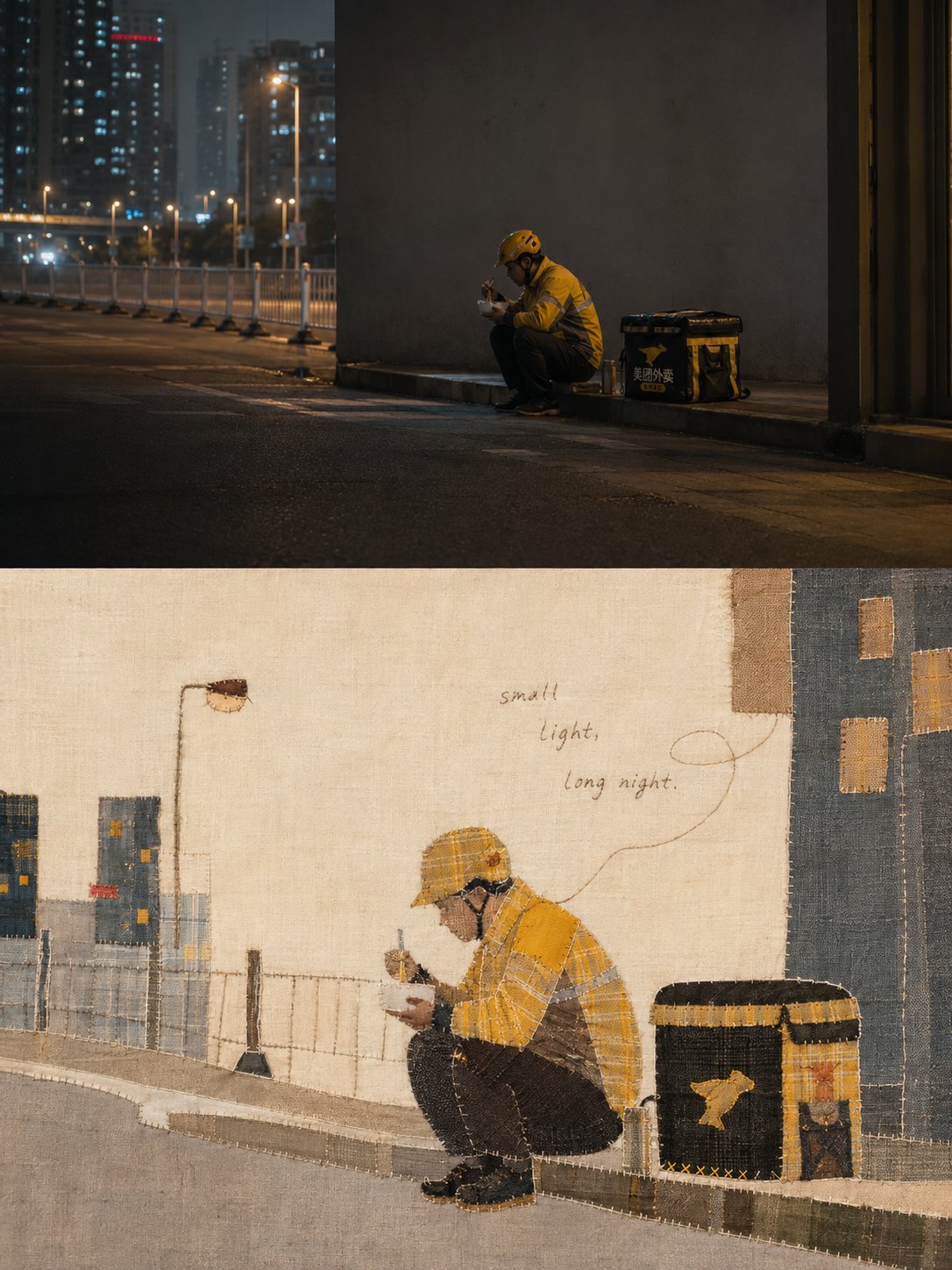
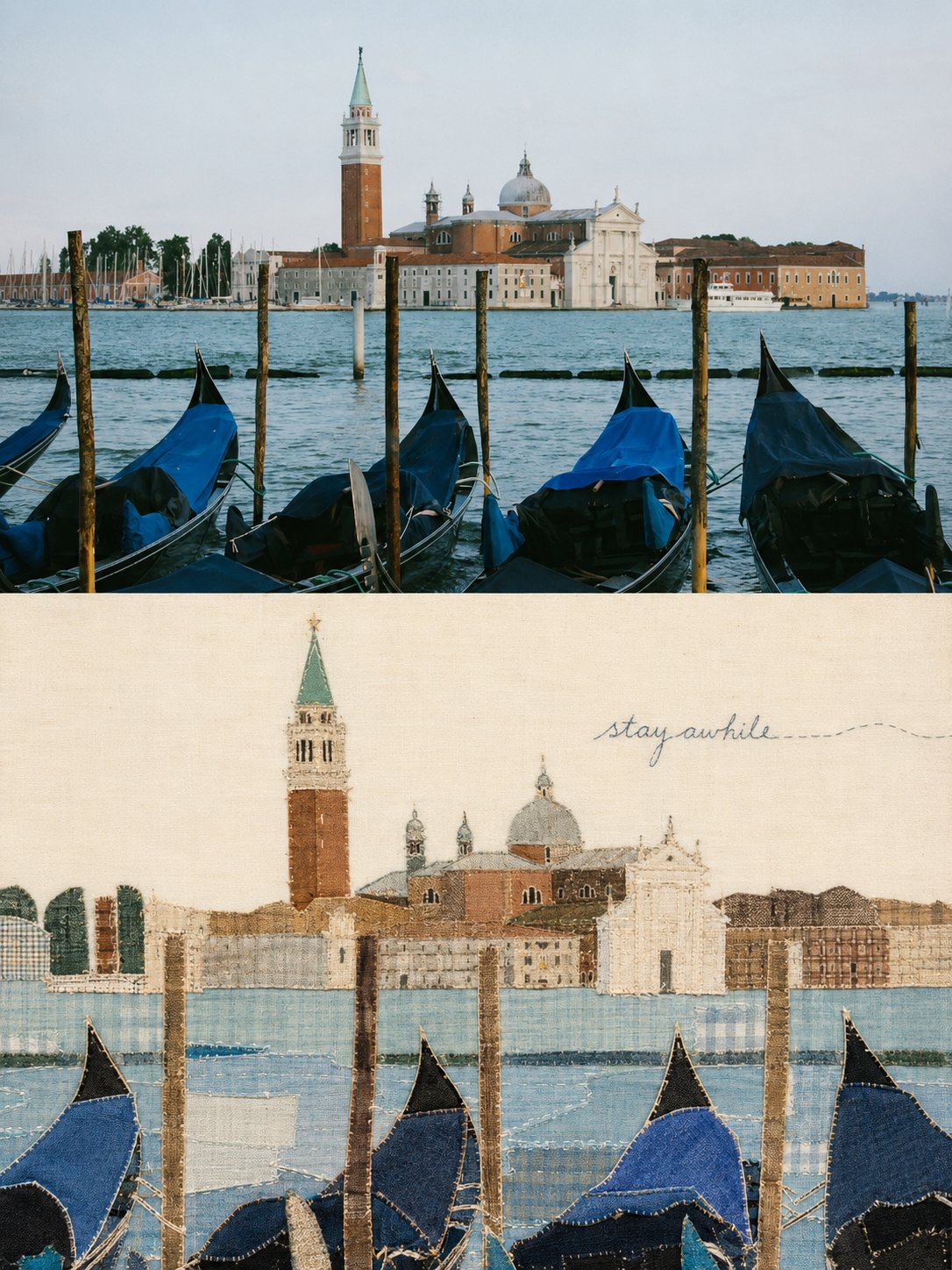
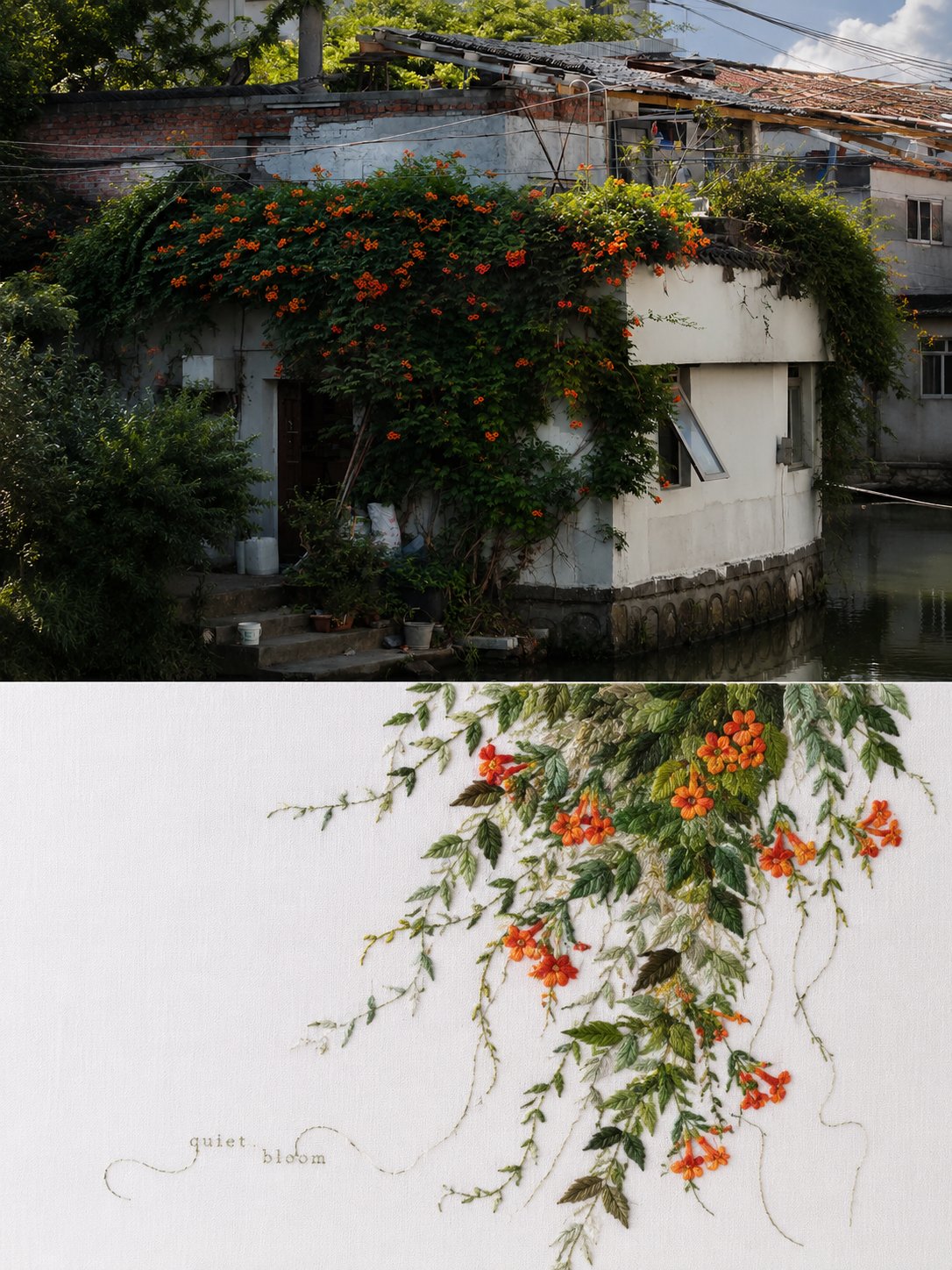
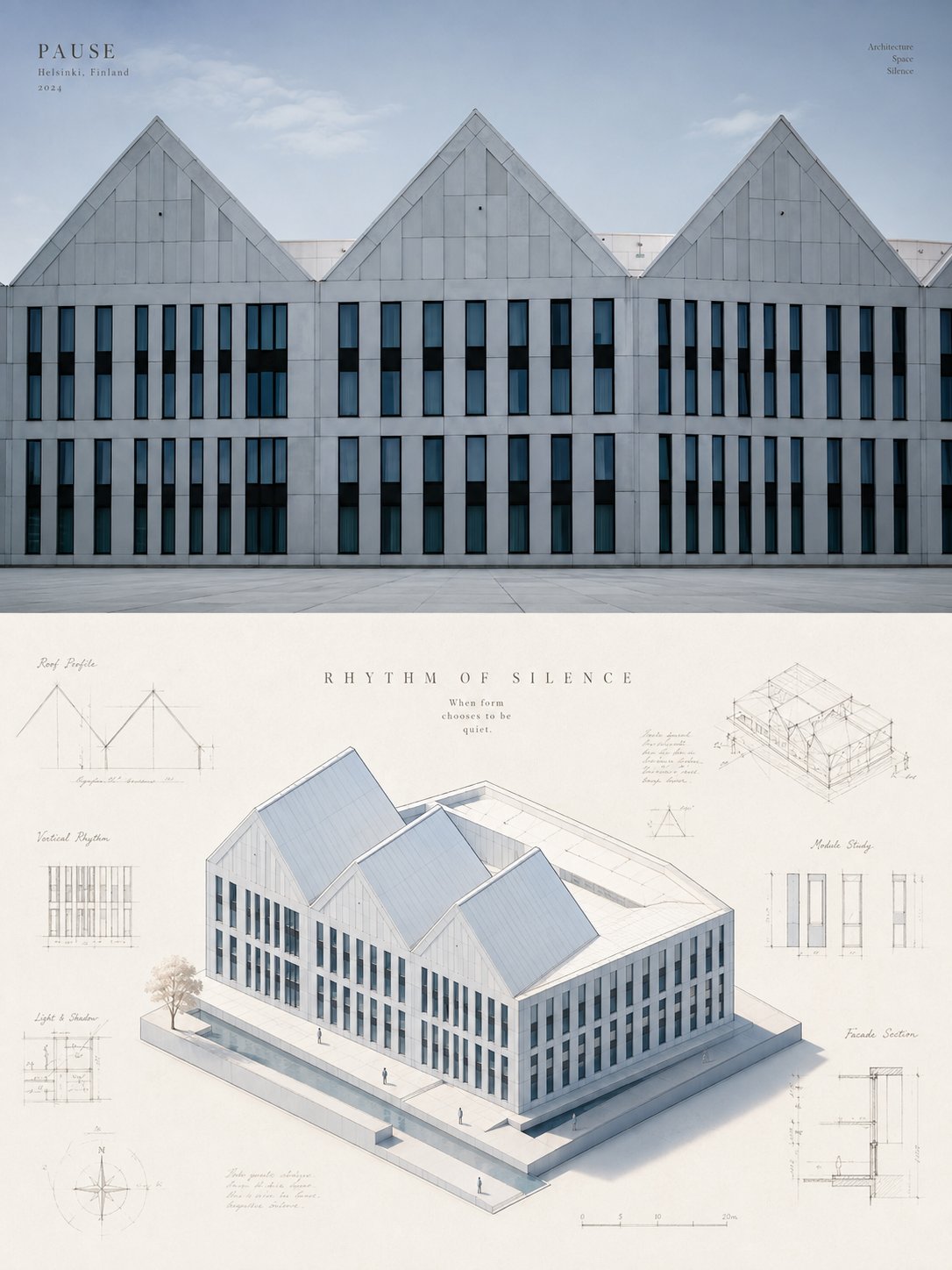
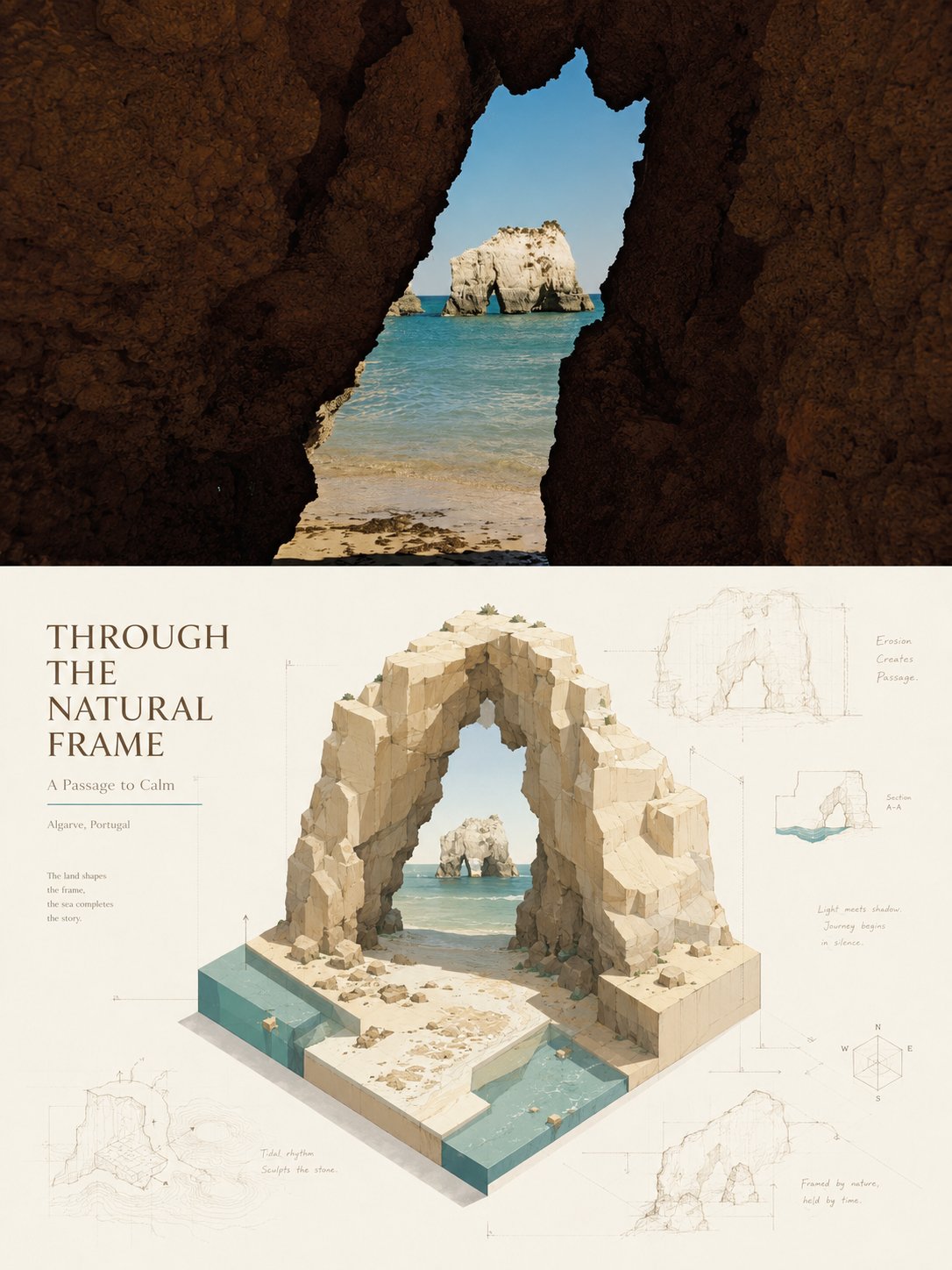
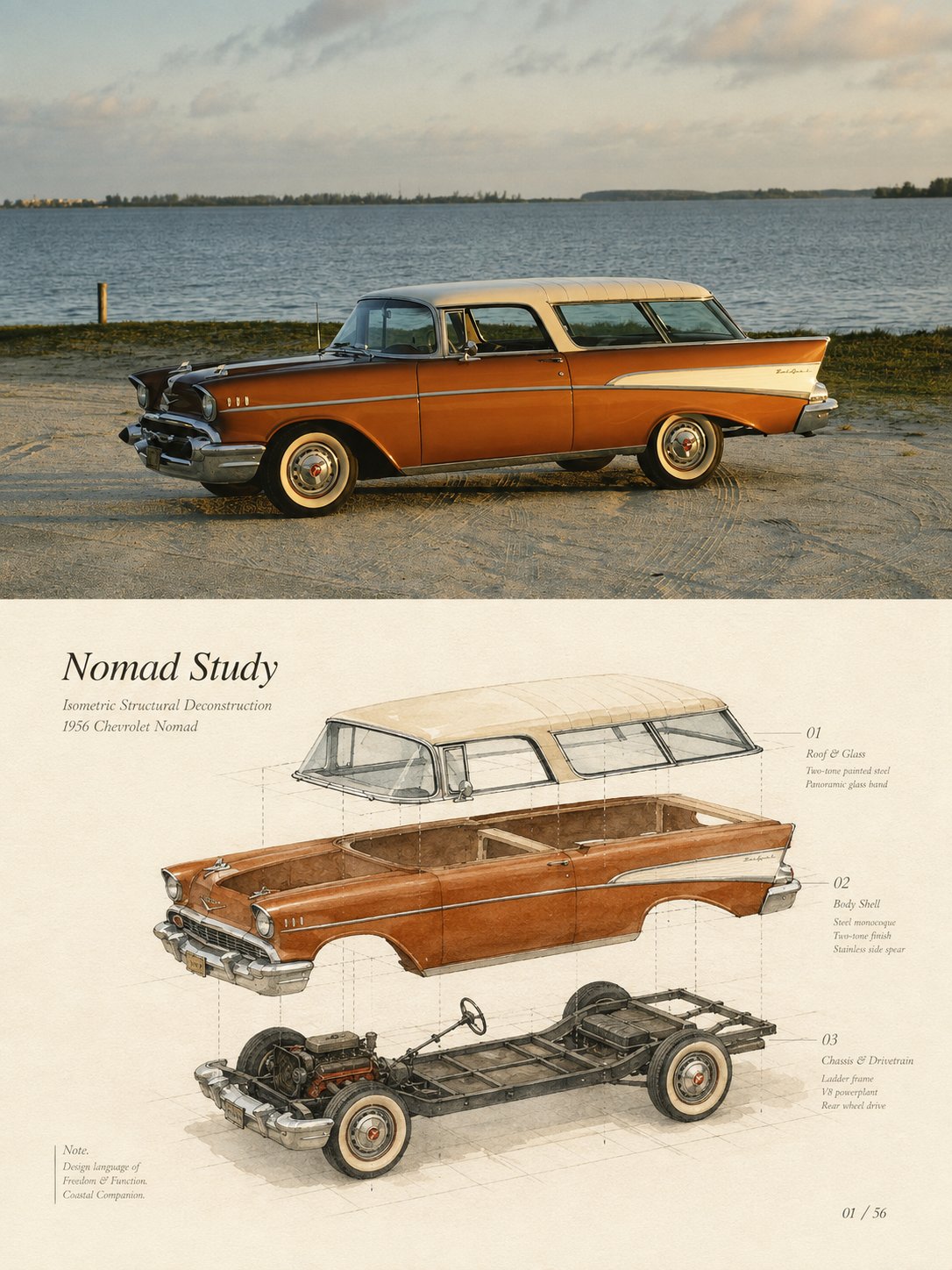
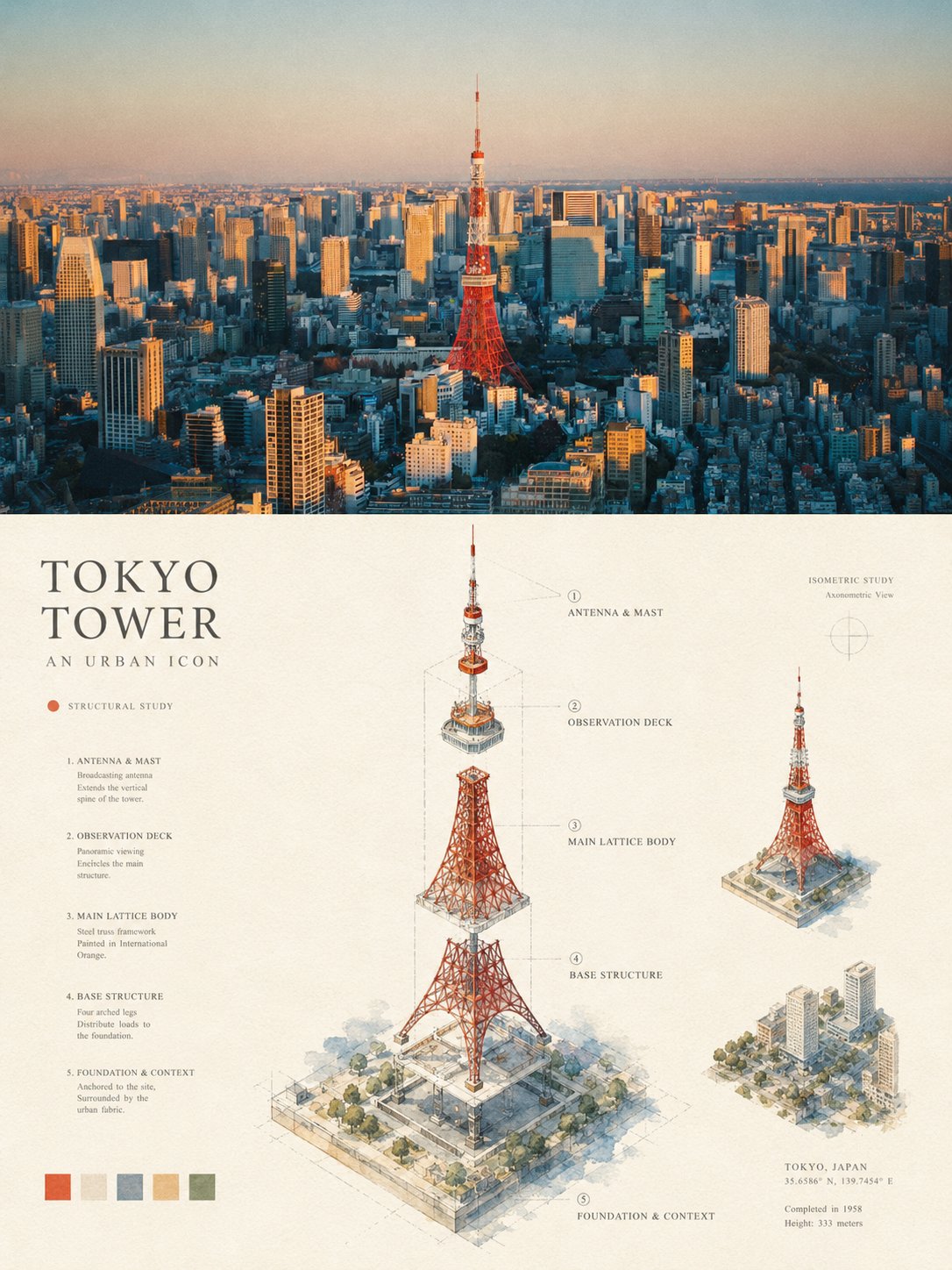
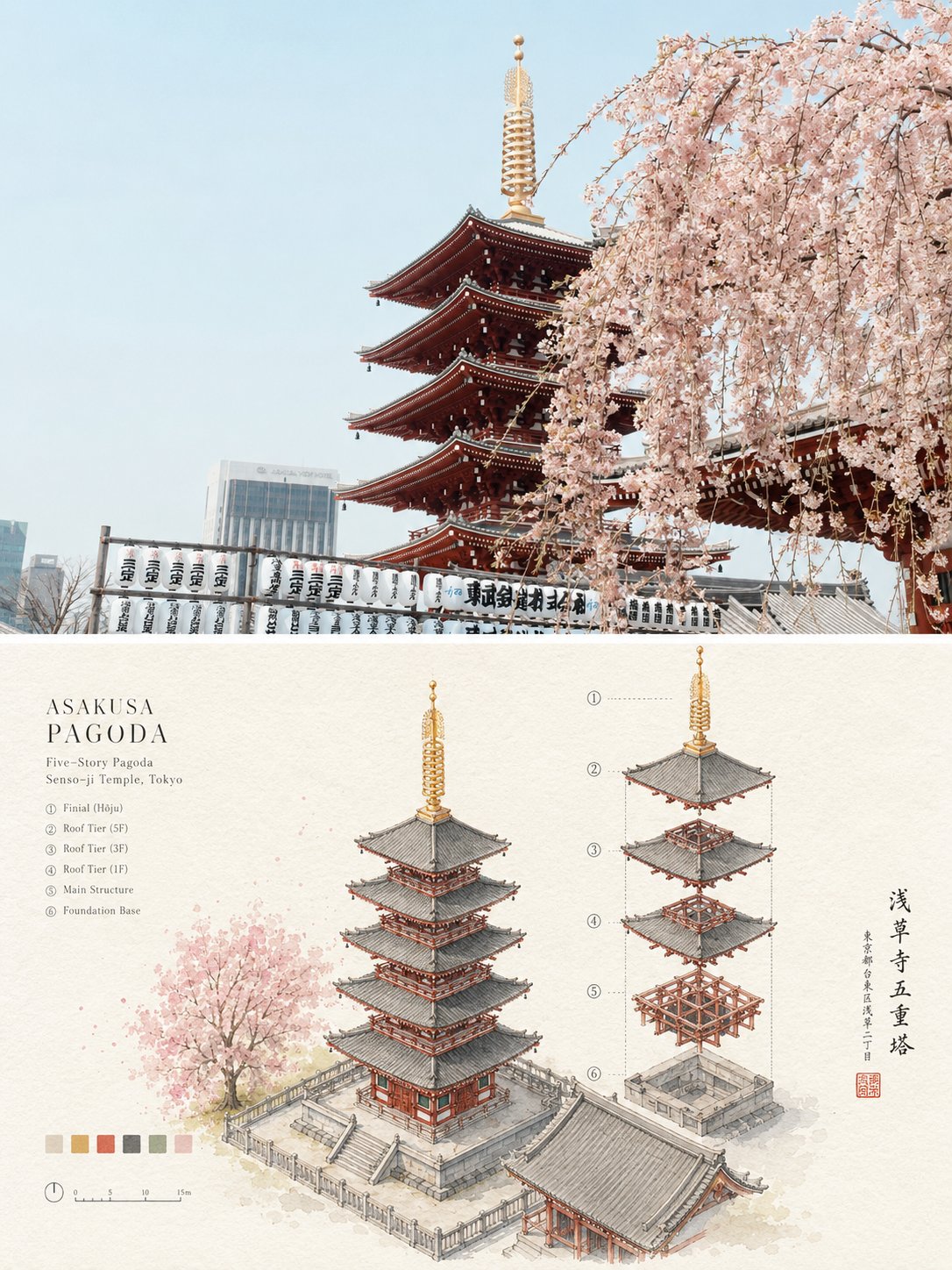
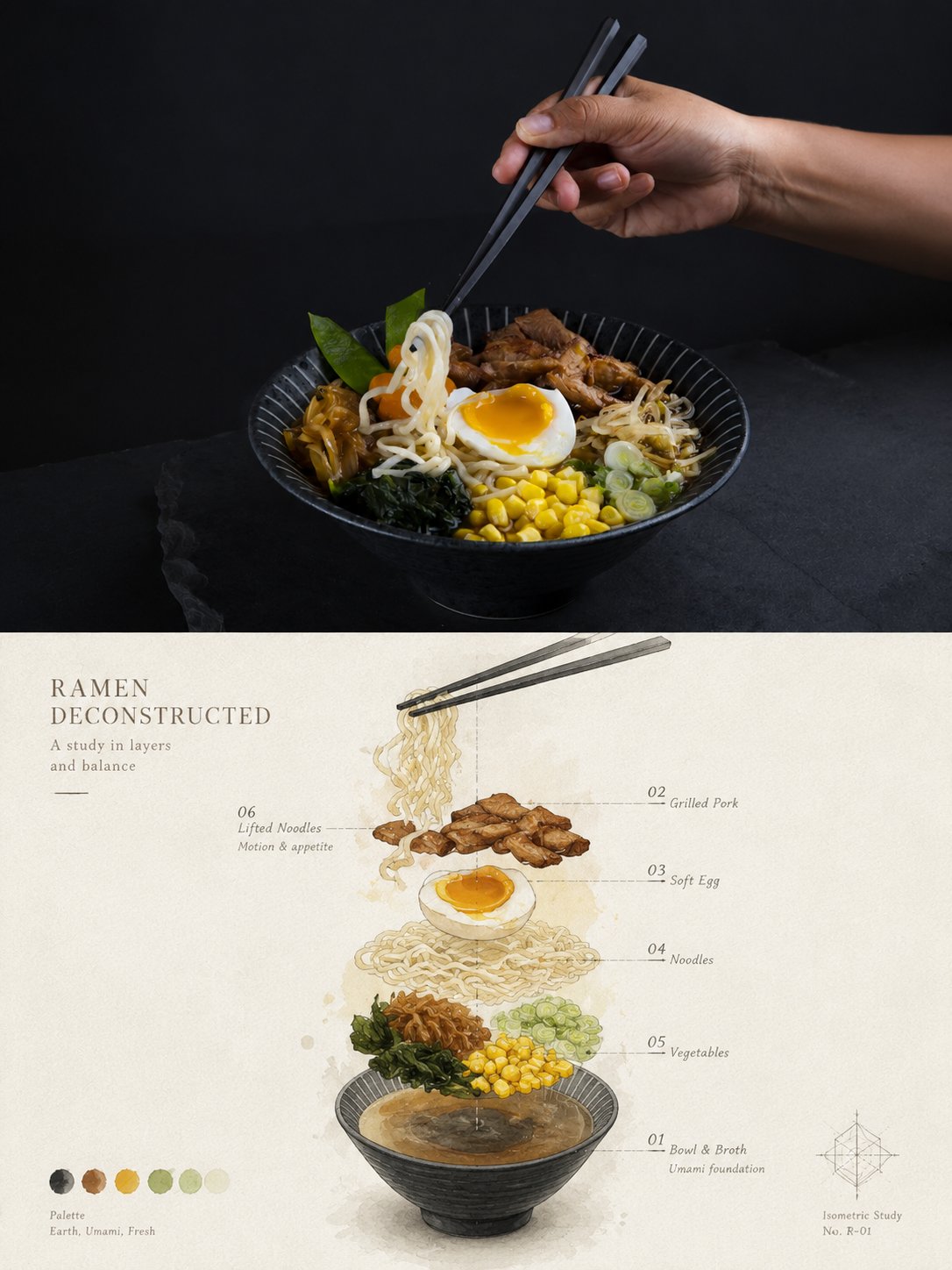
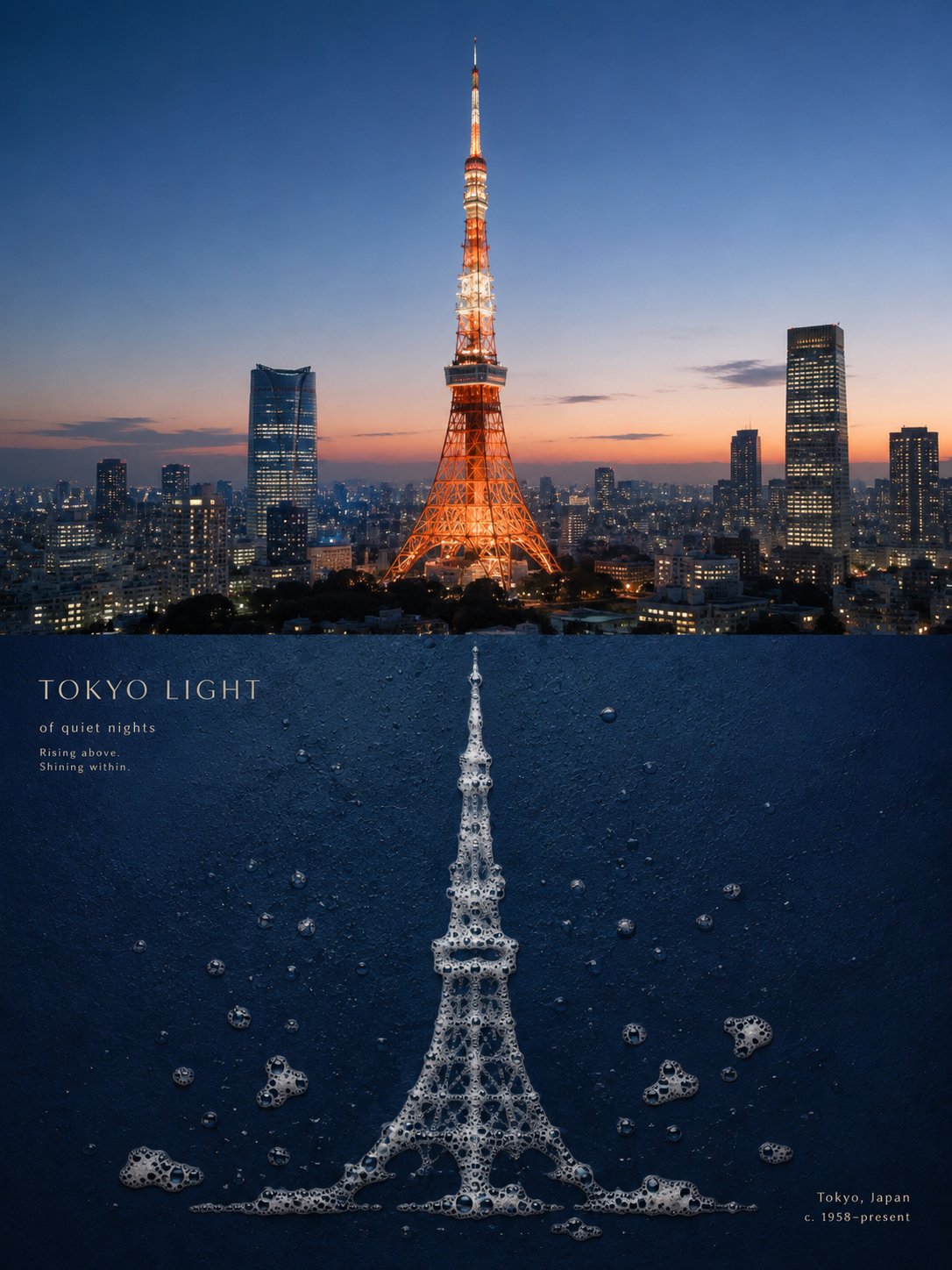
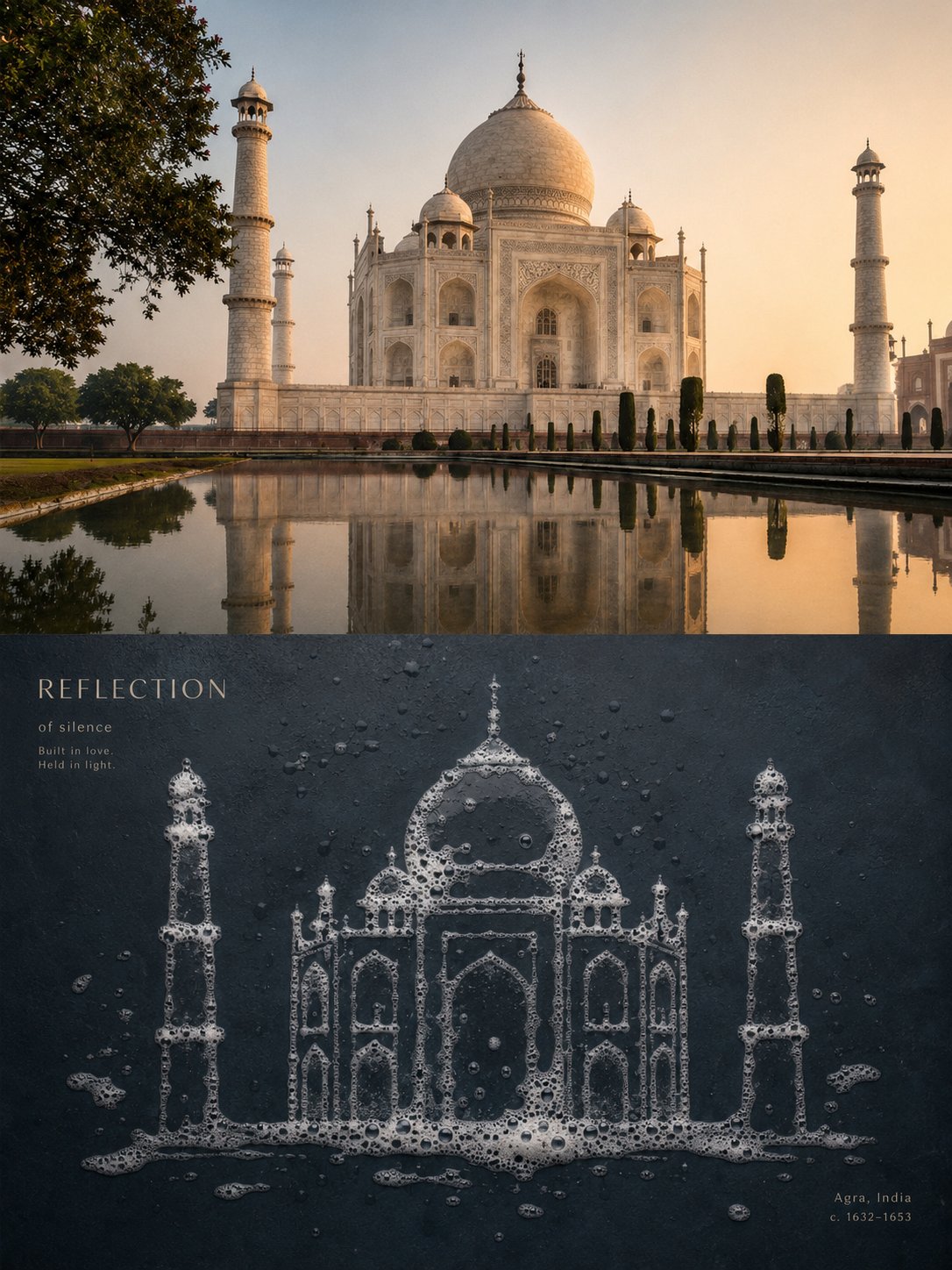
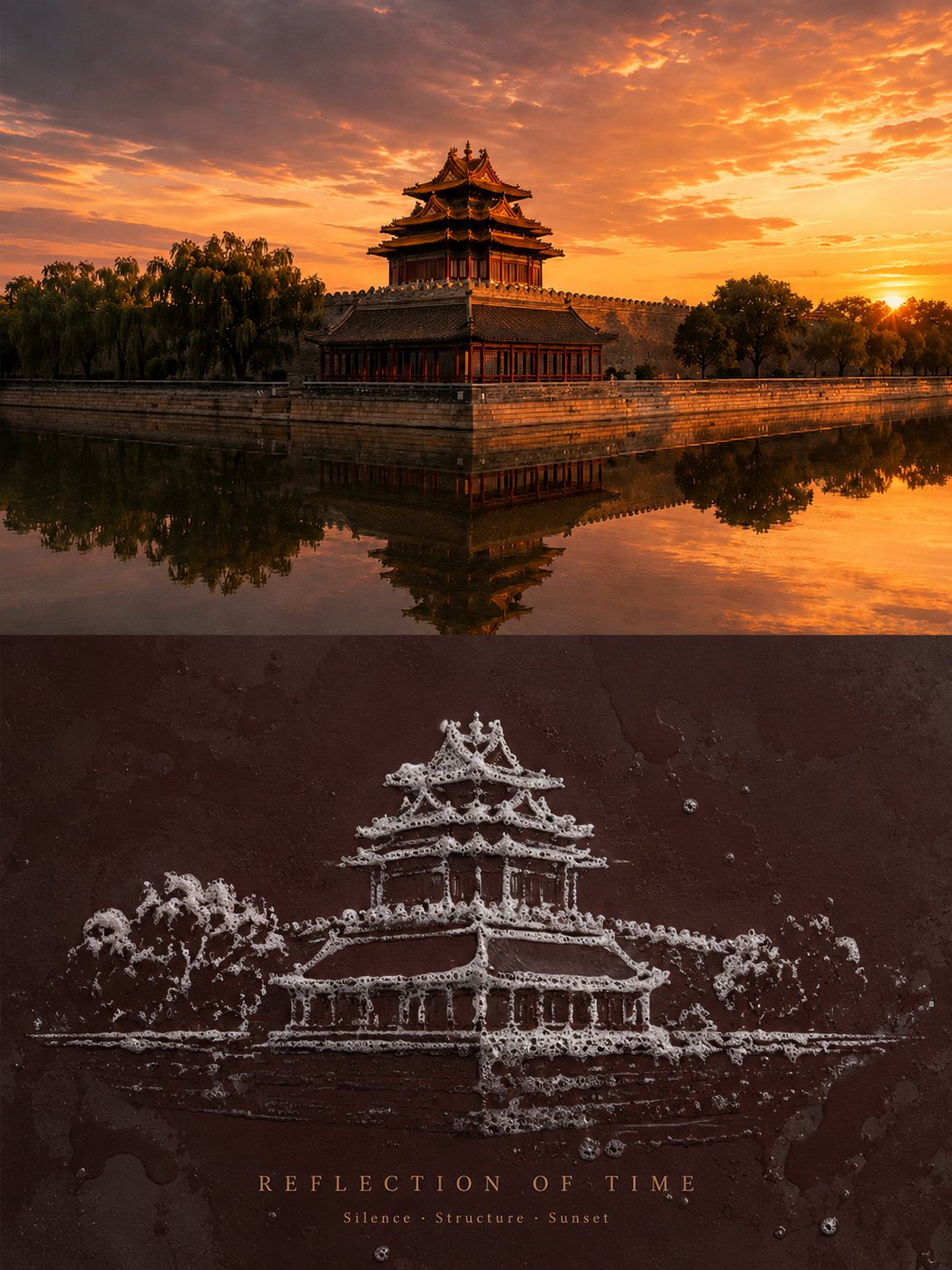
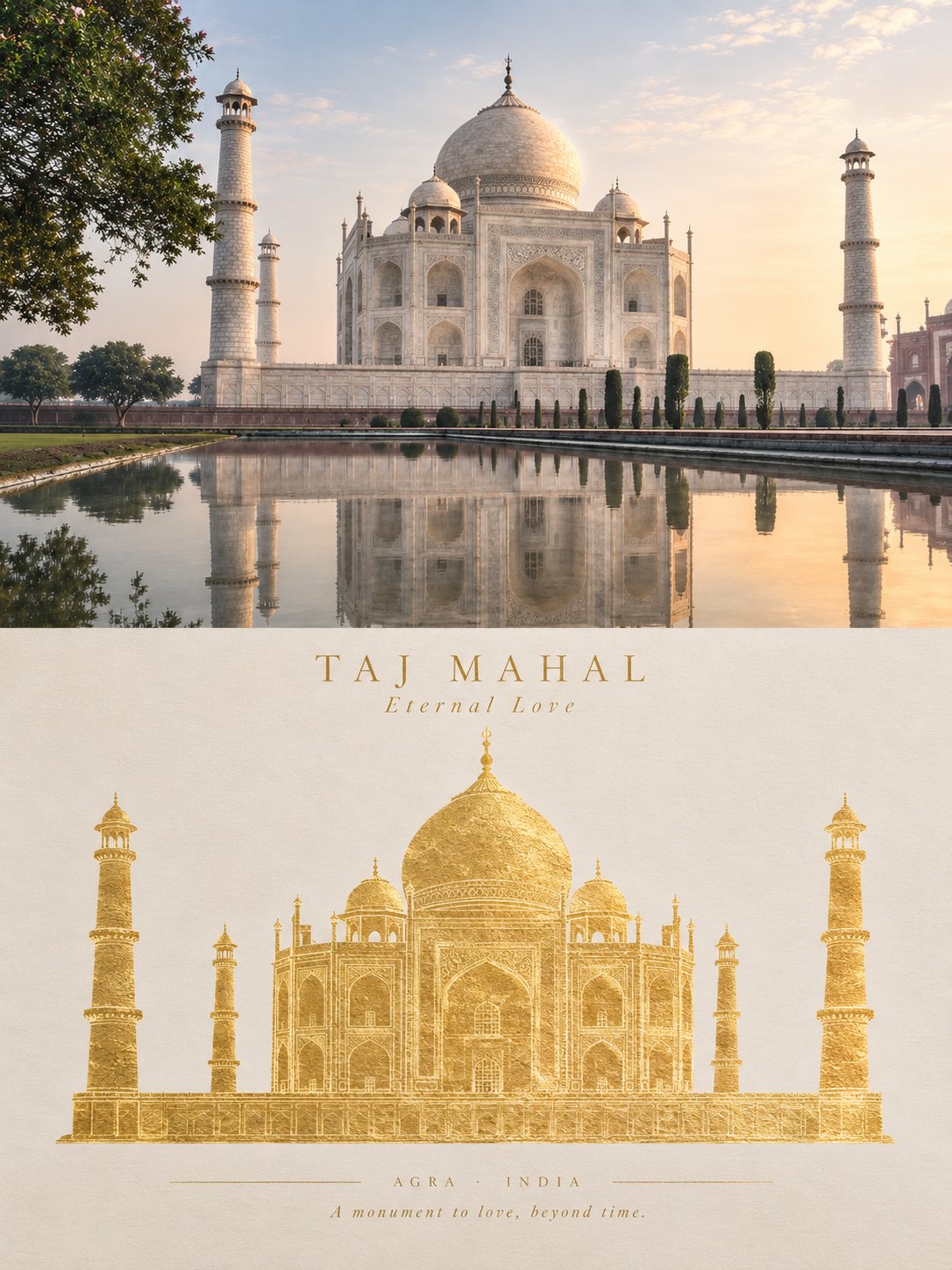
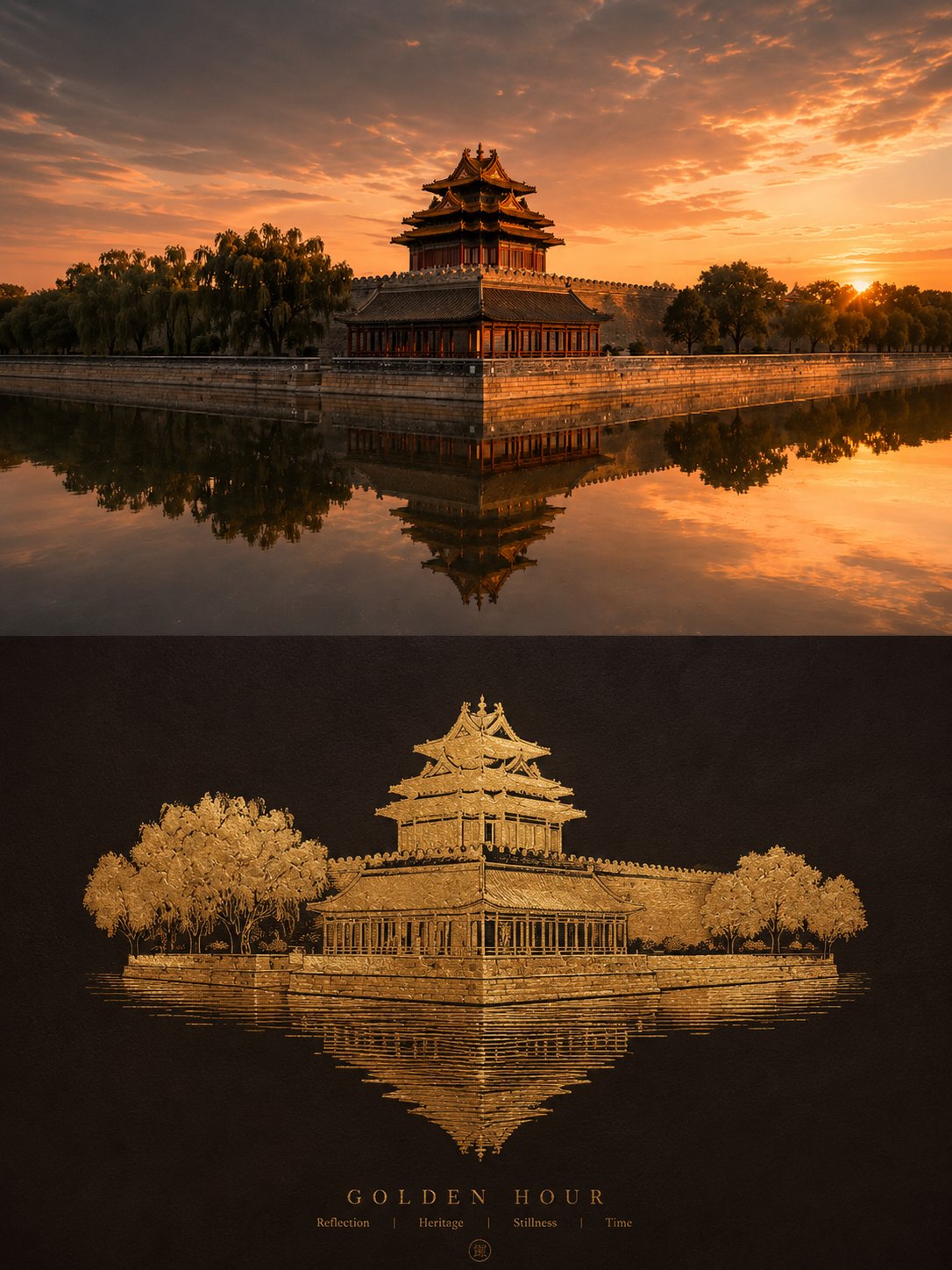
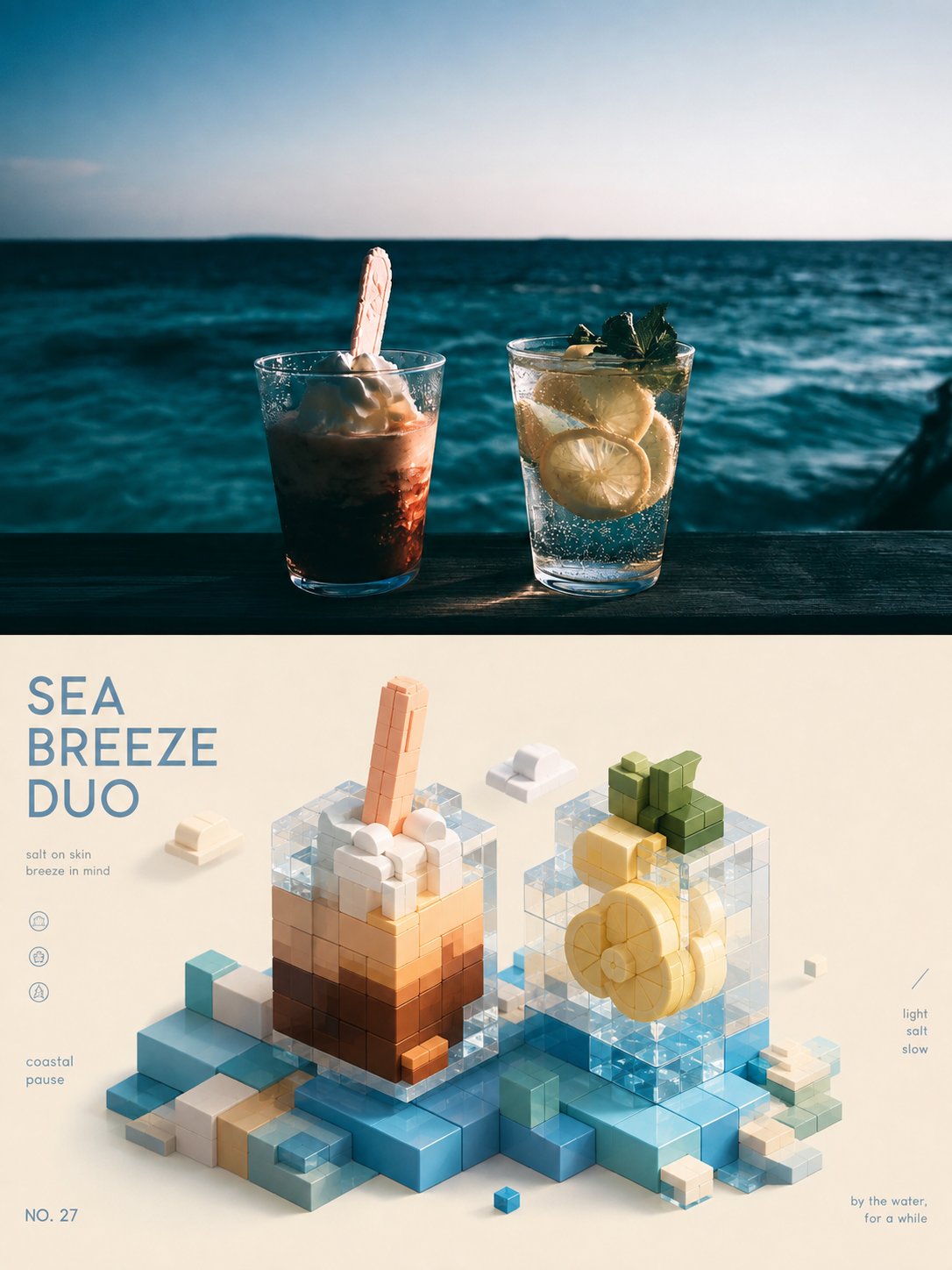
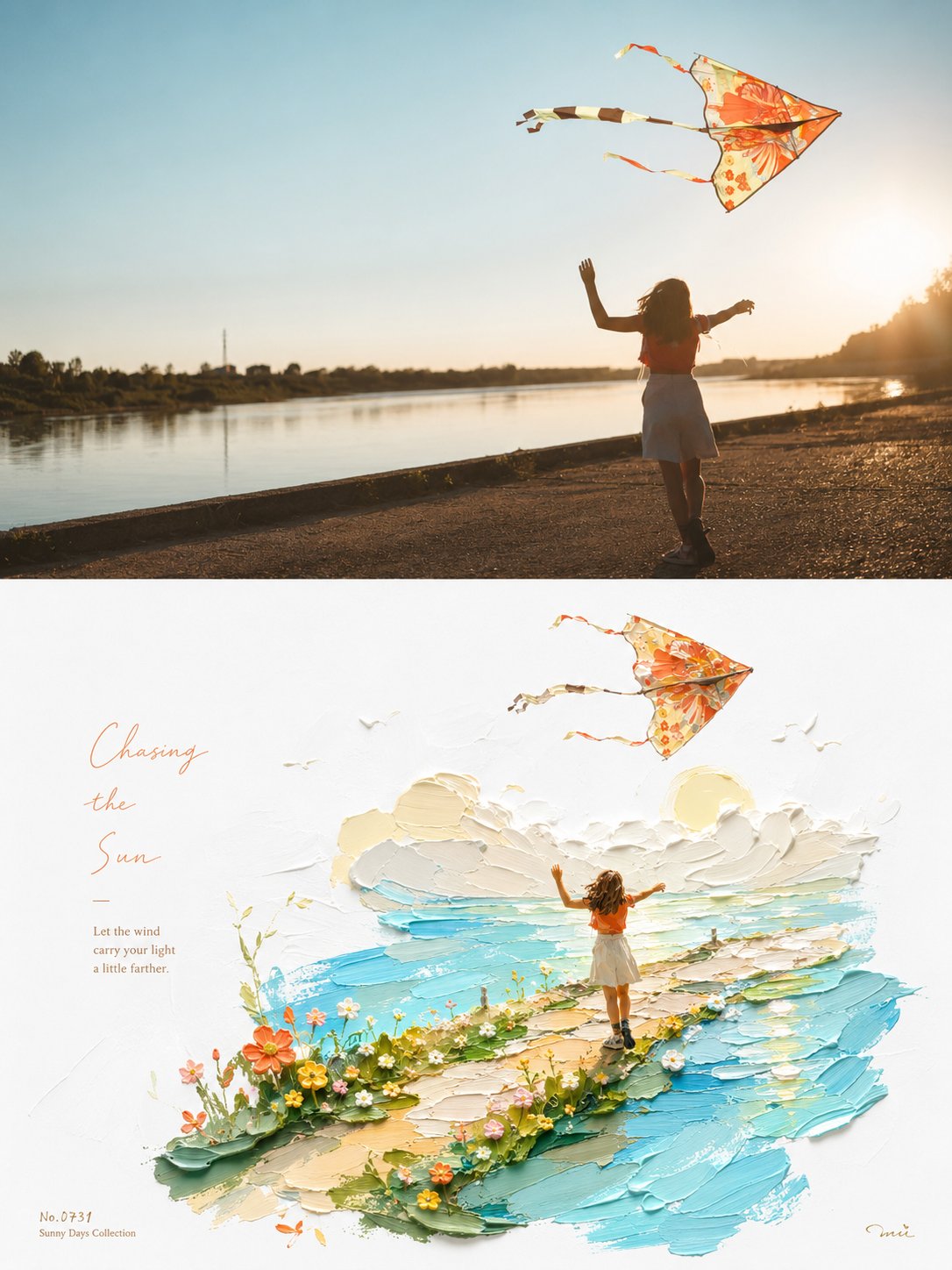
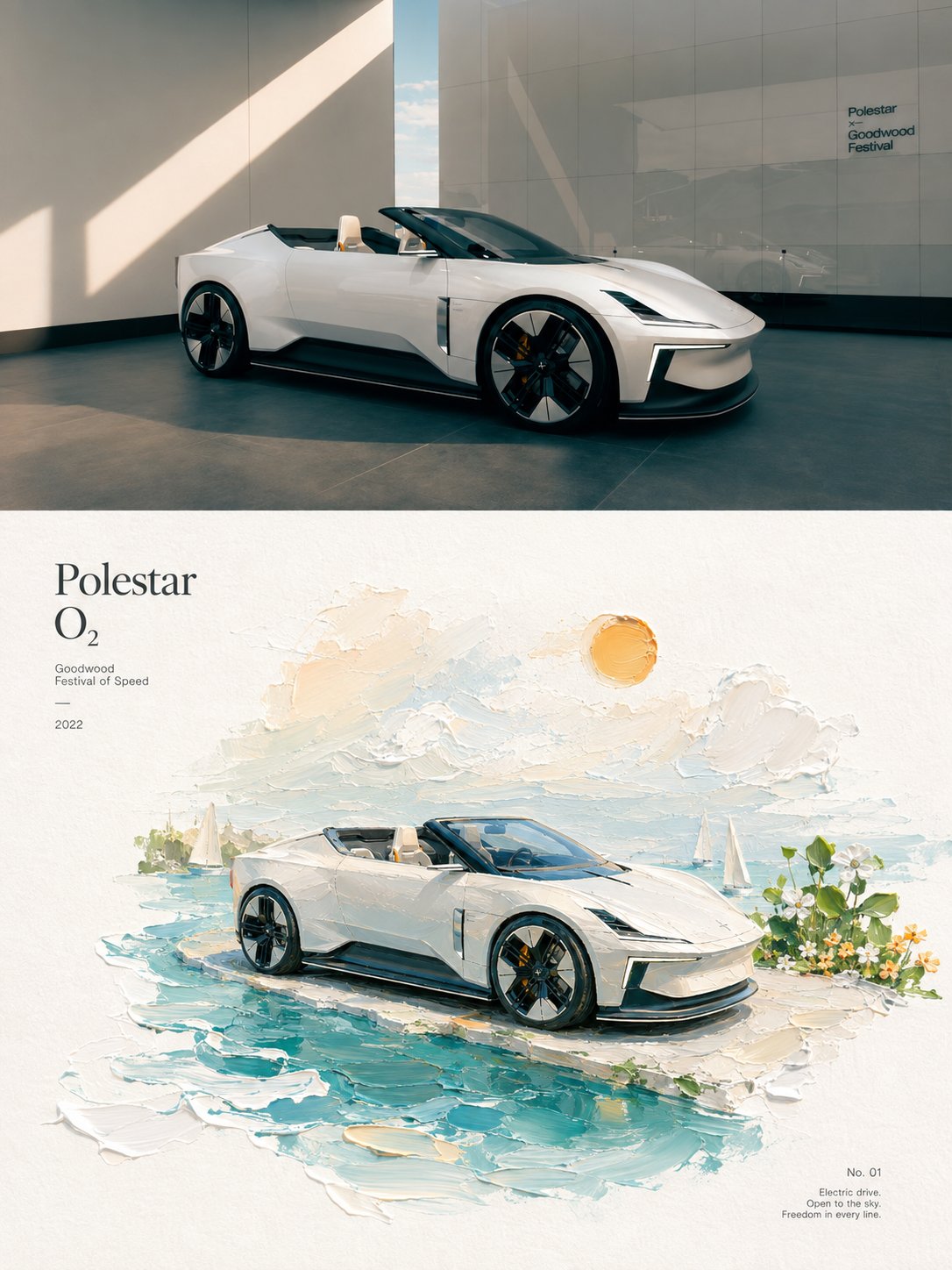
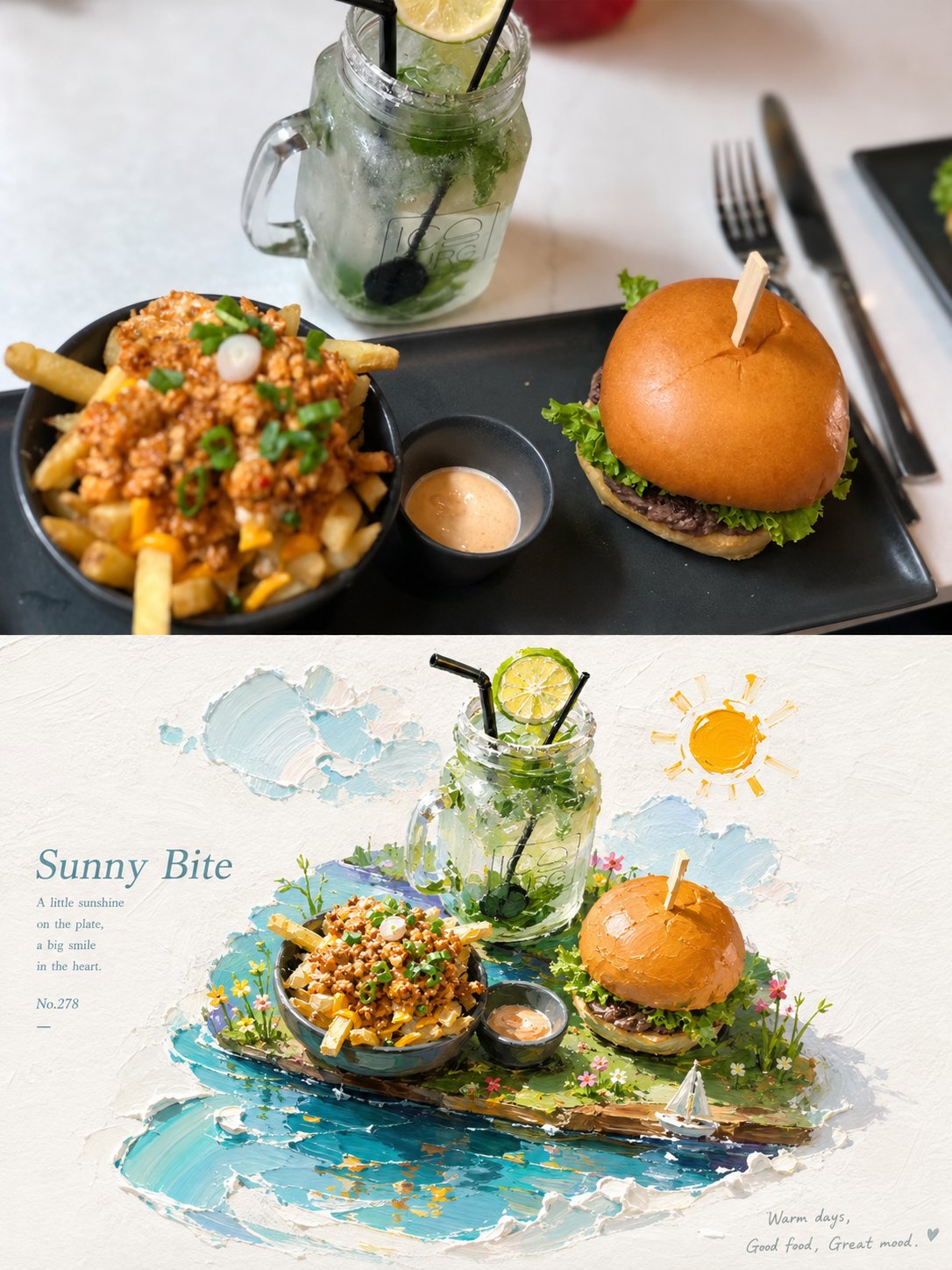
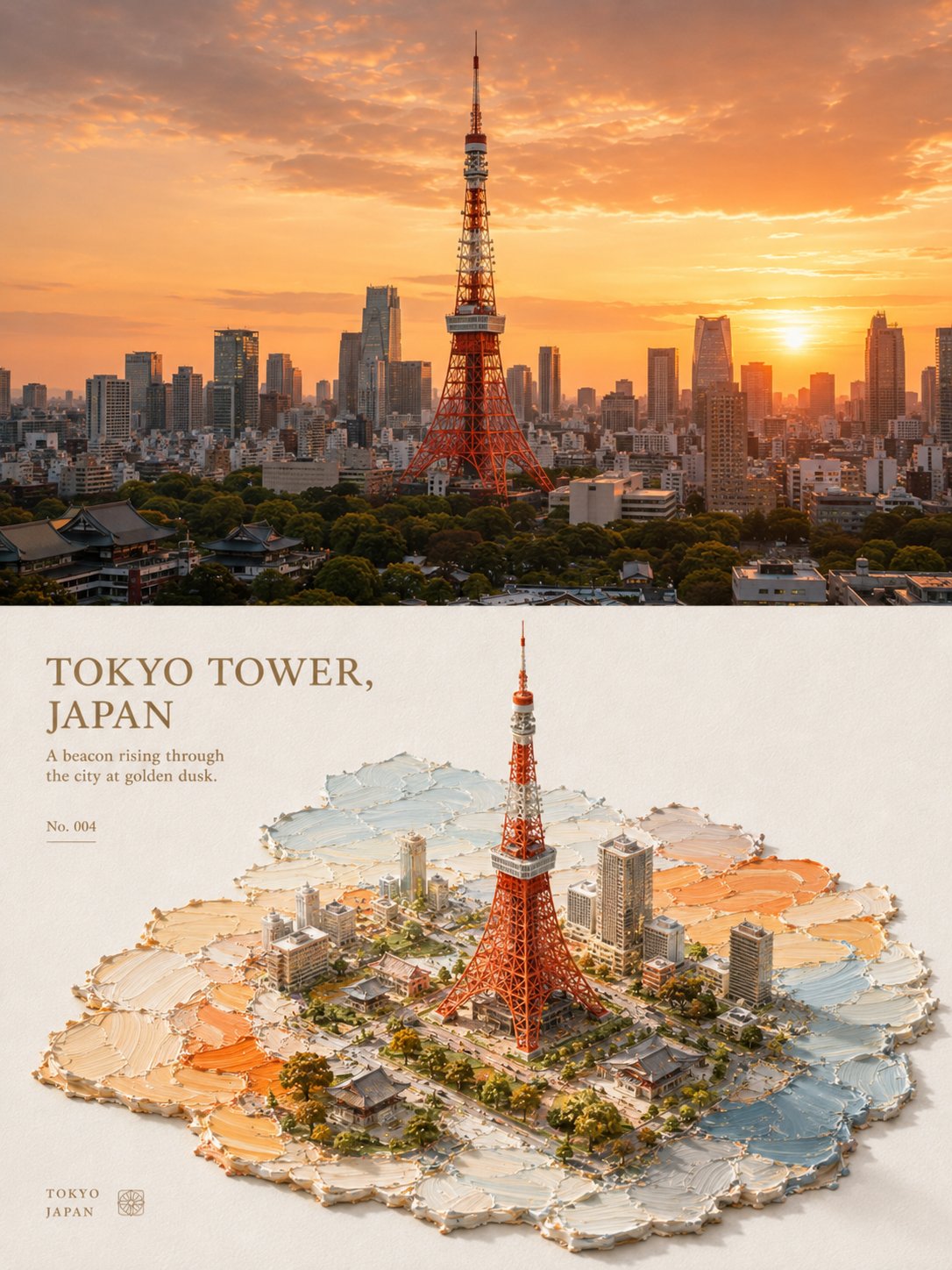
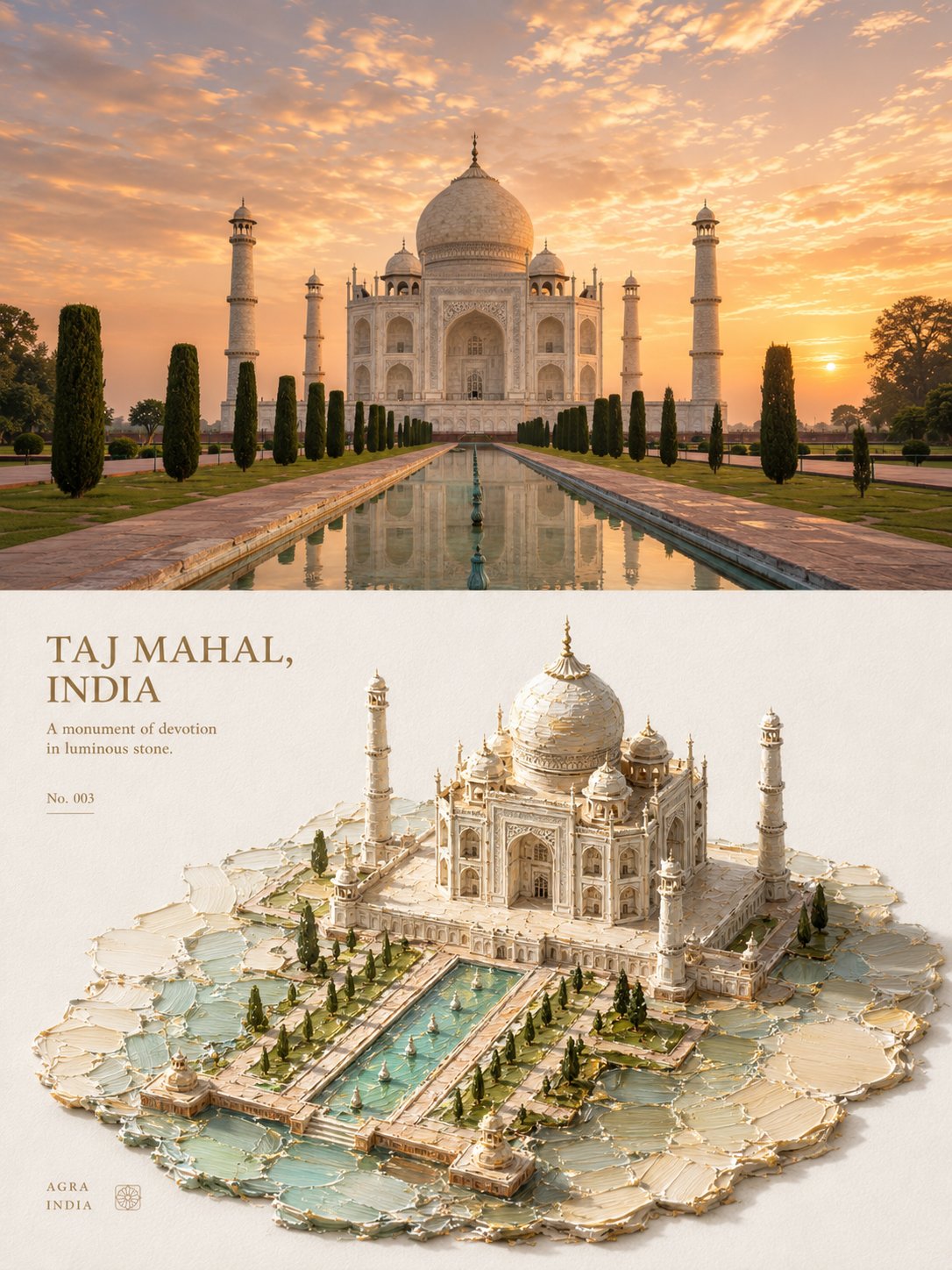
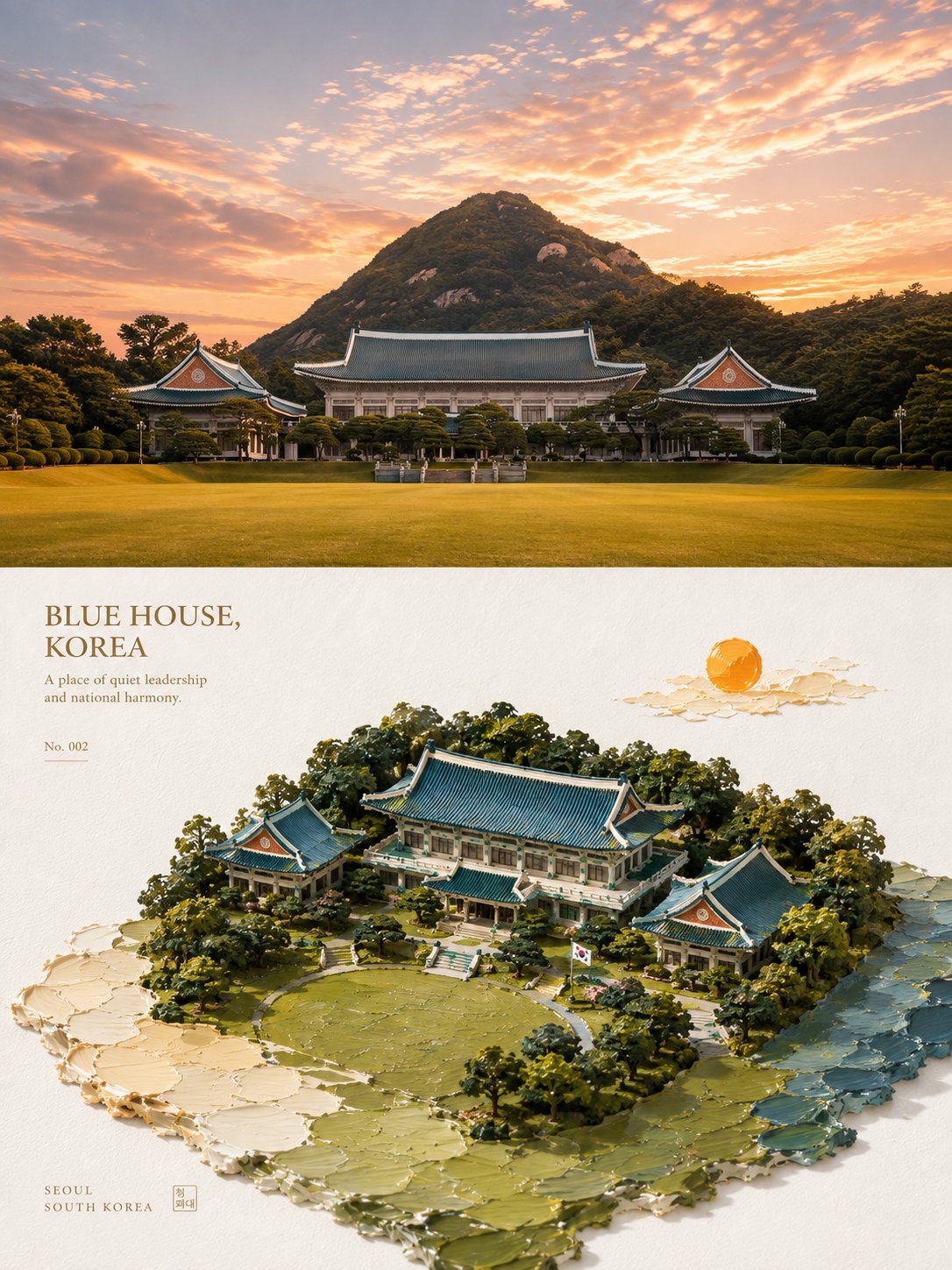
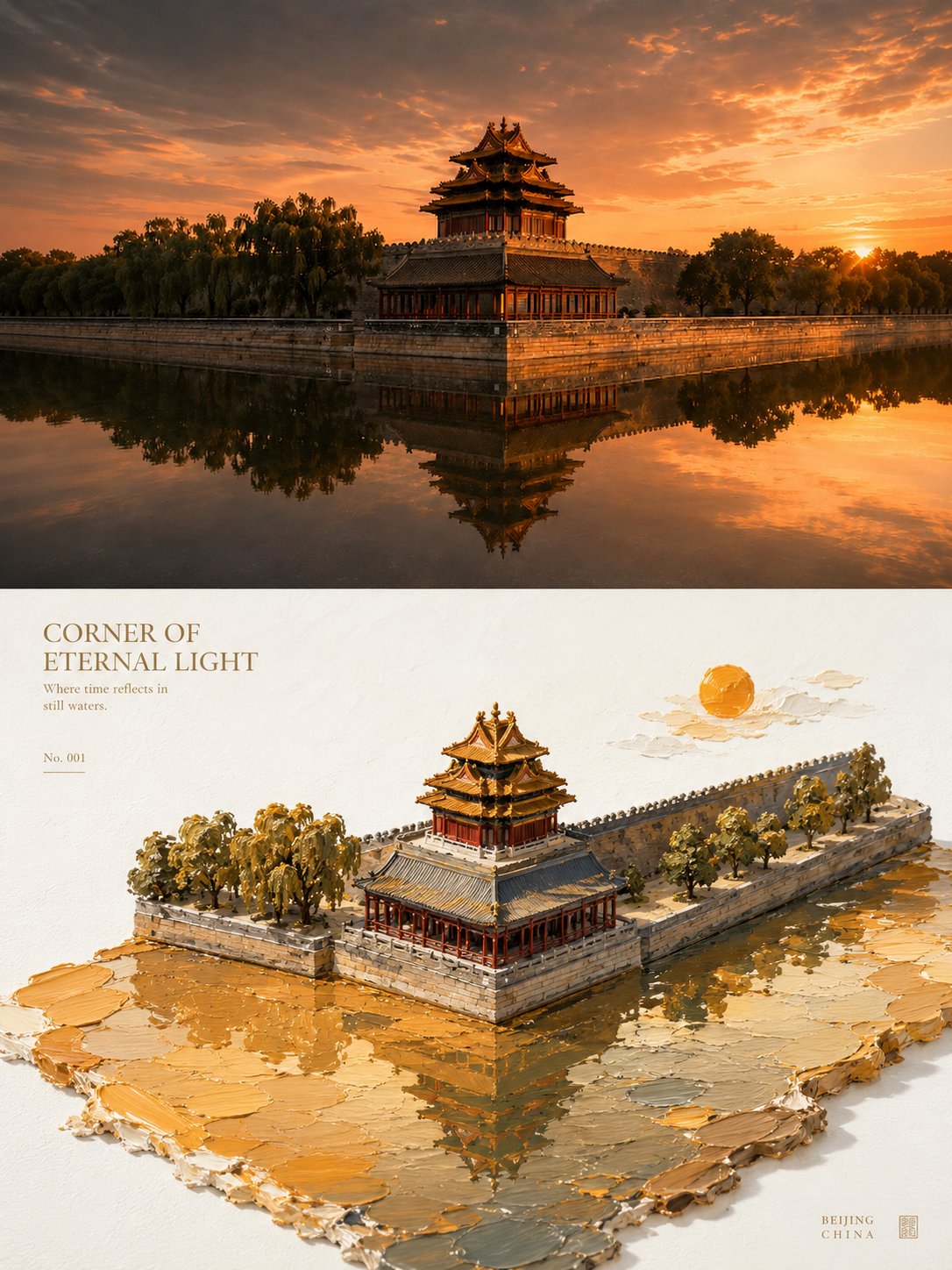
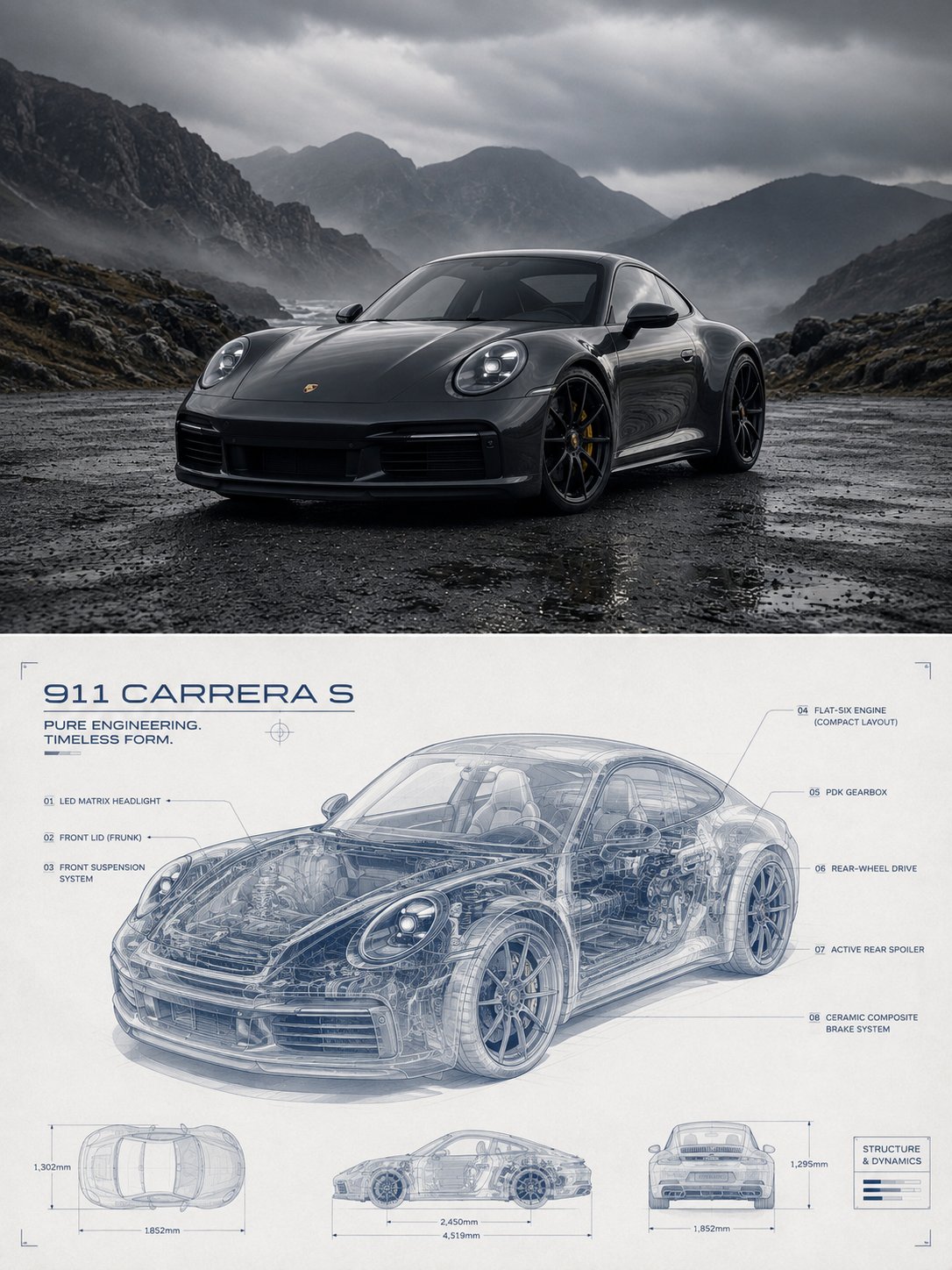
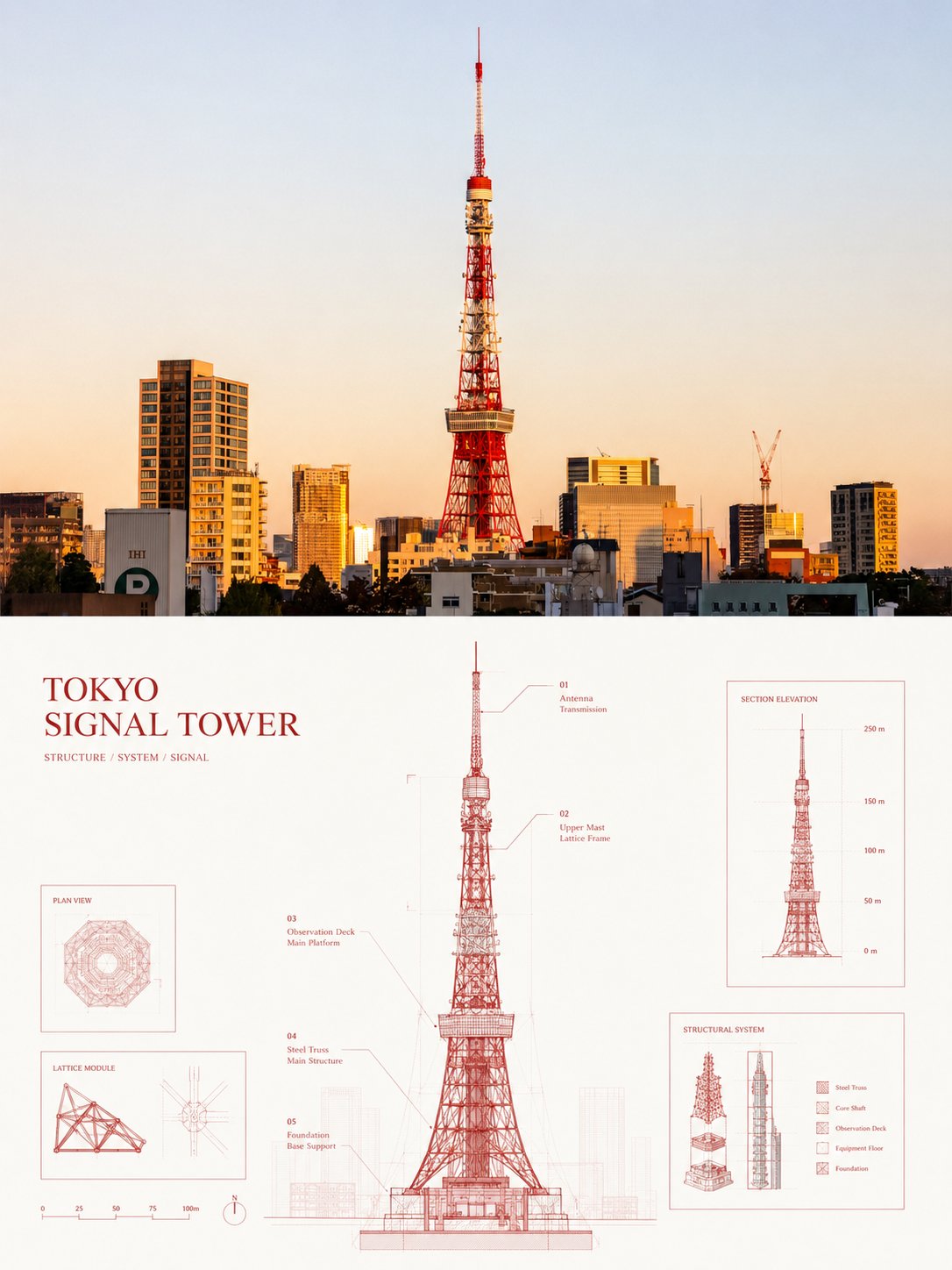
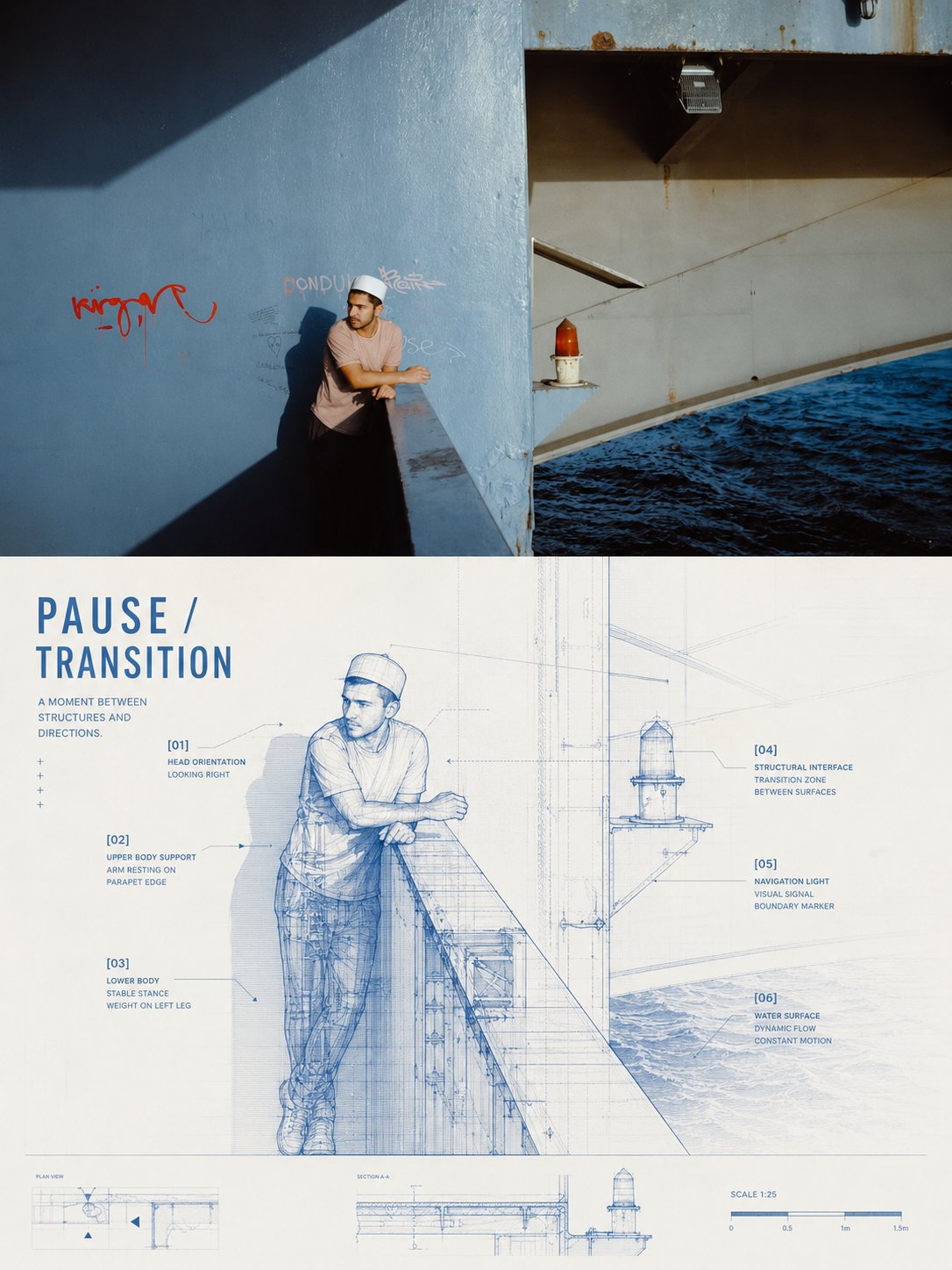
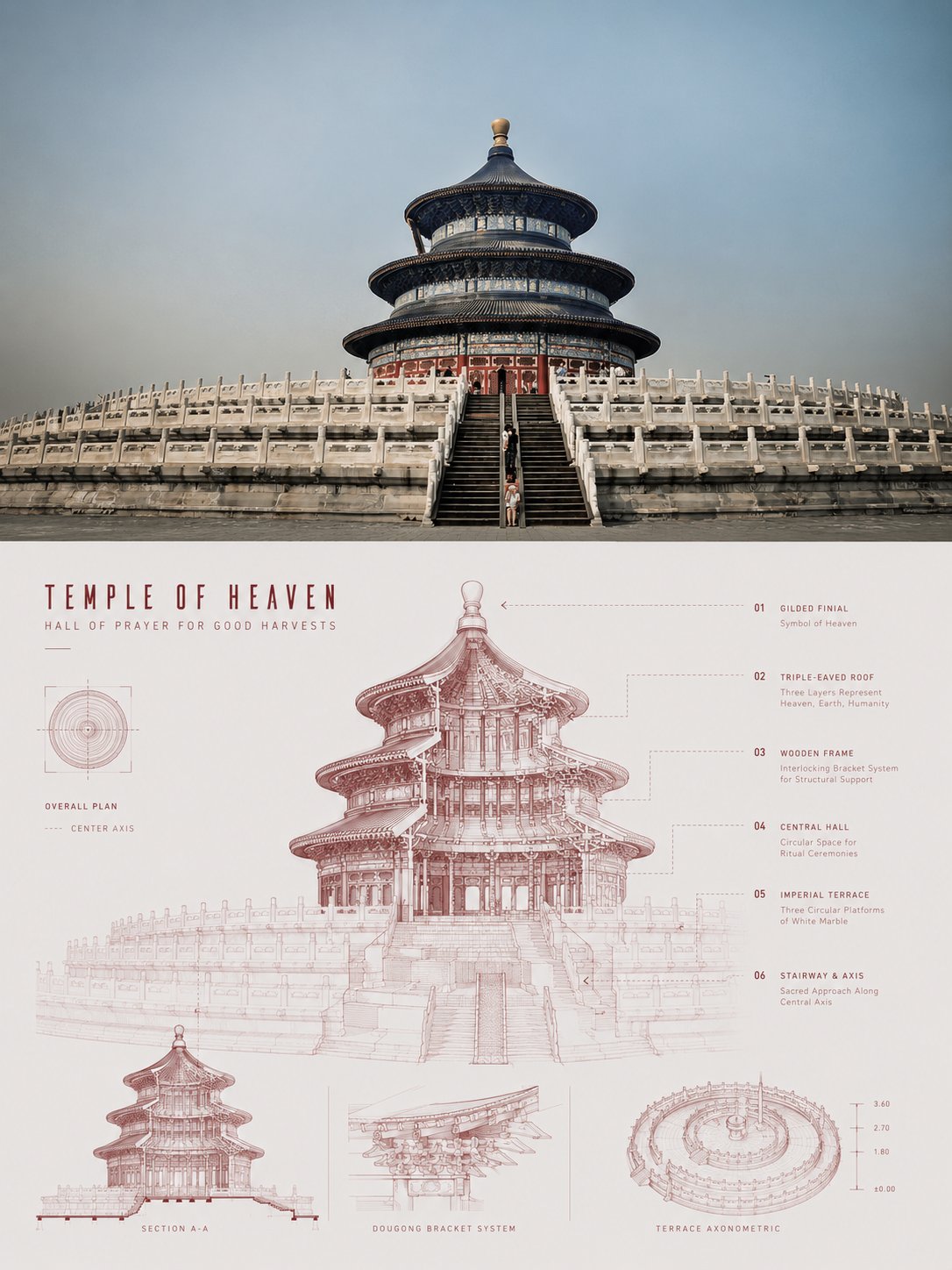
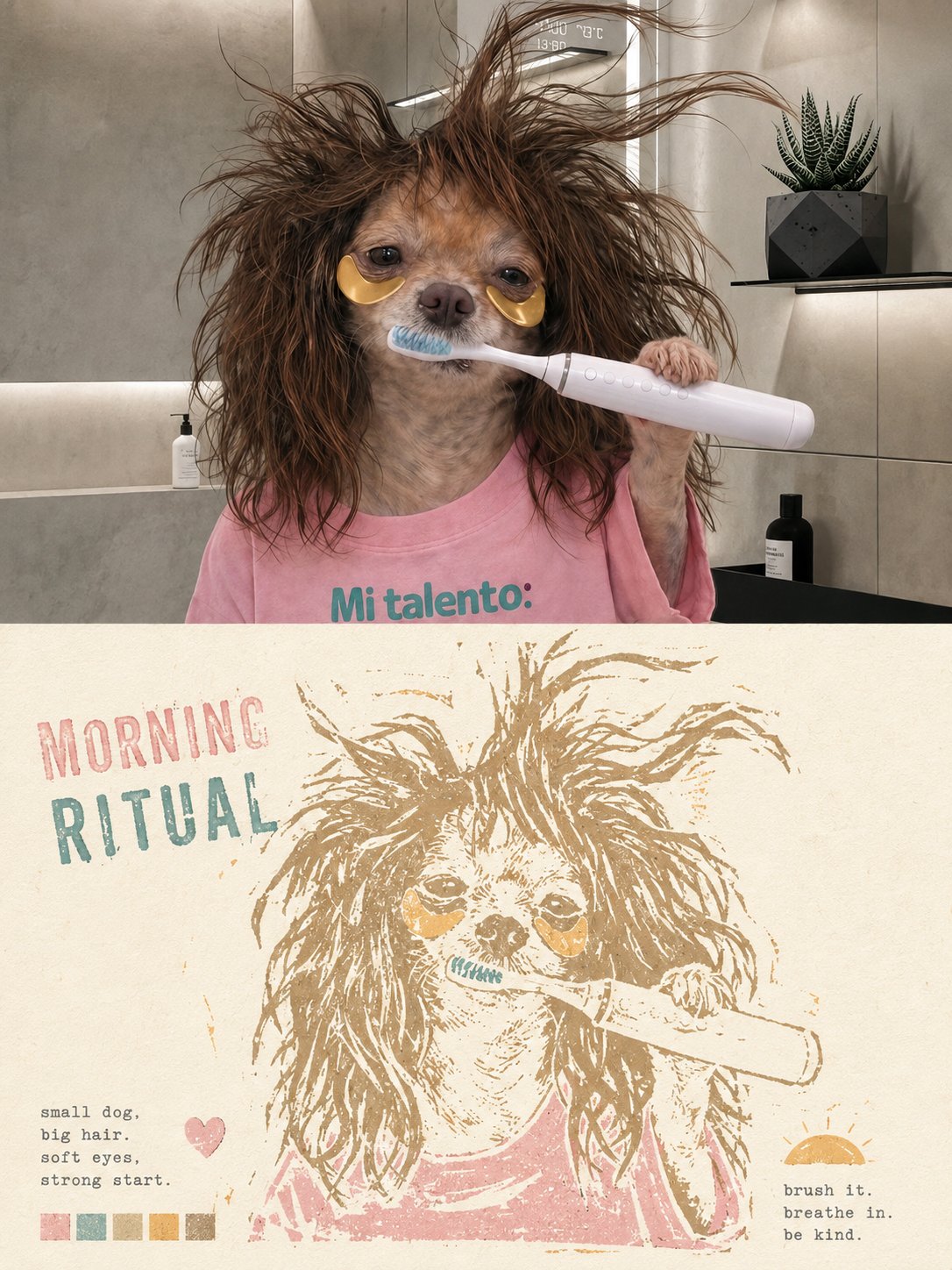
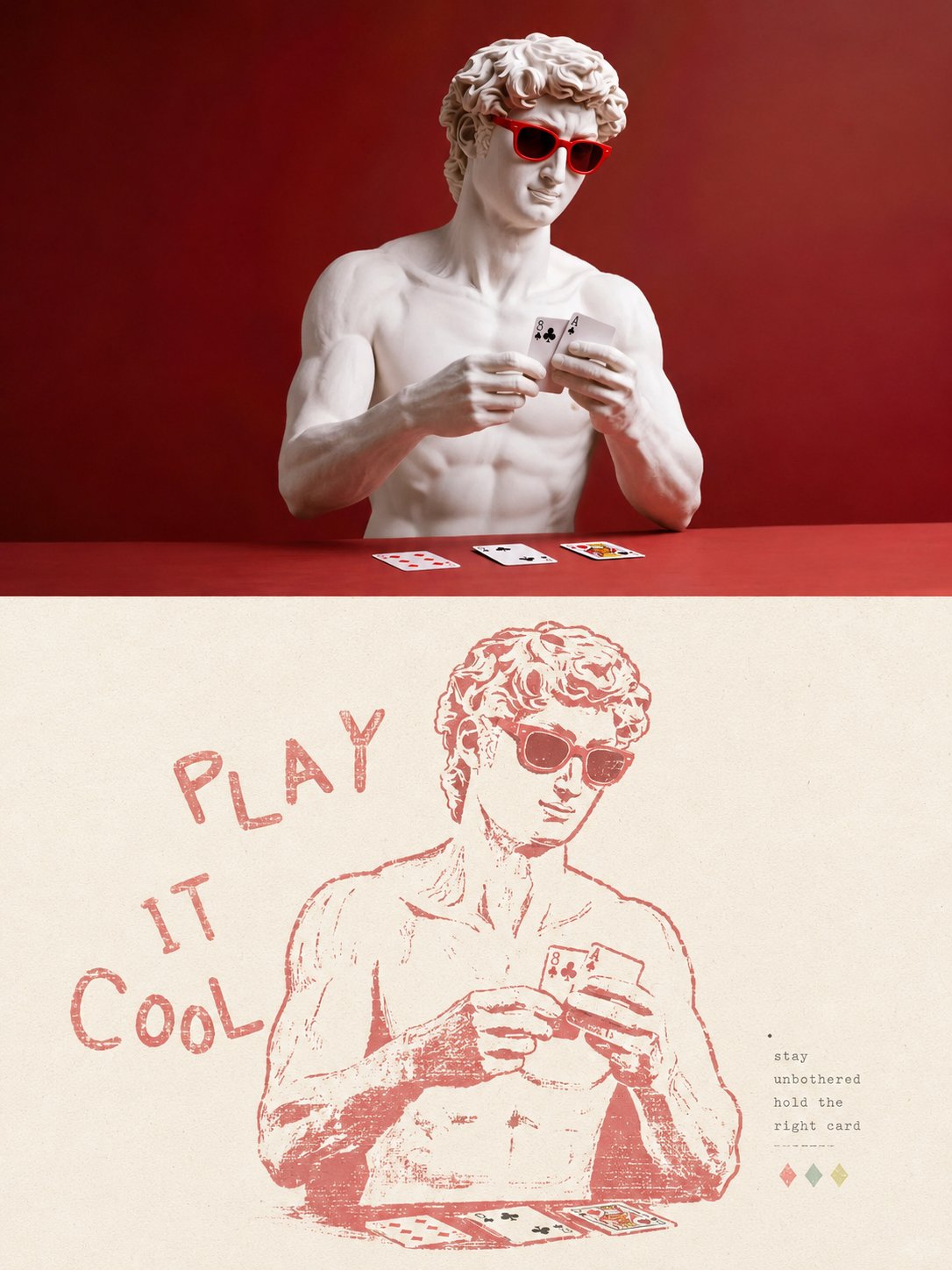
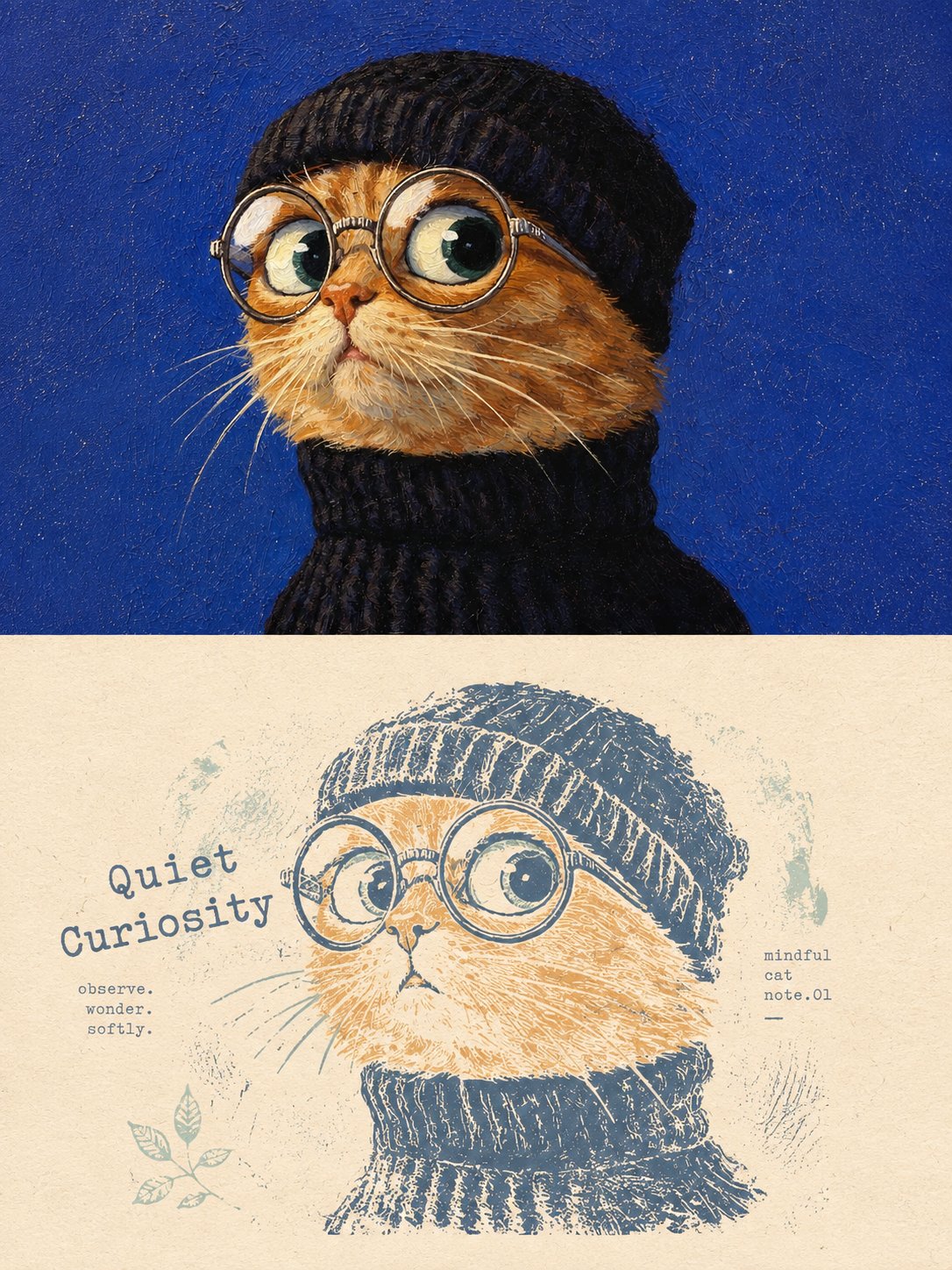
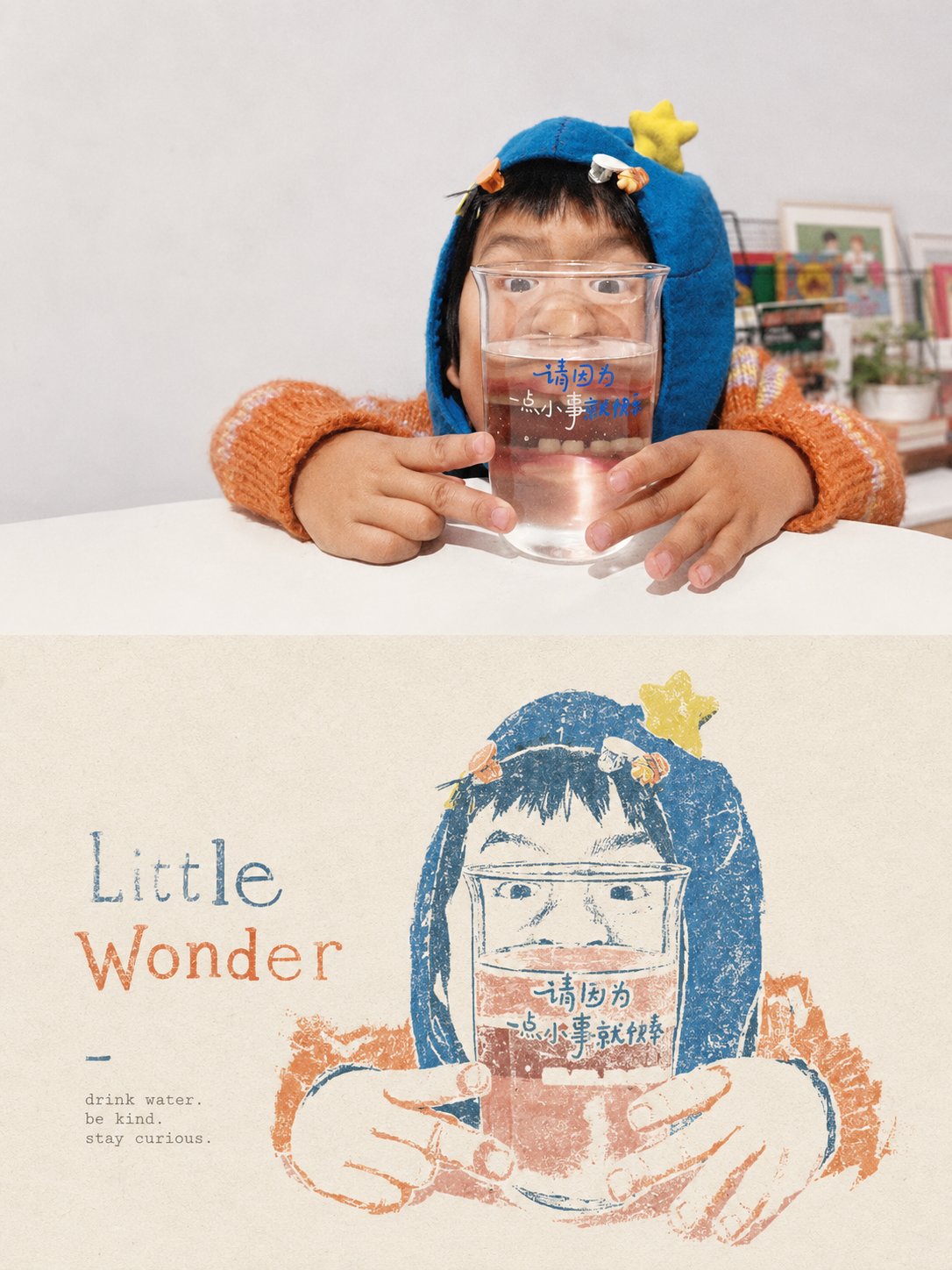
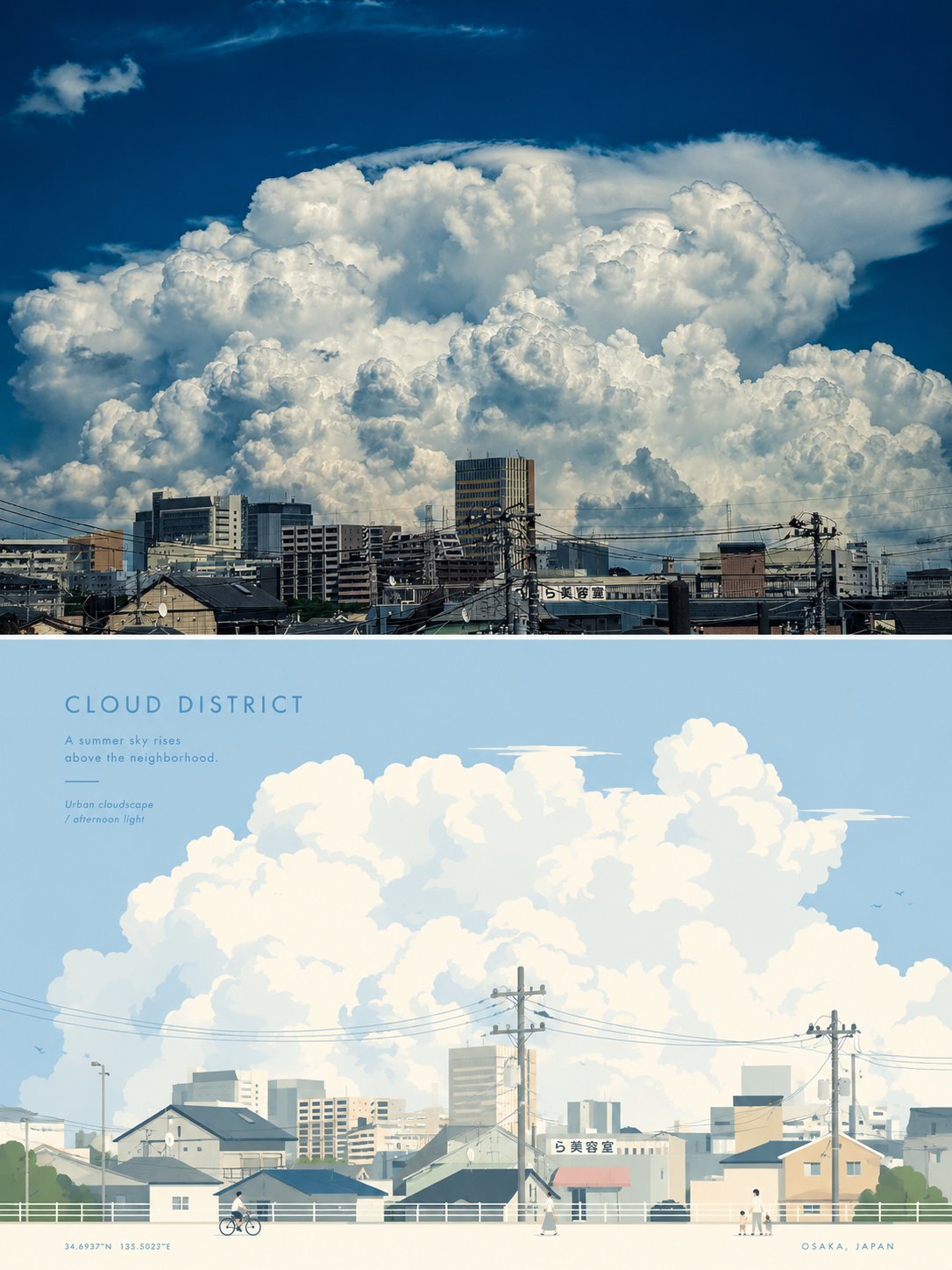
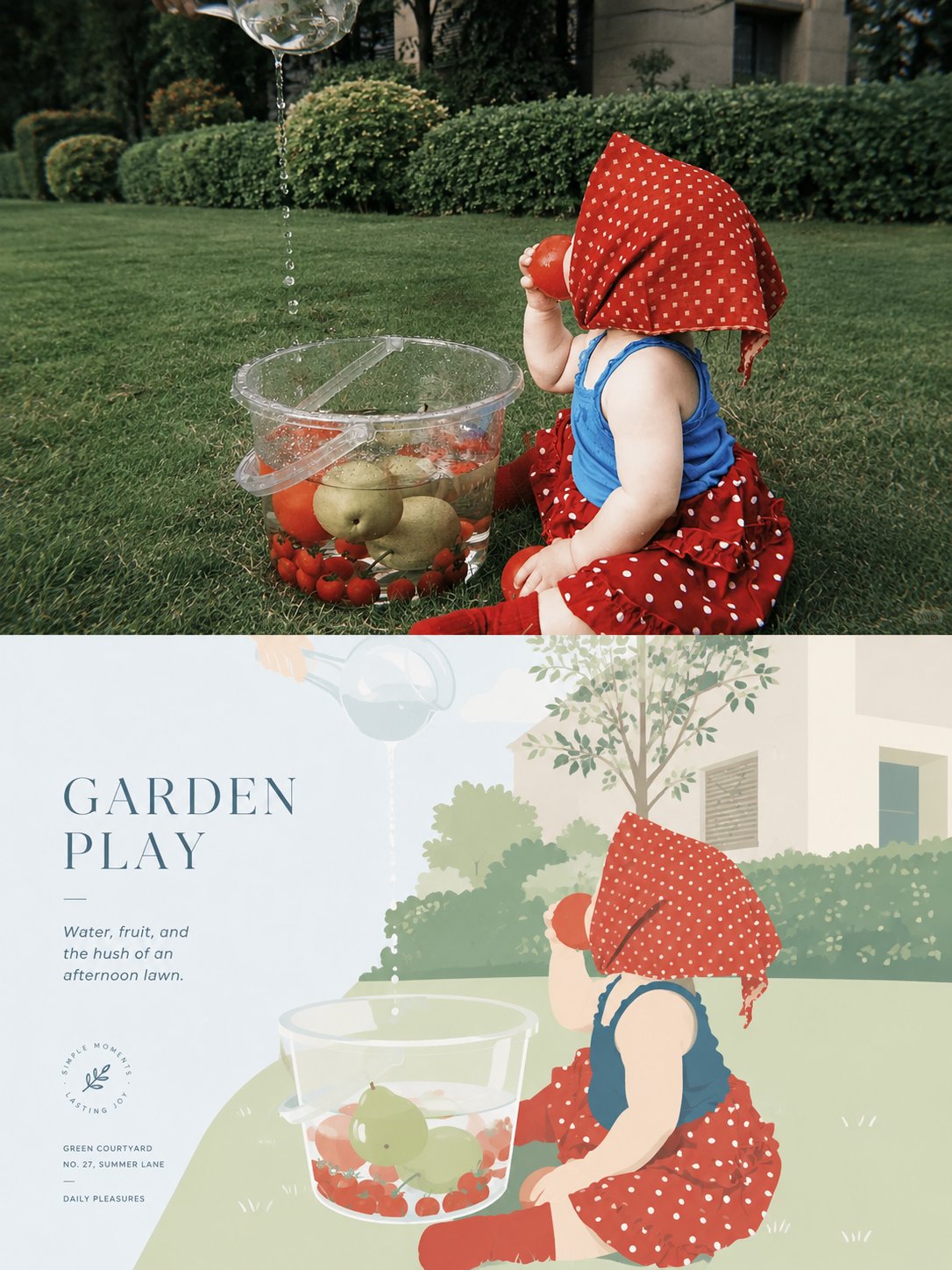
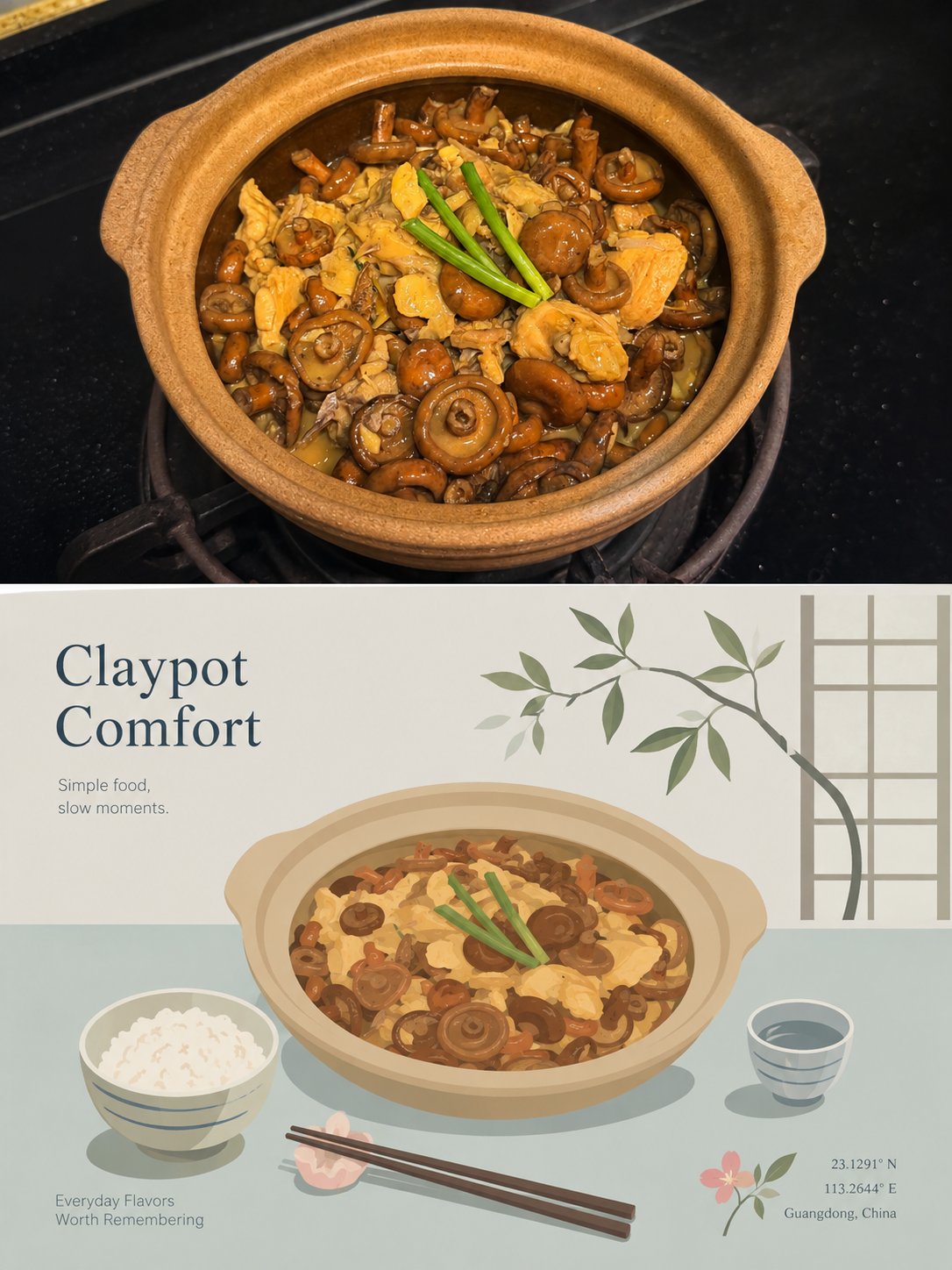
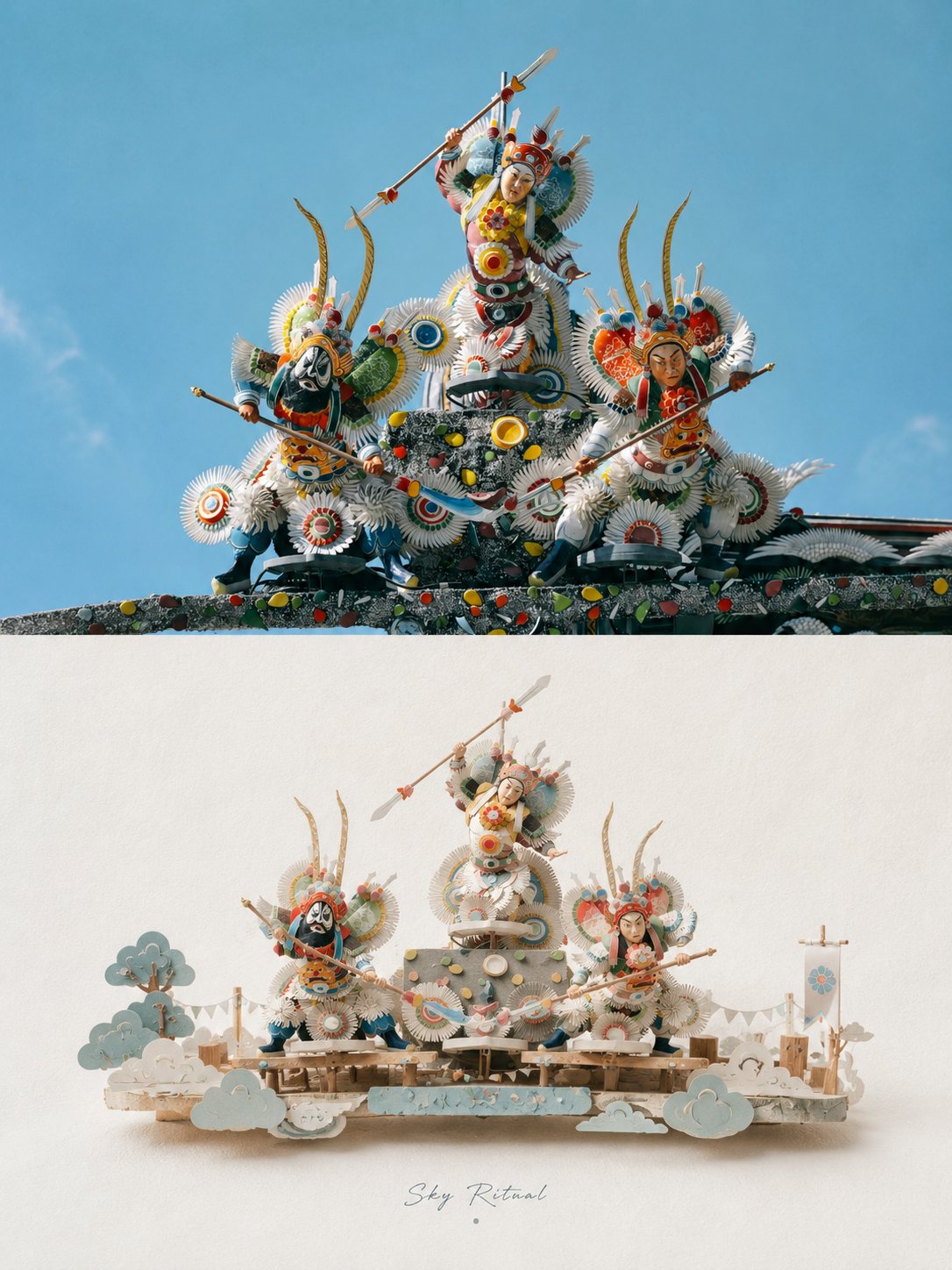
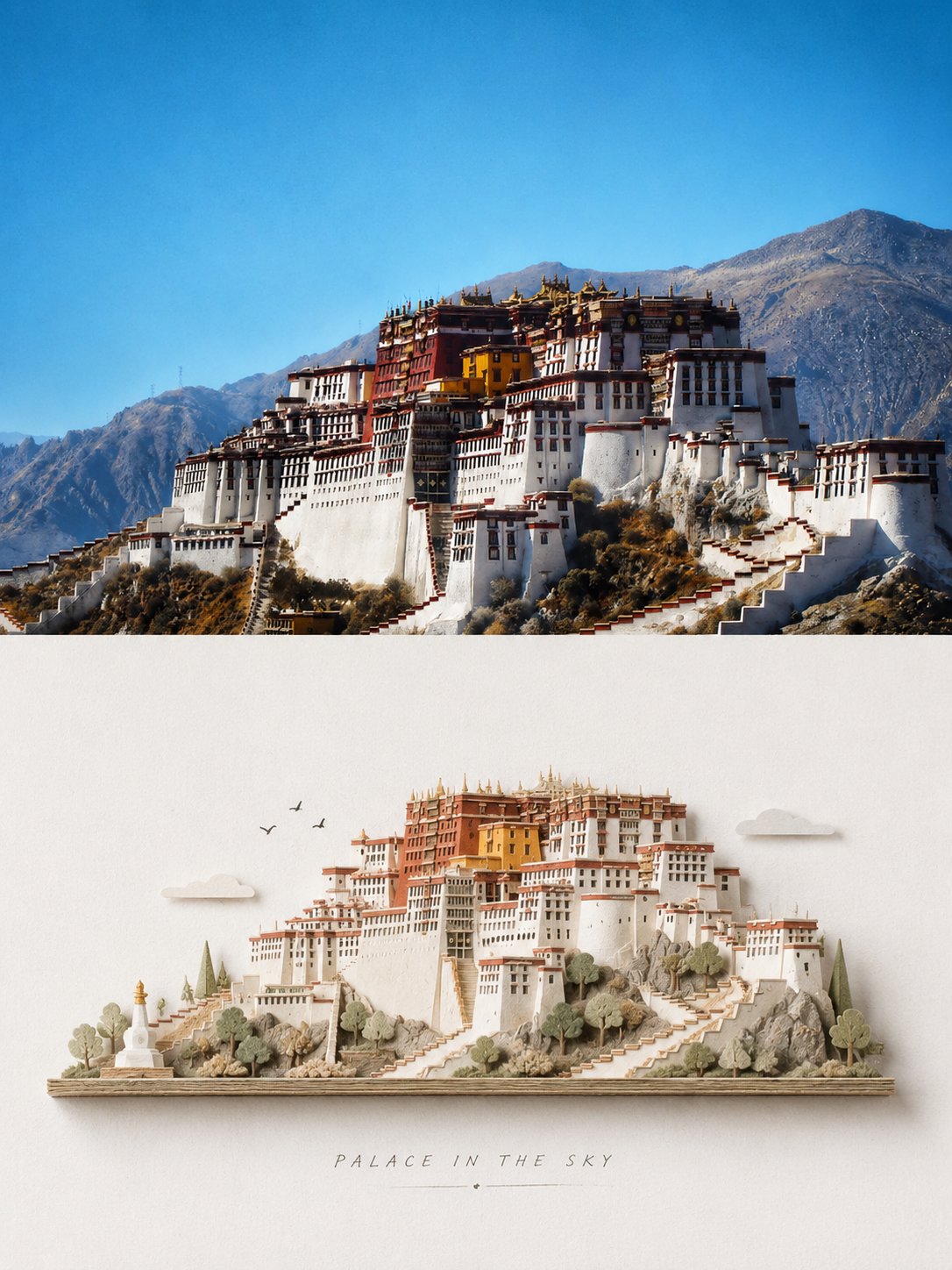
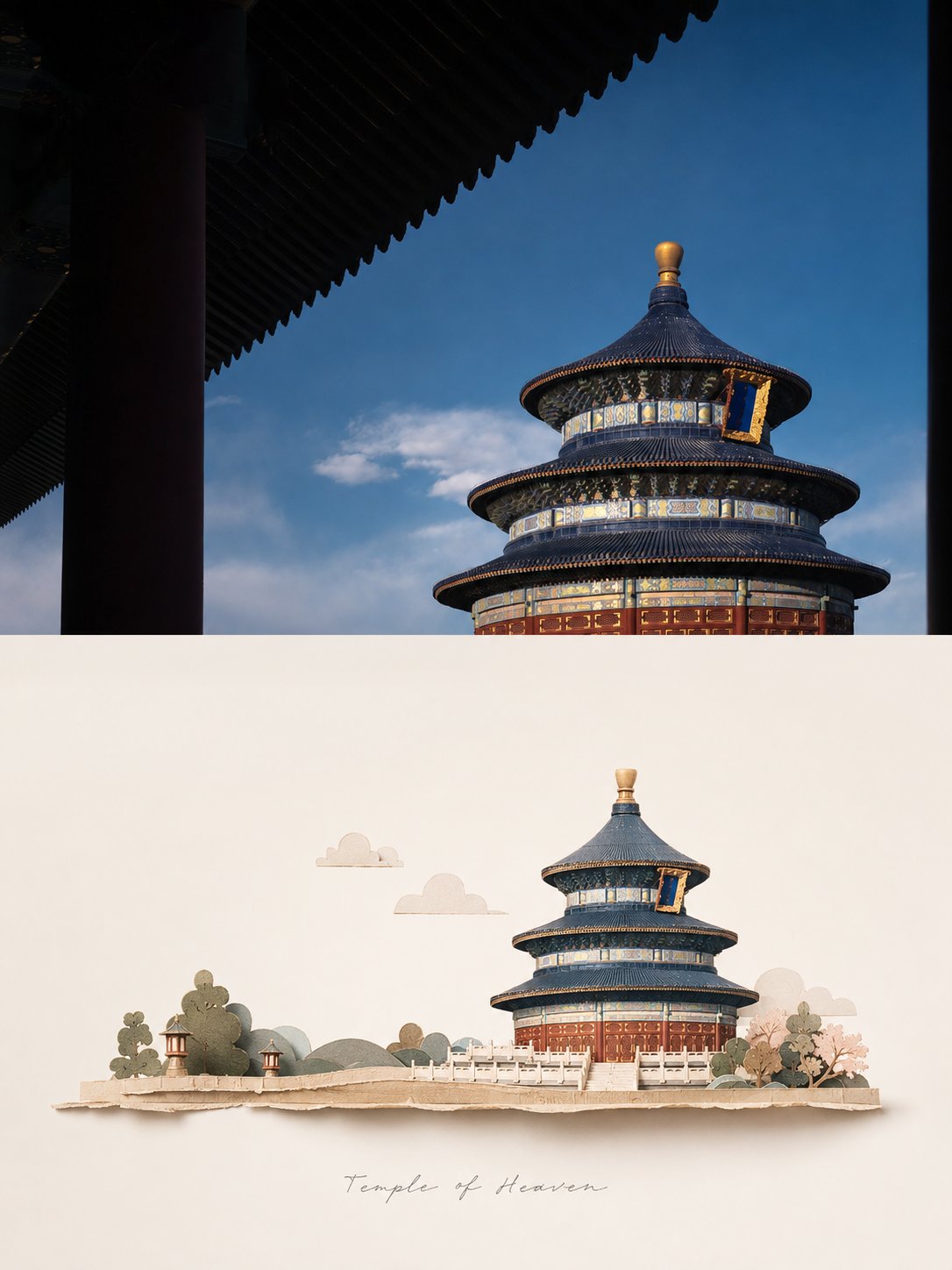
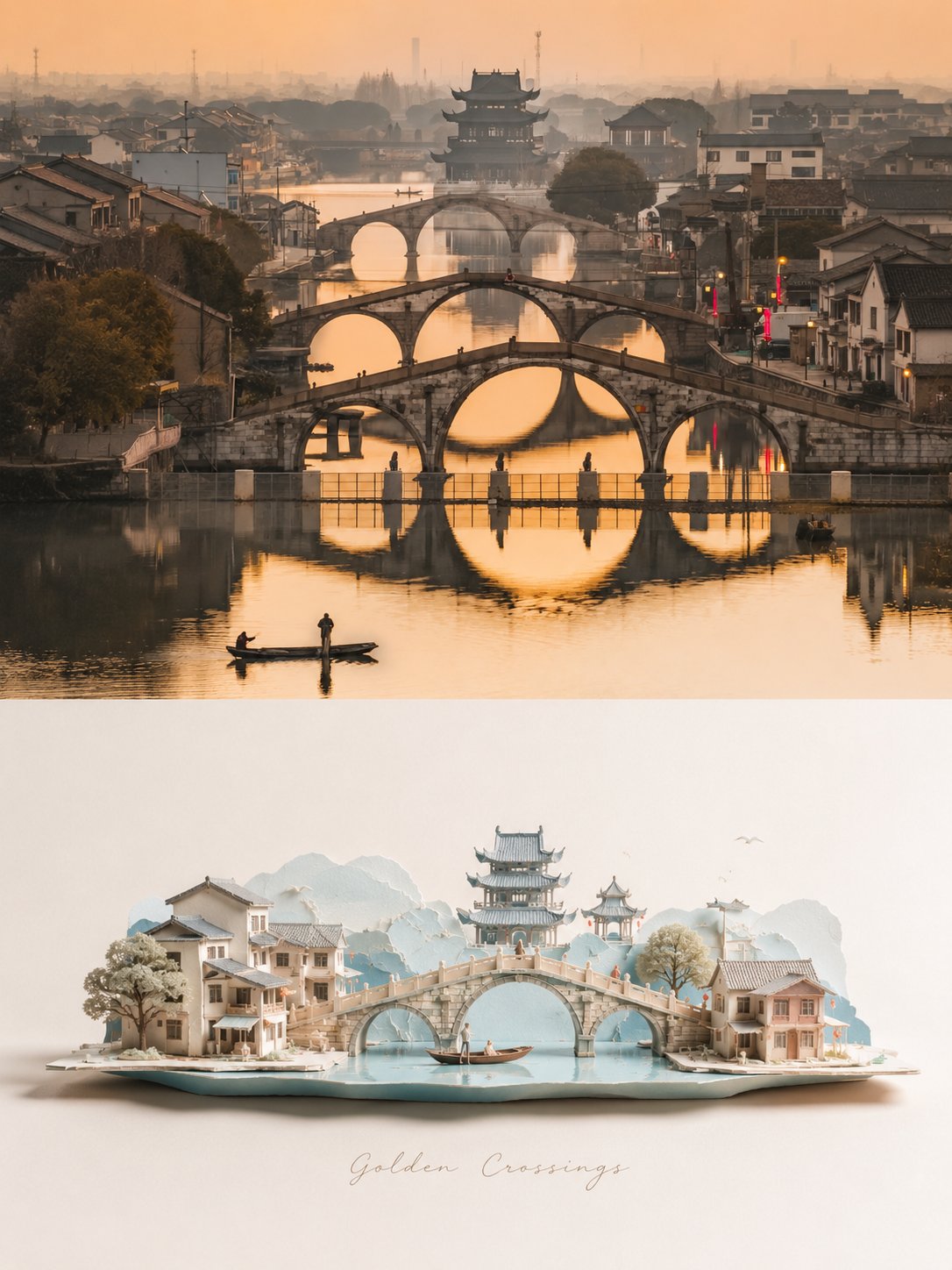
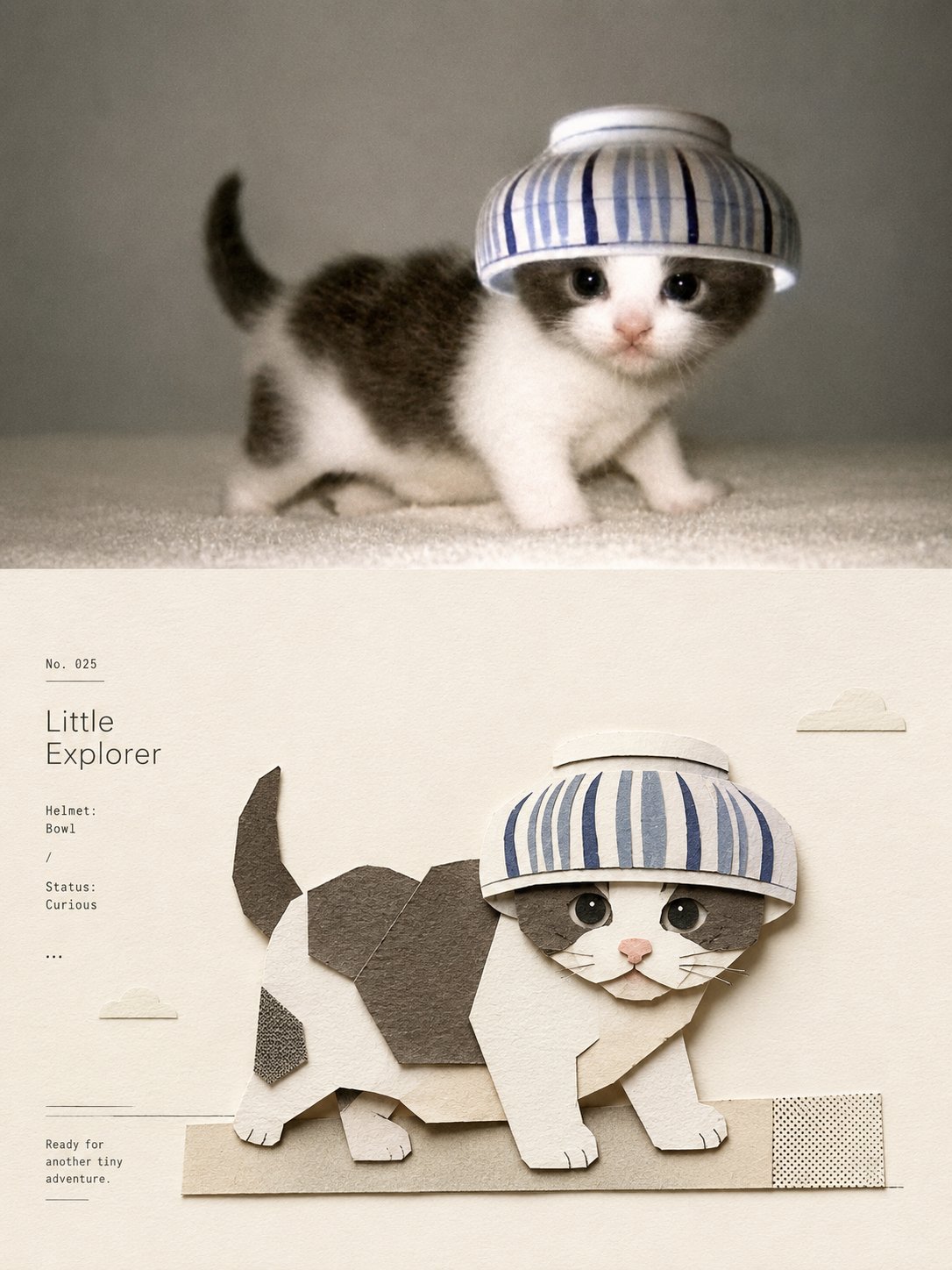
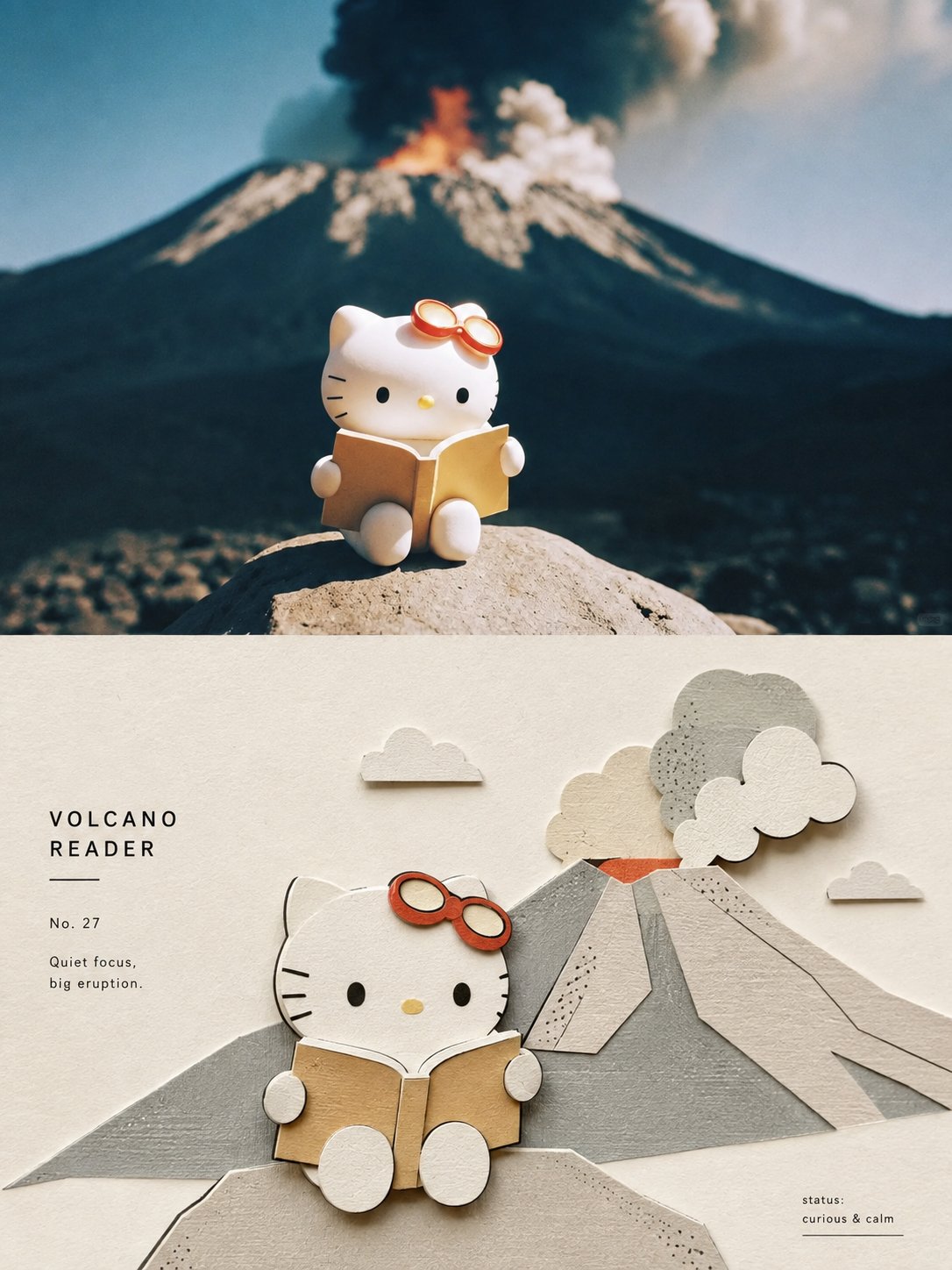
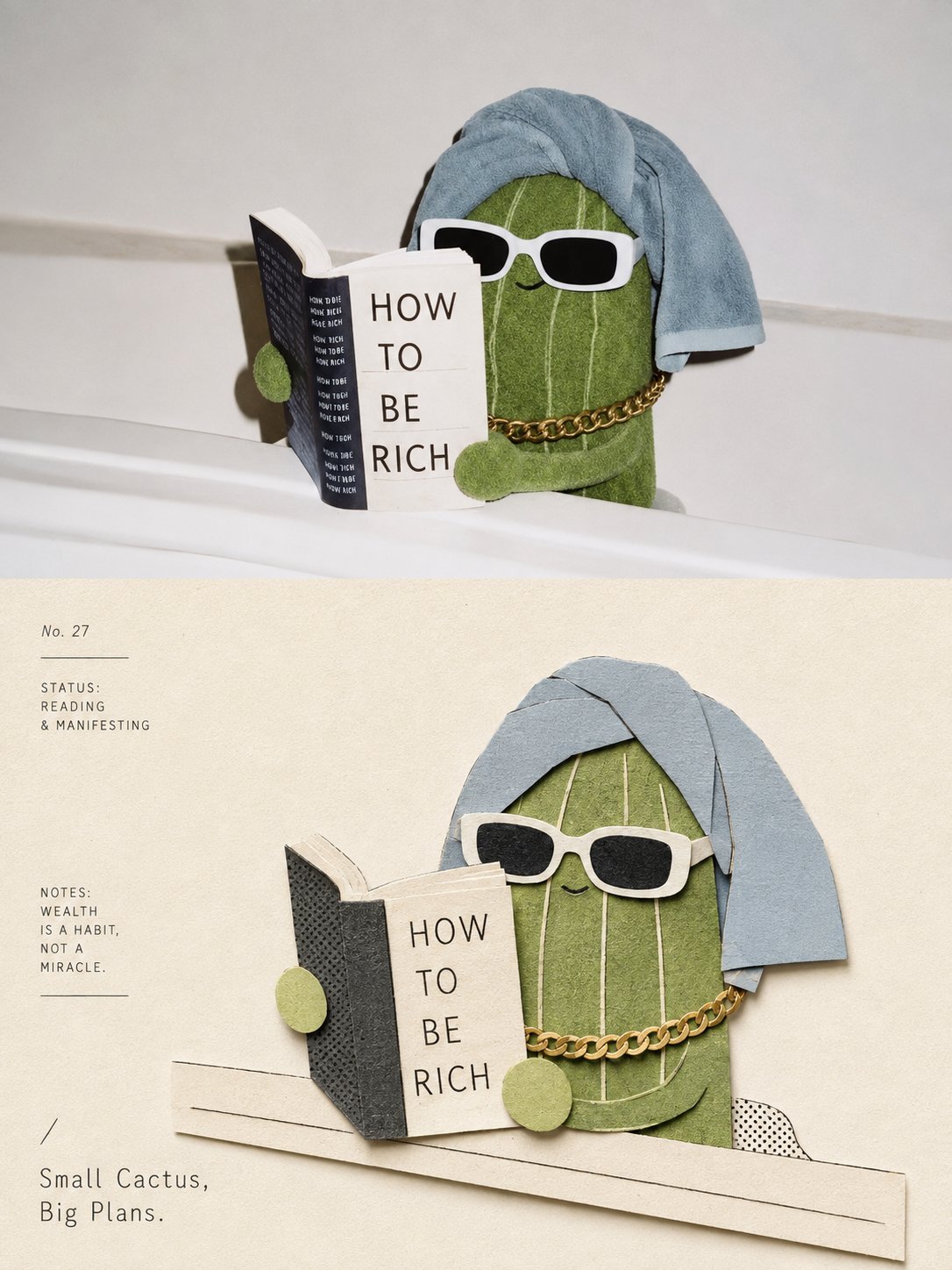
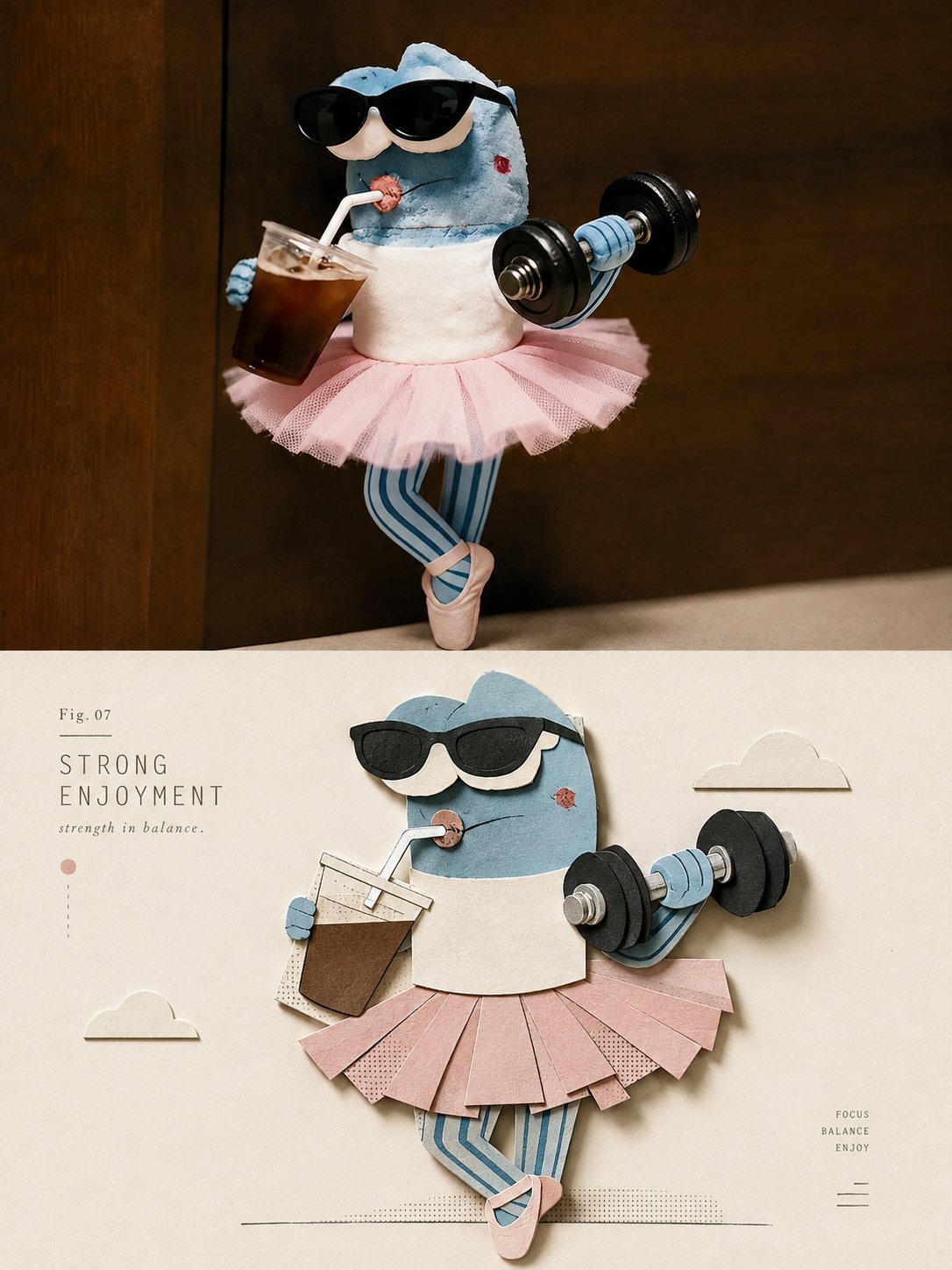
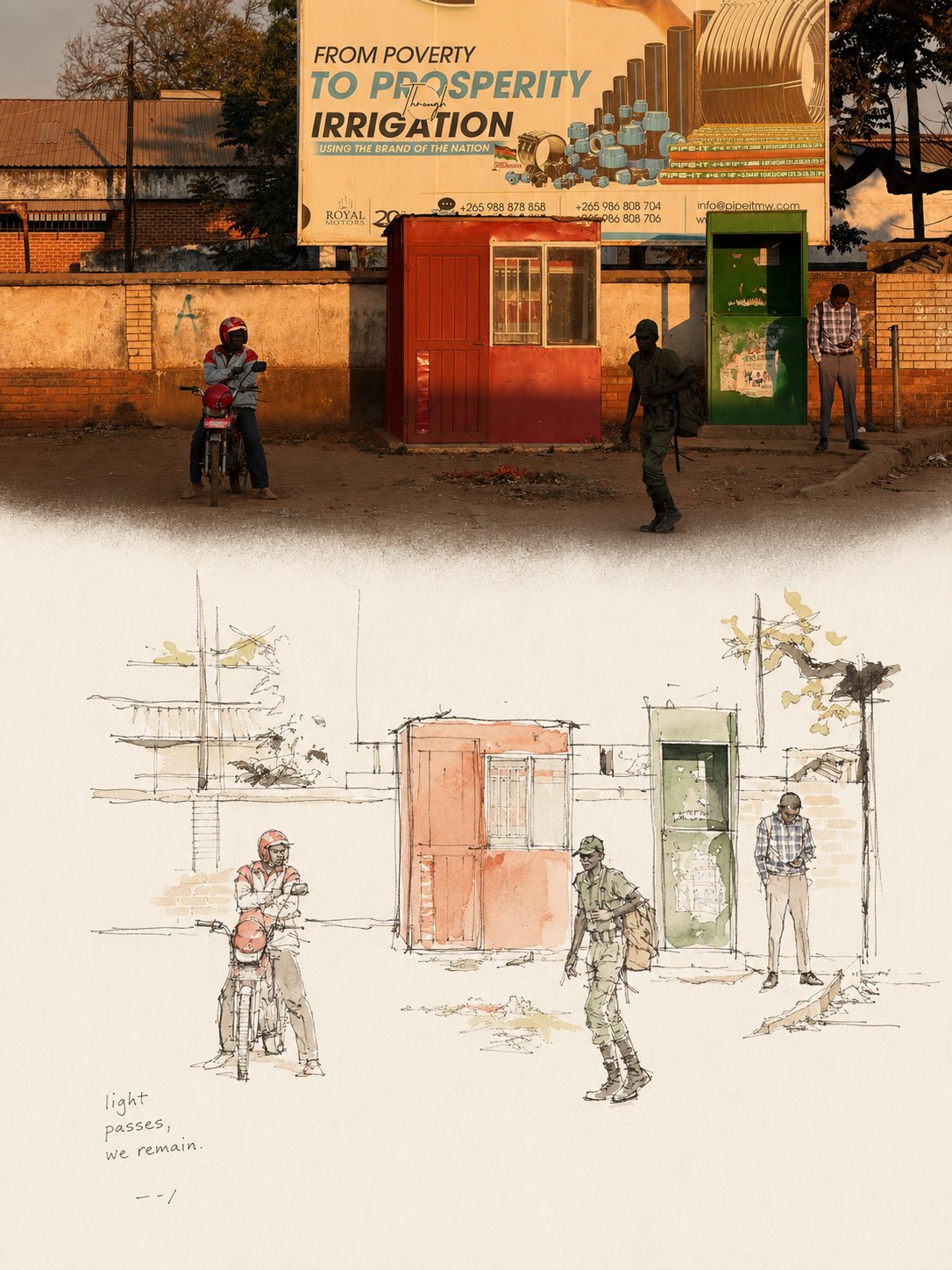
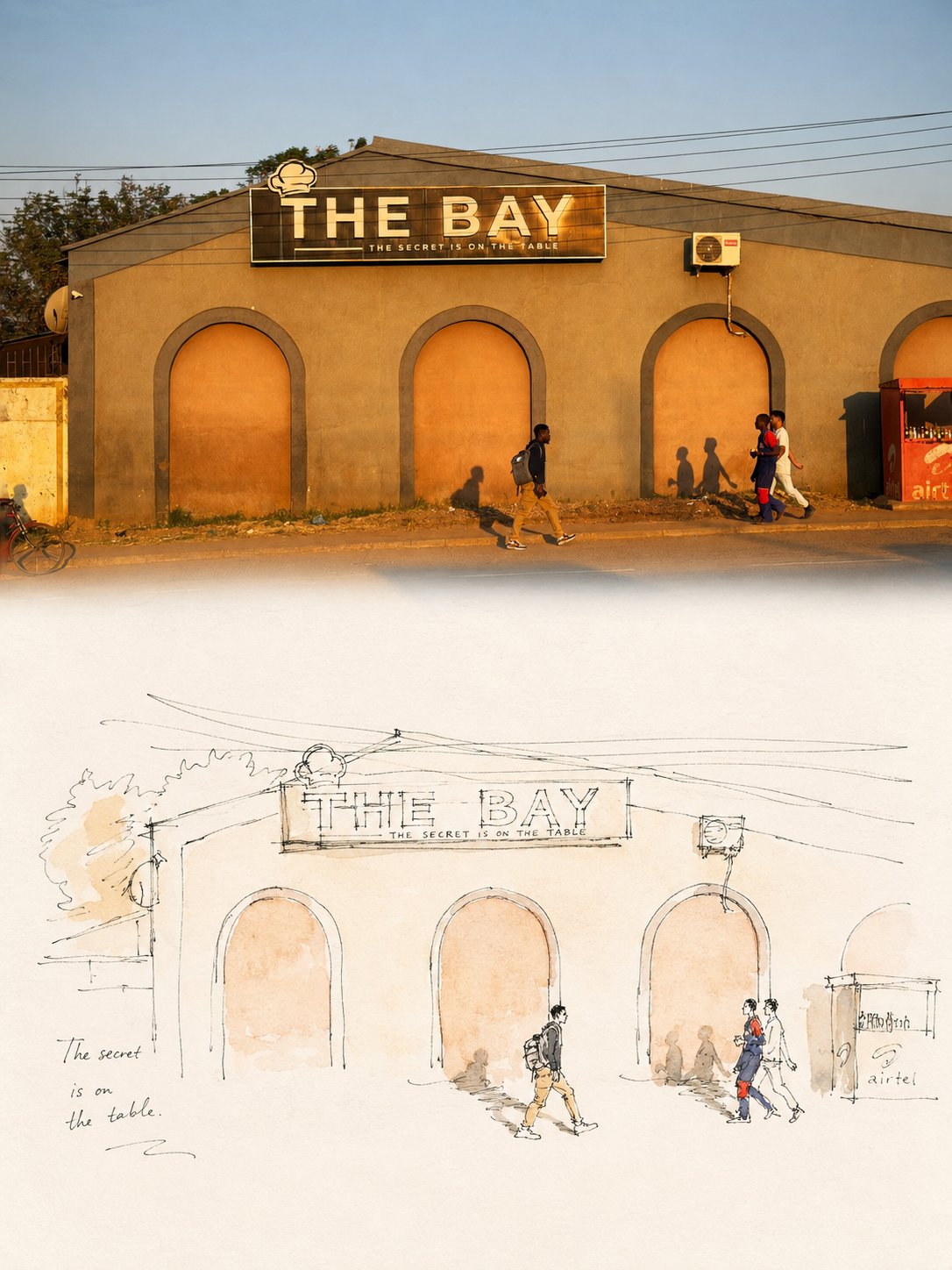
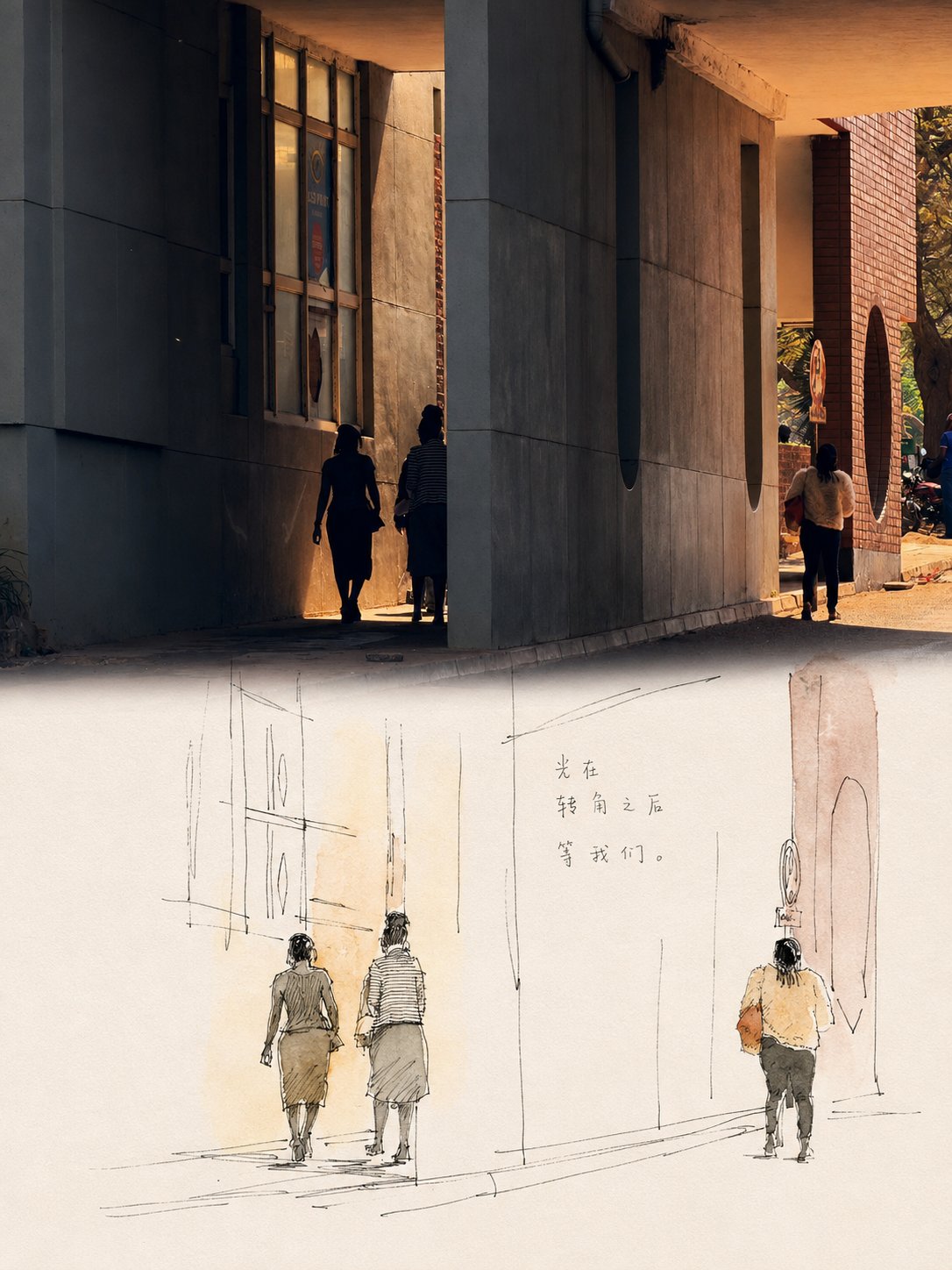
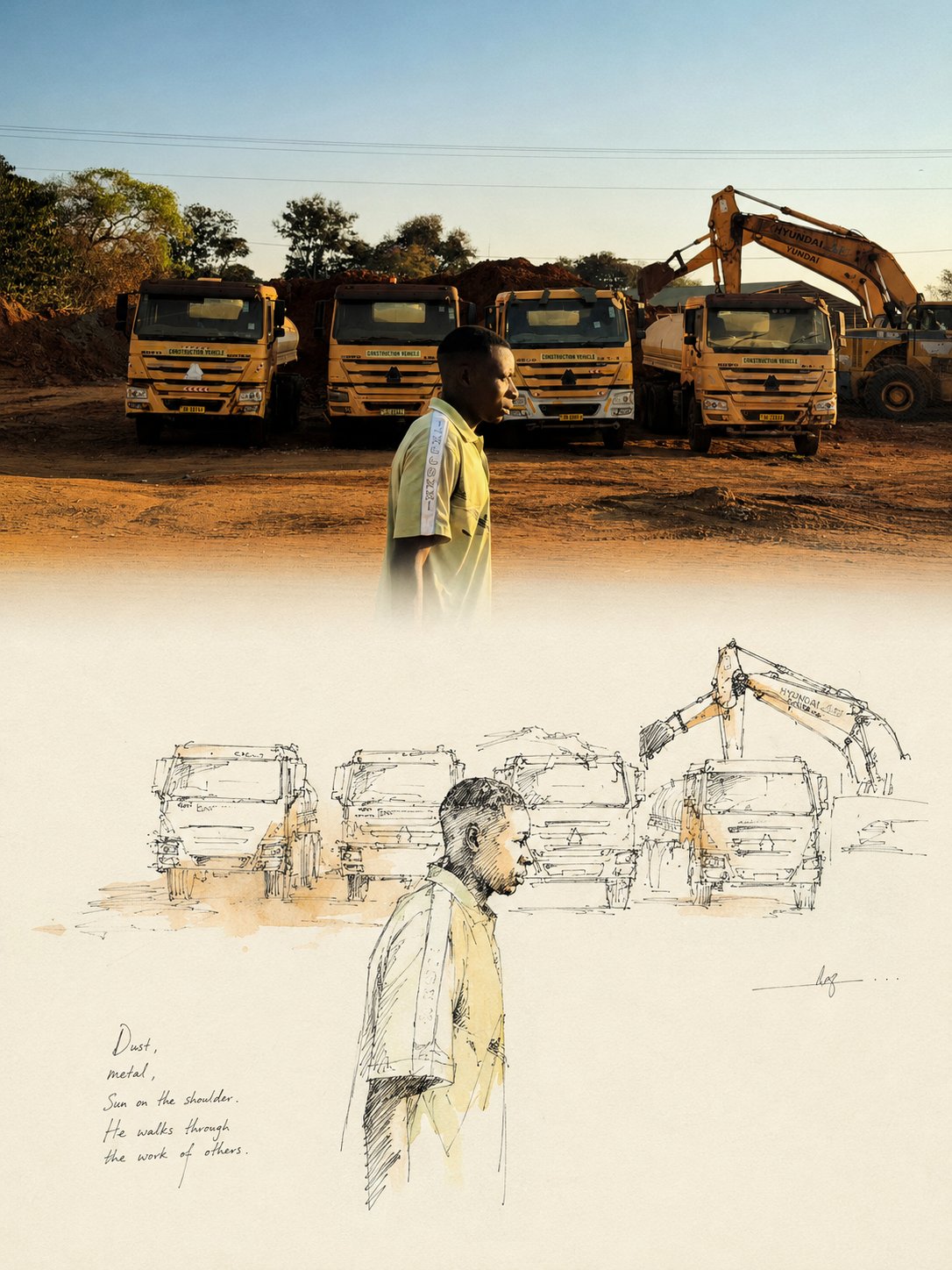
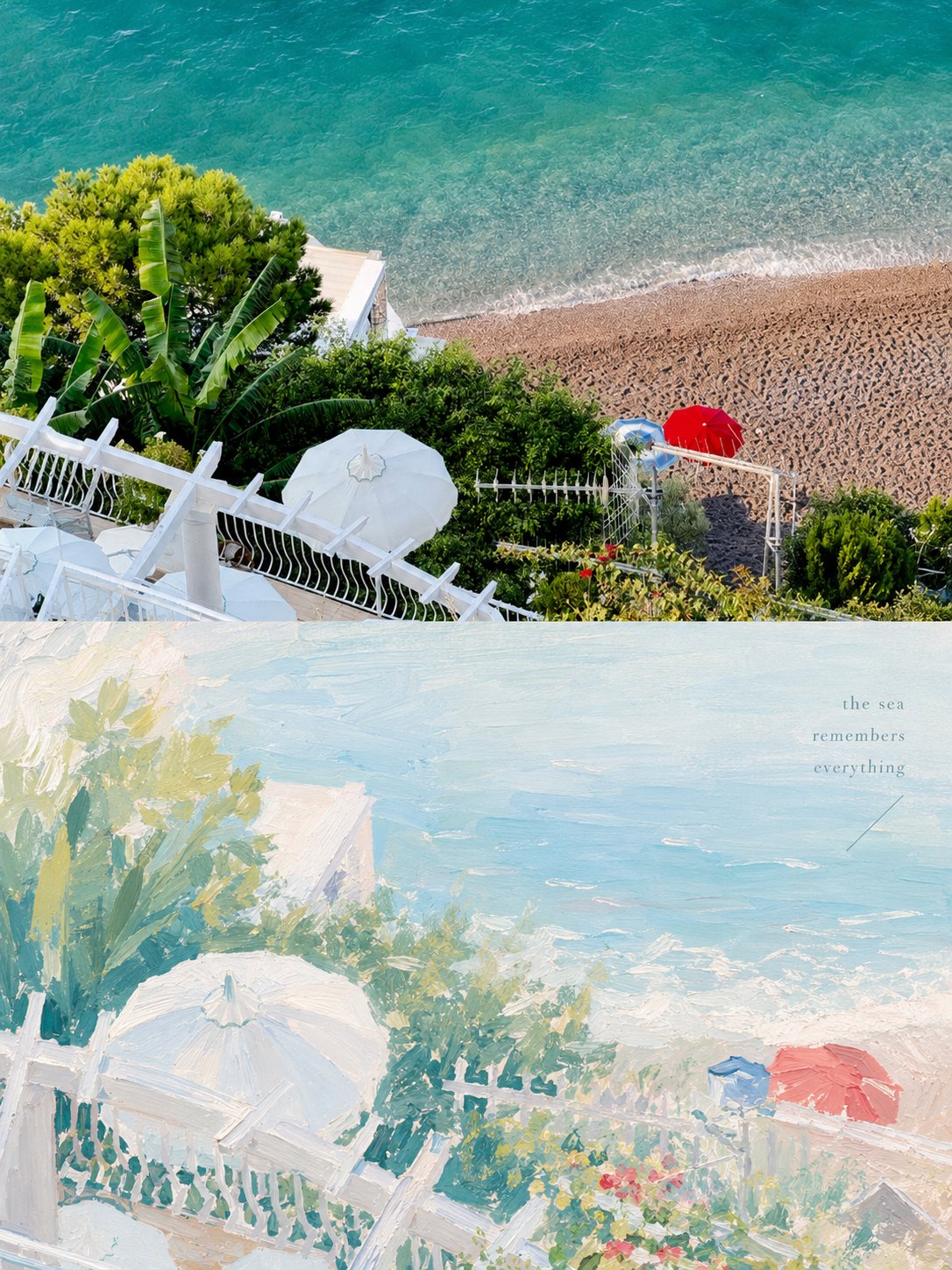
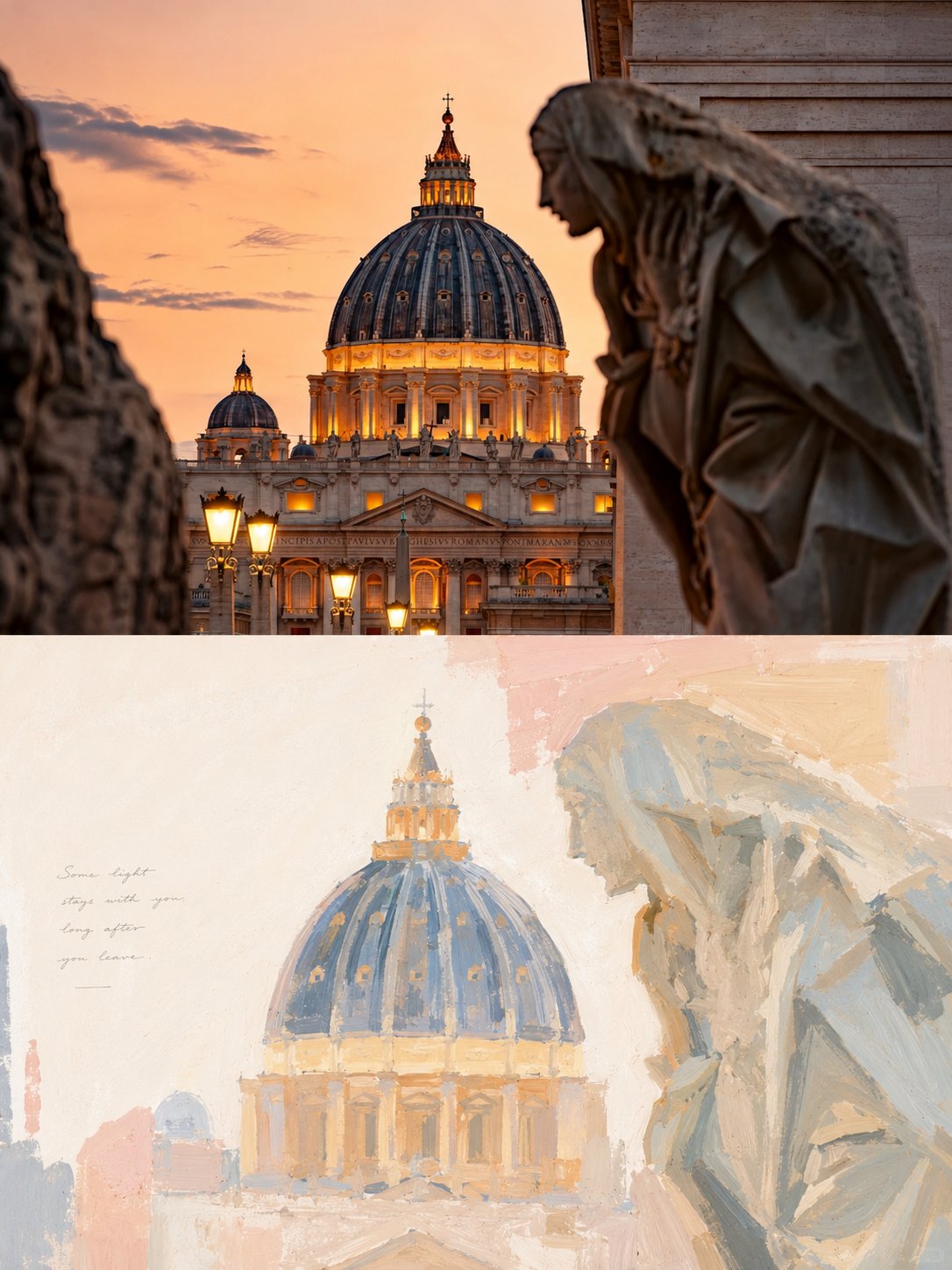
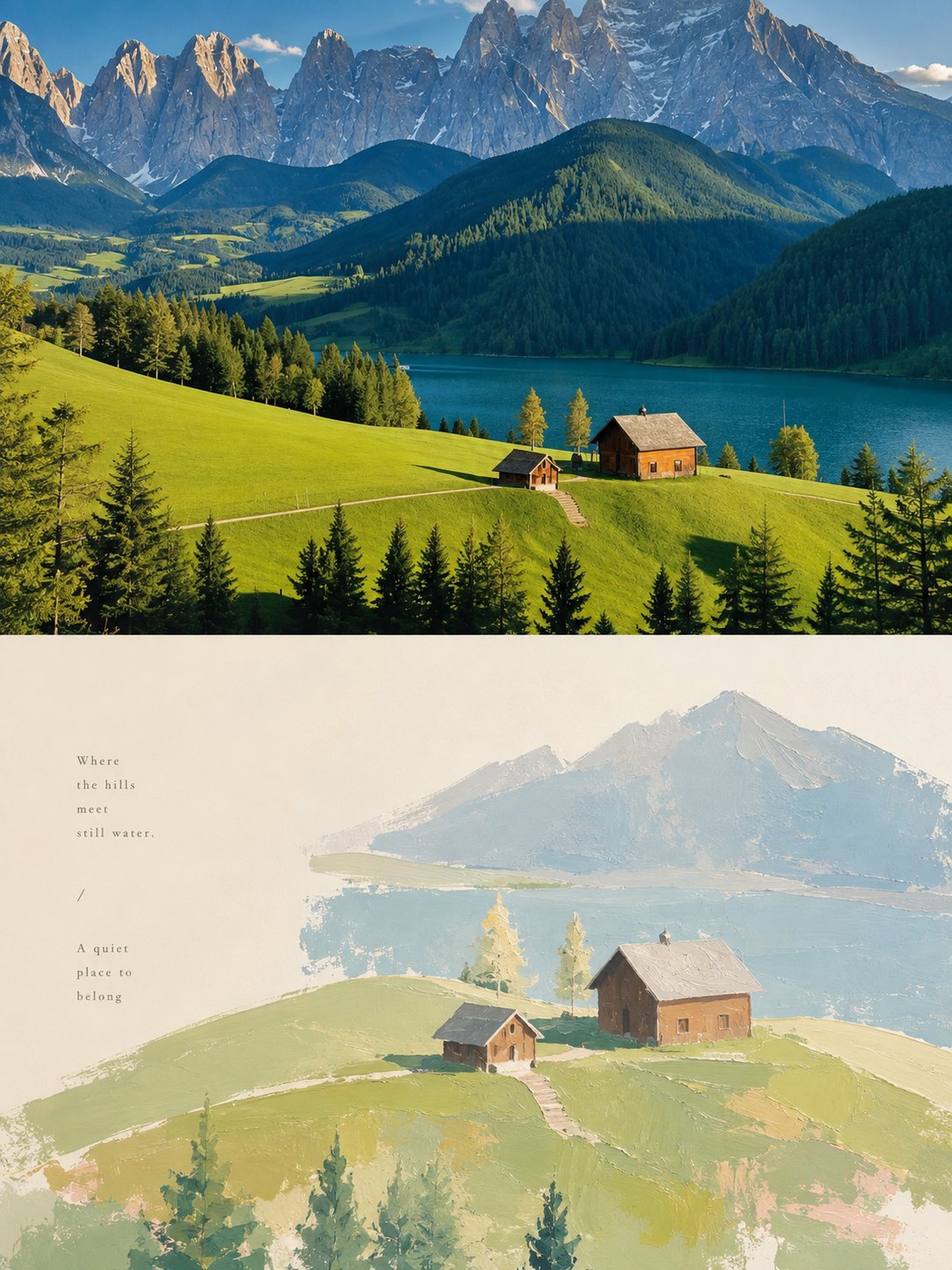
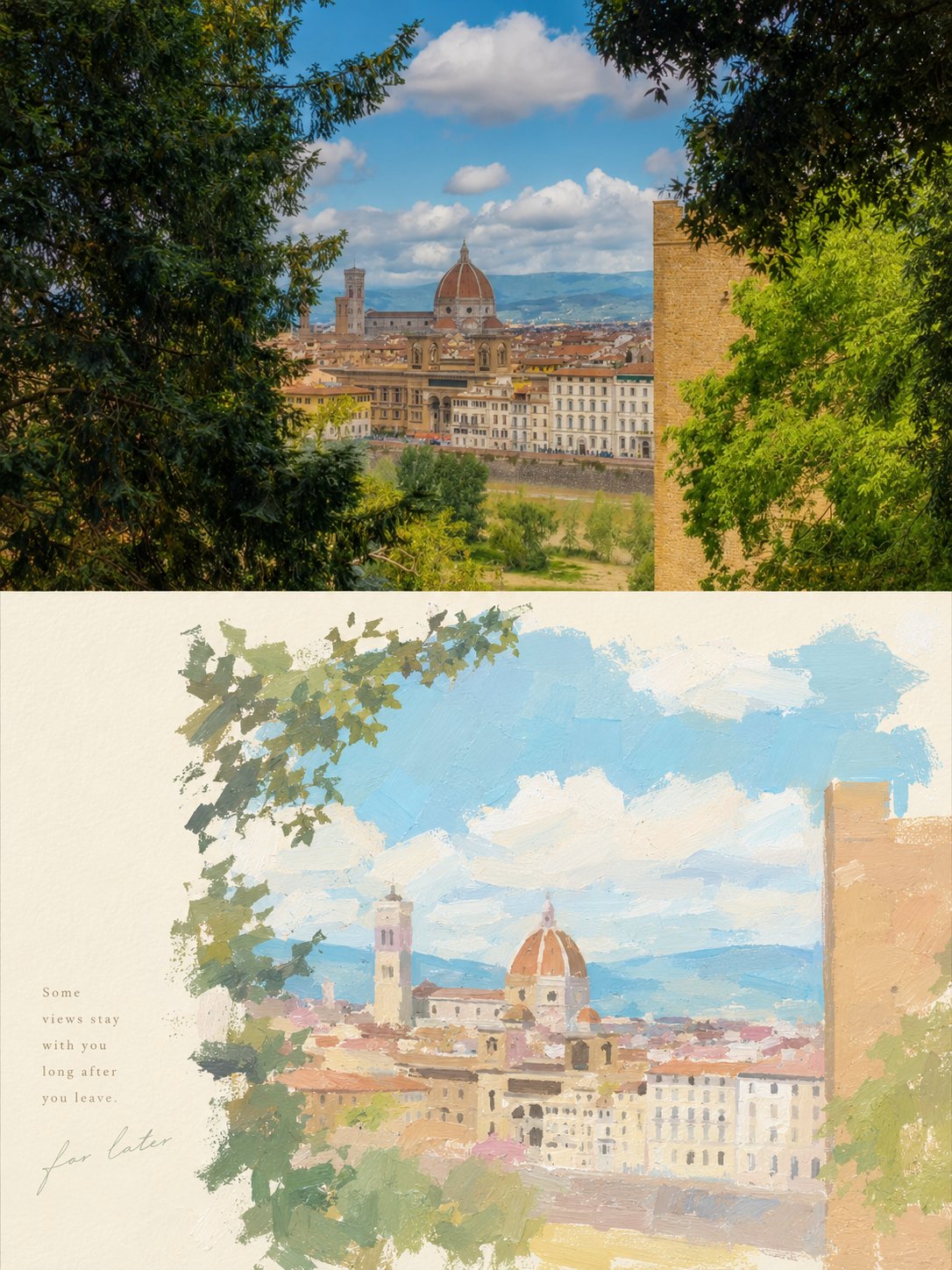
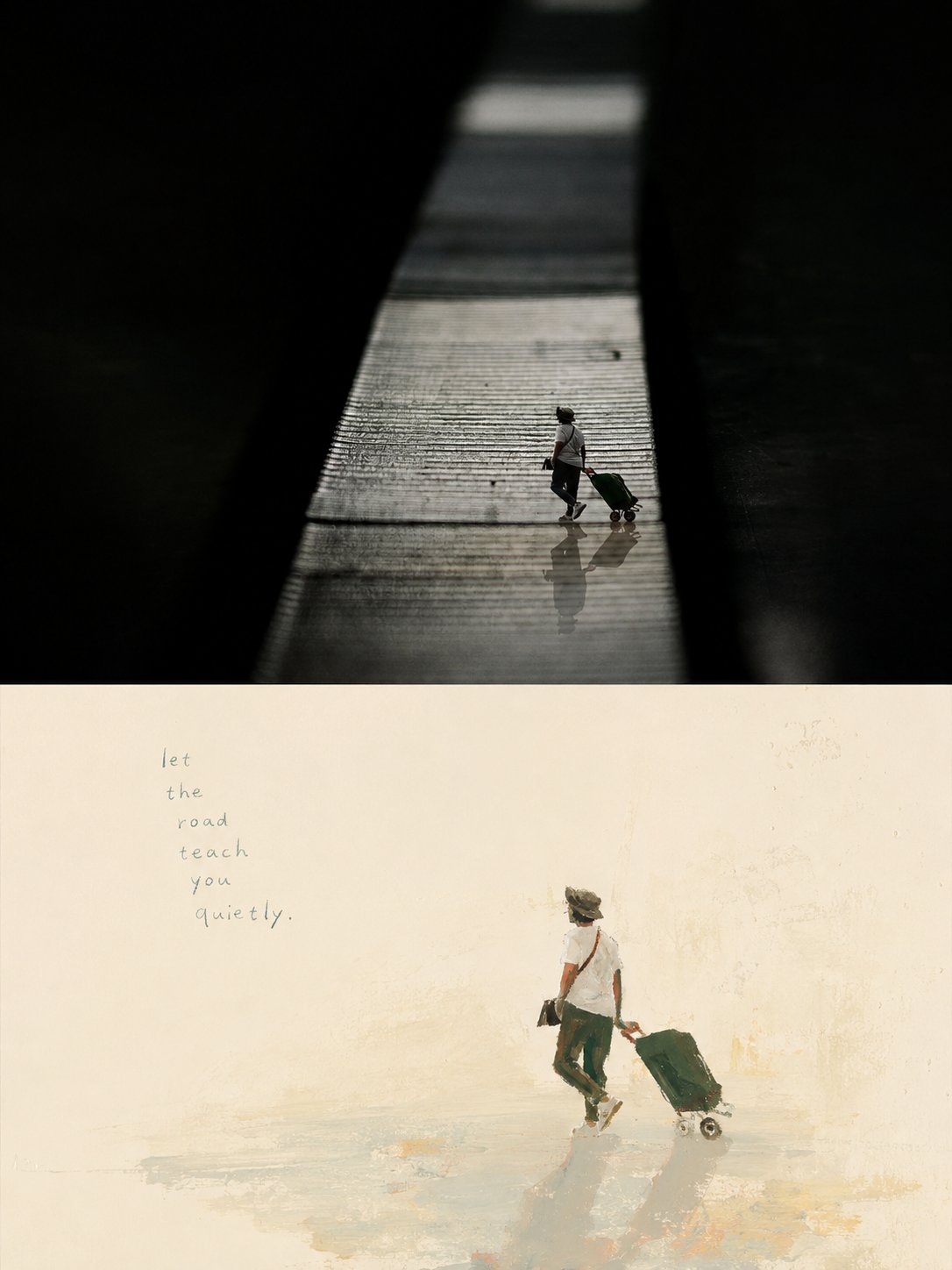
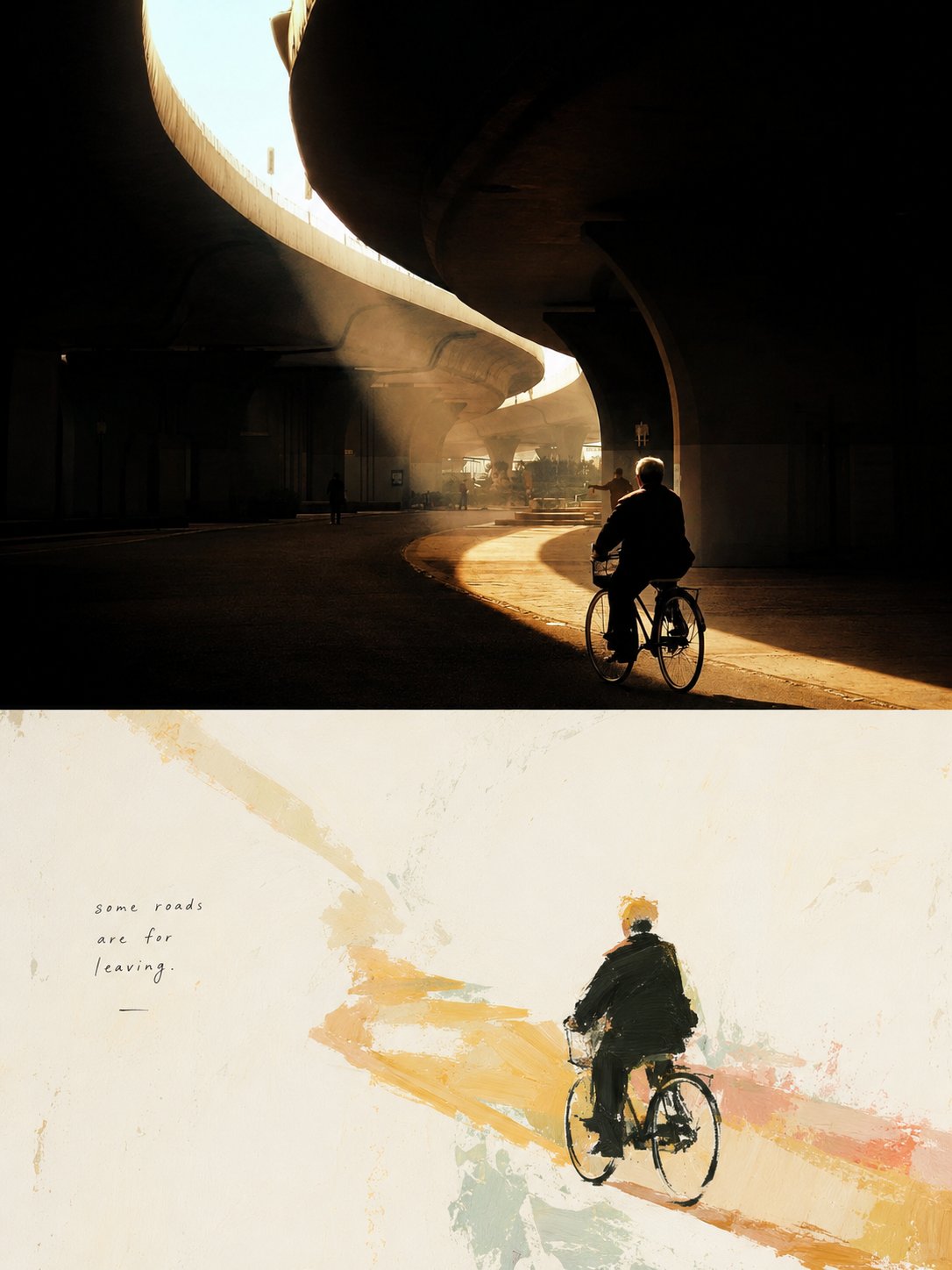
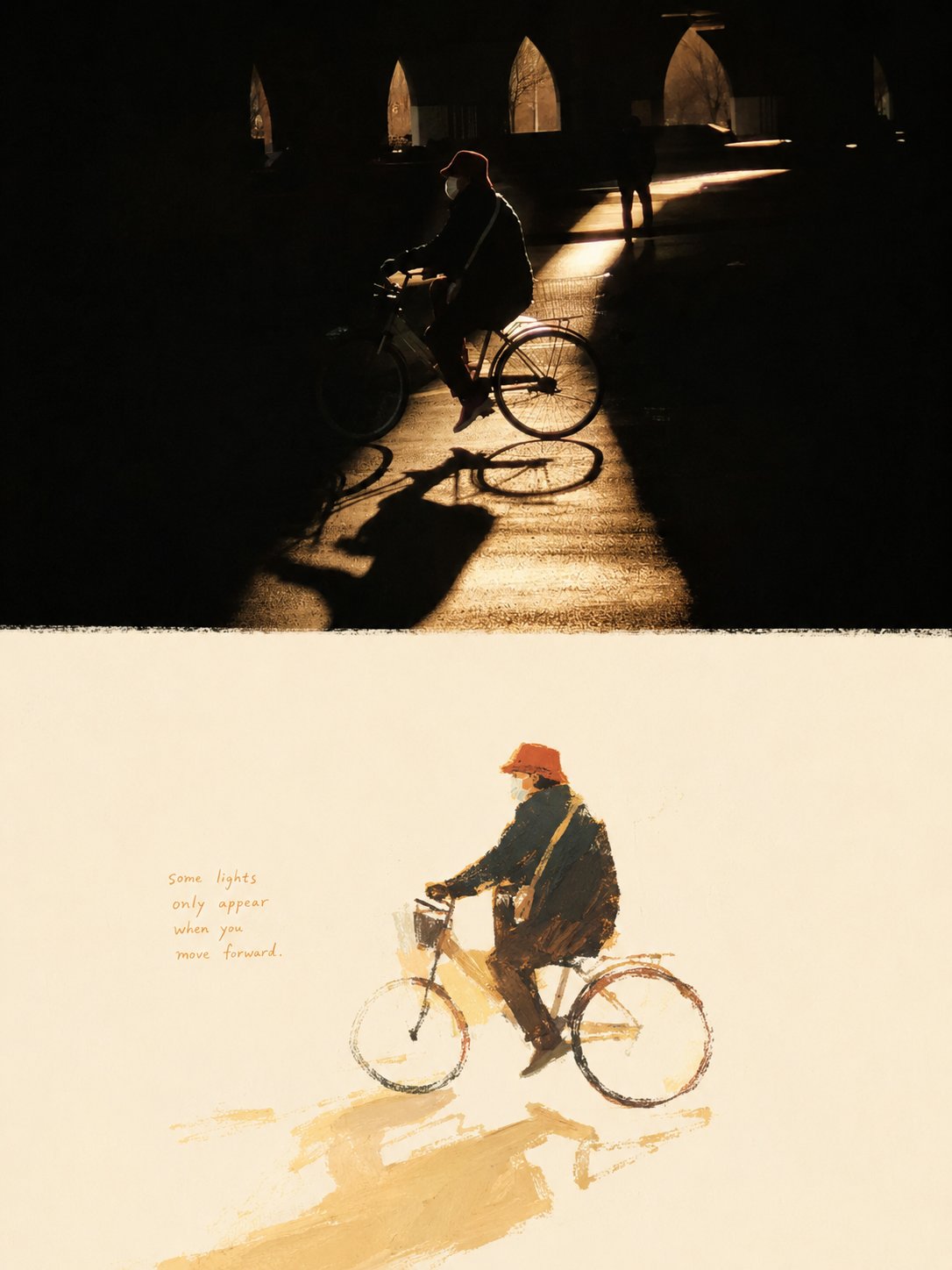
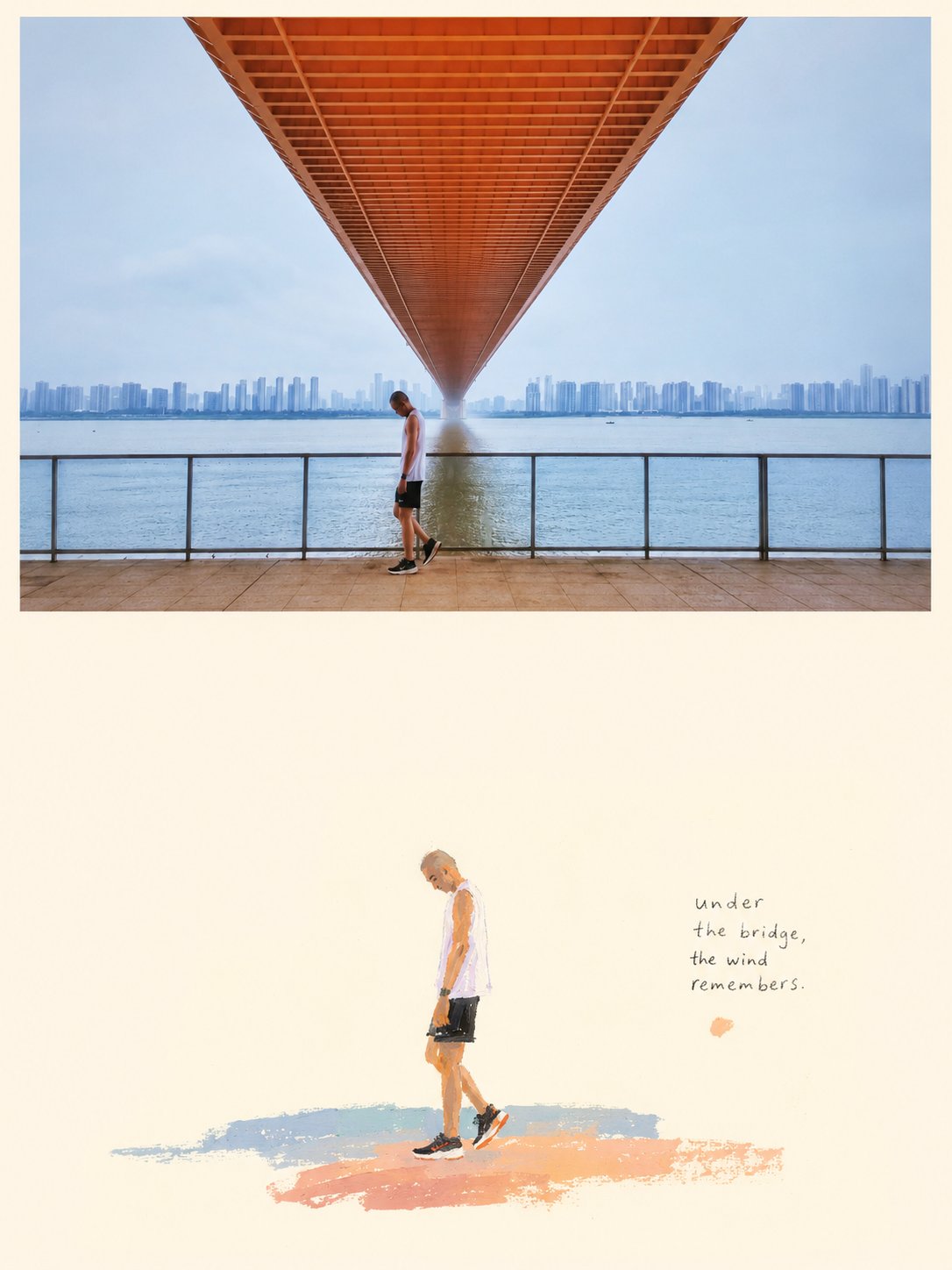
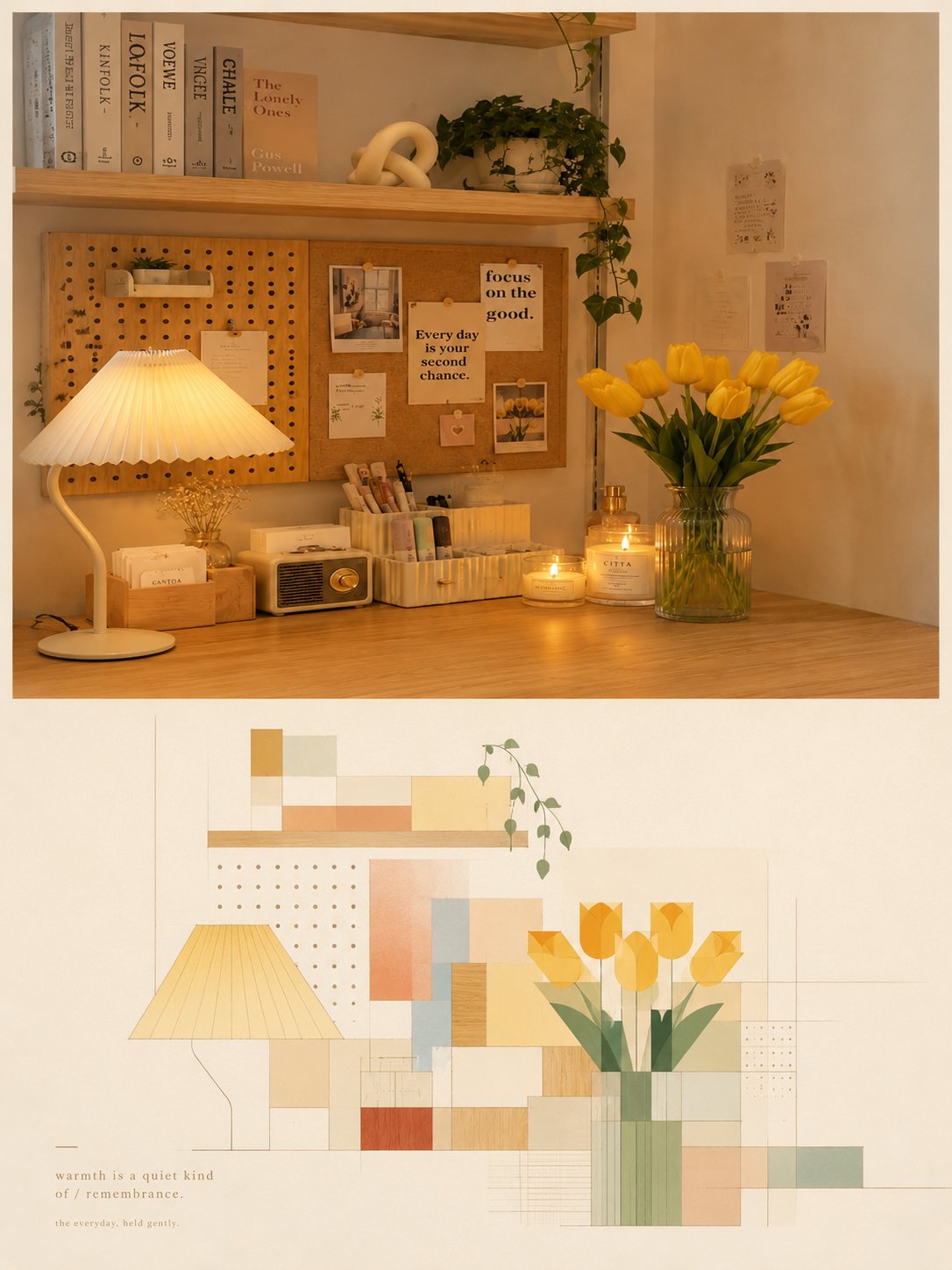
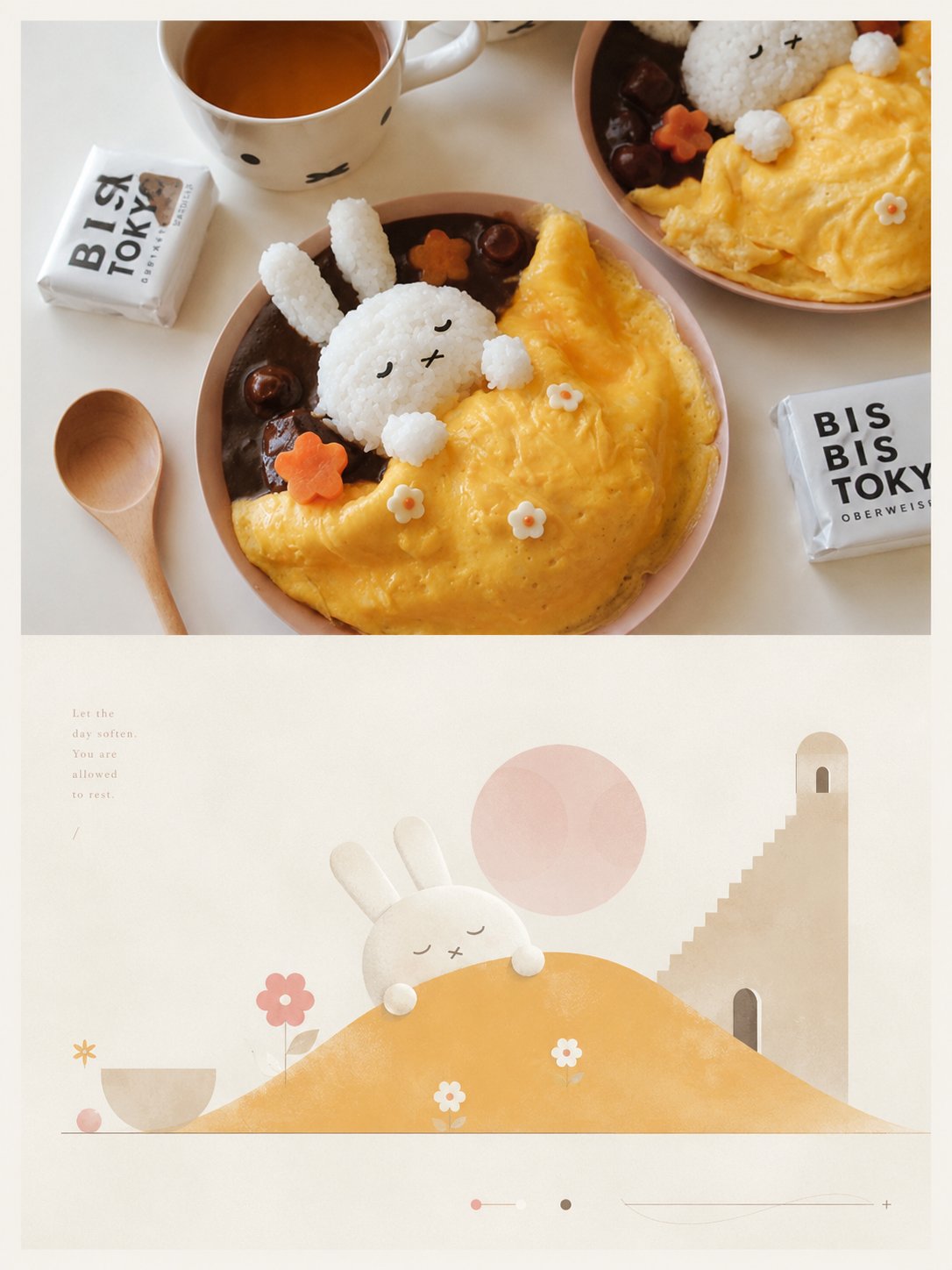
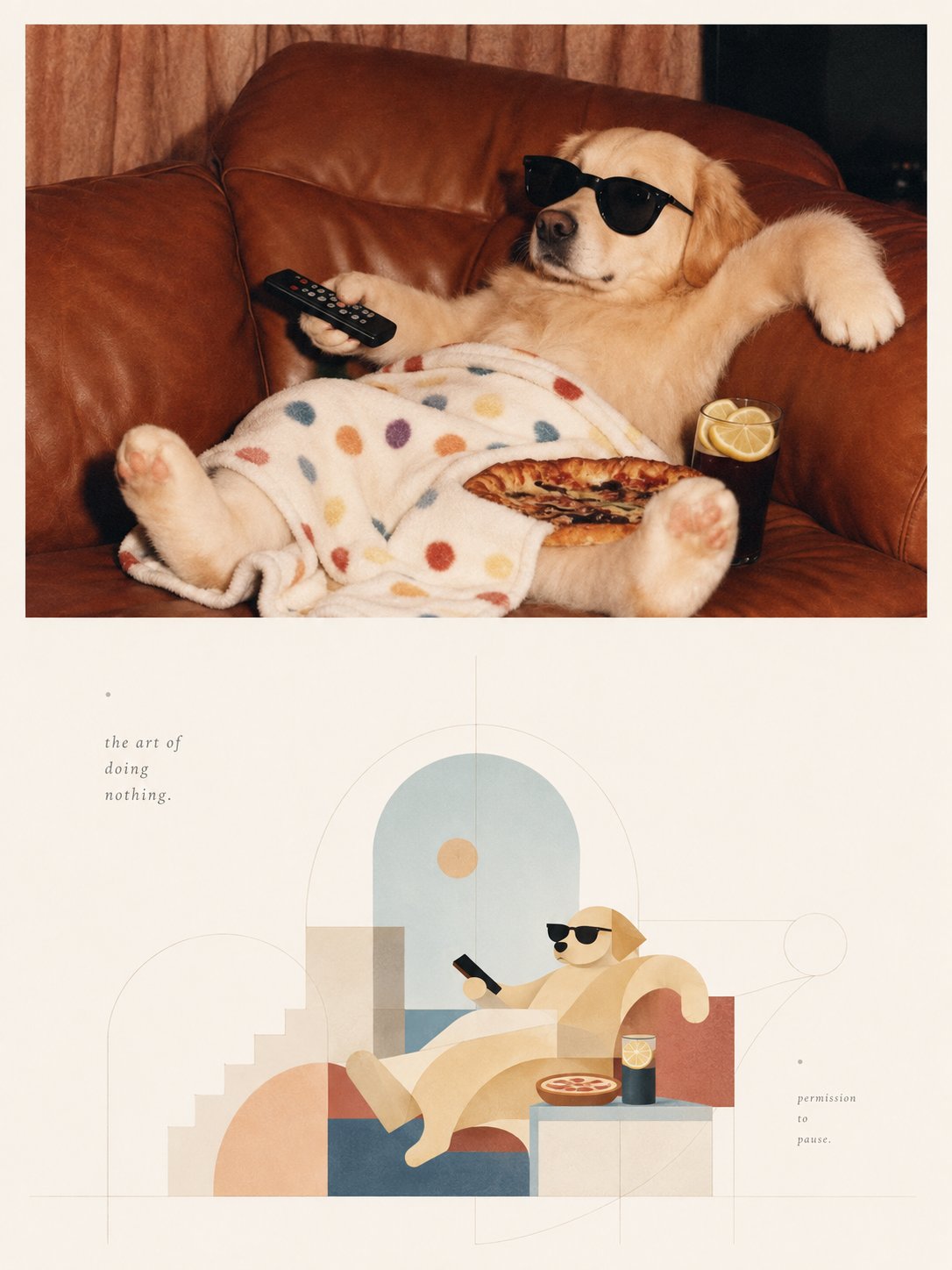
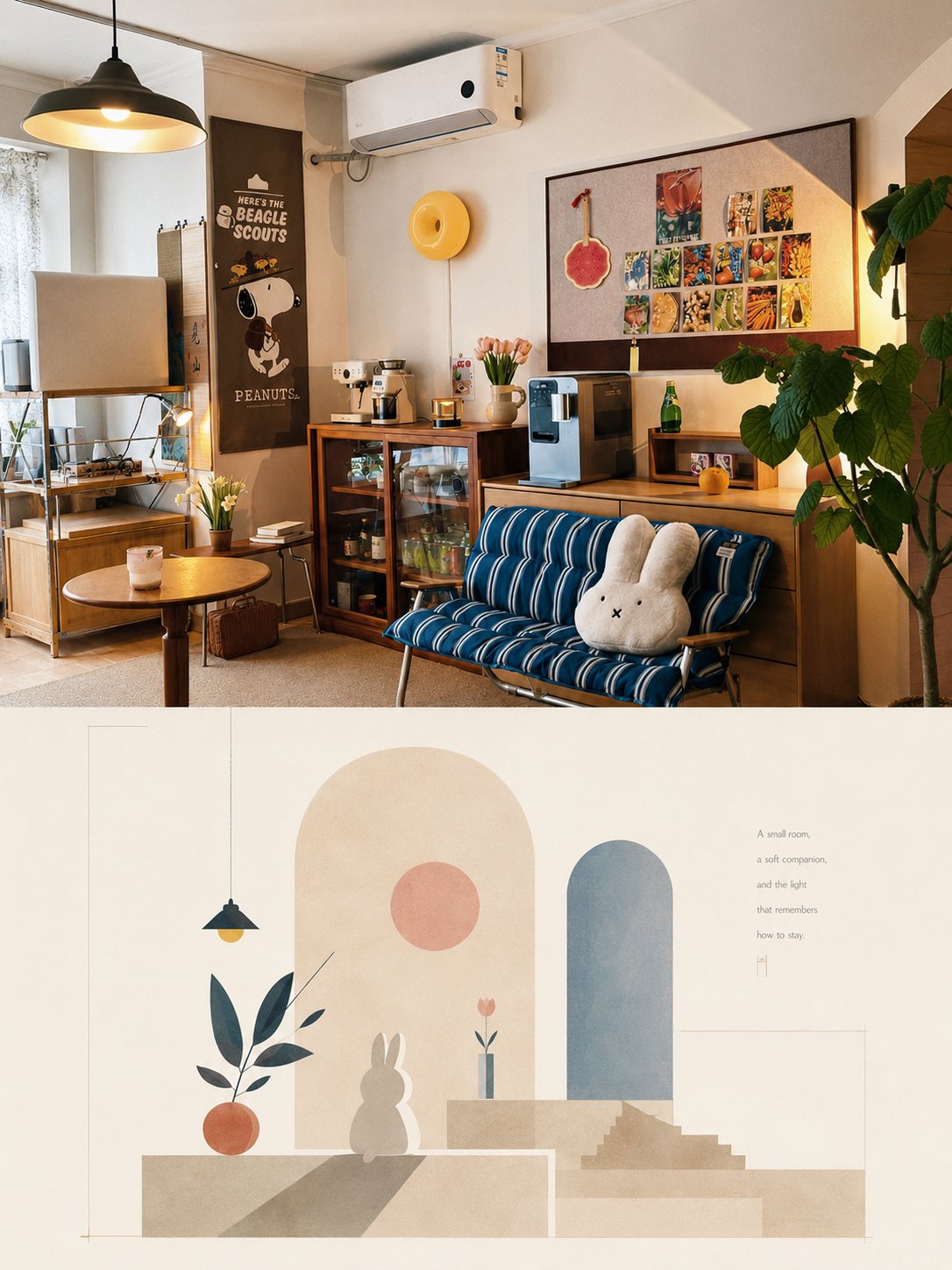
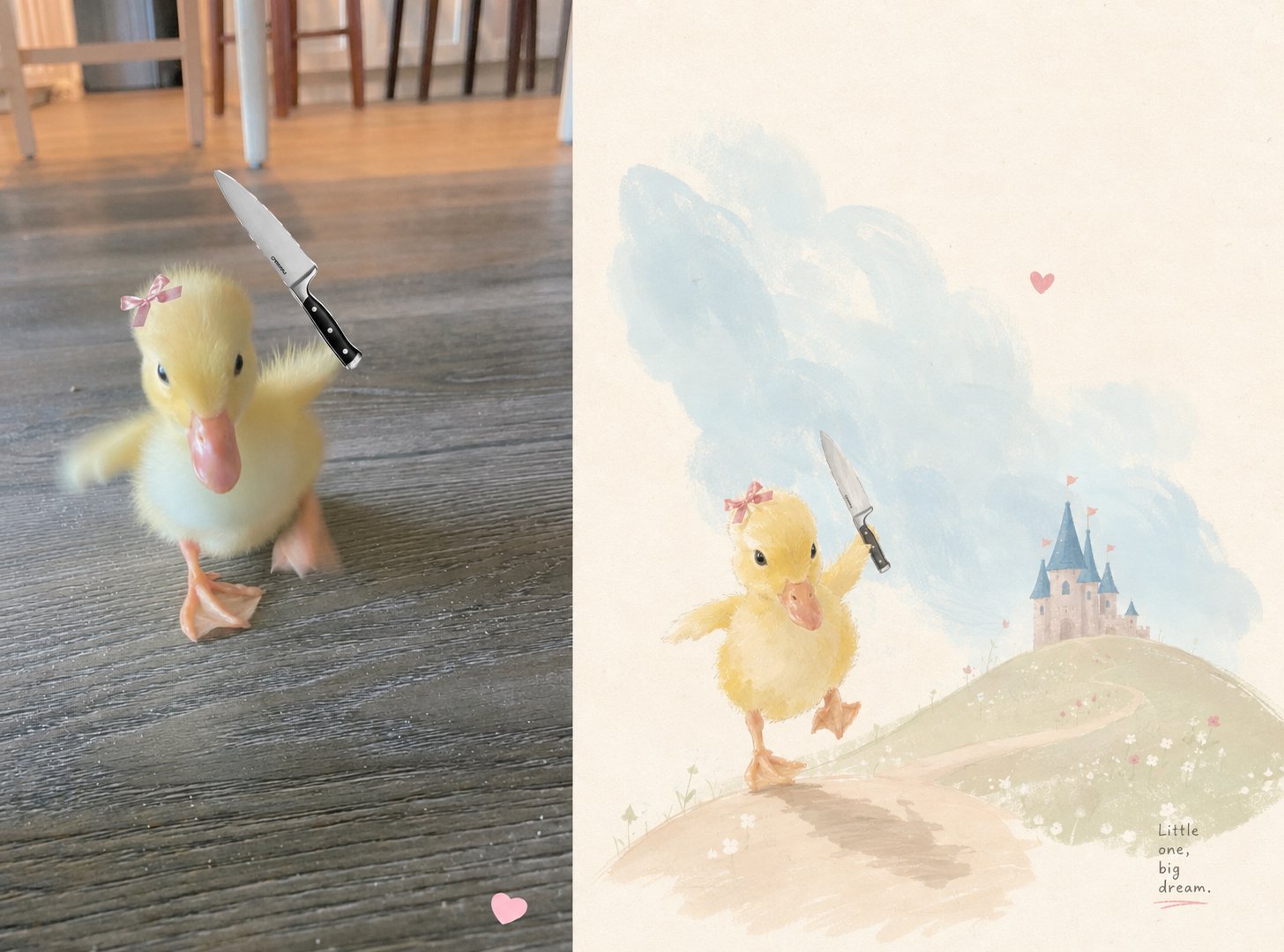
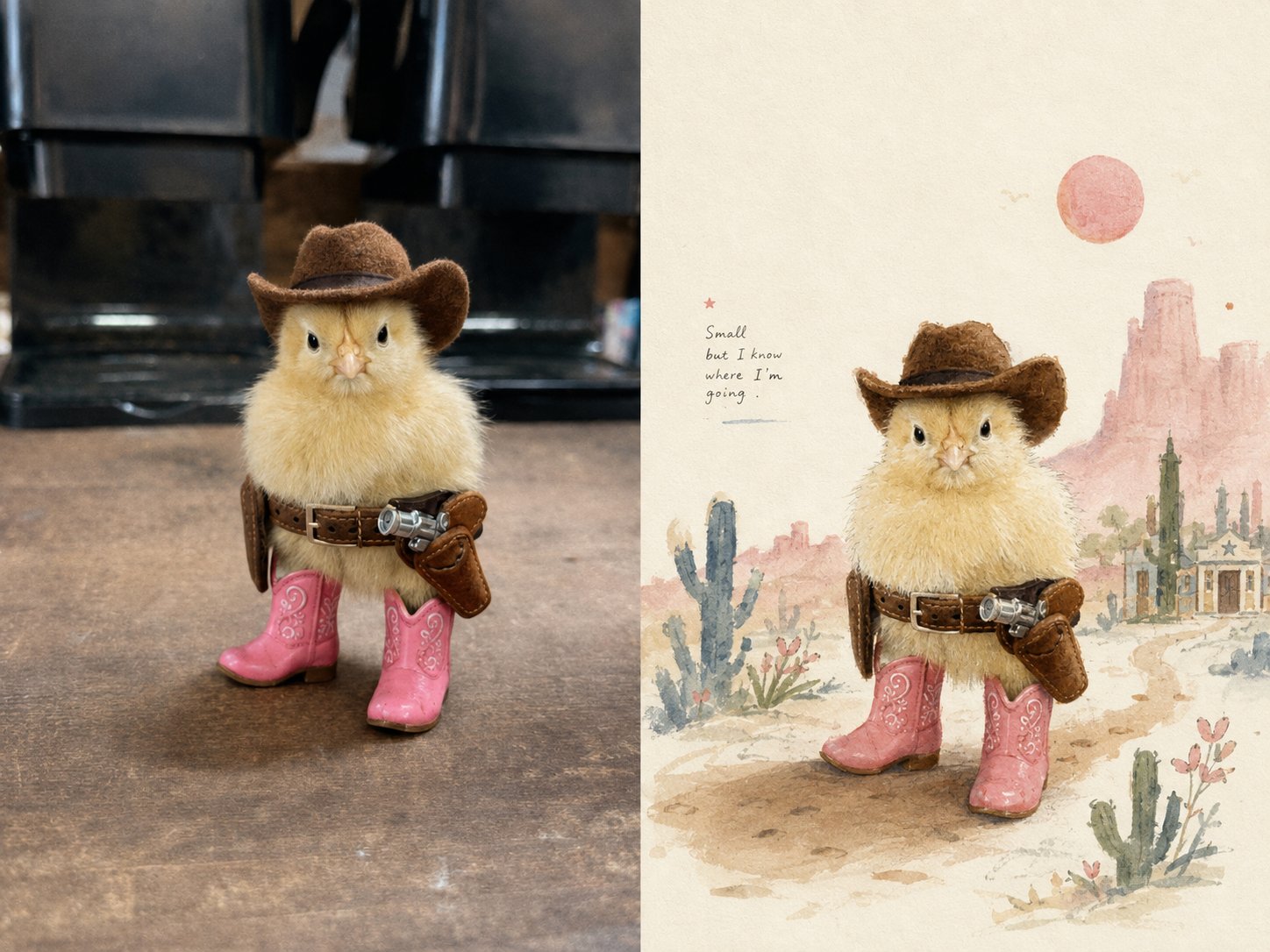
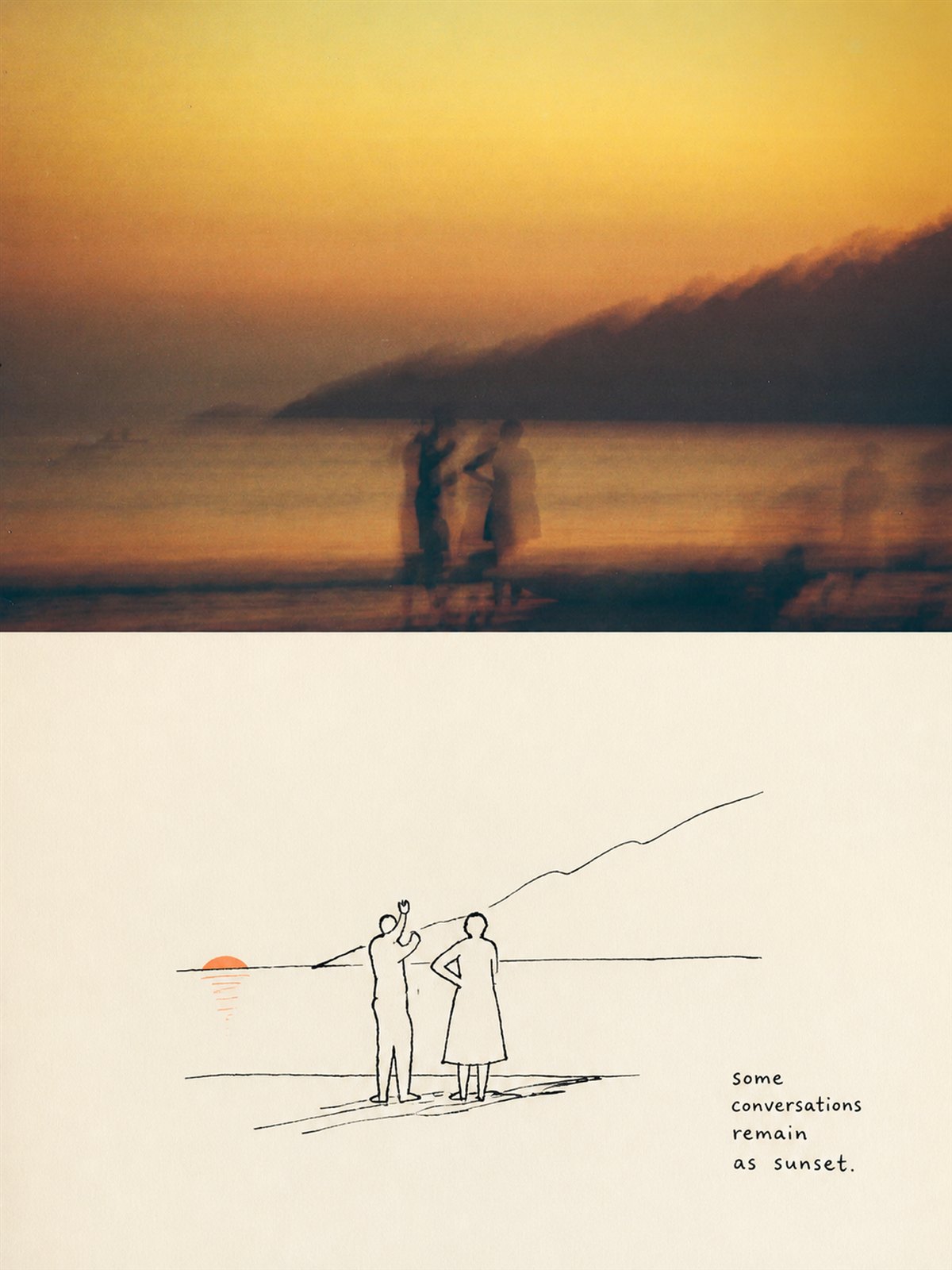
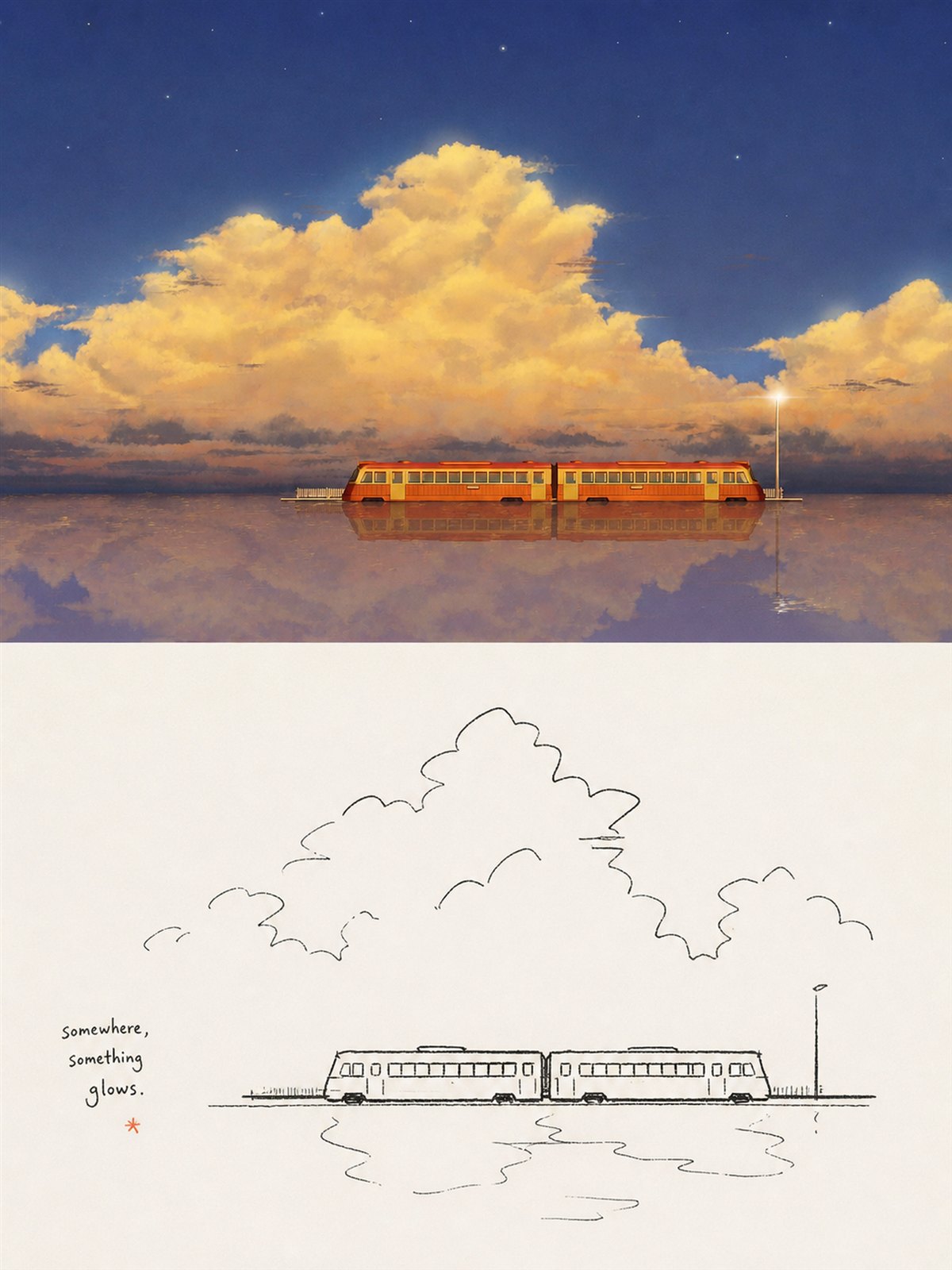
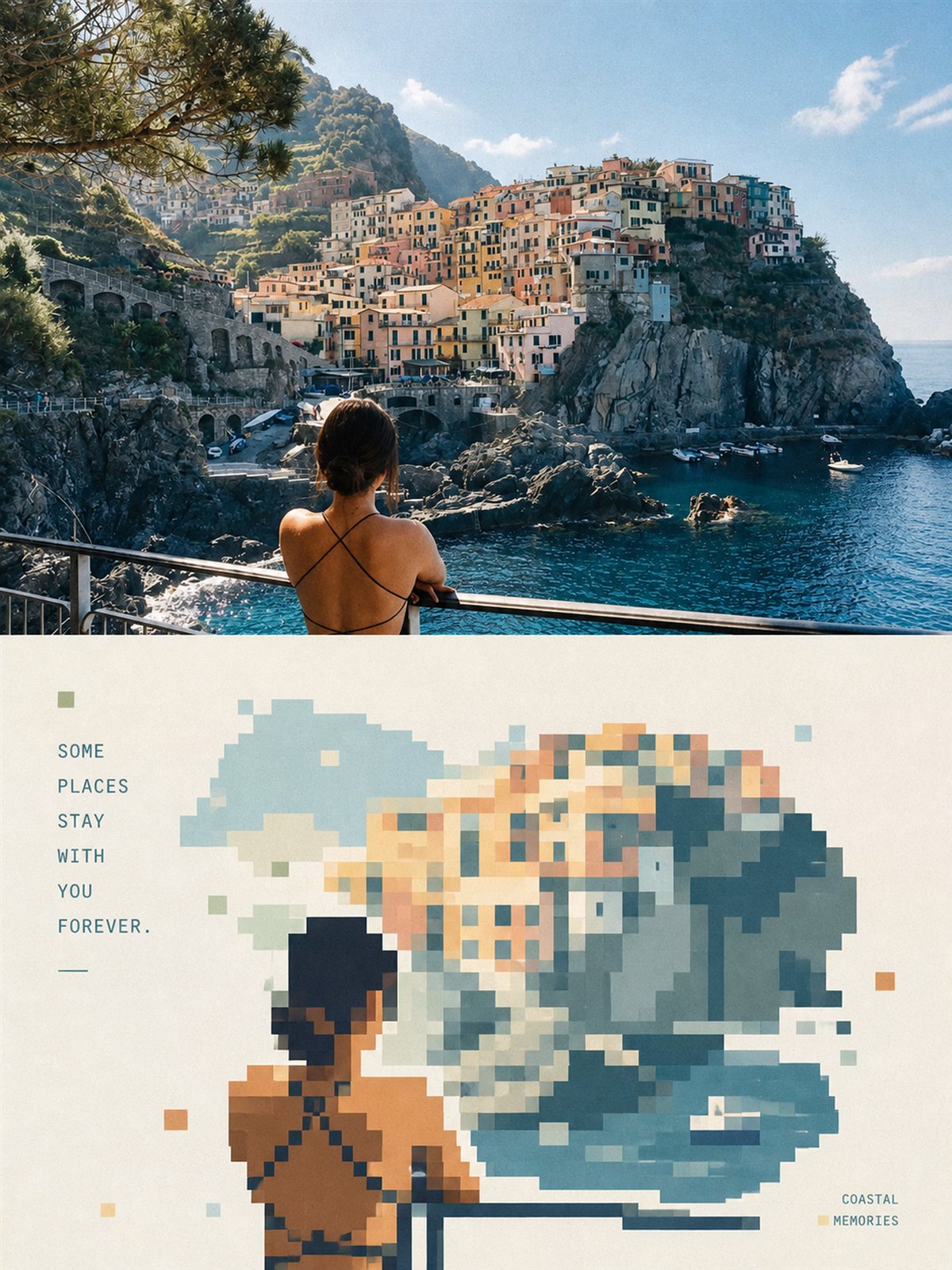
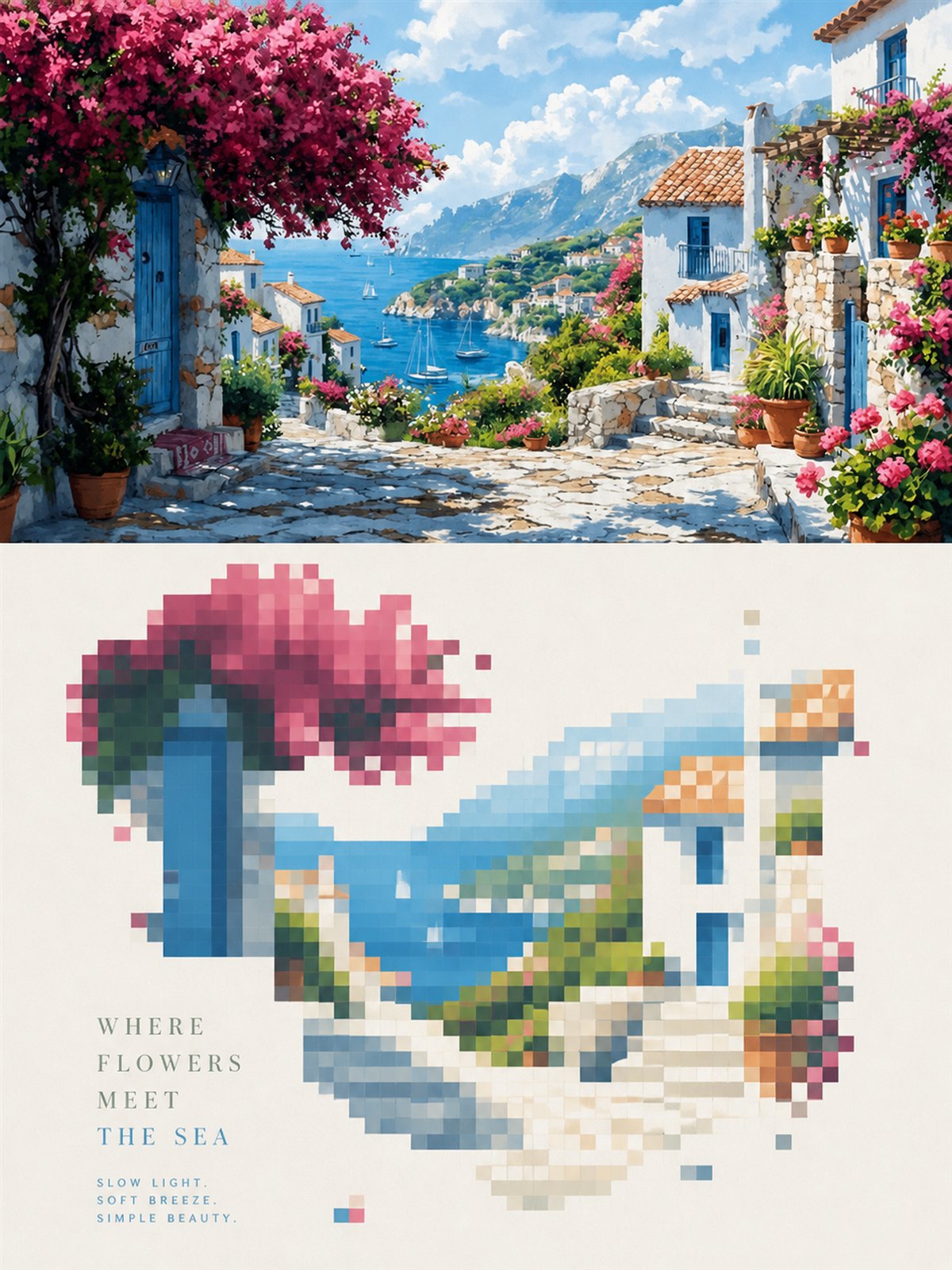
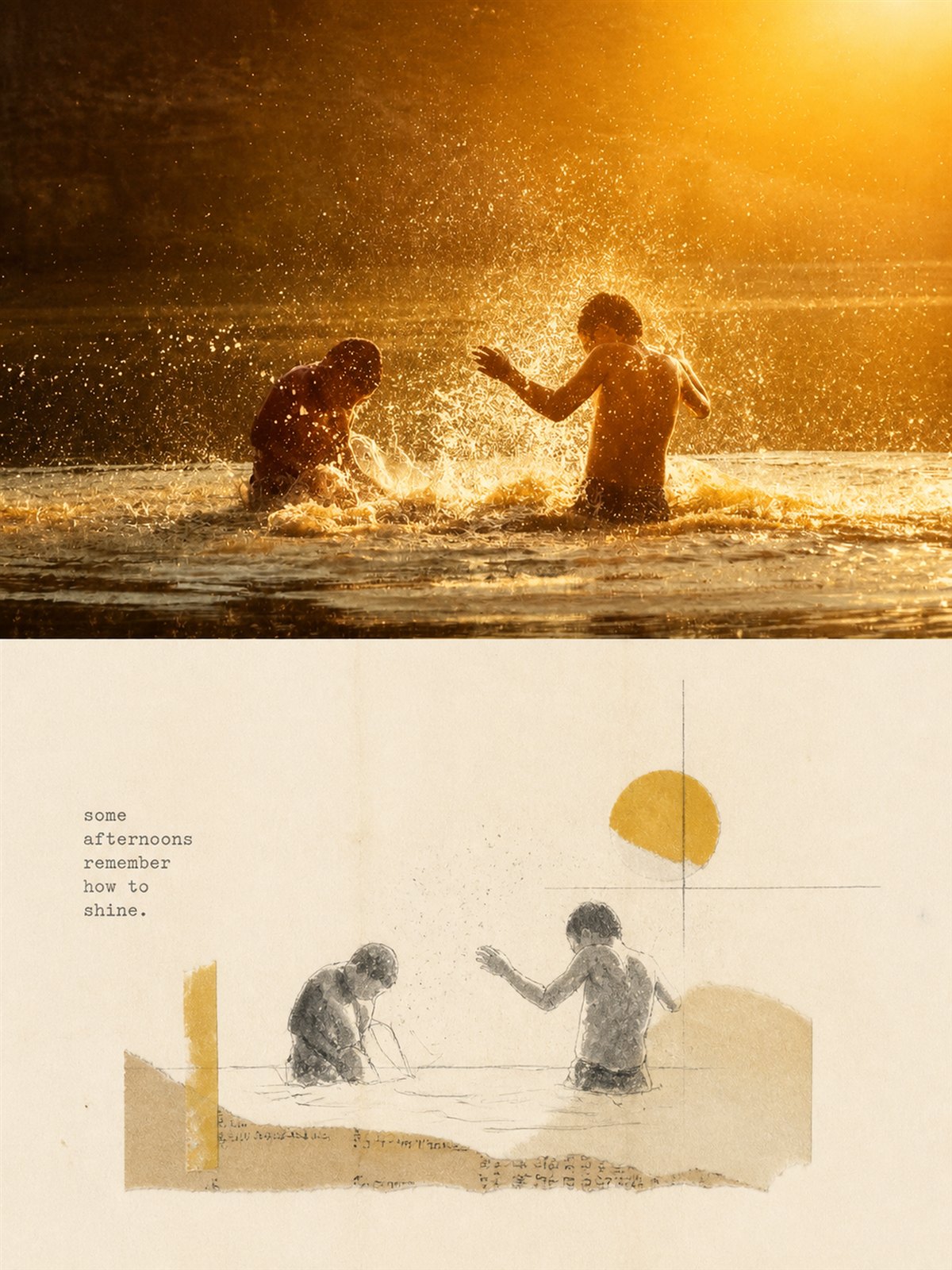
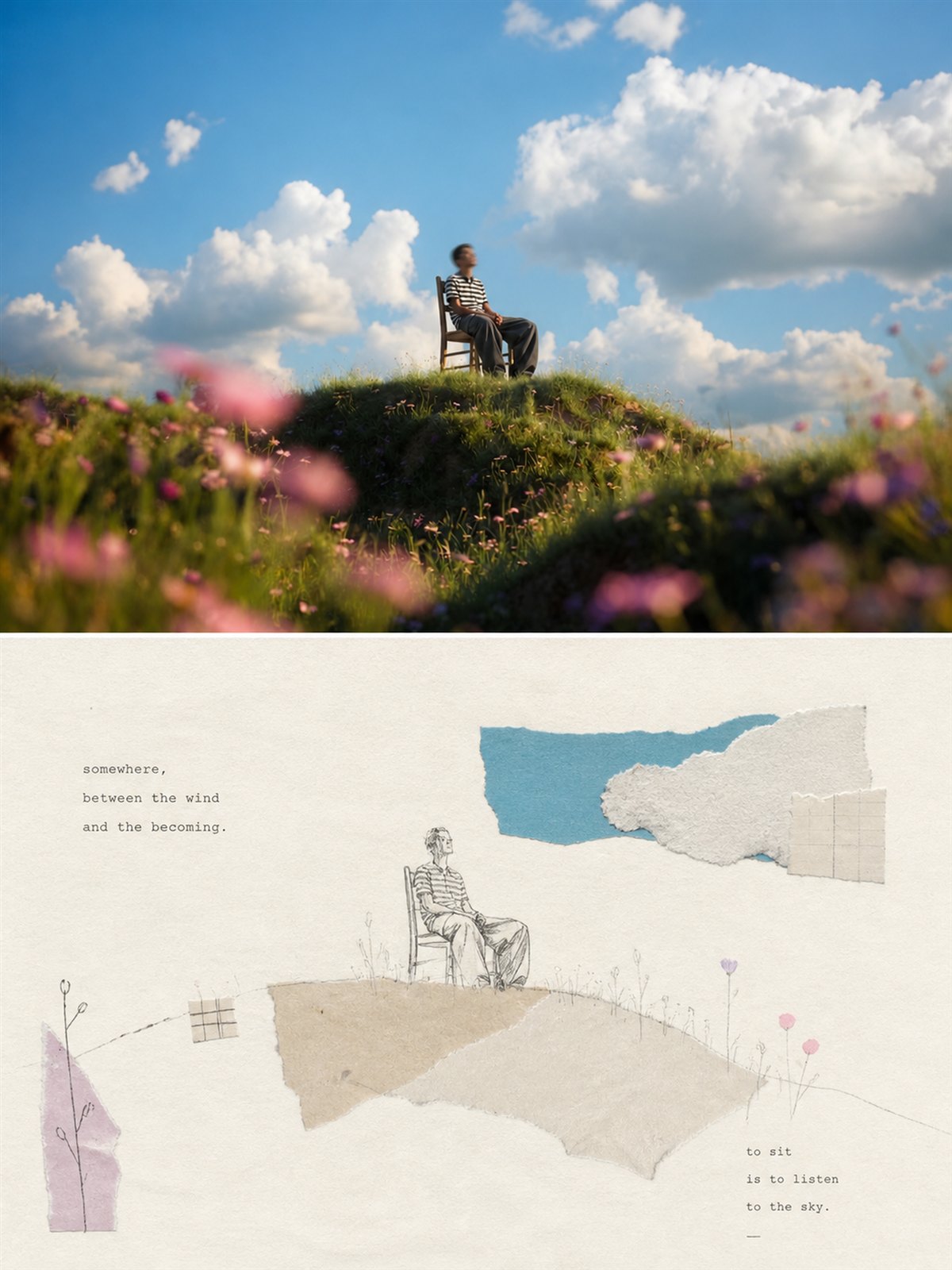
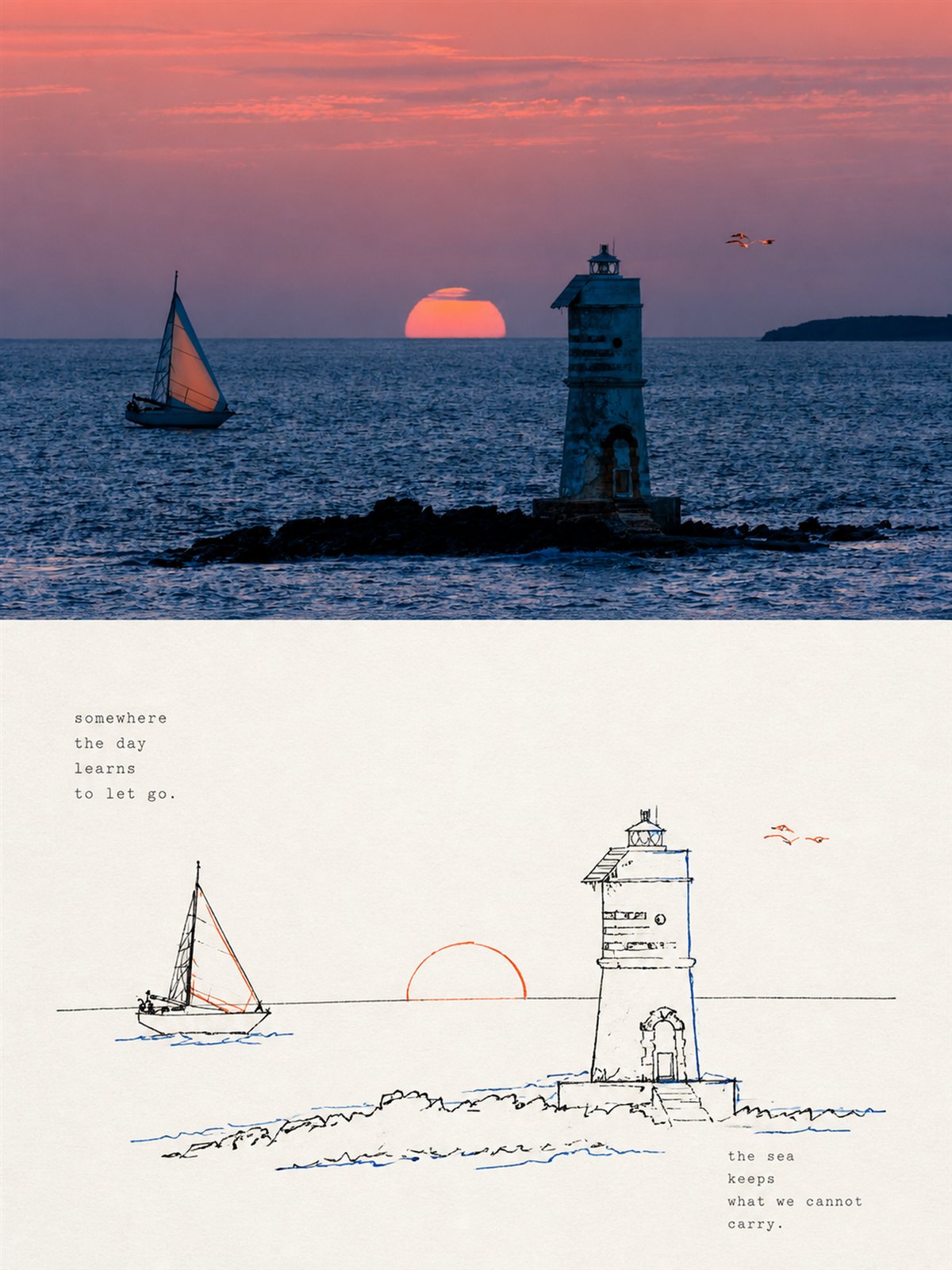
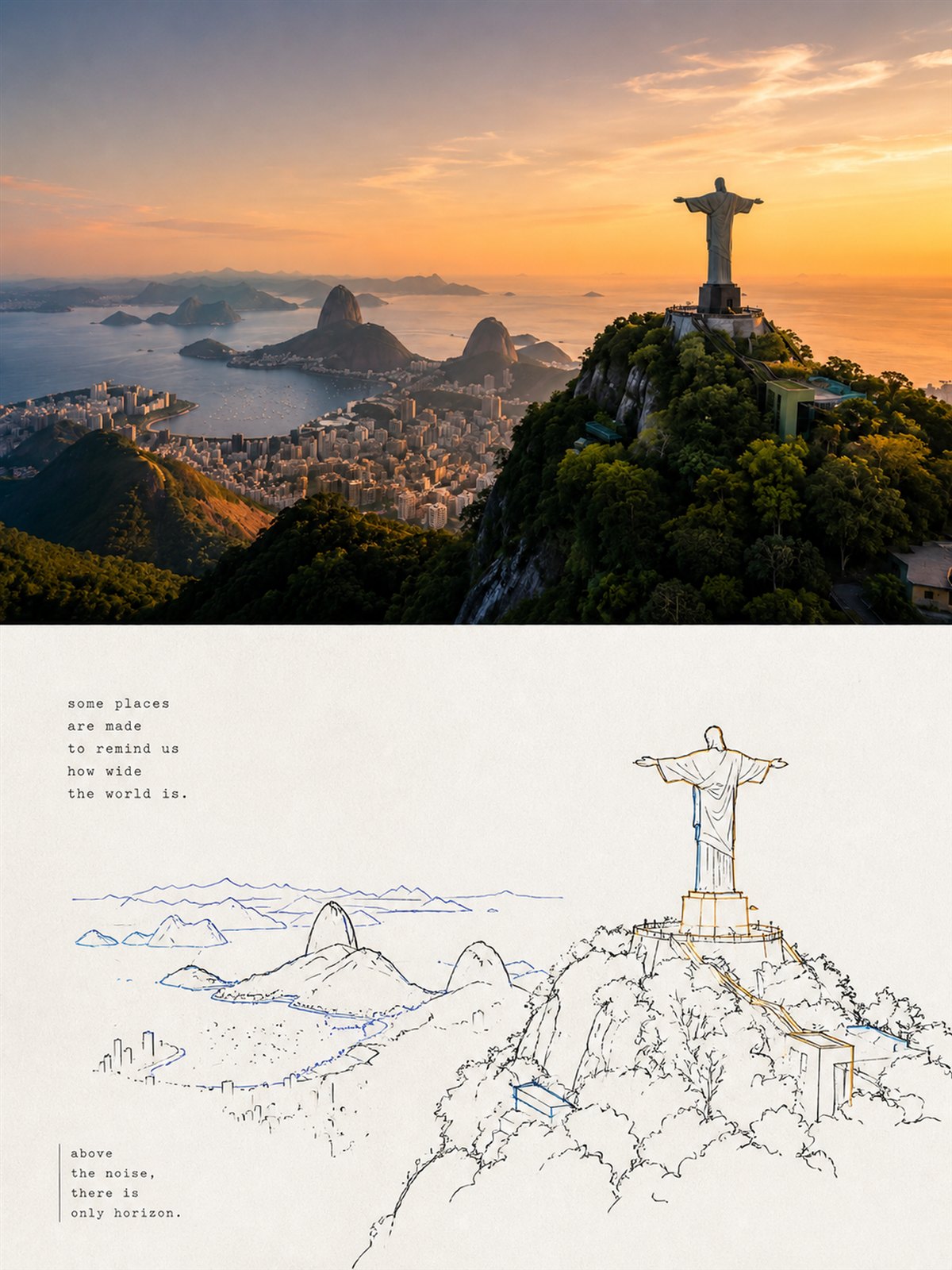
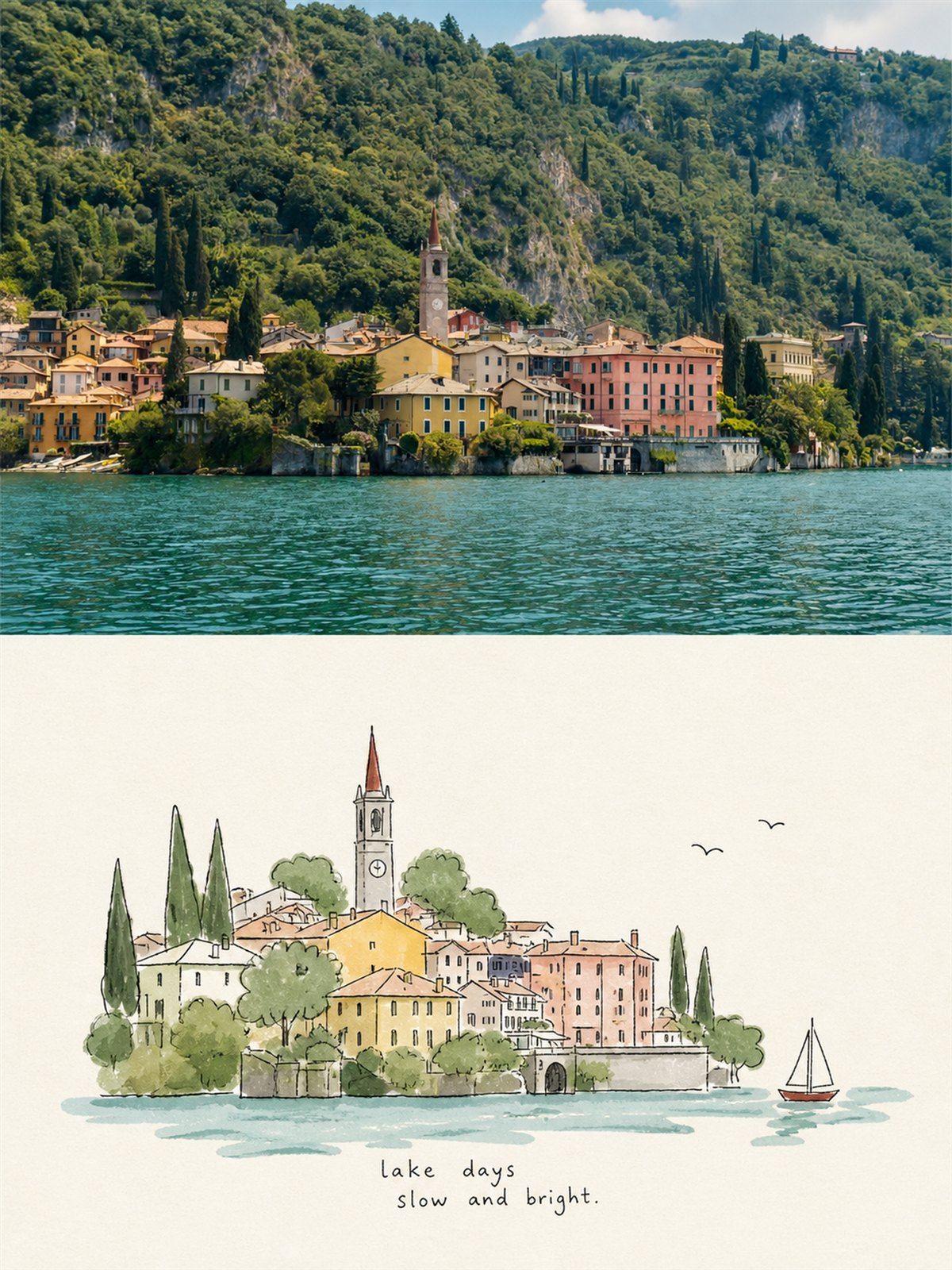
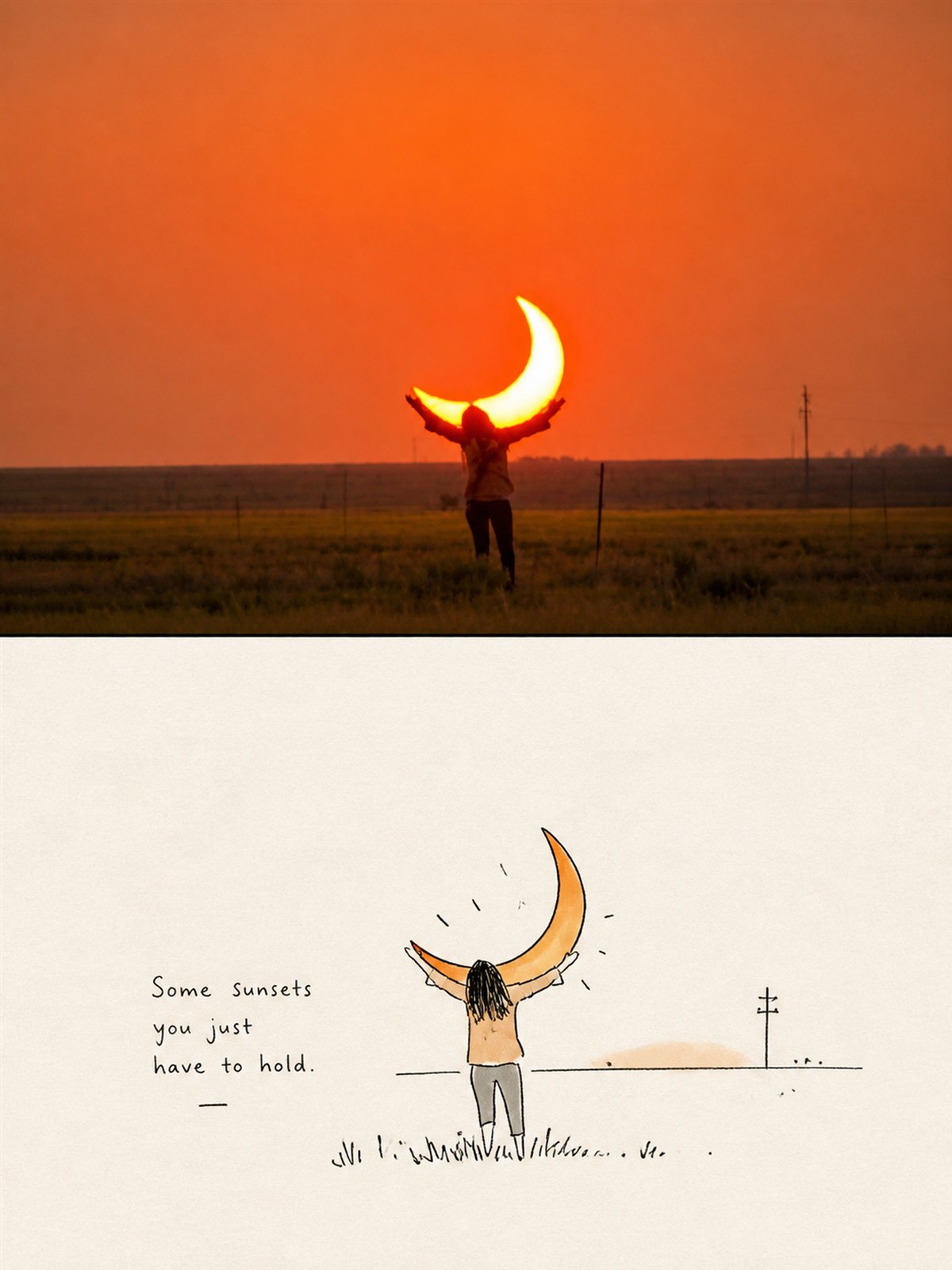
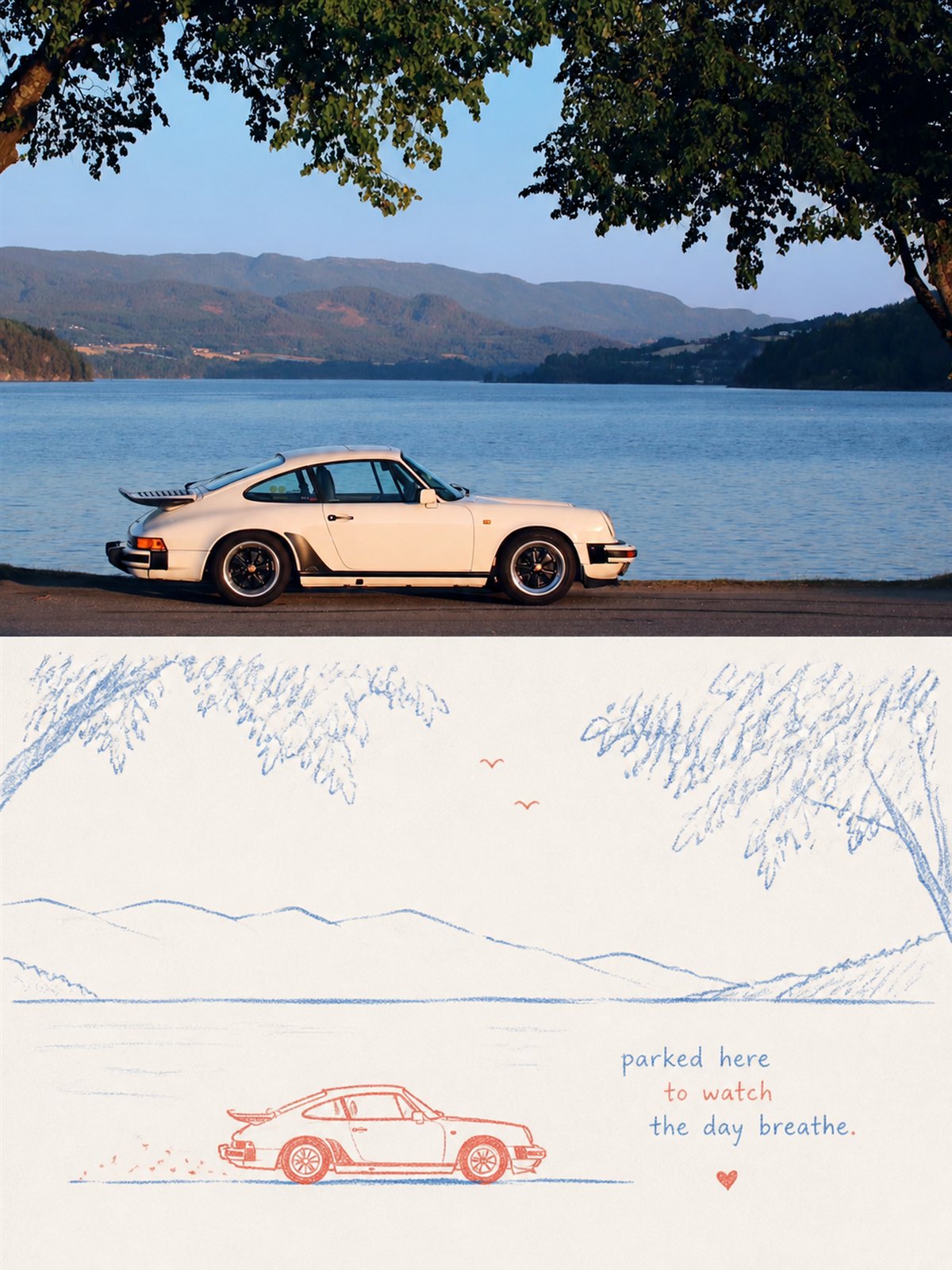
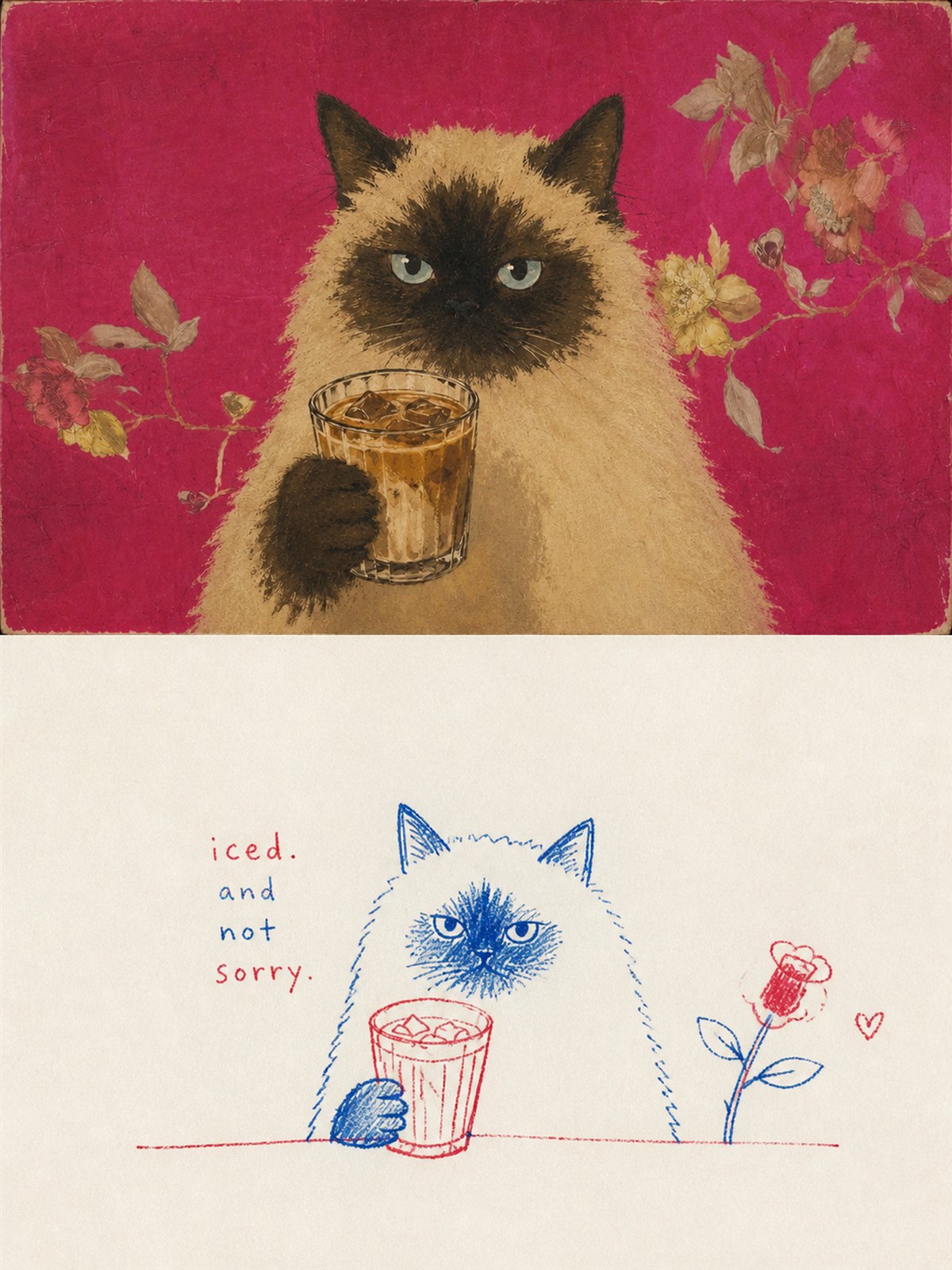
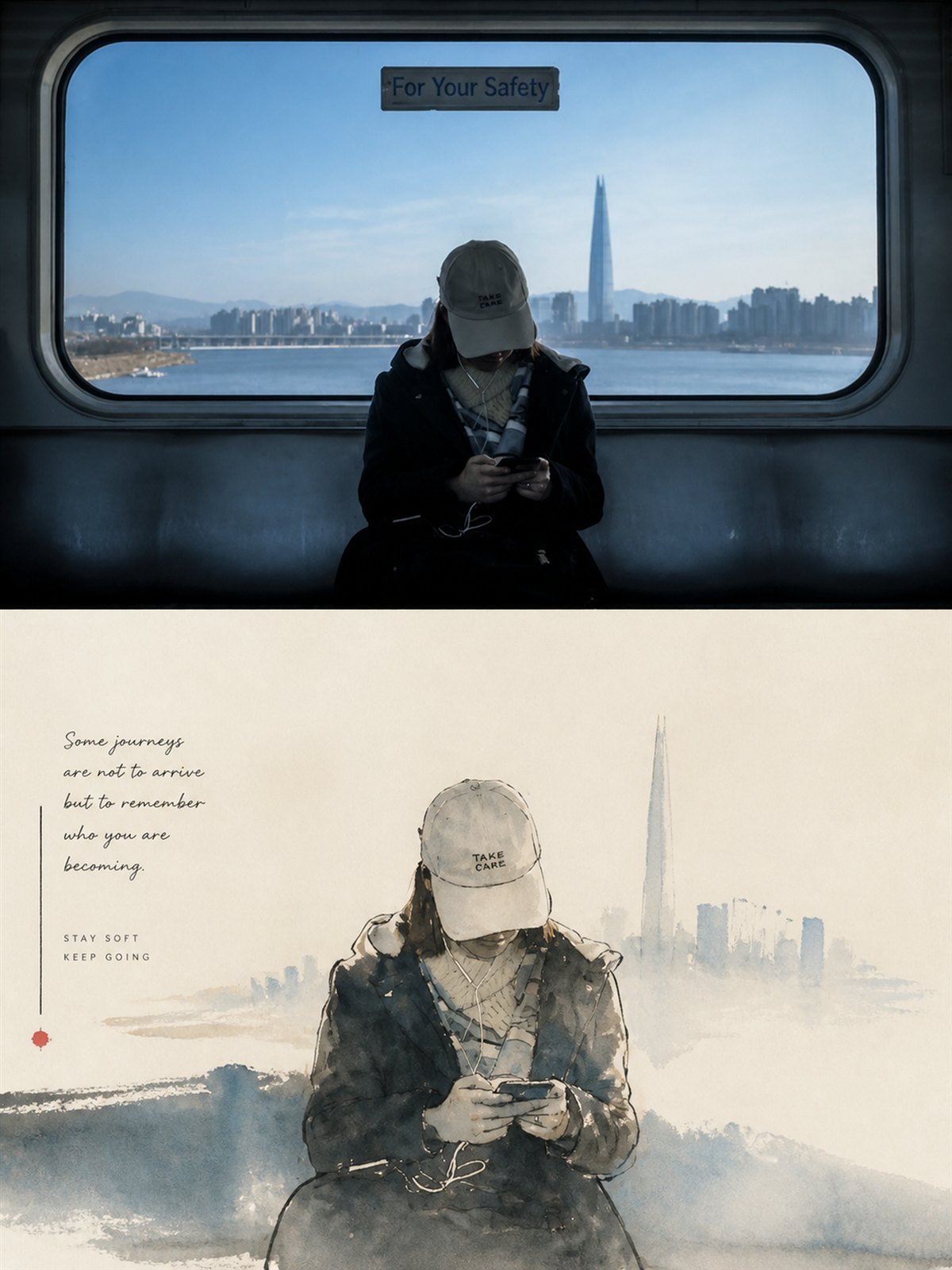
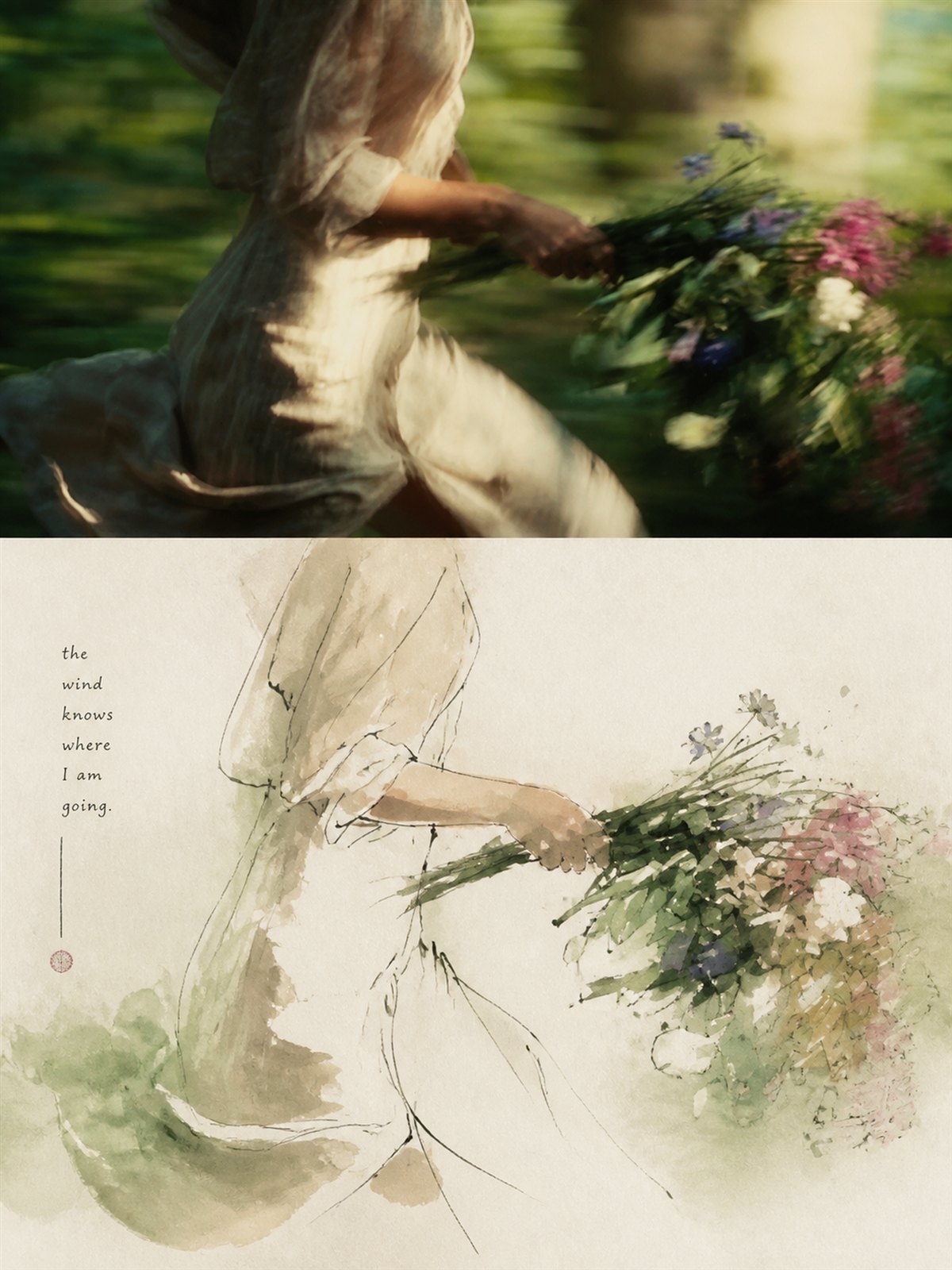
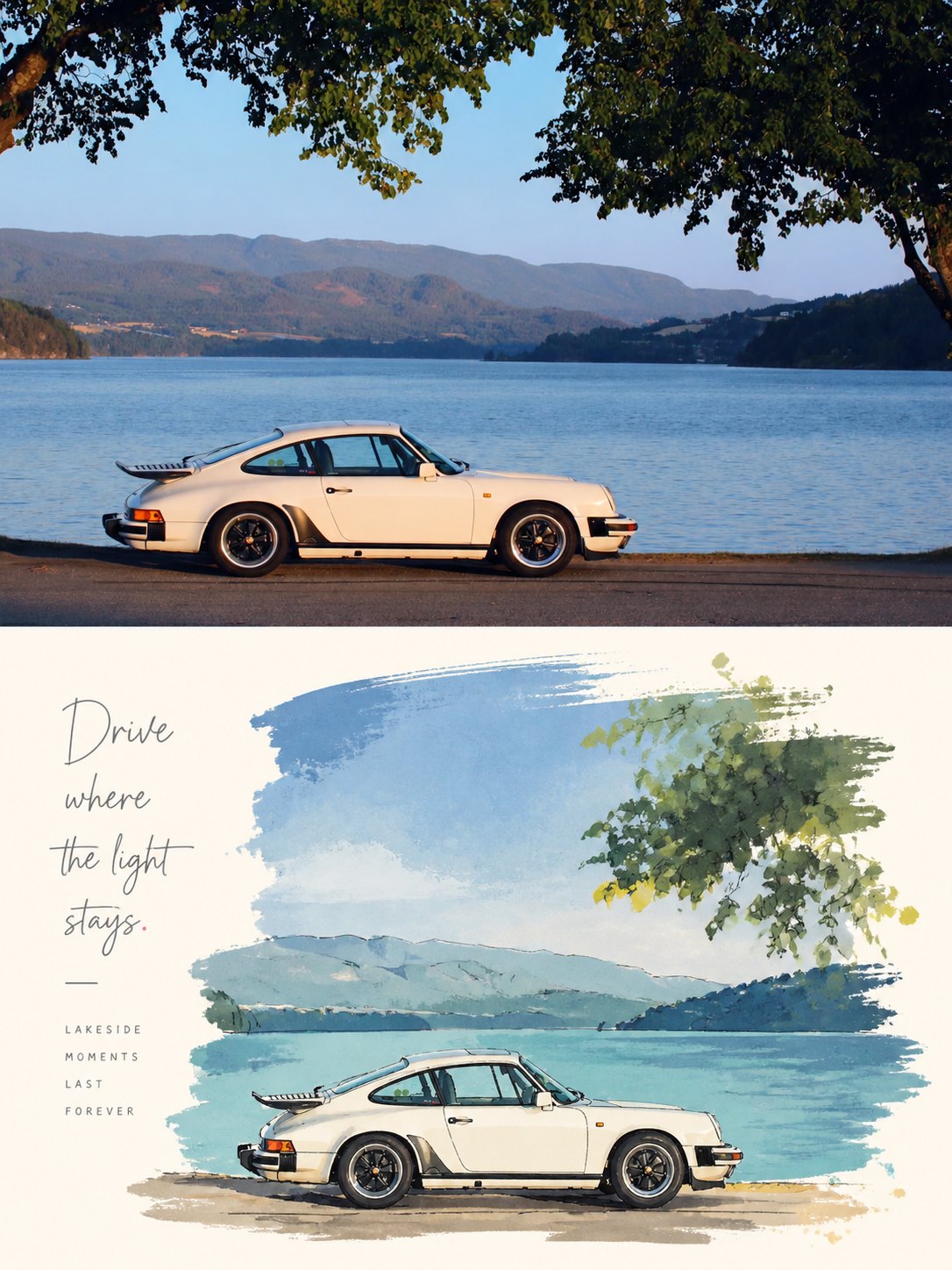
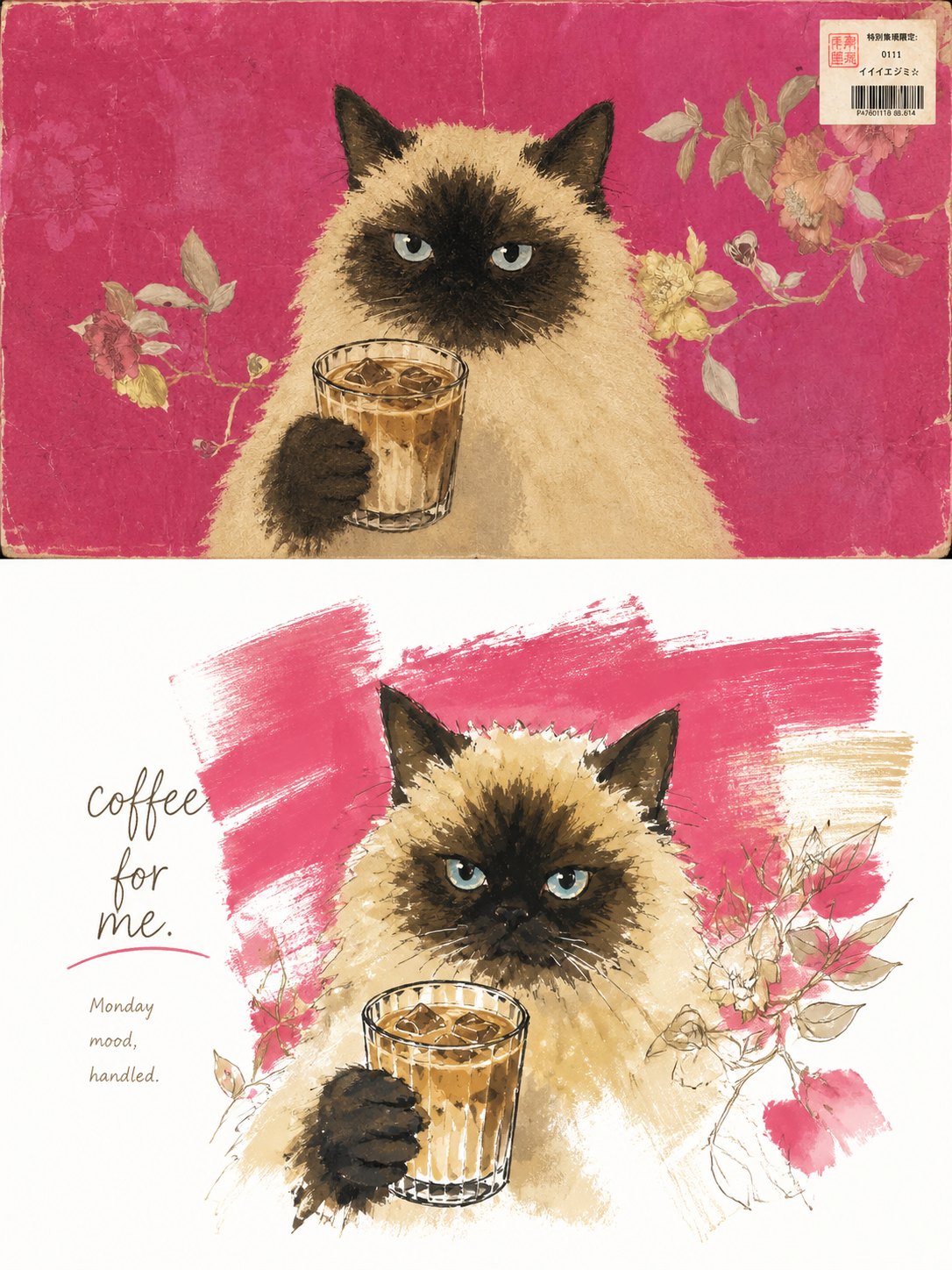
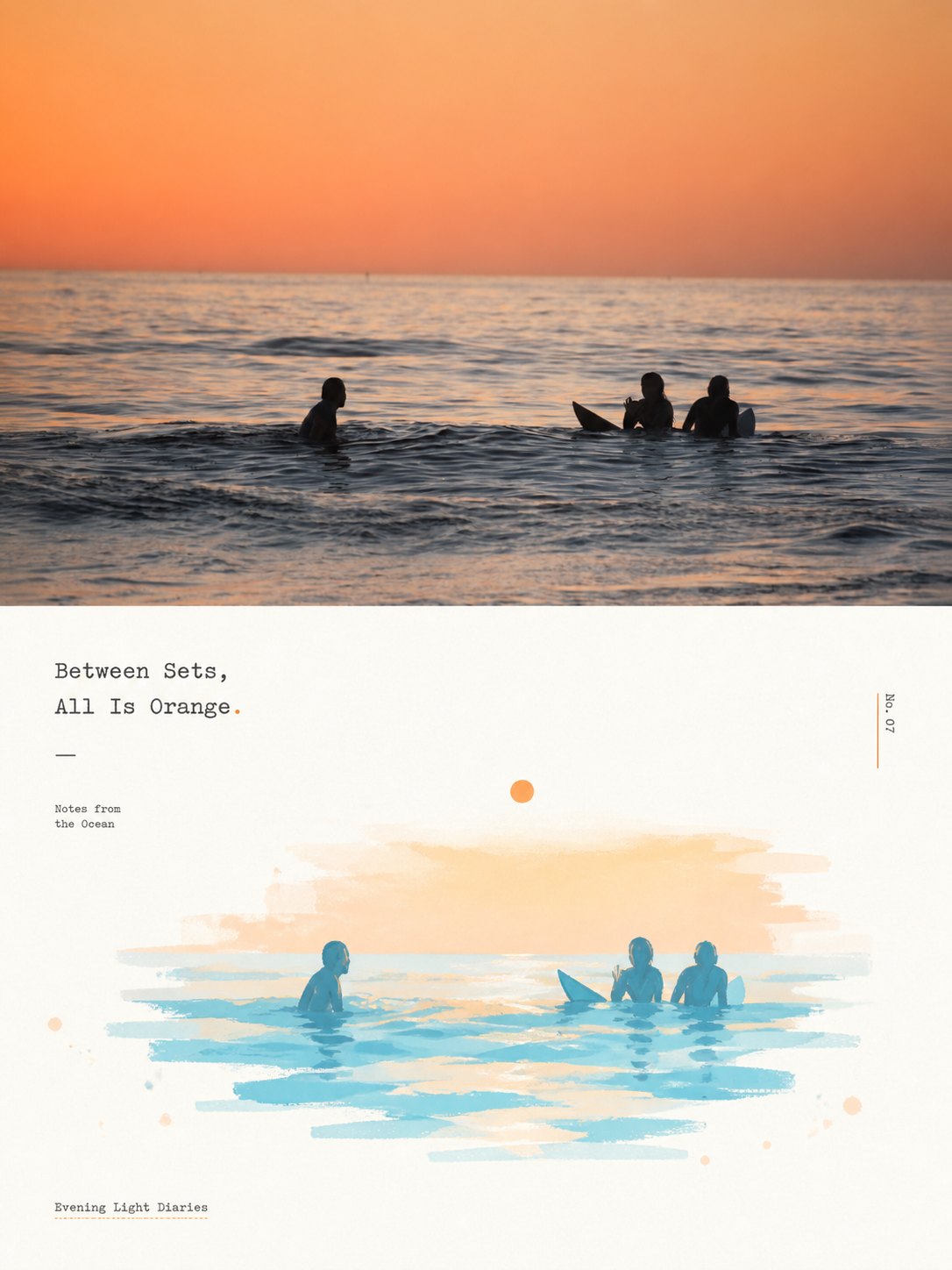
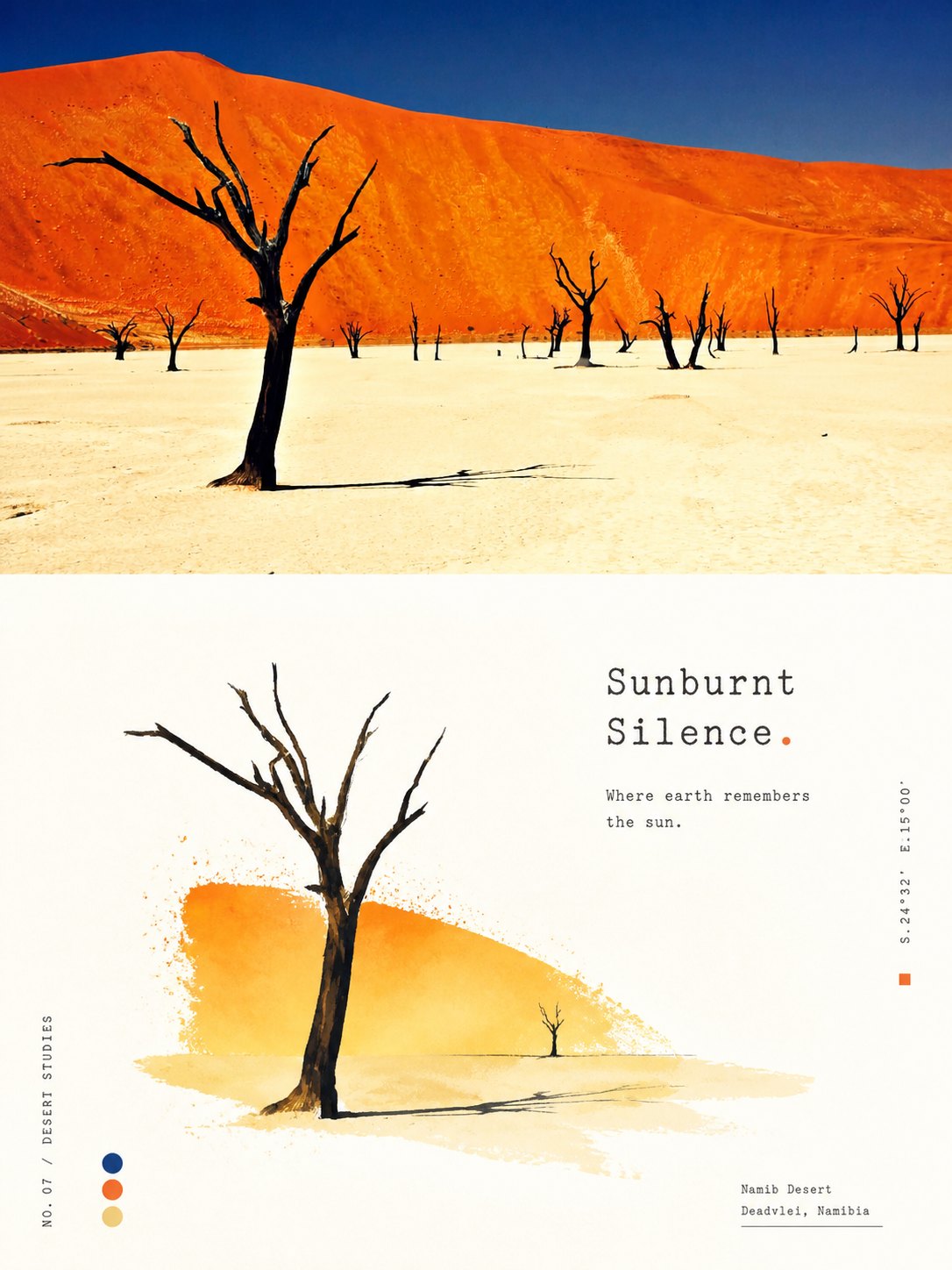
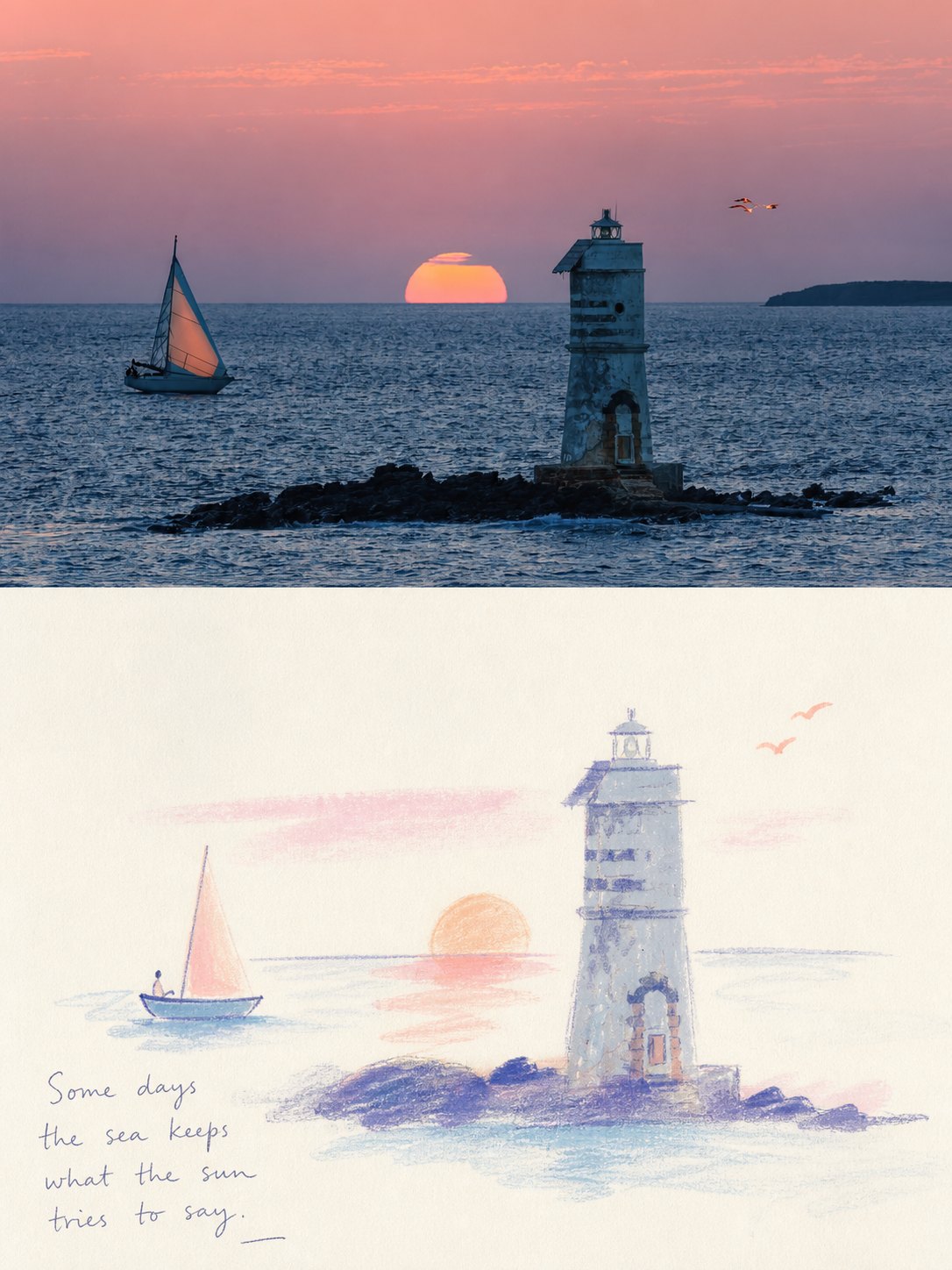
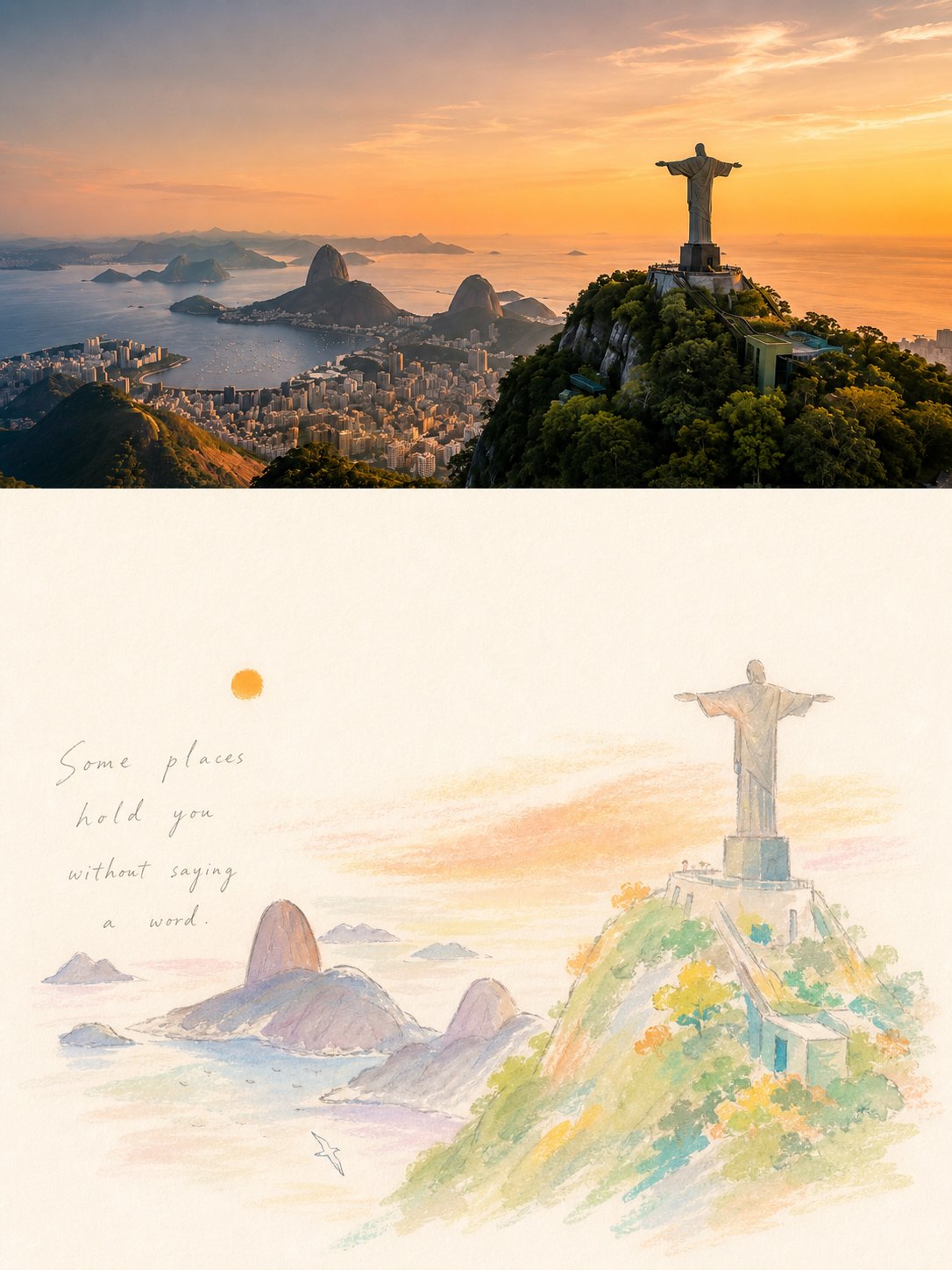
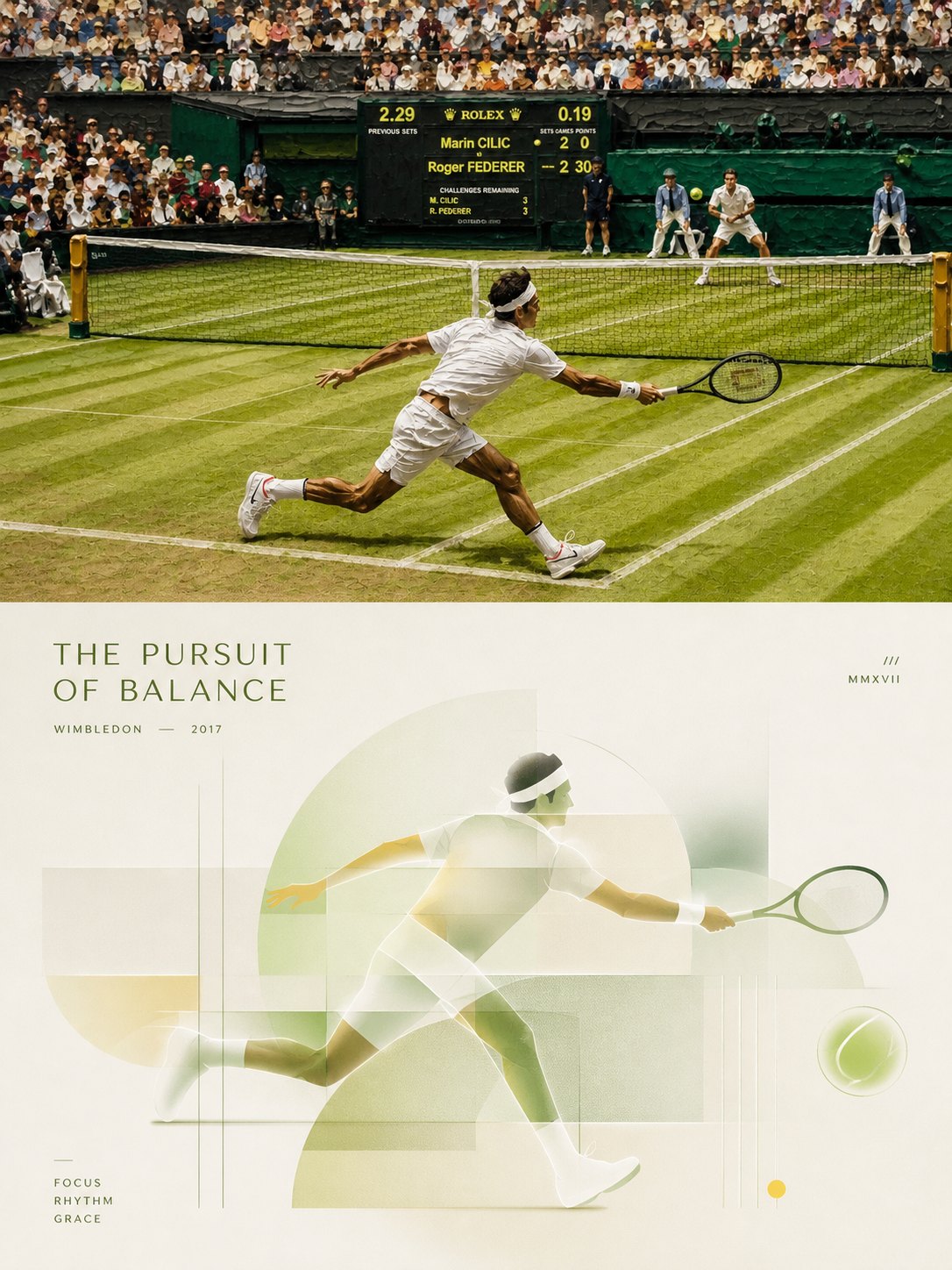
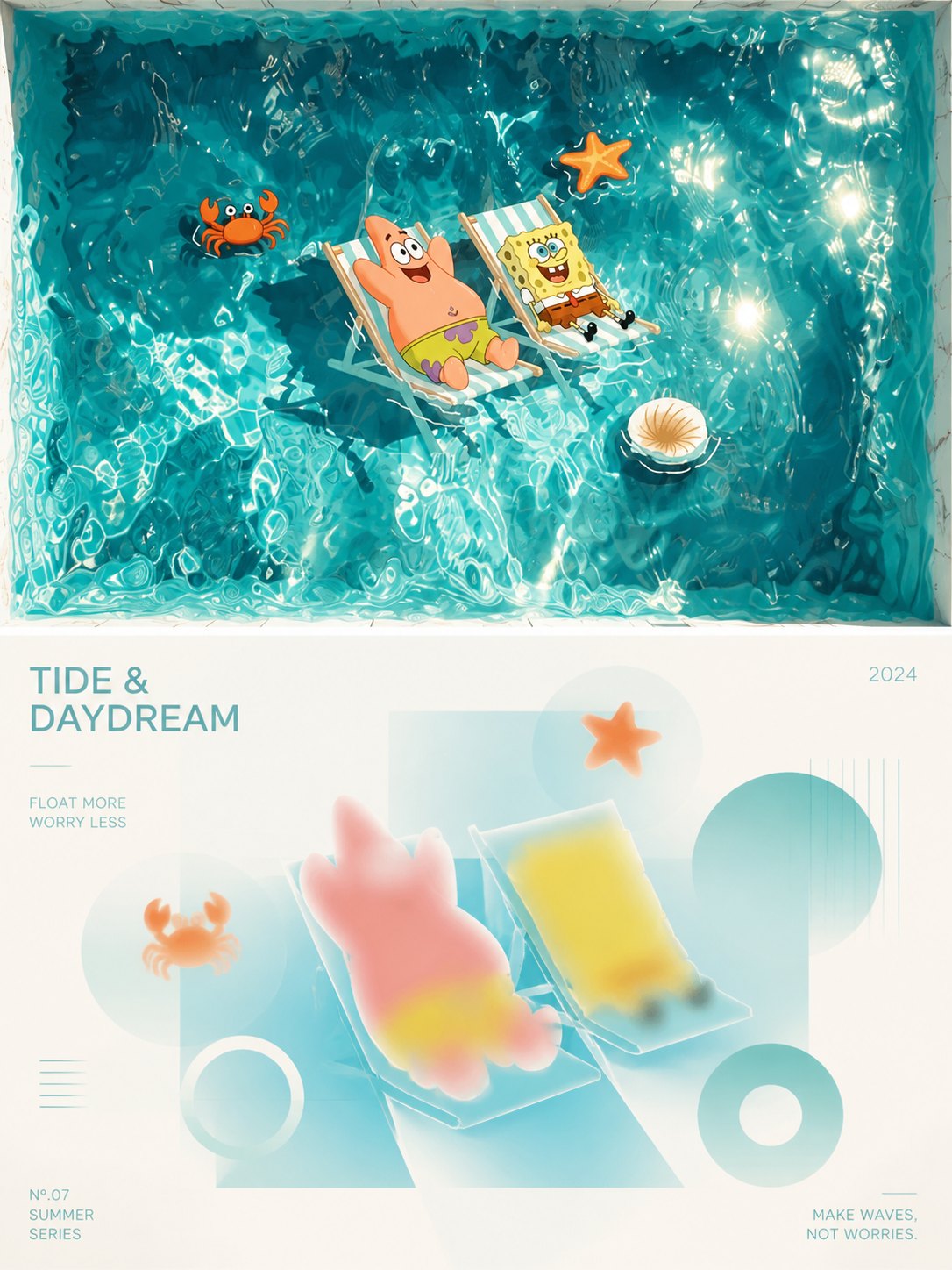
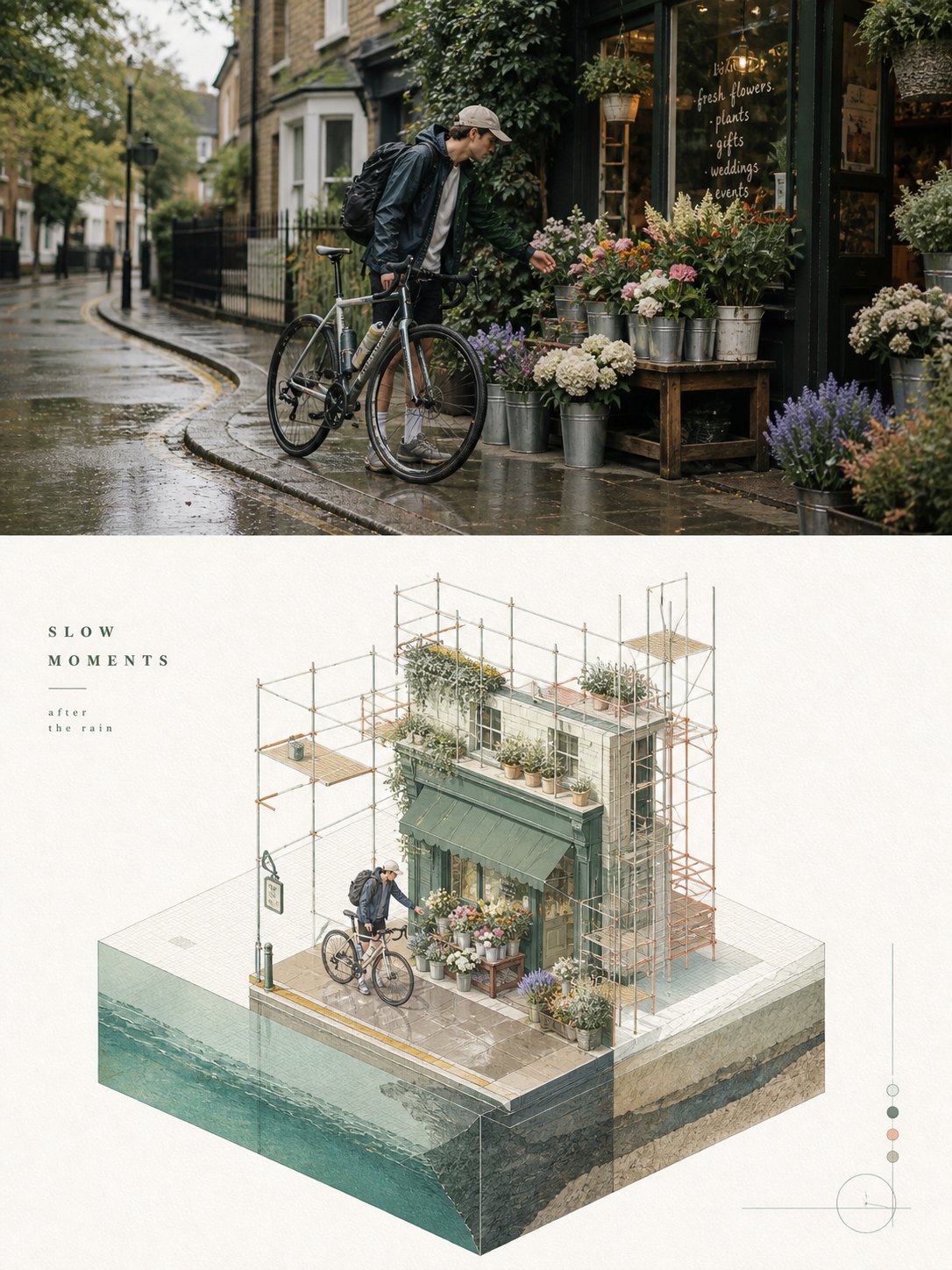
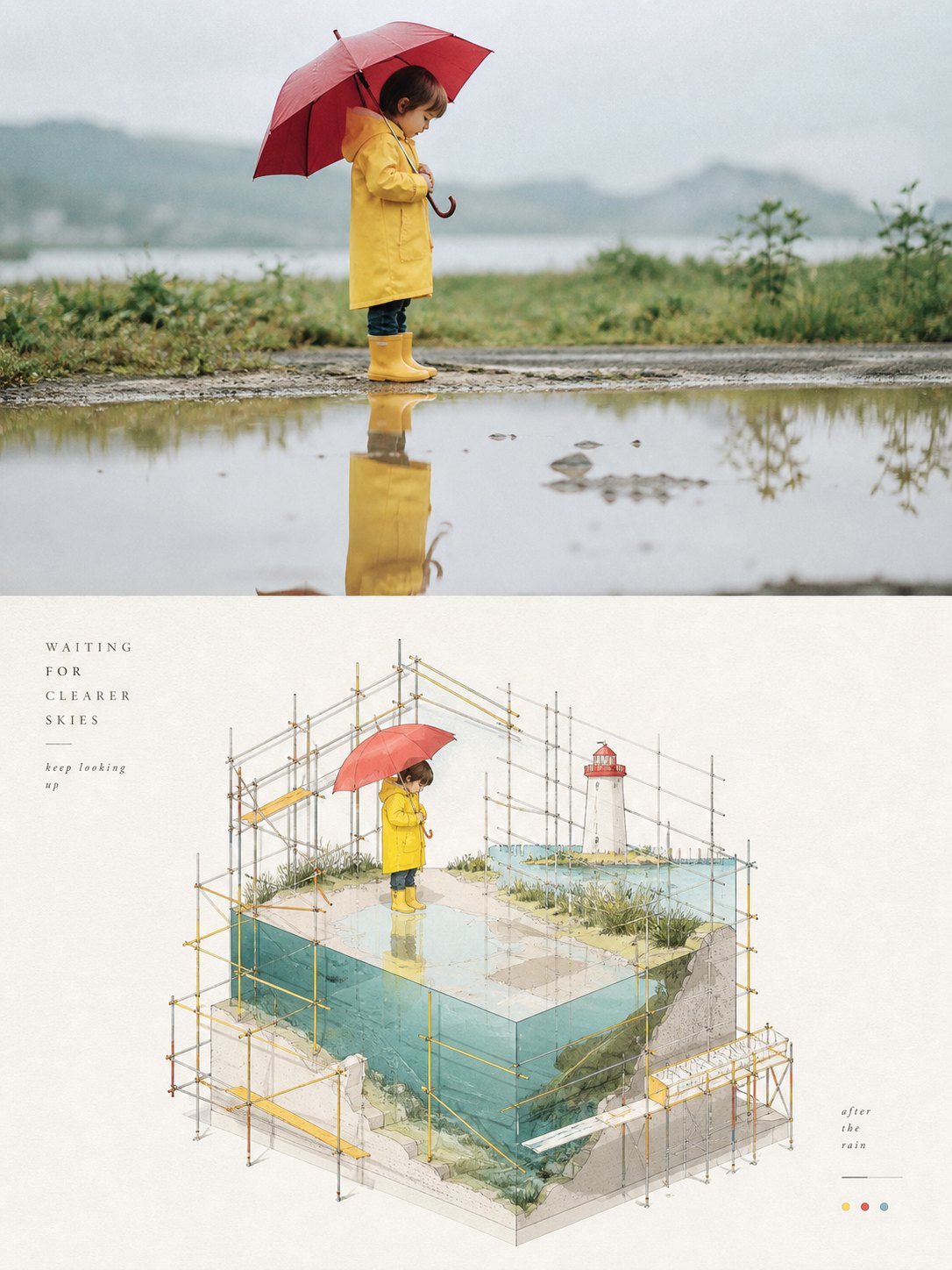
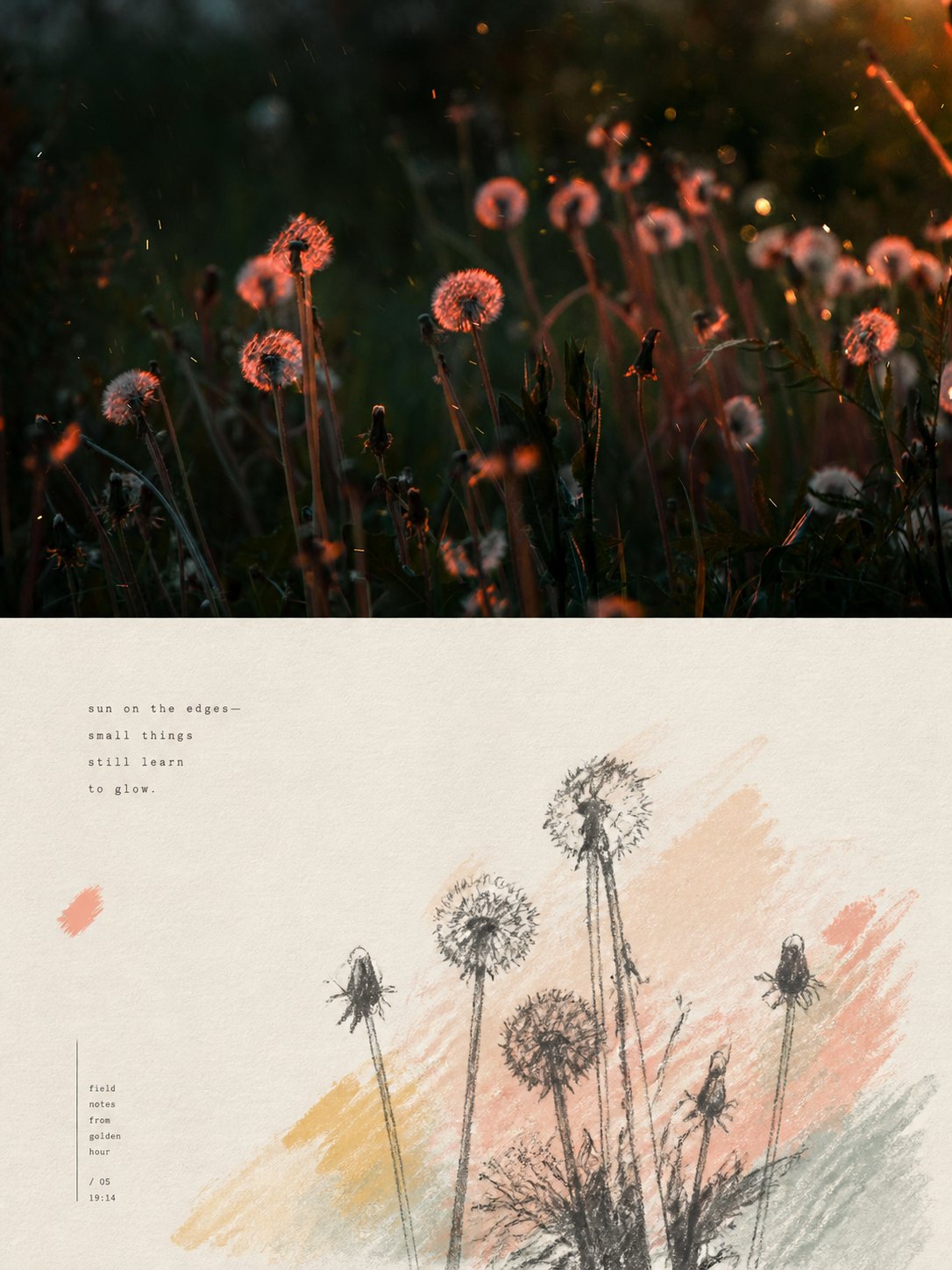
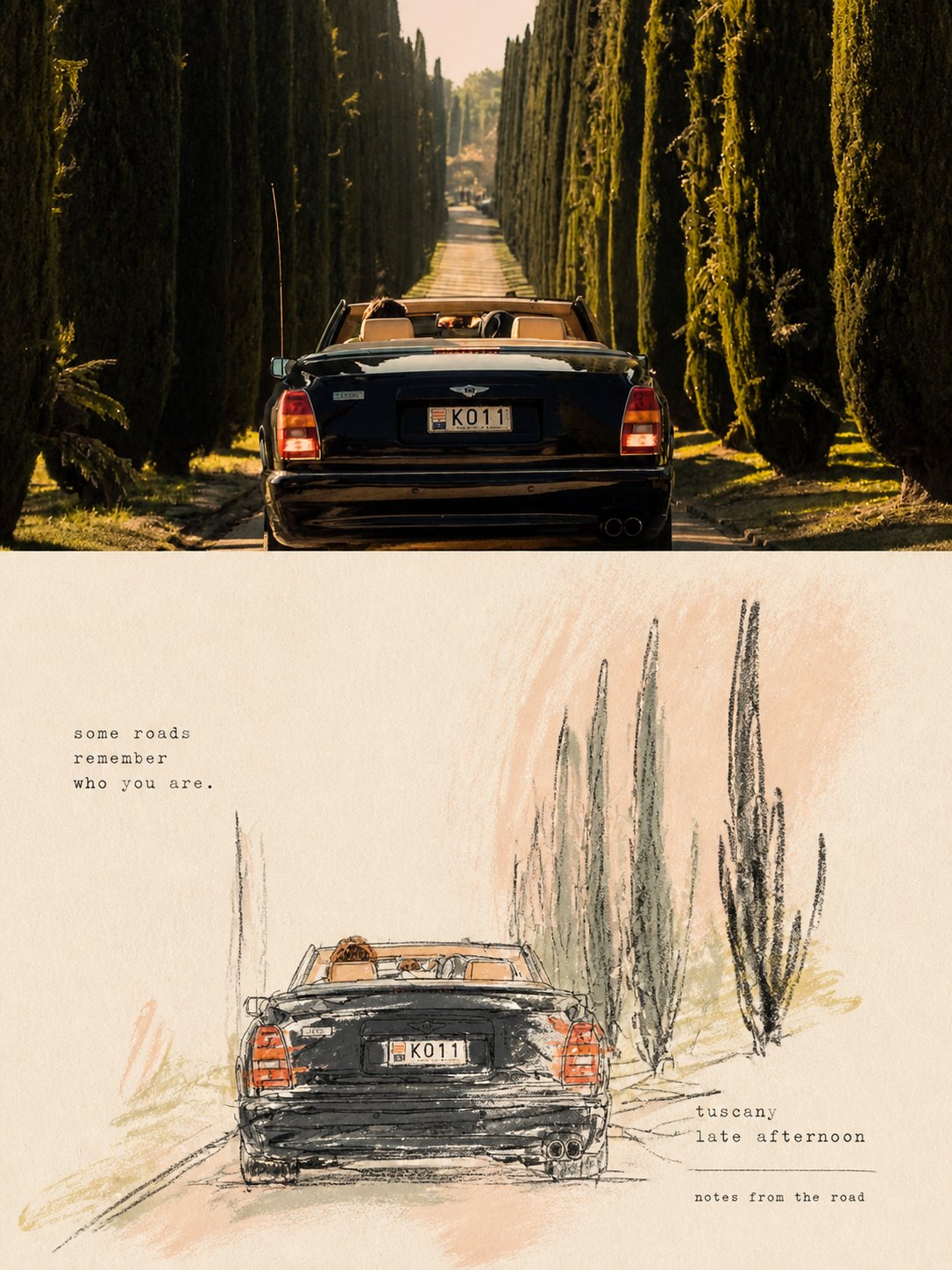
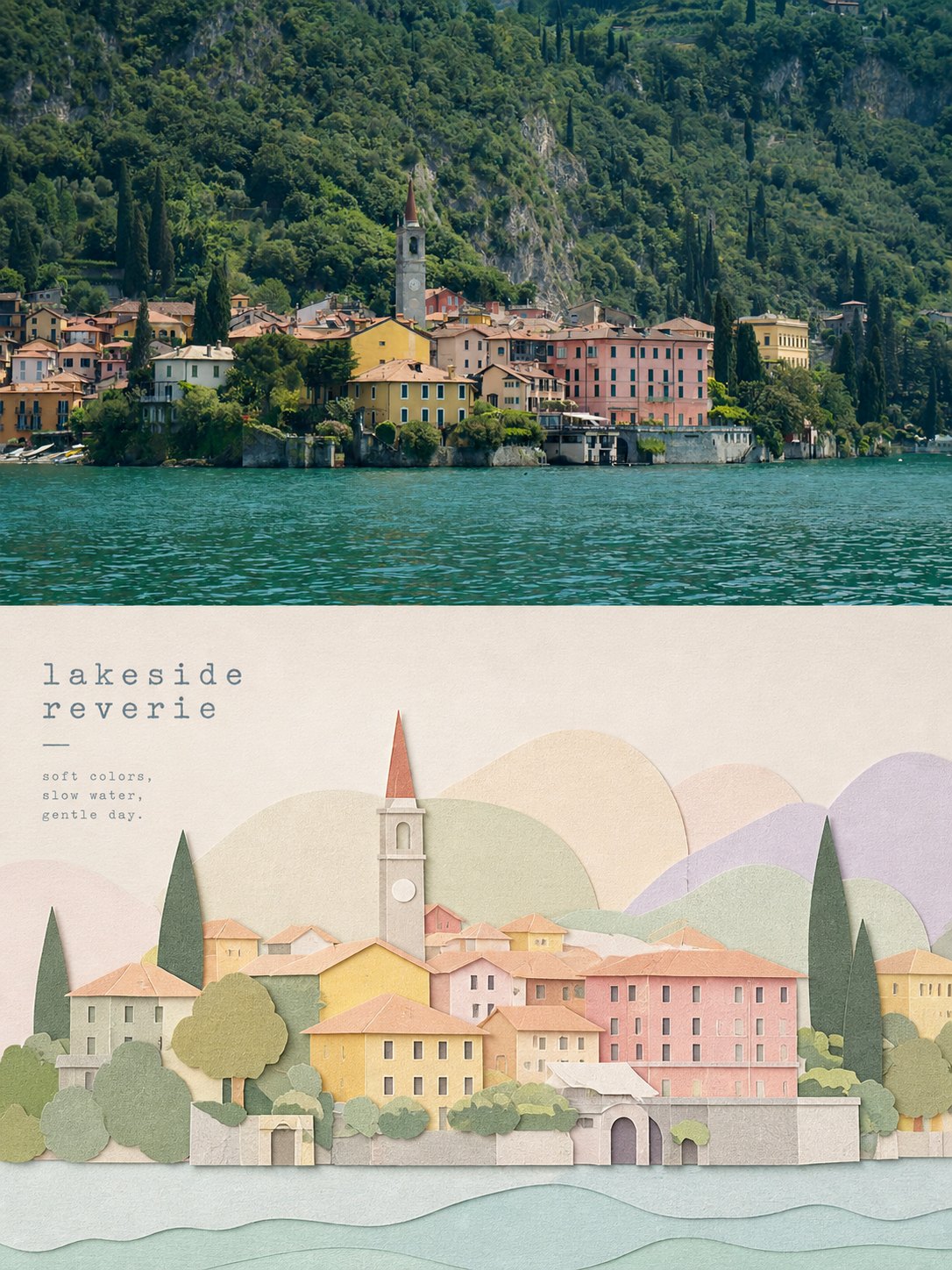
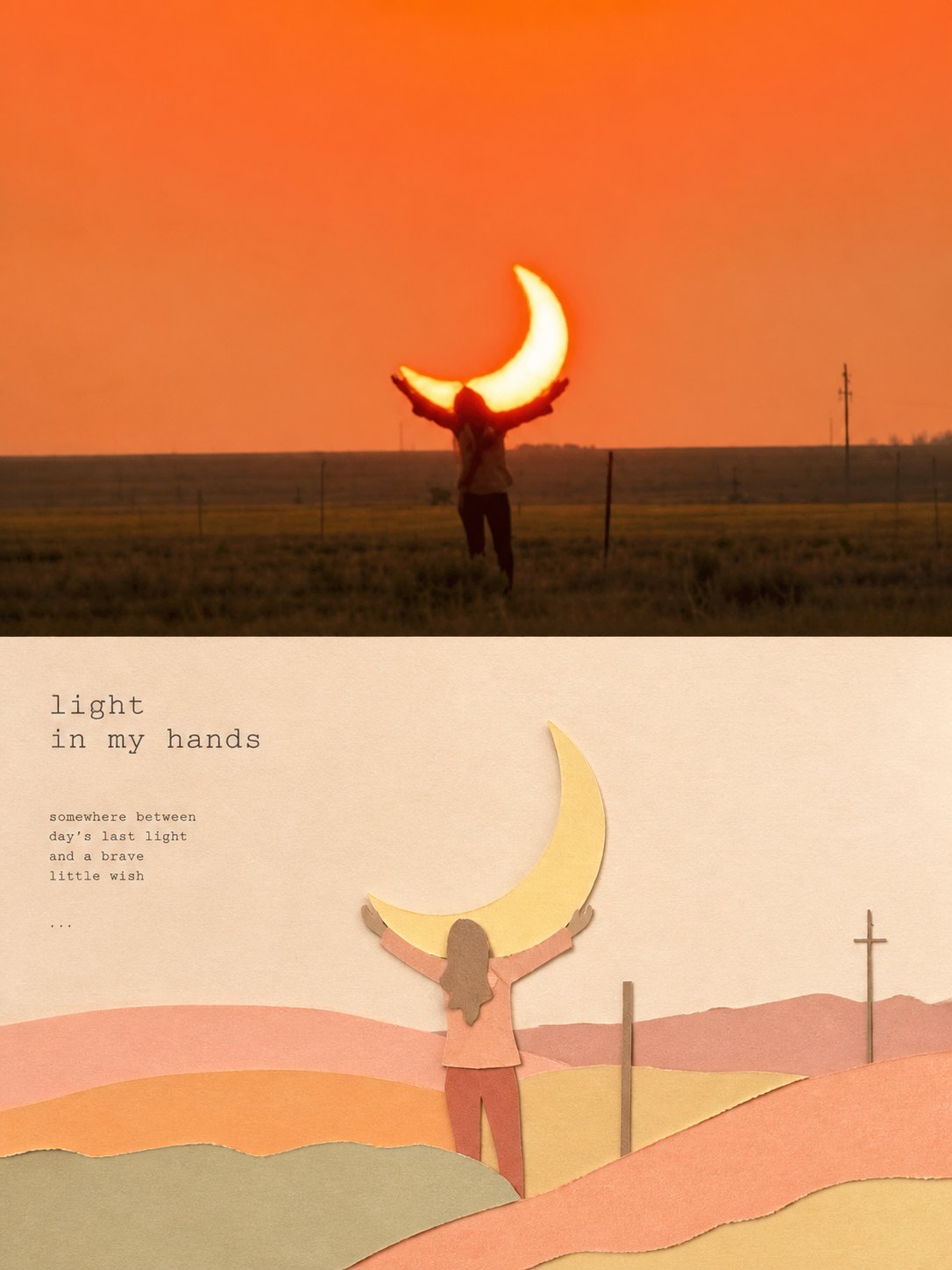
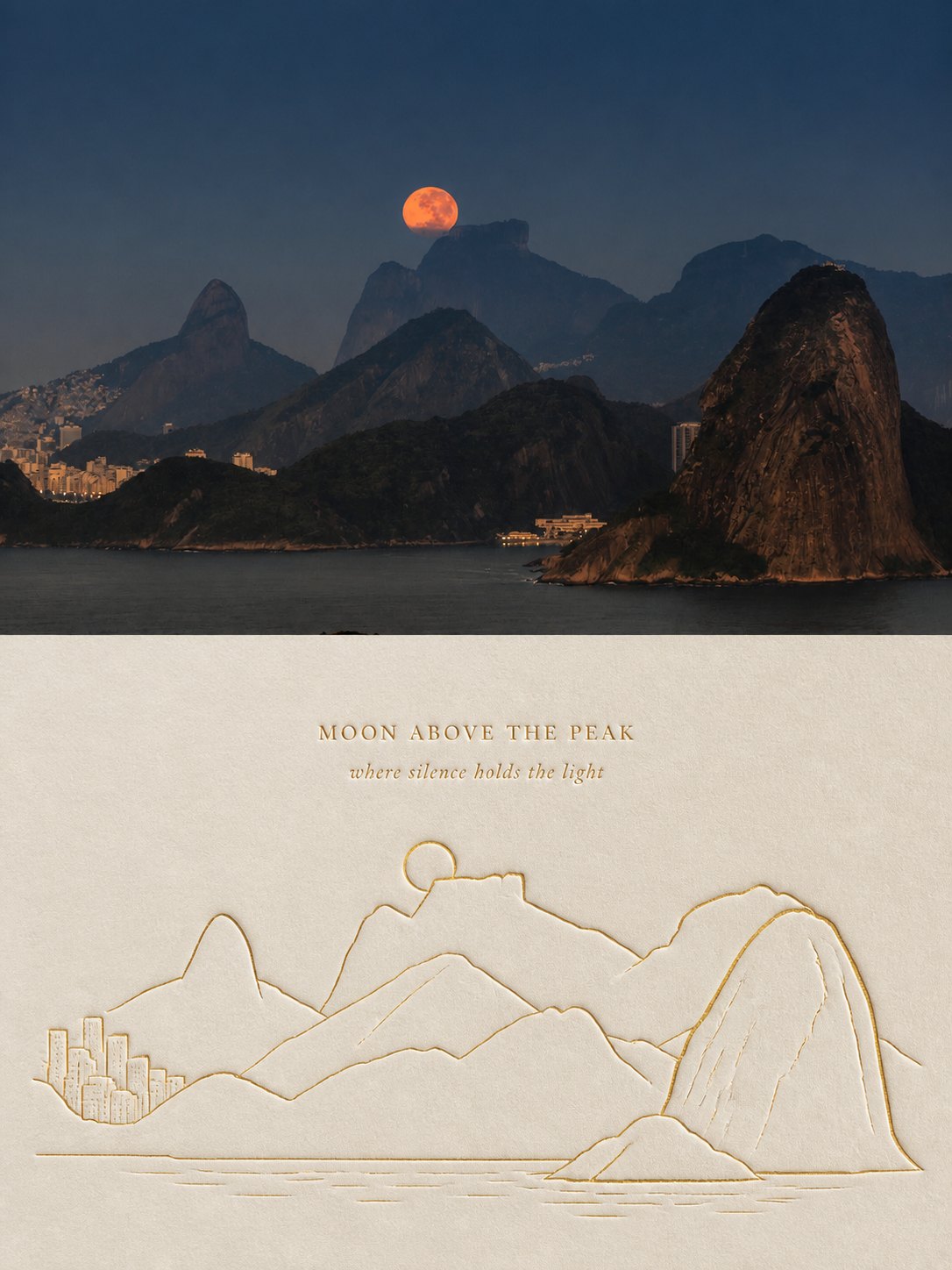
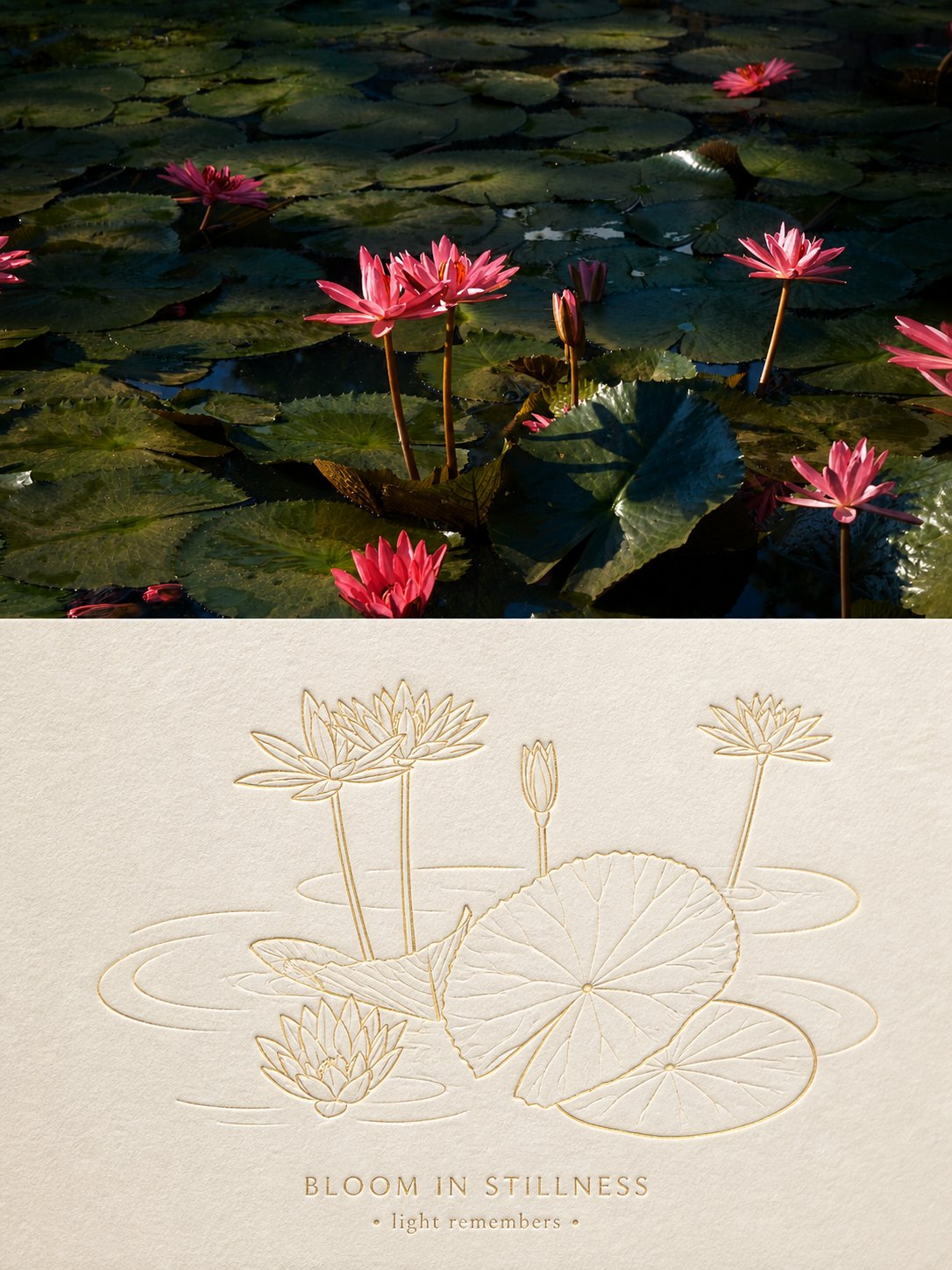
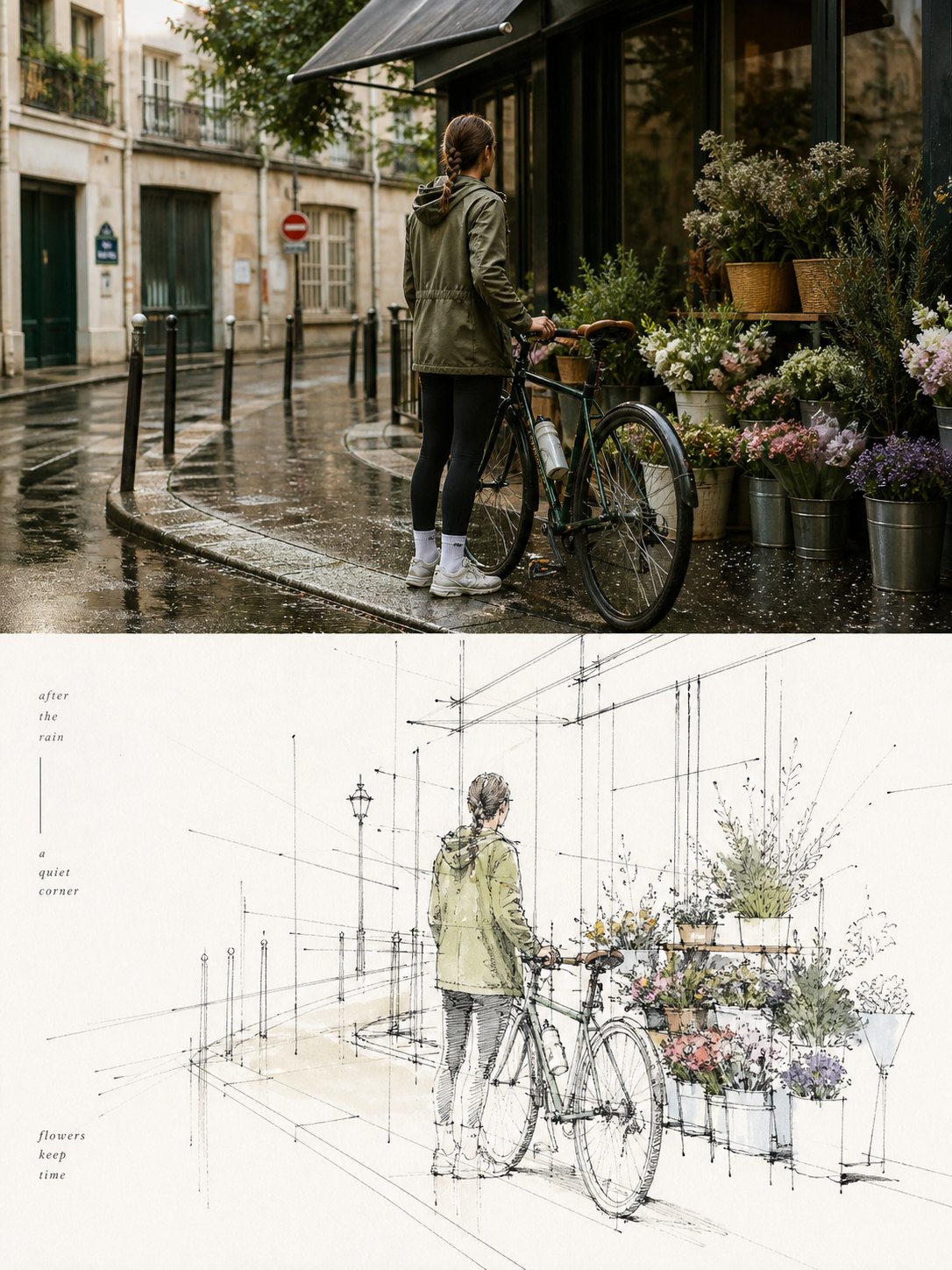
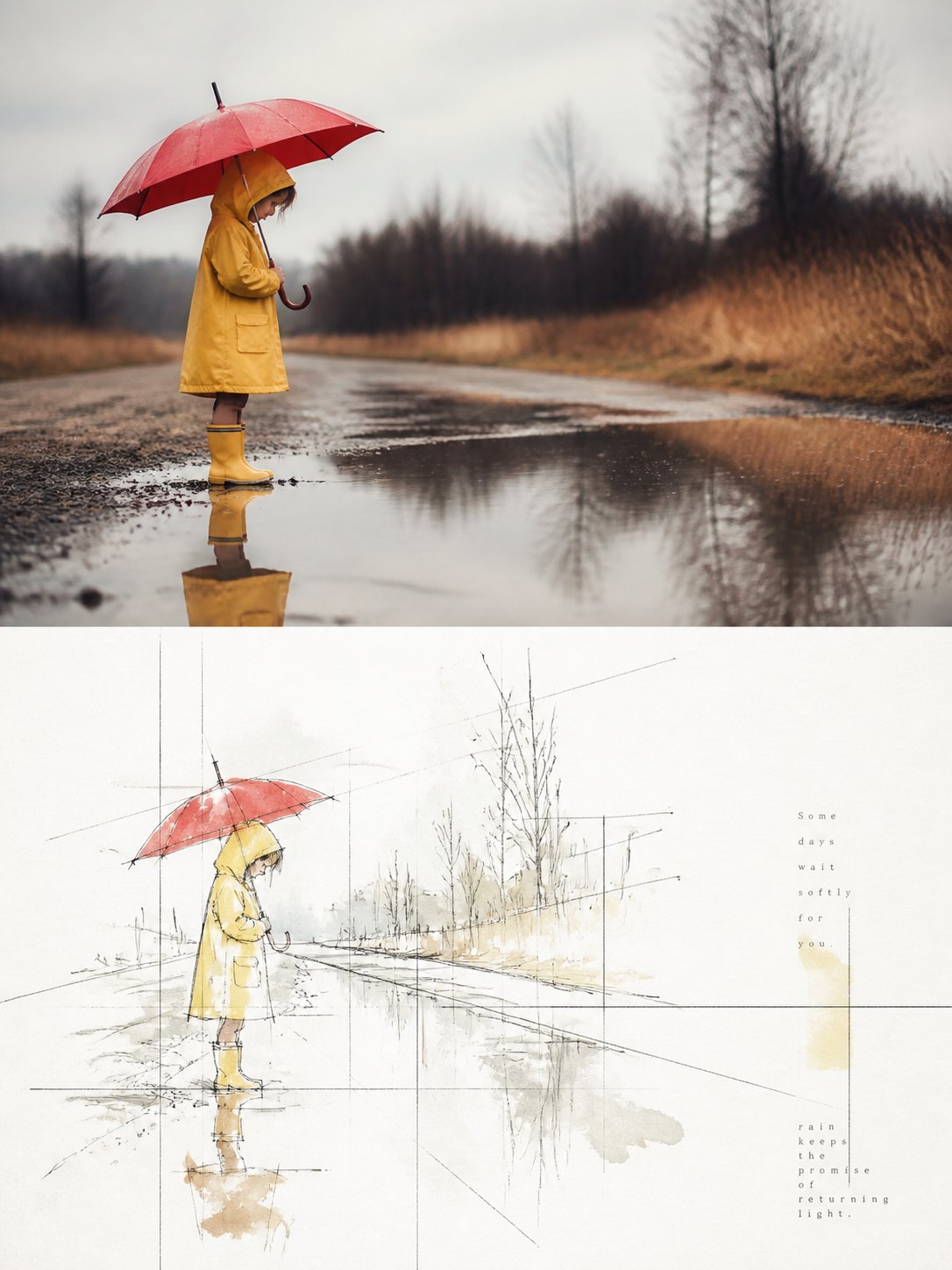
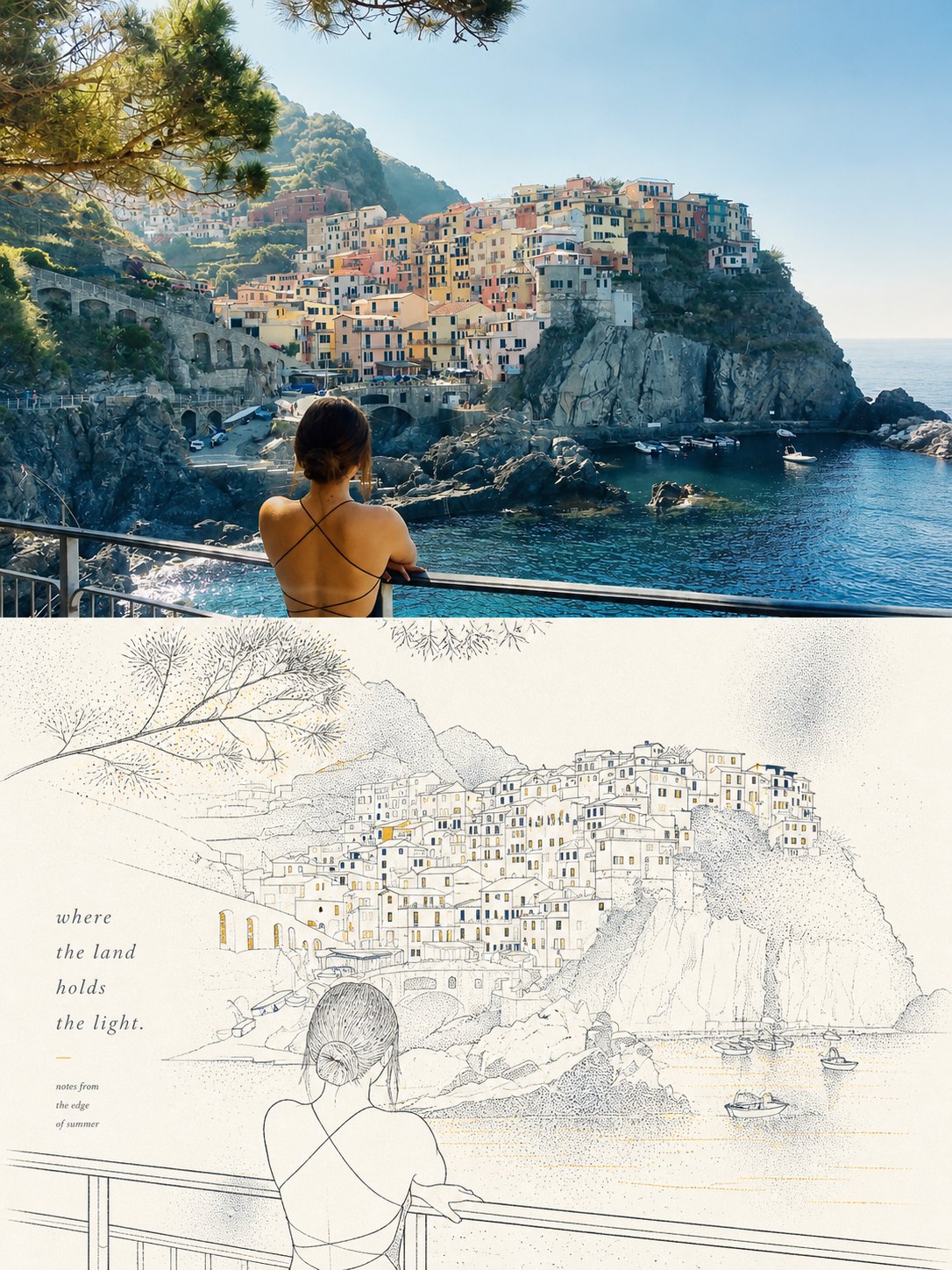
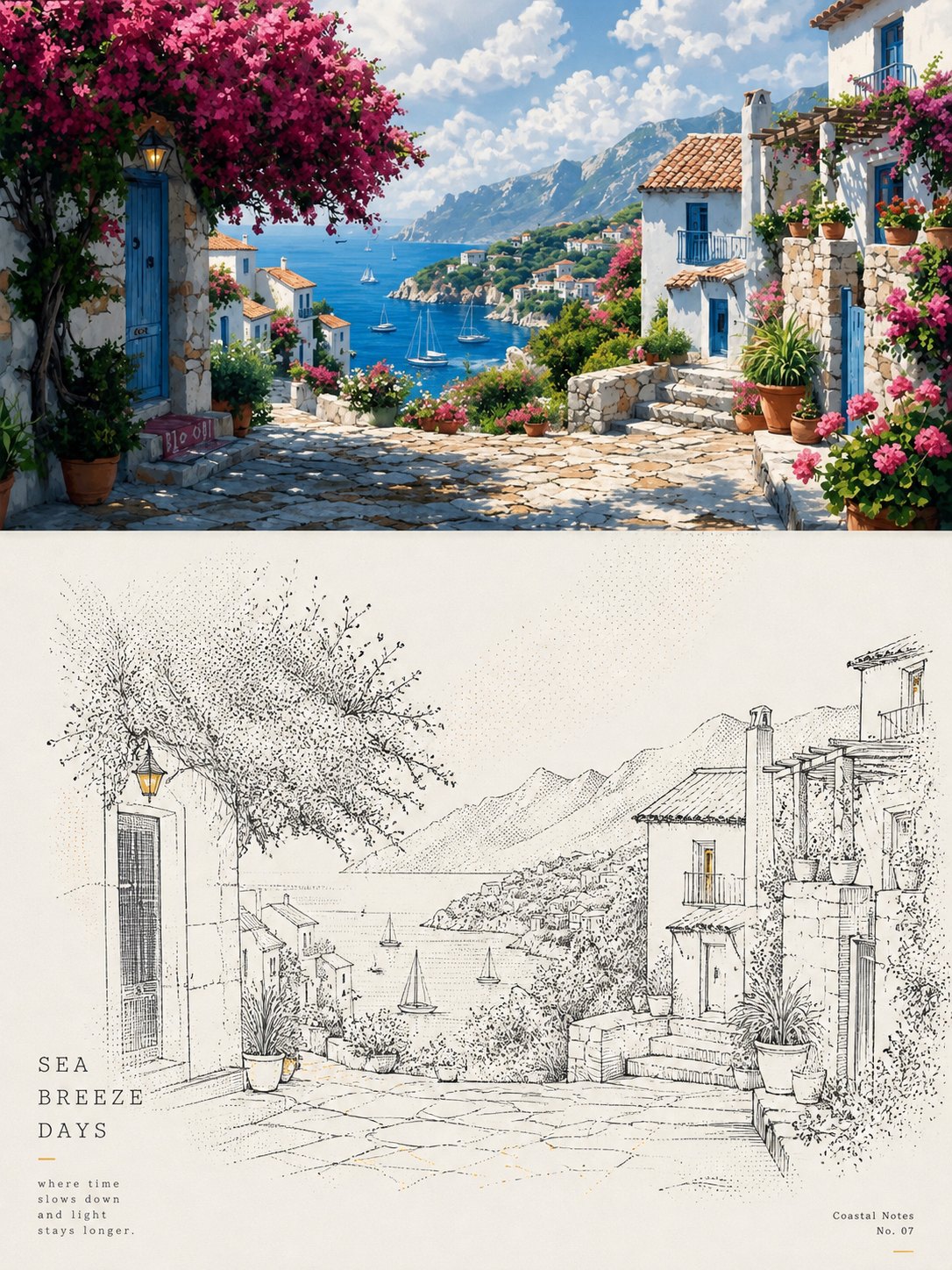
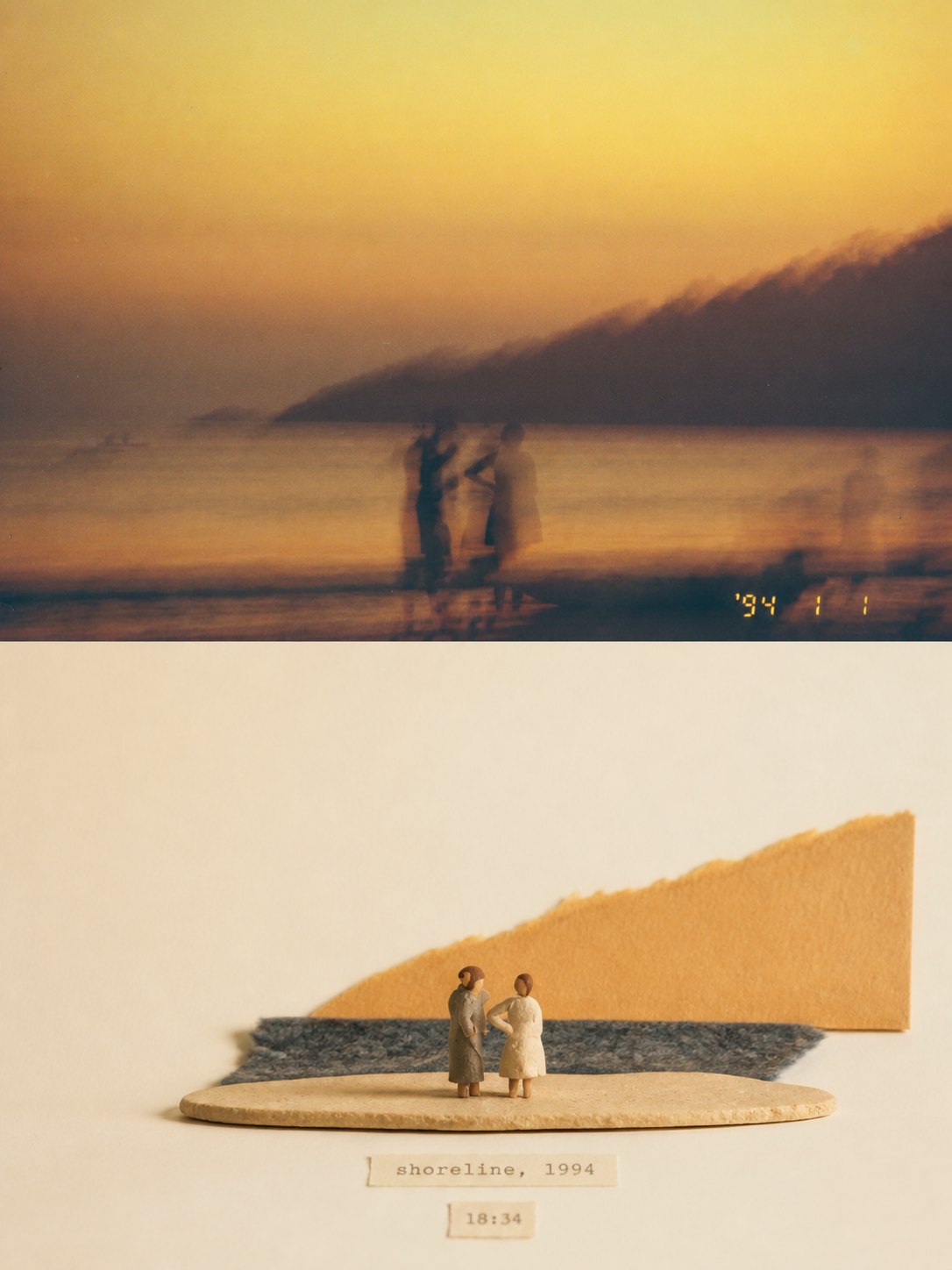
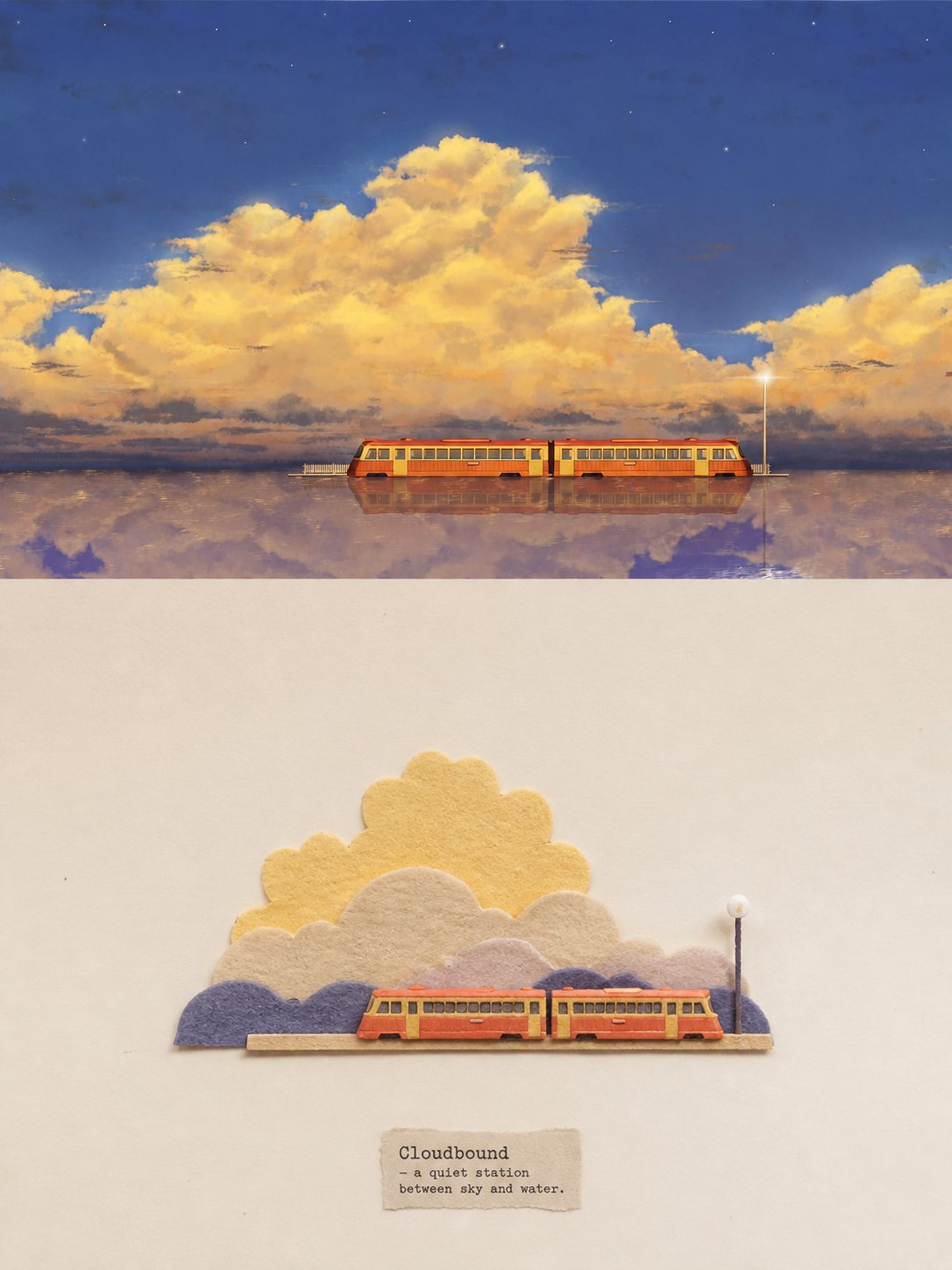
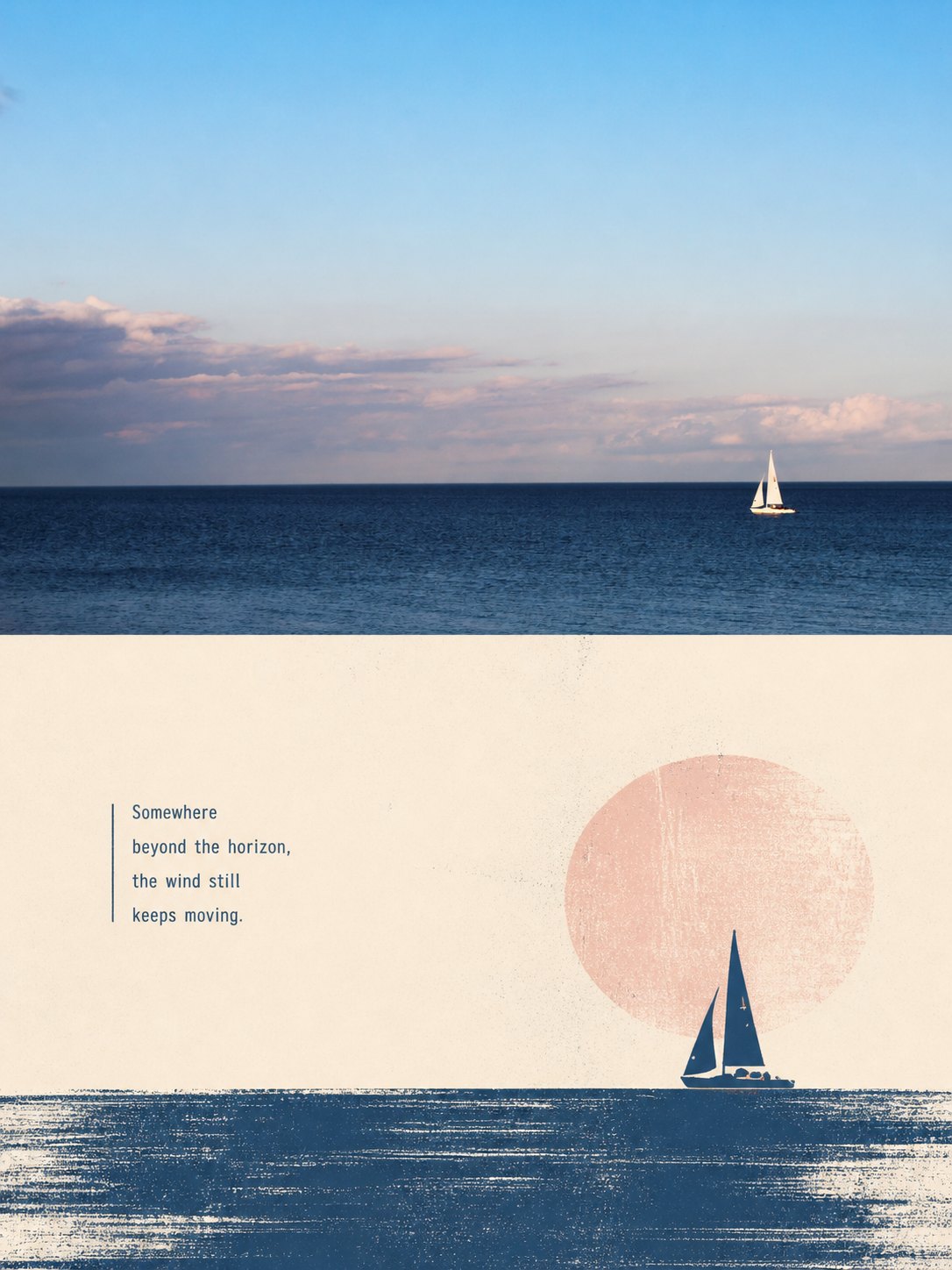
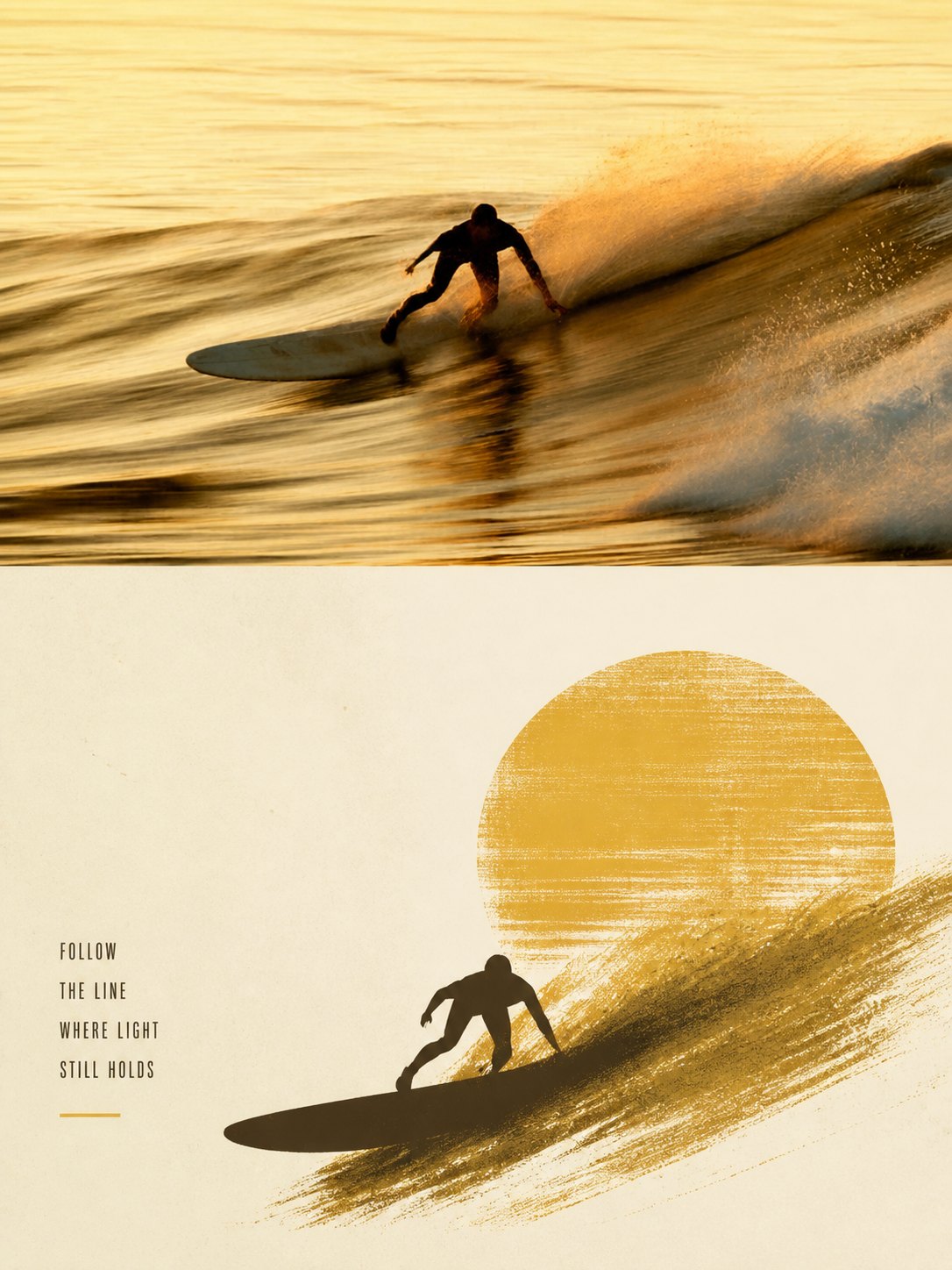
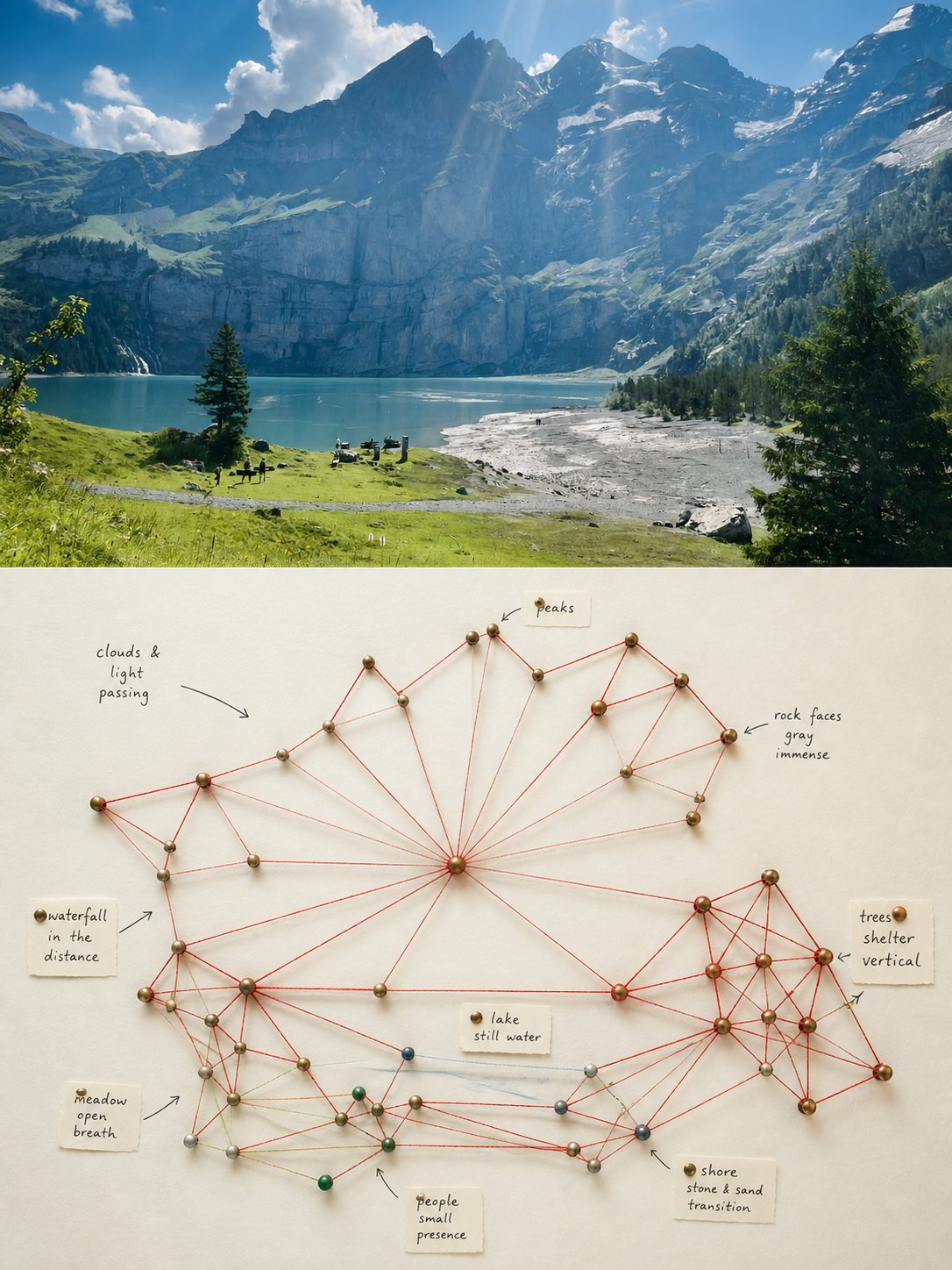
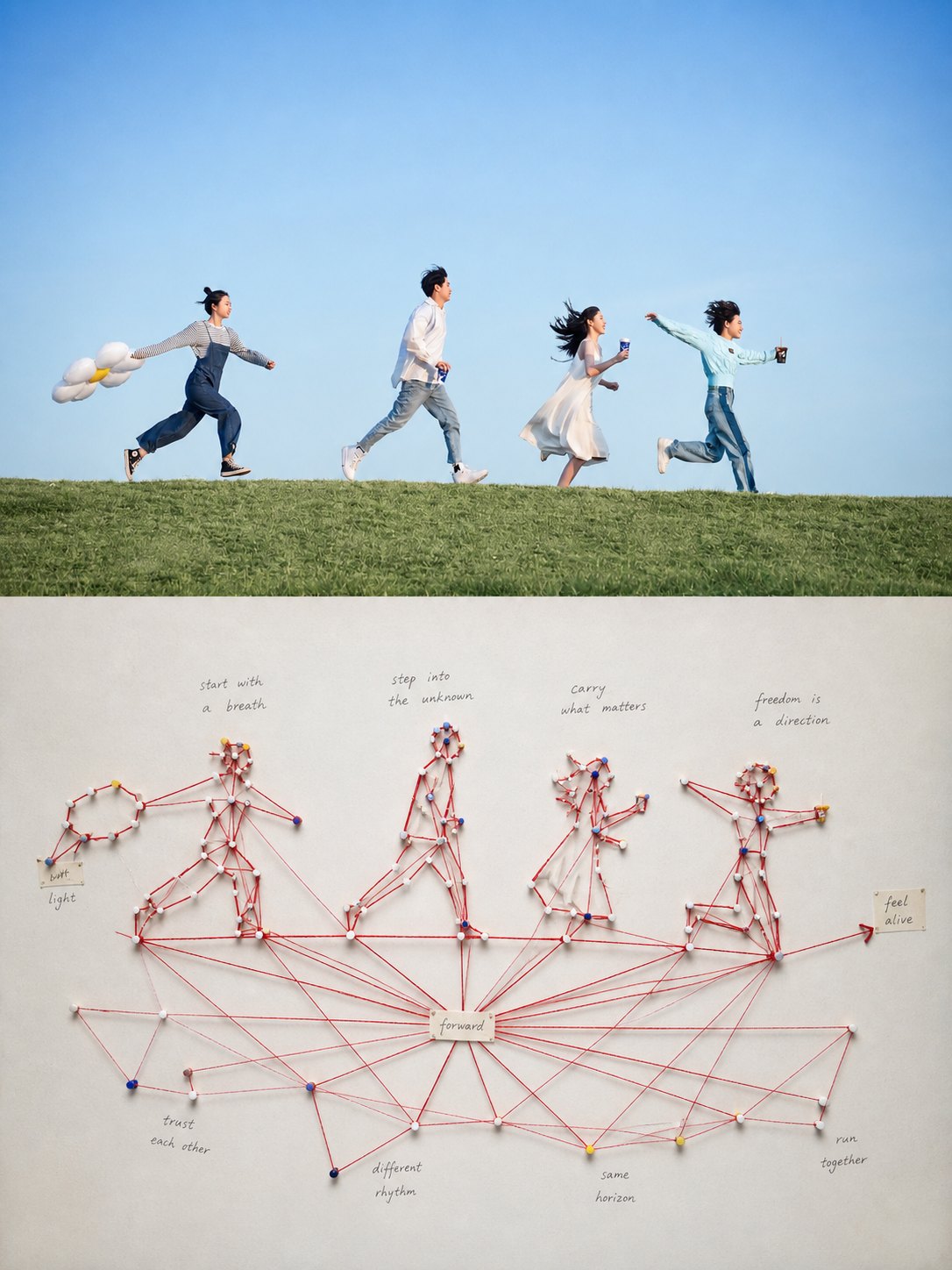
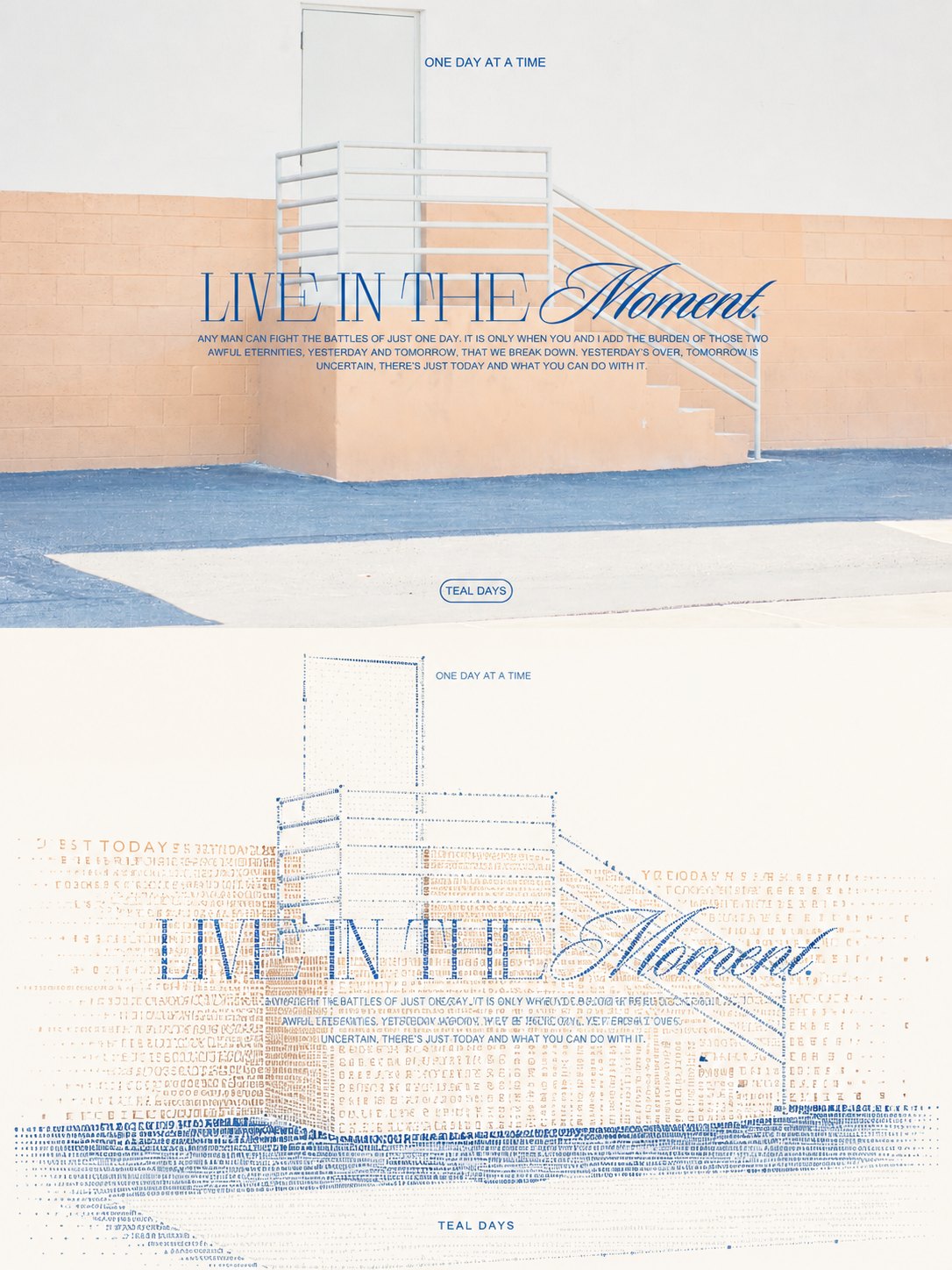
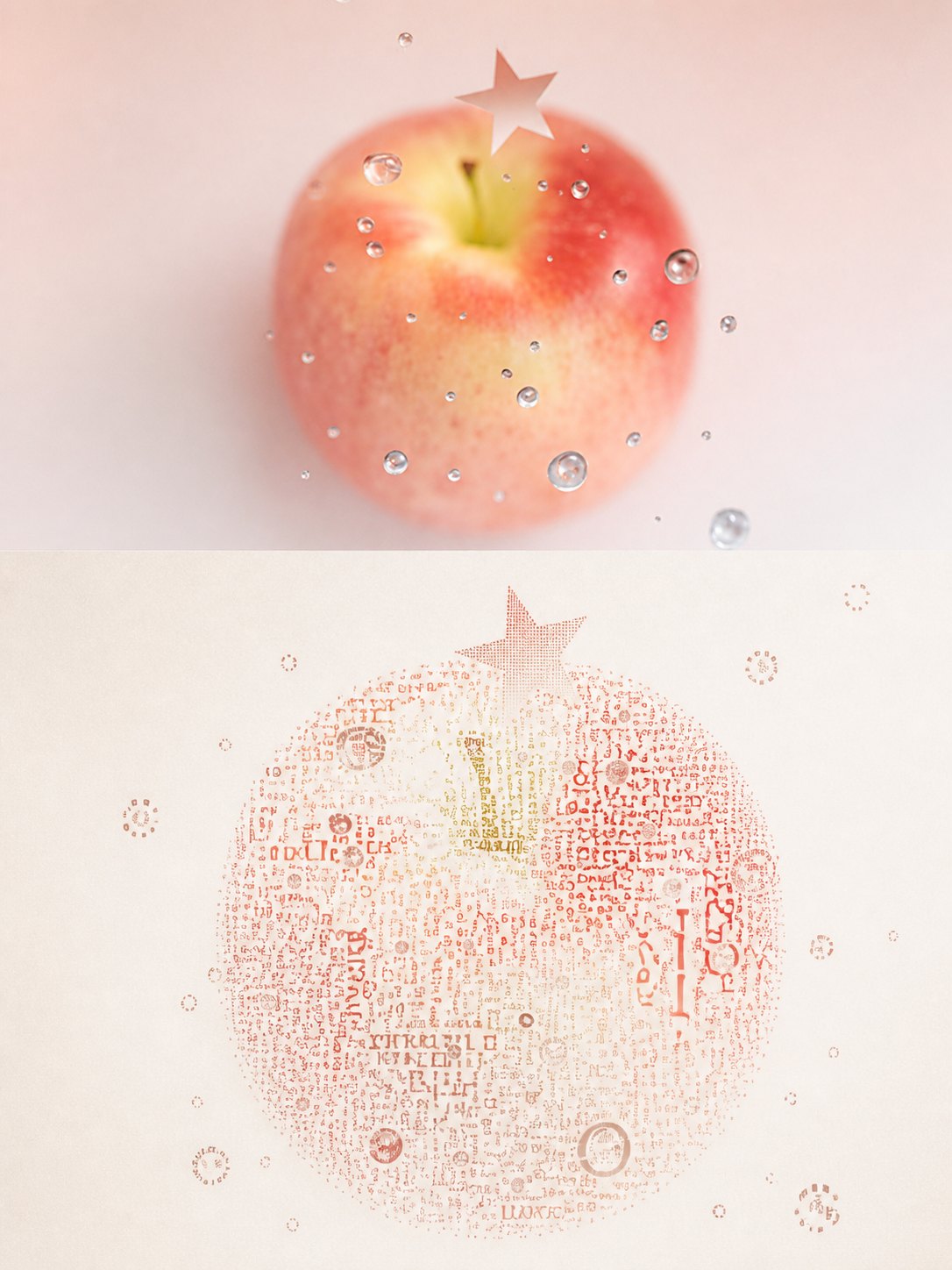
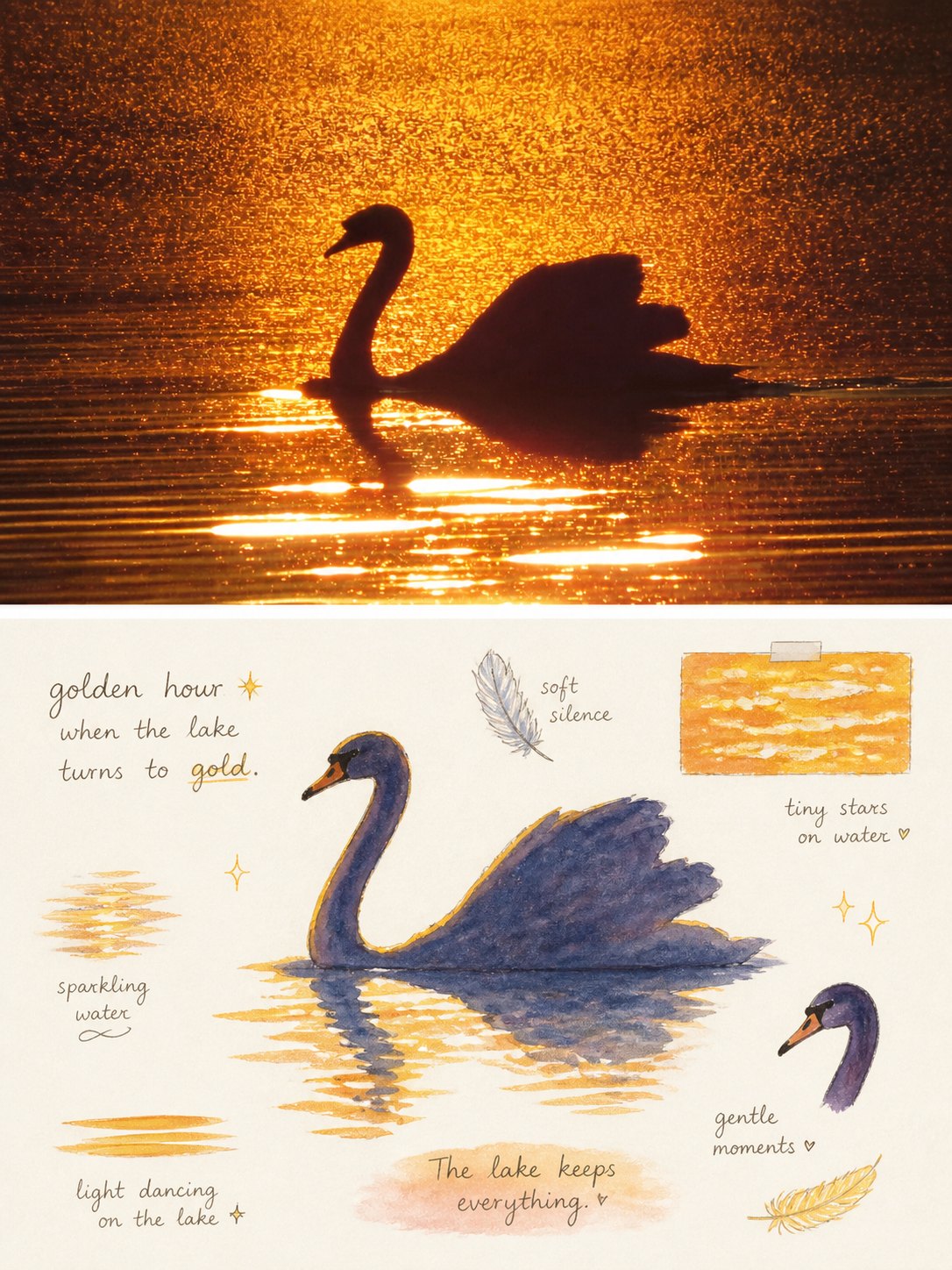
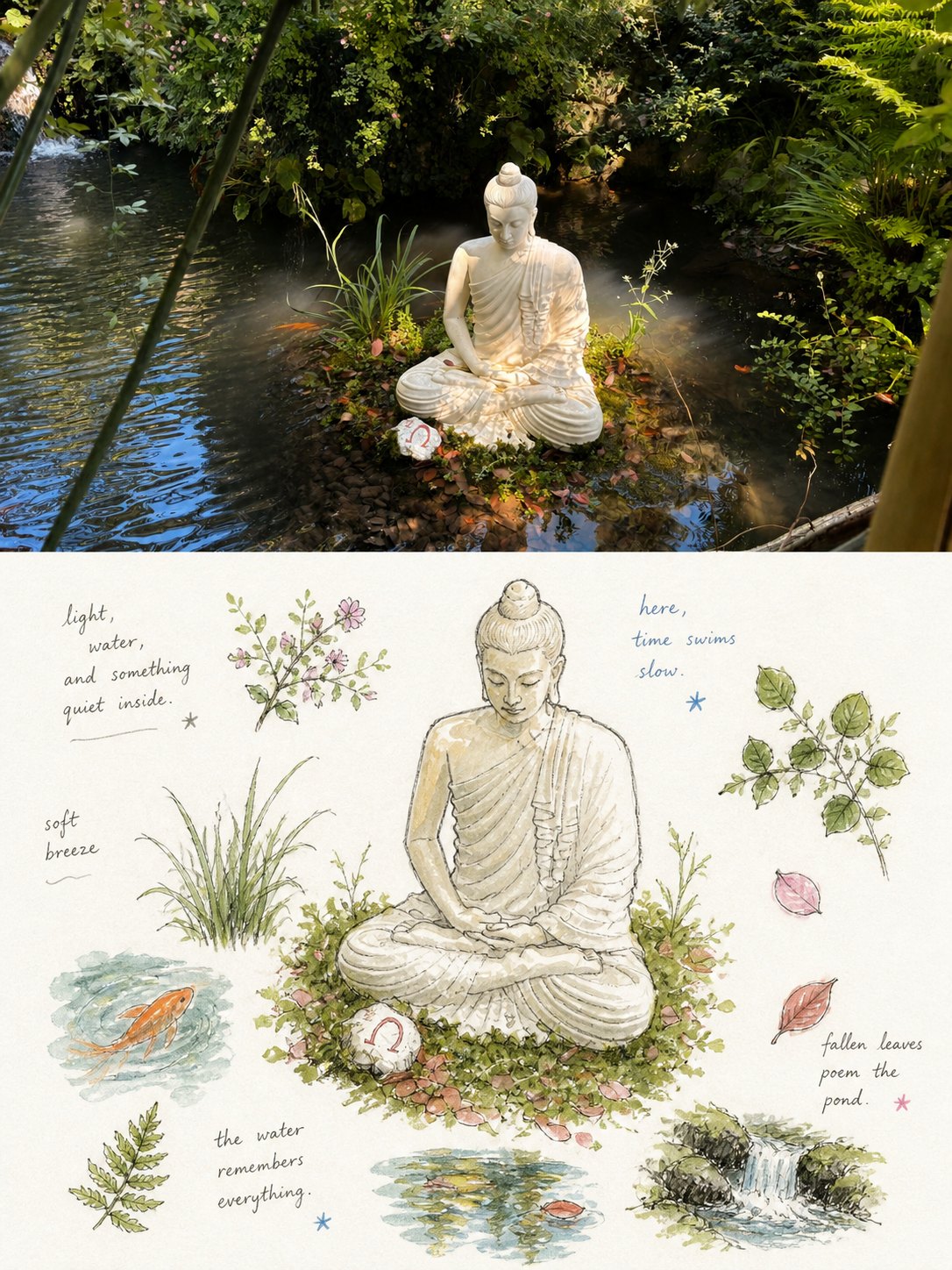
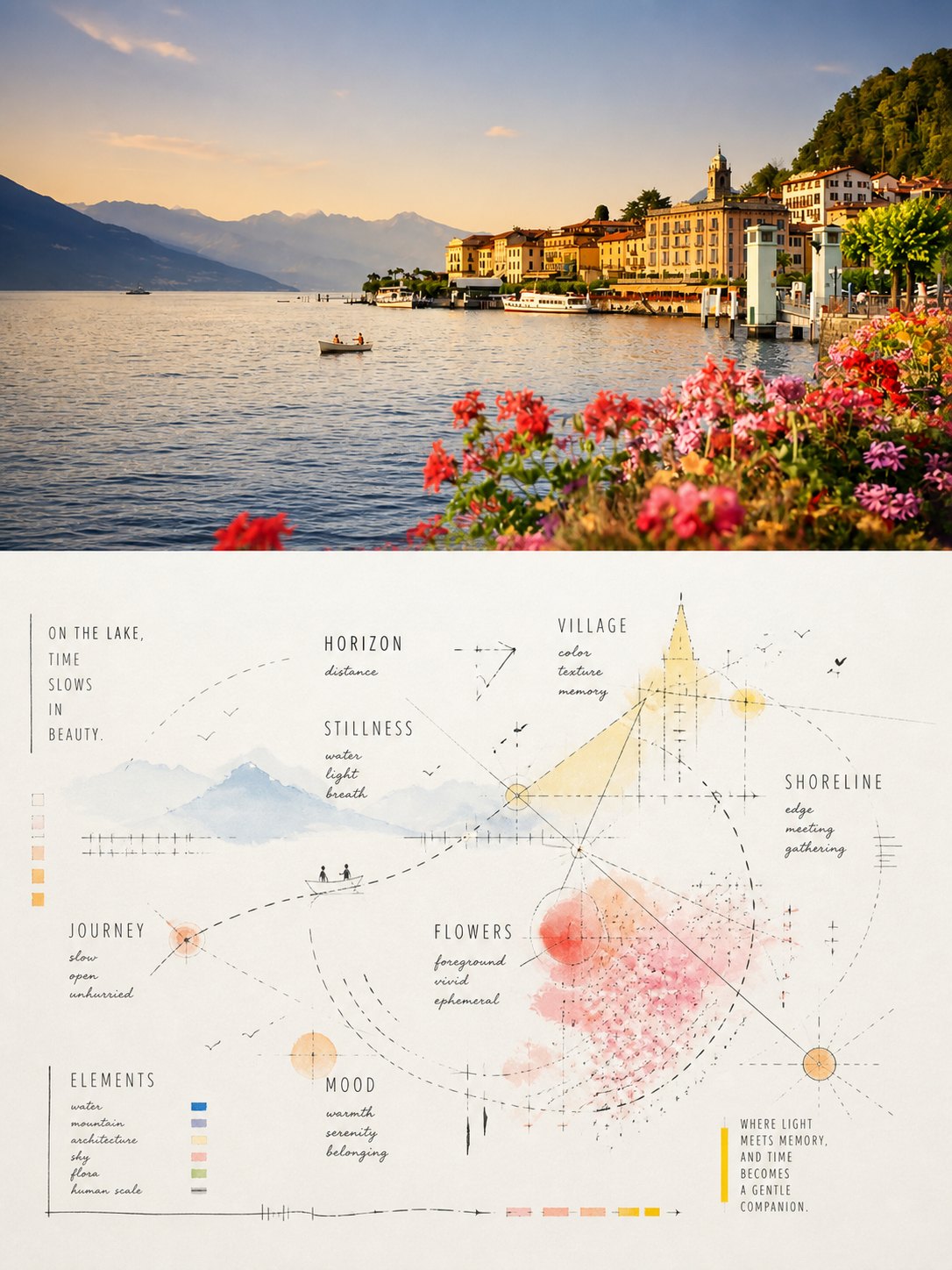
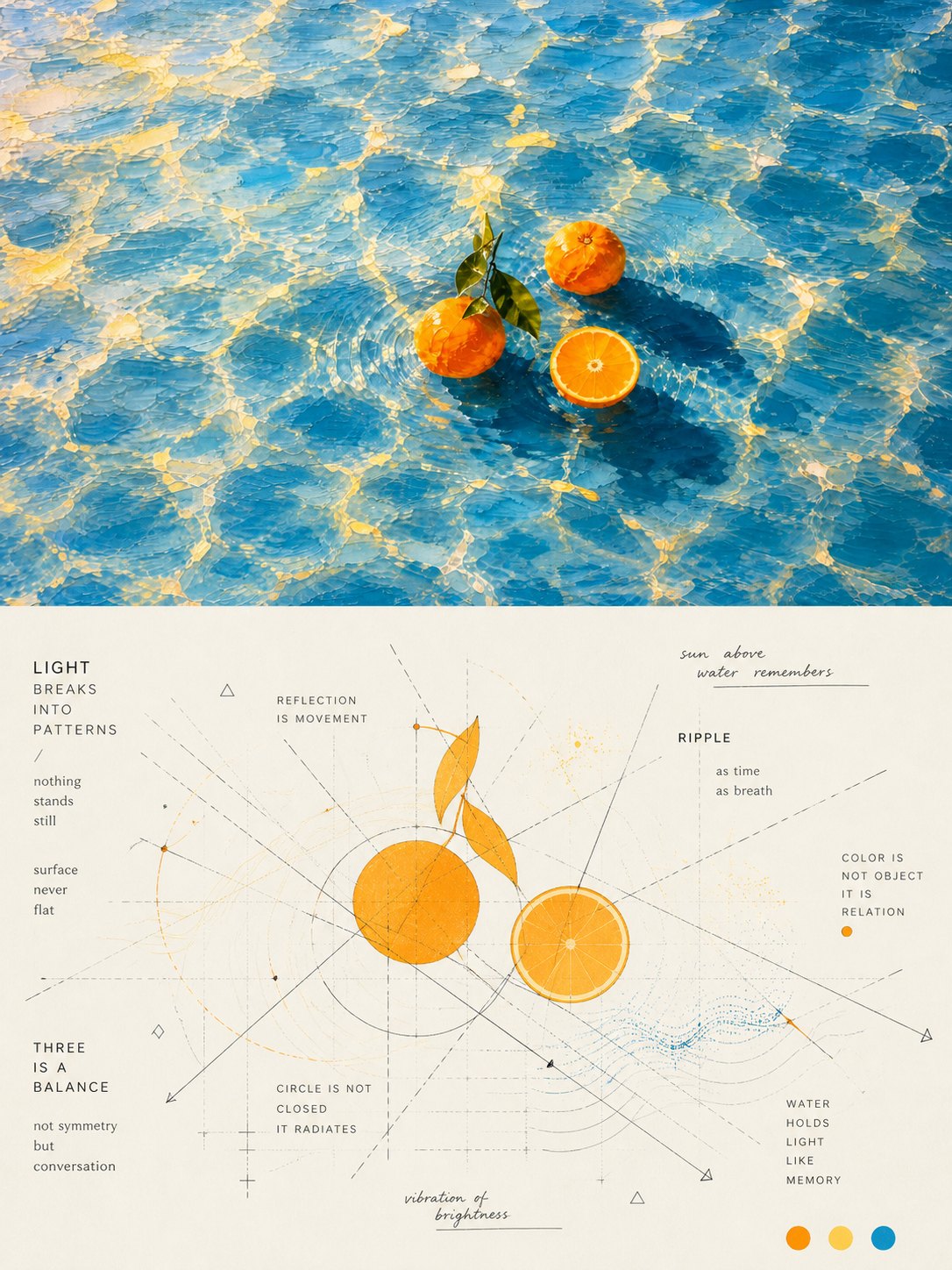
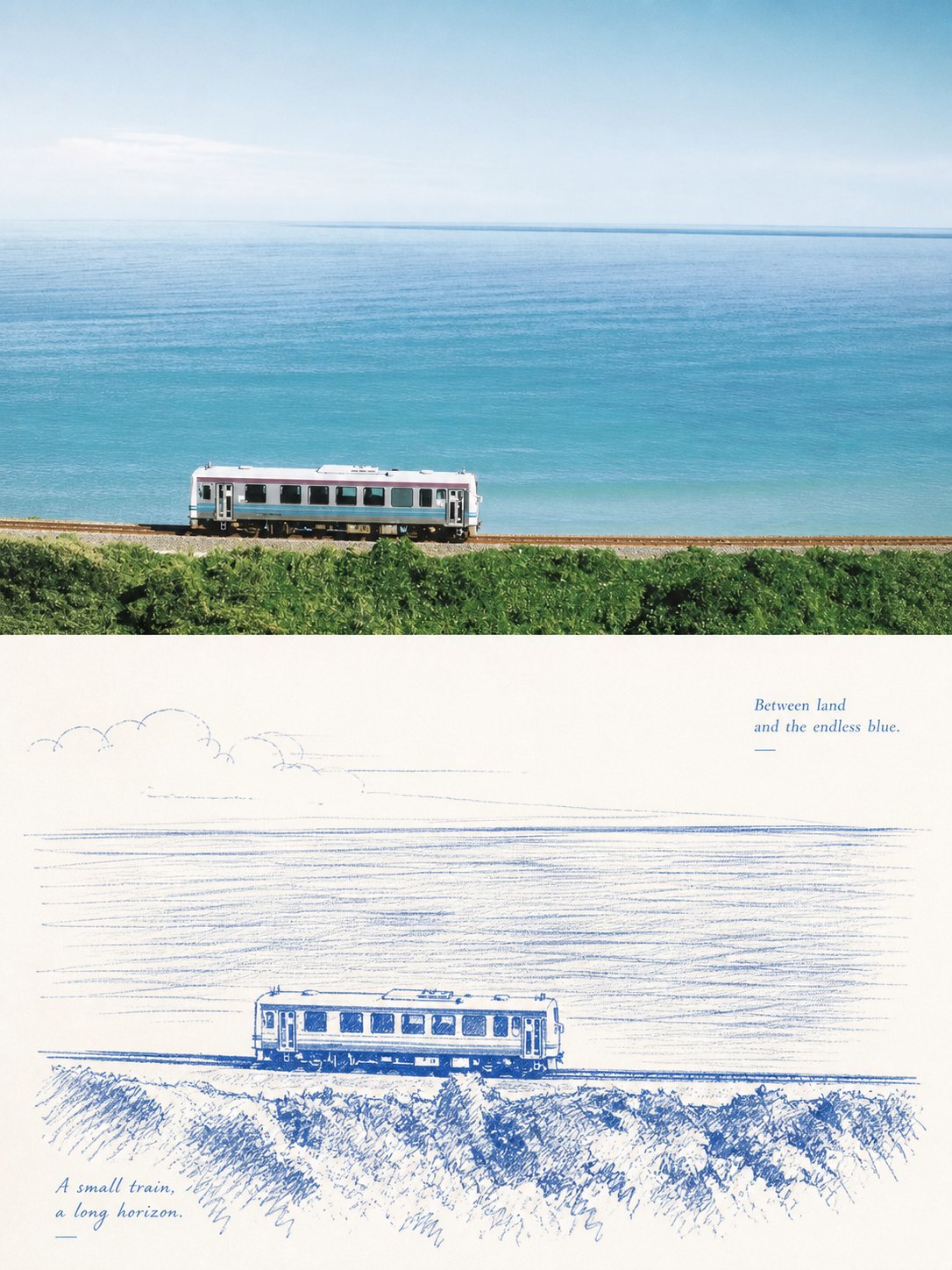
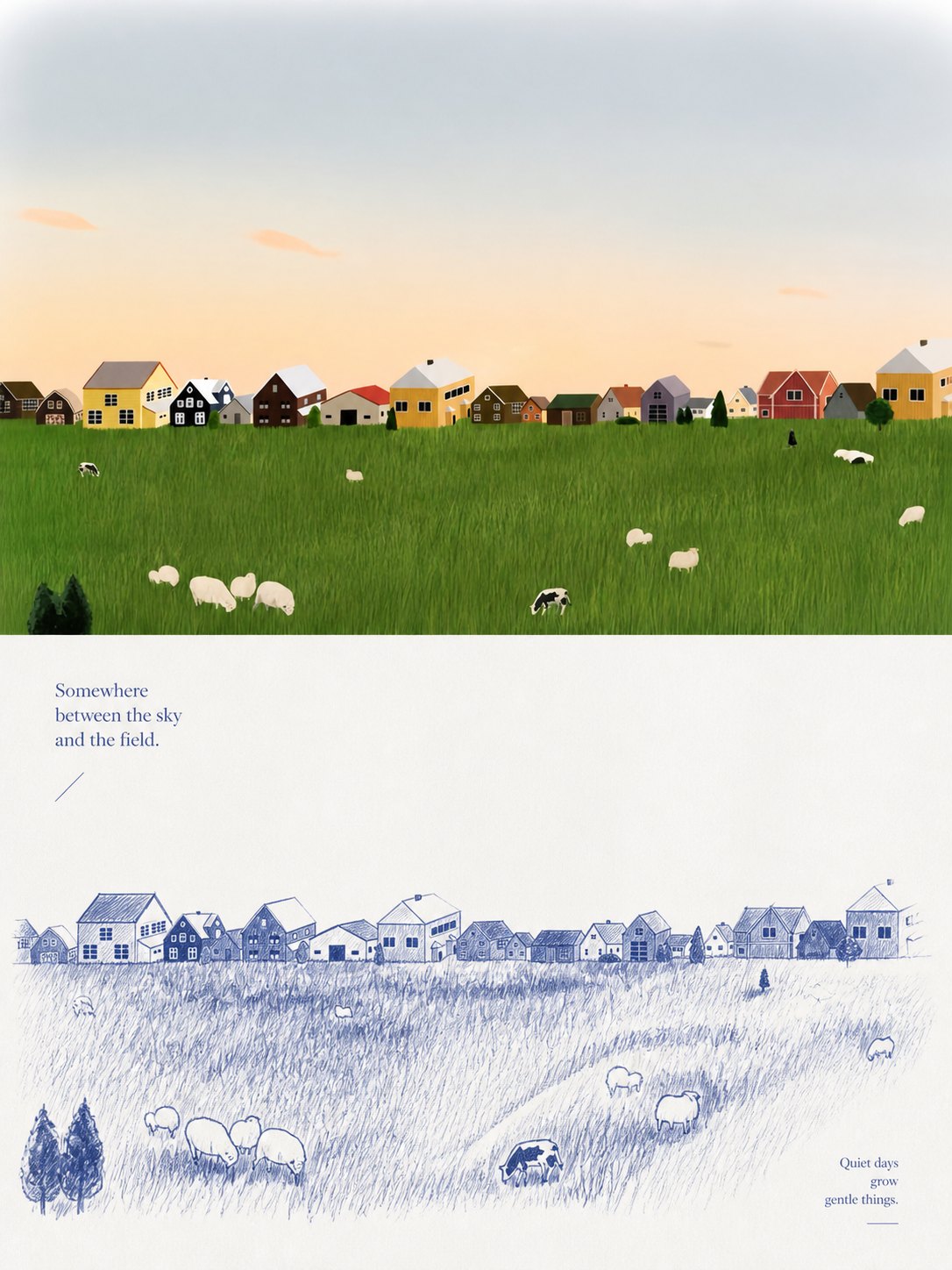
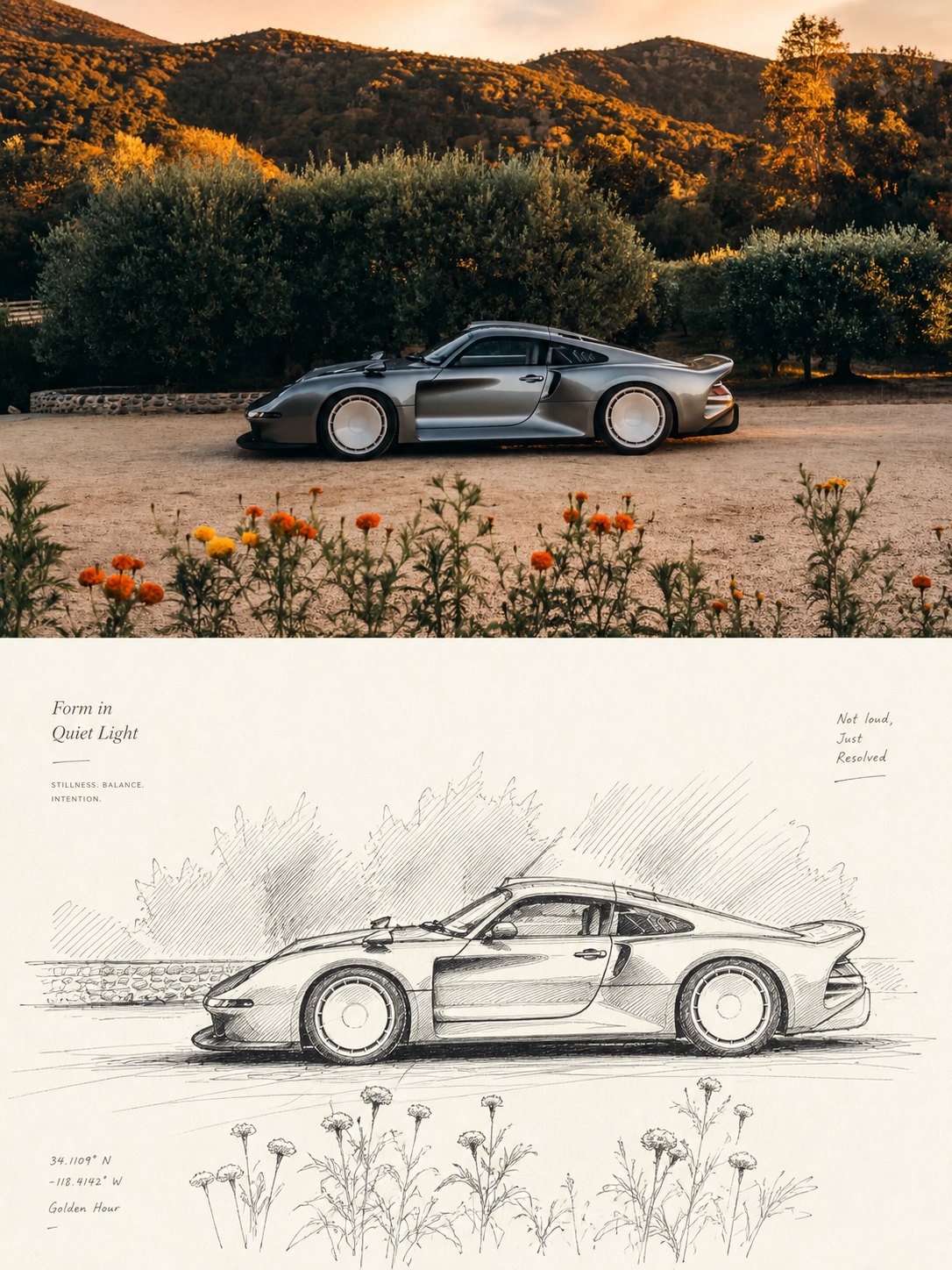
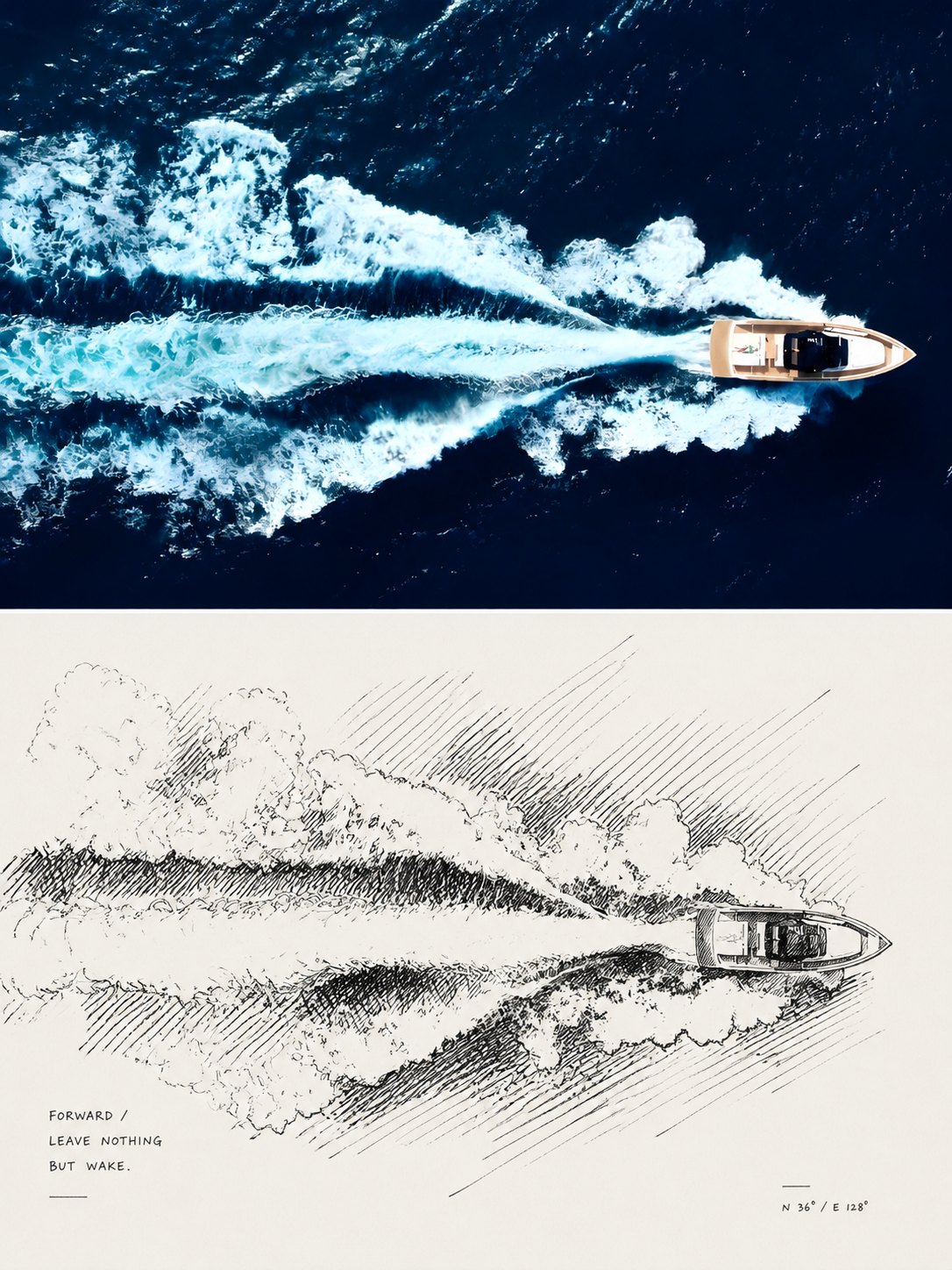
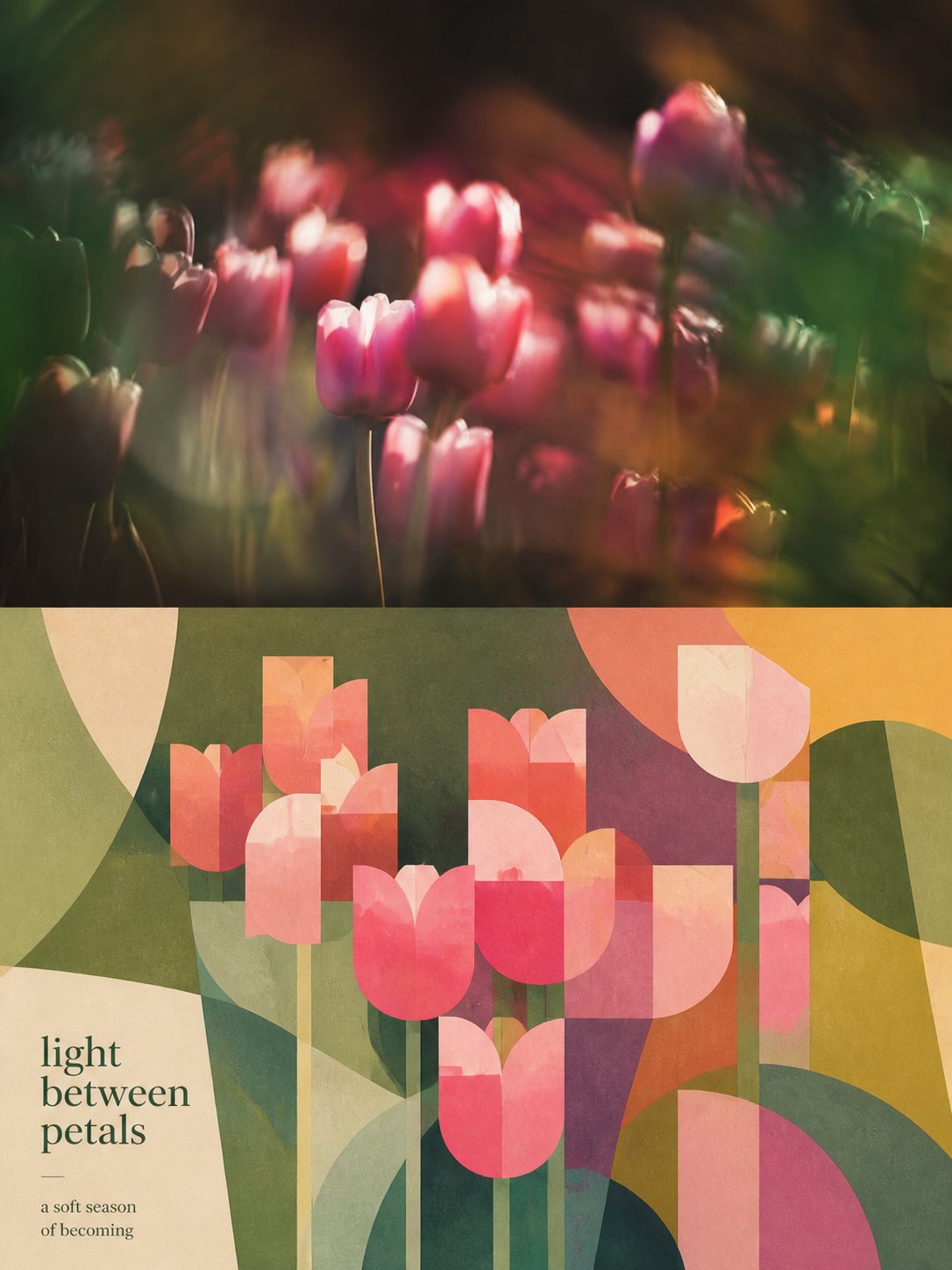
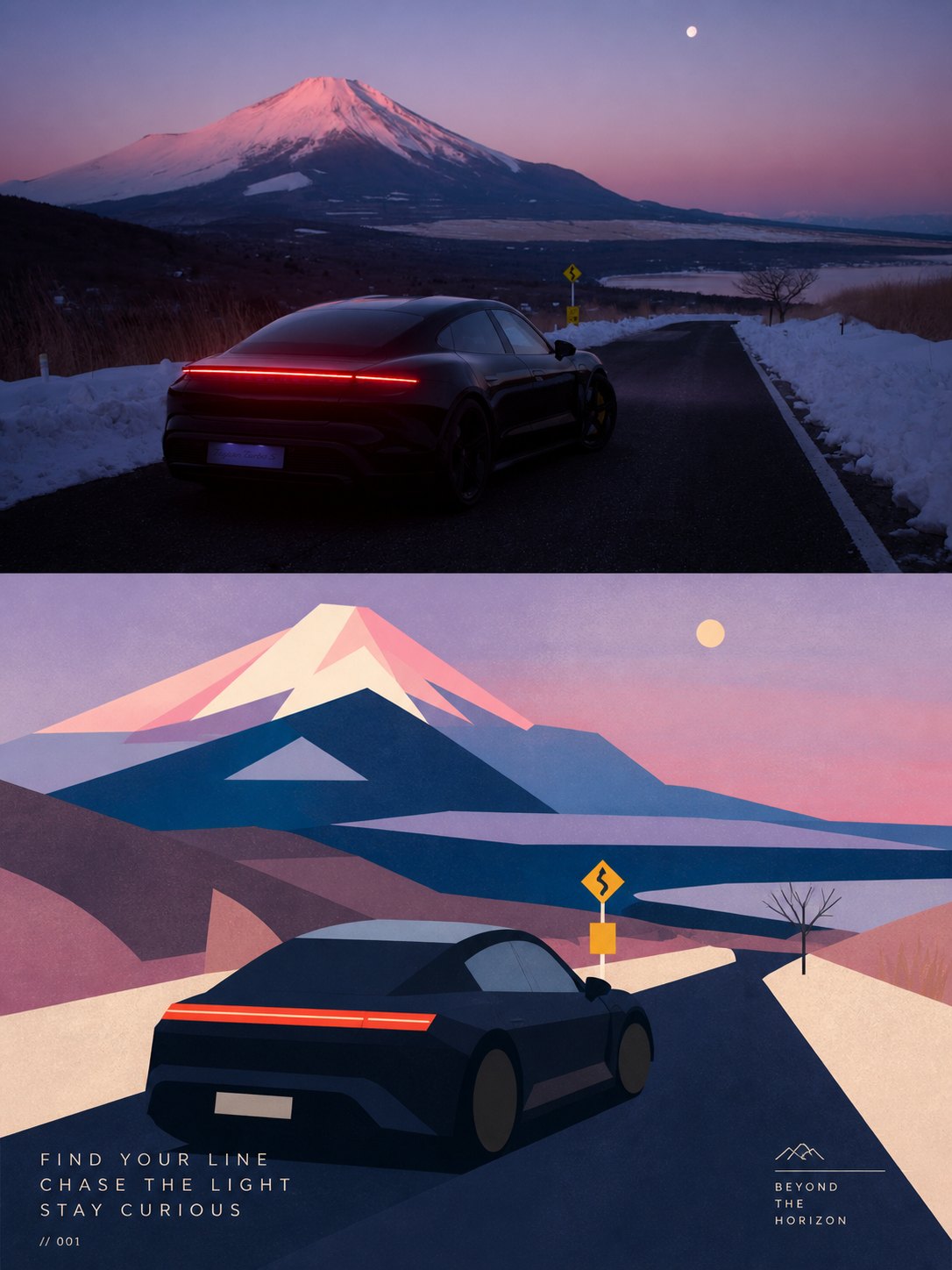
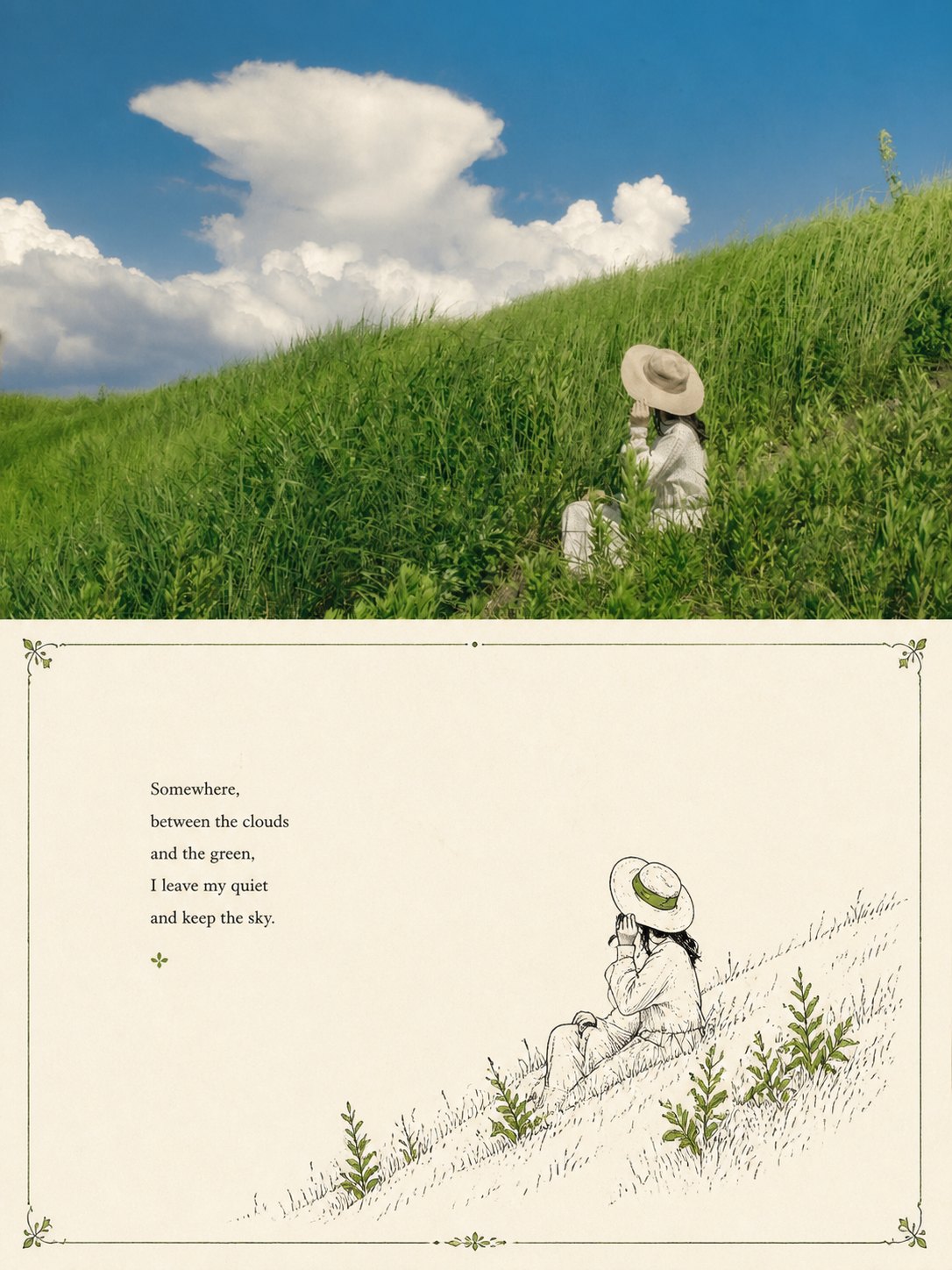
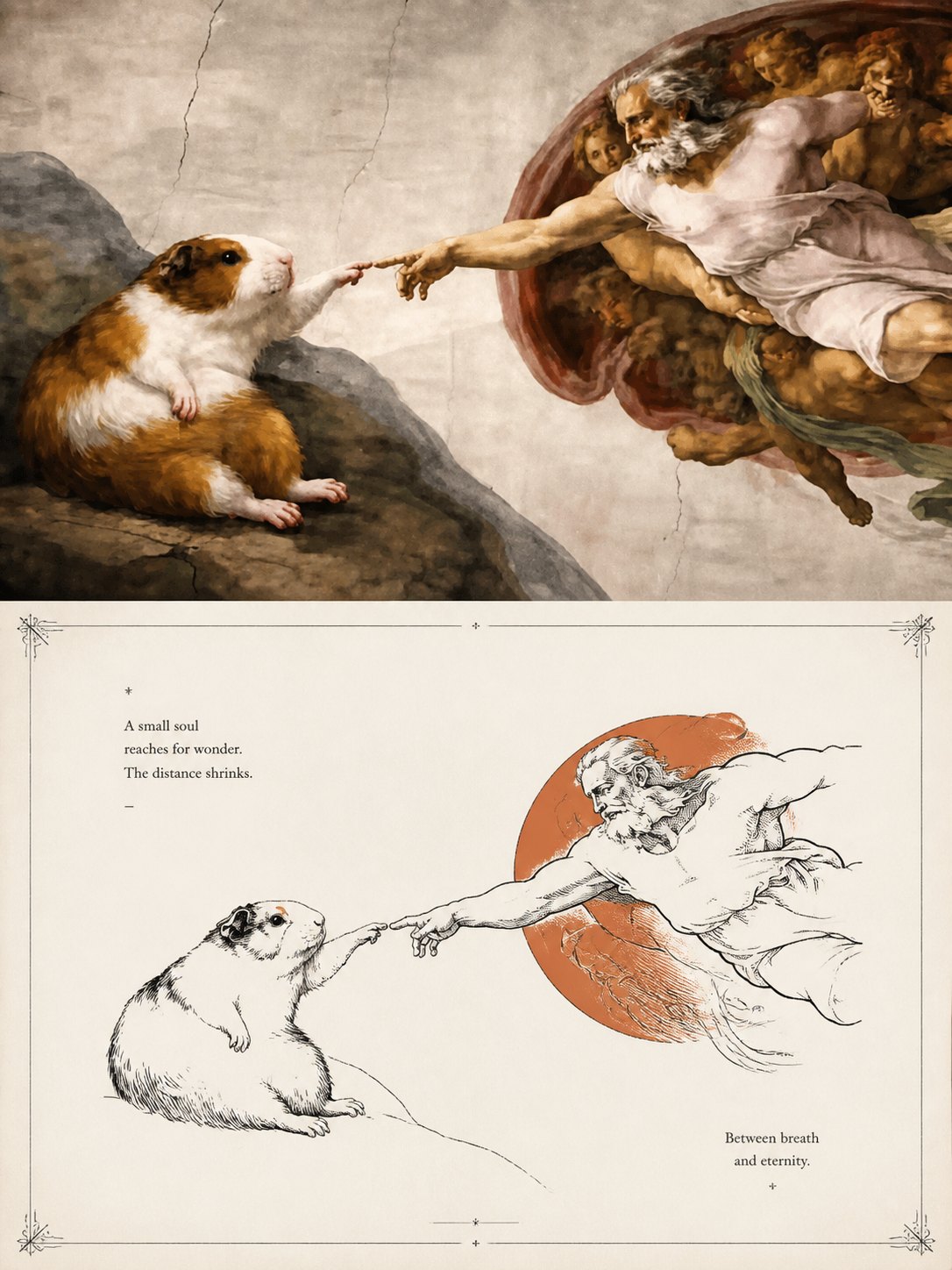
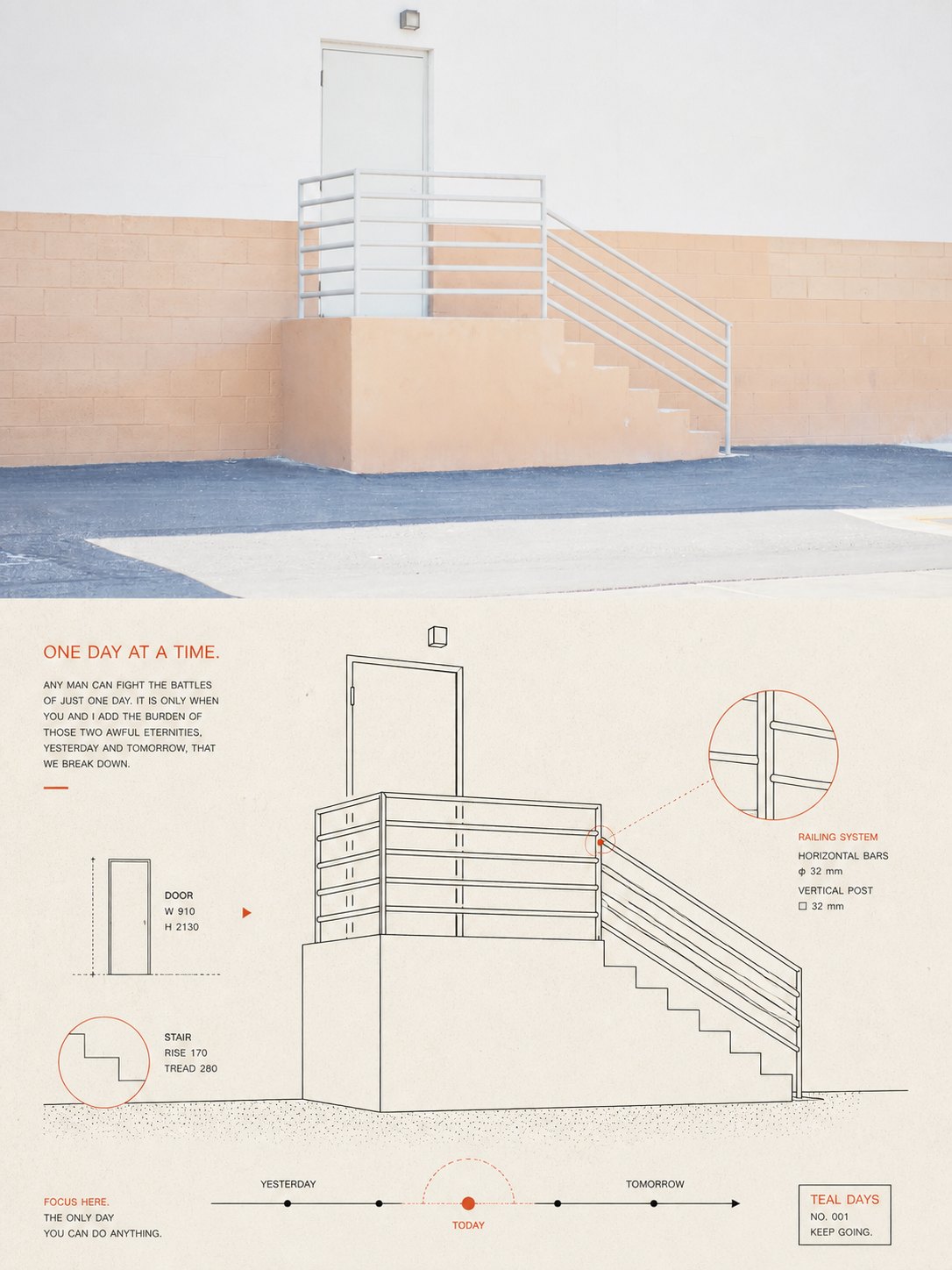
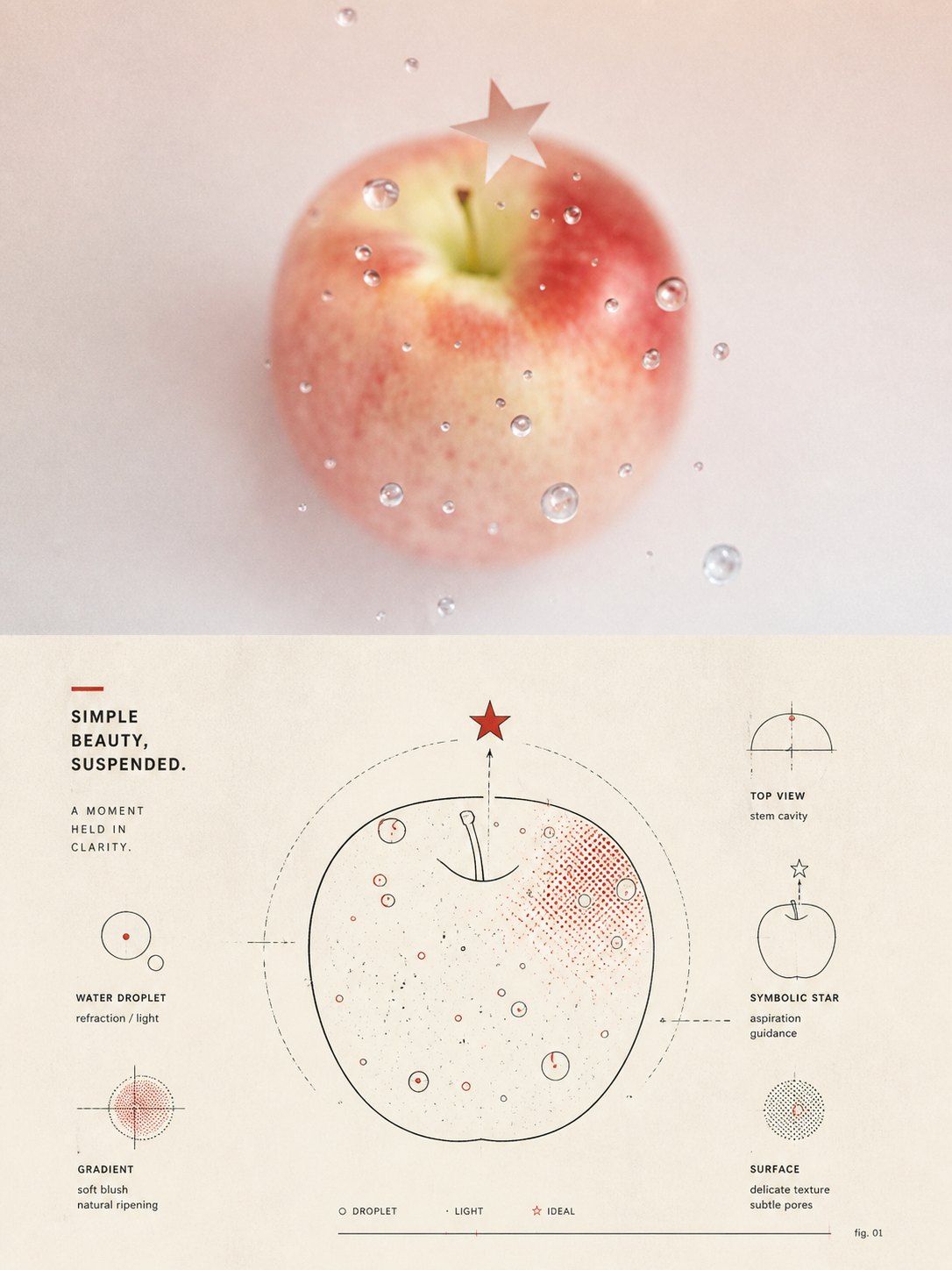
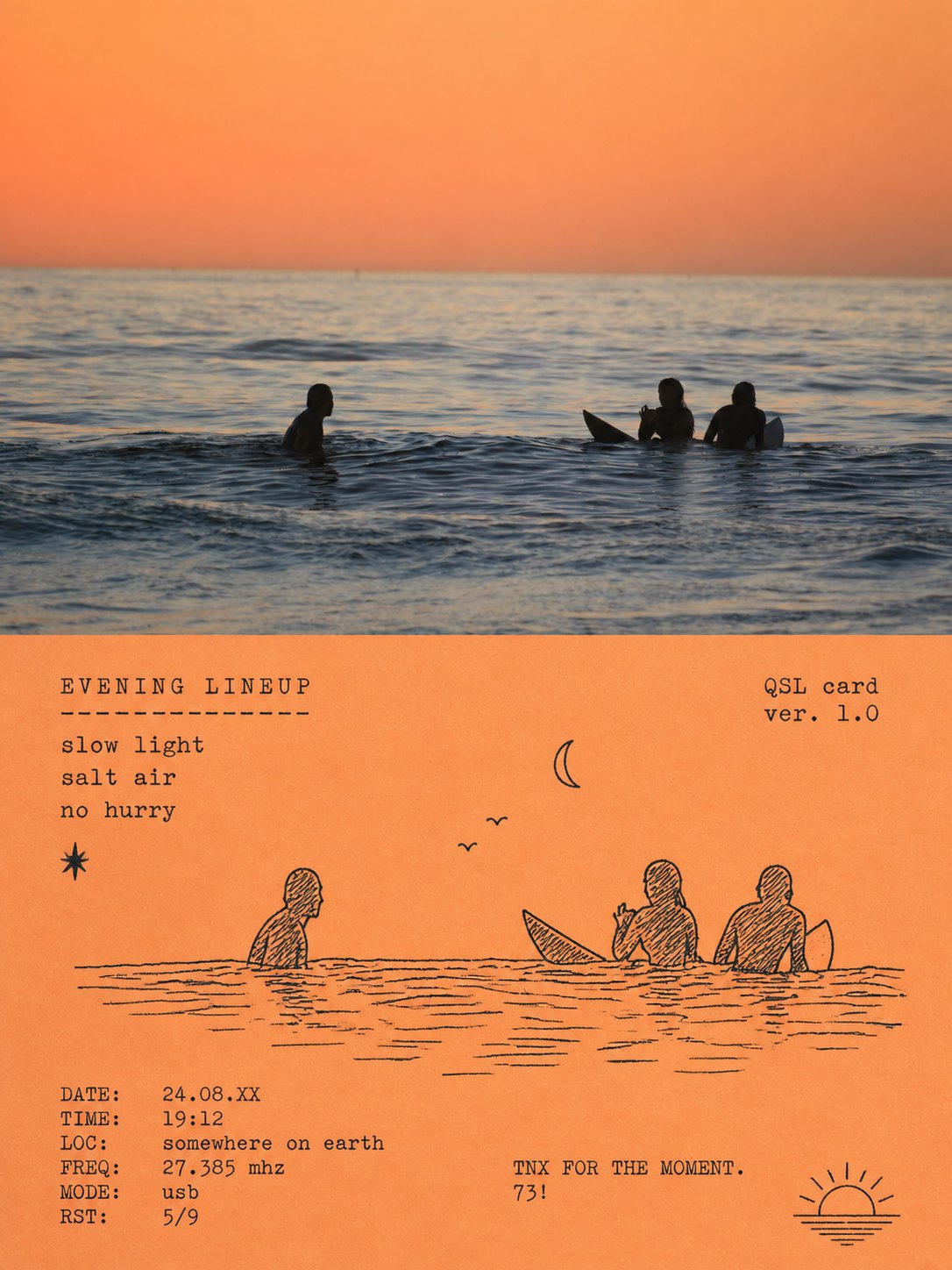
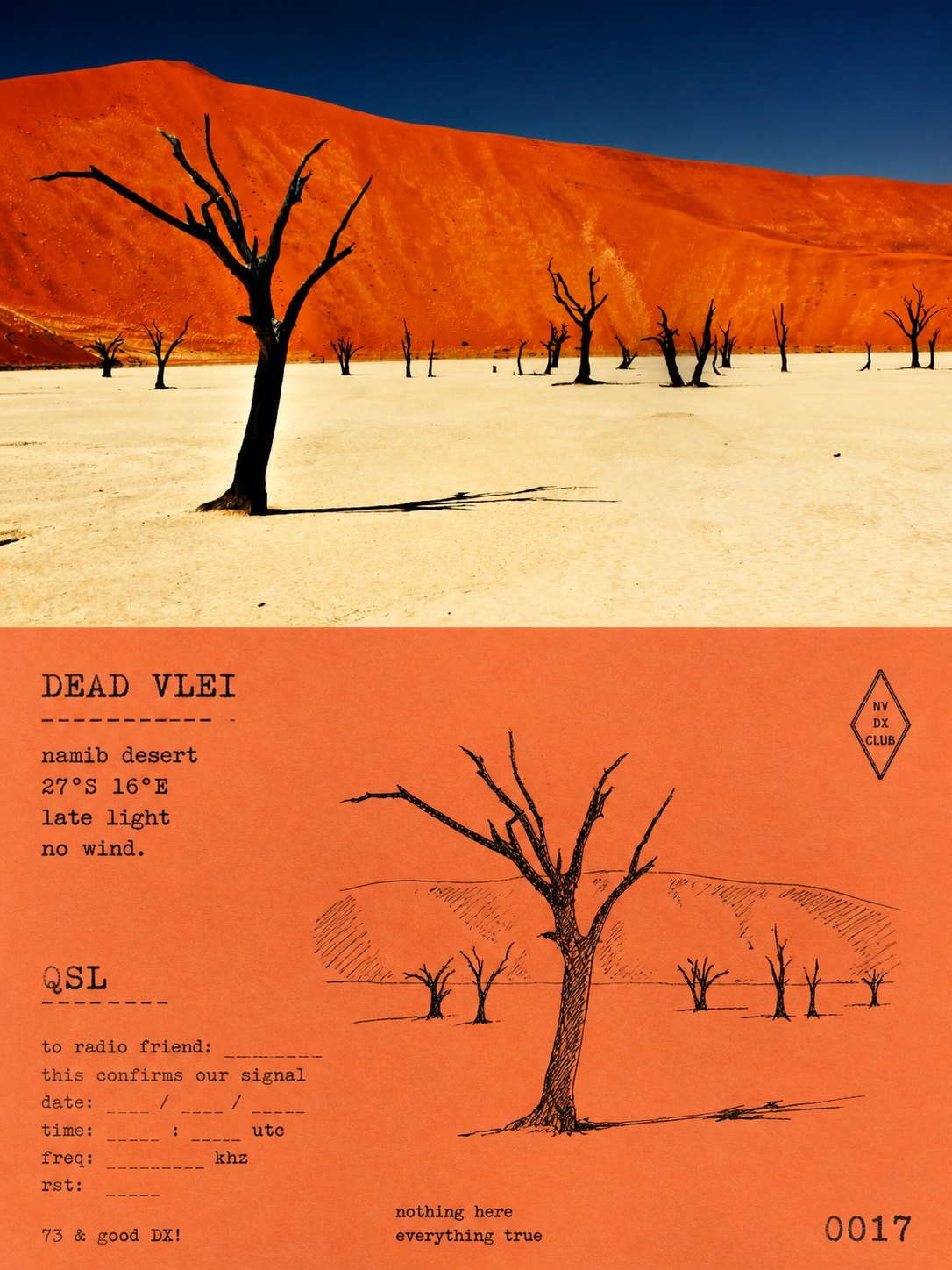
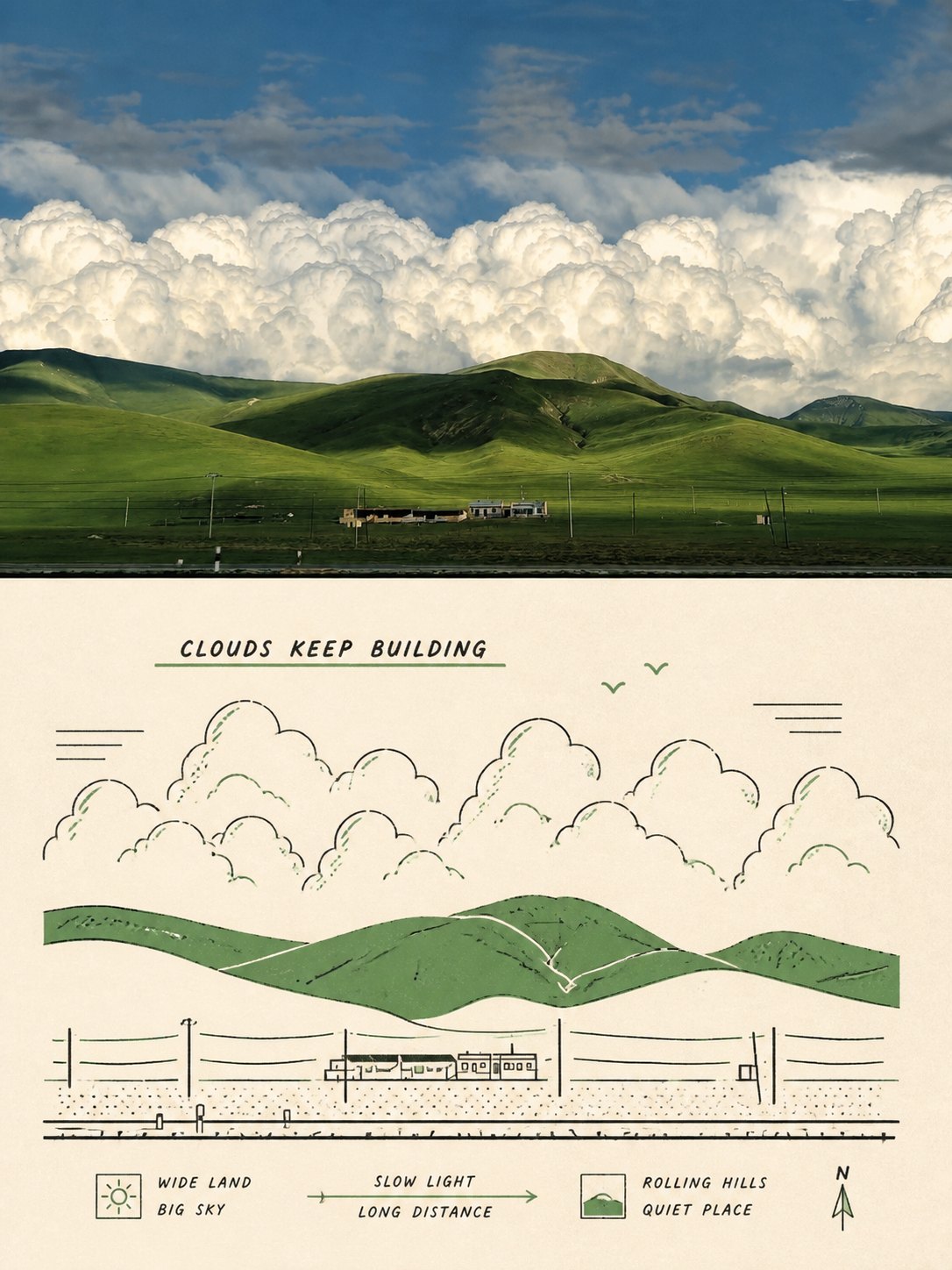
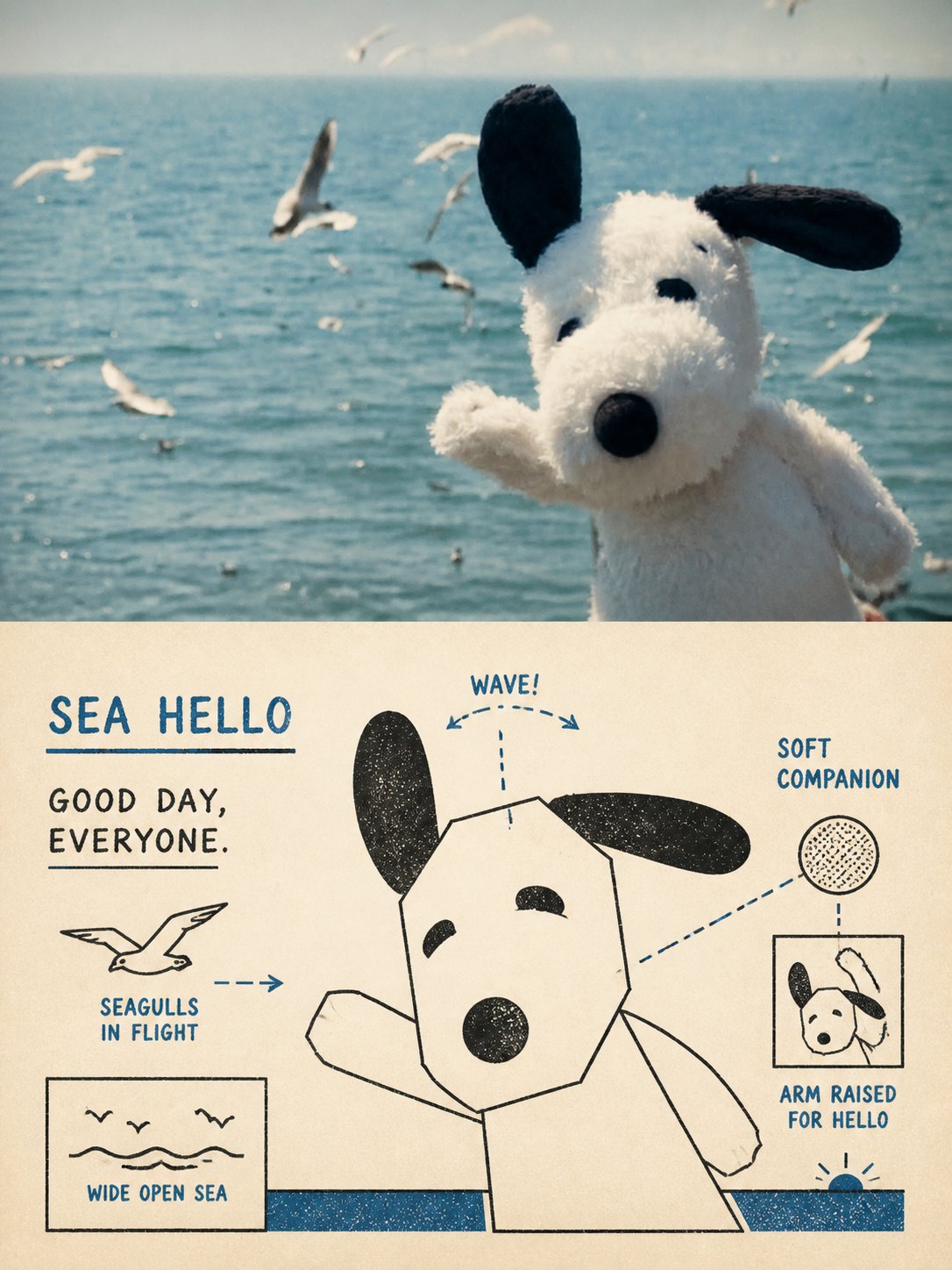
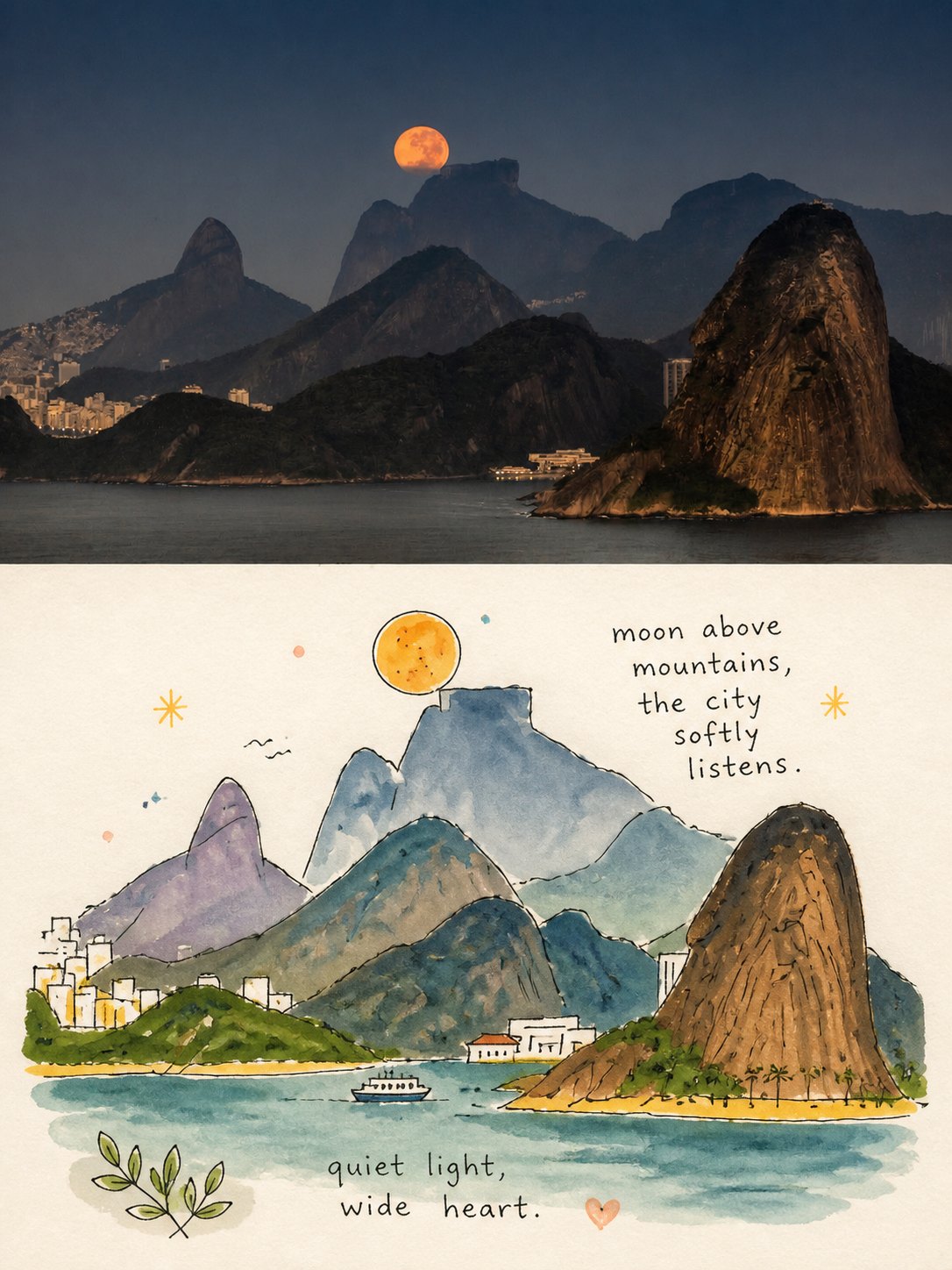
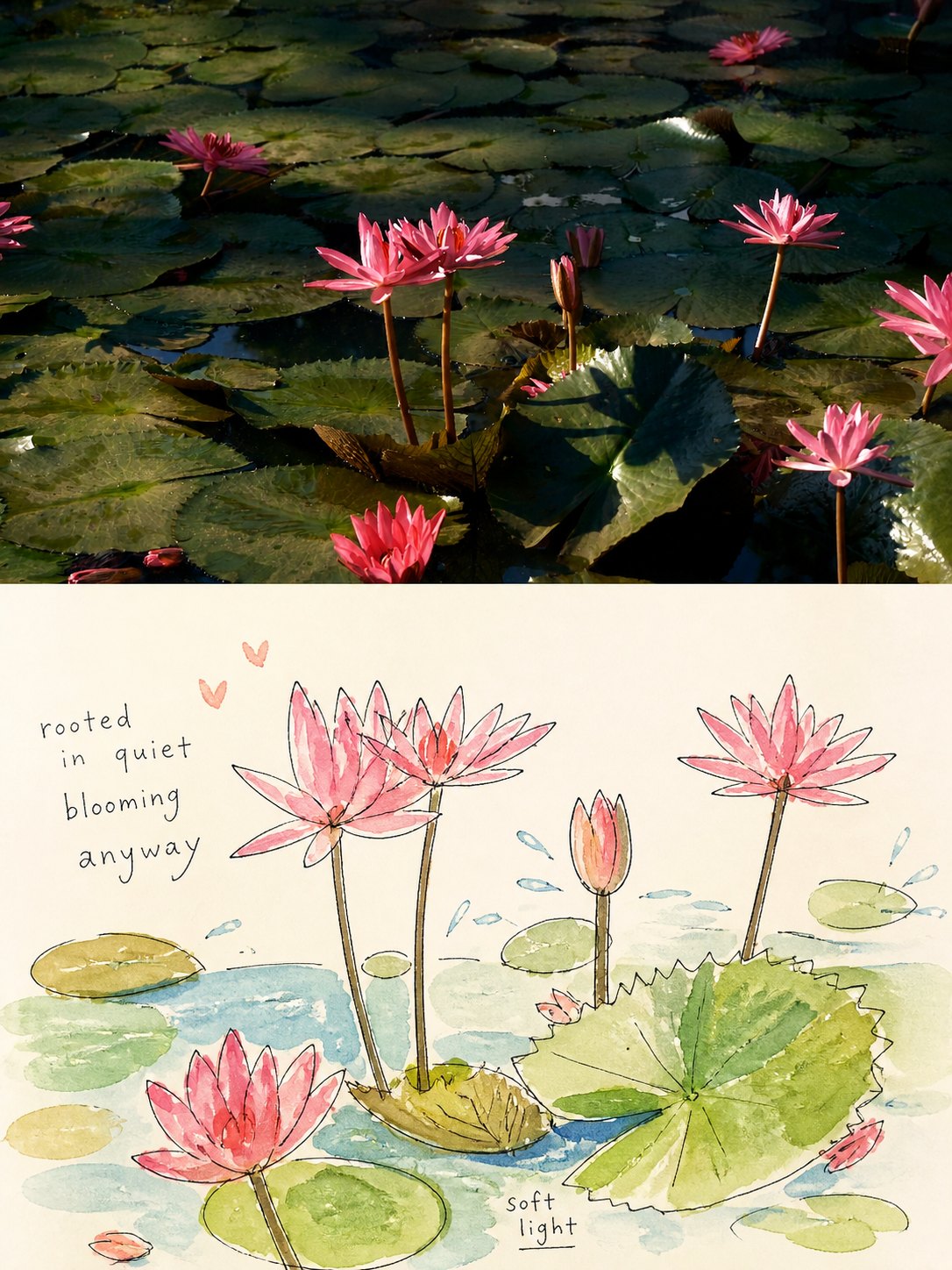
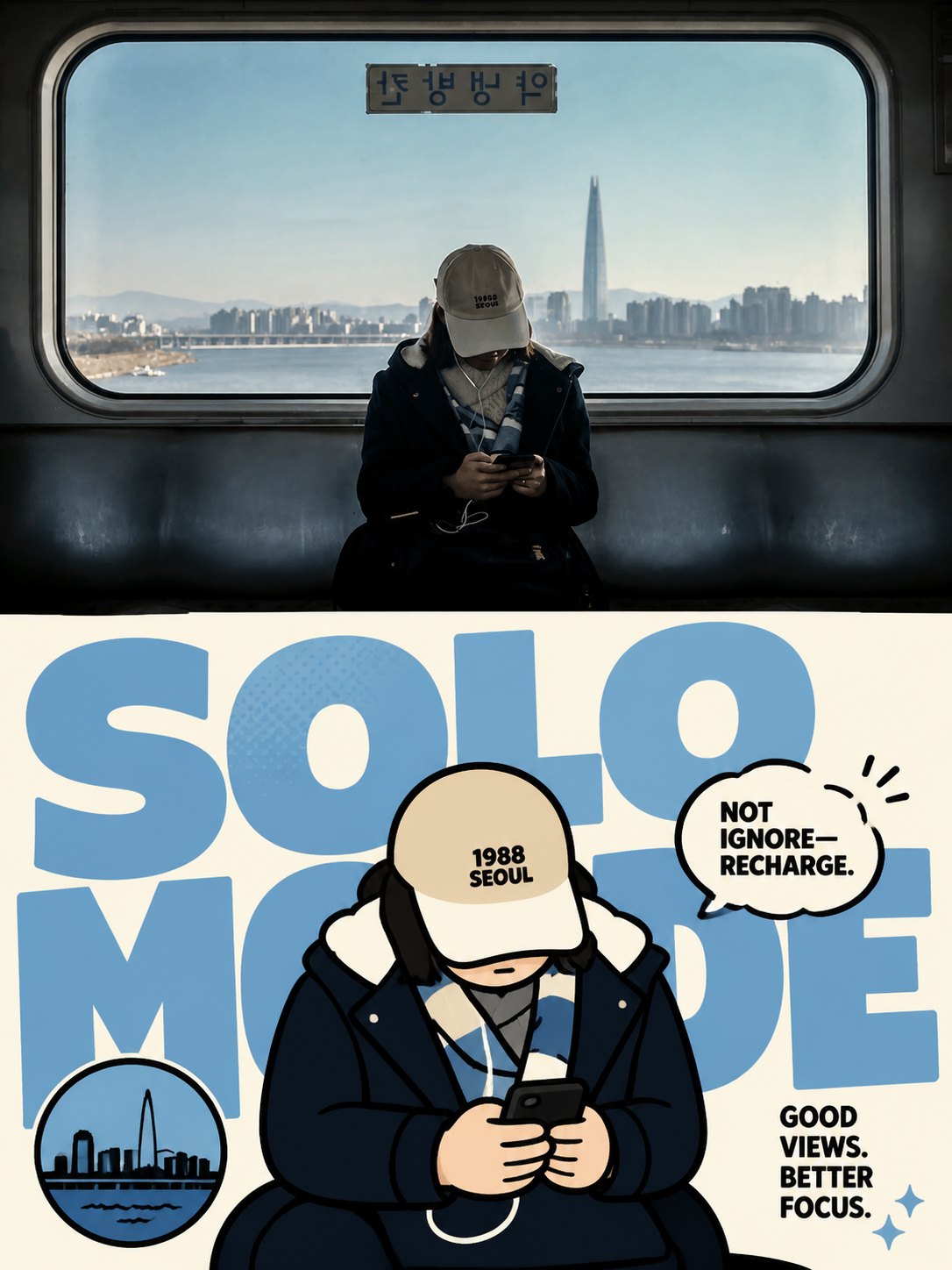
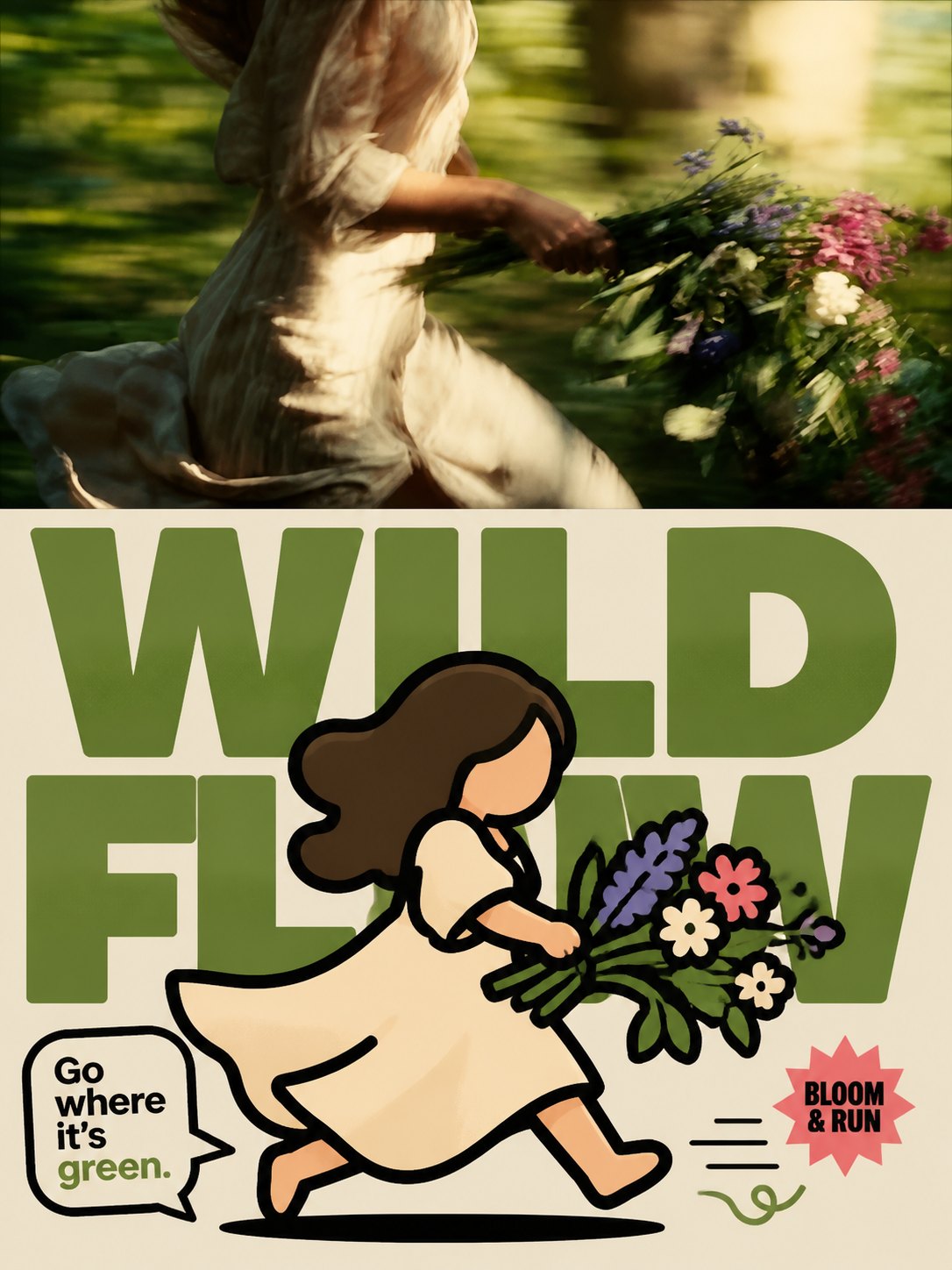
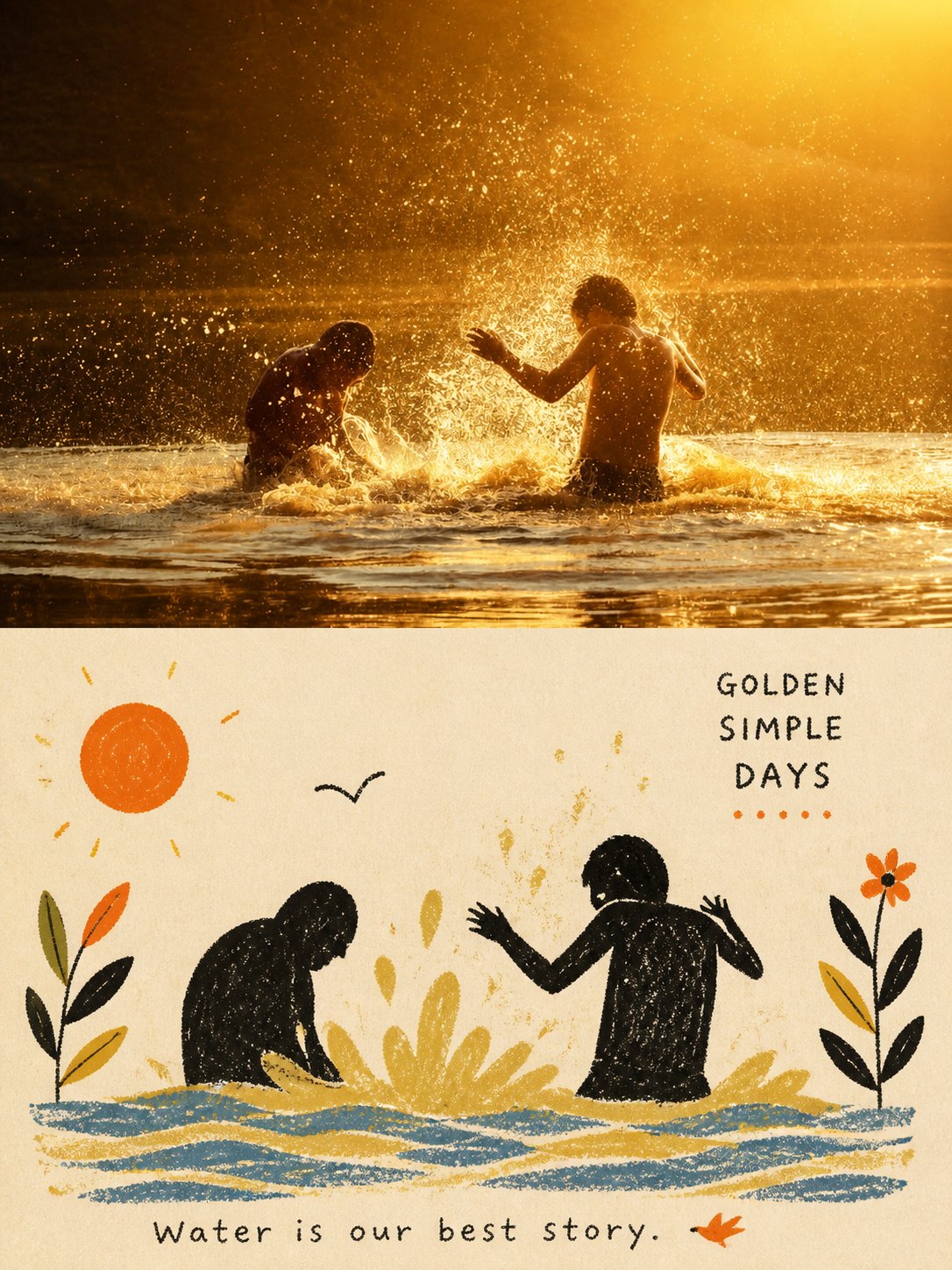
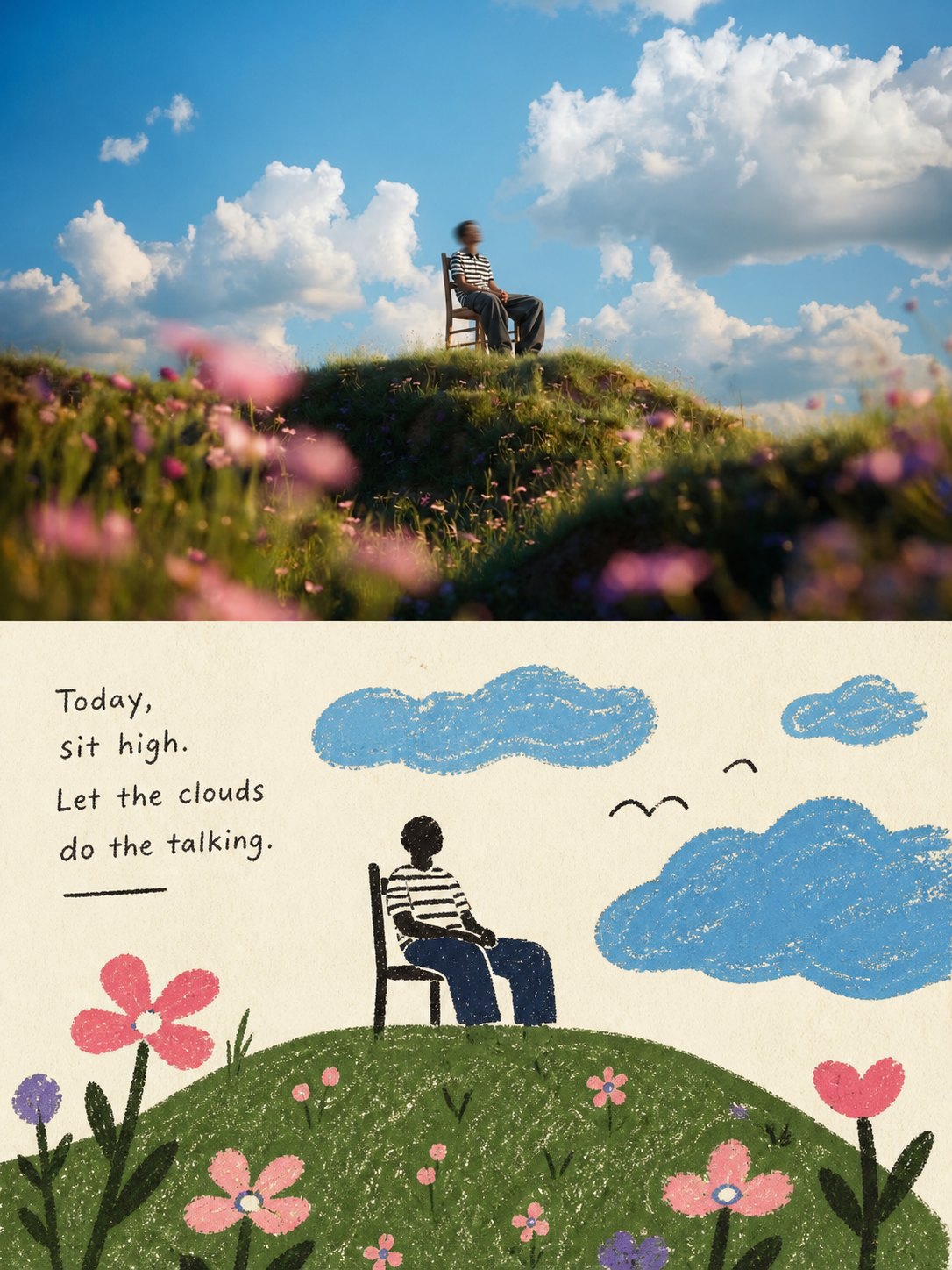
Please create a separate high-end design poster for each of my uploaded travel photos, outputting each photo individually without collage or multi-image combinations.
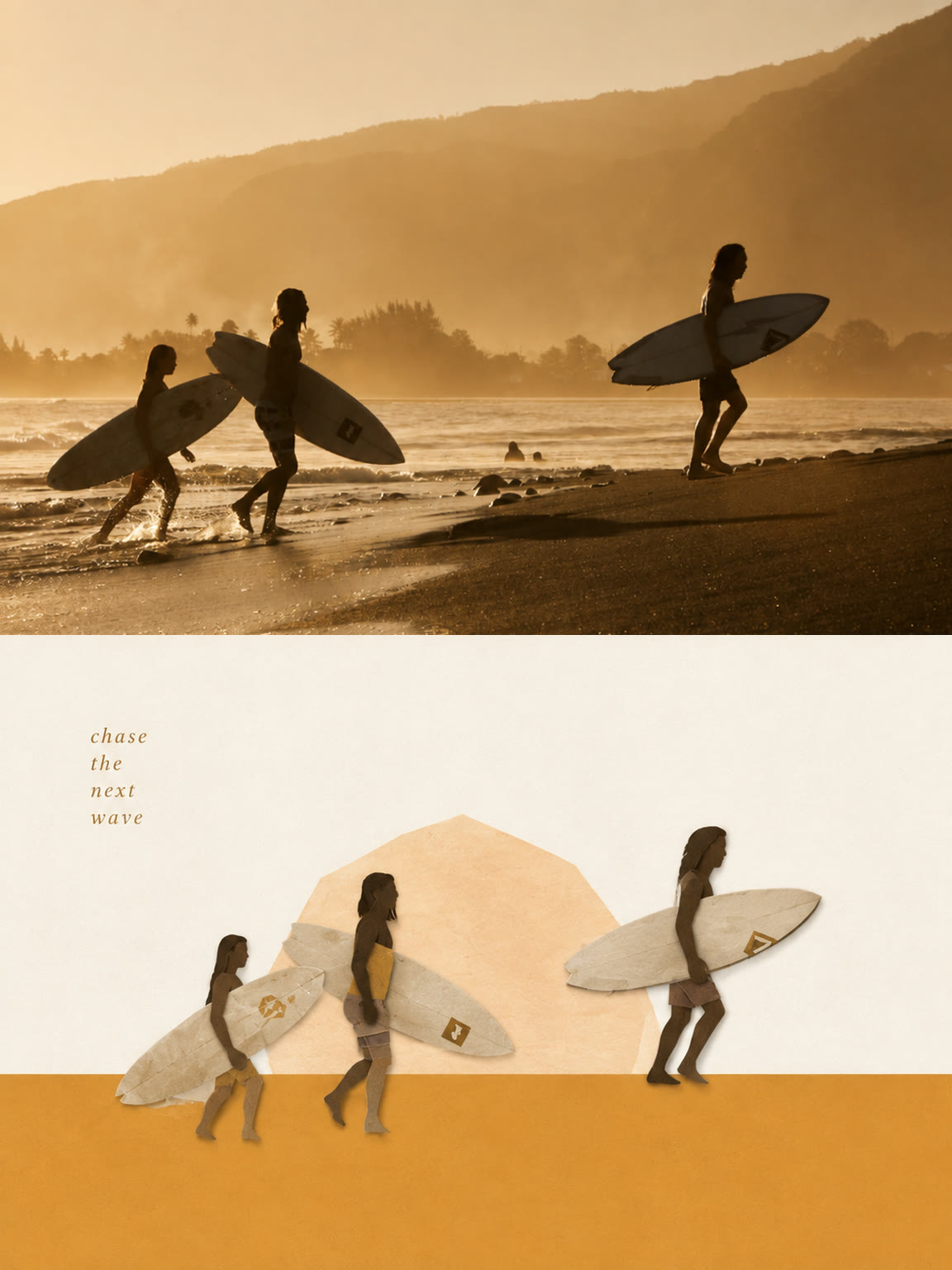
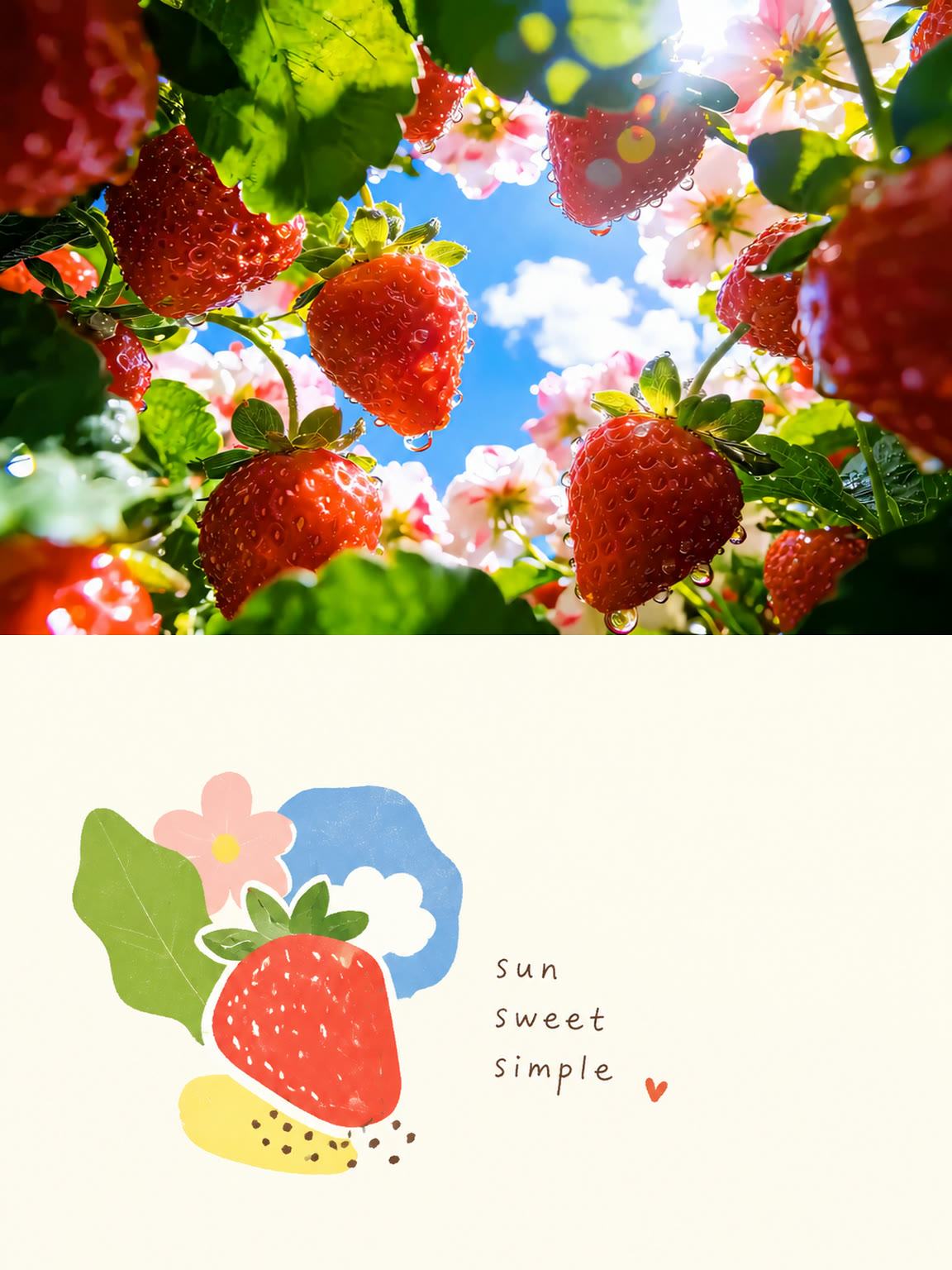
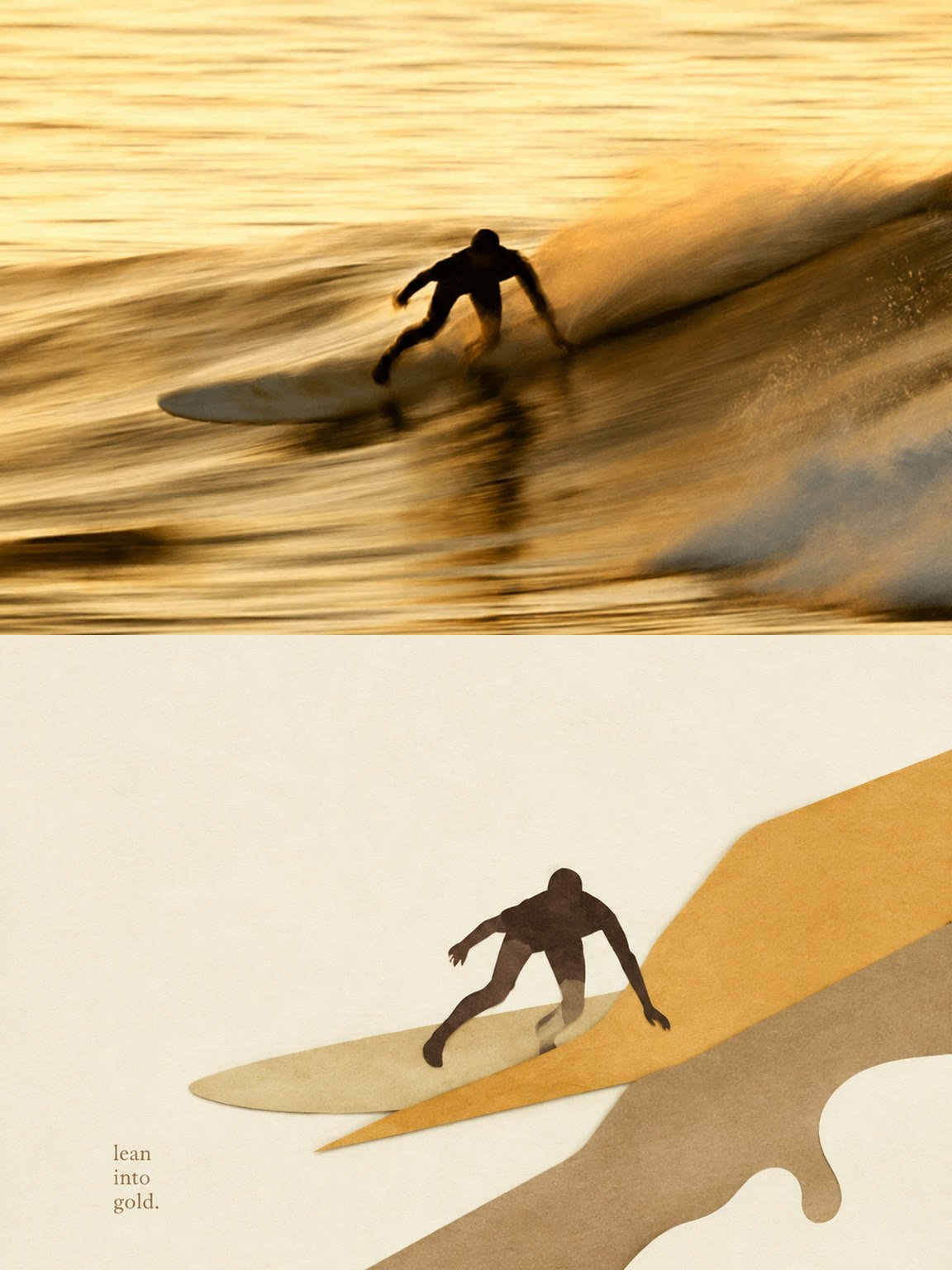
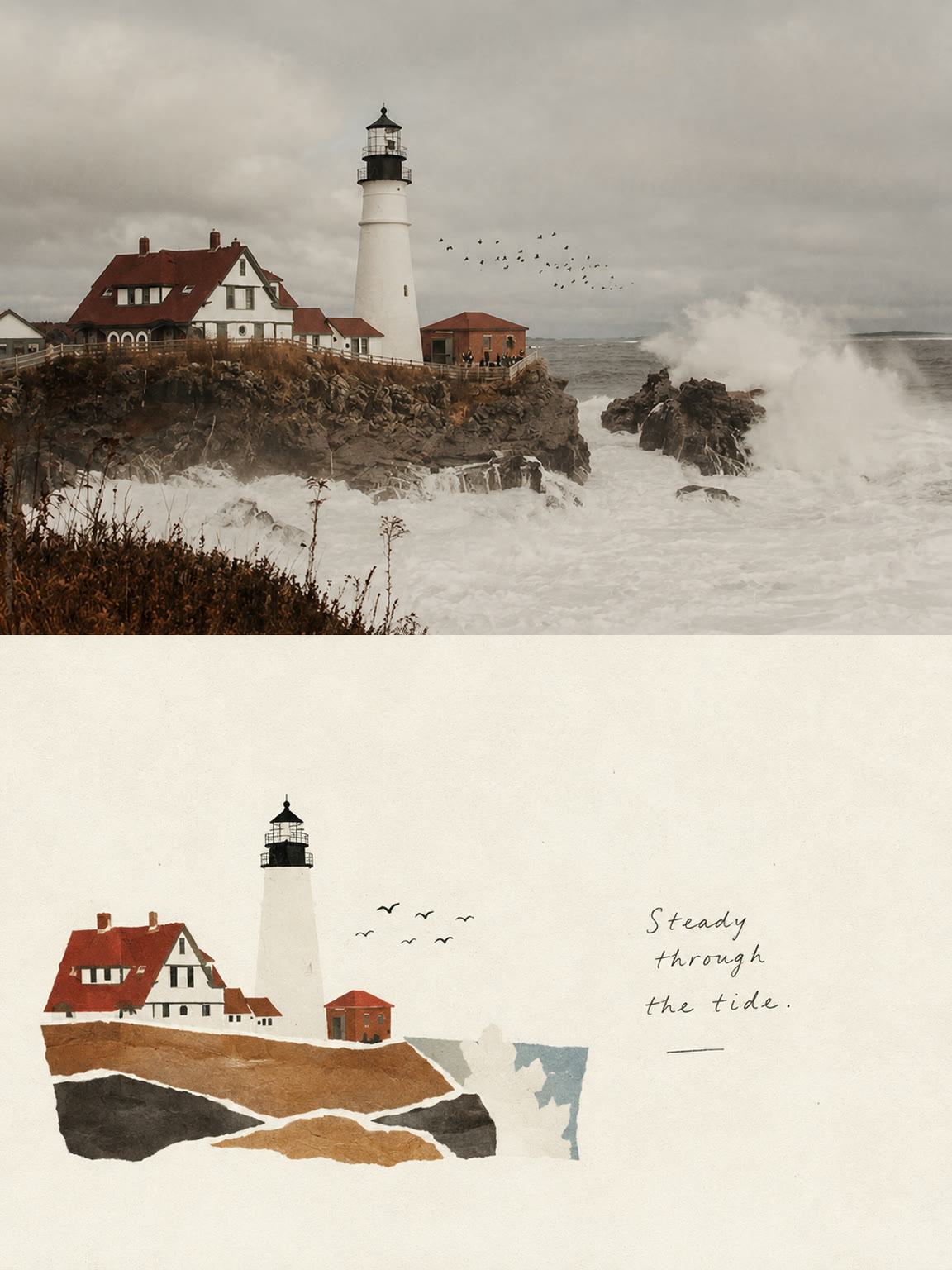
Overall, adopt a 3:4 vertical composition, using warm ivory-colored natural silk paper as the background. The final image must simultaneously retain the clearly visible original photo and a blue-green landscape reinterpretation of the same scene, forming a contrast between authentic travel imagery and classical handscroll painting.
The upper section, approximately 40%–45%, faithfully preserves the mountains, rivers, terraced fields, villages, forests, roads, and their relative positions from the original photo. Apply only light artistic publication color correction and extremely subtle grain processing—do not redraw the original image or add buildings, boats, figures, or peaks absent from the photo.
The lower section, approximately 55%–60%, sets a wide, low horizontal painting area within a large expanse of ivory blank silk, making it appear as an excerpted segment from a blue-green landscape handscroll. Do not generate a complete physical scroll; avoid wooden rods, curled edges, tassels, or product displays.
Reanalyze the spatial route of the photo, organizing the real landscape into a viewing sequence that unfolds progressively from left to right. You may arrange distant mountains, river surfaces, peak clusters, terraced fields, shorelines, villages, or wooded areas in sequence, but must adhere to the actual terrain and positional relationships in the photo—do not fabricate traditional architecture or ancient figures out of thin air.
Render using fine ink outlines, textured rubbing strokes, and restrained mineral pigments, with colors primarily in stone blue, stone green, gray-blue, ochre, and light ink, allowing minimal cinnabar for visual emphasis. Pigments should be serene, delicate, with a silk-based granular texture—avoid high-saturation emerald greens or opulent gold-and-lacquer decorative effects.
Preserve evident blank silk within the painted core. Water surfaces, skies, mists, and valleys may be directly represented by uncolored areas, letting the blanks serve as pauses in the horizontal route. The core's upper and lower boundaries should be clearly defined; beyond the core, continue with broad silk expanses, avoiding stuffing the lower half into a complete, full-frame landscape.
In the blanks outside the painted core, incorporate a small amount of precise English typography: a 2–4 word title distilled from the location or landscape, a number, and a short observational sentence. Use loose letter spacing, restrained serif fonts or small caps, ensuring the text is clearly readable and echoes the handscroll's horizontal rhythm.
Overall, reference blue-green landscapes, silk handscrolls, mineral pigments, and modern museum publication design. The image should be serene, distant, clear, with a sense of horizontal wandering viewing, while preserving the authentic regional identity of the travel photo.
Avoid: fake Chinese, calligraphy, seals, ancient poetry, artist names, complete scroll products, wooden rods, tassels, frames, wall mockups, fictional temples, ancient figures, cranes, extra boats, arbitrarily added peaks, gold-and-lacquer decorations, neon blue-greens, full-frame filling, photographic realism in the lower half, and simple filter effects.
2026-09-03via @Hamburgerai